
Urethane Blog
Office Market Rebounds
January 29, 2025
Investors Who Shunned the U.S. Office Market Are Coming Back
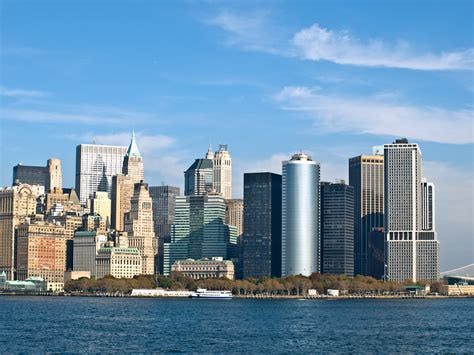
Investors who shunned the beleaguered U.S. office market in recent years are coming back, brightening the outlook for the sector after five years of turmoil.
Some investors are buying premium-quality buildings that are burdened with debt, or scooping up half-empty towers for pennies on the dollar. Others are bidding on obsolete office properties with an eye toward converting them to apartments. Some big foreign investors are showing renewed interest, hoping to beat what they believe will be an even larger surge of buying later in 2025.
“People are making their bets,” said Gary Phillips, managing director of real-estate investment banking firm Eastdil Secured.
The volume of office building sales increased to $63.6 billion in 2024, up 20% from 2023, according to data firm MSCI. That activity still pales compared with 2015 to 2019, when volume averaged $142.9 billion a year. But it marked the first increase since 2021.
And with a lot of cash sitting on the sidelines, brokers expect sales activity to continue to accelerate in 2025. Opportunistic real-estate funds had $196.8 billion available at the end of last year, up from $179.9 billion at the end of 2020, according to data fund Preqin.
Norges Bank Investment Management, the giant Norwegian sovereign-wealth fund, last month purchased the 50.1% stake it didn’t own in eight office properties in Boston, San Francisco and Washington, D.C., in a deal that valued them at $1.9 billion.
Norges last year also bought an office building on Sand Hill Road in Menlo Park, Calif., a strip filled with venture-capital firms. The two deals last year were the fund’s first U.S. office investments since 2018.
“We see an opportunity being a very large capital source that is willing to write checks in a sector that most of our peers are still not willing to invest in,” said John McCarthy, head of U.S. real estate for Norges.
The budding buying spree offers more encouraging news after the rise of remote work and the increase in interest rates greatly depressed office values.
Now, investors point to a pickup in leasing activity as businesses start requiring workers to be back in offices more.
“We hear from customers they’re going to continue bringing more workers back to the office. In many cases, they don’t have enough space to accommodate the transition,” said Colin Connolly, chief executive of Cousins Properties. His firm bought office properties in Atlanta, Austin, Texas, and Charlotte, N.C., recently.
Certain business districts are also experiencing shortages of the most desirable space and rising rents because there has been practically no new development in recent years.
Owners of high-quality office buildings in good markets “should be on much better footing to start the new year than they have in recent memory,” real-estate analytics firm Green Street said in a January report.
A venture of investment manager Hines and Rialto Capital has raised nearly $750 million for a debt fund, after banks and other lenders have fled the office market.
The partnership is targeting well-leased office buildings that are having trouble finding lenders. It is also looking to lend to buyers of office buildings sold at huge discounts from what they were worth before the pandemic.
Office towers acquired at cut-rate prices offer the new owner a lot more flexibility. “By financing an asset reduced in price, it allows owners to lower rents,” said Alfonso Munk, co-head of investment management for Hines.
The office market still faces a number of challenges, including high vacancy rates and loan delinquencies. Many investors remain leery about the sector and favor other types of commercial real estate, such as multifamily buildings or warehouses.
Values for less than premium grade A office buildings are about 35% to 60% lower than they were before the pandemic, according to Green Street.
But more sellers are finally capitulating. Many had been hoping that interest rates would fall further this year, boosting commercial property values. Recently, the Federal Reserve indicated that it would likely keep rates steady, convincing more owners to put their properties on the block.
“Rates aren’t going to be the saving grace that a lot of people thought,” said Dylan Burzinski of Green Street.
Some buyers are even ready to take a chance on buildings that are located in prime locations near transport hubs but are struggling with debt and too much empty space. New York landlord RXR this month acquired a 49% stake in a Midtown Manhattan tower. (The building is home to Fox Corp. and Wall Street Journal owner News Corp.)
The 2 million-square-foot building is losing one of its largest tenants, which will drive vacancy up to about 25%. It also has $1 billion of debt coming due this year, making it tricky to refinance because of high rates.
RXR is planning to invest more than $300 million to attract new tenants by adding a new entrance, new plaza and gym. The firm can afford to do this because its purchase of a 49% stake values the building at $1.3 billion, including the new capital. That is about $700 million less than the building was worth in a 2015 refinancing.
“If we can come in and fix the capital structure, we’ll have no problem leasing the space because the market has gotten stronger,” said Scott Rechler, RXR’s chief executive.
 Sign Up for Email Updates
 Everchem Updates Archive