
Urethane Blog
Plaquemine Update
July 31, 2023
Two weeks after explosion, Dow plant still ‘essential personnel only’ as cleanup continues
- BY DAVID J. MITCHELL | Staff writer
- 2 hrs ago
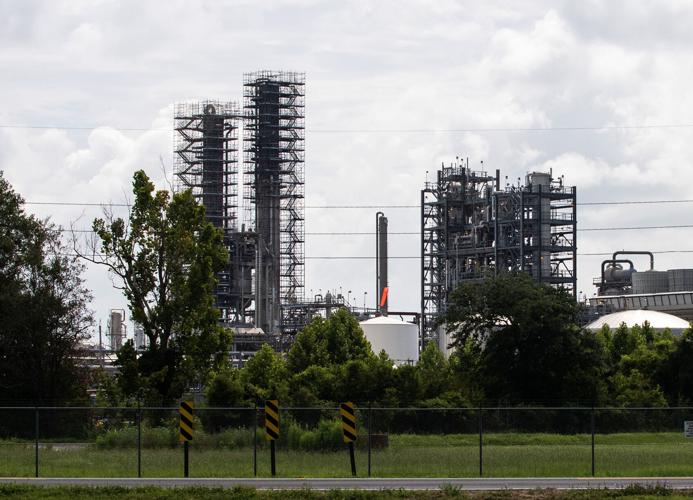
The Dow Chemical complex, in Iberville Parish, along La. 1 on Saturday, July 15, 2023. The plant in Plaquemine, Louisiana, was the scene of a large fire and explosions late Friday.
- STAFF PHOTO BY MICHAEL JOHNSON

More than two weeks since a unit inside Dow’s large complex near Plaquemine exploded in a towering fireball, company officials continued to allow only essential personnel inside the 1,500-acre site but were in talks to more fully reopen the plant to workers.
Company officials ordered the limitations as a precaution for their workers and contractors, Dow officials said, as workers continued on Monday to remove dangerous chemical products from their Glycol II unit that burned in the explosions in mid-July.
Company officials said they were assessing when to lift the restriction but don’t expect the safe removal of the potent chemical ethylene oxide to finish until the end of this week.
“To ensure the safety of our employees, we have restricted access to the site to essential workers only,” company officials said in a statement. “As we near completion of the assessment process, our site leadership team is discussing a return to site plan for all employees.”
In recent reports to state regulators, the company said the fire led to the release of ethylene oxide and ethyl chloride into the air. Ethylene oxide was also found in water initially used to extinguish the fire.
The water overflowed and ended up in the Mississippi River, a state report says.
Dow officials have told the state Department of Environmental Quality that the release of the chemicals into the air was continuing, reports say, but the company has not determined how much was released during the fire or since it has been put out.
Greg Langley, DEQ spokesman, said the “ongoing” air release stems from likely smaller releases expected to occur as the company removes the material from storage tanks, lines and damaged equipment in the Glycol II Unit.
Ethylene oxide is a highly flammable, colorless gas and is a potent human carcinogen with long-term exposure, the U.S. Environmental Protection Agency says.
DEQ and Dow have said continued air monitoring has not detected emissions of ethylene oxide outside the plant perimeter at or above 0.1 parts per million, the lower limit of the handheld monitors being used by Dow and DEQ.
That’s the same concentration as one-tenth of a drop of water in a 10-gallon aquarium, according to one government estimate.
The concentration, which is a federal worker safety standard, also happens to be the “action level” at which state environmental regulators would begin taking protective measures.
Dow officials have not described the level of damage to the unit, one of two that makes glycol at Dow’s Louisiana Operations, nor why the fire occurred, but said other units inside the complex are working.
The fire started around 9:15 p.m. July 14 and took a day and a half to extinguish. It could be seen lighting up the night sky for miles around and appeared on social media pages.
The blast and fire prompted local officials to order about 350 residents to shelter in their homes on the south side of the complex for several hours July 14 and 15.
It will likely be weeks before Dow says why the fire occurred, but an early dispatch from a DEQ field inspector issued sometime after July 16 provided a glimpse at some of what had been happening in the early stages of the fire fight.
Crews were working to isolate five “bullet tanks” that at least had the potential to be fueling the blaze. These pressurized, vertical storage tanks hold ethylene oxide, company officials confirmed.
At the time of the report, about 8:30 p.m. July 15, four of the five tanks had been isolated already. Crews were working on the fifth.
The other chemical released in the fire, ethyl chloride, is another flammable colorless gas. Also known as chloroethane, it can cause dizziness, a drunken feeling and even unconsciousness in high, short-term doses.
Its long-term carcinogenic effects on humans are unknown, but one two-year study found it caused cancer in female mice that inhaled the gas, according to the U.S. Environmental Protection Agency.
Environmental groups have questioned how such a large fire could not result in some emissions of ethylene oxide and other chemicals, but state and company officials have said much of the chemical fuel could have been burned up in the blaze and converted to water and carbon dioxide.
Is there a risk in the air?
Ethylene oxide has drawn new attention and debate in recent years after an EPA research arm found the chemical, which is widely used in medical sterilization and in the production of a variety of chemical products, posed a far higher carcinogenic risk than earlier believed.
Though some advocacy groups and New Jersey’s air regulator suggest there may be no safe level for ethylene oxide, these concerns arise primarily from chronic exposure over a lifetime.
The DEQ action level for ethylene oxide being tested around Dow is 180 times larger than the state’s chronic exposure limit of 0.55 parts per billion, which is for 70 years of continuous exposure.
Air monitors being used around Dow don’t measure a level that small, so it’s not clear if lower levels of ethylene oxide were emitted by the fire.
The higher state action-level standard around which the monitoring at Dow has been based rely on existing federal worker safety recommendations in the absence of an EPA standard for this kind of short-term release, DEQ officials said.
Federal authorities are calling for even smaller chronic exposure standards than DEQ’s standard. Industry groups and some state environmental agencies have argued the chronic standards are based on flawed methods and are overstated, prompting litigation.
In addition to the air impact, DEQ also authorized Dow to send large volumes of water that had been used to extinguish the fire and liquids from damaged coolant and utility lines into the Mississippi River without treatment.
Is there a risk to the water?
In July 18 order, DEQ granted the authority for 14 days after the company told the agency it needed to remove the water that was continuing to fill its containment systems and couldn’t be treated quickly enough to allow progress on the fire recovery to continue.
DEQ required Dow to test the water daily inside the complex and at the river discharge point and report the results to the agency.
Even before the permit was issued, Dow says it has been testing water, including every four hours during the fire.
About 140 samples were taken through last Thursday and hadn’t shown a groundwater risk. The water also appeared to be within preexisting water discharge limits, the company said.
“Water quality remains normal,” Dow officials said.
More than 25 miles downstream of the plant, the city of Donaldsonville draws its drinking water from the Mississippi River. Several other communities farther downriver in St. James and other parishes do also.
State officials say the small concentrations likely being detected would be diluted by the large volumes of water in the river.
Though Dow says it is reporting the testing results to DEQ, those results have not yet been made public in the state’s online database. A report is due in the coming days.
In the first days of the fire, water from fire suppression systems had overwhelmed a containment reservoir, causing water to overflow on July 15 into one of the plant’s drainage canals.
Testing of that overflow water on July 15 gave mixed results, company officials said: one elevated concentration of 39 parts per million and two much smaller results of 0.55 ppm and 2.5 ppm.
The EPA doesn’t have a drinking water standard for ethylene oxide, but the American Chemistry Council says its maximum safe concentration is up to 41 ppm.
Dow officials said the highest sample was taken from a lab in Dow’s Glycol II unit that had been testing other types of ethylene oxide samples previously and wasn’t set up to test water through the EPA-approved method for ethylene oxide.
Dow officials said they used the equipment to get a quick result in the immediate aftermath of the fire.
The lowest sample was found at another Dow lab on equipment calibrated for ethylene oxide and set up to use the EPA method, DOW officials said. The second-highest sample was found by a third-party lab.
All three samples were collected near the Glycol II unit inside Dow, about three-fourths of a mile from the river, company officials said.
 Sign Up for Email Updates
 Everchem Updates Archive