
Company News
September 18, 2025
Another One Bites The Dust
Ineos to close European PO, PG production
- Market: Chemicals, Petrochemicals
- 18/09/25

UK-based Ineos will indefinitely shut down propylene oxide (PO) and propylene glycol (PG) production in Europe even if chlorine supply resumes to its idled 210,000 t/yr chlorohydrin-based PO production plant in Germany.
The firm has notified clients, in a letter dated 8 September, it would cease production of PO and PG with immediate effect. Argus understands Ineos has also withdrawn from industry association Cefic’s PO and PG working group from 2026.
Ineos’ PO production plant at Cologne supplies its 120,000 t/yr PG production unit nearby. Both plants have been offline since a fire on 12 July caused a power outage at Germany’s Chempark Dormagen. That in turn prompted German chemical firm Covestro on 15 July to declare force majeure on a range of products, including chlorine. Covestro provides chlorine to Ineos’ Cologne PO production plant, which then had to shut down, and Ineos declared force majeure on its PG production on 18 July. Ineos did not declare force majeure on its PO production, which is mainly for captive use.
Repairs are underway at Chempark Dormagen but the damage was extensive and full operations are unlikely to resume before the first quarter of 2026. But Ineos has told clients it will not resume PO or PG production.
The decision may predate the fire in July, as some downstream users of Ineos’ PO have been seeking alternative sources since at least the middle of the second quarter.
Ineos has this week declined to comment.
By Laura Tovey-Fall
September 18, 2025
Preliminary MDI ADD Ruling
Preliminary ruling made in US MDI antidumping investigation

Washington DC, US – The US Department of Commerce has announced its preliminary determination in the antidumping duty investigation of MDI imports from China. The investigation was in response to a petition made by the Ad Hoc MDI Fair Trade Coalition, which comprises BASF and Dow. Both companies manufacture MDI on the US Gulf coast, BASF in Geismar, Louisiana and Dow in Freeport, Texas.
Preliminary dumping rates of 376.12% were announced for Covestro Polymers (China), and Wanhua Chemical plus its exporter Shandong Mingko. For other companies in China, the rate is 511.75%, which the department said was “based on facts available with adverse inferences”.
The announcement was accompanied by MDI import statistics, although the department stated that the way the data are accumulated “may not accurately reflect actual imports of MDI covered by the scope of the investigation”. This is because the imports enter the country under tariff schedule subheadings that may cover both subject and non-subject merchandise.
Unless it is postponed, the final determination of the antidumping investigation is set to be announced on 25 November. The US International Trade Commission is also running an injury determination investigation.
https://www.utech-polyurethane.com/news/preliminary-ruling-made-us-mdi-antidumping-investigation
September 4, 2025
Adnoc Covestro EU Probe Delayed
Adnoc says EU probe delays could jeopardize Covestro deal – reports
Sep. 04, 2025 10:00 AM ETCovestro AG (CVVTF) Stock, COVTY StockBy: Joshua Fineman, SA News Editor

Abu Dhabi’s Adnoc said the European Union competition regulator’s decision to temporarily halt its probe into the Covestro (OTCPK:CVVTF) deal could jeopardize the transaction.
“While we remain committed to pursuing a constructive path forward, the continuation of such an approach raises serious questions about the viability of this investment,” a spokesperson for XRG, the international investment arm of Adnoc, told Reuters and MLex in an email.
The European Commission was set to decide on the probe by Dec. 2, though it will now set a new deadline.
“We are deeply disappointed by today’s decision,” the spokesperson for XRG told the news outlets. “The Commission’s demands have strayed far beyond what is reasonable or relevant to this transaction, crossing into areas that are both disproportionate and invasive.”
Covestro shares fell as much as 11% on Thursday in Frankfurt.
The European Commission in late July announced it was starting an in-depth probe into Abu Dhabi National Oil Co.’s €11.7B (~$13.75B) acquisition of Covestro (OTCPK:CVVTF) (OTCPK:COVTY) under the European Union’s tough new foreign subsidy rules. The EC said it will investigate concerns that Adnoc’s state funding by the United Arab Emirates could allow it to behave in a way that interferes with fair competition across the bloc.
September 3, 2025
Tony Sinicropi

Antonino “Tony” Sinicropi
June 1, 1947 – August 31, 2025
Tony was a dedicated employee of VitaFoam Products Limited and VPC Group Inc. He was a man of great integrity, kindness and a gentle soul! Below is the plaque that will be placed in the Toro Road Board room with a framed picture of Tony.
“Tony Sinicropi began his career in flexible polyurethane foam in 1975 at Vitafoam Products Canada Ltd.,
He was the first employee hired by General Manager Brian Prescott when the joint venture between British Vita and Pre‑Fab Cushioning launched.
A York University B.Sc. graduate, Tony started on the pour line and rose to Foam Plant Manager and Technical
Director by 1985. With deep expertise in slab‑foam processing and technology, he was instrumental in Vitafoam’s growth.
In recognition, Tony is awarded the VPC Founder award.”
VisitationFriday September 5, 2025 from 4pm to 8pm
Holy Cross Catholic Funeral Home
211 Langstaff Road East, Thornhill, ON, L3T 3Z6
Funeral Mass – Chapel of St. Joseph (within the Funeral Home)Saturday September 6, 2025 at 12pm
Interment Holy Cross Catholic Cemetery
8361 Yonge Street, Thornhill, ON, L3T 2C7
Obituary It is with heavy hearts and profound sadness, we announce the passing of our beloved Antonino “Tony” Sinicropi, who left this world peacefully on August 31, 2025, with his devoted wife of 48 years, Nancy, tenderly by his side.
Tony is now reunited in eternal rest with his beloved parents, Antonio and Francesca, and his dear brother, Carlo.
He leaves behind a legacy of love and devotion in the hearts of those he touched. Tony will be forever treasured by his loving wife Nancy, his adored nieces Francesca (Tony) and Grace (Peter), and the greatest joys of his life — his precious great-nephews Giancarlo, Max, Marco, and Francesco, whose laughter always brought him endless pride and happiness.
He will also be lovingly remembered by Mimma, Antonietta and Family, Frances and Family, Giuseppina and Family, and Antonio and Family, along with his extended family and many dear friends.
Though Tony’s presence will be deeply missed, his memory will forever live on in the love he gave, the stories he shared, and the hearts of all who were blessed to know him.
As an expression of sympathy, donations in honour of Tony can be made to the Canadian Cancer Society
Some quotes about Tony:
“Tony Sinicropi, long time
Pour Line/Technical Manager at Vitafoam-Downsview (now VPC Group) passed
away on Sunday August 31. He was a real good guy and knew how to pour foam“
“He was one of the good guys.”
September 3, 2025
PIR Recycling System
Unilin becomes the number one in recycling PIR insulation boards
Wednesday, September 3, 2025
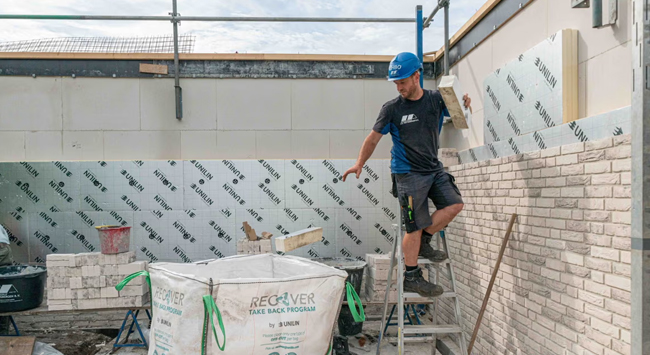
Unilin has raised the bar for sustainability with the opening of the first full-scale recycling facility for PIR (polyisocyanurate) insulation boards in the world in Desselgem, Belgium. This state-of-the-art plant represents a major accomplishment in Unilin’s goal to reduce environmental impact and improve the circularity of insulation products. The €8 million investment in the modern recycling facility enables Unilin to chemically recycle post-industrial PIR insulation boards and internal manufacturing waste into new PIR insulation products. Unilin’s new facility marks a significant milestone in the company’s continuous efforts to lower its carbon footprint and support sustainable construction practices, as it is the first manufacturer in the insulation sector to accomplish this.
PIR insulation boards, which are primarily used in walls, floors, and roofs, are known for their high thermal performance and long lifespan. These boards are made by chemically reacting polyol and MDI (methylene diphenyl diisocyanate), resulting in an insulating material that surpasses traditional materials such as mineral wool, XPS (extruded polystyrene), and EPS (expanded polystyrene) in terms of thermal efficiency.
PIR insulation’s benefits include its higher insulation value per thickness, making it an ideal solution for energy-efficient construction. Its lightweight structure is easy to handle and install, and the boards retain their insulation properties for decades, with little degradation over time. In fact, even after 50 years of use, PIR insulation’s thermal performance remains largely unchanged, further cementing its status as a long-lasting, reliable material for the construction industry.
Unilin’s recycling process
One of the biggest challenges facing PIR insulation products has been circularity. While PIR boards are recyclable, previous methods only allowed for mechanical recycling, which had its limitations. Unilin’s breakthrough came with the development of a chemical recycling process capable of converting waste PIR boards back into raw materials for producing new PIR boards. This self-developed recycling process is a game-changer. It involves a three-step procedure: shredding, filtering, and chemical recycling.
In the first step, the PIR boards are shredded into small pieces.
The next stage uses a specially developed internal procedure to separate the PIR material from the paper or aluminum facing on the panels. The purified PIR is then fed into a glycolysis reactor, which breaks down the material into polyol and other components. The recycled polyol is then reintroduced into the production process, where it is combined with MDI to create new PIR insulation boards. Through this process, Unilin can now self-supply up to 50% of its polyol requirements, marking a major step in reducing reliance on virgin raw materials. As a result, the company is enhancing the sustainability of its products while reducing waste in the construction sector.
The new recycling plant in Desselgem is just the beginning for Unilin. The company plans to gradually ramp up the capacity of the plant, initially focusing on recycling internal board waste before expanding to include post-industrial waste from construction sites. In 2024, Unilin plans to extend its operations with the addition of a recycling plant in the UK, with studies already underway for this expansion.
Beyond scaling up production capacity, Unilin is also exploring further innovations in recycling technologies. The company is researching techniques to not only recycle polyols but also the MDI components, which would bring the recycling process even closer to full circularity.
Unilin has also launched the Unilin Recover program, a take-back initiative designed to collect PIR waste from construction sites and return it to the company’s recycling facilities. By collaborating with the construction industry, this program ensures a steady supply of post-industrial PIR waste to feed into the recycling process. The Recover program is an essential part of the company’s strategy to close the loop on PIR insulation and promote sustainable building practices across Europe.
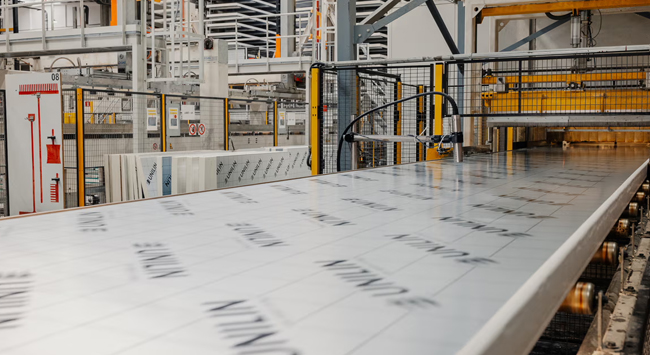
Unilin’s insulation division
Unilin has firmly established itself as one of Europe’s largest manufacturers of polyurethane (PU) insulation. The company’s product range includes a variety of insulation solutions for residential, commercial, and industrial applications, with well-known brands such as Usystem, Utherm, Usafe, and Rezillo. Unilin operates eight production sites across Western Europe, including in Belgium, the Netherlands, France, the UK, and Ireland, and is currently expanding with a new facility in Poland.
In addition to its groundbreaking work in PIR insulation recycling, Unilin’s commitment to sustainability extends across all areas of its operations. The company is constantly innovating to improve the environmental performance of its products, reduce its carbon footprint, and promote circularity within the construction industry. Unilin’s investment in the Desselgem recycling plant is a testament to the company’s leadership in advancing sustainable building materials. As demand for energy-efficient insulation products continues to grow, Unilin is poised to play a crucial role in shaping the future of the construction industry.
Unilin is cutting waste and carbon emissions by being the first company to recycle PIR insulation boards chemically. They are also laying the groundwork for a more sustainable and circular economy in the building industry. The closed-loop PIR insulation system that the company had envisioned is now a reality, and more innovation and growth are planned.
Read more news on: construction, sustainability, building materials, circular economy
Get such updates through the American woodworking industry website: woodandpanel.us
 Everchem Updates Archive
  Sign Up for Email Updates