
Uncategorized
March 1, 2026
Recticel Leadership Changes
Recticel Group Announces Leadership Transition

Jan Vergote to transition from CEO to Executive Chairman of the Board of Directors and Stefaan Debusschere to become Recticel Group CEO
Today, Recticel Group announces that Stefaan Debusschere, currently CEO of the Recticel Insulation Boards Division, is transitioning to Chief Executive Officer of the Recticel Group. At the same time, Jan Vergote, current Chief Executive Officer, will assume the role of Executive Chairman of Recticel Group. In order to allow and support these changes, Wim Dejonghe will step down as Chairman and will leave the Board of Directors after almost 2 years of service in a period of strategic reorientation and above-market growth.
The above changes take effect on 2 March 2026. As Stefaan Debusschere, Jan Vergote and Wim Dejonghe, have been working closely together over the past months, this transition is well prepared.
Wim Dejonghe:
“This leadership evolution comes at a time where Recticel will further accelerate the execution of its strategic growth agenda to double the company’s size and profitability in its core mission of providing smart building insulation solutions. I am convinced that Stefaan’s entire leadership team, and Jan as our incoming Executive Chairman are ready and highly motivated to achieve the plan.”
Jan Vergote:
“Our ambition is to build a smart building insulation group capable of outperforming the market. With revenue and adjusted EBITDA growth of respectively 23% and 42% over the last 2 years, and with the recent acquisitions and greenfields, we are ready for the next step. I will actively support Stefaan and his team to accelerate the development of our strategic agenda.”
Stefaan Debusschere:
“At Recticel, I have found a leadership team that matches a high level of competence with true entrepreneurial spirit. I am committed to implement the strategic agenda, Recticel Group’s Elevate 2030 plan, with focus on operational excellence, leadership involvement with key customers, a deeper presence in downstream applications and a stronger focus on the development of high performance insulation, whilst creating a broader geographical scope.”
Find out more on www.recticel.com.
March 1, 2026
Urethane Highlights from BASF Call
BASF SE (BASFY) Q4 2025 Press Conference Call Transcript
Feb. 27, 2026 11:28 AM ETBASF SE (BASFY) Stock, BFFAF Stock
BASF SE (BASFY) Q4 2025 Press Conference Call February 27, 2026 4:30 AM EST

Company Participants
Andreas Meier
Markus Kamieth – CEO & Chairman of the Board of Executive Directors
Dirk Elvermann – Member of the Board of Executive Directors, CFO & Chief Digital Officer
Markus Kamieth
CEO & Chairman of the Board of Executive Directors
[Interpreted] Thank you, Andreas. Good morning, and welcome to Ludwigshafen, and also to those in front of the monitors. First of all, thank you, Andreas, for you, for having taken over this job. You are doing this for the first time or have been doing this for the first time for a long time because Nina Schwab-Hautzinger left to join Roche, but you probably heard yesterday that we will welcome Thomas Biegi as successor of Nina Schwab-Hautzinger soon. And I think in future, he will take this job, but well, you will have to agree with him.
Dirk Elvermann and I will present and explain the most important figures and developments of the 2025 business year. 2025 marked by many geopolitical and headwinds in the world that unfortunately had a negative impact. Consequently, we, in the chemical industry, faced an uncertain and very volatile global market environment and with considerable headwinds. As previously stated, we, therefore, focus primarily on the things we can control within the framework of our Winning Ways strategy.
We successfully started up the major assets at our new Verbund site in Zhanjiang, and we also accelerated our cost savings programs and significantly streamlined BASF’s organization. Moreover, we progressed swiftly and successfully with the announced portfolio measures. But let me also mention that the year 2025 and particularly the fourth quarter did not develop as we had anticipated. Our prerelease on January 22 already gave you an indication of this.
Let’s now turn to the details of BASF’s financial performance in the fourth quarter of 2025, always compared with the prior year quarter. Overall, sales declined considerably because of strong currency headwinds and slightly lower prices. At the same time, we achieved slightly higher volumes. All segments reported volume growth, except for the Chemicals segment. Volumes rose particularly in Surface Technologies, Agricultural Solutions and Nutrition & Care segments.
From a regional perspective, we achieved a remarkable volume increase of 13% in China and posted solid growth in North America. In Europe, we recorded slightly lower sales volumes. Compared with the fourth quarter of 2024, prices declined in 5 of our 6 segments, most notably in Chemicals and Materials due to ongoing competitive pressure. We could only increase prices in the Surface Technologies segment, primarily owing to higher precious metal prices. Currency effects burdened sales in all divisions and were mainly caused by the strong depreciation of the U.S. dollar, the Chinese renminbi and Indian rupee. Portfolio effects slightly dampened sales growth, and this was mostly related to the sale of our Decorative Paints business.
Based on this underlying sales development, EBITDA before special items came in at EUR 1 billion compared with EUR 1.4 billion in the prior year quarter. Currency headwinds lowered EBITDA before special items in the fourth quarter of 2025 by around EUR 110 million. Ladies and gentlemen, overall, BASF Group’s EBITDA before special items reached EUR 6.6 billion in the full year of 2025. The decline compared with 2024 was mainly due to lower margins and negative currency effects, and the latter amounted to EUR 235 million in the full year 2025. Due to continued low market demand and pressure on margins, earnings in BASF’s core businesses, especially in the Chemicals segment, declined considerably. Higher contributions from BASF’s stand-alone businesses could only partially compensate for this decrease.
Let’s now turn to our portfolio measures. Our agreement with Carlyle marks an important milestone in realizing the full value of our Coatings business. Prior to that, we had divested our Decorative Paints business to Sherwin-Williams. Under Carlyle’s operational leadership, we want to continue to strengthen the leading position of the Coatings business. This will create further upside potential for the 40% equity share we will continue to hold after closing. We are on track to close the transaction in the second quarter, as previously announced. On the basis of the 2 transactions, BASF’s Coatings business is valued at an enterprise value of EUR 8.7 billion.
Let’s move on to Agricultural Solutions. Our team here once again delivered a very strong performance in 2025 and achieved an EBITDA margin before special items of 22%. We are on track to reach IPO readiness in 2027. Last year, excellent progress was made on the legal entity and ERP separation. By early 2027, the separation will be completed in all regions.
In November, we announced the future management Board for the Ag business. Its members combine extensive industry expertise with the required capital market experience. The management team headed by Livio Tedeschi will drive the transformation of Ag Solutions into an independently steered company focusing solely on the agricultural sector. The planned listing of our Agricultural Solutions business will mark the next decisive step to unlock additional value for our shareholders. The planned IPO is targeted to take place on the Frankfurt Stock Exchange.
And what is also good news is another piece of news. In January, we announced that BASF Agricultural Solutions is acquiring AgBiTech, a supplier of biological solutions to control insect pests. It has pioneered the use of nucleopolyhedrovirus technology to develop insect control solutions based on naturally occurring viruses. With operations in Brazil, the United States and Australia, AgBiTech serves farmers growing soybean, corn, and cotton as well as specialty crops. This acquisition is an important step in the value creation journey of Agricultural Solutions. The new technology will complement BASF’s existing biosolutions portfolio and underscores the commitment to a more sustainable, holistic approach in agriculture, in line with the business strategy of Ag Solutions. The transaction is expected to close in the first half of 2026.
From the stand-alone Ag business, let’s return to the beginnings of our value chain. We successfully started up all 32 key production lines at our Zhanjiang-Verbund site on time and below budget, a remarkable achievement and a testament to the capabilities of our teams. We also started up the steam cracker, the heart of the Verbund, without any lost time. This steam cracker is flexible, so we can use both naphtha and butane as feedstocks.
I was very pleased to hear Linde’s CEO, Sanjiv Lamba, describe this as one of the fastest cracker starts up ever. Linde supports us with their cracker technology and engineering expertise and contributed to this major achievement of our teams in Zhanjiang. The team executed this complex task with outstanding dedication and success. We are confident that we will operate the site at high utilization rates even in the current market environment. Nevertheless, I want to note that we expect a slightly negative earnings contribution from the Zhanjiang-Verbund site in the first year of operations, mainly due to start-up related costs. From 2027, we expect the site to contribute positive earnings.
Ladies and gentlemen, MDI is an important product for BASF and a key component of our polyurethane value chain. It is indispensable in the construction, automotive, coatings, adhesives and furniture sectors. Classic applications include rigid and flexible foams. It can be found as insulation and upholstery material in your car. For example, I think you’re not sitting on such a chair at the moment. In the United States, we are currently expanding our MDI plant in Geismar, Louisiana. The final phase is on track, and we are planning to start up production in the third quarter of 2026. At USD 1 billion in total, the project marks BASF’s largest investment ever in the United States. Through this expansion, we are doubling our MDI capacity in Geismar to around 600,000 metric tons per year to serve the growing U.S. market.
Dirk Elvermann
Member of the Board of Executive Directors, CFO & Chief Digital Officer
Ladies and gentlemen, where do we stand with BASF’s cost-saving programs? In a nutshell, we have accelerated the implementation. By the end of 2025, we already achieved a total annual cost reduction run rate of around EUR 1.7 billion, and this represents an increase of EUR 100 million compared with our original savings target for this date. In 2025, the associated onetime costs amounted to EUR 700 million, and this increase in onetime costs of around EUR 300 million was caused by higher provisions for severance payments. In contrast, the planned onetime costs for 2026 will be reduced from EUR 500 million to EUR 300 million. By the end of 2026, we now expect annual cost savings of EUR 2.3 billion instead of EUR 2.1 billion as planned. The cumulative onetime costs are now expected to amount to EUR 1.9 billion in total. And this shows our positive momentum in bringing down our cost base and our ongoing focus on this crucial topic that we are dedicated to.
On the right-hand side of this slide, you can see that between December 2023 and December 2025, we reduced the number of BASF senior executives by 11%. The number of employees decreased by 4,800 if we exclude the around 1,000 employees who were recruited at the Verbund site in China in the same period. This demonstrates that we are actively streamlining our global organization at all levels. In 2026, we will further advance in this direction.
We recently communicated our next steps to create more value, which will happen in BASF’s service organizations. And these are Global Digital Services and Global Business Services. Why are we doing this? Against the backdrop of our successful portfolio measures and the differentiation between core and stand-alone businesses, we now also want to streamline IT, finance and HR services to meet the needs of BASF’s core businesses. In Global Digital Services, we are rationalizing and harmonizing BASF’s IT application landscape and sharpening the Digital Service portfolio through consolidation and standardization. In this context, we plan to open a cost-efficient digital hub in Hyderabad, India. We will adjust our existing location footprint and take out significant costs.
Building on competitive service levels and focused digitalization, these measures allow us to capture efficiency gains and achieve a significant reduction in the Digital Services workforce. Similarly, in Global Business Services, we intend to streamline the service portfolio, drive automation and establish cost-efficient global hubs. We, therefore, aim to bundle a significant portion of our business services in 2 global hubs in Asia. At the new global hub in India, we intend to bundle services with a focus on finance and HR. And the established hub in Kuala Lumpur in Malaysia is foreseen to focus on global supply chain services in the future. Existing regional hubs will complement this setup.
Markus Kamieth
CEO & Chairman of the Board of Executive Directors
[Interpreted] Thank you, Dirk. A key objective of our Winning Ways strategy is attractive shareholder distributions via dividends and share buybacks. That is why we will propose a dividend of EUR 2.25 per share for the 2025 business year to the Annual Shareholders’ Meeting. Based on the year-end share price, this represents an attractive dividend yield of 5.1%. The second pillar of our attractive shareholder distribution policy is our buyback program. In view of cash proceeds already received and further proceeds expected, particularly from portfolio measures, we started buying back shares in November 2025. By year-end 2025, we had repurchased shares of around EUR 355 million.
Moving on to our outlook for 2026. From today’s perspective, we do not expect a meaningful market upswing or a significant easing of geopolitical tensions in the near term. Our forecast for the BASF Group assumes that GDP growth will be slightly lower and that global industrial production growth will be significantly lower than the 2025 level. We expect a further decline in chemical production in the mature economies and weaker growth in the emerging markets.
Our planning is based on an average oil price of USD 65 per barrel of Brent crude and an exchange rate of $1.20 per euro. Based on these assumptions, we expect EBITDA before special items to be between EUR 6.2 billion and EUR 7 billion in 2026. BASF Group’s free cash flow is expected to be between EUR 1.5 billion and EUR 2.3 billion. Payments made for property, plant and equipment and intangible assets are estimated to be reduced to EUR 3.4 billion.
I’d like to add that from a market perspective, the start to the first quarter has been as challenging as expected. In January, volumes in China continued to develop very positively, which is partly related to the timing of the Chinese New Year. But in the remaining regions, volume development has been weak. Given the considerably stronger U.S. dollar in the prior year quarter, currency headwinds on EBITDA before special items could amount to up to EUR 200 million in the first quarter of 2026 alone. So 2026 is likely to be another transitional year with significant headwinds for our industry. Most of the improvements we aim to achieve will need to be driven by our own efforts. We expect a gradual recovery of market conditions in the later part of this year and in 2027 and see promising early indications. However, we are also mindful of short-term demand constraints due to geopolitical and trade-related effects.
Let me highlight 3 topics that we will continue to prioritize in 2026. We will continue to actively drive measures to structurally reduce costs by rigorously implementing our cost savings programs, and we will bring down CapEx significantly below the level of depreciation. In parallel, we will hunt for volumes to increase the utilization rates of our plants. And after the successful start-up of our new Verbund site in China, it’s now all about filling the asset’s increasing utilization rates. Based on our highly competitive cost position, we are confident that we will achieve this goal fairly quickly.
Furthermore, we will focus on the completion of the final phase of the MDI capacity expansion in Geismar to capture further profitable growth in North America. And we will build on our successful portfolio measures to crystallize and unlock the value of our stand-alone businesses. We will stay on course to further strengthen our core businesses by implementing the necessary measures.
In summary, delivering on our Winning Ways strategy means combining active portfolio steering with capital discipline and strong operational execution when it comes to CapEx and costs. And this way, we will create value for our company.
Bernd Freytag
[Interpreted] Regarding Ludwigshafen, one follow-up question. So what range is the loss? And what do you expect this year? Second question, Mr. Elvermann, when you ask tariffs to be back, how much have you paid here, to give us an idea? Mr. Kamieth, regarding the European chemicals policy in general. The EU with the critical chemical alliance would like to pick value chains which may be protected or are seen as worth to continue, may probably be subsidized. What are you hoping for here?
Markus Kamieth
CEO & Chairman of the Board of Executive Directors
[Interpreted] Very complex questions. Let me start with chemicals, legislation, EU. Maybe you can take over then. Complicated issue, Mr. Freytag. Let me limit myself to Critical Chemicals Alliance. Otherwise, so many other topics will be added that are decided for us in Brussels. Critical Chemicals Alliance, developed from 2 different types of motivation. It’s an initiative by the EU Commission. On the one hand, the shock after corona, because we realized in many value chains, Europe is not in a robust situation. And if we don’t watch out, we will lose more value chains in Europe, and we will become even more dependent on other regions or even individual countries. Buzzword, rare earths. Buzzword, antibiotics. During COVID, it turned out, oh, it’s not a good thing to be in that weak situation in Europe.
Secondly, a short-term aspect, and that’s the import pressure that we experienced from the U.S. and from China regarding the chemical industry in Europe, because they put capacities in Europe under pressure. I say we caused this problem, of course, to a large extent, because competitiveness situation is very difficult here. So I welcome this approach. The industry, the EU Commission and many advisers want to sit down and discuss how can we come up with a regulatory framework to make sure that on the one hand, we maintain the European chemical industry. And on the other hand, we do away with the critical dependencies.
But I think we must not switch it in a way to come up with an island solution for Europe. We must not have a protectionist development in the chemical industry in Europe. That would be the wrong development. This is why we say we need a balanced approach where protection is necessary for reasons of resilience or, maybe in some cases, in a targeted way for competitive reasons. We are in favor. If it means that it will help, it’s okay. But if it continues with noncompetitive situations in Europe, we are against.
As a chemical industry in Europe, we don’t want to live in a zoo. We want to still live out in the wild. So my appeal to the EU Commission often is do not come up with too many specific aid packages, just make sure you take away the load from our shoulders, so that we can continue breathing. So that’s my approach here. But of course, I could spend hours discussing this.
Unknown Attendee
[Interpreted] Mr. Kamieth, in today’s press release, we read that last year, the Zhanjiang-Verbund site was started up successfully. It’s the third biggest production site of BASF globally. Why is BASF continuing to invest so much money in China? Looking at today’s uncertain times, how important is the Chinese market in the global strategic approach of BASF?
Markus Kamieth
CEO & Chairman of the Board of Executive Directors
[Interpreted] Thank you for the question. Yes, you are right. In the fourth quarter, so with the highlight of the steam cracker very early in January, we, from our point of view, successfully started up the site. As I said, 32 production assets were started up within only 4 weeks. And I would say, looking at the complexity and the success, I’m only talking about the technical start-up, not the construction, which was also great. But to achieving this with such a quality, I think this is the first ever in the chemical industry. So great performance by the team. And this goes to show that this is what our workforce really, really is able to do. We are very proud of this.
Of course, this does not protect us against a very difficult market in China. I said, well, the market is growing. There is volume growth in China. However, prices are under enormous pressure because of high overcapacities in China. This does not only go for the chemical industry. In China, for 40 months in a row, we have producer price inflation. So this producer price inflation is not what the consumer sees, but what the producing industry sees, and there is a strong margin pressure because of this in all Chinese industry. But we think in the mid to long term, this will be a successful site for BASF because the strategic location is fine in South China, in the Guangdong Province, where the heart of Chinese growth is to be found, and we are very competitive.
China represents almost 54% of the global chemical market. We are at the right location, with the right assets, with a site which, especially within China, but also at global level is producing with a very, very low CO2 footprint. So strategically speaking, very good. Operationally, in the short term, more difficult than expected. But still, we are convinced that this was the right decision. Even though in ’26, 2027, the financial performance will be a little more difficult.
In China, we generate around 13% of group sales of the BASF Group. This will increase slightly with the new site to between 15% and 20% probably, but China will become more important for us. And you have to put it in perspective. I tend to compare this with the U.S. The U.S. will still be a much bigger, much more important market than China in future. Sometimes the press says, well, we are somewhat biased here, but we are not.
Tom Brown
Just a quick one to close off. In light of the bearish environment this year and the insolvencies we’ve seen in Germany, especially, like do you have a projection on how much capacity you expect to leave the European market? And just kind of building from that, looking at Ursula von der Leyen’s comments in Antwerp and the delays in EU Mercosur as well as the delays to funding for Ukraine, do you think there’s an argument for centralizing greater power in Europe at the Brussels level?
Markus Kamieth
CEO & Chairman of the Board of Executive Directors
The second question, it’s a very fundamental question. I think if you would ask anybody in Europe, [indiscernible] form of the European Union and its constituents or processes, so to say, you would find a high vote. And I would say even people in the European Commission would say, yes, it would be needed because we are struggling with the 27 votes, 27 Unity votes on a lot of big decisions. But there’s also no easy answer. And I think, for me, it is not appropriate to now use the word like you used, centralization. It’s an oversimplification of what is needed.
Everybody wants to make Europe successful. We want to make Europe successful. We have to make Europe successful. I can only warn that especially parties that are making public noise around criticizing that the EU is maybe not good for Germany, that they don’t get, let’s say, too much airtime with their oversimplistic arguments, because Europe is good for us, Europe is good for European industry, Europe is good for most citizens in Europe, but we could use a more future-ready European Union, so to say, I would say. And I think there probably even Mrs. von der Leyen would subscribe to this. Your first question was on insolvencies…
Tom Brown
Yes, insolvencies…
Markus Kamieth
CEO & Chairman of the Board of Executive Directors
I don’t know. We have published this — the Cefic has published this in January. You have maybe seen this if you were in Antwerp, that over the last 3, 4 years, already 9% of the European chemical capacity has been closed with a consequence that 90,000 jobs have already been — direct and indirect jobs have been affected. And if you look at the dynamics, we are not at the end. So there is more capacity that will be closed. There are insolvencies, there’s restructuring. And I would say there’s also delayed restructuring now with some asset sales that are happening in Europe.
So I would say the time of restructuring in the European chemical industry is not yet over from a BASF perspective. This is also something we feel is necessary. So that’s why I said earlier, a protectionism in Europe is not good for the industry, and it’s also not good for BASF, because to some extent, the overcapacity also in Europe has to be addressed. The overcapacity is not only in China, it’s also in Europe.
And noncompetitive assets have to also be restructured. And we believe that this actually is a source of relative competitive advantage for BASF, because we have, in Europe, very competitive assets. In sites like Ludwigshafen and Antwerp, with a high degree of integration, a low cost base in terms of asset cost and good energy integration will actually play out their relative advantage compared to many other chemical sites in Europe, smaller nonintegrated that will get into difficulties.
February 22, 2026
Remodeling To Grow
NAHB expects remodeling growth in 2026 and beyond
By Larry Adams
February 18, 2026 | 10:20 am CST
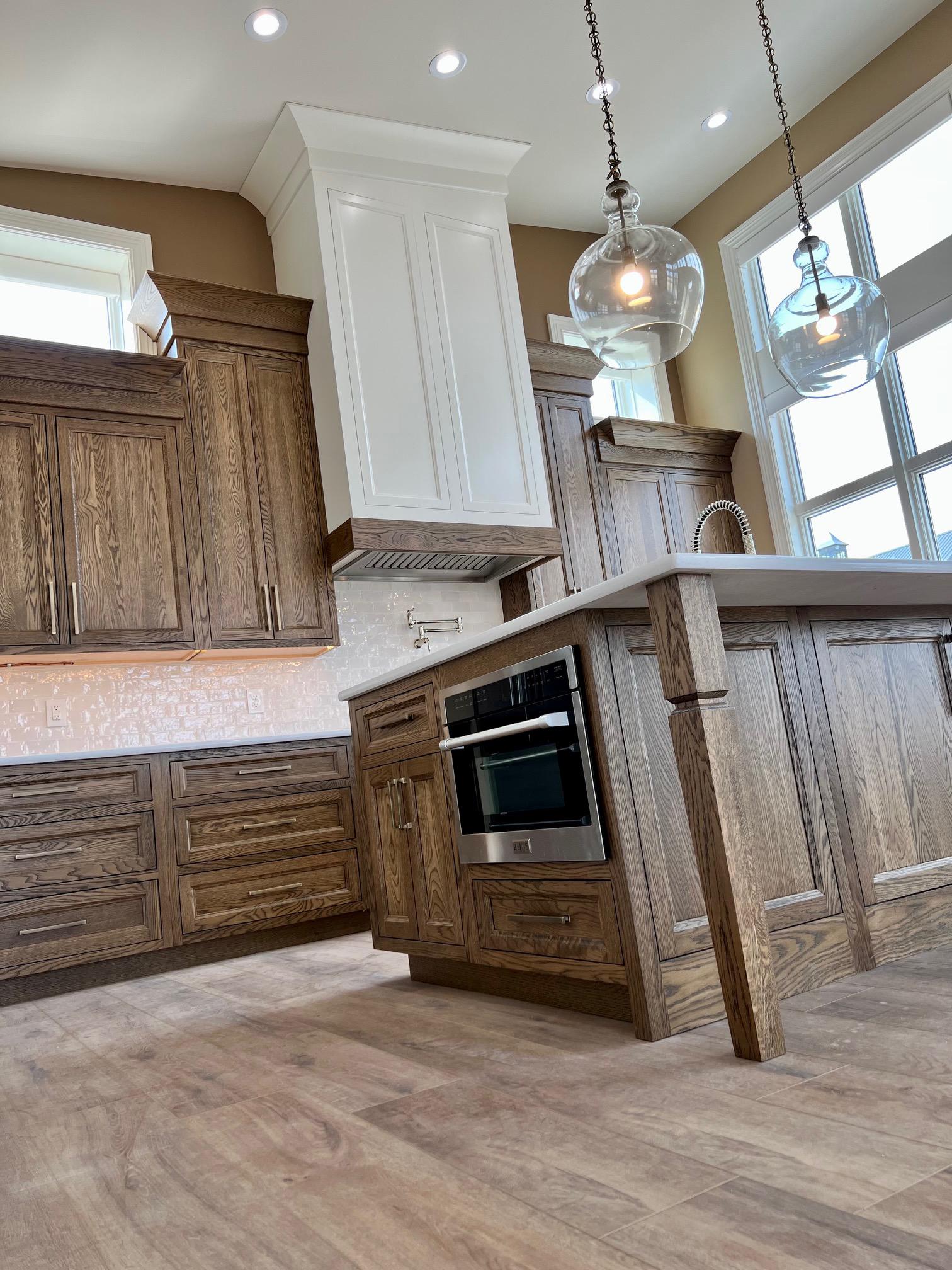
ORLANDO — The remodeling market is poised for growth in the coming years as many structural tailwinds, including an aging housing stock, the persistent lock-in effect and the trend for older home owners to age-in-place, will not be changing quickly, according to industry experts at a panel hosted by the National Association of Home Builders (NAHB) during the International Builders’ Show in Orlando.
This positive outlook is reflected in the NAHB/Westlake Royal Remodeling Market Index (RMI), a quarterly survey of NAHB remodeler members that provides insight for the remodeling industry. In fact, the RMI has registered a reading above the break-even point of 50 for 24 consecutive quarters, showcasing a post-pandemic resiliency. The remodeling sector is also outpacing the single-family and multifamily housing markets when comparing their respective sentiment measurements over the past five years.
“There are many factors contributing to the continued growth of the remodeling market, including the aging housing stock,” said NAHB Economist Eric Lynch. “The typical age of a home has increased from 31 years old in 2006 to 41 years old in 2023. And with the dramatic rise in home equity post-pandemic, more home owners are able to finance remodeling projects that align with their needs.”
Another tailwind for the remodeling market is the mortgage rate lock-in effect, where home owners with low mortgage rates have chosen to stay in their current homes instead of moving and taking on a higher rate. Lynch noted that while the lock-in effect is lessening, it is still persisting which means households will be incentivized to pursue remodeling projects first before considering a sale.
Lynch explained that the remodeling sector is continuing to become a larger share of the residential construction market, especially when looking at the number of firms and overall construction spending. There were 128,000 remodeling firms at the start of 2025, up from 69,000 in 2000. And home improvement spending share increased from 33% in 2007 to 44% in the first quarter of 2025.
The trend for older home owners to age-in-place has positively contributed to the growth in the remodeling market. The RMI survey showed that 56% of remodelers are involved in home modification work relating to aging-in-place and that 96% of remodelers said that most or some of their consumers are familiar with the aging-in-place concept. The survey also showed that 73% of respondents indicated that requests for aging-in-place features have significantly or somewhat increased over the past five years.
A recent RMI survey found that the most common remodeling projects in 2025 were: bathroom remodels, kitchen remodels and whole house remodels. These findings are consistent with historical trends reported by NAHB where bathroom, kitchen and whole house renovations have traditionally ranked as the top three project types undertaken by NAHB remodelers.
Looking ahead, residential remodeling activity is expected to increase 3% in 2026 and an additional 2% in 2027 in inflation-adjusted terms. “NAHB is forecasting growth for the remodeling sector both in the short-term and the long run, driven by these structural tailwinds that are not expected to change in the near future,” said Lynch.
Attendees also heard from Alan Hanbury, Jr., CGR, CAPS, GMR, president and CEO of Consulting by House of Hanbury Builders Inc., based in Newington, Conn., who presented on best practices for setting KPIs for remodelers to grow and manage their businesses profitably.
For remodelers, a few best practices stand out in ensuring sustained success. “It is extremely important for remodelers to establish benchmarks and target attainable future goals if they want to continue to succeed and grow,” said Hanbury. “It is even better when those objectives are based on data from your fellow peers.”
August 4, 2025
L&P Earnings Call Summary
Leggett & Platt maintains $4.0B–$4.3B revenue and $1–$1.20 EPS outlook as restructuring nears completion
Aug. 01, 2025 11:27 AM ETLeggett & Platt, Incorporated (LEG) Stock AI-Generated Earnings Calls Insights

Earnings Call Insights: Leggett & Platt (LEG) Q2 2025
Management View
- Karl G. Glassman, President, CEO & Chairman, introduced Steve West as the new Vice President of Investor Relations, noting his extensive background in the consumer discretionary sector. Glassman also announced Cassie Branscum’s promotion to Vice President of Financial Planning and Analysis, emphasizing her strategic contributions to financial planning.
- Glassman stated, “I am pleased we grew our earnings versus last year and continue to strengthen our balance sheet and cash flow generation. Our team has done a terrific job driving these results through the execution of our restructuring plan and disciplined cost management as well as making progress on our priorities of improving operational execution and paying down debt.”
- He highlighted that the company’s restructuring plan is largely complete in Bedding, progressing in Flooring Products, and ongoing in Hydraulic Cylinders, expecting company-wide restructuring to be substantially done by year-end.
- The CEO reported the sale of a small Work Furniture operation in Mexico and said the company remains on track to close the Aerospace transaction this year, pending regulatory approval.
- Glassman addressed the evolving tariff landscape, explaining that while tariffs are a net positive, “we remain concerned that wide-ranging tariffs will drive inflation, hurt consumer confidence and pressure consumer demand.” The company is mitigating impacts by shifting sourcing and production and leveraging its global footprint.
- Benjamin M. Burns, CFO, said, “Second quarter sales were $1.1 billion, down 6% versus second quarter of 2024, resulting from continued soft demand in residential end markets, Automotive and Hydraulic Cylinders as well as restructuring-related sales attrition. These declines were partially offset by strength in trade wire and rod sales, Textiles, Work Furniture and Aerospace.”
- Burns further reported, “Second quarter EBIT was $90 million and adjusted EBIT was $76 million, up $4 million versus second quarter 2024 adjusted EBIT, primarily due to metal margin expansion, restructuring benefit and disciplined cost management, partially offset by lower volume.”
Outlook
- Burns stated, “we maintained our full year 2025 sales and adjusted EPS guidance including sales in the range of $4.0 billion to $4.3 billion or down 2% to 9% versus 2024. Earnings per share is now $0.88 to $1.17 versus $0.85 to $1.26 previously. Adjusted earnings per share is still expected to be $1 to $1.20.”
- Burns noted that the midpoint reflects metal margin expansion and restructuring benefit, partially offset by lower volume. The adjusted EBIT margin range is expected to be between 6.5% and 6.9%, and cash from operations remains at $275 million to $325 million.
- The company now expects restructuring costs of $15 million to $25 million in 2025, lower than previous estimates, and projects total restructuring costs at $65 million to $75 million.
Financial Results
- Second quarter sales reached $1.1 billion, with sales by segment showing Bedding Products down 11%, Specialized Products down 5%, and Furniture, Flooring & Textile Products down 2% compared to the previous year.
- Adjusted EPS for the quarter was $0.30, up from $0.29 in the previous year’s quarter. Operating cash flow was $84 million, a decrease of $10 million versus the prior year, primarily due to working capital and noncash items.
- The company reduced total debt by $143 million in the quarter to $1.8 billion, with total liquidity at $878 million.
- Restructuring benefits are expected to yield $35 million to $40 million in incremental EBIT this year, with an additional $5 million to $10 million in 2026, for a total annualized benefit of $60 million to $70 million.
Q&A
- Robert Kenneth Griffin, Raymond James: Asked for clarity on Bedding business consumption and volume differences. Tyson Hagale responded that “U.S. Spring, we showed year-over-year volume down 9%… about 1/3 of that 9% related to sales attrition to our restructuring.” Glassman clarified, “We are not losing share. It’s the melt off of the Mexican business… If anything, I think we’re starting to regain share.”
- Griffin inquired about metal margin expansion. Glassman responded, “It’s expanding sequentially. It’s expanding year-on-year now. It’s expanding as we enter the third quarter. It is being impacted by the 232 tariffs… the metal margin expansion is sustainable.”
- Griffin asked about retaining facilities previously set for closure. Glassman explained, “There was one in the Bedding side of things and one in Hydraulics… looking at our plan and then how we think about the longer term and balancing out the risk and opportunities… it made sense for us to make some adjustments.”
- Charles Perron-Piché, Goldman Sachs: Asked about consumer health and demand outlook. Glassman said, “April was very soft. As we moved through the second quarter, we started to see a little bit of uptick… as we exited second quarter, we’re certainly more optimistic going into the third quarter than we were than — when we exited the first quarter.”
- Perron-Piché inquired about price/cost dynamics. Glassman replied, “On purchased product, we’re working with the suppliers, trying to get them to absorb as much of that tariff exposure as possible. When that doesn’t work, we’re passing through that pricing.”
- Perron-Piché asked about guidance by segment. Burns stated, “in Bedding, we’d expect the midpoint sales to be down low double digits with volume down mid-teens. But our margins, we would expect to be up 150 basis points… Specialized side, we’d expect sales and volumes to both be down mid-single digits and our margins to be up about 100 basis points… Furniture, Flooring & Textiles, we would expect sales and volume to be down low single digits and margins to be down about 100 basis points.”
- Peter Jacob Keith, Piper Sandler: Sought clarity on Bedding industry improvement and guidance reduction. Hagale noted, “Second quarter was definitely better than the first… we do expect additional headwinds… in adjustable bed and specialty foams.”
- Keith also asked about enforcement of mattress import tariffs. Glassman said, “We are really optimistic as regards the impact that the recently announced… tariffs may have on the finished mattress imports… If the administration has the ability through customs or commerce to really control that process… we may be starting to see that in the not-too-distant future.”
- Keith asked about SG&A leverage. Burns replied, “So… we talked about some G&A reductions that we’ve made as part of our overall restructuring plan. So what you’re starting to see is that flow through. And so yes, we feel really good about that continuing to hold.”
- Keith Brian Hughes, Truist Securities: Inquired about Home Furniture segment performance. Robert Samuel Smith explained, “There is an absolute bifurcation in that business right now… customers who are making higher price point furniture, their business is pretty decent… when those tariffs came out on Southeast Asia and China… business just ground to a halt in Asia… as we went through the quarter… business started to get back to normal.”
Sentiment Analysis
- Analysts expressed cautious optimism, pressing for clarification on volume, margin sustainability, and tariff impacts, but acknowledged management’s operational progress and restructuring execution.
- Management tone in prepared remarks was confident, emphasizing financial stability and readiness for market recovery. During Q&A, management was detailed and assertive, particularly regarding market share and tariff benefits, while acknowledging market uncertainties: “we remain concerned that wide-ranging tariffs will drive inflation, hurt consumer confidence and pressure consumer demand.”
- Compared to the previous quarter, analyst tone shifted from guarded to slightly more optimistic, while management maintained a confident stance but provided more nuanced views on consumer trends and restructuring.
Quarter-over-Quarter Comparison
- Guidance for full-year 2025 sales ($4.0 billion to $4.3 billion) and adjusted EPS ($1 to $1.20) remains unchanged from Q1, though the GAAP EPS range has narrowed slightly. Restructuring cost estimates have been lowered, and expected sales attrition and real estate proceeds from restructuring have been updated.
- Management’s confidence in margin expansion and deleveraging remains strong, with a greater emphasis on readiness to reengage in share repurchases and strategic acquisitions once deleveraging is achieved.
- Analysts again focused on bedding volume, tariff impacts, and capital allocation, but with increased questioning on segment-level guidance and tariff enforcement specifics.
- The management’s tone in both quarters is confident, but the current quarter reflects a more positive outlook for consumer demand into the third quarter and a higher degree of operational flexibility, as seen in the decision to retain certain facilities.
Risks and Concerns
- Management identified ongoing risks from tariff volatility, potential inflation, consumer demand uncertainty, and supply chain disruptions, especially in Automotive and Home Furniture.
- Tariff enforcement, particularly regarding transshipment and compliance with regulations, remains a key unknown for U.S. mattress demand.
- Aggressive competitive discounting in Flooring and Textiles is driving pricing adjustments expected to continue through the year.
- Management is actively mitigating risks by shifting sourcing, optimizing the footprint, and leveraging pricing power where possible.
Final Takeaway
Leggett & Platt’s management highlights a successful execution of its restructuring plan, improved operational efficiency, and strengthened financial position, maintaining full-year 2025 sales and EPS guidance. The company expects to complete restructuring by year-end, continues to deleverage, and is positioned to capitalize on potential market recovery, while remaining vigilant toward evolving tariff policies and consumer demand trends.
June 18, 2025
Somnigroup Reduces Interest Expense
Somnigroup announces successful Term Loan B repricing

- Somnigroup International (NYSE:SGI) announced on Wednesday the successful repricing of its $1.6B Term Loan B due October 2031.
- The loan was repriced with a reduction to the current applicable margin by 25 basis points, from SOFR plus 2.50% to SOFR plus 2.25%. The margin can see a further step-down to SOFR plus 2.00% if total net leverage is below 3.0x adjusted EBITDA per the company’s credit agreement.
- Concurrent with the repricing, the company intends to prepay $100M of the outstanding term loan B principal balance with cash on hand and revolver borrowings.
- The company estimates the repricing and prepayment will produce annualized cash interest savings of approximately $5M, with the opportunity to realize further savings of $4M if total net leverage is below 3.0 times adjusted EBITDA.
 Everchem Updates Archive
  Sign Up for Email Updates