
Company News
July 28, 2025
Mitsui TDI Plant Gas Leak
Mitsui Chemicals’ TDI Plant in Japan Experiences Chlorine Gas Leak
PUdaily | Updated: July 28, 2025
On July 27, 2025, around 6:10 p.m., residents near Hashiguchimachi, Omuta-shi, Fukuoka, Japan reported a sulfur-like smell and alerted emergency services. The source was traced to a chlorine gas leak at Mitsui Chemicals’ Omuta Plant, about 1 km east of the reported area. The plant operates a 50 ktpa TDI facility.

CHECK THE VIDEO: https://www.youtube.com/watch?v=OEt7Hf0M3eA
Previously, the plant’s TDI capacity was 120 ktpa, but it was recently reduced to 50 ktpa after maintenance. According to the plant and local fire authorities, around 40 to 42 people – both nearby residents and plant workers – were treated for symptoms like coughing and eye irritation. About five were hospitalized for observation. All remained conscious, and no serious injuries were reported.
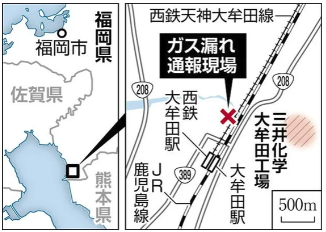
The leak occurred during plant operations. Detectors triggered an alarm at 5:40 p.m., leading to an emergency shutdown. The leak was fully contained by 7:50 p.m. The cause remains under investigation by the Omuta police.
The leak also disrupted the “Omuta Daijayama Festival”, a popular summer event that started at 5 p.m. near the site. The festival was canceled midway due to safety concerns.
Given these unpredictable dynamics, access to accurate, real-time market intelligence has become essential. PUdaily’s Pricing Intelligence Service and dedicated Asia-Pacific TDI reports help industry participants anticipate shifts, benchmark prices, and make better-informed procurement and sales decisions amid the uncertainty.
July 28, 2025
Adnoc Update
Adnoc contests EU findings as €12b Covestro deal faces deeper scrutiny
EU investigates foreign subsidies of Adnoc’s Covestro deal; decision due by December 2
Last updated: July 28, 2025 | 14:45
Justin Varghese, Your Money Editor
2 MIN READ
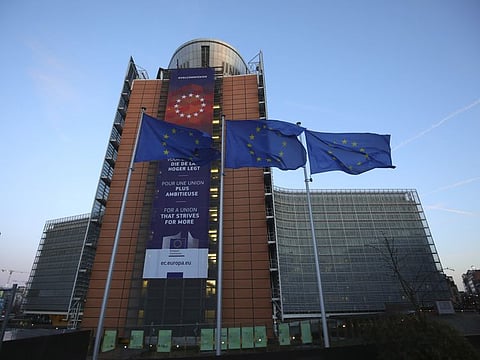
European Union flags flap in the wind outside EU headquarters in Brussels, Friday, February 21, 2020AP
Dubai: The European Commission launched an in-depth investigation into Abu Dhabi National Oil Company’s (Adnoc) proposed €12 billion (Dh47.8 billion) acquisition of German chemicals firm Covestro.
The probe is part of a newly enforced EU regulation aimed at addressing the competitive impact of foreign state subsidies.
In its official statement, the European Commission said it had “preliminary concerns that foreign subsidies granted by the United Arab Emirates (UAE) could distort the EU internal market.”
Among the subsidies under scrutiny are an “unlimited guarantee” from the UAE government and a potential capital injection from Adnoc into Covestro—both of which may have given Adnoc an edge over any competing bidders.
The Commission argues these benefits might have allowed Adnoc to offer a purchase price and terms that wouldn’t typically be viable for unsubsidised investors, raising fears of unfair competition within the bloc.
ADNOC contests EU findings
In a statement, ADNOC said it “respects the European Commission’s process” but disagrees with the regulator’s initial concerns over its proposed acquisition. The company added it is confident the deal will ultimately be cleared.
“ADNOC has a proven track record in value creation and driving opportunities for growth built on long-term and mutually beneficial partnerships,” the statement said.
”While we respect the European Commission’s process, we contest the preliminary findings of the Commission and are confident that when the facts are fully examined, there will be no reason to hold up clearance of a transaction that will add great value for all stakeholders and stimulate European industry.”
Gulf investments in Europe
While the deal had earlier passed the EU’s traditional merger control process, the new investigation under the Foreign Subsidies Regulation (FSR) reflects rising European caution toward major acquisitions by state-backed companies from the Gulf and beyond.
If the Commission concludes that the deal breaches the regulation, it could force Adnoc to offer significant concessions—or even block the acquisition entirely. A final decision is expected by December 2, 2025.
This isn’t the first time EU regulators have taken issue with UAE state-linked funding. In 2023, Emirates Telecommunications (e&) had to alter terms of its €2.2 billion deal for PPF Telecom assets by dropping an unlimited state guarantee to receive EU approval.
Why this matters now
The EU’s Foreign Subsidies Regulation came into force just over a year ago and has since been used mainly to investigate Chinese investments in rail and clean energy sectors.
For UAE-based firms eyeing strategic assets in Europe, the Covestro case could serve as a landmark moment, shaping how future cross-border deals are structured and scrutinised.
Adnoc, as the UAE’s largest oil producer, has been seeking to diversify globally through downstream and specialty chemicals investments, with the Covestro deal seen as a strategic entry into high-performance polymers used in everything from smartphones to electric vehicles.
If approved, the acquisition would hand Adnoc control of Covestro’s operations across Europe and beyond, with over 18,000 employees worldwide and major customers in auto, electronics, and construction sectors.
July 24, 2025
Urethane Highlights from Dow’s Earnings Call
Dow Inc. (DOW) Q2 2025 Earnings Call Transcript
Jul. 24, 2025 10:33 AM ETDow Inc. (DOW) StockDOW
Dow Inc. (NYSE:DOW) Q2 2025 Earnings Conference Call July 24, 2025 8:00 AM ET
Company Participants
Andrew Riker – Vice President of Investor Relations
James R. Fitterling – Chairman & CEO
Jeffrey L. Tate – Chief Financial Officer
Karen S. Carter – Chief Operating Officer
James R. Fitterling
Thank you, Andrew. Beginning on Slide 3. The prolonged down cycle our industry has been experiencing was further amplified this quarter by heightened trade and geopolitical uncertainties, which have strained profitability across our industry. In this environment, it is critical that we successfully navigate the near-term, protect Dow’s financial flexibility and advance our near-term growth initiatives to support higher earnings as the industry recovers.
Additionally, growing signs of oversupply from newer market entrants being exported to other regions and anticompetitive economics requires an aggressive industry response and regulatory action to restore competitive dynamics. Given these challenges, we remain focused on driving operational discipline in everything we do.
In the second quarter, net sales were $10.1 billion, down 7% versus the year ago period, reflecting declines in all operating segments. Sequentially, net sales decreased 3% as seasonally higher demand in Performance Materials & Coatings was more than offset by declines in our other operating segments.
EBITDA was $703 million, which is also lower than the same period last year. Following a significant analysis and consideration, we announced this morning that Dow would implement a 50% dividend reduction effective in the third quarter of this year. This decision was not taken lightly as we understand the importance our shareholders place on the dividend and we carefully considered this on top of the financial impacts that we model. The dividend is a key element of our investment thesis, and that is not changing. We remain committed to targeting a competitive dividend across the economic cycle. However, given the current lower for longer earnings environment and the lack of a clear line of sight to a recovery for our industry, this is the most prudent way to maintain financial flexibility and maximize long-term value for our shareholders.
Also in the second quarter, we progressed several near-term cash support levers. The close of our strategic infrastructure asset partnership named Diamond Infrastructure Solutions delivered $2.4 billion of cash for Dow in the second quarter and has already captured growth opportunities with new customers. We also expect to receive cash proceeds from the NOVA judgment this year,
and consistent with our best owner mindset, we recently announced 2 noncore product line divestitures totaling approximately $250 million at attractive EBITDA multiples of around 10x. These divestitures are additive to our announcement that we will shut down 3 upstream assets in Europe to address structural challenges in that region.
We are confident that these actions paired with the completion of our near-term incremental growth projects will support long-term value creation. Additionally, we are accelerating progress on our $1 billion in cost savings actions, where we now expect to deliver approximately $400 million this year. We are committed to continuing Dow’s track record of operational and financial discipline, executing near-term actions to maximize shareholder value and navigating the current environment all to better position the company for profitable growth and higher shareholder returns as the industry recovers.
Karen S. Carter
Thank you, Jim. In the second quarter, our teams continued to focus on price management to restore margins as we prioritize volume in attractive end markets. As we have done for the past several quarters, we are closely monitoring the macros across the markets we serve, pulling all levers to help mitigate the current lower for longer earnings environment as well as the impact brought on by recent trade and tariff uncertainties.
Next, turning to our Industrial Intermediates & Infrastructure segment on Slide 5. Net sales declined both year-over-year and sequentially, as market conditions across the segment remains challenging, particularly in our polyurethanes and Construction Chemicals business, which has high exposure to durables and building and construction end markets. Volume declined 2% compared to the year ago period. Lower polyurethanes and construction chemicals volumes and EMEAI where we continue to see increasing import activity from competitors in China were partially offset by higher industrial solutions volumes across data center cooling and gas treating applications.
Sequentially, a decline in demand for deicing fluid following the winter month was only partially offset by a modest seasonal uplift in building and construction applications, which was lower than expected in a typical year. Operating EBIT for the segment decreased versus the year ago period as well as sequentially, primarily driven by lower prices and higher planned maintenance activity. This included activities related to the start-up of our new alkoxylation unit in Seadrift, Texas.
The new capacity representing the completion of one of our near-term growth investments will support earnings growth beginning in the third quarter and beyond. We also recently finalized a long-term agreement with a major consumer brand owner to supply millions of pounds of low-carbon solutions, demonstrating our ability to capitalize on innovation, that are meeting the needs of our customers and their sustainability commitments to consumers.
Jeffrey L. Tate
In the Industrial Intermediates & Infrastructure segment, we expect third quarter EBITDA to be approximately $85 million higher than the second quarter. This expected earnings uplift reflects our expectations for higher volumes from the start-up of our new alkoxylation facility.
In Polyurethanes, we anticipate higher volumes in both MDI and polyols although margins remained under pressure sequentially, driven by fierce price competition with Chinese exports into both Europe and Latin America. Following the heavy turnaround schedule in second quarter, II&I would have a sizable tailwind in the third quarter, in addition to the ramp and cost reductions. This segment will also experience headwinds from lower equity earnings at Sadara.
In May, we finalized our strategic partnership with Macquarie Asset Management for the sale of a minority equity stake in select U.S. Gulf Coast infrastructure assets, receiving approximately $2.4 billion in initial cash proceeds from the transaction. The new entity, Diamond Infrastructure Solutions recently announced the deal with a Climate Tech company named Again to build a first-of-its-kind plant to recycle waste CO2 emissions from an on-site tenant in our Texas City Industrial Park. This agreement is one of many growth opportunities, the Diamond Infrastructure Solutions business model is set up to enable with both new and existing customers.
And as a reminder, Macquarie has the option to increase their stake to 49% within 6 months of closing, which would occur no later than November. This would increase total cash proceeds from this new partnership to approximately $3 billion per Dow this year.
Looking into the second half of the year, we also expect to receive cash proceeds of approximately $1.2 billion from the resolution for damages related to the jointly owned ethylene assets with NOVA Chemicals. So in total, we expect these actions to provide more than $6 billion in near-term cash support. And building on this, Karen will now cover the work we’re doing to drive execution, ensure strong operational performance and enable higher near-term returns.
Patrick Duffy Fischer
Two questions. One, Jim, can you just talk about on the anticompetitive stuff which product chains are being most impacted there? And then where has legal actions been taken already? And where should we expect it going forward? And then could you just clarify how much of the July price increase is actually baked into your Q3 guide?
James R. Fitterling
Yes. I’ll take the first part, and I’ll ask Karen to take the second part. Polyurethanes, you’ve seen a lot of that activity, Duffy. And of course, there’s a lot of overcapacity that’s been built there. And so there’s been a lot of move there. And it’s a low demand environment. So that’s created that kind of pressure. Although it’s not a particular area for us, you see it in chlorine, aromatics. If you spots like that, you see that same kind of an impact.
We’re starting to see a bit of it in polyethylene. So we’ve seen Brazil take action, so Latin America. We’re starting to see a little bit of that potentially in Europe, although I don’t think it’s been as prevalent in Europe on the plastic side. We’re eyes wide open in all areas for that. And then I think you — obviously, you’ve seen it in electric vehicles in Europe. That was one of the early cases where there was a lot of pressure in Europe on EVs. So it’s not just a chemical industry, but in the chemical industry, there’s a significant activity.
Karen, do you want to talk about pricing and how much is in that testament?
Karen S. Carter
So all of our July price increase that we have on the table is incorporated into our results. And again, we fully expect to achieve that. We are pushing to achieve that because, again, the current integrated margins are not only low, but they’re unsustainable. So we are fully baking in integrated margin expansion as we get into third quarter.
John Ezekiel E. Roberts
Do you think the duration of the overcapacity in polyethylene, siloxanes and polyurethanes are all in sync? Or do you see one or another of these chains actually improving before the others?
James R. Fitterling
That’s a good question, John. I think isocyanate is in relatively decent shape within the polyurethane portfolio PO will take longer. We’ve got probably the biggest adjustment in PO coming end of the year with a reduction of a train here in the U.S. Gulf Coast.
the demand that’s out there and the size of the market will recover quicker.
July 23, 2025
More Review for ADNOC & Covestro Deal
EU antitrust regulators resume foreign aid probe into ADNOC’s Covestro deal
By Reuters
July 3, 20251:24 PM EDTUpdated July 3, 2025

- Companies
Covestro AGBRUSSELS, July 3 (Reuters) – EU antitrust regulators have resumed scrutiny of Abu Dhabi state oil giant ADNOC’s 14.7-billion euro ($17.3 billion) acquisition of German chemicals company Covestro (1COVG.DE)
,after the companies provided the information they requested, according to an update on the European Commission website.
The EU competition enforcer, which had temporarily halted its review on May 28, set a new deadline of July 28 for its decision.
The EU’s Foreign Subsidies Regulation takes aim at unfair foreign aid for companies which may have to provide concessions to offset the state support in return for clearance of their deals.
ADNOC had in May secured EU approval for the acquisition under EU merger rules.
($1 = 0.8511 euros)
July 16, 2025
Covestro FM in Europe
Covestro Declares Force Majeure at Dormagen Site Following Transformer Fire
PUdaily | Updated: July 16, 2025
Following an electrical fire at an external transformer station on 12 July, Covestro has declared force majeure on its production of caustic soda, chlorine, and hydrochloric acid (HCl) at its Dormagen site in Germany. The plant has an annual capacity of 448,000 tonnes for caustic soda and 480,000 tonnes for chlorine. Covestro noted in a customer statement that the disruption cannot be fully offset by supply from other sites, and significant delays and interruptions should be expected. The duration of the force majeure remains uncertain. PUdaily will continue to monitor the situation and provide timely updates.
This also impacts downstream TDI for now.
 Everchem Updates Archive
  Sign Up for Email Updates