
Company News
November 23, 2020
Lyondell Costs to Rise
Tariffs, delays, construction inflate LyondellBasell PO/TBA costs by 30%
Author: Al Greenwood
2020/10/30
HOUSTON (ICIS)–Because of tariffs, delays and construction, LyondellBasell expects that costs will rise by at least 30% for its new propylene oxide/tertiary butyl alcohol (PO/TBA) project, executives said on Friday.
The $2.4bn PO/TBA project began in August 2018, and it is made up of two parts.
The PO/TBA plant is being built at LyondellBasell’s complex in Channelview, Texas. Once finished, the plant will produce 2.2bn lb/year (1m tonnes/year) of TBA and 1bn lb/year of PO.
The second part – about $640m of the $2.4bn project – will expand the company’s complex in Bayport, Texas. The new capacity will convert TBA into mainly ethyl tertiary butyl ether (ETBE), although it will have the flexibility to produce methyl tertiary butyl ether (MTBE) as well.
Back in March, LyondellBasell said it was slowing down construction at the site to preserve capital and to limit the spread of the coronavirus.
The delay pushed the completion date for the project by about a year to the fourth quarter of 2022, said Michael McMurray, chief financial officer. He made his comments during an earnings conference call.
“Higher costs arising from the delayed project execution, more extensive civil construction and unexpected tariffs on materials are expected to add at least 30% to our original cost estimate of $2.4bn,” he said.
The delay does have a positive side. It could help with the timing of the start-up of the project, so it corresponds with a stronger economy, McMurray said.
Nonetheless, the combined effects of the delay, the tariffs and the construction will lower the returns of the project, said Bob Patel, CEO. He was also on the conference call.
“Certainly returns will be lower. We think probably in the 10% range on returns for PO/TBA,” he said. Still, “I think in the end, we are going to net out the delay of the project”.
The delay gave LyondellBasell a cushion on cash flow in 2020, Patel said. Like McMurray, he noted that the project will start operations when the market is further along in its recovery.
“In the end, balancing near-term needs with long-term market demand, I think this was the right call to make,” Patel said.
November 23, 2020
Mr. Stanley F. Pauley
Press Release: November 23, 2020 Richmond, VA.

It is with great sadness that Carpenter Co. announces that
Stanley F. Pauley has passed away at the age of 93. Until
several weeks ago, he had remained engaged in the daily
activities of the company he had led for more than 40 years.
“The term visionary is often over used, but in the case of Stan,
it would be a completely accurate description” said Brad Beauchamp President & C.E.O. “He was one of the true giants in our industry who saw polyurethanes grow from its
infancy into the premier material choice for comfort and insulation applications.”
Stan was hired by E. Rhodes Carpenter in 1954 and moved from Canada to Richmond, Virginia. At that time, Carpenter was making seating cushions out of latex foam. In the early 1960s, with Mr. Carpenter’s blessing, Stan and a small group of executives made the decision to switch to manufacturing urethane foam, which at that time involved making a prepolymer and molding foam. Shortly thereafter, Union Carbide helped Carpenter implement the one-shot process which forms the basis of how most urethane foams are made today. Throughout the ensuing decades, the company embarked on an expansion strategy that initially focused on North America but eventually included acquisitions in Europe. The expansions were largely directed by Mr. Pauley. In addition to increasing the flexible urethane foam production footprint, in 1970 Carpenter Co. broke with convention and opened a greenfield site for the production of polyether polyols. Upon the death of Mr. Carpenter in the early 1980’s, Stan became Chairman & CEO and the majority shareholder. The company continues to be owned by the Pauley family.
Today Carpenter is one of the largest manufacturers of flexible foam in the world and is one of the largest producers of polyether polyols in North America, which not only supplies Carpenter but is a major raw material supplier to other segments of the urethane industry. Carpenter has 17 foam pouring plants as well as 25 other locations and over 4,200 employees.
It is also a leader in rebonded foam for carpet underlay as well as Chemical Systems, Tire Fill, Polyester Fiber and Expanded Polystyrene. In addition to his numerous industry recognitions, he supported a variety of educational and philanthropic institutions including the VCU Health Pauley Heart Center, the VCU School of Engineering, Hampden-Sydney College, the University of Manitoba and the Virginia Museum of Fine Arts.
“It was his vision that Carpenter Co. should remain an independent privately held company because that was the best way to ensure clear decision making and strategic focus. He believed in investing in equipment and training. With his passing, it will fall upon the rest of us to ensure
that the company remains true to that vision. We are fortunate that he had the foresight to structure the company in a way that will help keep that a reality.”
November 23, 2020
Mr. Stanley F. Pauley
Press Release: November 23, 2020 Richmond, VA.
It is with great sadness that Carpenter Co. announces that
Stanley F. Pauley has passed away at the age of 93. Until
several weeks ago, he had remained engaged in the daily
activities of the company he had led for more than 40 years.
“The term visionary is often over used, but in the case of Stan,
it would be a completely accurate description” said Brad Beauchamp President & C.E.O. “He was one of the true giants in our industry who saw polyurethanes grow from its
infancy into the premier material choice for comfort and insulation applications.”
Stan was hired by E. Rhodes Carpenter in 1954 and moved from Canada to Richmond, Virginia. At that time, Carpenter was making seating cushions out of latex foam. In the early 1960s, with Mr. Carpenter’s blessing, Stan and a small group of executives made the decision to switch to manufacturing urethane foam, which at that time involved making a prepolymer and molding foam. Shortly thereafter, Union Carbide helped Carpenter implement the one-shot process which forms the basis of how most urethane foams are made today. Throughout the ensuing decades, the company embarked on an expansion strategy that initially focused on North America but eventually included acquisitions in Europe. The expansions were largely directed by Mr. Pauley. In addition to increasing the flexible urethane foam production footprint, in 1970 Carpenter Co. broke with convention and opened a greenfield site for the production of polyether polyols. Upon the death of Mr. Carpenter in the early 1980’s, Stan became Chairman & CEO and the majority shareholder. The company continues to be owned by the Pauley family.
Today Carpenter is one of the largest manufacturers of flexible foam in the world and is one of the largest producers of polyether polyols in North America, which not only supplies Carpenter but is a major raw material supplier to other segments of the urethane industry. Carpenter has 17 foam pouring plants as well as 25 other locations and over 4,200 employees.
It is also a leader in rebonded foam for carpet underlay as well as Chemical Systems, Tire Fill, Polyester Fiber and Expanded Polystyrene. In addition to his numerous industry recognitions, he supported a variety of educational and philanthropic institutions including the VCU Health Pauley Heart Center, the VCU School of Engineering, Hampden-Sydney College, the University of Manitoba and the Virginia Museum of Fine Arts.
“It was his vision that Carpenter Co. should remain an independent privately held company because that was the best way to ensure clear decision making and strategic focus. He believed in investing in equipment and training. With his passing, it will fall upon the rest of us to ensure
that the company remains true to that vision. We are fortunate that he had the foresight to structure the company in a way that will help keep that a reality.”
November 16, 2020
Grenfell Investigations
Grenfell inquiry: Ex-employee describes ‘dishonest’ acts at firm that made flammable insulation used on tower
The ex-Celotex assistant product manager told the inquiry the firm had been dishonest when testing its Rs5000 insulation product.
By Aisha Zahid, news reporter
Monday 16 November 2020 20:05, UK
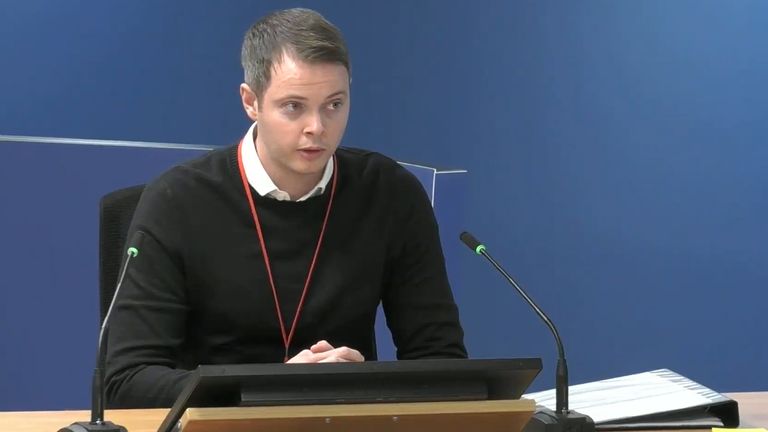
A former employee of the company that produced flammable insulation used on Grenfell Tower says he complied with “completely unethical” acts, the inquiry into the June 2017 disaster has heard.
Jonathan Roper, the ex-assistant product manager at Celotex, told proceedings the firm had been “dishonest” by “overengineering” a cladding fire safety test to enable its Rs5000 insulation product to pass.
After an initial test failure in January 2014, a second system passed in May 2014 – this was used to incorrectly market the combustible rigid foam boards as safe for use on high-rise buildings, the inquiry heard.
Celotex added a 6mm fire-resisting magnesium oxide board to a cladding test rig consisting of 12mm fibre cement panels for the second test, the hearing was told.
The inquiry heard 8mm fibre cement panels were added to “conceal” the presence of the magnesium oxide, making the whole system almost flush – but for the 2mm difference.
Mr Roper agreed with the inquiry’s chief lawyer Richard Millett QC that using “a thinner layer was to make it less noticeable there was something else behind it”, which would help “see off any prospect of anyone asking questions”, about how it had been made up.
Mr Roper answered “yes it did”, when Mr Millett had asked him the question: “Did that not strike you at the time as dishonest?”
Mr Roper also said: “I went along with a lot of actions at Celotex that, looking back on reflection, were completely unethical and that I probably didn’t potentially consider the impact of at the time.
“I was 22 or 23, first job, I thought this was standard practice albeit it did sit very uncomfortably with me.”

Mr Roper added that his superiors ordered the mention of magnesium oxide to be removed from any marketing, which he agreed was “misleading and intended to mislead”.
Mr Millett also asked: “Did you realise at the time that if this was how the test was to be described to the market it would be a fraud on the market?”
Mr Roper responded by saying: “Yes I did. I felt incredibly uncomfortable with it. I felt incredibly uncomfortable with what I was asked to do.”
He added that he could not voice his concerns to anyone else in the firm at the time.
Mr Roper also told the inquiry that the motivation for getting the Rs5000 product to market was to compete with a rival firm.
Celotex has released a statement, saying: “In the course of investigations carried out by Celotex after the Grenfell Tower fire, certain issues emerged concerning the testing, certification and marketing of Celotex’s products which were previously unknown to Celotex’s current management.”
It added: “Once established, they were promptly and publicly announced by notices on Celotex’s website and reported to the relevant testing and certification bodies, the Ministry of Housing, Communities and Local Government, Trading Standards, the Metropolitan Police and the Inquiry.
“These matters involved unacceptable conduct on the part of a number of employees. They should not have happened and Celotex has taken concerted steps to ensure that no such issues reoccur.
“Celotex is committed to cooperating fully with the Grenfell Tower Inquiry and related investigations, continuing to support the UK Government’s ongoing response to the tragedy.”
The company, part of the French multinational Saint-Gobain group, maintains that it promoted the use of Rs5000 on buildings higher than 18 metres only on a “rainscreen cladding system with the specific components”, used when it passed the fire safety test.
In its opening statement for module two of the inquiry, the firm said: “In the course of investigations carried out by Celotex after the Grenfell Tower fire, certain issues emerged concerning the testing, certification and marketing of Celotex’s products.
“These matters involved unacceptable conduct on the part of a number of employees.”
Module two of the inquiry will scrutinise the production, testing and sale of materials used in the tower’s refurbishment which saw 72 people killed in the 14 June 2017 fire.
November 16, 2020
Grenfell Investigations
Grenfell inquiry: Ex-employee describes ‘dishonest’ acts at firm that made flammable insulation used on tower
The ex-Celotex assistant product manager told the inquiry the firm had been dishonest when testing its Rs5000 insulation product.
By Aisha Zahid, news reporter
Monday 16 November 2020 20:05, UK
A former employee of the company that produced flammable insulation used on Grenfell Tower says he complied with “completely unethical” acts, the inquiry into the June 2017 disaster has heard.
Jonathan Roper, the ex-assistant product manager at Celotex, told proceedings the firm had been “dishonest” by “overengineering” a cladding fire safety test to enable its Rs5000 insulation product to pass.
After an initial test failure in January 2014, a second system passed in May 2014 – this was used to incorrectly market the combustible rigid foam boards as safe for use on high-rise buildings, the inquiry heard.
Celotex added a 6mm fire-resisting magnesium oxide board to a cladding test rig consisting of 12mm fibre cement panels for the second test, the hearing was told.
The inquiry heard 8mm fibre cement panels were added to “conceal” the presence of the magnesium oxide, making the whole system almost flush – but for the 2mm difference.
Mr Roper agreed with the inquiry’s chief lawyer Richard Millett QC that using “a thinner layer was to make it less noticeable there was something else behind it”, which would help “see off any prospect of anyone asking questions”, about how it had been made up.
Mr Roper answered “yes it did”, when Mr Millett had asked him the question: “Did that not strike you at the time as dishonest?”
Mr Roper also said: “I went along with a lot of actions at Celotex that, looking back on reflection, were completely unethical and that I probably didn’t potentially consider the impact of at the time.
“I was 22 or 23, first job, I thought this was standard practice albeit it did sit very uncomfortably with me.”
Mr Roper added that his superiors ordered the mention of magnesium oxide to be removed from any marketing, which he agreed was “misleading and intended to mislead”.
Mr Millett also asked: “Did you realise at the time that if this was how the test was to be described to the market it would be a fraud on the market?”
Mr Roper responded by saying: “Yes I did. I felt incredibly uncomfortable with it. I felt incredibly uncomfortable with what I was asked to do.”
He added that he could not voice his concerns to anyone else in the firm at the time.
Mr Roper also told the inquiry that the motivation for getting the Rs5000 product to market was to compete with a rival firm.
Celotex has released a statement, saying: “In the course of investigations carried out by Celotex after the Grenfell Tower fire, certain issues emerged concerning the testing, certification and marketing of Celotex’s products which were previously unknown to Celotex’s current management.”
It added: “Once established, they were promptly and publicly announced by notices on Celotex’s website and reported to the relevant testing and certification bodies, the Ministry of Housing, Communities and Local Government, Trading Standards, the Metropolitan Police and the Inquiry.
“These matters involved unacceptable conduct on the part of a number of employees. They should not have happened and Celotex has taken concerted steps to ensure that no such issues reoccur.
“Celotex is committed to cooperating fully with the Grenfell Tower Inquiry and related investigations, continuing to support the UK Government’s ongoing response to the tragedy.”
The company, part of the French multinational Saint-Gobain group, maintains that it promoted the use of Rs5000 on buildings higher than 18 metres only on a “rainscreen cladding system with the specific components”, used when it passed the fire safety test.
In its opening statement for module two of the inquiry, the firm said: “In the course of investigations carried out by Celotex after the Grenfell Tower fire, certain issues emerged concerning the testing, certification and marketing of Celotex’s products.
“These matters involved unacceptable conduct on the part of a number of employees.”
Module two of the inquiry will scrutinise the production, testing and sale of materials used in the tower’s refurbishment which saw 72 people killed in the 14 June 2017 fire.
 Everchem Updates Archive
  Sign Up for Email Updates