
Current Affairs
March 31, 2022
BASF in Europe
BASF could stop production if natural gas supplies fall to half its needs – Reuters
Mar. 30, 2022 2:19 PM ETBASF SE (BASFY)BFFAFBy: Carl Surran, SA News Editor3 Comments
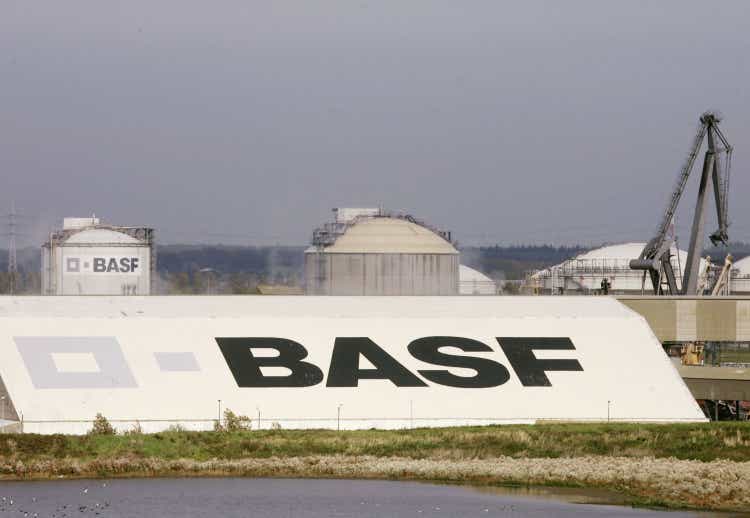
BASF (BASFY -2.9%) warns of potential damage to its operations from Europe’s power crunch, saying it would need to stop production if natural gas supplies fall to less than half its needs, Reuters reports.
There is no substitute for natural gas as a raw material or as an energy source, BASF says, and gas shortages would leave it without not enough energy for the chemical production process, and lack of a critical raw material for the manufacture of products.
In Europe, the company says it uses 60% of the gas it buys to generate energy needed in production and 40% as a raw material to produce important basic chemicals and a large number of products for almost all industrial sectors.
BASF has said it plans to increase capex spending every year until 2024, but high energy prices are weighing on its performance, Ellsworth Research writes in an analysis posted recently on Seeking Alpha.
March 31, 2022
Looming Dock Strike
22,000 Union Workers At 29 West Coast Ports May Strike
by Tyler DurdenThursday, Mar 31, 2022 – 10:45 AM
By Dees Stribling of Bisnow National
The international supply chain crisis that has impacted U.S. logistics firms, retailers and consumers could intensify this summer.
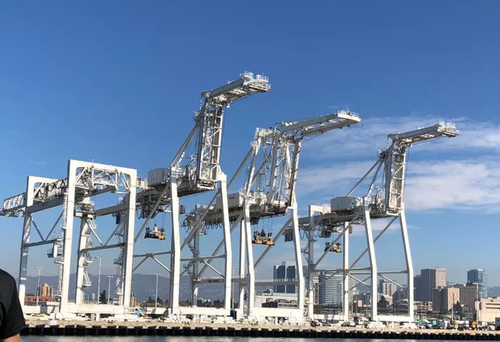
West Coast union dockworkers may strike if they don’t come to an agreement to replace their existing contract with marine terminals. The contract is set to expire at the end of June.
Major retail chains have already ordered extra goods from Asia as insurance against a breakdown in contract talks, keeping the goods at newly developed storage yards near the twin California ports of Long Beach and Los Angeles. Such lots allow retailers to move containers more quickly, preventing them from being delayed under piles of cargo at congested ports.
Walmart alone has room for 4,000 shipping containers at the ports’ overflow yards, Pacific Terminal Services Vice President of Commercial Operations Sepehr Matinifar told The New York Times.
Space constraints in the area led to the rise of the new storage yards. By Q2 2021, industrial vacancy near the ports of Los Angeles and Long Beach was below 1%, according to CBRE.
Even with beefed-up orders kept in storage yards, a slowdown or strike by West Coast dockworkers would compound the pandemic-induced supply chain woes that have seen record backlogs of container ships off the ports of Los Angeles and Long Beach waiting to be unloaded.
The International Longshore and Warehouse Union, which represents nearly 22,000 workers at 29 ports along the West Coast, recently put together its contract negotiating team. Nearly three-quarters of those workers are employed at the ports of Long Beach and Los Angeles, the major nexus for goods shipped from Asia to North America.
In 2014, the last time the union and shipping companies negotiated a contract, a labor slowdown brought activity at Pacific ports nearly to a standstill.
https://www.zerohedge.com/economics/22000-union-workers-29-west-coast-ports-may-strike
March 31, 2022
Looming Dock Strike
22,000 Union Workers At 29 West Coast Ports May Strike
by Tyler DurdenThursday, Mar 31, 2022 – 10:45 AM
By Dees Stribling of Bisnow National
The international supply chain crisis that has impacted U.S. logistics firms, retailers and consumers could intensify this summer.
West Coast union dockworkers may strike if they don’t come to an agreement to replace their existing contract with marine terminals. The contract is set to expire at the end of June.
Major retail chains have already ordered extra goods from Asia as insurance against a breakdown in contract talks, keeping the goods at newly developed storage yards near the twin California ports of Long Beach and Los Angeles. Such lots allow retailers to move containers more quickly, preventing them from being delayed under piles of cargo at congested ports.
Walmart alone has room for 4,000 shipping containers at the ports’ overflow yards, Pacific Terminal Services Vice President of Commercial Operations Sepehr Matinifar told The New York Times.
Space constraints in the area led to the rise of the new storage yards. By Q2 2021, industrial vacancy near the ports of Los Angeles and Long Beach was below 1%, according to CBRE.
Even with beefed-up orders kept in storage yards, a slowdown or strike by West Coast dockworkers would compound the pandemic-induced supply chain woes that have seen record backlogs of container ships off the ports of Los Angeles and Long Beach waiting to be unloaded.
The International Longshore and Warehouse Union, which represents nearly 22,000 workers at 29 ports along the West Coast, recently put together its contract negotiating team. Nearly three-quarters of those workers are employed at the ports of Long Beach and Los Angeles, the major nexus for goods shipped from Asia to North America.
In 2014, the last time the union and shipping companies negotiated a contract, a labor slowdown brought activity at Pacific ports nearly to a standstill.
https://www.zerohedge.com/economics/22000-union-workers-29-west-coast-ports-may-strike
March 24, 2022
Economic Concerns
Just three years after 2019’s trucking bloodbath, another one is on the way…
Craig Fuller, CEO at FreightWaves Follow on Twitter Thursday, March 24, 2022 4 minutes read

Listen to this article 0:00 / 5:40 BeyondWords
After two years of COVID-induced havoc in global freight markets, volatility has started to abate. FreightWaves’ view of the market has become clearer, and the picture isn’t pretty. We think another sharp, painful downturn in the U.S. truckload market is imminent, and it could be as bad as 2019.
March has been unusually soft in the truckload freight market, according to the SONAR Outbound Tender Volume Index (OTVI). Because this index measures actual truckload tenders in the contract market, it provides a very reliable indicator of market direction.
March is typically a strong month for trucking, as shippers start to stock their shelves in preparation for summer. And late March normally gets a reliable end-of-quarter boost in volumes as shippers pump sales and reduce inventories. This year, we are not seeing that surge. In fact, March volumes are softer than at any point in 2021 (other than holidays).

The OTVI (in blue) is currently sitting at 13,571. It was 15,531 at the end of January and 15,859 a year ago. The orange line is 2021.
What is causing soft truckload volumes?
More than likely, the lower volumes are due to a major consumer slowdown. Inflation that began in 2020, combined with the surge in fuel prices related to increased inflation and the Russian invasion of Ukraine, have made consumers move to the sidelines. In addition to monitoring SONAR data, FreightWaves analysts also conduct channel checks through our network. Market participants are confirming what FreightWaves analysts are seeing in the data. Spot rates are falling fast and volumes are dropping.
What does this mean for the rest of 2022?
There are many reasons to believe that the freight market slowdown will continue, and that an oversupply of trucking capacity – particularly in the spot market – will pull rates even lower.
Consumer spending is shifting away from physical goods
Freight is all about the movement of physical goods. Travel and entertainment do not drive (much) freight, so any dollars spent on “experiences” means money isn’t spent on cargo.
After two years of massive consumption of physical goods, consumers are pausing their spending. The COVID surge is largely behind us and people are starting to shift their spending away from physical goods to travel and entertainment, which will take a much larger percentage of disposable spending than we have seen over the past two years.
The trend toward intensive goods spending has taken longer than many initially expected to reverse itself, but consumer spending data confirms that a material shift is taking place. February retail sales were nearly flat at 0.3%, missing expectations.
Inflation and high fuel prices will keep consumers on the sidelines
If traffic is any indication, consumers are on the move right now and this requires fuel. Except for the 3% of the U.S. population that have electric cars, any money spent on filling up the gas tank will mean less money going toward discretionary spending.
Everything is more expensive than it used to be and consumers are starting to be more cautious about the future. High fuel prices and runaway inflation sap consumer confidence and will be a drag on discretionary purchases.
Inventories
Over the past two years, shippers were short of inventory. In an attempt to prevent stock outages, they ordered more than they needed and now are faced with a hangover from ordering too much. Key transshipment infrastructure like ports, warehouses, transloading facilities, and intermodal ramps were clogged, slowing freight velocity, reducing sales, and increasing inventory levels. FreightWaves’ view is that shippers will compensate by slowing their purchasing and working off inventory when opportunities with acceptable margins arise.

Truckload spot rates are falling – fast
Trucking spot rates are under massive pressure, caused by too many trucks and not enough freight. Truckstop.com’s truckload spot rates peaked at $3.83 per mile in January and are now down to $3.42 per mile. Spot rates will fall further and could hit $2.50 per mile by mid-year.
A rash of trucking bankruptcies are on the way and it will be Bloodbath 2.0
Trucking has enjoyed the largest number of new entrants in its history over the past two years. New fleet registrations were up to 20,166 last month alone. This is unprecedented. The last peak was in August 2019; there were 9,511 new trucking fleets and that was in the middle of one of the weakest freight markets in history. New trucking registrations tend to lag market conditions, so we can expect new fleets to continue to enter the market, even after things soften. This will make the downturn that much worse.

Many of the operators are unseasoned and inexperienced. They are unlikely to have ever seen a market downturn, much less run a business in the middle of one. They also bought their trucks and hired their drivers at the top of the market.
These same drivers that were chasing high spot volumes will find fewer and fewer opportunities in the market. They will either leave the trucking market or move to trucking companies that have more consistent freight, leaving those trucks unseated.
With falling spot rates, declining volumes, surging fuel prices and inflation across the board, it will get ugly, very quickly for many of these operators. Back in 2019, FreightWaves reporters wrote about trucking bankruptcies almost every day. I expect this will become reality for us once again.
March 24, 2022
Economic Concerns
Just three years after 2019’s trucking bloodbath, another one is on the way…
Craig Fuller, CEO at FreightWaves Follow on Twitter Thursday, March 24, 2022 4 minutes read
Listen to this article 0:00 / 5:40 BeyondWords
After two years of COVID-induced havoc in global freight markets, volatility has started to abate. FreightWaves’ view of the market has become clearer, and the picture isn’t pretty. We think another sharp, painful downturn in the U.S. truckload market is imminent, and it could be as bad as 2019.
March has been unusually soft in the truckload freight market, according to the SONAR Outbound Tender Volume Index (OTVI). Because this index measures actual truckload tenders in the contract market, it provides a very reliable indicator of market direction.
March is typically a strong month for trucking, as shippers start to stock their shelves in preparation for summer. And late March normally gets a reliable end-of-quarter boost in volumes as shippers pump sales and reduce inventories. This year, we are not seeing that surge. In fact, March volumes are softer than at any point in 2021 (other than holidays).
The OTVI (in blue) is currently sitting at 13,571. It was 15,531 at the end of January and 15,859 a year ago. The orange line is 2021.
What is causing soft truckload volumes?
More than likely, the lower volumes are due to a major consumer slowdown. Inflation that began in 2020, combined with the surge in fuel prices related to increased inflation and the Russian invasion of Ukraine, have made consumers move to the sidelines. In addition to monitoring SONAR data, FreightWaves analysts also conduct channel checks through our network. Market participants are confirming what FreightWaves analysts are seeing in the data. Spot rates are falling fast and volumes are dropping.
What does this mean for the rest of 2022?
There are many reasons to believe that the freight market slowdown will continue, and that an oversupply of trucking capacity – particularly in the spot market – will pull rates even lower.
Consumer spending is shifting away from physical goods
Freight is all about the movement of physical goods. Travel and entertainment do not drive (much) freight, so any dollars spent on “experiences” means money isn’t spent on cargo.
After two years of massive consumption of physical goods, consumers are pausing their spending. The COVID surge is largely behind us and people are starting to shift their spending away from physical goods to travel and entertainment, which will take a much larger percentage of disposable spending than we have seen over the past two years.
The trend toward intensive goods spending has taken longer than many initially expected to reverse itself, but consumer spending data confirms that a material shift is taking place. February retail sales were nearly flat at 0.3%, missing expectations.
Inflation and high fuel prices will keep consumers on the sidelines
If traffic is any indication, consumers are on the move right now and this requires fuel. Except for the 3% of the U.S. population that have electric cars, any money spent on filling up the gas tank will mean less money going toward discretionary spending.
Everything is more expensive than it used to be and consumers are starting to be more cautious about the future. High fuel prices and runaway inflation sap consumer confidence and will be a drag on discretionary purchases.
Inventories
Over the past two years, shippers were short of inventory. In an attempt to prevent stock outages, they ordered more than they needed and now are faced with a hangover from ordering too much. Key transshipment infrastructure like ports, warehouses, transloading facilities, and intermodal ramps were clogged, slowing freight velocity, reducing sales, and increasing inventory levels. FreightWaves’ view is that shippers will compensate by slowing their purchasing and working off inventory when opportunities with acceptable margins arise.
Truckload spot rates are falling – fast
Trucking spot rates are under massive pressure, caused by too many trucks and not enough freight. Truckstop.com’s truckload spot rates peaked at $3.83 per mile in January and are now down to $3.42 per mile. Spot rates will fall further and could hit $2.50 per mile by mid-year.
A rash of trucking bankruptcies are on the way and it will be Bloodbath 2.0
Trucking has enjoyed the largest number of new entrants in its history over the past two years. New fleet registrations were up to 20,166 last month alone. This is unprecedented. The last peak was in August 2019; there were 9,511 new trucking fleets and that was in the middle of one of the weakest freight markets in history. New trucking registrations tend to lag market conditions, so we can expect new fleets to continue to enter the market, even after things soften. This will make the downturn that much worse.
Many of the operators are unseasoned and inexperienced. They are unlikely to have ever seen a market downturn, much less run a business in the middle of one. They also bought their trucks and hired their drivers at the top of the market.
These same drivers that were chasing high spot volumes will find fewer and fewer opportunities in the market. They will either leave the trucking market or move to trucking companies that have more consistent freight, leaving those trucks unseated.
With falling spot rates, declining volumes, surging fuel prices and inflation across the board, it will get ugly, very quickly for many of these operators. Back in 2019, FreightWaves reporters wrote about trucking bankruptcies almost every day. I expect this will become reality for us once again.
 Everchem Updates Archive
 Sign Up for Email Updates
