Epoxy
January 20, 2021
BASF Expecting Better Q4
BASF Group releases preliminary figures for fourth quarter of 2020 and full year 2020
Q4 2020:
- Sales expected to be €15,905 million (Q4 2019: €14,686 million), above the prior-year quarter and above analyst consensus
- EBIT before special items expected to be €1,113 million (Q4 2019: €842 million), above the prior-year quarter and above analyst consensus
- EBIT expected to be €932 million (Q4 2019: €579 million), above the prior-year quarter and above analyst consensus
Full year 2020:
- Sales expected to be €59,149 million (2019: €59,316 million), below the prior year, above analyst consensus and above BASF forecast
- EBIT before special items expected to be €3,560 million (2019: €4,643 million), below the prior year, above analyst consensus and above BASF forecast
- EBIT expected to be –€191 million (2019: €4,201 million), below the prior year and above analyst consensus
Ludwigshafen – January 20, 2021 – BASF has released preliminary figures for the fourth quarter of 2020 and the full year 2020. Sales increased by 8 percent in the fourth quarter of 2020 to €15,905 million (Q4 2019: €14,686 million). This was mainly driven by higher volumes and prices; negative currency effects had an offsetting effect. Full year 2020 sales declined by €167 million to €59,149 million (2019: €59,316 million) and were thus above the €57 billion to €58 billion range forecast in October 2020.
The BASF Group’s operating business performed better than expected in the fourth quarter of 2020. EBIT before special items amounted to an expected €1,113 million, an increase of 32 percent compared with the prior-year quarter (Q4 2019: €842 million) and slightly above the highest analyst estimate. Compared with the third quarter of 2020, EBIT before special items rose by an expected €532 million in the fourth quarter of 2020 (Q3 2020: €581 million).
The Materials, Chemicals and Industrial Solutions segments considerably exceeded average analyst estimates for EBIT before special items in the fourth quarter of 2020. EBIT before special items fell slightly short of average analyst estimates in the Surface Technologies and Nutrition & Care segments and was considerably below analyst consensus in the Agricultural Solutions segment, mainly due to negative currency effects. In Other, EBIT before special items was less negative than expected by analysts on average.
In the full year 2020, EBIT before special items of the BASF Group amounted to an expected €3,560 million and was thus above the €3.0 billion to €3.3 billion range forecast in October 2020 and slightly above the highest analyst estimate. This corresponds to a decline of 23 percent compared with EBIT before special items for the prior year (2019: €4,643 million). The year-on-year decrease in the BASF Group’s EBIT before special items was primarily due to the considerably lower earnings contributions from the Chemicals, Surface Technologies, Materials and Agricultural Solutions segments. The Nutrition & Care segment recorded slightly lower EBIT before special items compared with the prior-year figure; in the Industrial Solutions segment, it was on a level with the previous year. The EBIT before special items of Other was significantly more negative than in 2019.
The BASF Group’s EBIT amounted to an expected €932 million in the fourth quarter of 2020, above the figure for the prior-year quarter (Q4 2019: €579 million) and above analyst consensus. In the full year 2020, EBIT declined to –€191 million (2019: €4,201 million), mainly due to the non-cash-effective impairments and provisions for restructuring in the third quarter of 2020, but was better than expected by analysts on average.
January 15, 2021
Huntsman Completes Gabriel Acquisition
Huntsman Completes the Acquisition of Gabriel Performance Products, Further Expanding its Specialty Chemicals Portfolio
Download as PDF January 15, 2021 4:05pm EST
THE WOODLANDS, Texas, Jan. 15, 2021 /PRNewswire/ — Huntsman Corporation (NYSE: HUN) today announced it completed the acquisition of Gabriel Performance Products (Gabriel), a North American specialty chemical manufacturer of specialty additives and epoxy curing agents for the coatings, adhesives, sealants and composite end-markets, from Audax Private Equity.
Huntsman paid $250 million, subject to customary closing adjustments, in an all-cash transaction funded from available liquidity. Gabriel had 2019 revenues of approximately $106 million with three manufacturing facilities located in Ashtabula, Ohio, Harrison City, Pennsylvania and Rock Hill, South Carolina. Based on calendar year 2019, the purchase price represents an adjusted EBITDA multiple of approximately 11 times, or approximately 8 times pro forma for synergies.
January 15, 2021
Container Traffic Jam
Inside California’s Colossal Container-Ship Traffic Jam
by Tyler DurdenFriday, Jan 15, 2021 – 14:05
By Greg Miller, of Freight Waves,
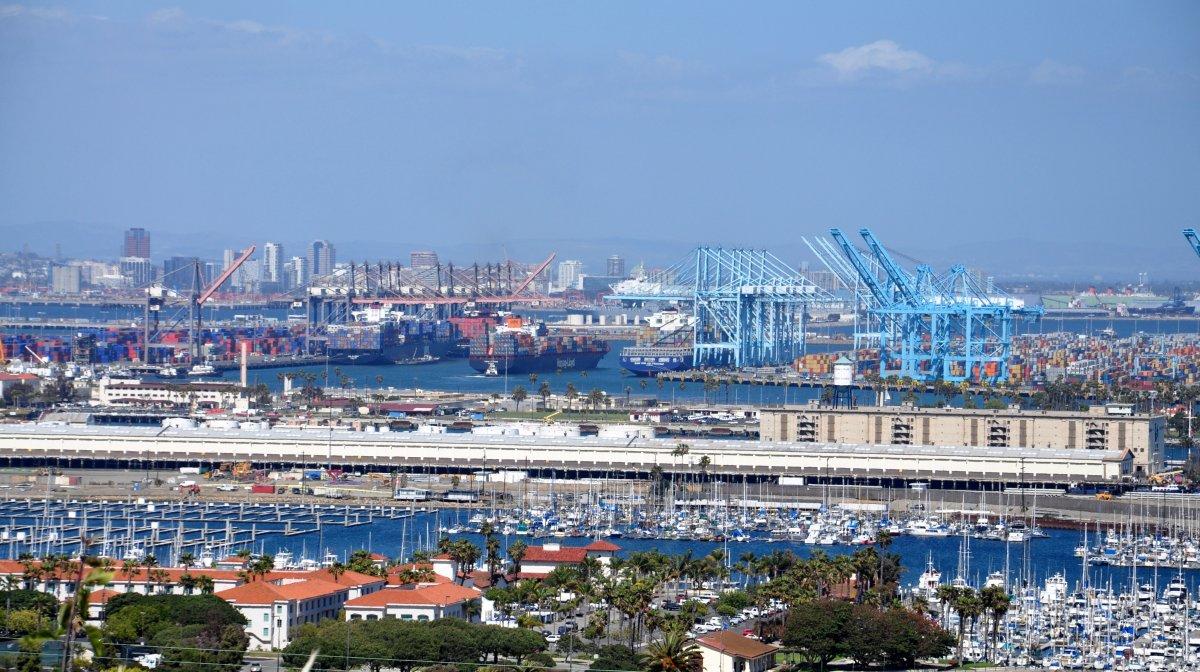
In the movie “Falling Down,” the character played by Michael Douglas is stranded in a Los Angeles traffic jam. He abandons his car, starts walking with briefcase in hand and ultimately has a mental breakdown. Cargo shippers trying to get their containers through the ports of Los Angeles and Long Beach can relate.Container imports overwhelming California ports

The pileup of ships offshore in San Pedro Bay and congestion onshore at the terminals have reached epic proportions. And the situation could become even more maddening in the weeks ahead.
32 container ships at anchor
American Shipper interviewed Kip Louttit, executive director of the Marine Exchange of Southern California, to get the latest on ships in San Pedro Bay.
He reported that as of midday Wednesday, 91 ships were in port: 46 at berth and 45 at anchor. Of those, there were 56 container ships: 24 at berth and 32 at anchor. Between Wednesday and Saturday, 19 more container ships will arrive, with the same number due to depart.
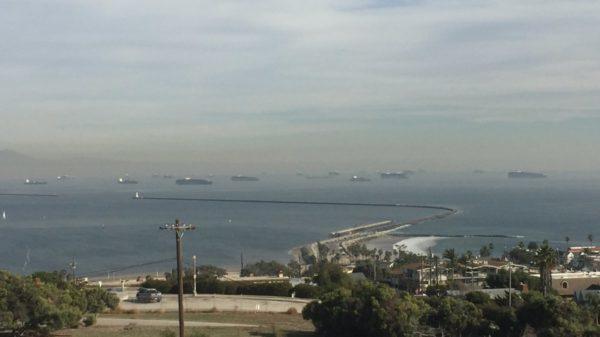
There were a few more container ships at anchor on Friday — 37 in total. Yet Louttit said “there has been no significant change between the first of January and today.”Container ship locations, Jan. 13 (Map: MarineTraffic)

Louttit confirmed that ships have effectively filled all of the usable anchorages off Los Angeles and Long Beach. Ships have also taken six of the 10 contingency anchorages off Huntington, the next town south.
If all the anchorages and contingency anchorages fill up, ships will be placed in so-called “drift boxes” in deeper water. These are actually circles not boxes. Unlike ships at anchorages in shallower water, ships in drift boxes would not anchor, they’d drift. “When you drift out of the circle, which has a radius of 2 miles, you start your engine and go back to the middle of the circle,” explained Louttit.
Historical perspective on traffic jam
Given the drift-box option, container ships are not about to hit any kind of maximum capacity offshore of California. Nor is there a higher safety risk. “There are a lot of ships, but they’re all very carefully watched and managed,” affirmed Louttit.
The significance of so many anchored ships is what they reveal about the extent of the logistics logjam on shore.Anchored container ships stretch off into the distance
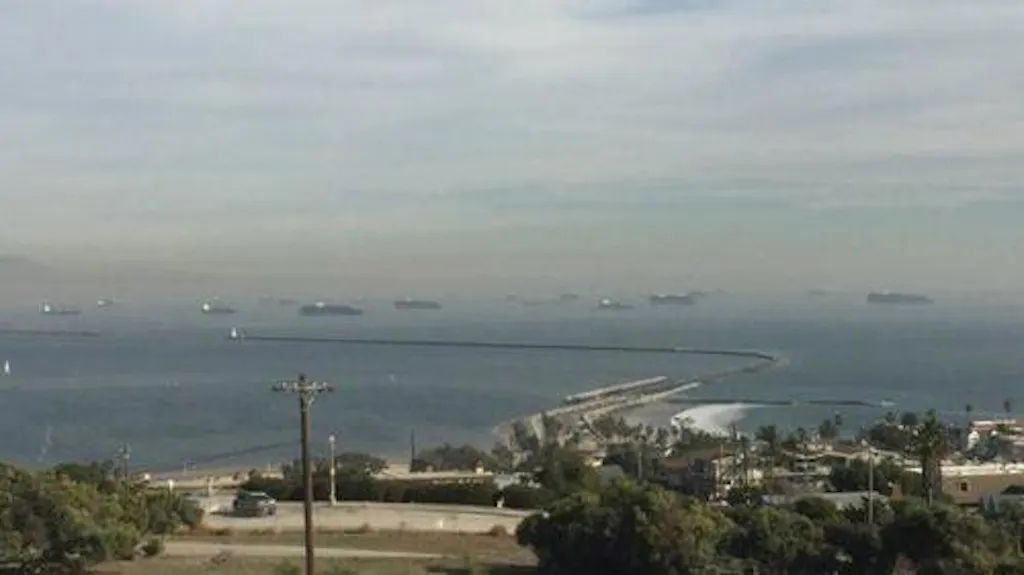
The most recent comparable anchorage level occurred during the labor dispute between the International Longshore and Warehouse Union (ILWU) and their employers in 2014-15.
“On March 14, 2015, there were 28 container ships at anchor. We’ve blown through that record,” said Louttit. The all-time record for ships at anchorage off California occurred in 2004 during a rail staffing shortage.
“Normally, if you want a baseline, there’d be a dozen and rarely are they container ships,” he said.
Signal still flashing red
The Marine Exchange does not look past the coming four days’ arrivals. But there are other ways to see what’s headed this way across the Pacific.
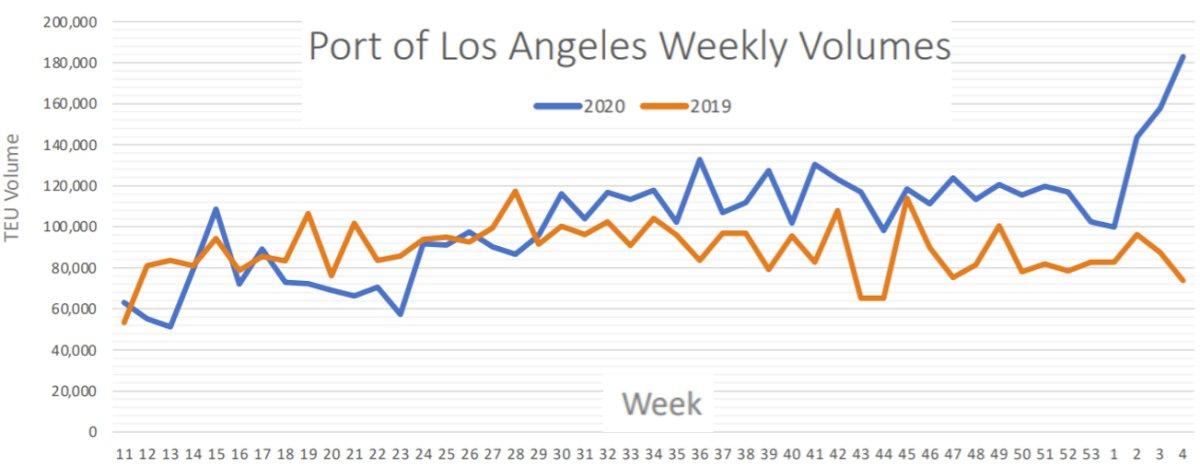
It takes two to three weeks for containers to cross the ocean from China to California. The Port of Los Angeles developed The Signal, a daily digital tool powered by Port Optimizer, to indicate what’s en route. The system uses manifest data from nine of the top 10 carriers calling in Los Angeles.
The Signal data updated on Wednesday showed no letup in sight. Imports are expected to rise from 143,776 twenty-foot equivalent units (TEUs) this week to 157,763 TEUs next week to 182,953 TEUs the week of Jan. 24-30.(Chart: The Port of Los Angeles Signal, Jan. 13)

Importantly, the data does not solely include TEUs arriving in a particular week. It also includes TEUs arriving in prior weeks that the port expects to handle in the stated week.
Consequently, the data provides an indirect indicator of how much cargo is getting delayed. For example, on Monday, Jan. 4, The Signal indicated the port would handle 165,000 TEUs that week. But by Friday, Jan. 8, the assessment for that same week had plunged to 99,785 TEUs — implying that over 65,000 TEUs were pushed to the following week (i.e., this week). This pattern also suggests that the forecast for 182,953 TEUs the week of Jan. 24-30 will ultimately be revised downward.
Congestion causes
In an alert to customers this week, carrier Hapag-Lloyd reported, “All terminals [at Los Angeles/Long Beach] continue to be congested due to the spike in import volumes and [this] is expected to last until February.
“Terminals are working with limited labor and split shifts,” it said, asserting that this is related to COVID. “This labor shortage affects all terminals’ TAT [turnaround time] for truckers, inter-terminal transfers and the number of daily appointments available for gate transactions and delays our vessel operations.”
As a result of “lack of terminal space” to service vessels, “there is a constant switching of terminals that must be kept in mind” given that containers are ending up “in the wrong terminal,” said Hapag-Lloyd.
Congestion woes are now spreading well beyond California ports, confirmed Hapag-Lloyd. The carrier reported “heavy congestion” in Canada and “berth congestion at Maher Terminal and APM Terminals [in the Port of New York and New Jersey] impacting all services with delays of several days being experienced upon arrival.”
Little relief ahead
Liner companies traditionally cancel numerous sailings during the Chinese New Year period to account for decreased Chinese exports. If they did so in 2021, it would allow U.S. terminals time to clear some of the inbound congestion. Unfortunately for terminals, liners are opting against canceling sailings during the Chinese holiday period next month.
Ports could also see congestion relief if U.S. consumer demand slowed. However, that does not appear to be happening.
Analysts believe the “blue sweep” scenario — with Democrats winning the presidency as well as both houses of Congress — will spur $1 trillion-$2 trillion in new stimulus during the first half of this year.
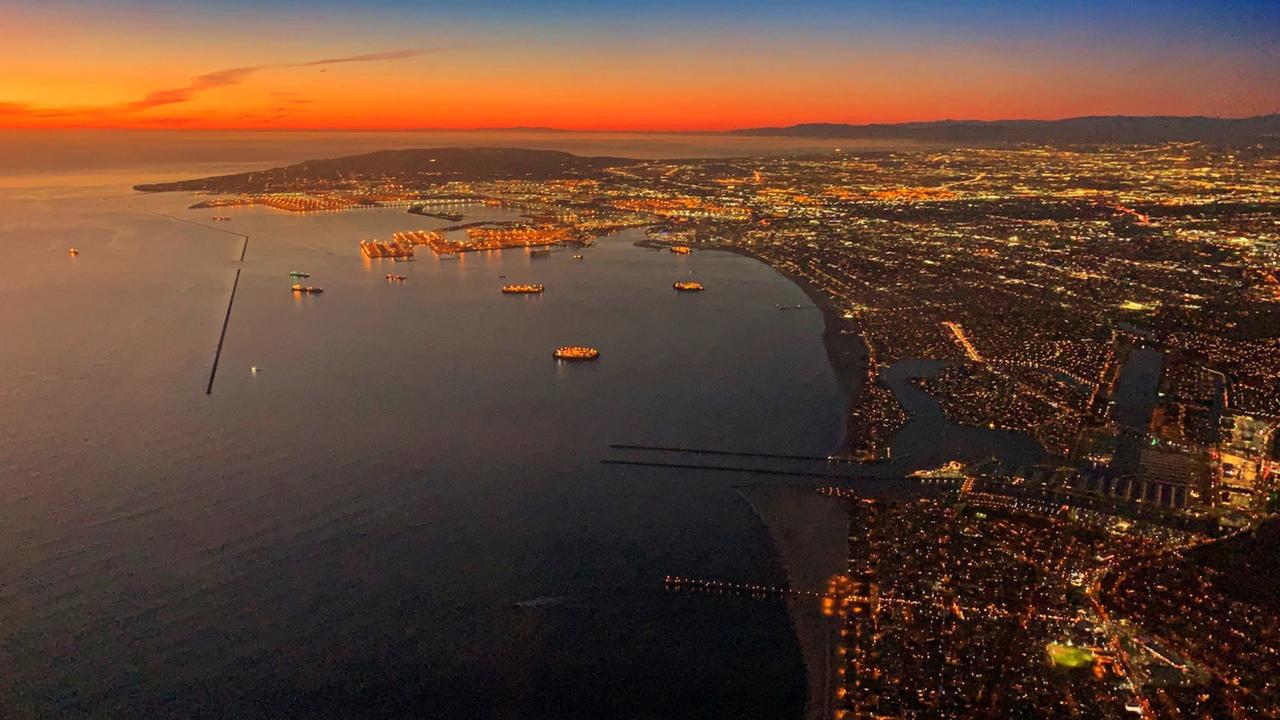
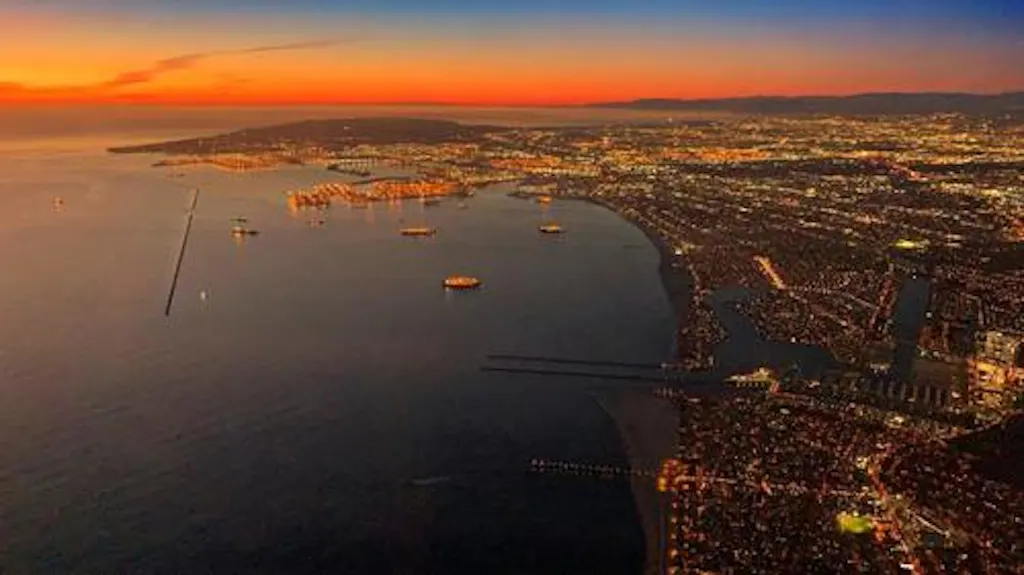
Investment bank Evercore ISI predicted, “Additional checks will reach consumers at a time when unemployment is lower [than during the 2020 stimulus round], mobility has significantly improved, the overall willingness to spend of the general public is up significantly, confidence levels are higher, housing is strong and the savings rate is still extremely high. That is a set-up for a consumer boom.”A view of normal times in San Pedro Bay, when there are few ships at anchor
https://www.zerohedge.com/economics/inside-californias-colossal-container-ship-traffic-jam
 Everchem Updates Archive
 Sign Up for Email Updates