The Urethane Blog
August 17, 2023
Closing deals can be confusing in the Chemical Industry. An Everchem Originals skit, based on true events:
August 15, 2023
- Research
- Jun 21, 2023
Mexico Is Poised to Ride the Nearshoring Wave
Closer economic ties to the U.S. could boost GDP and investment as manufacturing exports increase.
The world economy is realigning, with trade and supply chains becoming less decentralized and less deeply interconnected as globalization slows, or even reverses, in a multipolar world.
Mexico, in particular, could be a major beneficiary of this shift to “slowbalization.” Among other reasons, the U.S. is likely to look to allies that are geographically close and politically aligned as trade tensions, supply-chain difficulties and geopolitical concerns push the U.S. further from China.
A key step in this disengagement process is nearshoring, in which U.S. manufacturing companies move production closer to their bases and consumers in the U.S. and away from Asia. Along with its obvious geographical advantages, Mexico offers a large, low-cost labor force and free-trade agreements with the U.S. and Europe.
As U.S. companies increasingly look to their southern neighbor to bolster their supply and value chains, it is likely to boost Mexico’s GDP growth as investment surges, providing new opportunities for companies and investors alike.
“If U.S. manufacturing is to be less dependent on China, we think the path will be via Mexico,” says Morgan Stanley Research equity analyst Nikolaj Lippmann. “Nearshoring is expected to be a long and sustained race that could help build new ecosystems in Mexico’s existing manufacturing hubs.”
Manufacturing Leads Mexico’s Economic Growth

Nearshoring has the potential to boost the growth of Mexican manufacturing exports to the U.S., from $455 billion today to an estimated $609 billion in the next five years.
Manufacturing exports currently represent about 40% of Mexico’s $1.3 trillion economy. This estimated surge, representing more than 10% of GDP, is made up of:
- $94 billion in gains in well-established sectors such as electronics and automotive
- $38 billion from sectors that have benefited from free trade via the United States-Mexico-Canada Agreement, or USMCA
- $22 billion from a second wave of nearshoring growth driven by increased manufacture of IT hardware and new opportunities related to the electric vehicle supply chain and other clean technologies.
Meanwhile, new investment driven by nearshoring could reach about $46 billion in the next five years, helping boost Mexico’s annual GDP growth to around 3% in 2025 to 2027, from an estimated 1.9% in 2022. Recent investments announcements, including a decision by the leading U.S. electric car maker to open a $5 billion plant in Monterrey, highlight the growing nearshoring trend.
But potential hurdles to nearshoring-driven growth remain. While Mexico is well-positioned to tap into the nearshoring opportunity in terms of wages, commodity costs and tax rates, it still faces issues with access to skilled labor, environmental regulation, quality of infrastructure and intellectual property rights, according to a 2022 Morgan Stanley survey of global companies.
Energy infrastructure, in particular, remains a key potential limiting factor. The country has underinvested in the electricity sector and needs to improve grid capacity. Mexico would need roughly $40 billion in incremental spending to build enough generation capacity to power expansion from nearshoring-driven.
“Nearshoring will happen over time, not overnight,” says Fernando D. Sedano, Morgan Stanley’s Latin America Economist.
How to Invest
As Mexico’s GDP and manufacturing grow, so too should corporate profits, especially in the financials, industrials and consumer sectors. In fact, during periods of above-average GDP growth, Mexican equities have tended to outperform in terms of valuation, profitability and operating performance.
Financials, Real Estate, and Consumer Discretionary Names Are More Exposed to the Domestic Model
Chart

Additionally, stocks in industrial real estate, transportation and logistics, metals and cement could benefit from the realignment of supply chains.
The nearshoring trend has already driven a rerating of Mexican stocks, and strategists see further upside for domestic companies in the next five years as the second wave of nearshoring growth gathers momentum.
“A boost in GDP growth would be transformative for domestic stocks, especially in the regions exposed to nearshoring,” says Sedano.
https://www.morganstanley.com/ideas/mexico-nearshoring-gdp-growth
August 15, 2023
European NatGas Surges 15% As Strike Threats Mount At Australian LNG Plants
by Tyler Durden
Tuesday, Aug 15, 2023 – 10:10 AM
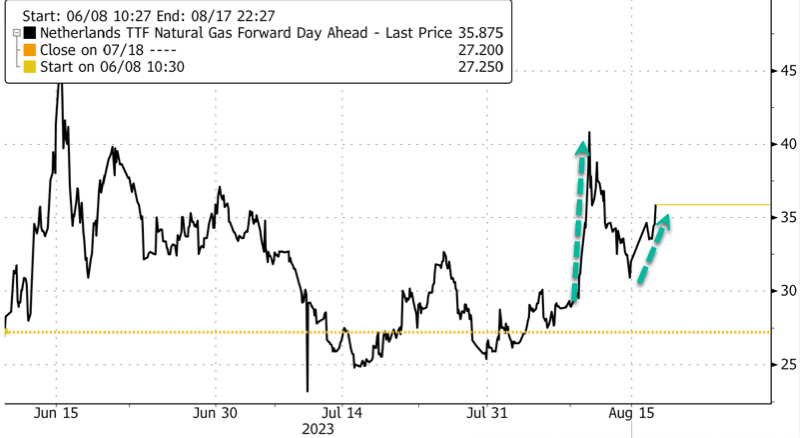
Yet another stunning move in European NatGas on Tuesday as prices soared 15% following last week’s 40% jump due to increasing labor action risks in Australia.
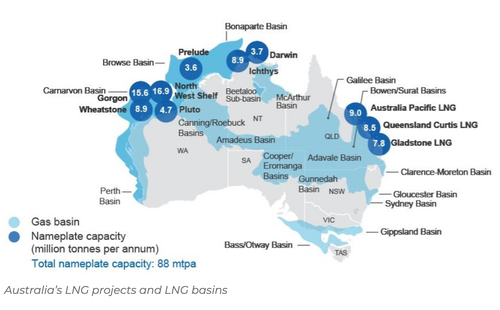
Bloomberg spoke with energy traders who said the Gorgon facility on Barrow Island off the northern coast of Western Australia had reduced sales over the increasing risks of a strike.
Talks were scheduled to take place between union officials and Woodside Energy Group Ltd., one of the two companies operating the affected liquefied natural gas facilities. –BBG
A Goldman Sachs analysis revealed potential strikes at three top LNG sites operated by Chevron and Woodside Energy Group Ltd. could disrupt global supplies. These three locations account for as much as 10% of global LNG exports.
“The potential for strike action at LNG export plants in Australia once again highlights the fact that we are now clearly in a globalised gas market,” ICIS analyst Tom Marzec-Manser told the Financial Times.
“Europe has understandably backfilled Russian pipeline supply with versatile LNG. But that versatility leads to increased price volatility.”
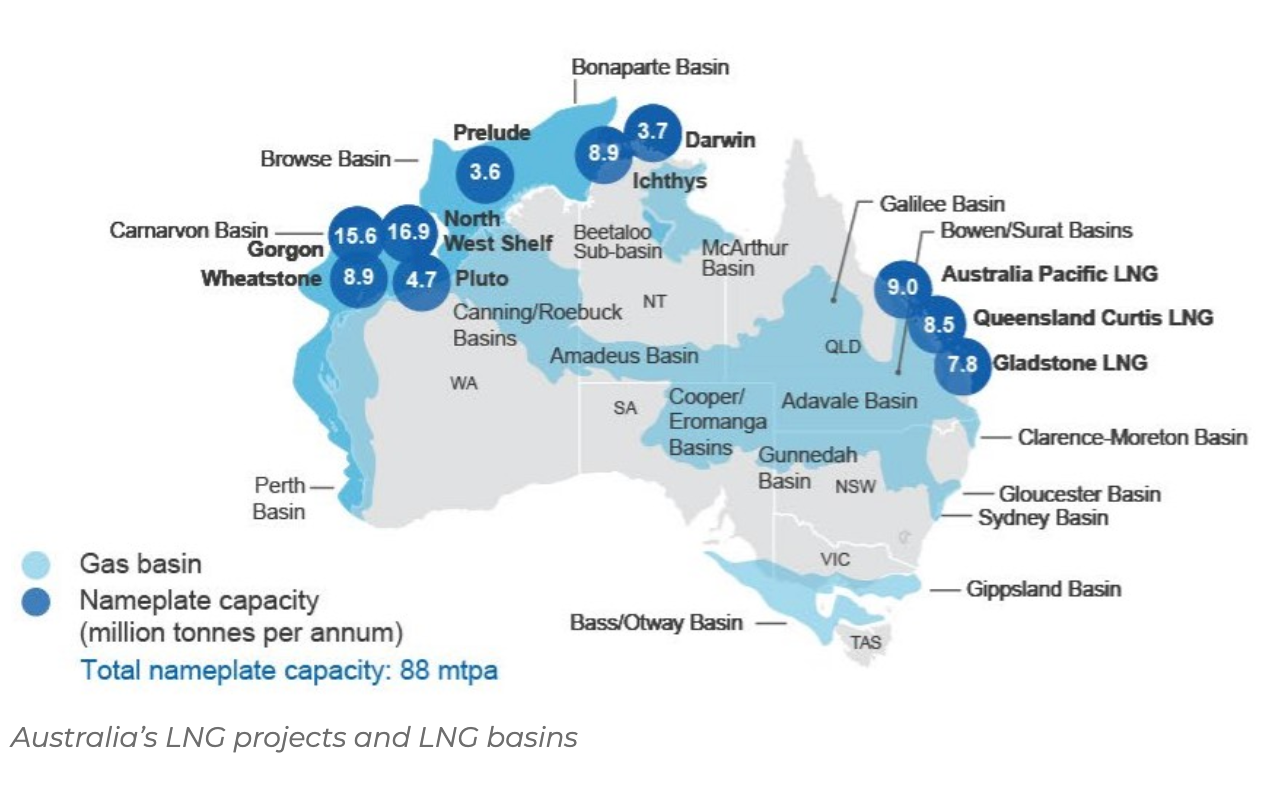
On Monday, Australia’s Fair Work Commission approved workers at Chevron’s Wheatstone offshore platform to vote on possible industrial action. This follows earlier labor action votes for workers at Wheatstone and Gorgon downstream facilities and at Woodside’s North West Shelf.
Australia’s Top Producing LNG Areas
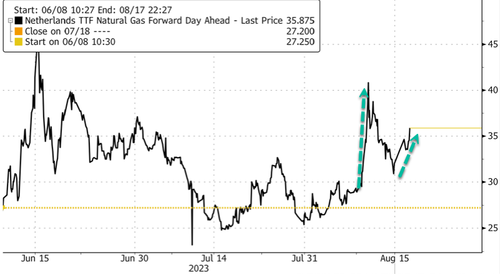
Today’s news sent European benchmark NatGas futures up 15%. Prices soared 40% last week after the first report of potential labor action at various LNG facilities in Australia could threaten global supply.
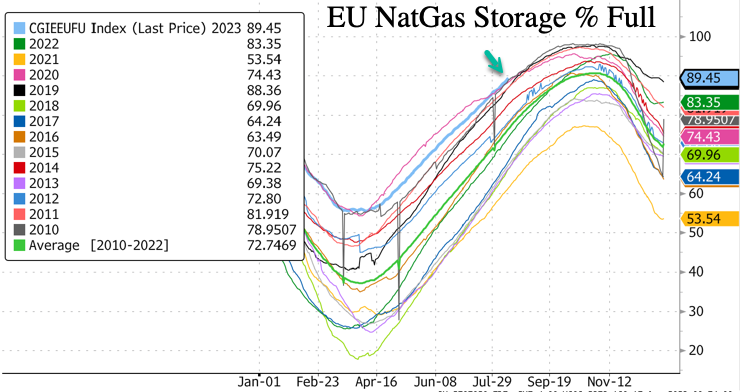
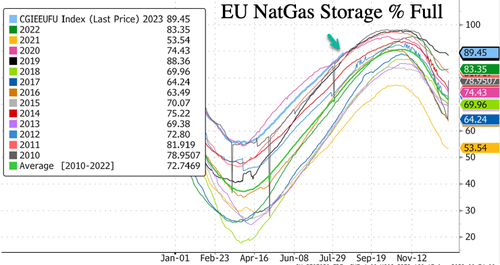
The good news for Europe is that demand for NatGas remains soft. Storage facilities across the continent are 89.45% full, the highest level for this time of year in over a decade.
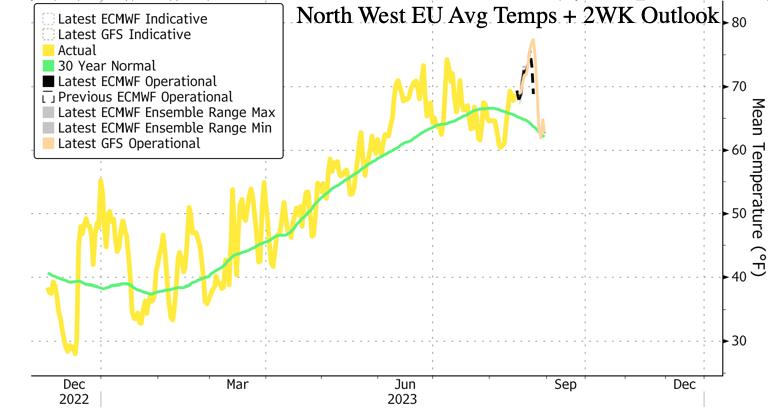
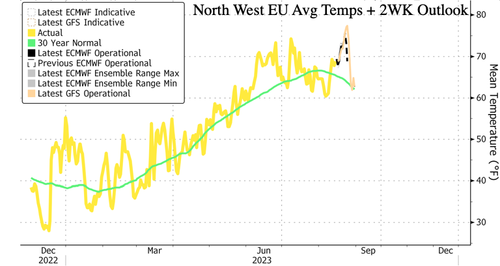
Before Europe and much of the Northern Hemisphere realize it, the heating season will arrive in the next couple of months, driving demand for NatGas higher.
The bad news is that Europe’s decoupling of reliable and cheap NatGas flows from Russia subjects it to sourcing the fuel elsewhere around the globe, making it prone to supply snarls and or what could soon be labor actions in Australia.
“The crisis is not over yet,” the chief executive of E.ON, one of Germany’s biggest utilities, said earlier this month.
“We must continue to work on the issue of austerity. This is the best way to ensure affordability for customers and also to achieve competitiveness of our society and our economy.”
If the CEO of E.ON is talking about austerity—not exactly a popular idea among regular electricity consumers—then the situation must be serious. It suggests there is no great chance of abundant LNG supply and weak competition from Asia that would make the commodity cheaper. That leaves limiting demand as the only choice.
Winter is coming
August 15, 2023
Azelis Appoints Todd Cottrell to Succeed Frank Bergonzi as CEO of Azelis Americas
August 14, 2023 11:35 AM Eastern Daylight Time
ANTWERP, Belgium–(BUSINESS WIRE)–Regulatory News:

Azelis Group NV (“Azelis” or the “Company”) (Brussels:AZE), a leading global innovation service provider in the specialty chemicals and food ingredients industry, announces that Todd Cottrell will assume the role of CEO of Azelis Americas when Frank Bergonzi retires on September 30, 2023. To ensure a seamless transition, Frank will support Todd with onboarding into his new role, and subsequently will remain available as a consultant to contribute to Azelis’ growth strategy in the Americas through the end of 2025.
Todd brings more than 30 years of expertise and industry knowledge that span both technical and executive roles. He has worked for some of the global leaders in the CASE (coatings, adhesives, sealants and elastomers) industry, his last position having been Managing Director Americas for a large European manufacturer. Over his extensive career, Todd also served in regional director and regional president roles in France and China, as well as multiple industry board positions. Todd holds BSc in Chemical Engineering from Michigan Technological University and an MBA from Duke University, both in the USA.
As CEO of Azelis Americas, Todd will be responsible for driving growth through the development of principal partnerships, market expansion, both organic and inorganic, operational excellence within all market segments, and digital, innovation, and sustainability strategies that drive value for our principals and customers.
Frank, who has led Azelis in the Americas for over seven years, first as CEO & President of KODA Distribution, and afterward as CEO of Azelis Americas following the Group’s acquisition of KODA in 2015, has decided to retire after a 40-year career. During his tenure in Azelis, Frank has led the Americas region to record growth, both organically and through M&A. Azelis Americas has seen both new market segment additions as well as geographical expansion in this period. The business has become the leading innovation service provider for the specialty chemicals and food ingredients industry in the Americas, growing from $725 million in revenue at the end of 2015 to $1.7 billion in 2022. Seven acquisitions have been completed in the Americas since 2015, and the footprint has grown from the US and Canada to Latin America.
Dr. Hans Joachim Müller, Azelis Group CEO, comments:
“Under Frank’s leadership, we have more than doubled our revenue in the Americas and established a presence in five new countries spanning North and South America. I’d like to thank Frank for his tireless dedication and passionate leadership and wish him all the best in his retirement. Frank’s expertise will continue to remain highly valuable, as he continues to support the broader operations through the end of 2025.
At the same time, we welcome Todd, who brings a wealth of experience in specialty chemicals and in the CASE market in particular, which is our largest segment in the Americas. He has substantial specialty supplier experience and a good perspective on the role of the distribution channel. I am excited that he is taking the reins from Frank to lead our operations in the Americas.”
Frank Bergonzi, CEO and President, Azelis Americas, adds:
“Todd brings strong business acumen and CASE industry experience as well as passion, enthusiasm, and an entrepreneurial spirit that will continue to drive value for our principals and customers. With his experience as an Azelis principal and customer at different points in his career, Todd clearly understands the needs of all of our stakeholders and will bring that invaluable insight to Azelis. I look forward to supporting Todd throughout the transition and have every confidence in his ability to lead our talented team to further success.”
Todd Cottrell, incoming CEO, Azelis Americas, comments:
“I am honored to lead the next chapter of the Azelis growth journey in the Americas. Having been both a customer and principal of Azelis, I have first-hand experience with the commercial professionalism, formulation value, and market insights that the Azelis team brings to enable the success of its stakeholders. I’d like to sincerely thank Frank for building this foundation upon which we will continue to grow Azelis’ market presence and value creation throughout the Americas.”
August 14, 2023
ADNOC Could Raise Covestro Bid To $12.6 Billion
By Alex Kimani – Aug 14, 2023, 3:30 PM CDT

Abu Dhabi National Oil Co (ADNOC) has signaled a willingness to raise its informal offer to 60 euros per share for a valuation of $12.6 billion for German plastics and chemicals maker Covestro. The latest offer would represent a premium of nearly 30% to Covestro’s closing share price on Friday.ADNOC last raised its informal offer to 57 euros per share in July, although no final decision has yet been made.
ADNOC appears willing to go on an M&A spree: Abu Dhabi’s national oil company is separately in talks with Austria’s OMV regarding a possible merger of the two companies that could form an entity worth $30 billion.
It’s not clear why ADNOC is interested in buying Covestro, considering how badly the petrochemical business has been doing lately. Earlier in August, Covestro reported a 21%Y/Y fall in second quarter revenues to 3.7 billion euros. Covestro is hardly alone, with U.S. oil and gas giants facing a similar fate. Sluggish consumer demand as well as a deluge of new factories coming online over the past few years means petrochemical margins face a protracted downturn. The situation is so dire that Cologne-based Lanxness AG has called it a “Lehman 2” moment for the chemicals industry.
“It’s been a pretty dramatic downturn. With chemicals oversupplied right now, large oil companies will find other areas to invest in,” Joseph Chang, a New York-based analyst at ICIS, has told Bloomberg.
Over the past decade, Big Oil has relied on petrochemicals as a growth engine, acting as a hedge when oil and gas prices drop and a long-term growth driver in the transition to clean energy. Previously, several Wall Street analysts predicted that oil demand will actually grow over the coming decades primarily driven by petrochemicals demand growth. Indeed, Energy Intelligence is not the only bull here. No less than 10 organizations, including OPEC, Exxon Mobil Corp. (NYSE:XOM), and the Energy Information Administration (EIA), have predicted that global oil demand will actually grow over the next few decades and not shrink as most analysts have forecast.
 Everchem Updates Archive
 Sign Up for Email Updates