
The Urethane Blog
March 9, 2021
Terra Firma and Wanhua Chemical Announce New Distribution Partnership
March 9, 2021 KEYWORDS Distributor Agreements Order Reprints No Comments
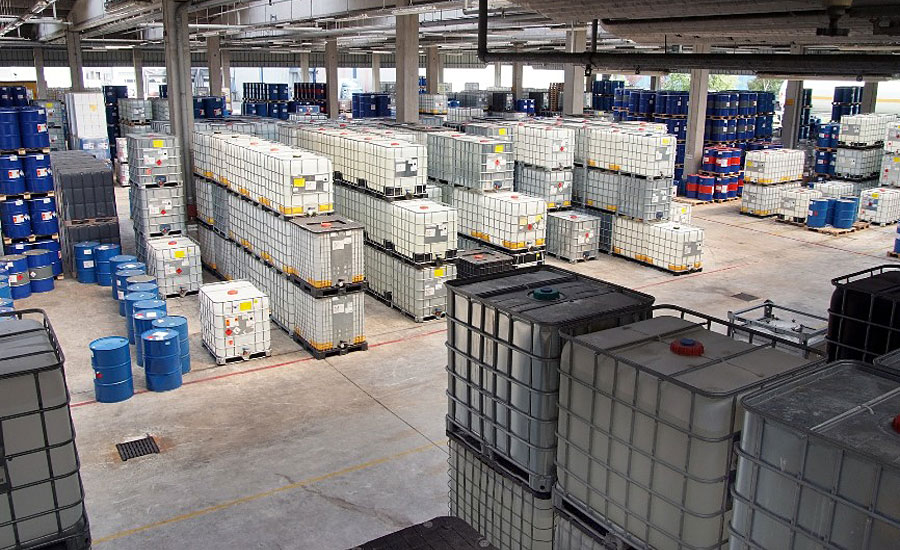
BALTIMORE – Terra Firma announced that the ADI Business Unit of Wanhua Chemical has chosen Terra Firma as the latest member of its distribution network. Terra Firma will be representing Wanhua Chemical’s line of aliphatic isocyanates technologies in its southeastern geography.
Wanhua Chemical is a producer of polyurethane resins. The company reports that it is one of the largest producers of MDI resin in the world. Terra Firma will be focused on the promotion of Wanhua’s diverse line of aliphatic isocyanates technologies, which include HDI, HMDI, and IPDI monomers as well as polyisocyanates biurets and trimer resins.
Brian Morris, Sales Director ADI Business Performance Chemical Business Unit, commented, “Wanhua’s Performance Chemicals Business Unit is excited to partner with Terra Firma to expand our reach into the Southeastern U.S. marketplace focusing on the ADI product lines. Our product lines are complemented by the other materials offered through Terra Firma.”
Kevin Trainor, Terra Firma’s Vice President of Sales, said, “We are honored to be working together with the ADI Business Unit of Wanhua Chemical as they are a market leader possessing a fantastic assortment of aliphatic isocyanate resins, which have broad utility across our customer base.”
March 9, 2021
Terra Firma and Wanhua Chemical Announce New Distribution Partnership
March 9, 2021 KEYWORDS Distributor Agreements Order Reprints No Comments
BALTIMORE – Terra Firma announced that the ADI Business Unit of Wanhua Chemical has chosen Terra Firma as the latest member of its distribution network. Terra Firma will be representing Wanhua Chemical’s line of aliphatic isocyanates technologies in its southeastern geography.
Wanhua Chemical is a producer of polyurethane resins. The company reports that it is one of the largest producers of MDI resin in the world. Terra Firma will be focused on the promotion of Wanhua’s diverse line of aliphatic isocyanates technologies, which include HDI, HMDI, and IPDI monomers as well as polyisocyanates biurets and trimer resins.
Brian Morris, Sales Director ADI Business Performance Chemical Business Unit, commented, “Wanhua’s Performance Chemicals Business Unit is excited to partner with Terra Firma to expand our reach into the Southeastern U.S. marketplace focusing on the ADI product lines. Our product lines are complemented by the other materials offered through Terra Firma.”
Kevin Trainor, Terra Firma’s Vice President of Sales, said, “We are honored to be working together with the ADI Business Unit of Wanhua Chemical as they are a market leader possessing a fantastic assortment of aliphatic isocyanate resins, which have broad utility across our customer base.”
March 9, 2021
Attacks on Saudi Arabia facilities send Brent crude surging above $70/bbl
Author: Pearl Bantillo
2021/03/08
SINGAPORE (ICIS)–Attacks on Saudi Arabian oil facilities on Sunday sent crude surging by more than 2% on Monday, with Brent crude now trading at above $71/bbl.
At 10:51 Singapore time (02:51 GMT), Brent crude surged 2.64% to $71.19/bbl, while US crude spiked 2.53% at $67.76/bbl.
The first attack on 7 March was made by “a drone, coming from the sea” at one of the petroleum tank farms in Ras Tanura Port in eastern Saudi Arabia, a spokesperson from the Saudi Ministry of Energy said in a statement posted on state-owned Saudi Press Agency (SPA).
Another attack came in the evening on the facilities of Saudi Aramco, the world’s biggest crude exporter.
“Shrapnel from a ballistic missile fell near Saudi Aramco’s residential area in the city of Dhahran, where thousands of the company’s employees and their families from different nationalities live,” the energy ministry spokesperson said.
It was further stated that “both attacks did not result in any injury or loss of life or property”.
In a separate statement, the official spokesperson of Saudi Arabia’s Ministry of Defense said: “Those failed attempts did not target the Kingdom of Saudi Arabia’s security and economic assets, but the core of global economy and its oil supplies, as well as the security of global energy.”
“The Ministry of Defense will undertake all necessary, deterrent measures to safeguard its national assets in a manner that preserves the security of global energy, puts an end to these acts of terrorism, guarantees the security and stability of oil supplies, protects security of petroleum exports and safeguards freedom of shipping and international trade,” the ministry spokesperson added.
March 9, 2021
Attacks on Saudi Arabia facilities send Brent crude surging above $70/bbl
Author: Pearl Bantillo
2021/03/08
SINGAPORE (ICIS)–Attacks on Saudi Arabian oil facilities on Sunday sent crude surging by more than 2% on Monday, with Brent crude now trading at above $71/bbl.
At 10:51 Singapore time (02:51 GMT), Brent crude surged 2.64% to $71.19/bbl, while US crude spiked 2.53% at $67.76/bbl.
The first attack on 7 March was made by “a drone, coming from the sea” at one of the petroleum tank farms in Ras Tanura Port in eastern Saudi Arabia, a spokesperson from the Saudi Ministry of Energy said in a statement posted on state-owned Saudi Press Agency (SPA).
Another attack came in the evening on the facilities of Saudi Aramco, the world’s biggest crude exporter.
“Shrapnel from a ballistic missile fell near Saudi Aramco’s residential area in the city of Dhahran, where thousands of the company’s employees and their families from different nationalities live,” the energy ministry spokesperson said.
It was further stated that “both attacks did not result in any injury or loss of life or property”.
In a separate statement, the official spokesperson of Saudi Arabia’s Ministry of Defense said: “Those failed attempts did not target the Kingdom of Saudi Arabia’s security and economic assets, but the core of global economy and its oil supplies, as well as the security of global energy.”
“The Ministry of Defense will undertake all necessary, deterrent measures to safeguard its national assets in a manner that preserves the security of global energy, puts an end to these acts of terrorism, guarantees the security and stability of oil supplies, protects security of petroleum exports and safeguards freedom of shipping and international trade,” the ministry spokesperson added.
March 8, 2021
What Businesses, Employees, & Interns Can Learn From the SolarWinds Hack
- March 2, 2021
- By Dashlane

Even government-trusted companies aren’t immune to bad password habits. Here’s what your organization can do to avoid a similar incident.
What happened?
U.S. IT firm SolarWinds experienced a software hack in 2020 that is only now being fully uncovered. After gaining access to the SolarWinds software, hackers added malicious code, which was then sent to SolarWinds customers during routine software updates. At this point, hackers could gain access to the customers’ IT systems, deploying more malware to spy on these organizations and their sensitive data. Among these customers? The U.S. Treasury.
The hack was first reported by Reuters in December of 2020 after going undetected for months. According to Reuters, the suspected culprits are Russian hackers.
New reports peg the catalyst of the incident on a weak password created by an intern: solarwinds123.
Find out why passwords can be the weakest link in your company security and what you can do about it in our latest white paper.
What info might have been compromised?
According to SolarWinds’s report to the SEC, around 18,000 customers installed software with the malicious code—including high profile customers, such as Fortune 500 companies and branches of the U.S. government.
The data that may have been compromised in the hack is still under investigation, however the U.S. Treasury has reported that emails and internal networks were hacked into.
Why is this such a big deal?
There are multiple implications with the SolarWinds hack. The researcher who initially discovered the leaked password told CNN that it had been available online since at least June 2018, until it was fixed in November 2019. For a company providing IT services, this oversight is enough to cause serious reputational damage. And because the malware went undetected for so long, it’s possible that companies may never know if they were affected by this hack or not. In fact, the full extent of the damage caused by this hack may never be known.
According to Dashlane’s own CTO, Frederic Rivain, “As we’ve seen in the SolarWinds incident, securing a company’s perimeter is not enough. With the explosion of SaaS services and APIs that we all use, there’s a domino effect. As a company, you need to have oversight into the security practices of your providers and partners, as they could result in an indirect incident and still hurt your own reputation.”
What businesses should do
A bad password should never be the cause of a hack or a breach—but unfortunately, weak, reused, or stolen employee passwords still cause the majority of business hacks and breaches. The good news is that a simple, cost-effective solution exists: a password manager.
Try Dashlane for your business and start improving your company’s passwords for free. Get started by finding the plan that’s right for you.
What employees and interns should do
If your organization does not use a password management solution, the change can start with you. A password manager makes life online simpler—not just at work but at home, too.
Read our full guide on building a case for a password manager to find out more about setting your company up with total password protection.
www.dashlane.com
 Everchem Updates Archive
  Sign Up for Email Updates