
The Urethane Blog
March 5, 2021
Stunning Views Of Freight Train Derailment In California Desert
by Tyler DurdenThursday, Mar 04, 2021 – 20:00
On Wednesday evening, a freight train derailment in the Southern California desert sent more than 40 railcars careening off the tracks into a mangled mess of metal.
San Bernardino County Fire (SBCF) tweeted pictures and a drone video of the train derailment. They said the incident occurred on the Burlington Northern Santa Fe Railway Company (BNSF Railway) rail network east of Ludlow, on Old National Trails Highway, or about 150 miles northeast of Los Angeles.
SBCF said, “BNSF cargo railcars, no injuries, no fire, Haz-Mat on scene. No impact to I-40.” Judging by the pictures released by the local police agency, a variety of cars were involved in the incident, including tanker cars, boxcars, and hoppers.
Mixed Freight Derailment
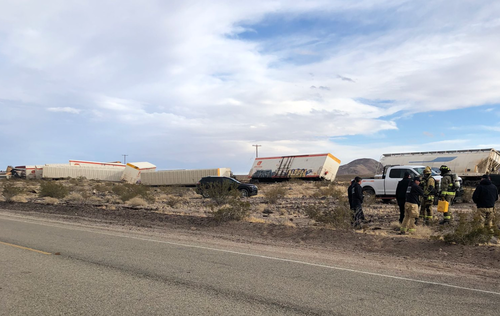
Tanker Cars And Other Cars Derailed
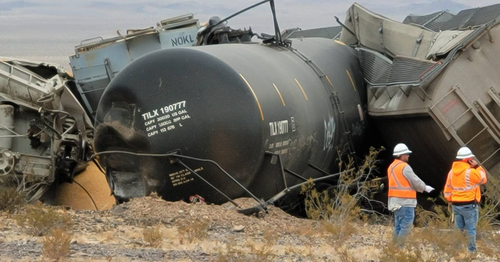
More Scenes Of The Incident
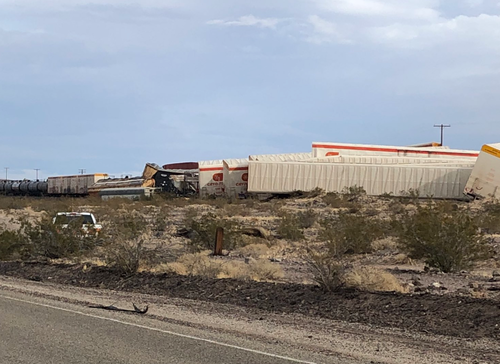
A drone video shows first responders in hazmat suits inspecting a tanker car.
The police drone captured stunning views of the mangled railcars.
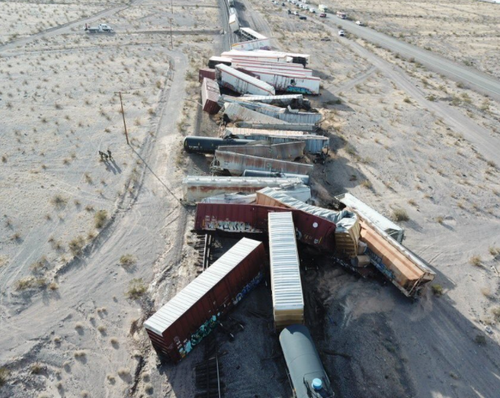
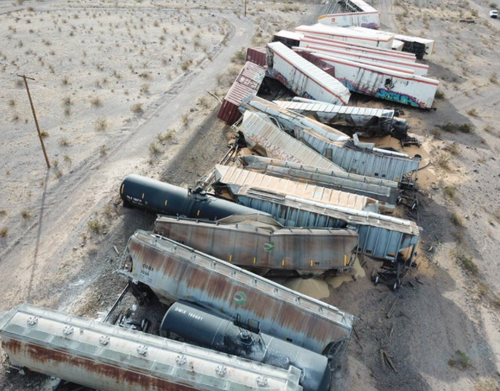
“Initial reports indicate 44 cars derailed, and one car carrying ethanol alcohol is leaking,” BNSF spokeswoman Lena Kent told NBC Los Angeles.
Investigators are still working the incident area to figure out how the derailment occurred.
Texas “Deep Freeze” Opens the Door for Appalachian Basin Investment
Tuesday, March 2nd 2021, 8:13 AM ESTS
PENN VALLEY, PA, U.S., March 2, 2021 /EINPresswire.com/ — The physical and mental misery throughout Texas due to the “Big Freeze” plus snow, and the attendant spike in energy prices nationwide is not yet over.
Well-below freezing temperatures and snow did much more than freeze pipelines, ice over wind turbines and cover solar panels.
Much of the U.S. petrochemical industry is centered along the Gulf Coast and, like their refinery cousins, petchem complexes were shut down, froze up, lost power, etc.
While several petchem giants have announced the restart of their facilities, a few factors have converged which could make returning to production impossible.
“The impact of the COVID pandemic, last summer’s very active hurricane season and now the Big Freeze have combined and will lead to a big shock for consumers,” according to Tom Gellrich, founder of TopLine Analytics.
The shock will be due to shortages, Gellrich said, as many of the plastic types we take for granted, used for such everyday things as milk jugs, hydrogen peroxide, even the numerous volume of plastic incorporated in today’s vehicles, could be in short supply.
Gellrich will further explain how the Texas Big Freeze could open the door to increased petchem investment in the Appalachian Basin at the Second Annual Appalachian Basin Real Estate Conference.
Presented by Shale Directories, the one-day program is slated for March 25, at the Oglebay Resort in Wheeling, West Virginia.
“Tom’s presentation will vividly demonstrate the petrochemical opportunity in the Appalachian Basin is now,” commented Joe Barone, President & Founder, Shale Directories.
Gellrich said the need for plastics related to treating COVID for such things as personal protective equipment (PPE), and hurricane-related flooding which shut petchem plants, led to a sharp drawdown in inventory.
“And now, you have the Big Freeze, which further strains inventories,” Gellrich said.
For chemical producers restarting their complexes, Gellrich said the time needed to do a restart is three weeks minimum, as all equipment must be pulled apart and inspected.
“Employees will need to work overtime, and more outside contractors will be needed to do the job,” he said. And keep in mind, many of these workers have their owns problems at home, with broken pipes, no electricity, etc., which also must be addressed.”
If plant components must be replaced, Gellrich said needed components may not be available. “Every part of the supply chain is so connected today that if one piece of equipment must be replaced, there is a ripple effect throughout the entire chain,” according to Gellrich.
“We might be three months out before things are back to normal.”
The hardships caused by COVID, hurricanes and the Texas Big Freeze are forcing numerous companies, analysts and consultants to take a closer look at supply chains, bringing more chain components back to the U.S. from China and other overseas venues.
“Some companies will look at other locations other than the Gulf Coast to establish petrochemical facilities,” said Gellrich.
The logical region to serve as the U.S.’s Petrochemical Hub No. 2 would be the Appalachian Basin, as it offers inexpensive natural gas for fuel/feedstock and is located within 700 miles of numerous plastic products wholesalers and customers.
Joseph Barone
Shale Directories
+1 610-764-1232
jbarone@shaledirectories.com
First Oil Discoveries
A Pennsylvania oil well in 1859 fueled kerosene lamps. A 1901 gusher in Texas would fuel autos.
The American Oil & Gas Historical Society frequently updates AOGHS.ORG content with new articles as part of its energy education mission. The society maintains a communication network of petroleum museums, teacher workshop programs, county historical societies, and similar organizations.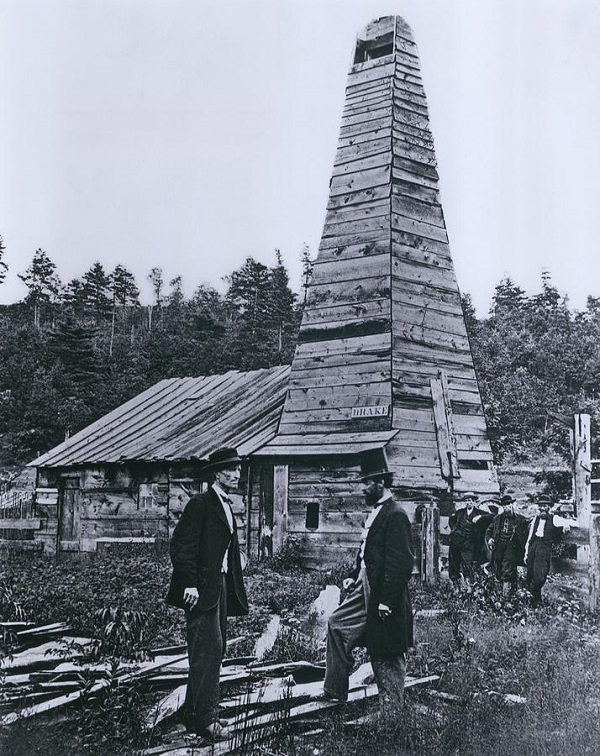
Edwin Drake, right, stands with friend Peter Wilson of Titusville, Pennsylvania, at the drilling site – but not the original cable-tool derrick – of America’s first oil well. Photo courtesy Drake Well Museum.
To help preserve U.S. petroleum history, the society documents exploration, production, and transportation milestones. It also tells the many stories of generations of “oil patch” families. Contact the society with your suggestions for articles, comments – and much-needed financial support.
Birth of the U.S. Oil and Natural Gas Industry
The domestic petroleum industry that began in 1859 with a well drilled just 69.5 feet deep forever changed America’s economy, standard of living, and culture. The earliest exploration companies began seeking oil for refining into a newly invented lamp fuel called kerosene. This “rock oil” fuel was cheaper than whale oil, and far safer than the more popular but explosive fuel, camphene.
As more states joined Pennsylvania in becoming “producing states,” the political landscape changed as fast as exploration technologies. Early energy issues included need for an infrastructure for producing, storing, and transporting oil and natural gas. As discoveries grew, the rush for “black gold” resulted in complex economic issues on a national scale, including wasteful over-production, sudden collapses of oil prices, questionable stock promotions, and frequent boom-and-bust cycles.
The industry also faced a major challenge just as the improved science of petroleum geology began finding mid-continent oilfields. Thomas Edison invented the first commercially practical incandescent light in 1879, threatening the oil industry’s principle product, kerosene. Demand would continue for other refined products (see vaseline and axle-grease). Fortunately for exploration and production companies, automobiles powered by an internal combustion engine required what had been a refinery byproduct: gasoline. The first U.S. auto show took place inside New York City’s Madison Square Garden in November 1900. Less than two months later, an oil gusher at Spindletop, Texas, launched the modern U.S. oil industry. The coming century would bring far greater challenges for petroleum and the world.
First American Oil Well
American oil history begins in a woodland valley along a creek in remote northwestern Pennsylvania. Today’s U.S. petroleum exploration and production industry is born on August 27, 1859, near Titusville when a well specifically drilled for oil finds it. A former railroad conductor drilled it for New Haven Connecticut investors. Even more early petroleum history came on the banks of Oil Creek: First Oil Well, First Oil Well Fire.
Spindletop launches Modern Petroleum Industry
The 1901 “Lucas Gusher” in Texas reveals the Spindletop oilfield, which will produce more oil in one day than the rest of the world’s oil fields combined. The Prophet of Spindletop – self-taught geologist Patillo Higgins – had founded the Gladys City Oil, Gas & Manufacturing Company in 1892 near Beaumont, Texas.
Texas “Deep Freeze” Opens the Door for Appalachian Basin Investment
Tuesday, March 2nd 2021, 8:13 AM ESTS
PENN VALLEY, PA, U.S., March 2, 2021 /EINPresswire.com/ — The physical and mental misery throughout Texas due to the “Big Freeze” plus snow, and the attendant spike in energy prices nationwide is not yet over.
Well-below freezing temperatures and snow did much more than freeze pipelines, ice over wind turbines and cover solar panels.
Much of the U.S. petrochemical industry is centered along the Gulf Coast and, like their refinery cousins, petchem complexes were shut down, froze up, lost power, etc.
While several petchem giants have announced the restart of their facilities, a few factors have converged which could make returning to production impossible.
“The impact of the COVID pandemic, last summer’s very active hurricane season and now the Big Freeze have combined and will lead to a big shock for consumers,” according to Tom Gellrich, founder of TopLine Analytics.
The shock will be due to shortages, Gellrich said, as many of the plastic types we take for granted, used for such everyday things as milk jugs, hydrogen peroxide, even the numerous volume of plastic incorporated in today’s vehicles, could be in short supply.
Gellrich will further explain how the Texas Big Freeze could open the door to increased petchem investment in the Appalachian Basin at the Second Annual Appalachian Basin Real Estate Conference.
Presented by Shale Directories, the one-day program is slated for March 25, at the Oglebay Resort in Wheeling, West Virginia.
“Tom’s presentation will vividly demonstrate the petrochemical opportunity in the Appalachian Basin is now,” commented Joe Barone, President & Founder, Shale Directories.
Gellrich said the need for plastics related to treating COVID for such things as personal protective equipment (PPE), and hurricane-related flooding which shut petchem plants, led to a sharp drawdown in inventory.
“And now, you have the Big Freeze, which further strains inventories,” Gellrich said.
For chemical producers restarting their complexes, Gellrich said the time needed to do a restart is three weeks minimum, as all equipment must be pulled apart and inspected.
“Employees will need to work overtime, and more outside contractors will be needed to do the job,” he said. And keep in mind, many of these workers have their owns problems at home, with broken pipes, no electricity, etc., which also must be addressed.”
If plant components must be replaced, Gellrich said needed components may not be available. “Every part of the supply chain is so connected today that if one piece of equipment must be replaced, there is a ripple effect throughout the entire chain,” according to Gellrich.
“We might be three months out before things are back to normal.”
The hardships caused by COVID, hurricanes and the Texas Big Freeze are forcing numerous companies, analysts and consultants to take a closer look at supply chains, bringing more chain components back to the U.S. from China and other overseas venues.
“Some companies will look at other locations other than the Gulf Coast to establish petrochemical facilities,” said Gellrich.
The logical region to serve as the U.S.’s Petrochemical Hub No. 2 would be the Appalachian Basin, as it offers inexpensive natural gas for fuel/feedstock and is located within 700 miles of numerous plastic products wholesalers and customers.
Joseph Barone
Shale Directories
+1 610-764-1232
jbarone@shaledirectories.com
First Oil Discoveries
A Pennsylvania oil well in 1859 fueled kerosene lamps. A 1901 gusher in Texas would fuel autos.
The American Oil & Gas Historical Society frequently updates AOGHS.ORG content with new articles as part of its energy education mission. The society maintains a communication network of petroleum museums, teacher workshop programs, county historical societies, and similar organizations.
Edwin Drake, right, stands with friend Peter Wilson of Titusville, Pennsylvania, at the drilling site – but not the original cable-tool derrick – of America’s first oil well. Photo courtesy Drake Well Museum.
To help preserve U.S. petroleum history, the society documents exploration, production, and transportation milestones. It also tells the many stories of generations of “oil patch” families. Contact the society with your suggestions for articles, comments – and much-needed financial support.
Birth of the U.S. Oil and Natural Gas Industry
The domestic petroleum industry that began in 1859 with a well drilled just 69.5 feet deep forever changed America’s economy, standard of living, and culture. The earliest exploration companies began seeking oil for refining into a newly invented lamp fuel called kerosene. This “rock oil” fuel was cheaper than whale oil, and far safer than the more popular but explosive fuel, camphene.
As more states joined Pennsylvania in becoming “producing states,” the political landscape changed as fast as exploration technologies. Early energy issues included need for an infrastructure for producing, storing, and transporting oil and natural gas. As discoveries grew, the rush for “black gold” resulted in complex economic issues on a national scale, including wasteful over-production, sudden collapses of oil prices, questionable stock promotions, and frequent boom-and-bust cycles.
The industry also faced a major challenge just as the improved science of petroleum geology began finding mid-continent oilfields. Thomas Edison invented the first commercially practical incandescent light in 1879, threatening the oil industry’s principle product, kerosene. Demand would continue for other refined products (see vaseline and axle-grease). Fortunately for exploration and production companies, automobiles powered by an internal combustion engine required what had been a refinery byproduct: gasoline. The first U.S. auto show took place inside New York City’s Madison Square Garden in November 1900. Less than two months later, an oil gusher at Spindletop, Texas, launched the modern U.S. oil industry. The coming century would bring far greater challenges for petroleum and the world.
First American Oil Well
American oil history begins in a woodland valley along a creek in remote northwestern Pennsylvania. Today’s U.S. petroleum exploration and production industry is born on August 27, 1859, near Titusville when a well specifically drilled for oil finds it. A former railroad conductor drilled it for New Haven Connecticut investors. Even more early petroleum history came on the banks of Oil Creek: First Oil Well, First Oil Well Fire.
Spindletop launches Modern Petroleum Industry
The 1901 “Lucas Gusher” in Texas reveals the Spindletop oilfield, which will produce more oil in one day than the rest of the world’s oil fields combined. The Prophet of Spindletop – self-taught geologist Patillo Higgins – had founded the Gladys City Oil, Gas & Manufacturing Company in 1892 near Beaumont, Texas.
March 4, 2021
Car seat foam shortage threatens to derail auto production, report says
Automakers continue to suffer through a semiconductor shortage, but there may be another issue brewing in the background: foam. Specifically, the foam that goes into millions of car seats we sit on every day when going for a drive. According to a report from Automotive News on Thursday, suppliers are “scrambling” to restart production following the devastating Texas winter storms last month.
The storms knocked power offline for millions of residents and produced water shortages statewide, and the state’s petrochemical plants didn’t go unscathed. Two sources spoke with the publication saying things are fine for now, but the problem may become serious in the coming weeks. One source cautioned this is a “threat” and not a “given,” depending on how the sector ramps up production again. But the semiconductor shortage has left automakers in a tough spot as they shut down plants across North America. A second supplier issue to hit the industry would compound the problem.
Stellantis, the merged automaker formed from Fiat Chrysler Automobiles and PSA Group, told Roadshow, “We are closely monitoring the situation. At this time, we do not expect an impact on our operations.” A GM spokesperson said, “GM continues to work closely with the supply base to mitigate the impacts caused by the significant winter weather that affected a large portion of the country the week of Feb. 15. We don’t anticipate any immediate production impacts.” Ford did not immediately return a request for comment on the report.
If the coronavirus pandemic taught us anything, these situations are mighty fluid. Last year, nearly every major automaker stopped vehicle production to slow the spread of COVID-19, and each carefully navigated their way to reopening their facilities. One of the report’s sources mentioned seat supplier production lines may start to run out of foam by this coming Monday; we’ll have to wait and see how the situation unfolds.
March 4, 2021
Car seat foam shortage threatens to derail auto production, report says
Automakers continue to suffer through a semiconductor shortage, but there may be another issue brewing in the background: foam. Specifically, the foam that goes into millions of car seats we sit on every day when going for a drive. According to a report from Automotive News on Thursday, suppliers are “scrambling” to restart production following the devastating Texas winter storms last month.
The storms knocked power offline for millions of residents and produced water shortages statewide, and the state’s petrochemical plants didn’t go unscathed. Two sources spoke with the publication saying things are fine for now, but the problem may become serious in the coming weeks. One source cautioned this is a “threat” and not a “given,” depending on how the sector ramps up production again. But the semiconductor shortage has left automakers in a tough spot as they shut down plants across North America. A second supplier issue to hit the industry would compound the problem.
Stellantis, the merged automaker formed from Fiat Chrysler Automobiles and PSA Group, told Roadshow, “We are closely monitoring the situation. At this time, we do not expect an impact on our operations.” A GM spokesperson said, “GM continues to work closely with the supply base to mitigate the impacts caused by the significant winter weather that affected a large portion of the country the week of Feb. 15. We don’t anticipate any immediate production impacts.” Ford did not immediately return a request for comment on the report.
If the coronavirus pandemic taught us anything, these situations are mighty fluid. Last year, nearly every major automaker stopped vehicle production to slow the spread of COVID-19, and each carefully navigated their way to reopening their facilities. One of the report’s sources mentioned seat supplier production lines may start to run out of foam by this coming Monday; we’ll have to wait and see how the situation unfolds.
 Everchem Updates Archive
  Sign Up for Email Updates