
The Urethane Blog
January 26, 2021
Chemical Deal Results
| Seller | Buyer | Business | Date |
|---|---|---|---|
| Tenex Capital | Wellspring Capital | Cadence Petroleum Group (distribution of lubricants, fuel, antifreeze, diesel exhaust fluid, and other ancillary products) | 4th Quarter 2020 |
| Polysi Technologies | The Fuchs Group | silicone lubricants | 4th Quarter 2020 |
| Tilley Chemical | SK Capital | distributor and value-added service provider of specialty chemicals and lubricants | 4th Quarter 2020 |
| New Nautical Coatings | Akzo | yacht coatings | 4th Quarter 2020 |
| Islechem | Aceto (New Mountain Capital) | chemical manufacturing, contract research and development (R&D), analytical services, and technical and support services | 4th Quarter 2020 |
| Microbiome Labs | Novozymes | probiotic and microbiome solutions – $40s | 4th Quarter 2020 |
| Alpha Chemical | Brenntag | distribution in Canada (mainly in the oil and gas, mining, water treatment, and aquaculture end markets) – $12s | 4th Quarter 2020 |
| Arkema | Trinseo | polymethyl methacrylate (PMMA) and methyl methacrylate (MMA) – €510s/€1,137v | 4th Quarter 2020 |
| Audax | Huntsman | Gabriel Performance Products (specialty additives and epoxy curing agents for the coatings, adhesives, sealants, and composite end markets) – $106s/$250v | 4th Quarter 2020 |
| Winlow Browning | The Protech Group | liquid coatings for metal, glass, wood, and plastic substrates | 4th Quarter 2020 |
| Seller | Buyer | Business | Date |
|---|---|---|---|
| Kost | Recochem (HIG Capital) | coolant/antifreeze and other functional fluids in the automotive aftermarket and industrial markets. | 4th Quarter 2020 |
| Olympus Partners | PPG | Ennis-Flint (coatings and pavement marking products) – $600s/$1,150v | 4th Quarter 2020 |
| Sensient | Symrise | aroma molecules and fragrances from natural and renewable sources – $91s | 4th Quarter 2020 |
| Givaudan | Herbstreith & Fox | pectins – CHF 23s | 4th Quarter 2020 |
| Incredible Solutions | Polytek (Arsenal Capital) | epoxy coating and casting systems | 4th Quarter 2020 |
| Nova | Alpek | expandable styrenics | 4th Quarter 2020 |
| Arlanxeo | Mitsubishi Corp. | Canadian olefins (butadiene and raffinate) | 4th Quarter 2020 |
| PQ Group | The Jordan Company | glass microspheres for transportation safety and electronics applications – $363s/$650v. | 4th Quarter 2020 |
| Bio Accutech | Mayzo | distribution of specialty chemicals for the coatings, inks and plastics markets | 4th Quarter 2020 |
| Golden Gate Capital | Ardian | 50% stake in Angus Chemical Co. (nitroalkanes and derivatives) – $2,250 total enterpise value | 4th Quarter 2020 |
| Seller | Buyer | Business | Date |
|---|---|---|---|
| CI Capital | Barentz (Cinven) | Maroon Group (distribution) – $500s | 4th Quarter 2020 |
| CLP Chemicals | Shrieve Chemical | styrene, acrylates, acetic acid and other industrial chemicals distribution | 4th Quarter 2020 |
| Warren Distribution | Pritzger Private Capital | passenger car and small engine motor oils, heavy-duty motor oils, industrial lubricants and greases, automatic transmission fluids, brake and power steering fluids, and oil and gasoline performance additives | 4th Quarter 2020 |
| The Sterling Group | Pritzger Private Capital | Highline Aftermarket (manufacturer and distributor of packaged automotive chemicals, lubricants, and parts) | 4th Quarter 2020 |
| Poteet Printing | Flint Group | water-based inks for Flexographic applications to printers and converters | 4th Quarter 2020 |
| K + S | Stone Canyon Industries | salt | 4th Quarter 2020 |
http://www.chemicaldeals.com/Results.aspx?searchtext=&quarter=4th+Quarter+2020
January 26, 2021
LyondellBasell and Sinopec finalize joint venture to manufacture propylene oxide and styrene monomer in China
ROTTERDAM, Netherlands and BEIJING, Jan. 25, 2021 /PRNewswire/ — LyondellBasell (NYSE: LYB), one of the largest plastics, chemicals and refining companies in the world and the China Petroleum & Chemical Corporation (Sinopec), one of the largest integrated energy companies in China, today announced the signing of an agreement to form a 50:50 joint venture (JV) which will produce propylene oxide (PO) and styrene monomer (SM) in China’s domestic market. First announced on December 23, 2019, the JV will operate under the name Ningbo ZRCC LyondellBasell New Material Company Limited.
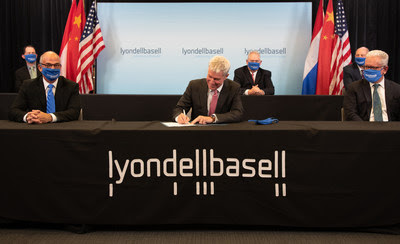
“As China’s economy continues to grow, so will demand for propylene oxide and styrene monomer. We are excited to expand our relationship with Sinopec through this joint venture in order to better serve China’s domestic market. Sinopec’s outstanding operational capabilities combined with LyondellBasell’s leading technology is a win-win,” said Torkel Rhenman, Executive Vice President, Intermediates and Derivatives, and Refining.
“Built on the remarkable success of our first Joint Venture, we are very delighted to continue to enhance the important partnership with LyondellBasell for future achievements. The establishment of the new Joint Venture is not only in line with the national drive for further opening-up, but also a vital step for Sinopec to deepen and expand our international operations,” said Yu Baocai, Senior Vice President of Sinopec Corp. “We have great expectations on the new Joint Venture for propelling the economic development of the city of Ningbo to a new level. During the 14th Five-Year Plan period (2021-2025), Sinopec will continue to promote green industrial upgrading and innovative transformation, contributing to the everlasting economic growth of Zhejiang Province and Eastern China, and even the development of the chemical industry in China.”
The JV will construct a new PO and SM unit in Zhenhai Ningbo, China. This new unit will have 275 kilotons per annum (KTA) capacity of PO and 600 KTA capacity of SM. The unit will use LyondellBasell’s leading PO / SM technology. Products produced by the JV will be marketed equally by both partners, significantly expanding their respective participation in the Chinese market for PO and SM. Startup is expected at the end of 2021.
The formation of the JV is subject to approvals by relevant government authorities, including antitrust review by the State Administration for Market Regulation. LyondellBasell expects to make its equity contribution to the JV during the first quarter of 2021.
According to IHS Markit, China accounts for more than 60 percent of chemical market demand in Asia and represents 40 percent of global chemical market growth over the next decade. PO and SM are core products of LyondellBasell and are used in a variety of applications including packaging, building and construction, furnishings and transportation.
LyondellBasell operates five wholly-owned facilities in China which are located in Guangzhou, Suzhou, Dalian, Dongguan and Changshu.
About LyondellBasell
LyondellBasell (NYSE: LYB) is one of the largest plastics, chemicals and refining companies in the world. Driven by its employees around the globe, LyondellBasell produces materials and products that are key to advancing solutions to modern challenges like enhancing food safety through lightweight and flexible packaging, protecting the purity of water supplies through stronger and more versatile pipes, improving the safety, comfort and fuel efficiency of many of the cars and trucks on the road, and ensuring the safe and effective functionality in electronics and appliances. LyondellBasell sells products into more than 100 countries and is the world’s largest producer of polymer compounds and the largest licensor of polyolefin technologies. In 2020, LyondellBasell was named to Fortune Magazine’s list of the “World’s Most Admired Companies” for the third consecutive year. More information about LyondellBasell can be found at www.lyondellbasell.com.
About Sinopec
Sinopec Group is the largest oil and petrochemical products supplier and the second largest oil and gas producer in China, the largest refining company, and the third largest chemical company in the world. Its total number of gas stations ranks the second place in the world.
https://lyondellbasell.mediaroom.com/index.php?s=43&item=1356
January 26, 2021
LyondellBasell and Sinopec finalize joint venture to manufacture propylene oxide and styrene monomer in China
ROTTERDAM, Netherlands and BEIJING, Jan. 25, 2021 /PRNewswire/ — LyondellBasell (NYSE: LYB), one of the largest plastics, chemicals and refining companies in the world and the China Petroleum & Chemical Corporation (Sinopec), one of the largest integrated energy companies in China, today announced the signing of an agreement to form a 50:50 joint venture (JV) which will produce propylene oxide (PO) and styrene monomer (SM) in China’s domestic market. First announced on December 23, 2019, the JV will operate under the name Ningbo ZRCC LyondellBasell New Material Company Limited.
“As China’s economy continues to grow, so will demand for propylene oxide and styrene monomer. We are excited to expand our relationship with Sinopec through this joint venture in order to better serve China’s domestic market. Sinopec’s outstanding operational capabilities combined with LyondellBasell’s leading technology is a win-win,” said Torkel Rhenman, Executive Vice President, Intermediates and Derivatives, and Refining.
“Built on the remarkable success of our first Joint Venture, we are very delighted to continue to enhance the important partnership with LyondellBasell for future achievements. The establishment of the new Joint Venture is not only in line with the national drive for further opening-up, but also a vital step for Sinopec to deepen and expand our international operations,” said Yu Baocai, Senior Vice President of Sinopec Corp. “We have great expectations on the new Joint Venture for propelling the economic development of the city of Ningbo to a new level. During the 14th Five-Year Plan period (2021-2025), Sinopec will continue to promote green industrial upgrading and innovative transformation, contributing to the everlasting economic growth of Zhejiang Province and Eastern China, and even the development of the chemical industry in China.”
The JV will construct a new PO and SM unit in Zhenhai Ningbo, China. This new unit will have 275 kilotons per annum (KTA) capacity of PO and 600 KTA capacity of SM. The unit will use LyondellBasell’s leading PO / SM technology. Products produced by the JV will be marketed equally by both partners, significantly expanding their respective participation in the Chinese market for PO and SM. Startup is expected at the end of 2021.
The formation of the JV is subject to approvals by relevant government authorities, including antitrust review by the State Administration for Market Regulation. LyondellBasell expects to make its equity contribution to the JV during the first quarter of 2021.
According to IHS Markit, China accounts for more than 60 percent of chemical market demand in Asia and represents 40 percent of global chemical market growth over the next decade. PO and SM are core products of LyondellBasell and are used in a variety of applications including packaging, building and construction, furnishings and transportation.
LyondellBasell operates five wholly-owned facilities in China which are located in Guangzhou, Suzhou, Dalian, Dongguan and Changshu.
About LyondellBasell
LyondellBasell (NYSE: LYB) is one of the largest plastics, chemicals and refining companies in the world. Driven by its employees around the globe, LyondellBasell produces materials and products that are key to advancing solutions to modern challenges like enhancing food safety through lightweight and flexible packaging, protecting the purity of water supplies through stronger and more versatile pipes, improving the safety, comfort and fuel efficiency of many of the cars and trucks on the road, and ensuring the safe and effective functionality in electronics and appliances. LyondellBasell sells products into more than 100 countries and is the world’s largest producer of polymer compounds and the largest licensor of polyolefin technologies. In 2020, LyondellBasell was named to Fortune Magazine’s list of the “World’s Most Admired Companies” for the third consecutive year. More information about LyondellBasell can be found at www.lyondellbasell.com.
About Sinopec
Sinopec Group is the largest oil and petrochemical products supplier and the second largest oil and gas producer in China, the largest refining company, and the third largest chemical company in the world. Its total number of gas stations ranks the second place in the world.
https://lyondellbasell.mediaroom.com/index.php?s=43&item=1356
January 25, 2021
New biodegradable polyurethane foams are developed from wheat straw

Every year around 734 million tons of wheat straw are produced worldwide, a large amount of waste, which is cheap and has had no well-defined use until now. Recently, the RNM-271 Chemical Engineering and FQM-383 NANOVAL Organic Chemistry research groups at the University of Córdoba have been able to give a new use to this agricultural excess material, by using it as the foundation in order to manufacture polyurethane foams.
Also known as foam rubber, this plastic material, often manufactured from petroleum by-products, is extremely versatile within the industry and has multiple uses in the construction and automobile sectors as a sealant as well as a thermal and acoustic insulator.
The new paper, published on the cover of Polymers, and on which Chile’s Advanced Polymers Research Center (CIPA) also participated, has found a new purpose for this wheat waste. After this waste is liquefied, polyols are obtained. These polyols are one of the key compounds that play a role in the chemical reaction that makes polyurethane foams.
To date, castor oil has been one of the main candidates in the race to obtain sustainable polyurethane foam that does not require petroleum. The issue, as explained by one of the main authors of the paper, Esther Rincón, is that this vegetable oil “does not offer complete hardness and dryness once exposed to air,” one of the keys to proper rubber foam formation.
For this reason, the new research proposed substituting 50% of this castor oil for wheat straw, with results that offer up very similar characteristics to those generated by traditional manufacturing processes that use non-renewable compounds: “We were able to obtain very desirable parameters in the manufacturing of foam, converting 96% of the wheat used with an almost maximum performance,” explains Esther Rincón. In addition, as pointed out by the researcher, they obtained higher levels of biodegradability than those reached by the products currently on the market, meaning that this material takes less time to decompose.
Use in plant nurseries
While these new polyurethane foams could have infinite applications and even be manufactured with other kinds of biomass, the research group, in the second stage of their study, will use them in plant nurseries to help with plant growth. “Instead of watering the plant, and with the aim of dealing with drought problems and preventing overwatering, we would inject the water into the foam so that the plant can consume it as needed,” explains the researcher.
https://koliasa.com/new-biodegradable-polyurethane-foams-are-developed-from-wheat-straw/
January 25, 2021
New biodegradable polyurethane foams are developed from wheat straw
Every year around 734 million tons of wheat straw are produced worldwide, a large amount of waste, which is cheap and has had no well-defined use until now. Recently, the RNM-271 Chemical Engineering and FQM-383 NANOVAL Organic Chemistry research groups at the University of Córdoba have been able to give a new use to this agricultural excess material, by using it as the foundation in order to manufacture polyurethane foams.
Also known as foam rubber, this plastic material, often manufactured from petroleum by-products, is extremely versatile within the industry and has multiple uses in the construction and automobile sectors as a sealant as well as a thermal and acoustic insulator.
The new paper, published on the cover of Polymers, and on which Chile’s Advanced Polymers Research Center (CIPA) also participated, has found a new purpose for this wheat waste. After this waste is liquefied, polyols are obtained. These polyols are one of the key compounds that play a role in the chemical reaction that makes polyurethane foams.
To date, castor oil has been one of the main candidates in the race to obtain sustainable polyurethane foam that does not require petroleum. The issue, as explained by one of the main authors of the paper, Esther Rincón, is that this vegetable oil “does not offer complete hardness and dryness once exposed to air,” one of the keys to proper rubber foam formation.
For this reason, the new research proposed substituting 50% of this castor oil for wheat straw, with results that offer up very similar characteristics to those generated by traditional manufacturing processes that use non-renewable compounds: “We were able to obtain very desirable parameters in the manufacturing of foam, converting 96% of the wheat used with an almost maximum performance,” explains Esther Rincón. In addition, as pointed out by the researcher, they obtained higher levels of biodegradability than those reached by the products currently on the market, meaning that this material takes less time to decompose.
Use in plant nurseries
While these new polyurethane foams could have infinite applications and even be manufactured with other kinds of biomass, the research group, in the second stage of their study, will use them in plant nurseries to help with plant growth. “Instead of watering the plant, and with the aim of dealing with drought problems and preventing overwatering, we would inject the water into the foam so that the plant can consume it as needed,” explains the researcher.
https://koliasa.com/new-biodegradable-polyurethane-foams-are-developed-from-wheat-straw/
 Everchem Updates Archive
 Sign Up for Email Updates