
The Urethane Blog
August 17, 2020
Chinese mattress maker leases manufacturing facility in Goodyear
In This Article
- CRE Brokerages Topic
- Colliers International Company
- Commercial Real Estate Industry
- First Industrial Realty Trust, Inc. Company
- Manufacturing Industry
By Corina Vanek – Reporter, Phoenix Business Journal Aug 13, 2020, 3:48pm EDT
MLILY, a mattress and memory foam product manufacturer, has leased 643,798 square feet of industrial space in Goodyear for a manufacturing facility, where it aims to employ 300 people.
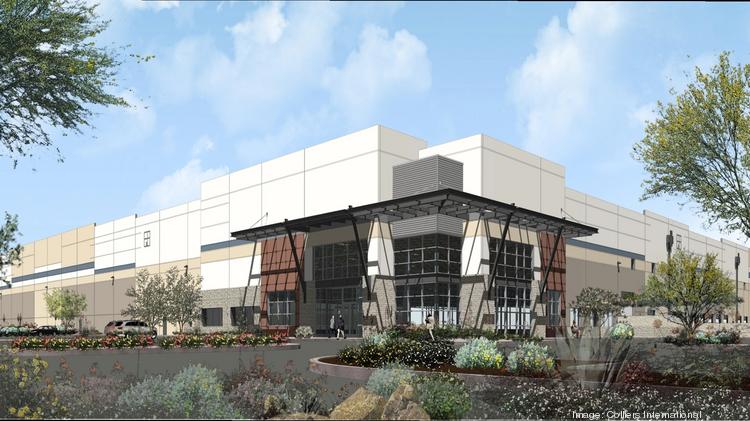
The company, which is a venture of China-based Healthcare Co., leased space at First Park at PV303, at 3350 N. Cotton Lane, which is under construction and will come online in late 2020. MLILY will lease the entire building for a 10-year term and will take occupancy of the space in mid-December.
Payson MacWilliam, Don MacWilliam, and Chris Reese with Colliers International in Phoenix partnered with Yang Chen in the Colliers International San Francisco office in representing MLILY.
The property is owned by Chicago-based First Industrial Realty Trust Inc.
“By manufacturing in Arizona, MLILY can continue to provide high quality products at a lower cost to U.S. consumers, while expanding its global footprint,” Yang Chen, managing director, Asia Pacific Division with Colliers International in San Francisco said in a statement.
The company makes mattresses, mattress toppers, bases and pillows. The company has factories in China, Thailand, Serbia and the United States.
“MLILY is entering Arizona with this sizable manufacturing facility, which reflects the continued appeal of our industrial marketplace,” Colliers’ Payson MacWilliam said in a statement. “The fundamentals of our pro-business environment attracted this international corporation to Phoenix, which will augment its existing U.S. presence in South Carolina.”
August 17, 2020
Chinese mattress maker leases manufacturing facility in Goodyear
In This Article
- CRE Brokerages Topic
- Colliers International Company
- Commercial Real Estate Industry
- First Industrial Realty Trust, Inc. Company
- Manufacturing Industry
By Corina Vanek – Reporter, Phoenix Business Journal Aug 13, 2020, 3:48pm EDT
MLILY, a mattress and memory foam product manufacturer, has leased 643,798 square feet of industrial space in Goodyear for a manufacturing facility, where it aims to employ 300 people.
The company, which is a venture of China-based Healthcare Co., leased space at First Park at PV303, at 3350 N. Cotton Lane, which is under construction and will come online in late 2020. MLILY will lease the entire building for a 10-year term and will take occupancy of the space in mid-December.
Payson MacWilliam, Don MacWilliam, and Chris Reese with Colliers International in Phoenix partnered with Yang Chen in the Colliers International San Francisco office in representing MLILY.
The property is owned by Chicago-based First Industrial Realty Trust Inc.
“By manufacturing in Arizona, MLILY can continue to provide high quality products at a lower cost to U.S. consumers, while expanding its global footprint,” Yang Chen, managing director, Asia Pacific Division with Colliers International in San Francisco said in a statement.
The company makes mattresses, mattress toppers, bases and pillows. The company has factories in China, Thailand, Serbia and the United States.
“MLILY is entering Arizona with this sizable manufacturing facility, which reflects the continued appeal of our industrial marketplace,” Colliers’ Payson MacWilliam said in a statement. “The fundamentals of our pro-business environment attracted this international corporation to Phoenix, which will augment its existing U.S. presence in South Carolina.”
August 17, 2020
Karoon Co Exporting Isocyanates to Companies in Asia and Europe

EghtesadOnline: Karoon Petrochemical Company, in the southwestern port city of Mahshahr in Khuzestan Province, is the only producer of isocyanates in Iran. Half the output is for domestic use and the rest is exported, managing director of the company said.
“Isocyanates are important chemicals that are difficult to store and transport. Globally about 8 million tons of isocyanates are produced annually. Only nine companies in the world produce it and Karoon is one. We currently export to Europe and Asia,” ILNA quoted Alireza Sediqizadeh as saying.
“Our products are competitive with European and East Asian products both in price and quality,” he noted.
Isocyanates are a family of highly reactive, low molecular weight chemicals widely used in the manufacture of polyurethane foams, insulation, household refrigerators and board or laminate form, residential sheathing or commercial roofing, floor finishes, wood finishes and paint, adhesive and sealant compounds, automobile parts, shoe soles, roller skate wheels, pond liners and blood bags.
Karoon Plant is also the first producer of isocyanates in the Middle East. Its production of toluene diisocyanate (TDI), which is its main product, amounts to 40,000 tons a year.
The company also produces other petrochemicals such as methylene diphenyl diisocyanate (MDI) (40,000 tons) acid clorhidric (116,000 tons), nitric acid (92,000 tons), ortho toluenediamine (11,000 tons), Meta toluenediamine (31,000 tons), nitrobenzene (40,000 tons) and aniline (30,000 tons).
Companies in Iraq, Turkey, India, Russia, Azerbaijan, Albania, Greece, Sweden, Peru, Kenya, Nigeria and Italy are the main foreign buyers.
“In 2017 we imported about $60 million worth of raw materials to produce isocyanates. This declined to $9 million in 2019 with the efforts of domestic experts and engineers who were able to manufacture the essential raw materials. This saved $51 million that was spent on importing other materials,” Sediqizadeh said.
Iran was a large importer of polyols, which are co-components of isocyanates and used together in the production of PU foam products. It mainly imported polyols from northeast Asia, where most producers are based.
Although Iran still imports the material, the CEO hopes that next year (starting March 2021), “we will no longer need to import in this sector and celebrate the self-sufficiency of this product.”
“Karoon Petrochemical Company started producing isocyanates through a joint venture with Chematur Engineering AB of Sweden. However, the foreign company walked away,” he added. “This did not discourage us and we focused on domestic experts and engineers and wrapped up the project”.
August 17, 2020
Karoon Co Exporting Isocyanates to Companies in Asia and Europe
EghtesadOnline: Karoon Petrochemical Company, in the southwestern port city of Mahshahr in Khuzestan Province, is the only producer of isocyanates in Iran. Half the output is for domestic use and the rest is exported, managing director of the company said.
“Isocyanates are important chemicals that are difficult to store and transport. Globally about 8 million tons of isocyanates are produced annually. Only nine companies in the world produce it and Karoon is one. We currently export to Europe and Asia,” ILNA quoted Alireza Sediqizadeh as saying.
“Our products are competitive with European and East Asian products both in price and quality,” he noted.
Isocyanates are a family of highly reactive, low molecular weight chemicals widely used in the manufacture of polyurethane foams, insulation, household refrigerators and board or laminate form, residential sheathing or commercial roofing, floor finishes, wood finishes and paint, adhesive and sealant compounds, automobile parts, shoe soles, roller skate wheels, pond liners and blood bags.
Karoon Plant is also the first producer of isocyanates in the Middle East. Its production of toluene diisocyanate (TDI), which is its main product, amounts to 40,000 tons a year.
The company also produces other petrochemicals such as methylene diphenyl diisocyanate (MDI) (40,000 tons) acid clorhidric (116,000 tons), nitric acid (92,000 tons), ortho toluenediamine (11,000 tons), Meta toluenediamine (31,000 tons), nitrobenzene (40,000 tons) and aniline (30,000 tons).
Companies in Iraq, Turkey, India, Russia, Azerbaijan, Albania, Greece, Sweden, Peru, Kenya, Nigeria and Italy are the main foreign buyers.
“In 2017 we imported about $60 million worth of raw materials to produce isocyanates. This declined to $9 million in 2019 with the efforts of domestic experts and engineers who were able to manufacture the essential raw materials. This saved $51 million that was spent on importing other materials,” Sediqizadeh said.
Iran was a large importer of polyols, which are co-components of isocyanates and used together in the production of PU foam products. It mainly imported polyols from northeast Asia, where most producers are based.
Although Iran still imports the material, the CEO hopes that next year (starting March 2021), “we will no longer need to import in this sector and celebrate the self-sufficiency of this product.”
“Karoon Petrochemical Company started producing isocyanates through a joint venture with Chematur Engineering AB of Sweden. However, the foreign company walked away,” he added. “This did not discourage us and we focused on domestic experts and engineers and wrapped up the project”.
August 14, 2020
Close to 150 large companies went bust in Q2 2020
29 July 2020 In the second quarter of 2020, 147 large companies — with turnover above EUR50mn — went insolvent, representing an increase by +70 cases compared to Q1 2020 (+91% q/q) and +73 compared to Q2 of last year (+99% y/y). The cumulative turnover of insolvent major companies also surged to EUR106.9bn (+155% q/q and +138% y/y). All three sub-categories of companies we monitor by size of turnover posted a record level of major insolvencies : 22 cases in Q2 (+12 q/q) for those with a turnover exceeding EUR1bn; 77 (+46) for those with a turnover between EUR100mn and EUR1bn; and 48 (+12) for those with turnover between EUR50mn and EUR100mn. In this context, the average turnover of major companies becoming insolvent jumped to EUR727mn in Q2 2020 compared to EUR544mn in Q1 and EUR601mn in 2019.

Figure 1 – Number of major insolvencies* by quarter and size of turnover in EUR mn

(*) Companies with a turnover exceeding EUR50mn. Sources: Euler Hermes, Allianz Research
The largest surges were seen in Western Europe and the U.S. In Q2 2020, Western Europe posted the largest increase in major insolvencies to 64 (+38 cases q/q), ahead of North America, which recorded 52 cases (+30 q/q). Western Europe also remains the largest contributor to the global insolvency count for the first half of the year with 90 cases (+21 compared to H1 2019), again ahead of North America with 74 cases (+43). Asia experienced a stable number of major insolvencies in both Q1 and Q2 (20 cases), pushing down the outcome for H1 to 40 (-7 cases y/y). At the same time, North America posted a noticeable rise in insolvencies of companies with turnovers exceeding EUR1bn, with 17 cases in Q2, after 6 in Q1. The U.S. tops the list with 20 out of the 30 largest insolvencies registered in H1 2020, ahead of China (5) and Singapore (2).
Retail, services and energy were the most impacted sectors, but automotive also stood out with a noticeable increase in major insolvencies. Retail and services posted 37 and 24 major insolvencies, respectively (i.e. +22 cases q/q) and +17 q/q), followed by energy with 17 cases (+10 q/q). While there was a pause in major insolvencies in the construction sector, they accelerated in the automotive sector, which recorded 13 cases in Q2 notably in the automotive suppliers, retailers and car rental sub-sectors. The list of more resilient sectors remains pretty unchanged from Q1 with in particular chemicals, computer/telecom and pharmaceuticals – on top of transport equipment. However, the average size (in terms of turnover) of their insolvent companies was two to three times larger than the average in H1 2020.
Where are the hotspots in Q2 2020? Retail and services in Western Europe and North America, energy in North America and automotive in Western Europe. In Q2 2020, the highest number of major insolvencies was recorded in retail in Western Europe (18), ahead of retail (14) and energy (14) in North America, and automotive (11) and services (11) in Western Europe. Looking at the first half of 2020 as a whole, the outcome is pretty similar in terms of ranking and relative frequency in major insolvencies. H1 2020 posted the highest number of major insolvencies in retail (52 cases) and services (31). For both sectors, these were mainly in North America and Western Europe. Yet, two other sectors stood out with more than 10 major insolvencies by region: energy in North America (18) and automotive in Western Europe (14). Construction comes right after in all regions but North America.
What does this mean for companies? As the Covid-19 pandemic creates an insolvency time bomb, we expect a stronger risk of domino effects, notably on fragile providers along supply chains.
For our full insolvency outlook, see our recent report : Calm before the storm: Covid-19 and the business insolvency time bomb.
Figure 2 – Number of major insolvencies* by sector and by region

(*) Companies with a turnover exceeding EUR50mn. Sources: Euler Hermes, Allianz Research
Figure 3 – Number of major insolvencies* in H1 2020 by sector and size of turnover in EUR mn

(*) Companies with a turnover exceeding EUR50mn. Sources: Euler Hermes, Allianz Research
 Everchem Updates Archive
 Sign Up for Email Updates