
The Urethane Blog
July 27, 2020
A trucking giant quietly agreed to shell out $28 million to its truck drivers — and it could be a ‘wake-up call’ for how the industry pays them
Rachel Premack Jul 23, 2020, 1:50 PM
- A Missouri-based trucking giant is settling two class-action suits with its truck drivers, offering $28 million.
- One of the cases against New Prime Inc. went all the way to the Supreme Court.
- Experts say the case and its settlement could set a precedent for truck drivers who say their companies aren’t paying fair wages.
- Truck drivers at companies like Walmart and PAM Transport have recently sued for the right to be paid for every hour on the road.
- Visit Business Insider’s homepage for more stories.
After a years-long court battle that went all the way to the Supreme Court, a Missouri-based trucking giant is settling two class-action suits with its truck drivers, said a court filing from Monday.
Up to 26,000 current and former drivers are eligible for a $28 million payout from New Prime Inc., known as Prime, the filing said.
Both of the class-action suits — Oliveira v. New Prime and Haworth v. New Prime — involved truck drivers for Prime who said they were not fairly paid. A case filed by a truck driver named Dominic Oliveira went all the way to the Supreme Court, which unanimously sided with Oliveira.
The ruling from the nation’s highest court concerned Prime’s ability to settle its dispute with Oliveira through arbitration. The Court ruled in favor of Oliveira, which also had wide-ranging implications for how drivers are paid.
“We are proud of how we treat all of our associates, and we work hard to get it right,” Prime’s general counsel, Steve Crawford, wrote in an email to Business Insider. “Nevertheless, we decided that moving past this litigation was the right thing to do.”
The core issue in both cases stemmed from a decades-old practice in the trucking industry in which drivers are paid per mile, not hourly or annually. Oliveira argued that he deserved to be paid at least the minimum wage.
Truck drivers spend weeks on the road for work and hours every day doing nondriving work tasks. In one 2016 survey, almost 63% of truck drivers said they waited at least three hours every time they were at a shipping dock. This waiting time typically goes unpaid.
The US Department of Labor says that “any work which an employee is required to perform while traveling must, of course, be counted as hours worked.”
An emerging trend in favor of the truck drivers
Experts say the case and its massive settlement could set a precedent for truck drivers who say their companies aren’t paying fair wages. Cathy Roberson, the president of the research firm Logistics Trends & Insights, said this may create a path for truck drivers who have documented evidence of unpaid work to fight for back pay in court.
“It could tip the scale in favor of the driver,” Roberson told Business Insider. “For those that do potentially launch action against a trucking firm, a precedent has been set already and they could refer to this.”
She added that “in a way, it’s almost like a wake-up call.”
America’s $800 billion trucking industry relies on owner-operators, who own their trucks and may be contracted with certain companies. About 350,000 to 400,000 of the nation’s 1.9 million truck drivers are owner-operators.
Like most trucking companies, Prime classifies its owner-operators as contractors — and therefore not privy to certain worker protections. The Supreme Court ruled in its unanimous opinion last year that Prime’s owner-operators were indeed employees.
“Considering the continuing efforts of mega-carriers to thwart the rights of drivers, the decision is an important one for protecting the rights of interstate drivers to have their claims heard publicly and in a collective fashion,” Justin Swidler, an employment-law attorney who often represents truck drivers, told Business Insider after the Supreme Court ruling.
Crawford said Prime believes its business model is “completely lawful.” The court case “primarily dealt with a challenge to the independent contractor business model for truckers,” Crawford wrote in an email.
“The independent contractor has been a long standing piece of our company and trucking in America,” Crawford said. “We believe that our business model is completely lawful and compliant with all regulations while providing drivers the opportunity to earn, based on their own efficiency and productivity, excellent compensation.”
It’s the latest legal action to push the boundaries of a question recently haunting America’s courts: whether truck drivers deserve minimum wage for nondriving duties.
A federal court in California told Walmart in January that it owed its California truck drivers $54.6 million. The opinion said Walmart violated the law when it didn’t pay truck drivers for rest breaks and other nondriving time.
In October 2018, a federal court in Arkansas decided in a class-action suit against PAM Transport that drivers should be paid for every hour they spend in their trucks while not sleeping — 16 hours a day of at least minimum-wage pay.
In 2017, a Nebraska court said Werner Enterprises, a trucking giant accused of pay-practice violations, must pay $780,000 to 52,000 student truck drivers. In 2016, another major carrier, C.R. England, paid $2.35 million in back wages to more than 6,000 drivers.
https://www.businessinsider.com/trucking-prime-agrees-pay-truck-drivers-28-million-2020-7
July 27, 2020
July 24, 2020
Subject: Force Majeure
Dear Valued Customer:
On the week of July 20th, the BASF Geismar, LA TDI plant experienced an unexpected equipment failure which impacted our ability to operate the facility. As a result, BASF is declaring force majeure on TDI and TDI containing blends effective immediately.
We are actively working to make repairs and are taking all necessary steps to resume normal operations. Current projections indicate the production interruption will last at least two weeks. Your BASF account manager will be in contact with you to discuss the status of current and future orders. We appreciate your patience and understanding during this event and will keep you informed of progress.
July 22, 2020
US sales of existing homes jump 20% after a 3-month slump
By JOSH BOAK – – Wednesday, July 22, 2020
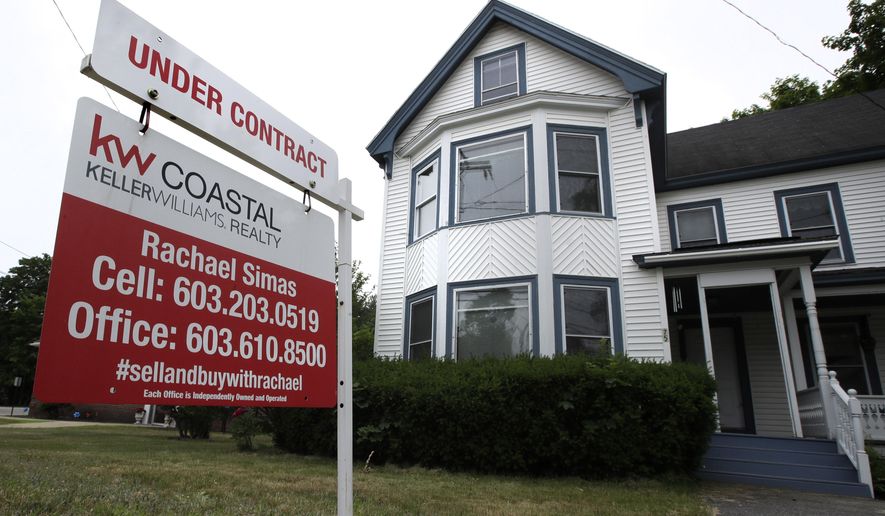
BALTIMORE (AP) – Americans stepped up their home purchases in June by a robust 20.7% after the pandemic had caused sales to crater in the prior three months. But the housing market could struggle to rebound further in the face of the resurgent viral outbreak and a shrinking supply of homes for sale.
Sales of existing homes rose last month to a seasonally adjusted annual rate of 4.72 million, the National Association of Realtors said Wednesday. Despite the sharp gain, purchases are still down 11.3% from a year ago, when homes had sold at an annual pace of 5.32 million. And Lawerence Yun, the Realtors’ chief economist, noted that sales remain roughly 20% below their pre-pandemic levels.
At the same time, housing has managed to avoid a deeper slump from the severe recession caused by the coronavirus. Demand has remained strong among buyers who have managed to weather the downturn, while record-low mortgage rates have helped sustain affordability.
Even so, the number of property listings has plunged 18.2% from a year ago to 1.57 million. It’s the 13th straight month of shrinking supply on an annual basis. The shortage of homes makes it unlikely that the housing industry can significantly boost the overall economy.
Home buyers typically purchase new furniture and fix up older properties. Their ability to deliver such a spending boost is constrained if they can’t find an available house. The limited supply is also forcing up prices just when many Americans are struggling with financial uncertainty because of the recession.
The combination of steady demand and falling mortgage rates has helped fuel a 3.5% rise in the median price of an existing home over the past year to $295,300.
https://www.washingtontimes.com/news/2020/jul/22/us-sales-of-existing-homes-jump-20-after-a-3-month/
 Everchem Updates Archive
 Sign Up for Email Updates