
The Urethane Blog
November 19, 2019
A good report . . .
U.S. housing starts rebound; permits highest in over 12 years

WASHINGTON, (Reuters) – U.S. homebuilding rebounded in October and permits for future home construction jumped to a more than 12-year high, pointing to strength in the housing market amid lower mortgage rates.
FILE PHOTO: Development and construction continues on a large scale housing project of over 600 homes in Oceanside, California, U.S., June 25, 2018. REUTERS/Mike Blake
Housing starts increased 3.8% to a seasonally adjusted annual rate of 1.314 million units last month, with single-family construction rising for a fifth straight month and activity in the volatile multi-family sector rebounding solidly, the Commerce Department said on Tuesday.
Data for September was revised to show homebuilding declining to a pace of 1.266 million units, instead of decreasing to a rate of 1.256 million units as previously reported.
Economists polled by Reuters had forecast housing starts increasing to a pace of 1.320 million units in October.
Housing starts advanced 8.5% on a year-on-year basis in October. Building permits surged 5.0% to a rate of 1.461 million units in October, the highest level since May 2007. Permits were driven by the single-family housing segment, which increased 3.2% to the highest level since August 2007.
The housing market, the most sensitive sector to interest rates, has perked up in recent months, catching up to the Federal Reserve’s monetary policy easing, which has pushed down mortgage rates from last year’s multi-year highs.
Read more here: https://www.reuters.com/article/us-usa-economy/u-s-housing-starts-rebound-permits-highest-in-over-12-years-idUSKBN1XT1S1?feedType=RSS&feedName=newsOne
November 19, 2019
A good report . . .
U.S. housing starts rebound; permits highest in over 12 years
WASHINGTON, (Reuters) – U.S. homebuilding rebounded in October and permits for future home construction jumped to a more than 12-year high, pointing to strength in the housing market amid lower mortgage rates.
FILE PHOTO: Development and construction continues on a large scale housing project of over 600 homes in Oceanside, California, U.S., June 25, 2018. REUTERS/Mike Blake
Housing starts increased 3.8% to a seasonally adjusted annual rate of 1.314 million units last month, with single-family construction rising for a fifth straight month and activity in the volatile multi-family sector rebounding solidly, the Commerce Department said on Tuesday.
Data for September was revised to show homebuilding declining to a pace of 1.266 million units, instead of decreasing to a rate of 1.256 million units as previously reported.
Economists polled by Reuters had forecast housing starts increasing to a pace of 1.320 million units in October.
Housing starts advanced 8.5% on a year-on-year basis in October. Building permits surged 5.0% to a rate of 1.461 million units in October, the highest level since May 2007. Permits were driven by the single-family housing segment, which increased 3.2% to the highest level since August 2007.
The housing market, the most sensitive sector to interest rates, has perked up in recent months, catching up to the Federal Reserve’s monetary policy easing, which has pushed down mortgage rates from last year’s multi-year highs.
Read more here: https://www.reuters.com/article/us-usa-economy/u-s-housing-starts-rebound-permits-highest-in-over-12-years-idUSKBN1XT1S1?feedType=RSS&feedName=newsOne
November 18, 2019
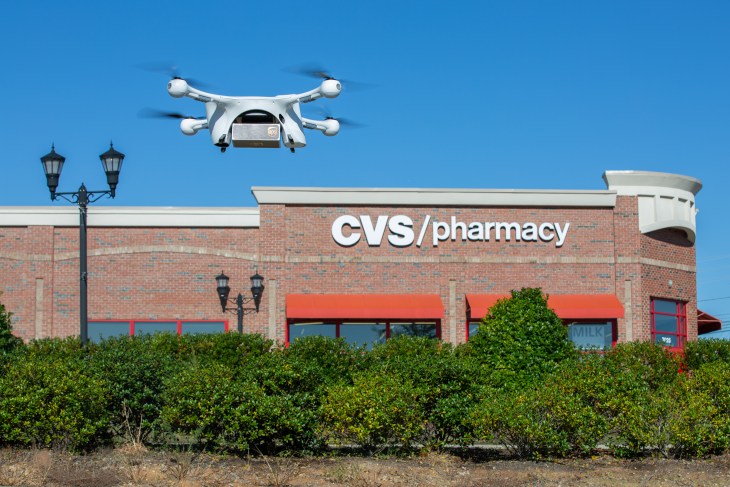
UPS is rolling along with its drone delivery program, working with partner CVS Pharmacy to deliver prescription drugs to customer doorsteps via its newly deployed commercial drones. UPS delivered medications to two paying customers on November 1 using the Matternet M2 drone system that the logistics company is using in partnership with Matternet ..
UPS received approval last month from the FAA to fly its fleet of commercial drones in service of customers, and now it plans to iterate its drone delivery program “in the coming months,” with the aim of ensuring that it can deploy UAVs in a commercial capacity at increasing scale. It also launched “UPS Flight Forward,” a dedicated division focused on autonomous drone delivery.
For these early deliveries, drones were loaded with prescriptions filled by pharmacists at a CVS location in Cary, NC. Once a UPS employee loaded the cargo onto the drones, they flew autonomously from the store location to nearby customer homes, dropping off the packages from a hover height of around 20 feet above these locations. One of the customers has mobility challenges that would make travel to a CVS store for prescription pickup difficult, UPS points out.
This isn’t the first time UPS has deployed drones in a healthcare industry setting: The company has been working with Mattternet and WakeMed Hospital in Raleigh, doing commercial deliveries of medical samples in a B2B setting.
UPS and CVS deliver prescription medicine via drone to US residential customers for the first time
November 18, 2019
UPS and CVS deliver prescription medicine via drone to US residential customers for the first time
UPS is rolling along with its drone delivery program, working with partner CVS Pharmacy to deliver prescription drugs to customer doorsteps via its newly deployed commercial drones. UPS delivered medications to two paying customers on November 1 using the Matternet M2 drone system that the logistics company is using in partnership with Matternet ..
UPS received approval last month from the FAA to fly its fleet of commercial drones in service of customers, and now it plans to iterate its drone delivery program “in the coming months,” with the aim of ensuring that it can deploy UAVs in a commercial capacity at increasing scale. It also launched “UPS Flight Forward,” a dedicated division focused on autonomous drone delivery.
For these early deliveries, drones were loaded with prescriptions filled by pharmacists at a CVS location in Cary, NC. Once a UPS employee loaded the cargo onto the drones, they flew autonomously from the store location to nearby customer homes, dropping off the packages from a hover height of around 20 feet above these locations. One of the customers has mobility challenges that would make travel to a CVS store for prescription pickup difficult, UPS points out.
This isn’t the first time UPS has deployed drones in a healthcare industry setting: The company has been working with Mattternet and WakeMed Hospital in Raleigh, doing commercial deliveries of medical samples in a B2B setting.
UPS and CVS deliver prescription medicine via drone to US residential customers for the first time
November 15, 2019
In Shock To $3.5 Trillion Healthcare Industry, Admin Will Force Hospitals To Disclose “Secret” Insurance Rates
In a move that will send shockwaves across the $3.5 trillion US healthcare industry, on Friday the Trump administration unveiled a plan that would – for the first time – force hospitals and insurers to disclose their secret negotiated rates, the WSJ reported.
In hopes of bringing some transparency and openness to a pathologically opaque industry, one which many have blamed for being behind the explosion in US underfunded liabilities to more than $100 trillion, administration officials said the final rule will compel hospitals in 2021 to publicize the rates they negotiate with individual insurers for all services, including drugs, supplies, facility fees and care by doctors who work for the facility. The White House would also propose extending the disclosure requirement to the $670 billion health-insurance industry. Insurance companies and group health plans that cover employees would have to disclose negotiated rates, as well as previously paid rates for out-of-network treatment, in computer-searchable file formats.
As the WSJ notes, the proposal covering insurers is the newest part of the price-disclosure initiative, and would include the private-employer market, where about 158 million people get their health insurance. Insurers and group health plans would have to put the negotiated rates into a file that third-party developers could incorporate into shopping tools. As with hospitals, insurers will have to create a web-based tool for beneficiaries that discloses the list price, the negotiated rate, cost sharing, and the amount left on a plan deductible, as well as allowable out-of-network rates.
The requirements, which are more far-reaching than industry leaders had expected, could upend commercial health-care markets, which are rife with purposefully complex systems of hidden charges and secret discounts which enable the fleecing of either end users or chronically underfunded government healthcare programs. The price-disclosure initiative has become a cornerstone of the president’s 2020 re-election health strategy, despite threats of legal action from industry.
“Right now there is too much arbitrage in the system,” a senior administration official said in an interview Thursday with The Wall Street Journal. “There are a ton of vested interests who will oppose this. We expect to get sued. We’re really goring people’s oxes.”
Hospitals and insurers typically treat specific prices for medical services as closely held secrets, with contracts between the insurers and hospital systems generally bound by confidentiality agreements. Policy makers, employers and patients are often unable to see clearly which hospital systems and doctor practices are driving high costs.
Ironically just a few days ago we showed why “US Healthcare Costs Are Exploding“, and the primary culprit was soaring insurance and medical care service fees. If there is one thing that could potentially put a dent in this exponential surge, it is the elimination of all the various secret price deals and arrangements.
Why is transaprency good? Because as studies have shown, consumers are often required to pay more out of pocket when they don’t have the price information they need to comparison shop. Employer health-plan deductibles are outpacing wage growth and have risen to an average $1,655 for a single plan, according to a September survey by the Kaiser Family Foundation. Workers on average pay $6,015 toward the cost of their coverage.
Taken together, the WSJ notes, “the price-disclosure initiatives could reshape the $3.5 trillion health-care industry.”
The good news: the much needed transparency finally may bring some – literal – price discovery to what has traditionally been the most opaque, and lucrative, sector for the aging and chronically obese US population.
Meanwhile, as Americans lament soaring prices of, well, everything, after shelter and rent costs, the second biggest drain of US household income and savings is insurance premiums.
https://www.zerohedge.com/health/shock-35-trillion-healthcare-industry-trump-admin-will-force-hospitals-disclose-secret
 Everchem Updates Archive
 Sign Up for Email Updates


