Asian Markets
February 15, 2021
Propylene Oxide in Korea
S-Oil expected to continue recovery this year
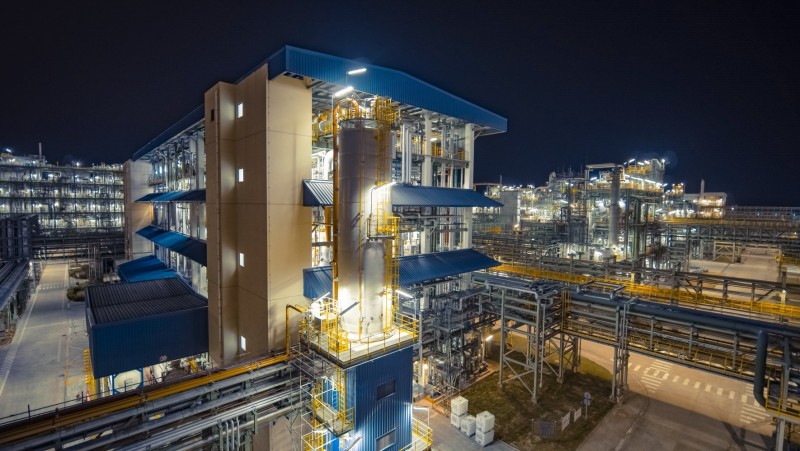
신문5면 1단 기사입력 2021.02.14. 오후 4:42 최종수정 2021.02.14. 오후 4:45 기사원문스크랩 좋아요 좋아요 평가하기 2 댓글 글자 크기 변경하기인쇄하기 보내기  S-Oil’s residue upgrading facility (S-Oil)
S-Oil, South Korea’s No. 3 refiner, is expected to see an improvement in profits this year, continuing a recovery momentum from the final quarter of 2020, according to the industry sources Sunday.
S-Oil said the company expects a recovery based on the increasing profitability of the company’s petrochemical products, including propylene oxide and polypropylene.
S-Oil noted the company plans to increase production capacity for propylene oxide through which the company managed to offset the weak refining margin in the last quarter.
During the October-December period, S-Oil’s refining business posted an operating loss of 89.7 billion won. However, the company’s petrochemical and lube oil units posted 72.7 billion won and 110 billion won of operating profits.
S-Oil was the only refiner — among four local refiners in the nation — that avoided plunging into the red.
Increasing profitability of propylene oxide, in particular, helped the company, the firm said.
The price of propylene oxide per metric ton in the fourth quarter last year reached an all-time high since December 2014, increasing 85 percent to reach $1,098 from $595 in the previous quarter.
The refiner said it plans to add its production capacity for propylene oxide by 30,000-40,000 tons to maximize profits from the petrochemical product.
The company also anticipated a recovery in refining margins in the wake of the global rollout of COVID-19 vaccines, which will boost travel demand worldwide.
According to Meritz Securities here, S-Oil’s operating profit this year is expected to hit 1.02 trillion won, turning around from the operating loss of 1.08 trillion won in 2020.
By Shim Woo-hyun (ws@heraldcorp.com)
February 15, 2021
Propylene Oxide in Korea
S-Oil expected to continue recovery this year
신문5면 1단 기사입력 2021.02.14. 오후 4:42 최종수정 2021.02.14. 오후 4:45 기사원문스크랩 좋아요 좋아요 평가하기 2 댓글 글자 크기 변경하기인쇄하기 보내기 S-Oil’s residue upgrading facility (S-Oil)
S-Oil, South Korea’s No. 3 refiner, is expected to see an improvement in profits this year, continuing a recovery momentum from the final quarter of 2020, according to the industry sources Sunday.
S-Oil said the company expects a recovery based on the increasing profitability of the company’s petrochemical products, including propylene oxide and polypropylene.
S-Oil noted the company plans to increase production capacity for propylene oxide through which the company managed to offset the weak refining margin in the last quarter.
During the October-December period, S-Oil’s refining business posted an operating loss of 89.7 billion won. However, the company’s petrochemical and lube oil units posted 72.7 billion won and 110 billion won of operating profits.
S-Oil was the only refiner — among four local refiners in the nation — that avoided plunging into the red.
Increasing profitability of propylene oxide, in particular, helped the company, the firm said.
The price of propylene oxide per metric ton in the fourth quarter last year reached an all-time high since December 2014, increasing 85 percent to reach $1,098 from $595 in the previous quarter.
The refiner said it plans to add its production capacity for propylene oxide by 30,000-40,000 tons to maximize profits from the petrochemical product.
The company also anticipated a recovery in refining margins in the wake of the global rollout of COVID-19 vaccines, which will boost travel demand worldwide.
According to Meritz Securities here, S-Oil’s operating profit this year is expected to hit 1.02 trillion won, turning around from the operating loss of 1.08 trillion won in 2020.
By Shim Woo-hyun (ws@heraldcorp.com)
February 8, 2021
Covestro Plans PUD Plant in China
Covestro plans new plants for polyurethane dispersions and polyester resins
- Significant increase of production capacity at the Shanghai site
- Environmentally compatible products replace solvent-based types
- Versatile applications in automobiles, furniture, textiles and shoes
Covestro’s existing production plant for polyurethane dispersions in Shanghai. © Covestro Polyurethane dispersions are used in many applications, including UV-curable gloss and matte floor coatings. © Covestro
Covestro is planning a new production facility for polyurethane dispersions (PUDs) at the Covestro Integrated Site in Shanghai, China (CISS) to address the rising demand for environmentally compatible coatings and adhesives in the Asia-Pacific region. A further line for polyester resins, from which PUDs are produced, is also to be built there. The plants are due to be completed in 2024.
“With these investments, we are preparing for the continued growth in demand for these products and expanding our leading global position,” says Michael Friede, Global Head of the Coatings, Adhesives, Specialties segment at Covestro. “In the future, customers will continue to rely on replacing solvent-based products with more sustainable waterborne systems with equally good properties. Thanks to our versatile production, we are at the same time flexible and can satisfy many different requirements.”
Covestro develops tailor-made PUDs for a wide range of industries, thereby creating new growth opportunities. The company is a leader in research and development of products and process technologies and supports customers around the globe with technical service.
Wide range of applications
The areas of application for polyurethane dispersions are highly diversified. For instance, Covestro raw materials from the Bayhydrol® UH, U and UV series and Bayhytherm® are used in basecoats for automotive primary and refinish coatings, as well as in wood and furniture coatings and robust floor coatings. Adhesives formulated with Dispercoll® U are used in furniture and shoe manufacturing as well as in the automotive industry.
The low-solvent components also play an important role in the production of coated textiles and fiber-reinforced plastics.
February 8, 2021
Covestro Plans PUD Plant in China
Covestro plans new plants for polyurethane dispersions and polyester resins
- Significant increase of production capacity at the Shanghai site
- Environmentally compatible products replace solvent-based types
- Versatile applications in automobiles, furniture, textiles and shoes
Covestro’s existing production plant for polyurethane dispersions in Shanghai. © Covestro Polyurethane dispersions are used in many applications, including UV-curable gloss and matte floor coatings. © Covestro
Covestro is planning a new production facility for polyurethane dispersions (PUDs) at the Covestro Integrated Site in Shanghai, China (CISS) to address the rising demand for environmentally compatible coatings and adhesives in the Asia-Pacific region. A further line for polyester resins, from which PUDs are produced, is also to be built there. The plants are due to be completed in 2024.
“With these investments, we are preparing for the continued growth in demand for these products and expanding our leading global position,” says Michael Friede, Global Head of the Coatings, Adhesives, Specialties segment at Covestro. “In the future, customers will continue to rely on replacing solvent-based products with more sustainable waterborne systems with equally good properties. Thanks to our versatile production, we are at the same time flexible and can satisfy many different requirements.”
Covestro develops tailor-made PUDs for a wide range of industries, thereby creating new growth opportunities. The company is a leader in research and development of products and process technologies and supports customers around the globe with technical service.
Wide range of applications
The areas of application for polyurethane dispersions are highly diversified. For instance, Covestro raw materials from the Bayhydrol® UH, U and UV series and Bayhytherm® are used in basecoats for automotive primary and refinish coatings, as well as in wood and furniture coatings and robust floor coatings. Adhesives formulated with Dispercoll® U are used in furniture and shoe manufacturing as well as in the automotive industry.
The low-solvent components also play an important role in the production of coated textiles and fiber-reinforced plastics.
February 1, 2021
Anti-dumping Investigation of TDI Imports to India
Case No. ADD (O.I.) 34/2019- Anti-dumping investigation concerning the imports of Toluene Di-Isocyanate from European Union, Saudi Arabia, Chinese Taipei and United Arab Emirates.
MINISTRY OF COMMERCE AND INDUSTRY
(Department of Commerce)
(DIRECTORATE GENERAL OF TRADE REMEDIES)
NOTIFICATION
FINAL FINDINGS
New Delhi, the 28th January, 2021
Case No. ADD (O.I.) 34/2019
Subject : Anti-dumping investigation concerning the imports of Toluene Di-Isocyanate from European Union, Saudi Arabia, Chinese Taipei and United Arab Emirates.
F. No. 6/43/2019-DGTR.—
A. BACKGROUND OF THE CASE
1. M/s Gujarat Narmada Valley Fertilizers & Chemicals Limited (hereinafter referred to as the “Applicant”) filed an application before the Designated Authority in accordance with Customs Tariff Act, 1975 (hereinafter also referred to as the “Act”) as amended from time to time and the Customs Tariff (Identification, Assessment and Collection of Antidumping Duty on Dumped Articles and for Determination of Injury) Rules, 1995 (hereinafter also referred to as the “Anti-Dumping Rules” or “Rules”) for initiation of anti-dumping investigation concerning the imports of Toluene Di-Isocyanate (hereinafter also referred to as the “product under consideration” or “PUC” or the “subject goods”) from European Union, Saudi Arabia, Chinese Taipei and United Arab Emirates (hereinafter also referred to as the “subject countries”).
2. The Authority on the basis of prima facie evidence submitted by the Applicant, issued a public notice vide Notification No. 6/43/2019-DGTR dated 31st January, 2020 in the Gazette of India Extraordinary initiating the investigation in accordance with Section 9A of the Act read with Rule 5 of the Rules to determine existence, degree and effect of the alleged dumping of the subject goods originating in or exported from the subject countries and to recommend the amount of anti-dumping duty (ADD), which if levied, would be adequate to remove the alleged injury to the Domestic Industry.
3. The Authority having regard to the Act and the Rules, considered it appropriate to recommend interim duties and issued Preliminary Findings vide Notification No. 6/43/2019-DGTR dated 4th September, 2020, recommending imposition of provisional ADD on the imports of the subject goods, originating in or exported from the subject countries. Accordingly, the Central Government vide Notification No.43/2020-Customs dated 2nd December, 2020 imposed provisional ADD on imports of the Toluene Di-Isocyanate from Chinese Taipei, European Union, Saudi Arabia and United Arab Emirates for a period of 6 months.
https://taxguru.in/custom-duty/anti-dumping-investigation-imports-toluene-di-isocyanate.html
 Everchem Updates Archive
  Sign Up for Email Updates