
Asian Markets
January 26, 2021
POSM JV Slated for LyondellBasell and Sinopec
LyondellBasell and Sinopec finalize joint venture to manufacture propylene oxide and styrene monomer in China
ROTTERDAM, Netherlands and BEIJING, Jan. 25, 2021 /PRNewswire/ — LyondellBasell (NYSE: LYB), one of the largest plastics, chemicals and refining companies in the world and the China Petroleum & Chemical Corporation (Sinopec), one of the largest integrated energy companies in China, today announced the signing of an agreement to form a 50:50 joint venture (JV) which will produce propylene oxide (PO) and styrene monomer (SM) in China’s domestic market. First announced on December 23, 2019, the JV will operate under the name Ningbo ZRCC LyondellBasell New Material Company Limited.
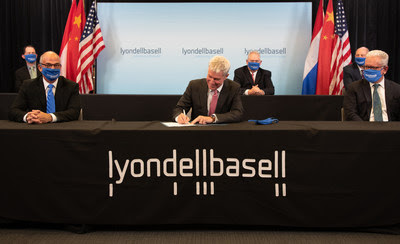
“As China’s economy continues to grow, so will demand for propylene oxide and styrene monomer. We are excited to expand our relationship with Sinopec through this joint venture in order to better serve China’s domestic market. Sinopec’s outstanding operational capabilities combined with LyondellBasell’s leading technology is a win-win,” said Torkel Rhenman, Executive Vice President, Intermediates and Derivatives, and Refining.
“Built on the remarkable success of our first Joint Venture, we are very delighted to continue to enhance the important partnership with LyondellBasell for future achievements. The establishment of the new Joint Venture is not only in line with the national drive for further opening-up, but also a vital step for Sinopec to deepen and expand our international operations,” said Yu Baocai, Senior Vice President of Sinopec Corp. “We have great expectations on the new Joint Venture for propelling the economic development of the city of Ningbo to a new level. During the 14th Five-Year Plan period (2021-2025), Sinopec will continue to promote green industrial upgrading and innovative transformation, contributing to the everlasting economic growth of Zhejiang Province and Eastern China, and even the development of the chemical industry in China.”
The JV will construct a new PO and SM unit in Zhenhai Ningbo, China. This new unit will have 275 kilotons per annum (KTA) capacity of PO and 600 KTA capacity of SM. The unit will use LyondellBasell’s leading PO / SM technology. Products produced by the JV will be marketed equally by both partners, significantly expanding their respective participation in the Chinese market for PO and SM. Startup is expected at the end of 2021.
The formation of the JV is subject to approvals by relevant government authorities, including antitrust review by the State Administration for Market Regulation. LyondellBasell expects to make its equity contribution to the JV during the first quarter of 2021.
According to IHS Markit, China accounts for more than 60 percent of chemical market demand in Asia and represents 40 percent of global chemical market growth over the next decade. PO and SM are core products of LyondellBasell and are used in a variety of applications including packaging, building and construction, furnishings and transportation.
LyondellBasell operates five wholly-owned facilities in China which are located in Guangzhou, Suzhou, Dalian, Dongguan and Changshu.
About LyondellBasell
LyondellBasell (NYSE: LYB) is one of the largest plastics, chemicals and refining companies in the world. Driven by its employees around the globe, LyondellBasell produces materials and products that are key to advancing solutions to modern challenges like enhancing food safety through lightweight and flexible packaging, protecting the purity of water supplies through stronger and more versatile pipes, improving the safety, comfort and fuel efficiency of many of the cars and trucks on the road, and ensuring the safe and effective functionality in electronics and appliances. LyondellBasell sells products into more than 100 countries and is the world’s largest producer of polymer compounds and the largest licensor of polyolefin technologies. In 2020, LyondellBasell was named to Fortune Magazine’s list of the “World’s Most Admired Companies” for the third consecutive year. More information about LyondellBasell can be found at www.lyondellbasell.com.
About Sinopec
Sinopec Group is the largest oil and petrochemical products supplier and the second largest oil and gas producer in China, the largest refining company, and the third largest chemical company in the world. Its total number of gas stations ranks the second place in the world.
https://lyondellbasell.mediaroom.com/index.php?s=43&item=1356
January 25, 2021
More on Containers
An ‘aggressive’ fight over containers is causing shipping costs to rocket by 300%
Published Sun, Jan 24 20218:58 PM ESTUpdated Mon, Jan 25 20219:53 AM ESTWeizhen Tan@weizentShareKey Points
- Shipping costs have skyrocketed as desperate companies wait weeks for containers and pay premium rates to get them, according to industry watchers.
- Ikea’s Singapore operations called it a “global transport crisis” and estimates 850 of its 8,500 products are affected by shipment delays.
- Chinese tech giant Alibaba’s logistic arm Cainiao launched a container booking service last week in response to the global shortage.
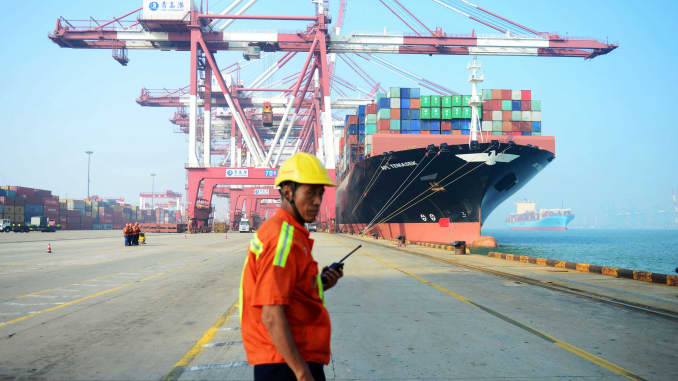
A Chinese worker looks on as a cargo ship is loaded at a port in Qingdao, eastern China’s Shandong province.AFP Contributor | AFP | Getty Images
SINGAPORE — A critical shortage of containers is driving up shipping costs and delays for goods purchased from China.
The pandemic and uneven global economic recovery has led to this problem cropping up in Asia, although other parts of the world have also been hit. Industry watchers said desperate companies wait weeks for containers and pay premium rates to get them, causing shipping costs to skyrocket.
This affects everyone who needs to ship goods from China, but particularly e-commerce companies and consumers, who may bear the brunt of higher costs.
In December, spot freight rates were 264% higher for the Asia to North Europe route, compared with a year ago, according to Mirko Woitzik, risk intelligence solutions manager at supply chain risk firm Resilience360. For the route from Asia to the West Coast of the U.S., rates are up 145% year over year.
Compared with last March’s low prices, freight rates from China to the U.S. and Europe have surged 300%, Mark Yeager, chief executive officer of Redwood Logistics, told CNBC. He said spot rates are up to about $6,000 per container compared with the usual price of $1,200.
Even rates from the U.S. have gone up, though not quite as dramatically, according to Yeager.
“The reason for this is the Chinese are being so aggressive about trying to get empty containers back … that it’s hard to get a container for US exporters,” he wrote in an email to CNBC, adding that 3 out of 4 containers from the U.S. to Asia are “going back empty.”
In fact, the shortage in Asia has also led to a similar crisis in many European countries, such as Germany, Austria and Hungary, as shipping carriers redirect containers to the East as quickly as possible, said Woitzik.
Trade surplus furthers container imbalance
There are a few factors stemming from the pandemic driving this phenomenon.
First, China is sending out a lot more exports to the U.S. and Europe than the other way round. Its economy bounced back faster as the virus situation within its borders was basically under control by the second quarter of last year. As a result, containers are stuck in the West when they are really needed in Asia.watch nowVIDEO03:37Port of Los Angeles executive director on shipping delays and traffic
There are about 180 million containers worldwide, but “they’re in the wrong place,” said Yeager of Redwood Logistics.
“So what’s happening is what was already a trade surplus in China has turned dramatically more severe and the reality is, there’s three containers going out for every container that’s coming in,” he said.
Making matters worse, orders for new containers were largely canceled during the first half of last year as most of the world went into lockdown, according to Alan Ng, PWC’s mainland China and Hong Kong transportation and logistics leader.
“The magnitude and pace of the recovery have caught everyone by surprise,” he said. “The sudden recovery in trade volume has seen virtually all of the major shipping lines needing to add significant container capacity to address the container shortage issue.”
Limited alternative
The shortage is further exacerbated by limited air freight capacity. Some high-value items that would normally be delivered by air, such as iPhones, now have to use containers via sea instead, according to Yeager.
International flight volumes have plunged due to virus and travel restrictions.
“Air freight companies typically use that extra capacity at the belly of a passenger plane. Well, there’s just not very many passenger flights, so not as much air service,” he said. “The lack of options, combined with this crazy amount of demand, has produced this crisis.”watch nowVIDEO02:21Analyst: Deutsche Post will benefit from global shortage in air freight supply
The container crisis affects all companies that need to ship goods. But analysts say the situation has a pronounced effect on e-commerce retailers that primarily offer consumer goods, many of which are made in China.
Ikea’s Singapore operations called it a “global transport crisis” in a mid-January Facebook post:
“The surge in demand worldwide for logistical services at this time has resulted in a global shortage of shipping containers, congested seaports, capacity constraints on vessels, and even lockdown in certain markets, amongst other challenges.”
The furniture giant estimated that about 850 of its 8,500 products sold in Singapore are affected by shipment delays, which Ikea said affects availability and planned promotions.
Redwood Logistics’ Yeager said retailers have to decide: “Do I pay a significant premium, or do I push back delivery substantially and (disappoint) customers?” The related costs are either being absorbed by retailers or passed on to customers, he said.
Race to build new containers
While some new containers have been ordered, PWC’s Ng said they will not be ready right away. He pointed to a report by the Shanghai International Shipping Research Centre released in the fourth quarter last year, which said that the shortage issue is likely to last for another three months or more.
Chinese tech giant Alibaba’s logistic arm Cainiao launched a container booking service last week, citing the global shortage. It said its service would span over 200 ports in 50 countries, and port-to-port shipping fees would be 30% to 40% cheaper, according to Reuters.
But even the race to build more containers could be hobbled by delays, according to Yeager. He said the pandemic has also hit the supply of steel and lumber needed to build containers.
https://www.cnbc.com/2021/01/22/shipping-container-shortage-is-causing-shipping-costs-to-rise.html
January 25, 2021
More on Containers
An ‘aggressive’ fight over containers is causing shipping costs to rocket by 300%
Published Sun, Jan 24 20218:58 PM ESTUpdated Mon, Jan 25 20219:53 AM ESTWeizhen Tan@weizentShareKey Points
- Shipping costs have skyrocketed as desperate companies wait weeks for containers and pay premium rates to get them, according to industry watchers.
- Ikea’s Singapore operations called it a “global transport crisis” and estimates 850 of its 8,500 products are affected by shipment delays.
- Chinese tech giant Alibaba’s logistic arm Cainiao launched a container booking service last week in response to the global shortage.
A Chinese worker looks on as a cargo ship is loaded at a port in Qingdao, eastern China’s Shandong province.AFP Contributor | AFP | Getty Images
SINGAPORE — A critical shortage of containers is driving up shipping costs and delays for goods purchased from China.
The pandemic and uneven global economic recovery has led to this problem cropping up in Asia, although other parts of the world have also been hit. Industry watchers said desperate companies wait weeks for containers and pay premium rates to get them, causing shipping costs to skyrocket.
This affects everyone who needs to ship goods from China, but particularly e-commerce companies and consumers, who may bear the brunt of higher costs.
In December, spot freight rates were 264% higher for the Asia to North Europe route, compared with a year ago, according to Mirko Woitzik, risk intelligence solutions manager at supply chain risk firm Resilience360. For the route from Asia to the West Coast of the U.S., rates are up 145% year over year.
Compared with last March’s low prices, freight rates from China to the U.S. and Europe have surged 300%, Mark Yeager, chief executive officer of Redwood Logistics, told CNBC. He said spot rates are up to about $6,000 per container compared with the usual price of $1,200.
Even rates from the U.S. have gone up, though not quite as dramatically, according to Yeager.
“The reason for this is the Chinese are being so aggressive about trying to get empty containers back … that it’s hard to get a container for US exporters,” he wrote in an email to CNBC, adding that 3 out of 4 containers from the U.S. to Asia are “going back empty.”
In fact, the shortage in Asia has also led to a similar crisis in many European countries, such as Germany, Austria and Hungary, as shipping carriers redirect containers to the East as quickly as possible, said Woitzik.
Trade surplus furthers container imbalance
There are a few factors stemming from the pandemic driving this phenomenon.
First, China is sending out a lot more exports to the U.S. and Europe than the other way round. Its economy bounced back faster as the virus situation within its borders was basically under control by the second quarter of last year. As a result, containers are stuck in the West when they are really needed in Asia.watch nowVIDEO03:37Port of Los Angeles executive director on shipping delays and traffic
There are about 180 million containers worldwide, but “they’re in the wrong place,” said Yeager of Redwood Logistics.
“So what’s happening is what was already a trade surplus in China has turned dramatically more severe and the reality is, there’s three containers going out for every container that’s coming in,” he said.
Making matters worse, orders for new containers were largely canceled during the first half of last year as most of the world went into lockdown, according to Alan Ng, PWC’s mainland China and Hong Kong transportation and logistics leader.
“The magnitude and pace of the recovery have caught everyone by surprise,” he said. “The sudden recovery in trade volume has seen virtually all of the major shipping lines needing to add significant container capacity to address the container shortage issue.”
Limited alternative
The shortage is further exacerbated by limited air freight capacity. Some high-value items that would normally be delivered by air, such as iPhones, now have to use containers via sea instead, according to Yeager.
International flight volumes have plunged due to virus and travel restrictions.
“Air freight companies typically use that extra capacity at the belly of a passenger plane. Well, there’s just not very many passenger flights, so not as much air service,” he said. “The lack of options, combined with this crazy amount of demand, has produced this crisis.”watch nowVIDEO02:21Analyst: Deutsche Post will benefit from global shortage in air freight supply
The container crisis affects all companies that need to ship goods. But analysts say the situation has a pronounced effect on e-commerce retailers that primarily offer consumer goods, many of which are made in China.
Ikea’s Singapore operations called it a “global transport crisis” in a mid-January Facebook post:
“The surge in demand worldwide for logistical services at this time has resulted in a global shortage of shipping containers, congested seaports, capacity constraints on vessels, and even lockdown in certain markets, amongst other challenges.”
The furniture giant estimated that about 850 of its 8,500 products sold in Singapore are affected by shipment delays, which Ikea said affects availability and planned promotions.
Redwood Logistics’ Yeager said retailers have to decide: “Do I pay a significant premium, or do I push back delivery substantially and (disappoint) customers?” The related costs are either being absorbed by retailers or passed on to customers, he said.
Race to build new containers
While some new containers have been ordered, PWC’s Ng said they will not be ready right away. He pointed to a report by the Shanghai International Shipping Research Centre released in the fourth quarter last year, which said that the shortage issue is likely to last for another three months or more.
Chinese tech giant Alibaba’s logistic arm Cainiao launched a container booking service last week, citing the global shortage. It said its service would span over 200 ports in 50 countries, and port-to-port shipping fees would be 30% to 40% cheaper, according to Reuters.
But even the race to build more containers could be hobbled by delays, according to Yeager. He said the pandemic has also hit the supply of steel and lumber needed to build containers.
https://www.cnbc.com/2021/01/22/shipping-container-shortage-is-causing-shipping-costs-to-rise.html
January 13, 2021
Asian Propylene Update
Asian propylene-naphtha spread crunches to 4-month low on naphtha upswing
Highlights
Naphtha prices rise on robust demand, crude uptick
Propylene prices weaken as buyers retreat
- Author
- Wanda Wang Melvin Yeo
- Editor
- Wendy Wells
Singapore — Asian naphtha prices strengthening to an almost 12-month high as propylene prices weaken has narrowed the propylene-naphtha spread to a four-month low, S&P Global Platts data showed Jan. 13.
The spread between FOB Korea propylene and naphtha C+F Japan cargo assessments narrowed $7.75/mt day on day to $424.25/mt at the Jan. 12 Asian close. The spread was lower on Sept. 4, 2020, at $420/mt, Platts data showed.
The typical breakeven level for propylene production is around $250/mt, and the Asian propylene-naphtha spread has remained above this level since Jan. 9, 2020, Platts data showed.
Feedstock naphtha, used by steam crackers to produce propylene has been on a crude-driven price uptrend, which pushed benchmark naphtha C+F Japan cargo up $7.75/mt day on day to $525.75/mt at the Asian close Jan. 12, a level last higher on Jan. 24, 2020, at $531.75/mt, Platts data showed.
Crude prices have firmed in response to the recent production cut by Saudi Arabia, vaccine rollouts and stimulus hopes.
Front month March Brent crude futures were assessed at $55.98/b at the Asian close Jan. 12, up $2.05/b week on week, Platts data showed. Front month Brent crude at the Asian close had averaged $50.11/b in December and $43.62/b in November, Platts data showed.
In addition, naphtha demand is robust as petrochemical makers are keen to run their naphtha-fed steam crackers at full or close to full capacity on positive olefin margins. Moreover, winter demand has boosted LPG to a premium to naphtha, making it uneconomical as an alternative cracker feedstock, sources said.
PROPYLENE UNDER PRESSURE
Propylene prices have been weighed down by thin trading activity, the availability of cheaper domestic cargoes in China, and weakness in polypropylene, sources said.
The CFR China propylene price was assessed steady day on day at $975/mt Jan. 12 and down $40/mt month on month, while the FOB Korea marker was unchanged day on day at $950/mt and down $20/mt month on month, Platts data showed.
Chinese buyers were putting import spot purchases on hold as they were expecting prices to soften when South Korean majors YNCC and LG Chemical restart cracker operations later this week. Weaker downstream polypropylene futures were also impacting their buying interest.
The planned restarts of naphtha-fed steam crackers in January and February are slated to increase propylene supply, sources said.
China’s Fujian Meide is also expected to produce on-spec propylene from its new PDH plant in Fujian province this month, and this is expected to add further pressure on import prices, sources said.
 Everchem Updates Archive
 Sign Up for Email Updates