Asian Markets

November 11, 2018

Wanhua Locks in LPG Supply

Adnoc signs 10-year contract for LPG supply with China’s Wanhua Group

The agreement is in line with recent trends towards locking in longer-term supply of products in Asia

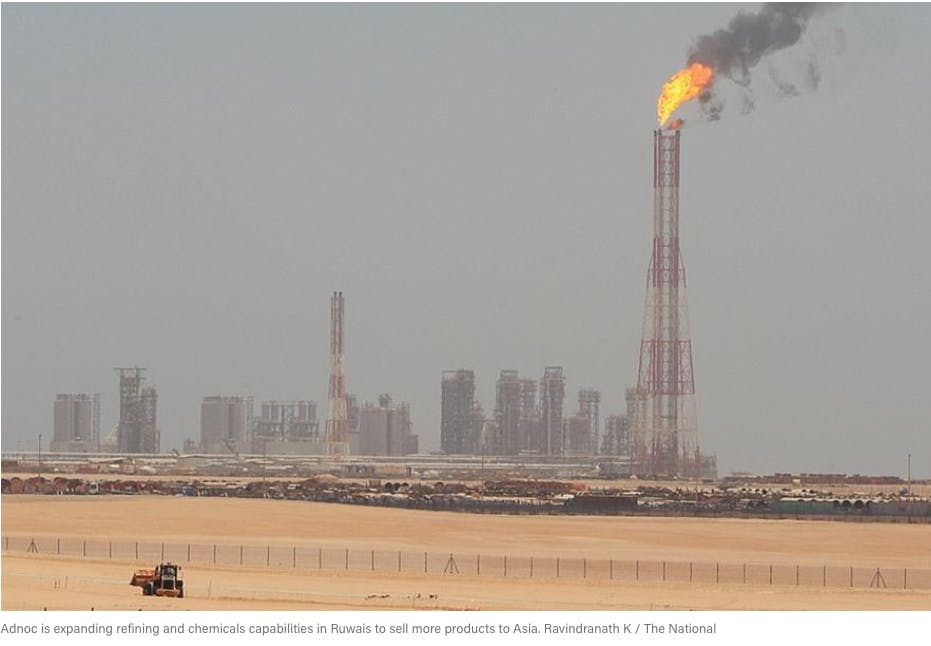
Adnoc is expanding refining and chemicals capabilities in Ruwais to sell more products to Asia. Ravindranath K / The National

State-owned Abu Dhabi National Oil Company (Adnoc) has signed a 10-year sales agreement for liquefied natural gas (LPG) with China’s Wanhua Chemical Group as the Arabian Gulf firm locks in longer-term supply deals with Asian buyers.

Under the terms of the contract, whose value was not disclosed, Wanhua will purchase up to a million tonnes of LPG annually, Adnoc said.

LPG, a refined product, is in high demand in Asia, mainly as a cooking fuel stored in cylinders for stoves as well as a propellant, refrigerant, vehicle fuel and as a feedstock for the petrochemicals industry.

National oil companies such as Adnoc have begun negotiating and signing long-term contracts for products with buyers in East Asia as they look to secure market share and pivot business strategies to focus more downstream. Adnoc currently produces 10.5 million tonnes of LPG per year. The firm is expanding its refining and chemical capabilities through investments of up to $45 billion with partners over the next five years, including plans to build the world’s largest integrated refinery by 2025.

The latest agreement was in line with the expansion of Adnoc’s “client base and penetrating new markets, through a combination of both short and long-term sales and trading opportunities,” Abdulla Salem Al Dhaheri, the company’s marketing, sales and trading director, said on Saturday.

Wanhua is one of the world’s leading producers for methylene diphenyl diisocyanate, often abbreviated as MDI – a key ingredient in the manufacture of high-performance adhesives and synthetic fibres. The company is also a lead producer of toluene diisocyanate, abbreviated as TDI, which finds uses in the manufacture of flexible polyurethane foams used as support in car seats and upholstery. LPG is the key feedstock for the manufacture of both commodities, with the collective demand for the refined products set to exceed six million tonnes annually by 2021.

Wanhua owns the largest underground storage cavern for LPG with a total capacity of 2.4 million cubic metres as well as adjacent port facilities and berths.

The agreement with Wanhua follows several other long-term supply agreements with Japanese and Malaysian firms earlier this year. In March, Adnoc signed two three-year agreements to sell a combined supply of up to 1.5 million tonnes of the oil product naphtha to Idemitsu Kosan of Japan and SCG Chemicals of Thailand.

https://www.thenational.ae/business/energy/adnoc-signs-10-year-contract-for-lpg-supply-with-china-s-wanhua-group-1.790147

November 11, 2018

Wanhua Locks in LPG Supply

Adnoc signs 10-year contract for LPG supply with China’s Wanhua Group

The agreement is in line with recent trends towards locking in longer-term supply of products in Asia

Adnoc is expanding refining and chemicals capabilities in Ruwais to sell more products to Asia. Ravindranath K / The National

State-owned Abu Dhabi National Oil Company (Adnoc) has signed a 10-year sales agreement for liquefied natural gas (LPG) with China’s Wanhua Chemical Group as the Arabian Gulf firm locks in longer-term supply deals with Asian buyers.

Under the terms of the contract, whose value was not disclosed, Wanhua will purchase up to a million tonnes of LPG annually, Adnoc said.

LPG, a refined product, is in high demand in Asia, mainly as a cooking fuel stored in cylinders for stoves as well as a propellant, refrigerant, vehicle fuel and as a feedstock for the petrochemicals industry.

National oil companies such as Adnoc have begun negotiating and signing long-term contracts for products with buyers in East Asia as they look to secure market share and pivot business strategies to focus more downstream. Adnoc currently produces 10.5 million tonnes of LPG per year. The firm is expanding its refining and chemical capabilities through investments of up to $45 billion with partners over the next five years, including plans to build the world’s largest integrated refinery by 2025.

The latest agreement was in line with the expansion of Adnoc’s “client base and penetrating new markets, through a combination of both short and long-term sales and trading opportunities,” Abdulla Salem Al Dhaheri, the company’s marketing, sales and trading director, said on Saturday.

Wanhua is one of the world’s leading producers for methylene diphenyl diisocyanate, often abbreviated as MDI – a key ingredient in the manufacture of high-performance adhesives and synthetic fibres. The company is also a lead producer of toluene diisocyanate, abbreviated as TDI, which finds uses in the manufacture of flexible polyurethane foams used as support in car seats and upholstery. LPG is the key feedstock for the manufacture of both commodities, with the collective demand for the refined products set to exceed six million tonnes annually by 2021.

Wanhua owns the largest underground storage cavern for LPG with a total capacity of 2.4 million cubic metres as well as adjacent port facilities and berths.

The agreement with Wanhua follows several other long-term supply agreements with Japanese and Malaysian firms earlier this year. In March, Adnoc signed two three-year agreements to sell a combined supply of up to 1.5 million tonnes of the oil product naphtha to Idemitsu Kosan of Japan and SCG Chemicals of Thailand.

https://www.thenational.ae/business/energy/adnoc-signs-10-year-contract-for-lpg-supply-with-china-s-wanhua-group-1.790147

November 8, 2018

Cheap Filler

Gov’t collects tens of thousands of radioactive mattresses

2018/06/18 16:04

Article View Option

SEOUL, June 18 (Yonhap) — Over 22,000 bed mattresses found to emit radiation levels above safety standards have been collected nationwide over the weekend, the country’s post office said Monday.

Some 30,000 employees and 3,200 vehicles were mobilized to collect 22,298 mattresses produced by Daijin Bed Co. on Saturday and Sunday, according to Korea Post.

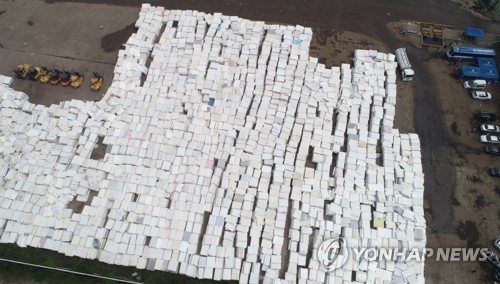
The problematic mattresses, which are known to emit radon at levels up to 9.3 times the national standard, have been moved to an open-air yard in Dangjin, 120 kilometers south of Seoul.

Being exposed to radon — a colorless, odorless, radioactive gas — for long periods of time can lead to lung cancer, according to the American Cancer Society.

Korea Post had originally planned to collect 24,000 beds, but the rest had either already been picked up by Daijin or could not be moved easily, it said.

None of the workers or cars mobilized for the operation were found to have been exposed to radiation levels above safe levels, Korea Post added.

An open-air yard in Dangjin, 120 kilometers south of Seoul, is full of collected mattresses on June 17, 2018. The products sold by Daijin Bed Co. were recently found to release radon, a radioactive gas that can cause lung cancer. (Yonhap) An open-air yard in Dangjin, 120 kilometers south of Seoul, is full of collected mattresses on June 17, 2018. The products sold by Daijin Bed Co. were recently found to release radon, a radioactive gas that can cause lung cancer. (Yonhap)

scaaet@yna.co.kr

http://english.yonhapnews.co.kr/news/2018/06/18/0200000000AEN20180618008600320.html

S. Korea’s nuclear safety agency orders recalls of radon-emitting mattress

2018/09/18 20:30

Article View Option

SEOUL, Sept. 18 (Yonhap) — South Korea’s nuclear safety agency said Tuesday that it has ordered three local companies to recall mattresses and pillows that have been found to emit higher-than-permissible levels of radon gas, a radioactive substance.

The recalls affect Kanuda pillows made by Tni Co. and mattresses made by furniture firm Enex Co. and Sungji Bed, according to the Nuclear Safety and Security Commission.

The agency said Tni is presumed to have sold about 29,000 pillows, and the company has so far recalled about 900.

Radon is a colorless and odorless gas that can be found in nature as an indirect decay product of uranium or thorium. Being exposed to radon for long periods of time can lead to lung cancer, according to the American Cancer Society.

In 2012, Enex sold a total of 244 mattress that are known to emit radon at levels up to 9.7 times the national standard, the agency said. Only five of them have so far been recalled.

The agency also ordered Sungji Bed, a small bedmaker, to recall about 6,000 mattresses over similar safety concerns.

Earlier this year, South Korea recalled about 24,000 mattresses produced by Daijin Bed Co. for emitting radon, sparking nationwide public safety concerns.

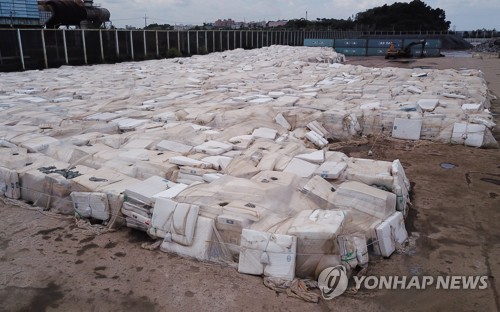
This photo shows an open-air yard in Dangjin, 120 kilometers south of Seoul, full of collected mattresses on Sept. 7, 2018. (Yonhap) This photo shows an open-air yard in Dangjin, 120 kilometers south of Seoul, full of collected mattresses on Sept. 7, 2018. (Yonhap)

entropy@yna.co.kr

http://english.yonhapnews.co.kr/news/2018/09/18/0200000000AEN20180918010000320.html

November 8, 2018

Cheap Filler

Gov’t collects tens of thousands of radioactive mattresses

2018/06/18 16:04

Article View Option

SEOUL, June 18 (Yonhap) — Over 22,000 bed mattresses found to emit radiation levels above safety standards have been collected nationwide over the weekend, the country’s post office said Monday.

Some 30,000 employees and 3,200 vehicles were mobilized to collect 22,298 mattresses produced by Daijin Bed Co. on Saturday and Sunday, according to Korea Post.

The problematic mattresses, which are known to emit radon at levels up to 9.3 times the national standard, have been moved to an open-air yard in Dangjin, 120 kilometers south of Seoul.

Being exposed to radon — a colorless, odorless, radioactive gas — for long periods of time can lead to lung cancer, according to the American Cancer Society.

Korea Post had originally planned to collect 24,000 beds, but the rest had either already been picked up by Daijin or could not be moved easily, it said.

None of the workers or cars mobilized for the operation were found to have been exposed to radiation levels above safe levels, Korea Post added.

An open-air yard in Dangjin, 120 kilometers south of Seoul, is full of collected mattresses on June 17, 2018. The products sold by Daijin Bed Co. were recently found to release radon, a radioactive gas that can cause lung cancer. (Yonhap) An open-air yard in Dangjin, 120 kilometers south of Seoul, is full of collected mattresses on June 17, 2018. The products sold by Daijin Bed Co. were recently found to release radon, a radioactive gas that can cause lung cancer. (Yonhap)

scaaet@yna.co.kr

http://english.yonhapnews.co.kr/news/2018/06/18/0200000000AEN20180618008600320.html

S. Korea’s nuclear safety agency orders recalls of radon-emitting mattress

2018/09/18 20:30

Article View Option

SEOUL, Sept. 18 (Yonhap) — South Korea’s nuclear safety agency said Tuesday that it has ordered three local companies to recall mattresses and pillows that have been found to emit higher-than-permissible levels of radon gas, a radioactive substance.

The recalls affect Kanuda pillows made by Tni Co. and mattresses made by furniture firm Enex Co. and Sungji Bed, according to the Nuclear Safety and Security Commission.

The agency said Tni is presumed to have sold about 29,000 pillows, and the company has so far recalled about 900.

Radon is a colorless and odorless gas that can be found in nature as an indirect decay product of uranium or thorium. Being exposed to radon for long periods of time can lead to lung cancer, according to the American Cancer Society.

In 2012, Enex sold a total of 244 mattress that are known to emit radon at levels up to 9.7 times the national standard, the agency said. Only five of them have so far been recalled.

The agency also ordered Sungji Bed, a small bedmaker, to recall about 6,000 mattresses over similar safety concerns.

Earlier this year, South Korea recalled about 24,000 mattresses produced by Daijin Bed Co. for emitting radon, sparking nationwide public safety concerns.

This photo shows an open-air yard in Dangjin, 120 kilometers south of Seoul, full of collected mattresses on Sept. 7, 2018. (Yonhap) This photo shows an open-air yard in Dangjin, 120 kilometers south of Seoul, full of collected mattresses on Sept. 7, 2018. (Yonhap)

entropy@yna.co.kr

http://english.yonhapnews.co.kr/news/2018/09/18/0200000000AEN20180918010000320.html

October 23, 2018

Chinese Investigation

China commits to enforcement action over CFC11 production reports

13 August, 2018 By Neil Merrett

Letter from the Chinese embassy in the UK has said 19 companies are being investigated over a possible manufacture of gas outlawed under the Montreal protocol

Chinese authorities have said that inspections are underway into the potential illegal production and use of the ozone depleting substance CFC11 in polyurethane (PU) foam insulation following recent media reports.

A recent joint inspection of 19 polyurethane foam producers by central and local government bodies in the country found no trace of the use or sale of CFC11 in 12 of the enterprises investigated, according to a representative from the Chinese embassy in the UK.

The same source said that enforcement action has so far been taken against one company that was found to have CFC11 in composite polyether materials, while six other groups were still under investigation.

Last month, a report by the Environmental Investigation Agency (EIA) campaign group said it had uncovered “widespread and pervasive” use of CFC11 for construction purposes in China.  The EIA’s findings were used to raise wider questions over the effectiveness of current monitoring mechanisms for global commitments to curb greenhouse gas use and emissions from functions such as cooling.

EIA is therefore pushing for an immediate clampdown of CFC11 use in China and a detailed review of all existing monitoring and enforcement from global partners.

A letter published in response to the EIA’s findings earlier this month in the Guardian Newspaper from Chinese embassy spokesperson Zeng Rong argued that the country’s government is committed to environmental conventions such as the Montreal protocol.  This agreement, first introduced in 1987, outlines required global action on phasing out gasses such as CFCs and HFCs.

China is committed to take action against use of any ozone depleting substances that are not permissible under the Montreal agreement, according to the spokesperson.

The embassy added that local authorities involved in its recent inspections had found two companies based in Liaoning and Henan province that were respectively producing CFC11 and CFC12.

The embassy spokesperson said, “The seized CFCs and raw materials have been confiscated and sealed up, and the local police have filed charges against the enterprises and are hunting down the suspects in the cases.”

“China will continue cracking down on illegal production and use of ODSs and strengthen regulation over relevant industries. Meanwhile, China is willing to further strengthen cooperation with other countries to ensure the effective and continuous implementation of the Montreal protocol.”

https://www.racplus.com/news/china-commits-to-enforcement-action-over-cfc11-production-reports/10034174.article