
Asian Markets
August 23, 2018
Huntsman Expands into Vietnam
HUNTSMAN OPENS FORMULATIONS MANUFACTURING FACILITY IN VIETNAM
Ho Chi Minh City, Vietnam – Huntsman Corporation (NYSE: HUN) announced today that it has opened a multi-purpose facility at the Amata Vietnam Industrial Park, near Ho Chi Minh City, Vietnam. The site is a greenfield investment, will house Huntsman’s Polyurethanes and Advanced Materials businesses, and comprises manufacturing; R&D capabilities; a technical service center; warehouse and distribution space and a commercial office.
Commenting on the new facility, Huntsman’s CEO Asia Pacific and President of the Polyurethanes business, Tony Hankins, said: “Vietnam is one of the largest and fastest growing countries in Asia Pacific. For Polyurethanes, we’ve seen double digit growth rates for a sustained period and fully expect this to continue. At the new site, we’ll manufacture formulated systems for the footwear and automotive markets; rigid insulation foam used in construction and cold chain applications; and simulated wood for the furniture market. These products will be consumed primarily in Vietnam, with the balance being exported to Cambodia. The facility will enable Huntsman to collaborate more effectively with Vietnamese customers and will also strengthen our strategy of globalizing downstream bolt-on acquisitions.”
Scott Wright, President of Huntsman’s Advanced Materials business added: “This is the first manufacturing expansion investment outside China for our business in Asia Pacific and we see many opportunities in Vietnam to support large-scale infrastructure and construction projects in one of the fastest growing economies in the region. The new plant will give us the capability to efficiently supply customers across the ASEAN region with high quality electrical insulation, coatings and adhesive solutions that will ensure these ambitious projects are implemented successfully.”
In addition to this facility, Huntsman has a distribution warehouse located in the inland container depot at Long Binh – Dong Nai Province, and a site in Hanoi which offers technical service and comprises warehouse and distribution space and a commercial office.
August 15, 2018
Chinese Environmental Plans
China has new three-year plan to clean up environment, minister says
Li Ganjie says the newly strengthened bureau will set tougher targets, especially for air pollution
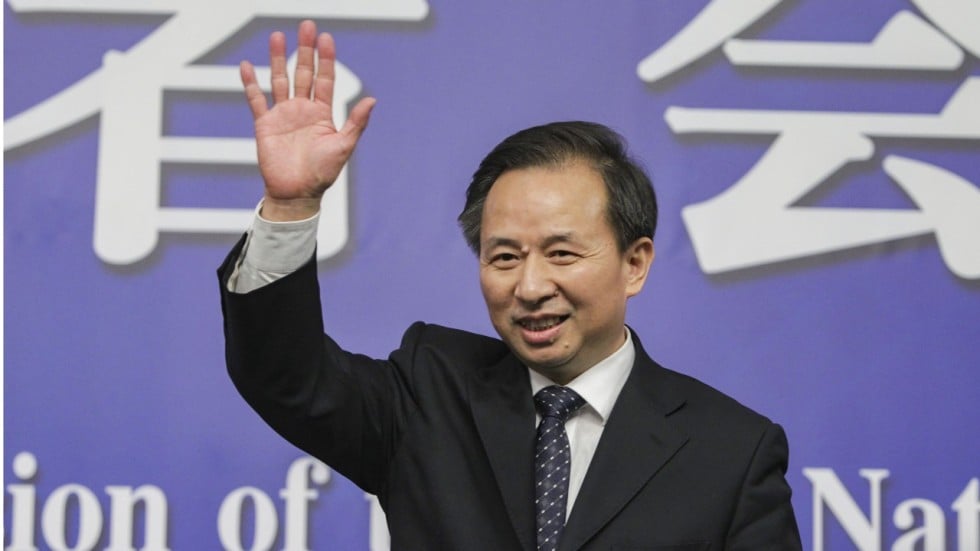
The ministry said the country had exceeded its target set in an air pollution action plan in 2013. Last year, average concentrations of PM 10, a fine particle that is harmful to health, were down by 22 per cent – compared to the target of 10 per cent – in more than 330 cities from 2013. In Beijing, the average concentration of PM 2.5, another harmful particle, was reduced to 58 micrograms per cubic metre last year from close to 90 in 2013, although that was still far from the level of 10 micrograms recommended by the World Health Organisation.
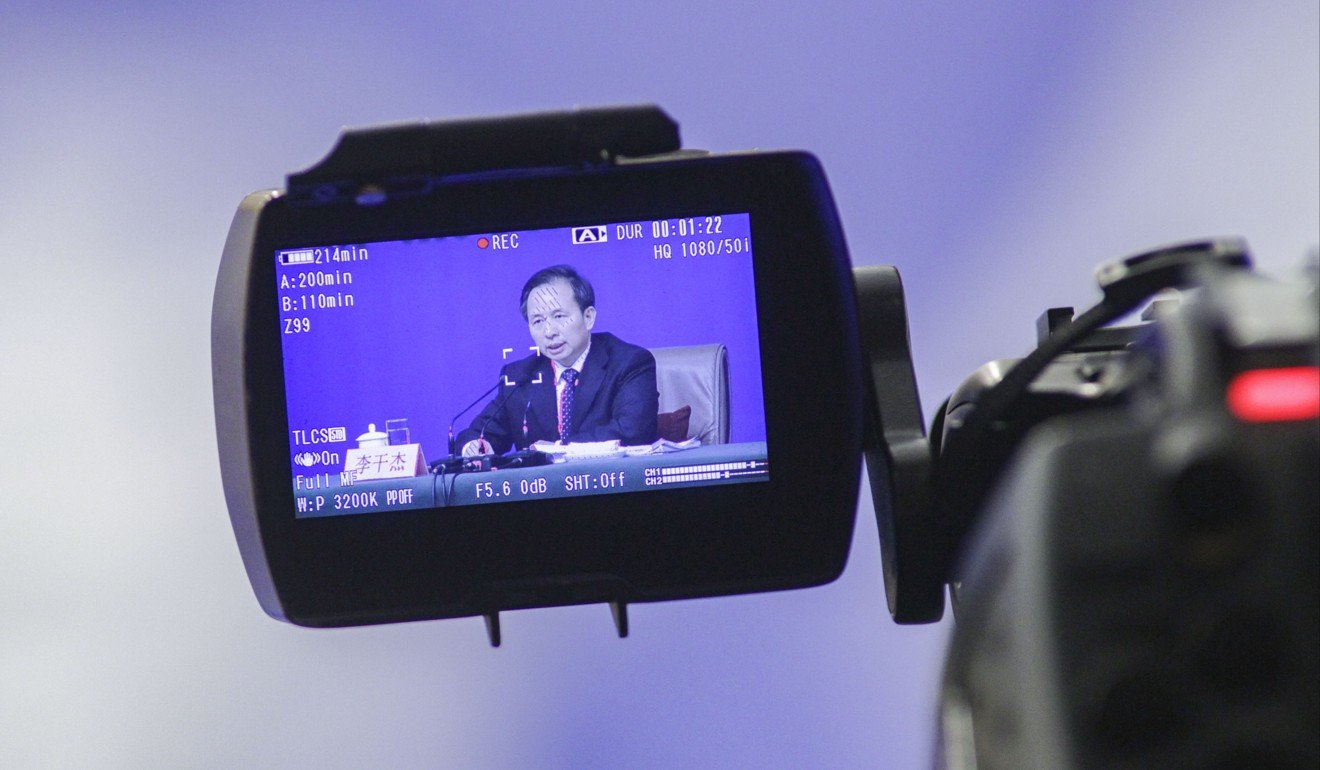
Li said that in the new plan until 2020, some goals could be stricter, but he did not give specific targets for major pollutants as there were still under study.
In its five-year plan until 2020, Beijing set a goal of improving the number of days with clean air to 80 per cent, or roughly 292 days per year. However, Li said that was still a difficult target requiring a great deal more effort.
“In general, our air pollution control is still at the mercy of weather. If the weather helps, the smog is low. If the weather is bad, then the smog becomes worse. It takes a lot of time to walk out of this stage and requires us to take much tougher measures, otherwise those goals cannot be achieved,” he said.
China tells regions not to blame others after smog surge in Yangtze River area
Li made a reference to temperature inversion contributing to the latest round of air pollution during this year’s legislative and advisory meetings in Beijing, which started in early March and end this Tuesday. There have been four days of serious air pollution so far during this year’s sessions.
To reduce smog, Beijing has asked cement and steel plants to suspend or curtail production, conducted frequent top-down environmental inspections of local authorities and ordered households in the country’s north to switch from coal to natural gas for heating.
The result were more days with better air last year, but it remains to be seen whether this was from stringent regulation or good weather.
Environmental group Greenpeace said in a note in January that cold fronts in particular helped lower the level of PM 2.5 last winter, a season that usually brought heavy air pollution.
Warmer world is making China’s smog woes even worse
“China’s national air pollution action plan has brought massive reductions in pollution levels and associated health risks, but policies favouring coal and heavy industry are holding back progress. Nationwide, 2017 saw the slowest air quality improvement on record,” Greenpeace campaigner Huang Wei said.
The average PM 2.5 concentration fell just 4.5 per cent nationwide in 2017, the lowest rate since 2013, according to Greenpeace.
Li said smog control was just one part of the leadership’s green campaign, and that the newly strengthened ministry would make a more concerted effort to tackle environmental problems.
The recent government reshuffle saw the environmental ministry – to be renamed the ministry of ecological environment – given regulatory powers that were previously the domain of other departments.
https://www.scmp.com/news/china/policies-politics/article/2137666/china-has-new-three-year-plan-clean-environment
August 15, 2018
Chinese Environmental Plans
China has new three-year plan to clean up environment, minister says
Li Ganjie says the newly strengthened bureau will set tougher targets, especially for air pollution
The ministry said the country had exceeded its target set in an air pollution action plan in 2013. Last year, average concentrations of PM 10, a fine particle that is harmful to health, were down by 22 per cent – compared to the target of 10 per cent – in more than 330 cities from 2013. In Beijing, the average concentration of PM 2.5, another harmful particle, was reduced to 58 micrograms per cubic metre last year from close to 90 in 2013, although that was still far from the level of 10 micrograms recommended by the World Health Organisation.
Li said that in the new plan until 2020, some goals could be stricter, but he did not give specific targets for major pollutants as there were still under study.
In its five-year plan until 2020, Beijing set a goal of improving the number of days with clean air to 80 per cent, or roughly 292 days per year. However, Li said that was still a difficult target requiring a great deal more effort.
“In general, our air pollution control is still at the mercy of weather. If the weather helps, the smog is low. If the weather is bad, then the smog becomes worse. It takes a lot of time to walk out of this stage and requires us to take much tougher measures, otherwise those goals cannot be achieved,” he said.
China tells regions not to blame others after smog surge in Yangtze River area
Li made a reference to temperature inversion contributing to the latest round of air pollution during this year’s legislative and advisory meetings in Beijing, which started in early March and end this Tuesday. There have been four days of serious air pollution so far during this year’s sessions.
To reduce smog, Beijing has asked cement and steel plants to suspend or curtail production, conducted frequent top-down environmental inspections of local authorities and ordered households in the country’s north to switch from coal to natural gas for heating.
The result were more days with better air last year, but it remains to be seen whether this was from stringent regulation or good weather.
Environmental group Greenpeace said in a note in January that cold fronts in particular helped lower the level of PM 2.5 last winter, a season that usually brought heavy air pollution.
Warmer world is making China’s smog woes even worse
“China’s national air pollution action plan has brought massive reductions in pollution levels and associated health risks, but policies favouring coal and heavy industry are holding back progress. Nationwide, 2017 saw the slowest air quality improvement on record,” Greenpeace campaigner Huang Wei said.
The average PM 2.5 concentration fell just 4.5 per cent nationwide in 2017, the lowest rate since 2013, according to Greenpeace.
Li said smog control was just one part of the leadership’s green campaign, and that the newly strengthened ministry would make a more concerted effort to tackle environmental problems.
The recent government reshuffle saw the environmental ministry – to be renamed the ministry of ecological environment – given regulatory powers that were previously the domain of other departments.
https://www.scmp.com/news/china/policies-politics/article/2137666/china-has-new-three-year-plan-clean-environment
August 15, 2018
Chinese TDI Overview
Will TDI Price Rebound as the Peak Season is Coming?
2018-08-15 [Source:PUdaily]
share:
PUdaily, Shanghai– In July, the downward trend of TDI price in the typical off season was reversed. The bullish sentiments among dealers became stronger as the manufacturers increased their fixed offers continuously. Due to the dealers’ reluctance to sell goods, the price gradually rose. Although there was a short period during which correction occurred as a result of the previous rapid rise in price, the overall TDI price showed an upward trend throughout July.
After the exhibition PUChina ended in early August, the price again rebounded sharply. Later, TDI price entered the correction period. At this point, sellers’ mentalities were divided. Some of them proactively reduced price to facilitate sale. Whereas some were cautious, showing less willingness to sell. Currently, price of TDI from foreign-owned manufacturers in east China stands at around RMB 31,000/ton. And price of TDI from Chinese producers stays at RMB 30,000-30,500/ton. Market players’ opinions are widely divided on how the price will move in the future. Next, PUdaily will perform the analysis from several aspects for your reference.
Supply side: the following table shows the maintenance plans at home and abroad as well as new capacities that will come onstream in the fourth quarter.
Table 1 status of TDI facilities in H2 (in 10k t/a)
| Company name | Designed capacity | Status of facilities |
| Covestro Shanghai | 25 | Scheduled to undergo maintenance |
| Gasu Yinguang | 10 | Scheduled to undergo maintenance for 1 month starting from August 22 |
| Juli Chemistry | 8 | Scheduled to undergo maintenance in September |
| Covestro Germany | 30 | Scheduled to undergo maintenance in September |
| OCI Company | 5 | Scheduled to undergo maintenance in November |
| BASF South Korea | 16 | Scheduled to undergo maintenance in October |
| Hanwha Chemical | 15 | Scheduled to undergo maintenance in October |
| Wanhua Chemical | 30 | New facilities will come onstream in Q4 |
| Sadara | 20 | Scheduled to be restarted in late August |
| BASF Germany | 30 | Operation is unstable in August |
As can be seen from the table, many domestic TDI producers will perform maintenance in and around September. Thus, their supplies are expected to decrease in the future. Besides, some TDI producers in South Korea will shut down their facilities for maintenance in October and November. Therefore, it is projected that the volume of imports from this country will be limited in September and October. It is also worth mentioning that Sadara’s TDI facility is scheduled to be restarted in late August. But it is expected that this will have little impact on domestic market as only a small volume of its exports goes to China each month. Therefore, TDI supply is expected to tighten in the coming months, and manufacturers will have strong motivation to pull up the price. There is high likelihood that they will increase their fixed offers.
Demand side: Currently the recovery in demand is not robust. Downstream inventories are still high now as buyers made some purchase from the beginning of July to that of August, resulting in their low motivation to make purchase. This is also the main reason for the recent correction. With the depletion of the inventories, it is expected that rigid demand-based purchase can still be witnessed in the mid-to-late August. Meanwhile, as the traditional peak season (from September to October) is coming, the possibility cannot be ruled out that some downstream manufacturers will increase purchase.
Mentality of market participants: As some imported goods will arrive at the port around August 20, most of the market participants are bearish on the market in mid-to-late August. But they also think the incoming drop in price can be seen as preparedness for the rebound beyond August. In addition, good news has come in that some domestic manufacturers will overhaul their facilities in September. Therefore, market participants are bullish on market around mid-September.
To sum up, correction will be the main feature of TDI market in mid-to-late August. In September and October, the market is expected to bounce back on the back of the slow recovery in demand and maintenance by some manufacturers.
Postscript: created by PUdaily, “Everyday News on PU” is a column providing high-quality and original contents, covering the review of PU raw material market, the forecast of future price movement and the operation status of manufacturers’ facilities, etc. Thank you! If you have different views, please feel free to leave a message or contact PUdaily for discussion via Email ly@chem366.com !
http://www.pudaily.com/News/NewsView.aspx?nid=73219
August 15, 2018
Chinese TDI Overview
Will TDI Price Rebound as the Peak Season is Coming?
2018-08-15 [Source:PUdaily]
share:
PUdaily, Shanghai– In July, the downward trend of TDI price in the typical off season was reversed. The bullish sentiments among dealers became stronger as the manufacturers increased their fixed offers continuously. Due to the dealers’ reluctance to sell goods, the price gradually rose. Although there was a short period during which correction occurred as a result of the previous rapid rise in price, the overall TDI price showed an upward trend throughout July.
After the exhibition PUChina ended in early August, the price again rebounded sharply. Later, TDI price entered the correction period. At this point, sellers’ mentalities were divided. Some of them proactively reduced price to facilitate sale. Whereas some were cautious, showing less willingness to sell. Currently, price of TDI from foreign-owned manufacturers in east China stands at around RMB 31,000/ton. And price of TDI from Chinese producers stays at RMB 30,000-30,500/ton. Market players’ opinions are widely divided on how the price will move in the future. Next, PUdaily will perform the analysis from several aspects for your reference.
Supply side: the following table shows the maintenance plans at home and abroad as well as new capacities that will come onstream in the fourth quarter.
Table 1 status of TDI facilities in H2 (in 10k t/a)
| Company name | Designed capacity | Status of facilities |
| Covestro Shanghai | 25 | Scheduled to undergo maintenance |
| Gasu Yinguang | 10 | Scheduled to undergo maintenance for 1 month starting from August 22 |
| Juli Chemistry | 8 | Scheduled to undergo maintenance in September |
| Covestro Germany | 30 | Scheduled to undergo maintenance in September |
| OCI Company | 5 | Scheduled to undergo maintenance in November |
| BASF South Korea | 16 | Scheduled to undergo maintenance in October |
| Hanwha Chemical | 15 | Scheduled to undergo maintenance in October |
| Wanhua Chemical | 30 | New facilities will come onstream in Q4 |
| Sadara | 20 | Scheduled to be restarted in late August |
| BASF Germany | 30 | Operation is unstable in August |
As can be seen from the table, many domestic TDI producers will perform maintenance in and around September. Thus, their supplies are expected to decrease in the future. Besides, some TDI producers in South Korea will shut down their facilities for maintenance in October and November. Therefore, it is projected that the volume of imports from this country will be limited in September and October. It is also worth mentioning that Sadara’s TDI facility is scheduled to be restarted in late August. But it is expected that this will have little impact on domestic market as only a small volume of its exports goes to China each month. Therefore, TDI supply is expected to tighten in the coming months, and manufacturers will have strong motivation to pull up the price. There is high likelihood that they will increase their fixed offers.
Demand side: Currently the recovery in demand is not robust. Downstream inventories are still high now as buyers made some purchase from the beginning of July to that of August, resulting in their low motivation to make purchase. This is also the main reason for the recent correction. With the depletion of the inventories, it is expected that rigid demand-based purchase can still be witnessed in the mid-to-late August. Meanwhile, as the traditional peak season (from September to October) is coming, the possibility cannot be ruled out that some downstream manufacturers will increase purchase.
Mentality of market participants: As some imported goods will arrive at the port around August 20, most of the market participants are bearish on the market in mid-to-late August. But they also think the incoming drop in price can be seen as preparedness for the rebound beyond August. In addition, good news has come in that some domestic manufacturers will overhaul their facilities in September. Therefore, market participants are bullish on market around mid-September.
To sum up, correction will be the main feature of TDI market in mid-to-late August. In September and October, the market is expected to bounce back on the back of the slow recovery in demand and maintenance by some manufacturers.
Postscript: created by PUdaily, “Everyday News on PU” is a column providing high-quality and original contents, covering the review of PU raw material market, the forecast of future price movement and the operation status of manufacturers’ facilities, etc. Thank you! If you have different views, please feel free to leave a message or contact PUdaily for discussion via Email ly@chem366.com !
http://www.pudaily.com/News/NewsView.aspx?nid=73219
 Everchem Updates Archive
  Sign Up for Email Updates