
Company News
February 21, 2023
Next Gen Chemicals Employees
My Toughest Challenge: Jerry Lebold of BASF Geismar
By
–
December 4, 2022
THE CHALLENGE
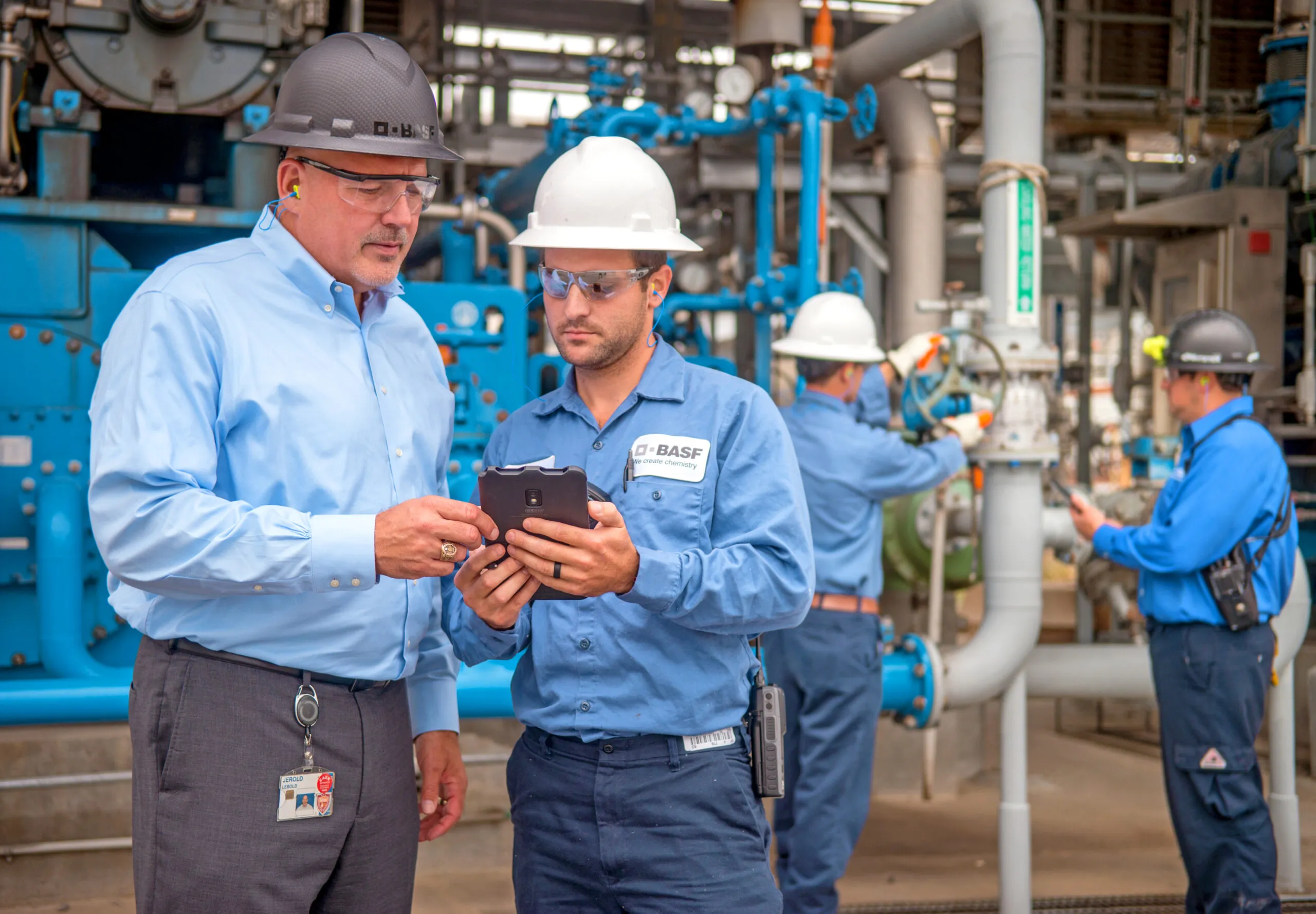
One thing BASF’s Jerry Lebold has learned over the years is the importance of having the right team with the right skills and talents.
That’s particularly important now, given the wave of retirements impacting the industry. “There’s a lot of knowledge that gets lost when someone who has worked for 30 or 40 years retires,” Lebold says. “Our challenge is knowledge retention and getting new team members to learn from that.”
Another hurdle—a cultural preference for four-year college degrees over manufacturing careers. “Students today want to work for Google or Microsoft or Tesla,” Lebold says. “Many of them don’t recognize the opportunities that manufacturing provides in their own backyard. It’s simply a failure to get the word out, and that’s unfortunate given the urgent need for skilled, capable team members and the proliferation of manufacturing jobs.”
THE RESOLUTION
Lebold has learned that the best way to change that perception is through a system of constant engagement. BASF starts early by grooming its future workforce while they’re still in elementary school.
“When I came here three years ago, I began to notice a real value in engaging our local schools,” he adds. “In Ascension Parish, we start very early with kids in the 4th grade. We sponsor the BASF Kids’ Lab at the Louisiana Arts & Science Museum, and we get them excited about the possibilities of a future in STEM.”
It doesn’t stop there. The company targets rising juniors and seniors through its BASF Tech Academy, whereby students visit the Geismar site for a week and are exposed to a variety of jobs in manufacturing, such as process technician, engineering or the skilled trades.
“Later, we offer them mentorships, internships and scholarships, while also guiding the curriculum at local community colleges and universities through advisory panels. That way, we ensure that the programs they’re offering put students in the best position to get hired.”
Lebold’s hope is that BASF will keep students in the local communities “constantly engaged” throughout their education. “In doing so, we’re creating a local pipeline,” he adds. “We hope to see those students who first came to BASF Kids Day in 4th grade also go through the TECH Academy as high schoolers, then eventually land a summer internship and even a full-time job.”
Upon attracting top talent, BASF shifts its focus to retainage through its learning and development program and learning coordinators. In the process, they promote the continuous development of those skillsets.
THE TAKEAWAY
Over the last three years, Lebold has broadened his diversification efforts by focusing more on local minority communities, as well as attracting more women to the manufacturing sector. “I think there’s a great opportunity to work with local underserved communities so that they’re aware of the jobs and opportunities, then put them in a position so that they can successfully be a part of this industry up and down the river,” he adds.
BASF has begun working with advocacy groups in the region such as the Greater Baton Rouge Industry Alliance, Louisiana Chemical Association and Louisiana Association of Business and Industry to make it happen. “We’re in the early stages of trying to figure out what that looks like, but I think it gets solved collaboratively and with the industry as a whole,” he adds.
“We have to look at those hurdles that are preventing these kids from advancing. We’re going to need operators, millwrights and technicians … so we need to work right here in this region to make sure we provide those opportunities.”
February 19, 2023
Wanhua Introduces Pallet Binder
Wanhua Chemical Launched a Molded Pallet Solution with MDI-based Binder
TIME :2023-02-17
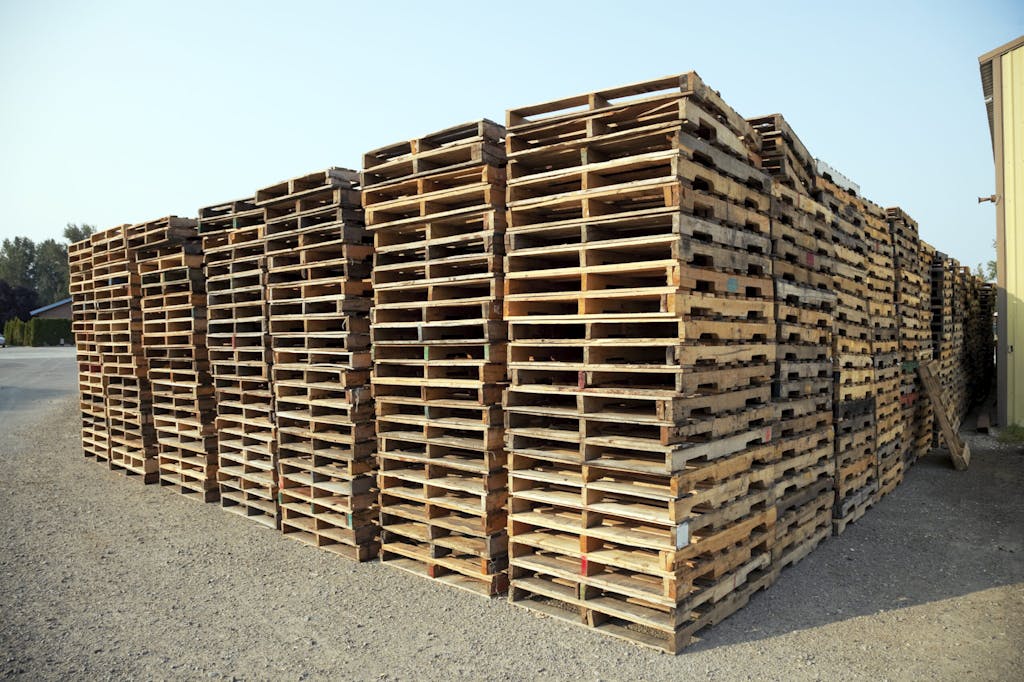
Wanhua Chemical has introduced an MDI binder-based molded pallet solution. The molded pallets use wood and crop waste as raw materials, and are recyclable through shredding and pressing processes.
The MDI-based binders provide high bonding strength and have higher moisture tolerance. Compared to conventional solution, the new solution significantly reduces the amount of binder usage.
During pallet production, the binder requires less heating for preparation, and required time for heat-pressing is reduced by 50%, thus saving electricity consumption and reducing carbon emissions.
The formaldehyde-free molded pallets reduce VOCs in production, benefiting the health of both workers and end-users.
The molded pallet with MDI binder provides a new option for logistics and packaging. Wanhua Chemical is committed to making its products more low-carbon, environment-friendly and high-performance, and becoming a supplier of high-quality solutions.
https://en.whchem.com/cmscontent/638.html
This is probably easier than trying to recycle wood pallets, with all the nails, etc.
February 15, 2023
Covestro CFO to Leave for Airbus
Thomas Toepfer to leave Covestro as of August 31, 2023
02/15/2023 | 12:38pm EST
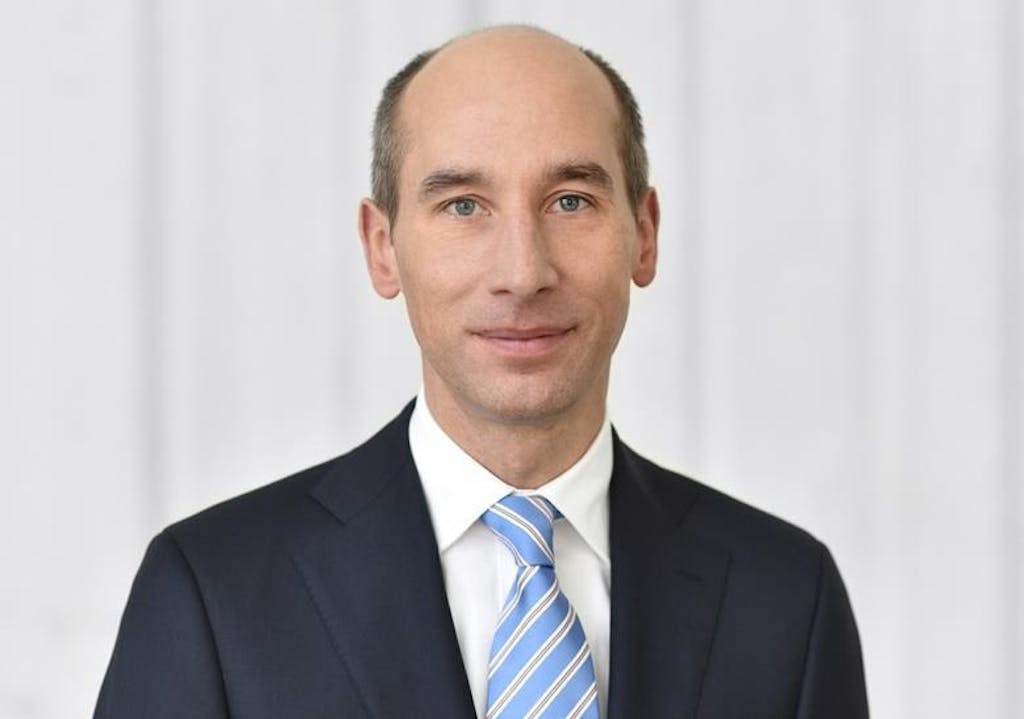
The Supervisory Board of Covestro has today acceded to the request from CFO and Labor Director Dr. Thomas Toepfer for the early termination of his current contract, which expires on March 31, 2026. Dr. Toepfer will leave the company as of August 31, 2023 to pursue a new role as CFO at the European aircraft manufacturer Airbus. Until then, Dr. Toepfer will continue his work as CFO and Labor Director to the full extent and with the same high level of commitment. The Supervisory Board has started its search for a successor and will make an announcement in due course.
Dr. Thomas Toepfer has been a member of Covestro’s Board of Management since April 2018 and, as Chief Financial Officer, is responsible for Accounting, Controlling, and Finance, among others. He has additionally held the position of Labor Director since January 2019. “We respect Thomas Toepfer’s personal wish to terminate his contract early in order to pursue his professional career outside the Group. Since he assumed office, he has made a major contribution to Covestro’s successful development,” says Dr. Richard Pott, Chairman of the Supervisory Board of Covestro. “In the past few years, he and his team have continually expanded the company’s financial structure and established the Group’s Finance board department very well at all levels. Thanks also to his commitment, Covestro enjoys a high level of trust by the capital market and today has all the tools to ensure the long-term Group strategy is sustainably financed. On behalf of the entire Supervisory Board, I thank Thomas Toepfer and wish him good luck and every success in his new role.”
Covestro’s CEO Dr. Markus Steilemann says: “Through his tremendous commitment, Thomas Toepfer has played an important role in developing and implementing our strategy. Together with our strong management team, we have successfully driven Covestro’s organizational realignment and in this way created the conditions necessary for Covestro to successfully generate sustainable growth.”
February 13, 2023
L & P Results Highlights
Leggett & Platt, Incorporated (LEG) Q4 2022 Earnings Call Transcript
Feb. 07, 2023 9:45 AM ETLeggett & Platt, Incorporated (LEG)

Q4: 2023-02-06 Earnings Summary
EPS of $0.39 misses by $0.09 | Revenue of $1.20B (-10.29% Y/Y) misses by $39.77M
Leggett & Platt, Incorporated (NYSE:LEG) Q4 2022 Earnings Conference Call February 7, 2023 8:30 AM ET
Company Participants
Susan McCoy – Vice President, Investor Relations
Mitch Dolloff – President & Chief Executive Officer
Jeff Tate – Executive Vice President & Chief Financial Officer
Steve Henderson – Executive Vice President & President of Specialized Products and Furniture, Flooring & Textile Products
Tyson Hagale – Senior Vice President & President of the Bedding Products
Cassie Branscum – Senior Director of Investor Relations
Mitch Dolloff
Good morning and thank you for participating in our fourth quarter call. Leggett & Platt diverse portfolio of businesses, strong cash discipline and the ingenuity and agility of our employees helped us deliver solid results in 2022 despite weak demand in residential end markets.
Sales grew 1% in 2022 to a record from continuing operations of $5.15 billion, primarily from acquisitions. Organic sales were flat, with volume declines of 7% and negative currency impact of 2%, offset by raw material-related selling price increases of 9%. Acquisitions, net of divestitures, added 1% to sales growth.
Volume declines were driven by demand softness in residential end markets, partially offset by growth in automotive and industrial end markets. 2022 EBIT was $485 million, a decrease of $111 million versus 2021 EBIT and a decrease of $83 million versus 2021 adjusted EBIT, primarily from lower volume, lower overhead absorption from reduced production, operational inefficiencies in specialty foam, and higher raw material and transportation costs and operational inefficiencies in automotive. These decreases were partially offset by metal margin expansion in our Steel Rod business and pricing discipline in the Furniture, Flooring and Textile Products segment.
EBIT margin was 9.4%, down from 2021’s EBIT margin of 11.7% and adjusted EBIT margin of 11.2%. Earnings per share in 2022 was $2.27, a decrease of 23% versus EPS of $2.94 in 2021 and a decrease of 18% versus adjusted EPS of $2.78.
Cash flow from operations was $441 million, a 63% increase versus 2021. The current global macroeconomic environment and its impact on the consumer negatively impacted our fourth quarter results.
Sales were $1.2 billion, EBIT was $91 million, and earnings per share was $0.39. Sales in the quarter were down 10% versus fourth quarter 2021, primarily from lower volume and currency impact, partially offset by raw material-related price increases.
Now, moving on to the segments. Sales in our Bedding Products segment were down 19% versus fourth quarter of 2021 and decreased 4% for the full year. Demand in the US bedding market softened during the fourth quarter as macroeconomic impacts on consumer spending persisted. We expect demand in 2023 to remain consistent with levels experienced in 2022 with relatively consistent sequential volumes continuing in the first half of the year and modest increases in the second half of the year.
Volume in US Spring was down 22% in 2022, which is comparable to the domestic mattress market. After a mid-single-digit share loss early in the pandemic related to supply shortages, we estimate that our share of the innerspring mattress market has remained stable over the last two years despite a volatile environment.
Although, consistent demand is assumed in 2023, we expect to increase production after limiting output in 2022 to align inventory with lower demand levels. Strong trade demand for rod and wire provided earnings benefit in the first half of the year. However, trade raw demand slowed considerably in the back half of 2022. And as a result, we cut production significantly to reduce inventory.
Steel rod production in 2023 is expected to be in line with 2022 but remain well below normal levels. We expect higher internal consumption to offset lower trade demand. Increased metal margin provided earnings benefit throughout the year but to a lesser extent in the latter part of the year as steel prices soften.
While it is difficult to predict steel pricing, we anticipate continued softening in 2023. However, we expect rod pricing and metal margins to remain at historically elevated levels due to higher conversion costs. Demand in European bedding has stabilized in recent months, and we expect demand in 2023 to be relatively flat with 2022.
The actions we took in 2022 to reduce inventory across the segment have brought levels back in line with those needed to support current demand. With the capacity we have in place, we are prepared to respond quickly to changing demand, and we remain focused on servicing customer requirements.
Full year 2022 segment earnings were significantly impacted by difficulties experienced in our specialty foam business. About two-thirds of the earnings challenge in specialty foam was a result of low demand, which dropped quickly in the fourth quarter of 2021 and remained at depressed levels throughout 2022.
Demand was impacted from three areas. The first being the general bedding market decline of approximately 20% following demand surges in 2020 and 2021, and chemical shortages in 2021.
The second was channel-focused. Finished goods production in specialty foam is weighted heaviest to digitally native brands, which declined more than the overall market due to changes in consumer privacy laws and customer cash constraints. And finally, we suffered share loss from a small number of customers with sales shifting from finished goods to components in some cases.
Specialty Foam earnings were also impacted by the volatile chemical supply environment. Like all other phone producers, we experienced significant chemical inflation through the course of 2021, and costs remained at historically high levels in 2022. Given the level of material costs, additionally, pouring and converting foam is of even greater importance than normal. However, because of high demand in 2021 and chemical shortages, our first priority became servicing customers. Between paused integration and the need to service customers, we have not operated at target material efficiency levels.
Material inefficiencies at these high chemical costs had a detrimental impact on earnings. While it will take some time to see improvements in specialty phone, especially with the continued challenging demand environment, we’re confident in our recovery plan and are making progress.
Our team has a strong pipeline of opportunities influenced by our Specialty Foam technologies. We’ve also focused on driving improvement in material margins through both process and equipment changes. We remain confident that our Specialty Foam business will drive long-term profitable growth for the segment and are placing our highest level of attention on short-term improvements in sales and material management.
Sales in our Furniture, Flooring & Textile Products segment were down 12% versus fourth quarter of 2021 and up 3% for the full year. Home Furniture demand slowed during the quarter at both the mid- and high end of the market, and customer backlogs largely have been depleted.
Demand at lower price points remained extremely weak and customers across all price points are working to reduce inventory levels. This demand softness also impacted volume in fabric converting. We expect lower market volume through at least the first half of 2023.
Work Furniture sales decreased in the fourth quarter as contract demand slowed and demand for products with residential exposure continued to soften. We expect this trend to continue into 2023.
Susan Maklari
My question is — and thank you for all the details in the prepared comments, I think it was very helpful. When you think about the efforts in Specialty Foam and you walk through some of those changes that you’re making, can you give us a sense of where you are within that process? And how we should be thinking about the benefits of that starting to flow through to the results perhaps later this year, or is it something that will be more of a 2024 event?
Mitch Dolloff
Yes, that’s a great question, Susan, and thanks for listening in on the comments. I know it was long, but we wanted to try and provide some clarification there. Tyson, I’ll let you comment on ECS. I know you’ve been working really diligently with the team there to assess where we are and put some recovery plans in place.
Tyson Hagale
Sure, thanks and, good morning Susan. I’ll start with the commercial side of our plans. As was noted in the prerecorded remarks, it’s tough in a slow demand environment, especially where we’ve weighted our business historically, but our commercial team has done a really good job even in the slow environment building our commercial pipeline and looking at opportunities to diversify our customer base. So despite some near-term headwinds just with the overall market slowness, I feel good about our pipeline there.
And especially, because we’re able to really return and our customers are interested in returning to looking at some of our specialty foam technologies. When chemicals got really short, our development team really had to pivot and spend more of their time and resources working on formulations just to make sure we could continue servicing our customers. But as those have improved as our constraints have eased and our customers have returned to looking at differentiation and other new product introductions, we’ve been able to get back to that as well.
So I feel good about our pipeline, both from the quality of leads and opportunities that we have, and those are developing throughout the year. We’ll start to see some of the benefits in the back half of the year, I think, from some of the business were being awarded. But still, overall, with slow demand and the full benefit probably coming into next year, but also the fact that we’re using our specialty phone technologies as part of those projects as well.
So, on the commercial side of things, that’s how we feel about it. The operations, which we’ve mentioned as well, working through challenges there, I feel good about the team that’s being put together both from the team that came along with the acquisition and also filling in some gaps along the way. So we’re in a good place with our operational leadership. Some of the things that we’ve talked about, I think, before as well, just being able to really get back to the integration of four companies now being brought under the L&P umbrella. But heavy focus just on our overall data and process control, and I feel good about the steps we’re taking there. And I think we’ll see those really take hold as we move through the year. We’re also investing and rolling out an improved IT system that’s already underway, but we’re being – I would – not cautious but realistic about the time frame to install the IT system across all of our specialty phone business.
We also, during the pandemic made investments in equipment, especially focused on automation and helping us control material efficiency that equipment is starting to arrive. But like a lot of investments over the last couple of years, lead times are pretty long. So even if they start to show up, it will take some time to get it integrated and up and running to full efficiency. So I would say back half of this year and into next year, we’ll start to see more of the benefits from our equipment investments. So I know that was a lot, but just to give you a little bit of a frame reference, both on the commercial and operational side just how things are rolling out.
Susan Maklari
Yeah. No, that’s very helpful. Thank you. And I guess following up on that, as we do think about the outlook that you gave us for 2023, especially as it does relate to some of the different parts of the bedding business. How are you thinking about the cadence of the margins in that segment for this year? When you think about normal seasonality on top of some of these company-specific dynamics that are coming through, any thoughts on how we should be thinking about where that margin eventually gets to and the path of getting from where we are today to that endpoint?
Mitch Dolloff
Susan, Cassie, do you have any detail there that you’d like to share? I think for us, the biggest – one of the biggest impact is what happens from a scratch or rod spread. And it’s really difficult to precisely predict that we have anticipated some contraction over the course of the year. That’s probably that in volume would be the biggest impact.
Susan Maklari
Okay.
Tyson Hagale
And also just one more comment. Yes, we do see the market returning to more normal seasonal patterns. And also, we talked about this before as well. But over the course of the last year, as demand was soft, but we were also really intentional about bringing down our inventory. Our production was below even the demand level so that we could control that, which is tough to do in a slow demand environment, but our team really did a good job in pushing that through reason towards the end of the year.
So, I think even as we get back to this year and more seasonal patterns, we should be back to a place we’re producing and have better overhead recovery. So, that was a real challenge for us over the last year.
Mitch Dolloff
Yes, particularly at the end of the year. I think that’s a great point, Tyson. So, if we looked at the first half of the year, call it, or even a little longer, we had really strong trade rod volume, right? And now we’re anticipating that to be a little bit lower than last year, but pretty similar, but much more consistent, right, as opposed to the big — high levels we had the first part of the year and lower in the last half of the year. And then similarly, as you said, with just overall production being more similar. So, I think it would just be a bit more normalized hopefully than what we saw last year.
Susan McCoy
Okay, Susan that’s very helpful. Yes. Susan a little bit specific on your margin question. We talked about lower first quarter expectations for the company overall that holds true with bedding with a return to more seasonal patterns as we move through the year.
So, that all helps treat bedding with, again, their historically highest seasonal quarter has been third quarter. So, a step-up in margins as we move through the year from a margin percentage perspective, what we’re showing.
Peter Keith
Great. Thanks. And then secondly, can you walk us through the Furniture segment and maybe explain why the year-over-year volumes in Furniture are starting to kind of chop off.
Mitch Dolloff
Yes, sure. Steve, I’ll ask you to jump in there. But it’s really a couple of dynamics. I mean we have to — after a big surge in Home Furniture that we saw over last year and in the beginning of this year, we really saw that soften across the industry. That’s not — shouldn’t really be new news.
And then if we look at Work Furniture, that is probably the change where after being so soft, we saw a strong recovery in the first three quarters of 2022 and then really started to see the contract business, which had been recovering slowdown in the fourth quarter. So, that’s been the biggest change there. But Steve, I’ll let you chime in as well.
Steve Henderson
Yes, thanks good morning. Yes, from a Home Furniture perspective, the answer is much, much lower retail demand. So, we had seen the low end drop, but then we saw the mid and high price points drop even further than what we expected. And that’s led to some fairly significant inventory levels, which we couldn’t see earlier in 2022, and we expect those to be worked off here hopefully in the first half of 2023 and start to return to a more normalized demand level.
And from a Work Furniture perspective, as Mitch said, our customers are reporting volume declines and incoming contract orders. And that’s really driven by the surge of back to office that they saw and that’s worked its way through, and now they’re seeing a little bit more lower level of return to office trends, particularly in the Americas, which is lowering that demand. And then you can add on top of that the retail residential slowdown that we spoke to from a Home Furniture perspective. So, those are the two big issues that are impacting Work Furniture at this point in time.
Mitch Dolloff
Yes. Steve, if I remember right, this forecast, which would be for North America was down about 8% or so for this year.
Steve Henderson
Yes, 8% or 9%.
Mitch Dolloff
Yes, yes. So in line with industry dynamics there, unfortunately. And as we’ve mentioned before, so the fabric converting side of our Textiles business also moves along largely with Bedding and Home Furniture. So, we see that down. But what does not is the geo textiles component side of that, and we see that driven by industry to be — continue to be strong as we go into 2023.
February 13, 2023
Holcim Makes Another Acquisition
Holcim Acquiring Duro-Last in $1.29 Billion Agreement
The Swiss company makes another major acquisition to solidify its presence in North America’s roofing market
By Chris Gray
February 7, 2023
Holcim is further expanding its presence in North America with the acquisition of roofing systems manufacturer Duro-Last for $1.29 billion.
The Michigan-based Duro-Last currently employs around 840 workers and has an annual sales of roughly $540 million. The deal is expected to complement Holcim’s integrated roofing offerings, with expected synergies of $60 million per year.
“I’m excited to welcome Duro-Last into Holcim’s broad range of innovative and sustainable building solutions,” said Holcim CEO Jan Jenisch in a release. “Duro-Last is a perfect strategic fit for our roofing business. Its proprietary technologies and leading brands complement our offering in the fast-growing North American market. Its energy-efficient systems and excellence in recycling will further advance our leadership in sustainability.”
The acquisition is one of the largest deals Holcim has made in North America. In early 2022, it acquired Malarkey Roofing Products for $1.35 billion. Holcim also acquired Firestone Building Products in April 2021.
Duro-Last’s systems include cool roofs, enhancing buildings’ energy efficiency and its award-winning “Recycle Your Roof” program, which drives circularity in roofing. Duro-Last is the first company in the U.S. to offer third-party verified environmental product declarations for its thermoplastic roofing solutions.
“Over the past 45 years, our family business has continually reinvested in Duro-Last to create the solid, financially strong and well-recognized company we are today,” said Tom Saeli, CEO of Duro-Last, in a release. “We are delighted to be joining the Holcim family, which shares our core values, and we look to the future to accelerate our success. Holcim recognizes the opportunities at Duro-Last and we are confident it will support us in our future growth plans.”
Holcim expects its roofing systems will exceed $4 billion in net sales ahead of schedule. This acquisition advances Holcim’s “Strategy 2025 – Accelerating Green Growth” with the goal to expand its Solutions & Products business to 30% of Group net sales by 2025. The Duro-Last acquisition is expected to close by the second quarter of 2023.
https://www.roofingcontractor.com/articles/97911-holcim-acquiring-duro-last-in-129-billion-agreement
 Everchem Updates Archive
  Sign Up for Email Updates