
Company News
February 15, 2023
Covestro CFO to Leave for Airbus
Thomas Toepfer to leave Covestro as of August 31, 2023
02/15/2023 | 12:38pm EST
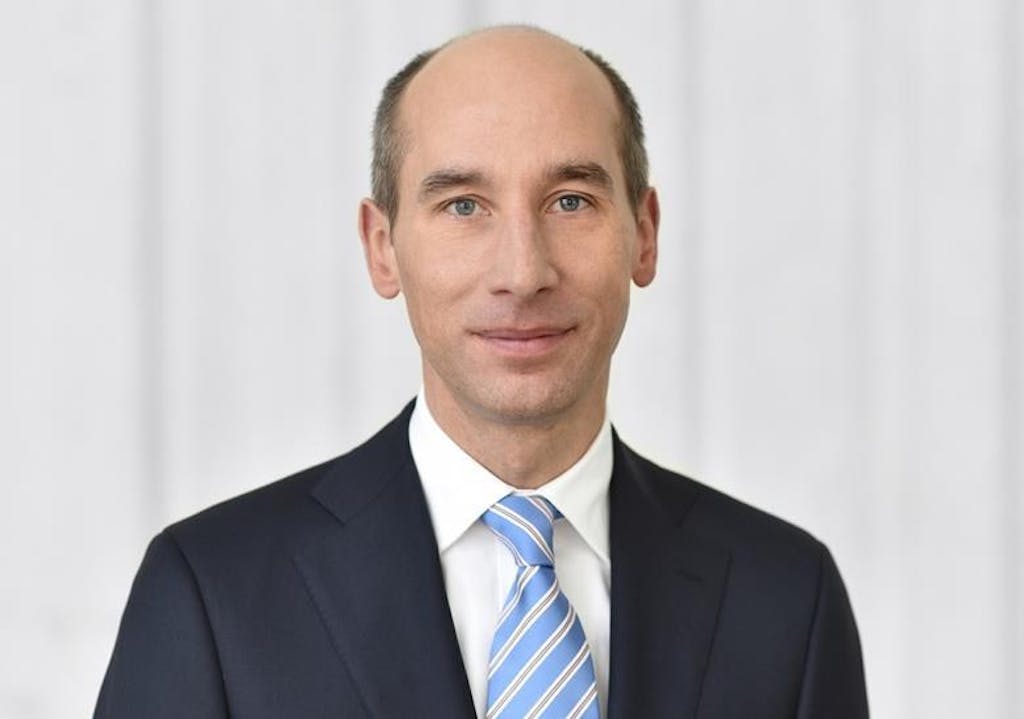
The Supervisory Board of Covestro has today acceded to the request from CFO and Labor Director Dr. Thomas Toepfer for the early termination of his current contract, which expires on March 31, 2026. Dr. Toepfer will leave the company as of August 31, 2023 to pursue a new role as CFO at the European aircraft manufacturer Airbus. Until then, Dr. Toepfer will continue his work as CFO and Labor Director to the full extent and with the same high level of commitment. The Supervisory Board has started its search for a successor and will make an announcement in due course.
Dr. Thomas Toepfer has been a member of Covestro’s Board of Management since April 2018 and, as Chief Financial Officer, is responsible for Accounting, Controlling, and Finance, among others. He has additionally held the position of Labor Director since January 2019. “We respect Thomas Toepfer’s personal wish to terminate his contract early in order to pursue his professional career outside the Group. Since he assumed office, he has made a major contribution to Covestro’s successful development,” says Dr. Richard Pott, Chairman of the Supervisory Board of Covestro. “In the past few years, he and his team have continually expanded the company’s financial structure and established the Group’s Finance board department very well at all levels. Thanks also to his commitment, Covestro enjoys a high level of trust by the capital market and today has all the tools to ensure the long-term Group strategy is sustainably financed. On behalf of the entire Supervisory Board, I thank Thomas Toepfer and wish him good luck and every success in his new role.”
Covestro’s CEO Dr. Markus Steilemann says: “Through his tremendous commitment, Thomas Toepfer has played an important role in developing and implementing our strategy. Together with our strong management team, we have successfully driven Covestro’s organizational realignment and in this way created the conditions necessary for Covestro to successfully generate sustainable growth.”
February 13, 2023
L & P Results Highlights
Leggett & Platt, Incorporated (LEG) Q4 2022 Earnings Call Transcript
Feb. 07, 2023 9:45 AM ETLeggett & Platt, Incorporated (LEG)

Q4: 2023-02-06 Earnings Summary
EPS of $0.39 misses by $0.09 | Revenue of $1.20B (-10.29% Y/Y) misses by $39.77M
Leggett & Platt, Incorporated (NYSE:LEG) Q4 2022 Earnings Conference Call February 7, 2023 8:30 AM ET
Company Participants
Susan McCoy – Vice President, Investor Relations
Mitch Dolloff – President & Chief Executive Officer
Jeff Tate – Executive Vice President & Chief Financial Officer
Steve Henderson – Executive Vice President & President of Specialized Products and Furniture, Flooring & Textile Products
Tyson Hagale – Senior Vice President & President of the Bedding Products
Cassie Branscum – Senior Director of Investor Relations
Mitch Dolloff
Good morning and thank you for participating in our fourth quarter call. Leggett & Platt diverse portfolio of businesses, strong cash discipline and the ingenuity and agility of our employees helped us deliver solid results in 2022 despite weak demand in residential end markets.
Sales grew 1% in 2022 to a record from continuing operations of $5.15 billion, primarily from acquisitions. Organic sales were flat, with volume declines of 7% and negative currency impact of 2%, offset by raw material-related selling price increases of 9%. Acquisitions, net of divestitures, added 1% to sales growth.
Volume declines were driven by demand softness in residential end markets, partially offset by growth in automotive and industrial end markets. 2022 EBIT was $485 million, a decrease of $111 million versus 2021 EBIT and a decrease of $83 million versus 2021 adjusted EBIT, primarily from lower volume, lower overhead absorption from reduced production, operational inefficiencies in specialty foam, and higher raw material and transportation costs and operational inefficiencies in automotive. These decreases were partially offset by metal margin expansion in our Steel Rod business and pricing discipline in the Furniture, Flooring and Textile Products segment.
EBIT margin was 9.4%, down from 2021’s EBIT margin of 11.7% and adjusted EBIT margin of 11.2%. Earnings per share in 2022 was $2.27, a decrease of 23% versus EPS of $2.94 in 2021 and a decrease of 18% versus adjusted EPS of $2.78.
Cash flow from operations was $441 million, a 63% increase versus 2021. The current global macroeconomic environment and its impact on the consumer negatively impacted our fourth quarter results.
Sales were $1.2 billion, EBIT was $91 million, and earnings per share was $0.39. Sales in the quarter were down 10% versus fourth quarter 2021, primarily from lower volume and currency impact, partially offset by raw material-related price increases.
Now, moving on to the segments. Sales in our Bedding Products segment were down 19% versus fourth quarter of 2021 and decreased 4% for the full year. Demand in the US bedding market softened during the fourth quarter as macroeconomic impacts on consumer spending persisted. We expect demand in 2023 to remain consistent with levels experienced in 2022 with relatively consistent sequential volumes continuing in the first half of the year and modest increases in the second half of the year.
Volume in US Spring was down 22% in 2022, which is comparable to the domestic mattress market. After a mid-single-digit share loss early in the pandemic related to supply shortages, we estimate that our share of the innerspring mattress market has remained stable over the last two years despite a volatile environment.
Although, consistent demand is assumed in 2023, we expect to increase production after limiting output in 2022 to align inventory with lower demand levels. Strong trade demand for rod and wire provided earnings benefit in the first half of the year. However, trade raw demand slowed considerably in the back half of 2022. And as a result, we cut production significantly to reduce inventory.
Steel rod production in 2023 is expected to be in line with 2022 but remain well below normal levels. We expect higher internal consumption to offset lower trade demand. Increased metal margin provided earnings benefit throughout the year but to a lesser extent in the latter part of the year as steel prices soften.
While it is difficult to predict steel pricing, we anticipate continued softening in 2023. However, we expect rod pricing and metal margins to remain at historically elevated levels due to higher conversion costs. Demand in European bedding has stabilized in recent months, and we expect demand in 2023 to be relatively flat with 2022.
The actions we took in 2022 to reduce inventory across the segment have brought levels back in line with those needed to support current demand. With the capacity we have in place, we are prepared to respond quickly to changing demand, and we remain focused on servicing customer requirements.
Full year 2022 segment earnings were significantly impacted by difficulties experienced in our specialty foam business. About two-thirds of the earnings challenge in specialty foam was a result of low demand, which dropped quickly in the fourth quarter of 2021 and remained at depressed levels throughout 2022.
Demand was impacted from three areas. The first being the general bedding market decline of approximately 20% following demand surges in 2020 and 2021, and chemical shortages in 2021.
The second was channel-focused. Finished goods production in specialty foam is weighted heaviest to digitally native brands, which declined more than the overall market due to changes in consumer privacy laws and customer cash constraints. And finally, we suffered share loss from a small number of customers with sales shifting from finished goods to components in some cases.
Specialty Foam earnings were also impacted by the volatile chemical supply environment. Like all other phone producers, we experienced significant chemical inflation through the course of 2021, and costs remained at historically high levels in 2022. Given the level of material costs, additionally, pouring and converting foam is of even greater importance than normal. However, because of high demand in 2021 and chemical shortages, our first priority became servicing customers. Between paused integration and the need to service customers, we have not operated at target material efficiency levels.
Material inefficiencies at these high chemical costs had a detrimental impact on earnings. While it will take some time to see improvements in specialty phone, especially with the continued challenging demand environment, we’re confident in our recovery plan and are making progress.
Our team has a strong pipeline of opportunities influenced by our Specialty Foam technologies. We’ve also focused on driving improvement in material margins through both process and equipment changes. We remain confident that our Specialty Foam business will drive long-term profitable growth for the segment and are placing our highest level of attention on short-term improvements in sales and material management.
Sales in our Furniture, Flooring & Textile Products segment were down 12% versus fourth quarter of 2021 and up 3% for the full year. Home Furniture demand slowed during the quarter at both the mid- and high end of the market, and customer backlogs largely have been depleted.
Demand at lower price points remained extremely weak and customers across all price points are working to reduce inventory levels. This demand softness also impacted volume in fabric converting. We expect lower market volume through at least the first half of 2023.
Work Furniture sales decreased in the fourth quarter as contract demand slowed and demand for products with residential exposure continued to soften. We expect this trend to continue into 2023.
Susan Maklari
My question is — and thank you for all the details in the prepared comments, I think it was very helpful. When you think about the efforts in Specialty Foam and you walk through some of those changes that you’re making, can you give us a sense of where you are within that process? And how we should be thinking about the benefits of that starting to flow through to the results perhaps later this year, or is it something that will be more of a 2024 event?
Mitch Dolloff
Yes, that’s a great question, Susan, and thanks for listening in on the comments. I know it was long, but we wanted to try and provide some clarification there. Tyson, I’ll let you comment on ECS. I know you’ve been working really diligently with the team there to assess where we are and put some recovery plans in place.
Tyson Hagale
Sure, thanks and, good morning Susan. I’ll start with the commercial side of our plans. As was noted in the prerecorded remarks, it’s tough in a slow demand environment, especially where we’ve weighted our business historically, but our commercial team has done a really good job even in the slow environment building our commercial pipeline and looking at opportunities to diversify our customer base. So despite some near-term headwinds just with the overall market slowness, I feel good about our pipeline there.
And especially, because we’re able to really return and our customers are interested in returning to looking at some of our specialty foam technologies. When chemicals got really short, our development team really had to pivot and spend more of their time and resources working on formulations just to make sure we could continue servicing our customers. But as those have improved as our constraints have eased and our customers have returned to looking at differentiation and other new product introductions, we’ve been able to get back to that as well.
So I feel good about our pipeline, both from the quality of leads and opportunities that we have, and those are developing throughout the year. We’ll start to see some of the benefits in the back half of the year, I think, from some of the business were being awarded. But still, overall, with slow demand and the full benefit probably coming into next year, but also the fact that we’re using our specialty phone technologies as part of those projects as well.
So, on the commercial side of things, that’s how we feel about it. The operations, which we’ve mentioned as well, working through challenges there, I feel good about the team that’s being put together both from the team that came along with the acquisition and also filling in some gaps along the way. So we’re in a good place with our operational leadership. Some of the things that we’ve talked about, I think, before as well, just being able to really get back to the integration of four companies now being brought under the L&P umbrella. But heavy focus just on our overall data and process control, and I feel good about the steps we’re taking there. And I think we’ll see those really take hold as we move through the year. We’re also investing and rolling out an improved IT system that’s already underway, but we’re being – I would – not cautious but realistic about the time frame to install the IT system across all of our specialty phone business.
We also, during the pandemic made investments in equipment, especially focused on automation and helping us control material efficiency that equipment is starting to arrive. But like a lot of investments over the last couple of years, lead times are pretty long. So even if they start to show up, it will take some time to get it integrated and up and running to full efficiency. So I would say back half of this year and into next year, we’ll start to see more of the benefits from our equipment investments. So I know that was a lot, but just to give you a little bit of a frame reference, both on the commercial and operational side just how things are rolling out.
Susan Maklari
Yeah. No, that’s very helpful. Thank you. And I guess following up on that, as we do think about the outlook that you gave us for 2023, especially as it does relate to some of the different parts of the bedding business. How are you thinking about the cadence of the margins in that segment for this year? When you think about normal seasonality on top of some of these company-specific dynamics that are coming through, any thoughts on how we should be thinking about where that margin eventually gets to and the path of getting from where we are today to that endpoint?
Mitch Dolloff
Susan, Cassie, do you have any detail there that you’d like to share? I think for us, the biggest – one of the biggest impact is what happens from a scratch or rod spread. And it’s really difficult to precisely predict that we have anticipated some contraction over the course of the year. That’s probably that in volume would be the biggest impact.
Susan Maklari
Okay.
Tyson Hagale
And also just one more comment. Yes, we do see the market returning to more normal seasonal patterns. And also, we talked about this before as well. But over the course of the last year, as demand was soft, but we were also really intentional about bringing down our inventory. Our production was below even the demand level so that we could control that, which is tough to do in a slow demand environment, but our team really did a good job in pushing that through reason towards the end of the year.
So, I think even as we get back to this year and more seasonal patterns, we should be back to a place we’re producing and have better overhead recovery. So, that was a real challenge for us over the last year.
Mitch Dolloff
Yes, particularly at the end of the year. I think that’s a great point, Tyson. So, if we looked at the first half of the year, call it, or even a little longer, we had really strong trade rod volume, right? And now we’re anticipating that to be a little bit lower than last year, but pretty similar, but much more consistent, right, as opposed to the big — high levels we had the first part of the year and lower in the last half of the year. And then similarly, as you said, with just overall production being more similar. So, I think it would just be a bit more normalized hopefully than what we saw last year.
Susan McCoy
Okay, Susan that’s very helpful. Yes. Susan a little bit specific on your margin question. We talked about lower first quarter expectations for the company overall that holds true with bedding with a return to more seasonal patterns as we move through the year.
So, that all helps treat bedding with, again, their historically highest seasonal quarter has been third quarter. So, a step-up in margins as we move through the year from a margin percentage perspective, what we’re showing.
Peter Keith
Great. Thanks. And then secondly, can you walk us through the Furniture segment and maybe explain why the year-over-year volumes in Furniture are starting to kind of chop off.
Mitch Dolloff
Yes, sure. Steve, I’ll ask you to jump in there. But it’s really a couple of dynamics. I mean we have to — after a big surge in Home Furniture that we saw over last year and in the beginning of this year, we really saw that soften across the industry. That’s not — shouldn’t really be new news.
And then if we look at Work Furniture, that is probably the change where after being so soft, we saw a strong recovery in the first three quarters of 2022 and then really started to see the contract business, which had been recovering slowdown in the fourth quarter. So, that’s been the biggest change there. But Steve, I’ll let you chime in as well.
Steve Henderson
Yes, thanks good morning. Yes, from a Home Furniture perspective, the answer is much, much lower retail demand. So, we had seen the low end drop, but then we saw the mid and high price points drop even further than what we expected. And that’s led to some fairly significant inventory levels, which we couldn’t see earlier in 2022, and we expect those to be worked off here hopefully in the first half of 2023 and start to return to a more normalized demand level.
And from a Work Furniture perspective, as Mitch said, our customers are reporting volume declines and incoming contract orders. And that’s really driven by the surge of back to office that they saw and that’s worked its way through, and now they’re seeing a little bit more lower level of return to office trends, particularly in the Americas, which is lowering that demand. And then you can add on top of that the retail residential slowdown that we spoke to from a Home Furniture perspective. So, those are the two big issues that are impacting Work Furniture at this point in time.
Mitch Dolloff
Yes. Steve, if I remember right, this forecast, which would be for North America was down about 8% or so for this year.
Steve Henderson
Yes, 8% or 9%.
Mitch Dolloff
Yes, yes. So in line with industry dynamics there, unfortunately. And as we’ve mentioned before, so the fabric converting side of our Textiles business also moves along largely with Bedding and Home Furniture. So, we see that down. But what does not is the geo textiles component side of that, and we see that driven by industry to be — continue to be strong as we go into 2023.
February 13, 2023
Holcim Makes Another Acquisition
Holcim Acquiring Duro-Last in $1.29 Billion Agreement
The Swiss company makes another major acquisition to solidify its presence in North America’s roofing market
By Chris Gray
February 7, 2023
Holcim is further expanding its presence in North America with the acquisition of roofing systems manufacturer Duro-Last for $1.29 billion.
The Michigan-based Duro-Last currently employs around 840 workers and has an annual sales of roughly $540 million. The deal is expected to complement Holcim’s integrated roofing offerings, with expected synergies of $60 million per year.
“I’m excited to welcome Duro-Last into Holcim’s broad range of innovative and sustainable building solutions,” said Holcim CEO Jan Jenisch in a release. “Duro-Last is a perfect strategic fit for our roofing business. Its proprietary technologies and leading brands complement our offering in the fast-growing North American market. Its energy-efficient systems and excellence in recycling will further advance our leadership in sustainability.”
The acquisition is one of the largest deals Holcim has made in North America. In early 2022, it acquired Malarkey Roofing Products for $1.35 billion. Holcim also acquired Firestone Building Products in April 2021.
Duro-Last’s systems include cool roofs, enhancing buildings’ energy efficiency and its award-winning “Recycle Your Roof” program, which drives circularity in roofing. Duro-Last is the first company in the U.S. to offer third-party verified environmental product declarations for its thermoplastic roofing solutions.
“Over the past 45 years, our family business has continually reinvested in Duro-Last to create the solid, financially strong and well-recognized company we are today,” said Tom Saeli, CEO of Duro-Last, in a release. “We are delighted to be joining the Holcim family, which shares our core values, and we look to the future to accelerate our success. Holcim recognizes the opportunities at Duro-Last and we are confident it will support us in our future growth plans.”
Holcim expects its roofing systems will exceed $4 billion in net sales ahead of schedule. This acquisition advances Holcim’s “Strategy 2025 – Accelerating Green Growth” with the goal to expand its Solutions & Products business to 30% of Group net sales by 2025. The Duro-Last acquisition is expected to close by the second quarter of 2023.
https://www.roofingcontractor.com/articles/97911-holcim-acquiring-duro-last-in-129-billion-agreement
February 13, 2023
Wanhua Chemical 2022 Results
Wanhua Chemical Group: Net profit for 2022 about 16.239 billion yuan, down 34.12% YoY
NBD
13, February, 2023,16:20 GMT+8
NBD AI Bulletin – Wanhua Chemical Group Co Ltd (SH 600309, close price: 97.97 yuan) on February 13 briefed its annual results for 2022. Operating income for the year was about 165.565 billion yuan, showing an increase of 13.76% from a year ago. Net profit attributable to the shareholders of the listed company was about 16.239 billion yuan, down 34.12% year on year. Basic earnings per share was 5.17 yuan, showing a 34.14% reduction.
Wanhua Chemical Group Co Ltd’s chairman is Liao Zengtai, male, 60 years old, with a master’s degree; The general manager is Kou Guangwu, male, 57 years old, with a master’s degree.
As at the press time, the market value of Wanhua Chemical Group Co Ltd was 307.6 billion yuan.
(By Lan Suying)
http://www.nbdpress.com/articles/2023-02-13/44873.html
February 9, 2023
Tempur Sealy Investors Call Highlights
Tempur Sealy International, Inc. (TPX) Q4 2022 Earnings Call Transcript

Feb. 09, 2023 10:17 AM ETTempur Sealy International, Inc. (TPX)
Tempur Sealy International, Inc. (NYSE:TPX) Q4 2022 Earnings Conference Call February 9, 2023 8:00 AM ET
Company Participants
Lauren Avritt – Investor Relations Manager
Scott Thompson – Chairman, President, and Chief Executive Officer
Bhaskar Rao – Executive Vice President, and Chief Financial Officer
Scott Thompson
Thank you, Lauren. Good morning, everyone, and thank you for joining us on our 2022 fourth quarter and full earnings call. I’ll begin with some highlights from our fourth quarter, and then I will turn to discuss how we delivered on our long-term initiatives. Then Bhaskar will review our fourth quarter financial performance in more detail and discuss our 2022 guidance. Finally, I’ll close with a few comments on how we view the current market environment, then we will open the call up for Q&A.
In the fourth quarter of 2022, net sales were approximately 1.2 billion and adjusted EPS was $0.54. This represents a 36% growth in sales and a 59% growth in adjusted EPS as compared to the fourth quarter of 2019, a pre-COVID period. Compared to the same period last year, this represents a 13% decline in sales and a 39% decline in adjusted EPS as we navigated a weak overall market and experienced robust inflation.
However, we continue to outperform the broader industry by a good bit and enhanced our competitive position. Consistent with our previous quarter, we observed a slight increase in resilience of our premium customers with sales of value focused customers a bit more subdued.
I’d like to begin by highlighting some of the key wins for the quarter. First, as we discussed last quarter, we successfully kicked-off the North America launch of our new collection of Stearns & Foster products, which is designed to further distinguish our high-end traditional Innerspring brand from the numerous mid-market Innerspring brands in marketplace.
Our third-party retail partners have demonstrated their enthusiasm for both the new Stearns & Foster product portfolio and our commitment to supporting the line-up through compelling national brand marketing. This excitement for the new product is reflected in robust year-over-year order trends.
In order to ensure the new product meets our stringent quality requirements, we have extended the launch window in response to a slight component delay. We expect to complete the rollout by Memorial Day holiday selling period. Overall, we remain on track to expand Stearns retail slot by more than 20%.
Turning to our second highlight, our U.S. e-commerce channel performance performed well in the quarter delivering approximately double-digit growth. Our new Stearns & Foster and Sealy e-commerce sites have exceeded our expectation, the greater mix into the more premium SKU assortments resulting in unexpectedly high ASP across both brands.
Our Tempur e-commerce business also delivered solid growth in the quarter, which is especially notable considering a difficult prior year compare. With the recent launch of our new Sealy website, we now have operation to direct-to-consumer websites to the U.S. at each of our leading brands. Our expanded e-commerce presence is a powerful tool that enables us to be closer to the customer, drive [share of voice] [ph] and build on our omnichannel strategy.
For the last five years, we’ve developed a direct relationship with millions of customers, gaining valuable consumer insights and furthering our direct marketing capability. This helps build our long-term customer relationships and drives marketing efficiencies. Moving to ESG, we further our commitment to protect and improve our communities and the environment.
We recently published our 2023 corporate social value report, which is available on our IR website. We are proud of the progress we’ve made in our ESG goals. In the fourth quarter, we achieved our goal of 100% landfill diversion from our U.S. and European manufacturing operations. We also made progress towards our goal of carbon neutrality for our global operations reporting a decrease in emissions per unit.
Before turning the call over to Bhaskar, I want to take a moment to step back and review the progress we’ve made on our long-term initiatives during 2022. Though the year was fluid from a macroeconomic standpoint, we remained focused on positioning the business for long-term success.
Starting with our first key initiative, which is to develop the highest quality products in all the markets we serve. When it comes to product development, our Number 1 objective is to anticipate and react to consumers evolving suite preferences. In early 2022, we made continued progress against this objective through various product launches.
As part of the refresh of our U.S. Sealy Posturepedic portfolio, we launched a new line of premium and hybrid Sealy mattresses featuring improved comfort, superior support, innovative cooling technology. This lineup has truly resonated with our Sealy targeted consumer base.
We leveraged our Sealy brand to tap into new market segments as well. We launched our new Sealy Natural Collection in the second half of the year, constructive or ecofriendly sustainable source material. This collection appeals to environmentally conscious consumers and continues to broaden our customer base. We also launched our Sealy FlexGrid mattress line, which features pressure relieving grid, gel grid, it represents the evolution of the technology in the market today.
With a unique scalable manufacturing approach, we’re able to offer these products at a mid-market retail price. In addition to supporting our 2022 launches, we set the innovation pipeline for 2023 and beyond. Later this quarter in the U.S. we’ll launch an upgraded line of TEMPUR-breeze products and smart adjustable basis.
Then later in the year, we expect to expand the distribution of our TEMPUR ACTIVEbreeze cooling system into select wholesale doors. We expect these launches to further strengthen Tempur’s appeal to the premium wellness minded consumer and drive improved attach rates and strong ASP.
Turning to our International group. Beginning this quarter, we’ll undertake the largest international product roll-out in the company’s history, reaching more than 90 markets worldwide. This new lineup of mattresses, pillows, and bed basis has been strategically designed to drive addressable market expansion of Tempur products. The launch is phased over multiple quarters to allow for the customization by region.
Finally, I would point out that our investment in Silicon Valley sleep tech started bright, our partnership with Sleep Data Company, full power technology, and our industry leading R&D team will ensure Tempur Sealy remains at the forefront of sleep innovation. As evidence of our commitment to product quality innovation, our leading brands received a number of recognitions throughout the year.
Notably, Tempur-Pedic ranked Number 1 in customer satisfaction among mattress brands in the J.D. Power 2022 Report for the fourth year in a row for retail mattress category. And for the second year in a row, ranked Number 1 in the online mattress category. A true testament to the customers’ trust of our brand and products.
Turning to our second initiative, which is to promote our brands with compelling marketing worldwide. We supported our brand and products with a record marketing investment of approximately $450 million this year. In addition to generating strong near-term returns and driving outperformance relative to the broader bedding market, these investments also serve to seed the market for our 2023 product launches.
Sealy and Tempur continue to be the Number 1 and Number 2 best-selling mattress brands in America and among the most highly recommended, recognized, and desirable brands in the industry with 95% of shoppers aware of at least one of the TSI brands. In 2022, we leaned into the untapped potential of our Stearns & Foster brand by doubling our presence on national television.
In addition to contributing to growth and awareness and consideration for Stearns, these marketing investments grew our retail support, which combined with the new product lineup is reflected in a significant increase in placements. Our investments in product, brand, and channel successfully drove Stearns & Foster’s website traffic and sales growth in 2022, making clear progress to our goals to make Stearns & Foster our third billion dollar brand.
Last year, we also ceded the market for upcoming international launch with strategic marketing investments in store sales programs and e-commerce initiatives worldwide. Our third initiative is to optimize our powerful omni distribution platform. Evolved, our global omnichannel present in-step with consumer preferences to be wherever they wanted to shop.
The largest pillar in our omnichannel distribution strategy is our more than 26,000 third-party retail doors. This broad footprint ensures that consumers can easily find and experience our products in person. Now, we’re well represented in third-party retailers in the U.S. today. There are opportunities both to increase our balance this year with existing retail partners and to sell to certain retailers who do not currently retail Tempur Sealy products.
Turning to our OEM operations. While we entered the space only a few years ago in 2020, we made significant progress in growing our operations, both within our Sherwood private label Innerspring business and our foam-pouring business. In 2022, we delivered significant growth in our OEM operations as we continued, to charge towards our target of 600 million in OEM sales.
Note that OEM sales growth will decrease the cost per unit for all of our branded products as we spread our fixed cost and drive more advantageous supply agreements on the enhanced volume. In addition to growing our wholesale and OEM business, we are now running in excess of [$1 billion] [ph] in annual sales in our global direct-to-consumer business with a robust five-year compound annual growth rate of over 40%.
Regarding our direct retail store operations, we opened 50 retail stores in 2022 and currently operate over 700 brick-and-mortar storefronts around the world. Our retail network is comprised of both wholly-owned and joint venture locations led by over 200 Tempur retail and multi-branded fleet outfitter stores in the U.S., and are more than 200 Dreams locations in the UK.
In total, including the e-commerce sales they facilitate, our company-owned stores generate an average sale of $2 million per location with the U.S.-based Tempur retail stores averaging a robust $4 million for sales per location. Finally, I should note that in aggregate our U.S. web has grown at a compounded annual growth rate of over 25% since 2017. Our fourth and final key initiative is to drive increased EPS through operational execution and prudent capital deployment.
In 2022, we generated full-year adjusted EPS of $2.66. This represents a five-year compound annual growth rate of 26%. We executed on our balanced capital allocation strategy to return value to shareholders. We allocated approximately $1 billion in capital. First, we reinvested over 300 million in operations. This includes a one-time investment to stand-up our new foam-pouring plant in Crawfordsville, Indiana which is expected to commence operation in 2023, enhancing our ability to service our customers by ensuring product availability to meet increase demand in the premium sector, creating shorter lead times, and reduced per unit logistics cost in the Northeast market.
Second, we invested 10 million in Bright, a technology based mattress company with differentiated new product offering targeted at a different premium customer than we currently serve today. Third, we invested over 665 million in share repurchase to buy back approximately 10% of our shares outstanding at an average price of $33 a share. And finally, we paid $70 million in cash dividend. I should note we announced today a 10% increase in our quarterly dividend bringing it to $0.11 per share.
I’d be remiss if I didn’t mention our ERP transition, which will play a critical part in our ability to deliver on all of our long-term objectives. In 2022, we completed the multi-year journey of transitioning more than 50 of our global subsidiaries from using five different ERP systems into one common system. This investment in consolidating our operations expected to drive long-term efficiencies across our global operations, enhance cyber security, facilitate customer communications regarding order status, and improve our direct-to-consumer capabilities.
Bhaskar Rao
Thank you, Scott. In the fourth quarter of 2022, consolidated sales were approximately $1.2 billion and adjusted earnings per share was $0.54. We had $10 million of pro forma adjustments this quarter, all of which are consistent with the terms of our senior credit facility. Turning to North American results. Net sales decreased 12% in the fourth quarter. On a reported basis, the wholesale channel decreased 13% and the direct channel decreased 5%.
Early indications are that we outperformed the market. When looking at our sales growth, please note our fourth quarter of 2021 was significantly benefited by a Tempur-Pedic backlog reduction of $100 million. North American adjusted gross profit margin declined to 37.9%, primarily driven by operational headwinds and mix related to the prior year Tempur-Pedic backlog reduction, partially offset by pricing actions.
The backlog reduction in the prior year accounted for approximately half of the margin decline. North American adjusted operating margin declined to 15.1%, driven by the decline in gross margin and operating expense deleverage.
Curtis Nagle
Good morning. Thanks very much. Kind of my last question in terms of just breaking out the sales guidance. I think we’re a little better than expected, so that’s good. Maybe just dig a little more into the U.S., Scott over the past, I don’t know, 3 months or 4 months, we’ve been talking about stabilization, right, in the U.S. which sort of started in 4Q. Through where we are right now has that continued? Could we talk a little bit in terms of just how the U.S. is trending at the moment and how you’re feeling about that?
Scott Thompson
Well, I mean, as of 8:00 A.M., I can tell you how we’re doing. Look, it’s very stable. I mean, it feels like from a trend standpoint we’re getting off, we’ll call the COVID trend of people shopping more during the week than they used to and less on the weekend. It’s moved back to more traditional shopping with more shopping on the weekend than during the week. One of the other trends that we saw during COVID was that the holiday periods were not quite as robust and the business was steadier through the calendar.
And now we’re going back to what I think is more of the historical pattern where the trough is a real trough and the peaks are real peaks, i.e. the holiday periods become critical for the industry. But all that would be, what I would call normal, getting back stable. And look, I think our volumes – we haven’t seen anything since year-end that would make us think the industry is anything, but at least stable. And I’ll add that I haven’t seen anything that makes me think that we won’t continue to take a reasonable amount of share in 2023.
Jonathan Matuszewski
Great. Thanks so much for taking my question. I had a question on the competitive landscape. Your largest competitor recently filed for bankruptcy a couple of weeks ago. Just curious if you could give us a sense of how conversations with your retail partners have looked since this news broke and how are conversations progressing regarding potential slot gains for the TSI brand? Thanks so much.
Scott Thompson
Yes. Thanks for the question. Look, I don’t think that particular news was shocking to the industry, I think it was well telegraphed and expected. So, I don’t think it’s fundamentally changed the discussions with our retailers. What the retailers care about is quality products, support with advertising and those kind of items.
I think our chief competitor has strong brands and is a hard, tough competitor. But we continue to work aggressively with our retailers. So, I don’t think the actual filing changed very much in most retailers mines, as long as they provide quality products and service in the marketplace.
 Everchem Updates Archive
 Sign Up for Email Updates