
Company News
February 17, 2025
More on Maasvlakte
LYONDELLBASELL
Closure of (PO) styrene plant in Netherlands reportedly a done deal / Fourth-quarter losses in hundreds of millions
— By Plasteurope.com staff —
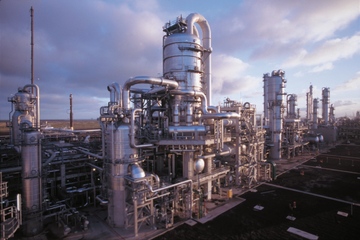 The styrene plant in Maasvlakte, Netherlands (Photo: LyondellBasell) The styrene plant in Maasvlakte, Netherlands (Photo: LyondellBasell) |
LyondellBasell (LYB, Houston, Texas, USA; www.lyondellbasell.com) and Covestro (Leverkusen, Germany; www.covestro.com) are still reluctant to comment on the planned closure of the combined propylene oxide/styrene plant in Maasvlakte, Netherlands. Both companies responded to a corresponding Plasteurope.com enquiry with statements that rumours would not be commented on until concrete decisions had been made. The negotiating partners of the Dutch trade unions FNV and CNV have also been tight-lipped. Although they confirm that negotiations have been going on since mid-January, they also point out that a non-disclosure agreement is in place.
However, media reports from the Netherlands make the closure of the plant appear almost certain. A detailed social plan for the 120 employees at the site is reportedly already in place. According to the information, 70 of them are to be made redundant. The remainder will presumably be used to decommission the plant, which, according to PIE’s Polyglobe database, has capacities for 640,000 t/y of styrene and 320,000 t/y of PO. It remains unclear when exactly the line, which has been throttled down to zero for some time, will be shuttered completely – as well as whether ethylbenzene production at the site near Rotterdam will follow suit.
This is the third styrene production facility to be removed from the market in Europe in the past two and a half years. Trinseo (Wayne, Pennsylvania, USA; www.trinseo.com) had already decided in 2022 and 2023 to shut down the plants in Terneuzen, Netherlands, with a capacity of 500,000 t/y and in Böhlen, Germany with a capacity of 300,000 t/y. Should Maasvlakte also fall, total European capacity – excluding Russia – would be reduced by a quarter from around 5.9 mn t/y. Since Plasteurope.com database records began in 2008, the number of styrene plants in Europe has fallen from 24 to 14.
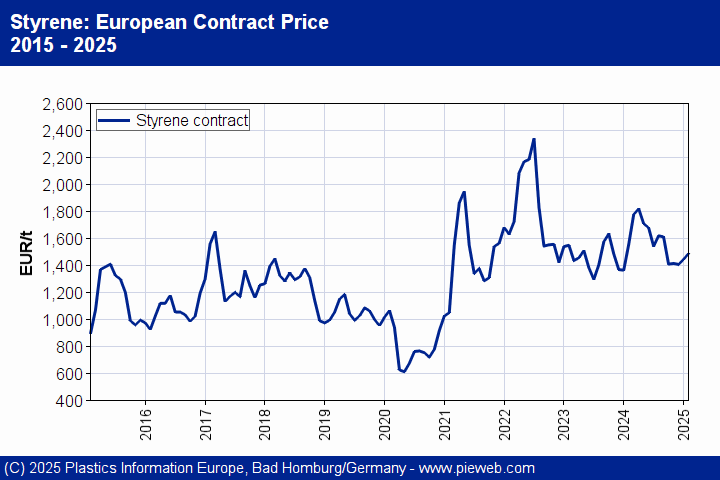 |
The high price volatility of the primary product has long been a thorn in the side of styrenics processors. Some polystyrene processors have switched portions of their production to other polymers for this and other reasons. As imports, primarily from the US, are expected to replace the lack of capacity in Europe if demand picks up again, the price volatility of the primary product is likely to increase further.
Write-offs inching towards billions
The haste with which LyondellBasell is “reorganising” (to quote the annual report) is not surprising, given the losses in the fourth quarter of 2024. The group’s bottom line slipped into the red by USD 603 mn (almost EUR 580 mn). With sales of USD 9.5 bn – almost half a billion less than in the same period of the previous year – LYB also reported negative operating figures. However, this is primarily due to write-offs in the two large polyolefin segments and the compounds segment totalling more than USD 800 mn. In addition, there are also costs for the closure of the US refinery in Houston.
Related: Olefins: Technical issues at LYB cracker in Berre, France
In 2024 overall, LyondellBasell lost around 2% of its revenue, which dropped to USD 40.3 bn. Compared against the previous year, EBITDA fell by almost a quarter to USD 3.5 bn and profit by as much as a third to USD 1.4 bn. The main reason for the downturn was the decline in demand in all areas. Polyolefin exports from North America were able to curb the decline in sales volumes only slightly. Compounds also suffered from the weakness of the automotive industry.
Good news is currently scarce for CEO Peter Vanacker, such as a 65% increase in sales of recycled materials – albeit still at a very low level of just over 200,000 t. The group’s recent withdrawal from the recycling joint ventureLMF Nord (Hohenwestedt, Germany) was therefore all the more surprising. LYB had wanted to use the obtained recycled materials in the manufacture of products from the CirculenRecover sustainability product range.
Despite the generally prevailing scepticism regarding an upturn this year, Vanacker’s management team sees positive indicators in the polyolefin market for the coming months. Among other things, capacity utilisation rates should stabilise – the plants of Olefins & Polyolefins Americas are expected to achieve an average of 80%, while the sister division for Europe, the Middle East, and India is expected to achieve 75%. Both figures are still noticeably below the level considered adequate, however.
— Translated by Elspeth Lenhard
Published on 17.02.2025
February 17, 2025
Divestitures Begin
Germany’s BASF sells Brazilian paint business
BILYONARYO.COM

German chemicals giant BASF said Monday it will sell its Brazilian paint business for $1.15 billion (1.1 billion euros), as it seeks to slim down its operations amid an industrial slowdown.
Sherwin-Williams, an American company, will acquire the unit, which has about 1,000 employees, said the world’s largest chemicals group.
The business was BASF’s only one which sold to consumers rather than to industry, it said in a statement, adding that it had “limited synergies with other coating businesses within BASF.”
The sale comes amidst a cost-cutting drive, with the chemicals giant seeking to strip out less profitable businesses after being battered by a combination of weak demand and higher energy costs following the outbreak of the Ukraine war.
Last September CEO Markus Kamieth told investors that BASF would focus on its “core businesses” in an effort to make annual savings of about 2.1 billion euros by the end of 2026.
Reporting third-quarter financial results in October, BASF warned “of risks from potential declines in prices and lower growth volume than expected” as its operating profit fell seven percent.
The deal is expected to close in the second half of 2025.
BASF said it would “further explore strategic options” for other parts of its coatings division.— Agence France-Presse
February 16, 2025
L&P Investors Call Highlights Produced by AI!
Leggett & Platt sees 2025 adjusted EPS of $1.00-$1.20 amid restructuring-driven efficiencies
Feb. 14, 2025 12:18 PM ETLeggett & Platt, Incorporated (LEG) StockAI-Generated Earnings Calls Insights

Earnings Call Insights: Leggett & Platt (NYSE:LEG) Q4 2024
Management View
- CEO Karl Glassman praised the execution of the company’s restructuring plan, which yielded $22 million in EBIT benefit in 2024, surpassing expectations. The plan included the closure of 14 bedding locations and further optimization of hydraulic cylinders and administrative costs.
- Glassman announced the promotion of Sam Smith to President of the Specialized Products segment, emphasizing his role in advancing operational efficiency improvements within the division.
- CFO Ben Burns highlighted Q4 2024 revenue of $1.1 billion, a 5% decline year-over-year, impacted by weak demand in residential and automotive markets. Adjusted EPS for the quarter was $0.21.
- Management noted strong product innovation, including the adoption of semi-finished bedding products like ComfortCore and Combi-Core, as well as partnerships with mattress OEMs for product refreshes.
Outlook
- The company projects 2025 adjusted EPS in the range of $1.00 to $1.20, reflecting restructuring benefits and operational efficiencies.
- Full-year sales are anticipated to range from $4.0 billion to $4.3 billion, representing a 2%-9% decline year-over-year, with volume reductions across all segments.
- Management expects restructuring costs of $30-$40 million in 2025, with total costs reaching $80-$90 million by year-end. Incremental EBIT benefit from restructuring is forecasted at $35-$40 million for the year.
- Cash from operations is expected to range from $275 million to $325 million in 2025, with the first quarter representing a seasonal low point.
Financial Results
- Adjusted EBIT for Q4 2024 was $56 million, down $10 million compared to the prior year, due to lower volume and compressed metal margins, partially offset by restructuring benefits and operational efficiency improvements.
- Full-year adjusted EPS was $1.05, a 24% decline year-over-year, reflecting weaker demand in residential and automotive markets. Total 2024 sales reached $4.4 billion, a 7% decrease from 2023.
- The company reduced total debt by $126 million in 2024, ending the year at $1.9 billion with a net debt-to-EBITDA ratio of 3.76x. Liquidity at year-end stood at $793 million.
Q&A
- Susan Maklari, Goldman Sachs: Asked about the dynamics in the bedding market and the impact of imports. CEO Glassman explained that low-end imports accounted for nearly 50% of units sold, creating challenges for mid-tier and higher-tier price points.
- Bobby Griffin, Raymond James: Inquired about the bedding segment’s restructuring and its impact on margins. Tyson Hagale described the consolidation of innerspring facilities into four larger plants, optimizing geographic efficiency and manufacturing output.
- Keith Hughes, Truist Securities: Sought clarification on adjustable bed performance. Glassman attributed weaker revenue to product mix shifts favoring lower-priced models.
- Peter Keith, Piper Sandler: Asked about the potential impact of tariffs on steel. Glassman noted potential margin benefits at the steel mill but warned of offsetting downstream competitiveness challenges.
Sentiment Analysis
- Analysts were cautiously optimistic about the restructuring progress but expressed concerns over demand softness and macroeconomic headwinds.
- Management maintained a measured tone, emphasizing operational improvements and restructuring benefits while acknowledging challenges such as inflation and consumer affordability.
- Compared to the previous quarter, the tone reflected heightened focus on structural improvements and cautious optimism regarding long-term profitability.
Quarter-over-Quarter Comparison
- Management increased the projected annualized EBIT benefit from restructuring to $60-$70 million, up from $50-$60 million in Q3.
- Full-year 2025 guidance reflects continued caution, with anticipated declines across all segments. This marks a more conservative outlook compared to Q3.
- Analysts shifted focus in Q4 to specific impacts of restructuring and import dynamics, contrasting with broader market concerns highlighted in Q3.
Risks and Concerns
- Management identified macroeconomic risks, including low housing turnover, inflation, and weakened consumer confidence, as key challenges.
- Analysts raised concerns about ongoing import pressure in the bedding market and automotive headwinds driven by EV program delays and trade-downs.
- The company’s reliance on volume-sensitive businesses was noted as a vulnerability in the current demand environment.
Final Takeaway
Leggett & Platt’s Q4 2024 earnings call highlighted the company’s ongoing restructuring efforts, which are expected to drive significant EBIT benefits in 2025. While facing demand challenges in residential and automotive markets, management remains focused on operational efficiencies, debt reduction, and product innovation to support long-term growth. Investors should monitor how effectively the company navigates macroeconomic headwinds and leverages its streamlined operations to maintain profitability.
February 16, 2025
BASF Expands MDI in China
BASF Plans for Further MDI Expansion in Shanghai, China
PUdaily | Updated: February 13, 2025
BASF Plans to Expand MDI Capacity in Shanghai to 400 ktpa
Recently, the MDI expansion project launched by Shanghai BASF Polyurethane Co., Ltd. (SBPC) is under public disclosure. According to the announcement, SBPC, located in Shanghai Chemical Industry Park, is one of the original three Sino-foreign joint ventures that initiated an integrated isocyanates plant project in Shanghai. The project was co-launched by Shanghai Lianheng Isocyanate Co., Ltd. (SLIC), Shanghai Huntsman Polyurethane Co., Ltd. (Huntsman Shanghai), and Shanghai BASF Polyurethane Co., Ltd. (BASF Shanghai). In July 2023, BASF announced that SLIC would be split between BASF Shanghai and Huntsman Shanghai. As of February 2024, the spin-off had been completed, with BASF Shanghai acquiring SLIC’s 240 ktpa crude MDI plant along with the nitrobenzene/aniline unit.
Currently, BASF Shanghai’s crude MDI capacity cannot meet demands in the surrounding markets. Therefore, the company plans to enhance production efficiency by renovating bottleneck facilities that affect the increase in production capacity per unit time. It will also extend the production time of the nitrobenzene/aniline unit and the MDA/crude MDI unit from the original 7,500 hours/year to 8,000 hours/year. Once the expansion project is completed, BASF Shanghai’s crude MDI capacity will achieve 401.76 ktpa, while its MDI splitting capacity will remain unchanged at 300 ktpa.
Furthermore, BASF’s MDI splitting capacity at its Chongqing plant is currently being expanded to 530 ktpa.
“Winning Ways” Strategy – Continuing to Increase Investment in the Asia-Pacific Region, Particularly in China
In September 2024, BASF presented its new “Winning Ways” strategy along four strategic levers: Focus, Accelerate, Transform and Win, aiming to strengthen its core businesses and add the value of standalone businesses. In order to enhance its presence in Asian markets, BASF continued to increase investments in the Asia-Pacific region, particularly in China. Apart from the MDI expansion project in Shanghai, BASF’s investment projects in China include Zhanjiang Verbund site, expanded downstream chemical plants at BASF-YPC, investments in synthetic biotech, polymer dispersions, anode binder, battery materials and renewable power. These investments underscore BASF’s long-term commitment and confidence in the Chinese market, as well as its strategic emphasis on sustainable development and high value manufacturing.
China is to Contribute Nearly 50% of Global MDI Capacity
In 2024, the global MDI capacity reached 10.69 mtpa in 2024, according to PUdaily. The MDI capacity in China was 4.69 mtpa, contributing 44% of the global total capacity. It’s projected that by 2029, the global MDI capacity will increase to around 12.84 mtpa and China’s MDI capacity will expand to 6.19 mtpa, further raising its share in the global total capacity to 48%.
February 12, 2025
Tempur Sealy Makes Changes
Leadership Change at Mattress Firm
Feb. 12, 2025 9:00 AM ETTempur Sealy International, Inc. (TPX)
– New Interim CEO of Mattress Firm, Scott Thompson
LEXINGTON, Ky., Feb. 12, 2025 /PRNewswire/ — Tempur Sealy International, Inc. (TPX) (NYSE: TPX, “Company” or “Tempur Sealy”) today announced management changes at Mattress Firm. The Company recently acquired Mattress Firm, the nation’s largest mattress specialty retailer.
John Eck has decided to step down as Chief Executive Officer of Mattress Firm. The Company has entered into a consulting agreement with Mr. Eck to ensure a smooth transition. Scott Thompson, Chairman and CEO of Tempur Sealy, will act as Interim CEO of Mattress Firm during a transition period. The Company expects to appoint a new CEO of Mattress Firm within the next 6 to 9 months.
“We thank John for his successful 6 years at Mattress Firm, leading the business to outperform the market over the period of his leadership,” commented Scott Thompson. “I look forward to working with the Mattress Firm leadership team during this transitional period.”
The Company previously announced it will change its name to Somnigroup International Inc. (“Somnigroup”), effective February 18, 2025. Mattress Firm, Dreams and Tempur Sealy will operate as decentralized business units under Somnigroup International. Mattress Firm and Dreams will continue to operate as multi-branded retailers and Tempur Sealy, primarily a manufacturer, will continue to serve third-party retailers as well as Mattress Firm, Dreams and Tempur Sealy direct-to-consumer channels.
https://seekingalpha.com/pr/19999988-leadership-change-at-mattress-firm#hasComeFromMpArticle=false
 Everchem Updates Archive
  Sign Up for Email Updates