
Company News
August 1, 2023
Wanhua First Half Results
Wanhua Chemical Group Co., Ltd. Reports Earnings Results for the Half Year Ended June 30, 2023
July 27, 2023 at 05:47 am

Wanhua Chemical Group Co., Ltd. reported earnings results for the half year ended June 30, 2023. For the half year, the company reported sales was CNY 87,178.76 million compared to CNY 88,856.73 million a year ago. Revenue was CNY 87,626.38 million compared to CNY 89,118.77 million a year ago.
Net income was CNY 8,568.24 million compared to CNY 10,383.02 million a year ago. Basic earnings per share from continuing operations was CNY 2.73 compared to CNY 3.31 a year ago.
August 1, 2023
Apollo Completes Univar Solutions Acquisition
Univar Solutions Completes Transaction with Apollo Funds
08/01/2023
Shareholders Receive $36.15 Per Share in Cash
DOWNERS GROVE, Ill. and NEW YORK, Aug. 1, 2023 /CNW/ — Univar Solutions Inc. (“Univar Solutions” or the “Company”) and Apollo (NYSE: APO) today announced that Apollo Funds have completed the previously announced acquisition of the Company, which includes a minority investment from a wholly owned subsidiary of the Abu Dhabi Investment Authority. The Company will continue to operate under the Univar Solutions name and brand and maintain its global presence.
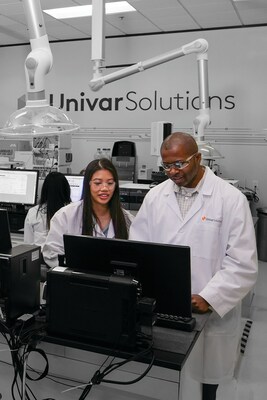
Univar Solutions Completes Transaction with Apollo Funds
David Jukes, president and chief executive officer of Univar Solutions, said, “The completion of this transaction begins the next chapter for Univar Solutions as we further enhance our position as a leading global chemical and ingredients solutions provider with enhanced flexibility to explore growth opportunities for the benefit of customers, suppliers, employees, and industry alike. I couldn’t be more pleased to be in such an advantaged position due to our broad product offering and enhanced presence in target growth end markets, award winning customer experience, leading digital tools, and expanded suite of service capabilities.”
Apollo Private Equity Partner Sam Feinstein said, “We are excited to partner with David and the talented Univar Solutions team to build on the Company’s strong foundation and track record of innovation, leveraging our extensive industry experience. We have strong conviction in Univar’s potential and look forward to embarking on a number of exciting initiatives to help accelerate the Company’s growth.”
Transaction Details
Pursuant to the terms of the transaction, an affiliate of the Apollo Funds acquired all of the outstanding shares of Univar Solutions stock. Shareholders are entitled to receive $36.15 in cash for each share of Univar Solutions (UNVR) common stock owned. As a result of the transaction completion, Univar Solutions’ common stock no longer trades on the New York Stock Exchange.
July 31, 2023
Plaquemine Update
Two weeks after explosion, Dow plant still ‘essential personnel only’ as cleanup continues
- BY DAVID J. MITCHELL | Staff writer
- 2 hrs ago
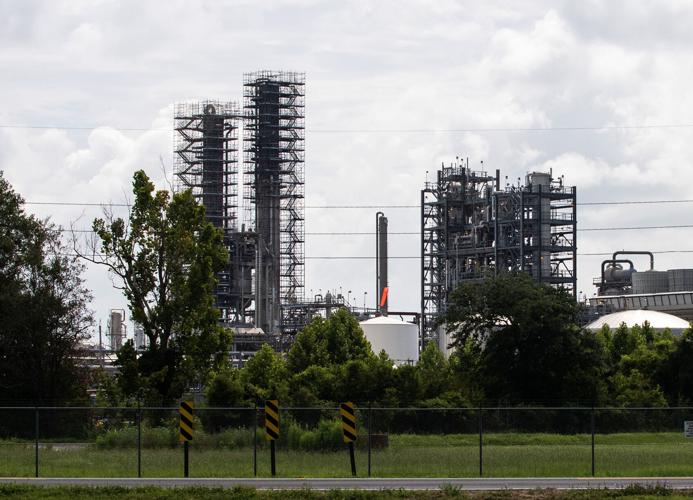
The Dow Chemical complex, in Iberville Parish, along La. 1 on Saturday, July 15, 2023. The plant in Plaquemine, Louisiana, was the scene of a large fire and explosions late Friday.
- STAFF PHOTO BY MICHAEL JOHNSON

More than two weeks since a unit inside Dow’s large complex near Plaquemine exploded in a towering fireball, company officials continued to allow only essential personnel inside the 1,500-acre site but were in talks to more fully reopen the plant to workers.
Company officials ordered the limitations as a precaution for their workers and contractors, Dow officials said, as workers continued on Monday to remove dangerous chemical products from their Glycol II unit that burned in the explosions in mid-July.
Company officials said they were assessing when to lift the restriction but don’t expect the safe removal of the potent chemical ethylene oxide to finish until the end of this week.
“To ensure the safety of our employees, we have restricted access to the site to essential workers only,” company officials said in a statement. “As we near completion of the assessment process, our site leadership team is discussing a return to site plan for all employees.”
In recent reports to state regulators, the company said the fire led to the release of ethylene oxide and ethyl chloride into the air. Ethylene oxide was also found in water initially used to extinguish the fire.
The water overflowed and ended up in the Mississippi River, a state report says.
Dow officials have told the state Department of Environmental Quality that the release of the chemicals into the air was continuing, reports say, but the company has not determined how much was released during the fire or since it has been put out.
Greg Langley, DEQ spokesman, said the “ongoing” air release stems from likely smaller releases expected to occur as the company removes the material from storage tanks, lines and damaged equipment in the Glycol II Unit.
Ethylene oxide is a highly flammable, colorless gas and is a potent human carcinogen with long-term exposure, the U.S. Environmental Protection Agency says.
DEQ and Dow have said continued air monitoring has not detected emissions of ethylene oxide outside the plant perimeter at or above 0.1 parts per million, the lower limit of the handheld monitors being used by Dow and DEQ.
That’s the same concentration as one-tenth of a drop of water in a 10-gallon aquarium, according to one government estimate.
The concentration, which is a federal worker safety standard, also happens to be the “action level” at which state environmental regulators would begin taking protective measures.
Dow officials have not described the level of damage to the unit, one of two that makes glycol at Dow’s Louisiana Operations, nor why the fire occurred, but said other units inside the complex are working.
The fire started around 9:15 p.m. July 14 and took a day and a half to extinguish. It could be seen lighting up the night sky for miles around and appeared on social media pages.
The blast and fire prompted local officials to order about 350 residents to shelter in their homes on the south side of the complex for several hours July 14 and 15.
It will likely be weeks before Dow says why the fire occurred, but an early dispatch from a DEQ field inspector issued sometime after July 16 provided a glimpse at some of what had been happening in the early stages of the fire fight.
Crews were working to isolate five “bullet tanks” that at least had the potential to be fueling the blaze. These pressurized, vertical storage tanks hold ethylene oxide, company officials confirmed.
At the time of the report, about 8:30 p.m. July 15, four of the five tanks had been isolated already. Crews were working on the fifth.
The other chemical released in the fire, ethyl chloride, is another flammable colorless gas. Also known as chloroethane, it can cause dizziness, a drunken feeling and even unconsciousness in high, short-term doses.
Its long-term carcinogenic effects on humans are unknown, but one two-year study found it caused cancer in female mice that inhaled the gas, according to the U.S. Environmental Protection Agency.
Environmental groups have questioned how such a large fire could not result in some emissions of ethylene oxide and other chemicals, but state and company officials have said much of the chemical fuel could have been burned up in the blaze and converted to water and carbon dioxide.
Is there a risk in the air?
Ethylene oxide has drawn new attention and debate in recent years after an EPA research arm found the chemical, which is widely used in medical sterilization and in the production of a variety of chemical products, posed a far higher carcinogenic risk than earlier believed.
Though some advocacy groups and New Jersey’s air regulator suggest there may be no safe level for ethylene oxide, these concerns arise primarily from chronic exposure over a lifetime.
The DEQ action level for ethylene oxide being tested around Dow is 180 times larger than the state’s chronic exposure limit of 0.55 parts per billion, which is for 70 years of continuous exposure.
Air monitors being used around Dow don’t measure a level that small, so it’s not clear if lower levels of ethylene oxide were emitted by the fire.
The higher state action-level standard around which the monitoring at Dow has been based rely on existing federal worker safety recommendations in the absence of an EPA standard for this kind of short-term release, DEQ officials said.
Federal authorities are calling for even smaller chronic exposure standards than DEQ’s standard. Industry groups and some state environmental agencies have argued the chronic standards are based on flawed methods and are overstated, prompting litigation.
In addition to the air impact, DEQ also authorized Dow to send large volumes of water that had been used to extinguish the fire and liquids from damaged coolant and utility lines into the Mississippi River without treatment.
Is there a risk to the water?
In July 18 order, DEQ granted the authority for 14 days after the company told the agency it needed to remove the water that was continuing to fill its containment systems and couldn’t be treated quickly enough to allow progress on the fire recovery to continue.
DEQ required Dow to test the water daily inside the complex and at the river discharge point and report the results to the agency.
Even before the permit was issued, Dow says it has been testing water, including every four hours during the fire.
About 140 samples were taken through last Thursday and hadn’t shown a groundwater risk. The water also appeared to be within preexisting water discharge limits, the company said.
“Water quality remains normal,” Dow officials said.
More than 25 miles downstream of the plant, the city of Donaldsonville draws its drinking water from the Mississippi River. Several other communities farther downriver in St. James and other parishes do also.
State officials say the small concentrations likely being detected would be diluted by the large volumes of water in the river.
Though Dow says it is reporting the testing results to DEQ, those results have not yet been made public in the state’s online database. A report is due in the coming days.
In the first days of the fire, water from fire suppression systems had overwhelmed a containment reservoir, causing water to overflow on July 15 into one of the plant’s drainage canals.
Testing of that overflow water on July 15 gave mixed results, company officials said: one elevated concentration of 39 parts per million and two much smaller results of 0.55 ppm and 2.5 ppm.
The EPA doesn’t have a drinking water standard for ethylene oxide, but the American Chemistry Council says its maximum safe concentration is up to 41 ppm.
Dow officials said the highest sample was taken from a lab in Dow’s Glycol II unit that had been testing other types of ethylene oxide samples previously and wasn’t set up to test water through the EPA-approved method for ethylene oxide.
Dow officials said they used the equipment to get a quick result in the immediate aftermath of the fire.
The lowest sample was found at another Dow lab on equipment calibrated for ethylene oxide and set up to use the EPA method, DOW officials said. The second-highest sample was found by a third-party lab.
All three samples were collected near the Glycol II unit inside Dow, about three-fourths of a mile from the river, company officials said.
July 31, 2023
BASF Urethane Highlights from Investors Call
BASF SE (BASFY) Q2 2023 Earnings Call Transcript
Jul. 28, 2023 8:01 AM ETBASF SE (BASFY), BFFAF
138.98K Followers
BASF SE (OTCQX:BASFY) Q2 2023 Earnings Conference Call July 28, 2023 4:00 AM ET
Company Participants
Martin Brudermüller – Chairman
Dirk Elvermann – Chief Financial Officer
Stefanie Wettberg – Senior Vice President Investor Relations
Martin Brudermüller
Good morning, ladies and gentlemen. On July 12, we adjusted our full-year’s outlook and released preliminary Q2 figures. Today, the first time with Dirk, we will provide you with further details.
Let’s start with the development of Global Chemical Production. Based on currently available data, global chemical production stagnated compared with the prior-year quarter on account of weaker global demand. Among the large chemical markets, only China recorded growth. However, this was largely due to the low baseline resulting from the COVID-related lockdowns in Q2 2022.
In Europe, chemical production again declined strongly compared with the prior-year quarter. This was due to lower demand resulting from high inflation, frontloading of durable goods consumption during the COVID years, as well as elevated natural gas prices.
In Q2 2023, gas prices were still around twice as high as the average between 2019 and 2021 and 5x higher than the Henry Hub quotation for the quarter. In some cases, this has already led to temporary or permanent shutdowns of production capacities in the European chemical industry.
In North America, chemical production also declined compared with the prior-year quarter in an environment of weak demand for consumer goods. Lower demand and increased energy prices were also the main reasons for the decline in chemical production in Asia, excluding China, with the notable exception of moderate growth in India.
Despite recessionary developments in Europe and the United States and a subdued economic development in China, we do not expect a further weakening in demand at the global level of the second half of 2023. Inventories of chemical raw materials in most customer industries have already been greatly reduced.
Let’s take a closer look at the current and historical levels of indicators for inventories in the manufacturing industry by region. On this slide, values below 50 indicate declining inventories, values above 50 indicate restocking.
In Western Europe and North America, the indicators are already below their long-term averages. Furthermore, indicators in these two regions are now in the range of historical inflection points from destocking to inventory build-up. From this perspective, we should have likely reached the trough. Inventory indicators for Asia Pacific are above the long-term average, but have to be interpreted in the context of a somewhat higher growth momentum in industrial production.
Overall, these observations and statistical data are in-line with the current development of order entries in our operating divisions. Some customers are recognizing that they cannot expect further prices – further expect purchase prices to fall further. This should also support gradual demand recovery combined with a cautious rise in consumer confidence.
Moving on to BASF performance. Q2 2023, we faced low demand from our key customer industries, except automotive. Overall, BASF Group sales declined by 25% to EUR17.3 billion in Q2 2023, mainly on account of lower prices and volumes. Negative currency effects also lowered sales.
Compared with the extremely strong prior-year quarter, EBIT before special items decreased by EUR1.3 billion and amounted to EUR1.0 billion. The decline was especially driven by the upstream segments. Dirk will go into more detail on the development of the segments.
Already in January 2023, BASF broke ground on the third and final phase of the MDI expansion at our Verbund site in Geismar, Louisiana. We will increase production capacity to approximately 600,000 metric tons per year by 2026 to support the ongoing growth of our North American MDI customers.
We are investing $780 million in this final expansion phase from 2022 to 2025. Including the first and second phase, this investment volume totaled around $1 billion. This makes the MDI expansion project BASF’s largest wholly owned investment in North America. For future investments in the United States, we will evaluate incentive schemes provided by the Inflation Reduction Act.
Martin Brudermüller
Thank you, Dirk. Ladies and gentlemen, as announced on July 12, we expect weaker second-half sales and earnings than previously forecast. We adjusted our outlook for the full year 2023 accordingly. We now anticipate sales of between EUR73 billion and EUR76 billion. And EBIT before special items is now expected to reach between EUR4.0 billion and EUR4.4 billion in 2023. Based on the expected weaker earnings performance, we now anticipate a ROCE of between 6.5% and 7.1%.
Matthew Yates
Hi, good morning everyone. And welcome, Dirk. Now that you’re all warmed up, I can maybe ask a slightly tougher question. So the press release mentioned you’re planning to have sharper focus on cash management. As you’re probably aware, there’s a lot of anxiety from your shareholders around the balance sheet as we go through this period of tough trading, combined with high CapEx spending.
So can you talk a little bit more about the different levers you think you can pull to improve that cash management of the group? Are we talking about sort of cost-cutting, CapEx plans, working capital management, disposals or all of the above? Because I think there’s an anxiety from investors that BASF doesn’t have a Plan B if the cycle doesn’t quickly turn for sustaining that dividend. Thank you.
Martin Brudermüller
Clearly for the new CFO.
Dirk Elvermann
Thanks, Matthew, for the question. So yes, and first of all you see the focus on the cash management already, I think in the second quarter results, which we have just explained. So what are the levers that we are pulling?
So (a) CapEx we talked about. We started the year with a EUR6.3 billion expectation for this year. We have trimmed this down first to a little bit below EUR6 billion as you know, and now we’re at EUR5.7 billion. And this is attributable to savings in the base CapEx I’d say, which is the maintenance and funding of our overall asset footprint.
But also with regard to our growth projects, we came down here and this is a little bit of FX effect certainly, but this is also smart negotiations with partners in China. So that we are not just postponing CapEx to the outer years, but that we are really also reducing it to now 5.7 billion. This is I think a comfortable number, which will not be higher and I think that’s the step in the right direction.
Cost savings; I mentioned we are having the various dimensions. We have the focus projects, cost-saving projects on Europe, EUR 500 million run rates from non-operating activities, and then until 2026, also the streamlining of the Verbund in Ludwigshafen with the further 200 million. And then we have the running programs for the service units, which we have also explained. So altogether, it’s a little bit more of EUR1 billion run rate as of 2026, the latest.
And then on inventories, that’s close to my heart also. You know the typical inventory profile of the group, so we are normally peaking around late summertime. This year, we stayed very focused on inventory build-down alone in June. Just to give you an idea, we are more than 400 million lower than in May in terms of our inventories, and if you compare it with June last year, we are more than 550 million lower. So this shows you in which direction we want to go there.
Last not least, accounts receivable. There we will see of course the build-down in the second half when the cash collection from the agricultural business is at its peak, and also here we see some cash release. So in short, in a nutshell, we are pulling all levers that we have.
Sebastian Bray
Hello, good morning, and thank you for taking my questions. I have two, please. The first is on the automotive sector. This has been a source of relative strength over the last two years. There may be some lead indicators that demand starting to slip a little. You mentioned earlier Martin, the comments around the slight pickup in orders on a near-term basis for the industry. But is this also the case for automotive or is it more appropriate to talk about a slight weakening there, is there any change?
My second question is on the mission’s control business, together with the precious metal activities that have been carved out. Could you give us any idea if the economics of this business, either in terms of its absolute sales or profitability currently? Thank you.
Martin Brudermüller
I mean, overall the order income from automotive I would say is rather stable. Also, when I said weakness or getting maybe a little bit weaker, that has also to do a lot with the base effect over there. So I see actually automotive rather stable, particularly the emission catalyst business and Dirk will come to this in a second, is also stable. And you see also that we have a very strong coating business, currently is performing actually very well, and that shows you there will be no car produced or sold, that is not painted, so that’s always very, very good indicator over there.
July 31, 2023
Olin Investor Highlights
Olin Corporation (OLN) Q2 2023 Earnings Call Transcript
Jul. 28, 2023 12:15 PM ETOlin Corporation (OLN)

138.98K Followers
Q2: 2023-07-27 Earnings Summary
EPS of $1.08 beats by $0.06 | Revenue of $1.70B (-34.91% Y/Y) misses by $168.30M
Olin Corporation (NYSE:OLN) Q2 2023 Earnings Conference Call July 28, 2023 9:00 AM ET
Company Participants
Steve Keenan – Director-Investor Relations
Scott Sutton – Chief Executive Officer
Todd Slater – Chief Financial Officer
Scott Sutton
Thanks, Steve, and good morning, everybody. Global market conditions continue to be quite poor. Additionally, our performance in the second quarter was not up to expectations, partially due to the previously announced Freeport vinyl chloride monomer plant operating issues, but also due to excessive Asian Epoxy resin exports and our associated Epoxy asset right sizing activities. These factors will result in a lower trough expectation for 2023 adjusted EBITDA. The bright spot in the second quarter was our purchase of 2.5% of our outstanding shares while simultaneously reducing net debt compared to the first quarter. Since January 1, 2022, we have purchased 21% of our outstanding shares.
In the third quarter, we expect Epoxy resins and system sales volumes to slightly improve relative to the second quarter. However, inventory reduction efforts will lead the business in negative EBITDA territory. While Winchester’s performance is expected to slightly improve in the third quarter, mainly due to international and domestic military growth, our Chlor Alkali and Vinyls business is expected to be slightly down, mainly due to execution of our leadership model as we see bottoming of ECU values in some geographies likely a positive sign for 2024.
This is our time to be testing, and I am confident that the Olin team is up to that test. It should be clear from Slide number 4 that Olin believes running a value strategy with lots of built-in free options, delivers more total cash for shareholders versus any alternative strategy. Looking forward, we are working on numerous initiatives to make sure both future peaks and troughs from that value strategy are higher than our previous results. Those initiatives are spelled out on Slide number 5.
Hassan Ahmed
Understood. And sorry, it’s – the peak side of it, I also wanted to sort of touch base on. You guys sort of flagged over $3 billion in the next peak, right? And if I take a look at what you guys on a quarterly basis were run rating in Q1 2022 and Q2 2022, it was over $850 million. And clearly, utilization rates weren’t as tight as they potentially could be in the next peak, right? And you hadn’t sort of restructured the Epoxy business as you are right now, right? So, I mean, from the sounds of it, $3 billion in the next peak actually sounds pretty bare bone, is that fair?
Scott Sutton
I mean – yes. I mean, Hassan, look, our outlook certainly says that the structure of Chlor Alkali only gets better over, over time. And it’s true that we’ve done some restructuring in our Epoxy business. But I will say that in order for Epoxy to get back to the levels it was that – that’s probably a couple of years out. So you’re going to see the next peak in Chlor Alkali while Epoxy is still recovering. And that’s why we put the next peak at somewhere just about $3 billion.
Hassan Ahmed
Understood. And one last one, if I may. On Dow’s earnings call, they basically talked about how their contract with you was renewed through 2035. Is there any sort of commentary you can give about? I know historically, sort of Olin’s talked about not really making any money on that contract. But is there any commentary you guys can give us about that renewed contract?
Scott Sutton
Yes. I would just agree that we did reach an agreement, and I think that’s going to be good for everybody in the future.
Steve Byrne
Hi, thank you. Just continuing on to this peak EBITDA discussion. Is it more driven by Chlor Alkali? And is your view on Epoxy a little more measured than it used to be? And with the former Chlor Alkali and – are you moving any further down the path of partnering on some downstream polymer capacity? Or is it a little too early for that?
Scott Sutton
Well, I would say, I mean, the big driver of it is certainly Chlor Alkali. There is no doubt Epoxy will improve, but the structure of the Epoxy industry, when you have a China, that’s probably added almost 20% to the world’s supply capability in the last 18 months or so, it’s going to take a little more time to recover. I mean I’d also call out our Winchester business as well. I mean that business has great fundamentals, particularly in the growth of international and domestic ammunition. So it’s those things that will get us there.
Mike Sison
Okay. And then just in terms of where your mid-cycle EBITDA could be? Is it sort of the delta between the peak and this year? Or is it a different number? And how long do you think it takes to sort of get to sort of a mid-cycle number?
Scott Sutton
Yes. Well, I would just say, Mike, that we expect 2024 to be better. There’s good signs to that. I think even though they are slowly maturing signs and 2025 looks even better than that. So it’s in that range.
Michael Leithead
Morning. First question on epoxy. When you look at Asian exports and the prices they’re selling for in the market, is your sense that producers there are below cash breakeven levels? And if so, how, if at all, does that change your thinking about how Olin should approach, say, the epoxy value chain?
Scott Sutton
Yes. Thanks for the question. I would just say, yes. I mean you got to remember in China that they’ve been operating with favorability of negative chlorine values, right, at potentially negative hydrochloric acid values. So those key inputs, which is just one input, has gone into the epoxy chain with somebody paying the producers of epoxy to take it. That’s totally different than any other geography, and it has nothing to do with covering any kind of level of fixed cost and certainly no return on capital. So yes, I think that’s a real issue. We’re going to consider what we’re going to do about proposing duties in certain geographies as well because this really can’t go on.
Jeff Zekauskas
Thanks very much. You’ve always spoken of negotiation of the Dow contract has a meaningful future benefit in 2025. Now it seems that Dow is going to take less chlorine and caustic because of what they’re doing in propylene oxide. Is it still a meaningful jump for Olin in 2025? Or is that no longer the case?
Scott Sutton
Yes. I would say it’s really a positive arrangement for Olin. And Jeff, I mean you’re right that one PO unit Dow has announced that they’re closing that. So that volume goes away. But other volumes at that same site remain, and the site in Louisiana becomes the site of focus for the bigger volumes.
Jeff Zekauskas
So we shouldn’t expect some meaningful contractual – some meaningful EBITDA benefit to you in 2025 because of the renegotiation of the contract. Is that correct?
Scott Sutton
No, I think it’s positive, Jeff.
Duffy Fischer
Yes. Good morning. Scott, I was hoping, can you just kind of summarize all the changes you’ve made to your epoxy footprint and what does that do to the upside coming out? I mean, how much capacity have we taken off when we get through this downturn, how much different is your footprint today?
Scott Sutton
Yes, I mean, we’ve made and are in the process of making quite a number of changes. Upstream, I’ll say that we exited a Cumene plant. We exited one of our BPA facilities. In the resin area, we reduced our capability both in Freeport, Texas and in strata [ph] and then at a few downstream plants, we reduced our capability in solids epoxy resin, and then we shut down a facility in Korea. So, yes, I mean, that has reduced our capability some. What I will say is that in epoxy, we had at least two of everything to begin with and sometimes three or four of everything. So we’ve gotten rid of that overhang. We’re much more efficient now, and it’s not going to take a massive amount of volume to put as closer to a higher capacity utilization, and we’re still working to get those costs out.
Aleksey Yefremov
Thanks, Scott. And coming back to your configuration with Dow, as you mentioned, Dow will shut some PO capacity at Freeport that will free up some of your chlor alkali capacity. Should we assume that that’s not used in any way? Or is it more likely that you’ll look for some other derivative opportunities either through joint ventures, other arrangements or even organic investments downstream of chlor alkali.
Scott Sutton
Well, I would just say it opens up possibilities, right? And those are sort of some of the free options that we have going forward and we haven’t made a decision about that.
Matthew Blair
Hey, good morning Scott and Todd, circling back to the Dow contracts, Scott, you mentioned it was a positive resolution there. Should we think about this as being more significant on the free cash flow side for you than the EBITDA side? Or can you give us any color on that?
Scott Sutton
So, I would say it’s probably favorable for both parties on both sides, because there’s some real win-win elements of this, and that not only helps how we’re both running our day-to-day operations, but it also prevents inefficient investments on both parties side, which drives free cash flow. So, I would just say it’s a positive for both parties on both those fronts.
Matthew Blair
Sounds good. And then do you have any more commentary on the epoxy side. In terms of demand, could you talk about how things are going in areas like electronics and wind and autos?
Scott Sutton
Yes. I mean, look, the demand in all of those areas as well, at least in electronics was certainly sluggish. Automotive coatings at least in the U.S. has shown some recent recovery and you’ve seen some of that in the coatings company’s earnings announcement here. There is a nice portfolio of wind projects, and that’s one of the biggest outlets for our systems activities, but those projects go through stops and starts, and there’s been some level of inventory adjustment in those supply chains. But I would say all three of those areas as we move into 2024 are positive.
Frank Mitsch
Hey, good morning. If I could just point of clarification. The new terms on the Dow contract, did they take place when the old one was supposed to expire in October of 2025? Or is there a different effective date for the new terms?
Scott Sutton
Yes. I mean that’s roughly right. I mean, Frank, I won’t comment on all the different dates and all the different improvements, but I guess you can average it there.
Frank Mitsch
All right. Awesome. Thank you. And yes, I totally appreciate the difficulties in the epoxy business, and obviously, you’ve been taking number of steps to improve your own footprint. You’ve outlined some of them. And I know in the past, you’ve indicated that some of these actions should start to lead to a $50 million annual EBITDA improvement starting in the fourth quarter, given the degradation in the broader markets, how should we think about sort of these actions that Olin is proactively taking will start impacting your income statement.
Scott Sutton
Yes. I mean, principally, you’ll see it more in 2024. It’s actually being effective today and into the fourth quarter, Frank. But we’re having to clean up our inventory on the balance sheet a bit. And that is offsetting some of that underlying improvement that will expose itself after a couple of quarters here.
John Roberts
And then is any of the Parlay activity in epoxies? Or is it all in chlor alkali items?
Scott Sutton
Well, the majority of it is in chlor alkali. We’ve been successful at running that Parlay strategy in epoxy until capacity utilization got so low. And so we’ve reduced that participation there. It just doesn’t make sense to do it at the moment.
John Roberts
Do you have any longer-term targets for both total Parlay and the balance between Epoxy and chlor alkali?
Scott Sutton
Well, I wouldn’t say there’s a target for a balance between chlor alkali and epoxy. I would say that we’re going to do the right amount of Parlays so that we can keep a leadership strategy in place and keep our product values up even when our capacity utilization is low. So when our capacity utilization is very low, like it is now, you’re going to see big percentages. When it goes up, you might see some smaller percentages. However, I will say that Blue Water is out there trading more caustic and more EDC across the oceans and that trading activity will continue and grow no matter what our capacity utilization is.
 Everchem Updates Archive
  Sign Up for Email Updates