Current Affairs
January 26, 2021
Fuel Surcharges Are Back
Fuel prices up for 11th straight week, hit highest mark since March 2020
Overdrive StaffJan 20, 2021
Trucking news and briefs for Wednesday, Jan. 20, 2021:

Diesel fuel prices across the U.S. increased for the 11th straight week during the week ending Jan. 18, according to the Department of Energy’s weekly report.
According to DOE, the average price for a gallon of on-highway diesel is $2.696, up 2.6 cents from the previous week and up 32.4 cents from the 2020 low mark of $2.372 per gallon during the week ending Nov. 2.
Fuel prices are now at their highest point since the week ending March 16, 2020, when prices stood at $2.733 per gallon.
During the most recent week, prices increased in all regions, with the most significant increase being seen in New England, which saw a 6.4-cent increase.
California is home to the nation’s most expensive diesel at $3.448 per gallon, followed by the Central Atlantic region at $2.924 per gallon.
The cheapest fuel can be found in the Gulf Coast region at $2.461 per gallon, followed by the Rocky Mountain region at $2.603 per gallon.
January 23, 2021
Where’s My Container?
Maersk Boxship Loses 750 Containers Overboard in North Pacific
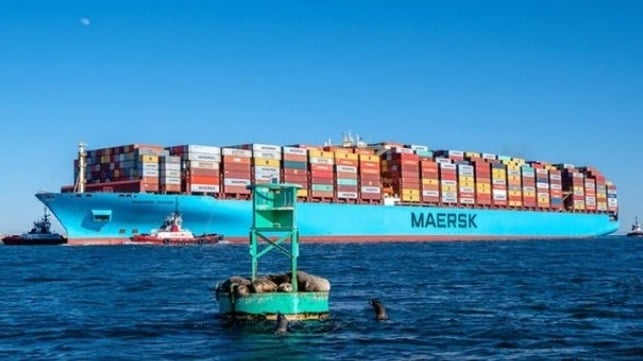
Heavy weather in the North Pacific is being blamed for the loss of containers aboard one of Maersk’s containerships. This is the third container loss incident recently reported in the Pacific.
Maersk is saying that approximately 750 containers were lost overboard from the Maersk Essen, a 148,723 dwt vessel with a capacity of 13,100 TEU. The loss occurred on January 16, but the line did not supply details on the vessel’s location. According to tracking provided by Pole Star, the Maersk Essen was about 430 nautical miles NNE of Honolulu at about 1800 GMT on January 16.
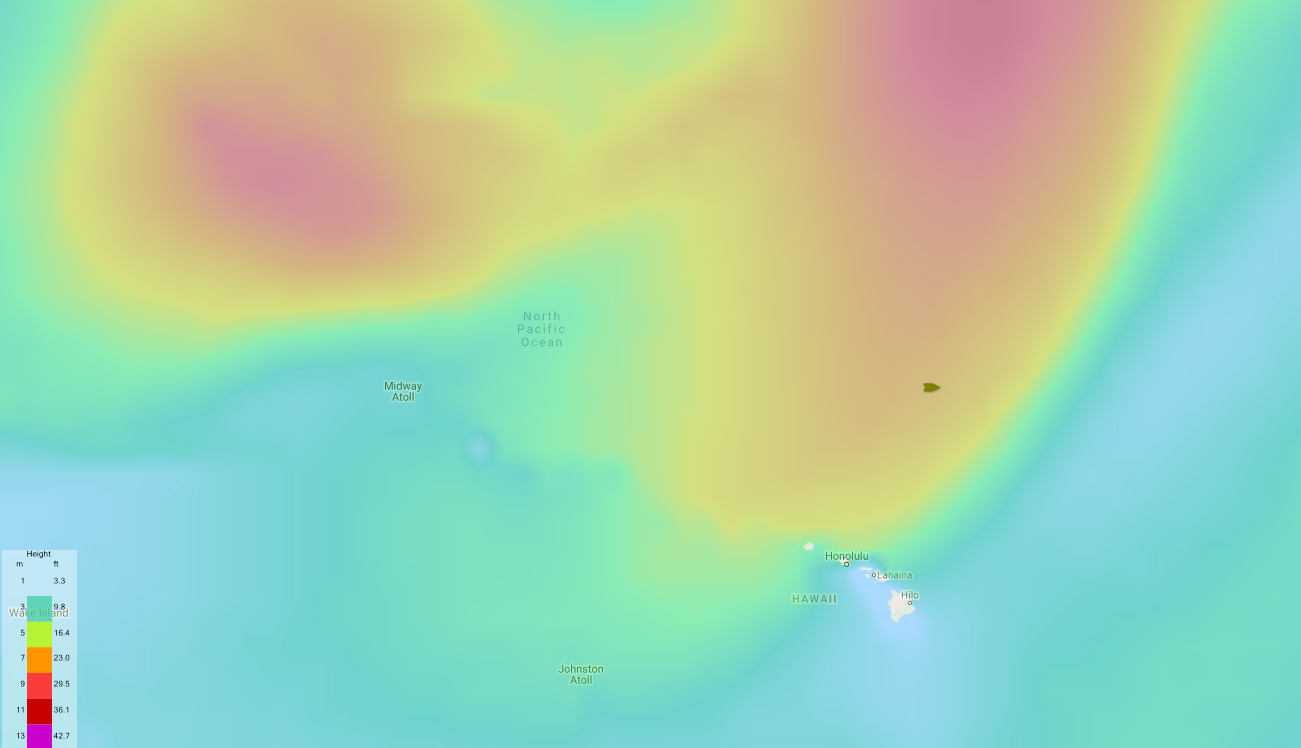
Maersk Essen’s position with significant wave height, January 16, 1800 GMT; orange represents waves of approximately 20 feet (courtesy Pole Star)
The vessel had departed Xiamen, China on December 26 and was due to arrive off Los Angeles on January 22. She operates on Maersk’s TP6 Asia/US West Coast route and as such would have made calls in Vietnam, Hong Kong, and Yantian, China before arriving in Xiamen.
Cargo claims consultancy WK Webster is saying in its initial casualty report, “it is therefore also very likely that some containers will have collapsed or have been damaged in the affected stacks, but remain on board. These containers will need to be removed or repositioned.” Webster reports that it is making arrangements for surveyors to be in place in order to investigate the cause of the incident and to attend to any cargo surveys. They are urging anyone who might have had cargo aboard to make contact to protect their position.
“We view this as a very serious situation which will be investigated promptly and thoroughly,” Maersk said in its statement. They reported that all of the crew was safe and that a detailed cargo assessment is ongoing. In addition, the US Coast Guard, flag state and relevant authorities have been notified.
The Maersk Essen is proceeding to Los Angeles on its scheduled route. Maersk’s vessel tracking system shows that the vessel was scheduled to be on the terminal in Los Angeles from January 28 to February 5 before departing for Yokohama, Japan.
There have been several other incidents in recent month also on the North Pacific. On November 30, the ultra-large containership ONE Apus lost approximately 1,800 containers overboard and damaged scores more during reports of severe weather approximately 1,600 nautical miles northwest of Hawaii. In that incident, the vessel reversed course and sailed to Kobe, Japan, where the recovery operation is still ongoing.
In a third recent incident, at the beginning of November, the ONE Aquila also suffered a container loss in the North Pacific. One Line did not provide details on the number of containers, but WK Webster in its casualty report said that it believed the number exceeded 100 containers. That vessel diverted to Washington state to offload damaged containers and reposition lose containers before proceeding to Long Beach, California.
These recent events are counter to a report issued by the World Shipping Council last summer that said the incidents of containers lost overboard has been on the decline and is a small percentage of the total annual volume. The WSC reported that the three-year moving average was declining, amounting to an average annual loss of 779 containers overboard between 2017 and 2019.
January 23, 2021
Where’s My Container?
Maersk Boxship Loses 750 Containers Overboard in North Pacific
Heavy weather in the North Pacific is being blamed for the loss of containers aboard one of Maersk’s containerships. This is the third container loss incident recently reported in the Pacific.
Maersk is saying that approximately 750 containers were lost overboard from the Maersk Essen, a 148,723 dwt vessel with a capacity of 13,100 TEU. The loss occurred on January 16, but the line did not supply details on the vessel’s location. According to tracking provided by Pole Star, the Maersk Essen was about 430 nautical miles NNE of Honolulu at about 1800 GMT on January 16.
Maersk Essen’s position with significant wave height, January 16, 1800 GMT; orange represents waves of approximately 20 feet (courtesy Pole Star)
The vessel had departed Xiamen, China on December 26 and was due to arrive off Los Angeles on January 22. She operates on Maersk’s TP6 Asia/US West Coast route and as such would have made calls in Vietnam, Hong Kong, and Yantian, China before arriving in Xiamen.
Cargo claims consultancy WK Webster is saying in its initial casualty report, “it is therefore also very likely that some containers will have collapsed or have been damaged in the affected stacks, but remain on board. These containers will need to be removed or repositioned.” Webster reports that it is making arrangements for surveyors to be in place in order to investigate the cause of the incident and to attend to any cargo surveys. They are urging anyone who might have had cargo aboard to make contact to protect their position.
“We view this as a very serious situation which will be investigated promptly and thoroughly,” Maersk said in its statement. They reported that all of the crew was safe and that a detailed cargo assessment is ongoing. In addition, the US Coast Guard, flag state and relevant authorities have been notified.
The Maersk Essen is proceeding to Los Angeles on its scheduled route. Maersk’s vessel tracking system shows that the vessel was scheduled to be on the terminal in Los Angeles from January 28 to February 5 before departing for Yokohama, Japan.
There have been several other incidents in recent month also on the North Pacific. On November 30, the ultra-large containership ONE Apus lost approximately 1,800 containers overboard and damaged scores more during reports of severe weather approximately 1,600 nautical miles northwest of Hawaii. In that incident, the vessel reversed course and sailed to Kobe, Japan, where the recovery operation is still ongoing.
In a third recent incident, at the beginning of November, the ONE Aquila also suffered a container loss in the North Pacific. One Line did not provide details on the number of containers, but WK Webster in its casualty report said that it believed the number exceeded 100 containers. That vessel diverted to Washington state to offload damaged containers and reposition lose containers before proceeding to Long Beach, California.
These recent events are counter to a report issued by the World Shipping Council last summer that said the incidents of containers lost overboard has been on the decline and is a small percentage of the total annual volume. The WSC reported that the three-year moving average was declining, amounting to an average annual loss of 779 containers overboard between 2017 and 2019.
January 15, 2021
Container Traffic Jam
Inside California’s Colossal Container-Ship Traffic Jam
by Tyler DurdenFriday, Jan 15, 2021 – 14:05
By Greg Miller, of Freight Waves,
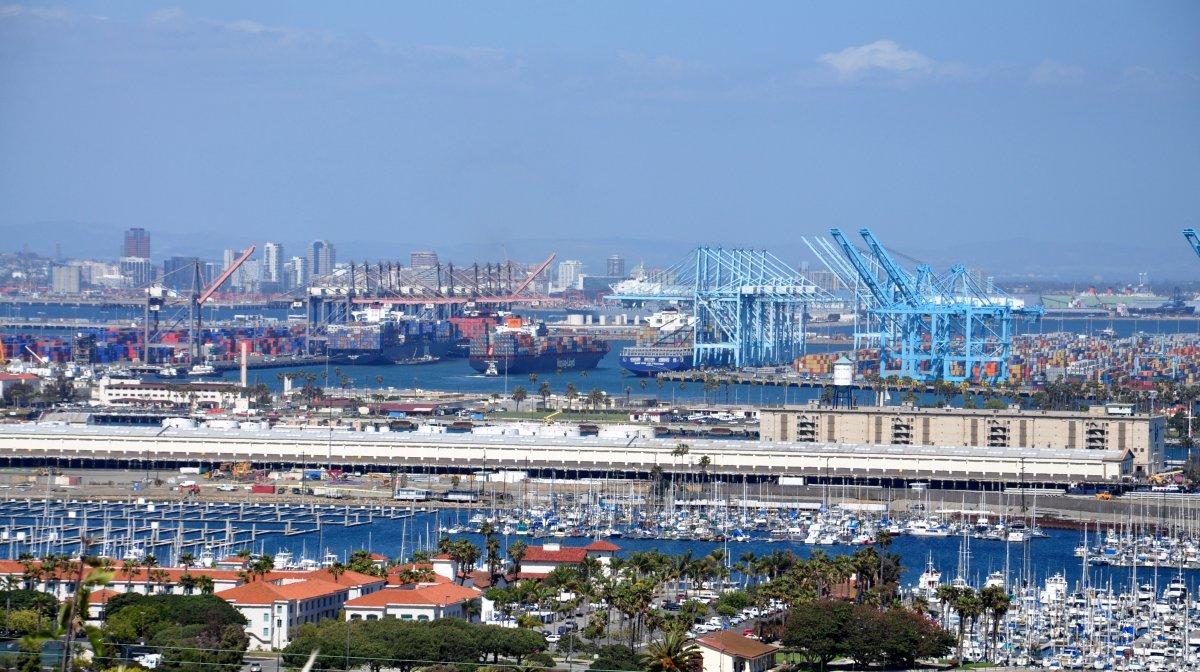
In the movie “Falling Down,” the character played by Michael Douglas is stranded in a Los Angeles traffic jam. He abandons his car, starts walking with briefcase in hand and ultimately has a mental breakdown. Cargo shippers trying to get their containers through the ports of Los Angeles and Long Beach can relate.Container imports overwhelming California ports

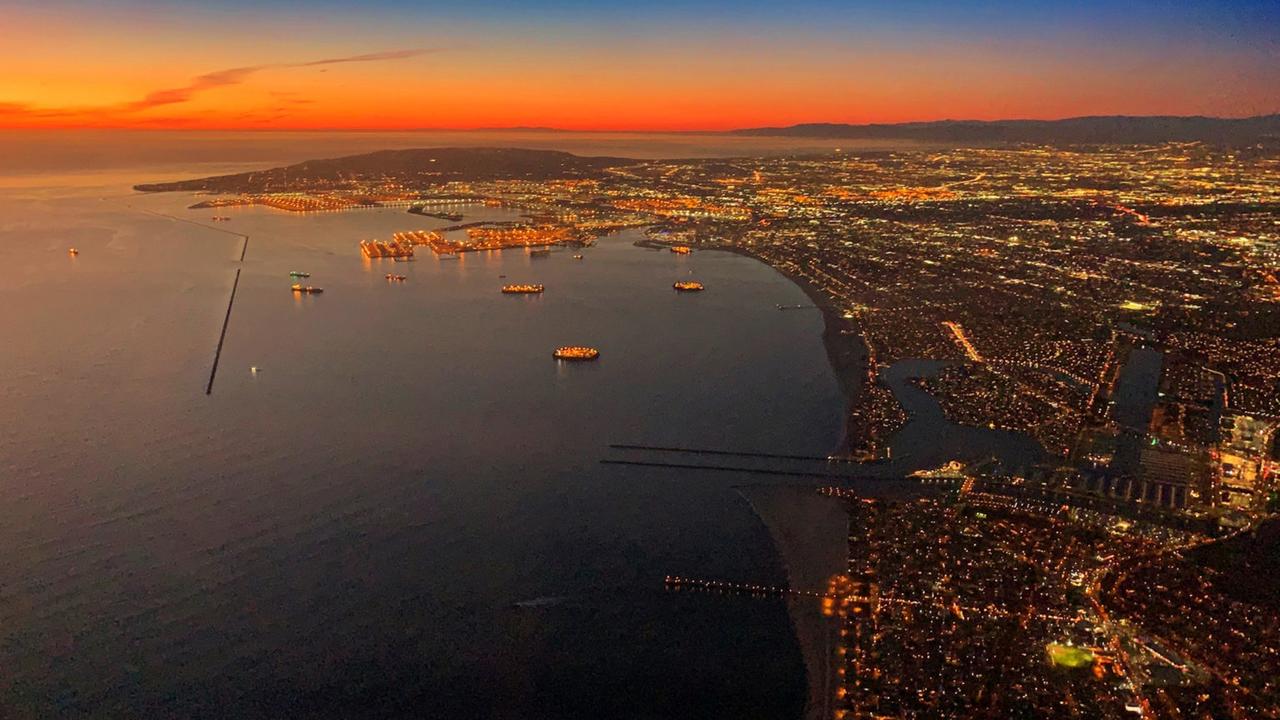
The pileup of ships offshore in San Pedro Bay and congestion onshore at the terminals have reached epic proportions. And the situation could become even more maddening in the weeks ahead.
32 container ships at anchor
American Shipper interviewed Kip Louttit, executive director of the Marine Exchange of Southern California, to get the latest on ships in San Pedro Bay.
He reported that as of midday Wednesday, 91 ships were in port: 46 at berth and 45 at anchor. Of those, there were 56 container ships: 24 at berth and 32 at anchor. Between Wednesday and Saturday, 19 more container ships will arrive, with the same number due to depart.
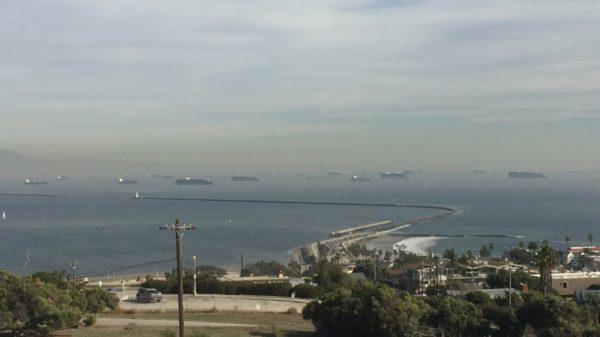
There were a few more container ships at anchor on Friday — 37 in total. Yet Louttit said “there has been no significant change between the first of January and today.”Container ship locations, Jan. 13 (Map: MarineTraffic)

Louttit confirmed that ships have effectively filled all of the usable anchorages off Los Angeles and Long Beach. Ships have also taken six of the 10 contingency anchorages off Huntington, the next town south.
If all the anchorages and contingency anchorages fill up, ships will be placed in so-called “drift boxes” in deeper water. These are actually circles not boxes. Unlike ships at anchorages in shallower water, ships in drift boxes would not anchor, they’d drift. “When you drift out of the circle, which has a radius of 2 miles, you start your engine and go back to the middle of the circle,” explained Louttit.
Historical perspective on traffic jam
Given the drift-box option, container ships are not about to hit any kind of maximum capacity offshore of California. Nor is there a higher safety risk. “There are a lot of ships, but they’re all very carefully watched and managed,” affirmed Louttit.
The significance of so many anchored ships is what they reveal about the extent of the logistics logjam on shore.Anchored container ships stretch off into the distance
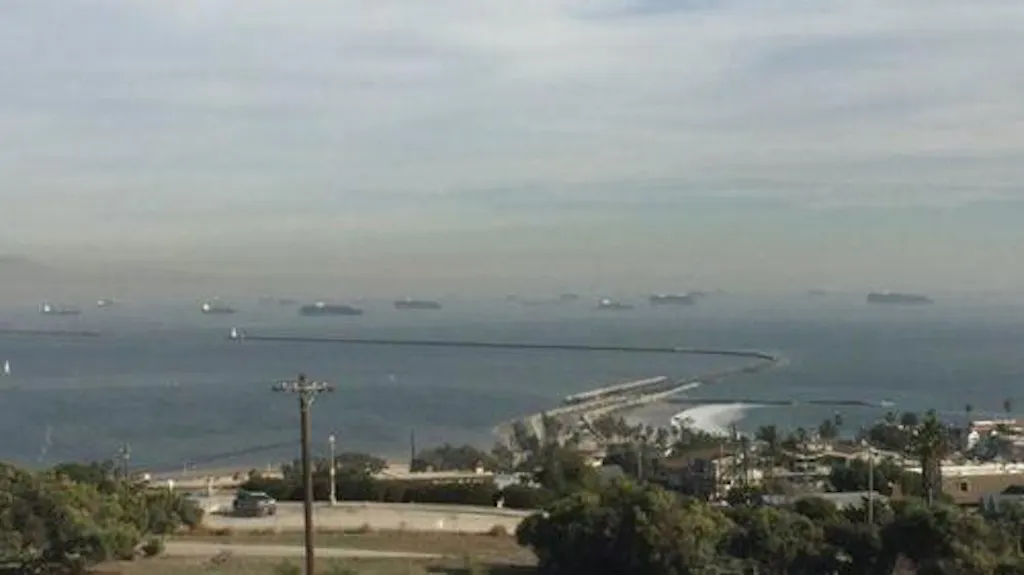
The most recent comparable anchorage level occurred during the labor dispute between the International Longshore and Warehouse Union (ILWU) and their employers in 2014-15.
“On March 14, 2015, there were 28 container ships at anchor. We’ve blown through that record,” said Louttit. The all-time record for ships at anchorage off California occurred in 2004 during a rail staffing shortage.
“Normally, if you want a baseline, there’d be a dozen and rarely are they container ships,” he said.
Signal still flashing red
The Marine Exchange does not look past the coming four days’ arrivals. But there are other ways to see what’s headed this way across the Pacific.
It takes two to three weeks for containers to cross the ocean from China to California. The Port of Los Angeles developed The Signal, a daily digital tool powered by Port Optimizer, to indicate what’s en route. The system uses manifest data from nine of the top 10 carriers calling in Los Angeles.
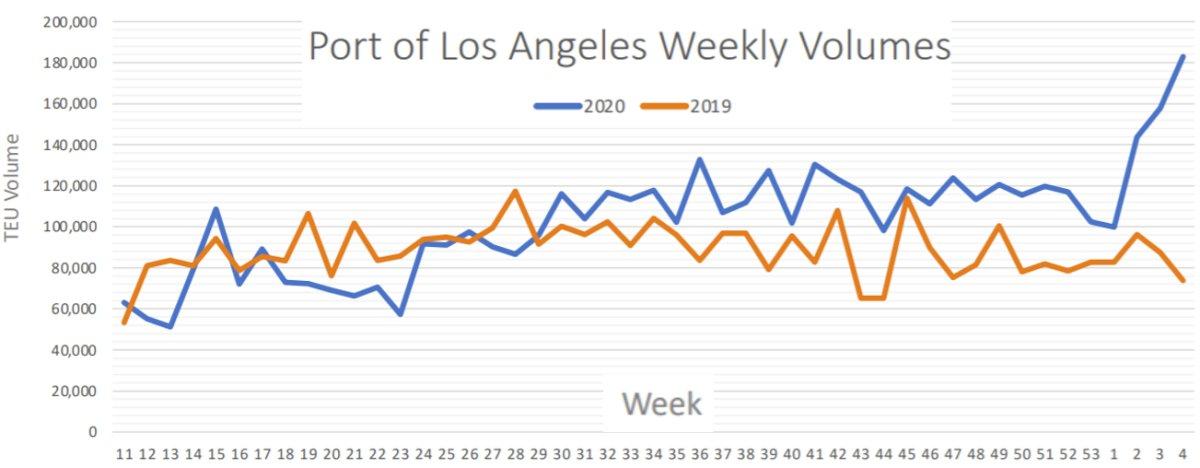
The Signal data updated on Wednesday showed no letup in sight. Imports are expected to rise from 143,776 twenty-foot equivalent units (TEUs) this week to 157,763 TEUs next week to 182,953 TEUs the week of Jan. 24-30.(Chart: The Port of Los Angeles Signal, Jan. 13)

Importantly, the data does not solely include TEUs arriving in a particular week. It also includes TEUs arriving in prior weeks that the port expects to handle in the stated week.
Consequently, the data provides an indirect indicator of how much cargo is getting delayed. For example, on Monday, Jan. 4, The Signal indicated the port would handle 165,000 TEUs that week. But by Friday, Jan. 8, the assessment for that same week had plunged to 99,785 TEUs — implying that over 65,000 TEUs were pushed to the following week (i.e., this week). This pattern also suggests that the forecast for 182,953 TEUs the week of Jan. 24-30 will ultimately be revised downward.
Congestion causes
In an alert to customers this week, carrier Hapag-Lloyd reported, “All terminals [at Los Angeles/Long Beach] continue to be congested due to the spike in import volumes and [this] is expected to last until February.
“Terminals are working with limited labor and split shifts,” it said, asserting that this is related to COVID. “This labor shortage affects all terminals’ TAT [turnaround time] for truckers, inter-terminal transfers and the number of daily appointments available for gate transactions and delays our vessel operations.”
As a result of “lack of terminal space” to service vessels, “there is a constant switching of terminals that must be kept in mind” given that containers are ending up “in the wrong terminal,” said Hapag-Lloyd.
Congestion woes are now spreading well beyond California ports, confirmed Hapag-Lloyd. The carrier reported “heavy congestion” in Canada and “berth congestion at Maher Terminal and APM Terminals [in the Port of New York and New Jersey] impacting all services with delays of several days being experienced upon arrival.”
Little relief ahead
Liner companies traditionally cancel numerous sailings during the Chinese New Year period to account for decreased Chinese exports. If they did so in 2021, it would allow U.S. terminals time to clear some of the inbound congestion. Unfortunately for terminals, liners are opting against canceling sailings during the Chinese holiday period next month.
Ports could also see congestion relief if U.S. consumer demand slowed. However, that does not appear to be happening.
Analysts believe the “blue sweep” scenario — with Democrats winning the presidency as well as both houses of Congress — will spur $1 trillion-$2 trillion in new stimulus during the first half of this year.
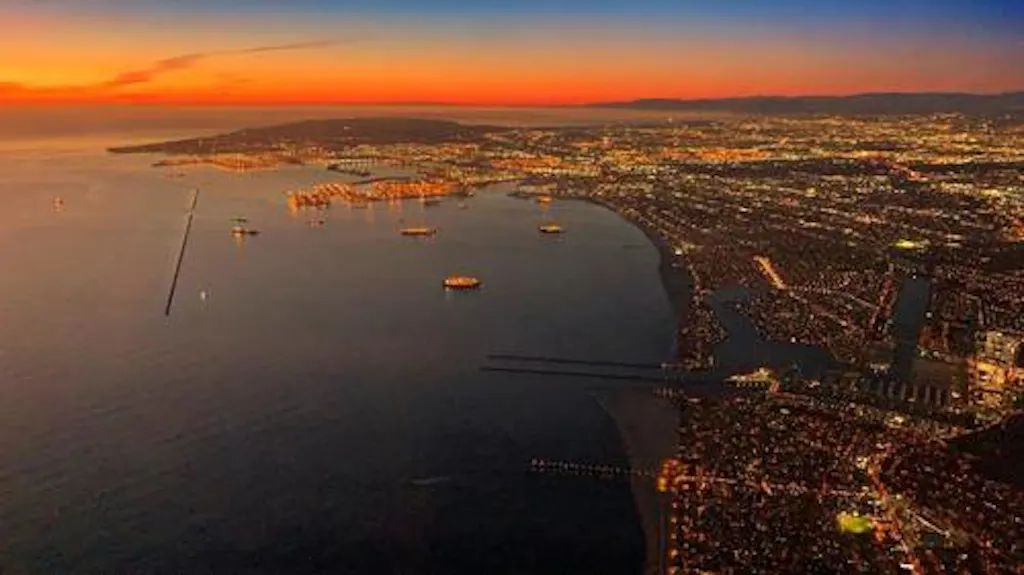
Investment bank Evercore ISI predicted, “Additional checks will reach consumers at a time when unemployment is lower [than during the 2020 stimulus round], mobility has significantly improved, the overall willingness to spend of the general public is up significantly, confidence levels are higher, housing is strong and the savings rate is still extremely high. That is a set-up for a consumer boom.”A view of normal times in San Pedro Bay, when there are few ships at anchor
https://www.zerohedge.com/economics/inside-californias-colossal-container-ship-traffic-jam
January 15, 2021
Container Traffic Jam
Inside California’s Colossal Container-Ship Traffic Jam
by Tyler DurdenFriday, Jan 15, 2021 – 14:05
By Greg Miller, of Freight Waves,
In the movie “Falling Down,” the character played by Michael Douglas is stranded in a Los Angeles traffic jam. He abandons his car, starts walking with briefcase in hand and ultimately has a mental breakdown. Cargo shippers trying to get their containers through the ports of Los Angeles and Long Beach can relate.Container imports overwhelming California ports
The pileup of ships offshore in San Pedro Bay and congestion onshore at the terminals have reached epic proportions. And the situation could become even more maddening in the weeks ahead.
32 container ships at anchor
American Shipper interviewed Kip Louttit, executive director of the Marine Exchange of Southern California, to get the latest on ships in San Pedro Bay.
He reported that as of midday Wednesday, 91 ships were in port: 46 at berth and 45 at anchor. Of those, there were 56 container ships: 24 at berth and 32 at anchor. Between Wednesday and Saturday, 19 more container ships will arrive, with the same number due to depart.
There were a few more container ships at anchor on Friday — 37 in total. Yet Louttit said “there has been no significant change between the first of January and today.”Container ship locations, Jan. 13 (Map: MarineTraffic)
Louttit confirmed that ships have effectively filled all of the usable anchorages off Los Angeles and Long Beach. Ships have also taken six of the 10 contingency anchorages off Huntington, the next town south.
If all the anchorages and contingency anchorages fill up, ships will be placed in so-called “drift boxes” in deeper water. These are actually circles not boxes. Unlike ships at anchorages in shallower water, ships in drift boxes would not anchor, they’d drift. “When you drift out of the circle, which has a radius of 2 miles, you start your engine and go back to the middle of the circle,” explained Louttit.
Historical perspective on traffic jam
Given the drift-box option, container ships are not about to hit any kind of maximum capacity offshore of California. Nor is there a higher safety risk. “There are a lot of ships, but they’re all very carefully watched and managed,” affirmed Louttit.
The significance of so many anchored ships is what they reveal about the extent of the logistics logjam on shore.Anchored container ships stretch off into the distance
The most recent comparable anchorage level occurred during the labor dispute between the International Longshore and Warehouse Union (ILWU) and their employers in 2014-15.
“On March 14, 2015, there were 28 container ships at anchor. We’ve blown through that record,” said Louttit. The all-time record for ships at anchorage off California occurred in 2004 during a rail staffing shortage.
“Normally, if you want a baseline, there’d be a dozen and rarely are they container ships,” he said.
Signal still flashing red
The Marine Exchange does not look past the coming four days’ arrivals. But there are other ways to see what’s headed this way across the Pacific.
It takes two to three weeks for containers to cross the ocean from China to California. The Port of Los Angeles developed The Signal, a daily digital tool powered by Port Optimizer, to indicate what’s en route. The system uses manifest data from nine of the top 10 carriers calling in Los Angeles.
The Signal data updated on Wednesday showed no letup in sight. Imports are expected to rise from 143,776 twenty-foot equivalent units (TEUs) this week to 157,763 TEUs next week to 182,953 TEUs the week of Jan. 24-30.(Chart: The Port of Los Angeles Signal, Jan. 13)
Importantly, the data does not solely include TEUs arriving in a particular week. It also includes TEUs arriving in prior weeks that the port expects to handle in the stated week.
Consequently, the data provides an indirect indicator of how much cargo is getting delayed. For example, on Monday, Jan. 4, The Signal indicated the port would handle 165,000 TEUs that week. But by Friday, Jan. 8, the assessment for that same week had plunged to 99,785 TEUs — implying that over 65,000 TEUs were pushed to the following week (i.e., this week). This pattern also suggests that the forecast for 182,953 TEUs the week of Jan. 24-30 will ultimately be revised downward.
Congestion causes
In an alert to customers this week, carrier Hapag-Lloyd reported, “All terminals [at Los Angeles/Long Beach] continue to be congested due to the spike in import volumes and [this] is expected to last until February.
“Terminals are working with limited labor and split shifts,” it said, asserting that this is related to COVID. “This labor shortage affects all terminals’ TAT [turnaround time] for truckers, inter-terminal transfers and the number of daily appointments available for gate transactions and delays our vessel operations.”
As a result of “lack of terminal space” to service vessels, “there is a constant switching of terminals that must be kept in mind” given that containers are ending up “in the wrong terminal,” said Hapag-Lloyd.
Congestion woes are now spreading well beyond California ports, confirmed Hapag-Lloyd. The carrier reported “heavy congestion” in Canada and “berth congestion at Maher Terminal and APM Terminals [in the Port of New York and New Jersey] impacting all services with delays of several days being experienced upon arrival.”
Little relief ahead
Liner companies traditionally cancel numerous sailings during the Chinese New Year period to account for decreased Chinese exports. If they did so in 2021, it would allow U.S. terminals time to clear some of the inbound congestion. Unfortunately for terminals, liners are opting against canceling sailings during the Chinese holiday period next month.
Ports could also see congestion relief if U.S. consumer demand slowed. However, that does not appear to be happening.
Analysts believe the “blue sweep” scenario — with Democrats winning the presidency as well as both houses of Congress — will spur $1 trillion-$2 trillion in new stimulus during the first half of this year.
Investment bank Evercore ISI predicted, “Additional checks will reach consumers at a time when unemployment is lower [than during the 2020 stimulus round], mobility has significantly improved, the overall willingness to spend of the general public is up significantly, confidence levels are higher, housing is strong and the savings rate is still extremely high. That is a set-up for a consumer boom.”A view of normal times in San Pedro Bay, when there are few ships at anchor
https://www.zerohedge.com/economics/inside-californias-colossal-container-ship-traffic-jam
 Everchem Updates Archive
  Sign Up for Email Updates