Current Affairs
August 25, 2020
Gulf Coast Storm Update
USGC refiners, petchems shut down as Laura approaches
17:02 PM | August 25, 2020 | Clay Boswell
US Gulf Coast refiners and petrochemical producers are battening down the hatches in preparation for Hurricane Laura, which is forecast to make landfall near the Texas-Louisiana border Wednesday night or Thursday (map).
The National Hurricane Center has declared a hurricane watch for the stretch of coast extending from San Luis Pass, Texas, just south of Houston, to Intracoastal City, Louisiana, east of Lake Charles, a region that includes almost 70% of US olefins production capacity.
Several chemical producers are shutting down in advance of the hurricane, according to air emission event reports submitted to the Texas Commission on Environmental Quality (TCEQ). CPChem intends to shut down its Pasadena plastics complex, where the company has about 1 million metric tons/year (MMt/y) of polyethylene capacity. Motiva Chemicals is shutting down its steam cracker at Port Arthur, which has 0.7 MMt/y of ethylene capacity and 0.2 MMt/y of polymer-grade propylene (PGP) capacity. INEOS is shutting down its Olefins 1 steam cracker at Chocolate Bayou, which has 0.9 MMt/y of ethylene capacity and 0.3 MMt/y of PGP capacity.
Port Arthur-Beaumont, Texas, has more than 1.6 million b/d of refining capacity. OPIS reported on Monday that Motiva has filed a shutdown report with the Texas Commission on Environmental Quality for its 607,000-b/d refinery as well as its chemical plant. Total’s 225,000-b/d Port Arthur facility was reportedly reducing runs to minimum levels.
ExxonMobil said it was preparing for severe weather at its 384,400-b/d Beaumont refinery, but as of late Monday afternoon the company said operations were normal. Market sources say Valero’s 415,000-b/d Port Arthur refinery is also shutting down, but the company has not yet offered confirmation. Calcasieu has idled its 137,000-b/d refinery.
Tuesday the Port of Houston said it expects to be fully closed Wednesday and possibly Thursday, depending on the storm track.
August 25, 2020
New Home Sales Surge in July
US New Home Sales Surge In July, Highest Annual Spike Since 1996
by Tyler Durden Tue, 08/25/2020 – 10:07
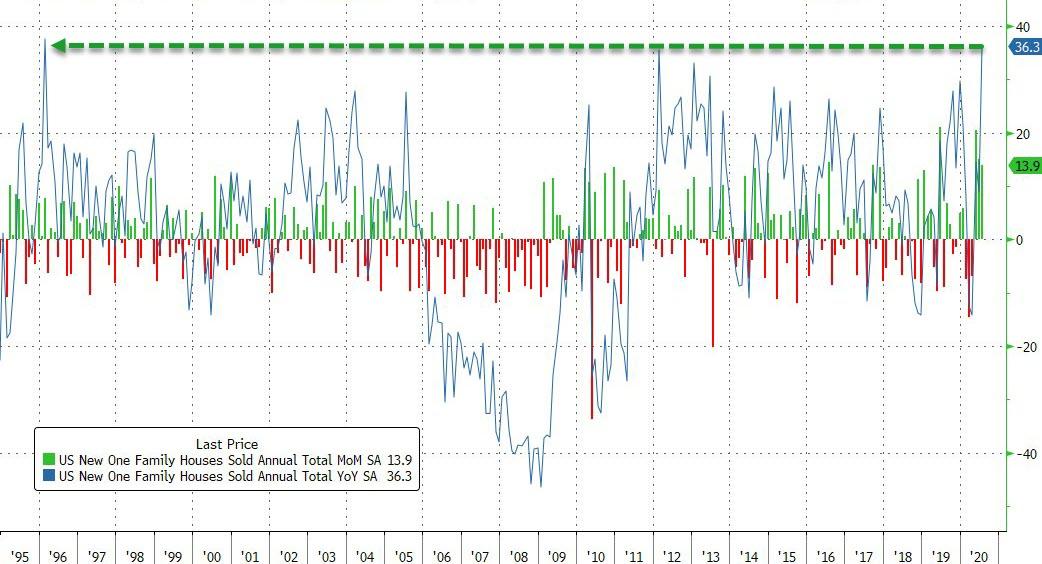
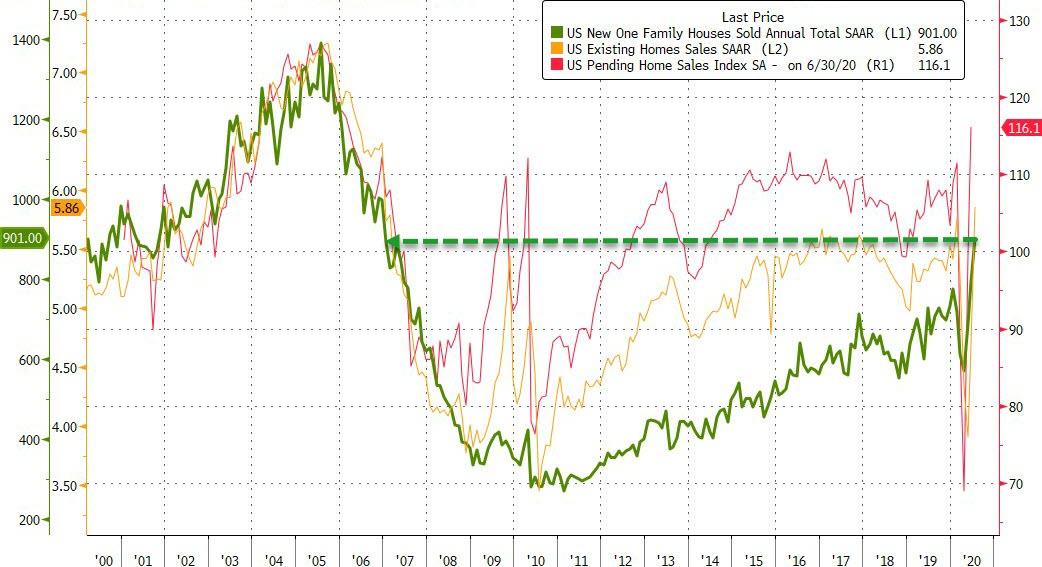
After June’s continued resurgence in US home sales, July is expected to see a significant slowdown in that recovery, with new home sales expected to rise 1.8% MoM. Instead, new home sales soared a stunning 13.9% MoM. This means new home sales in the US rose 36.3% YoY – the most since 1996…
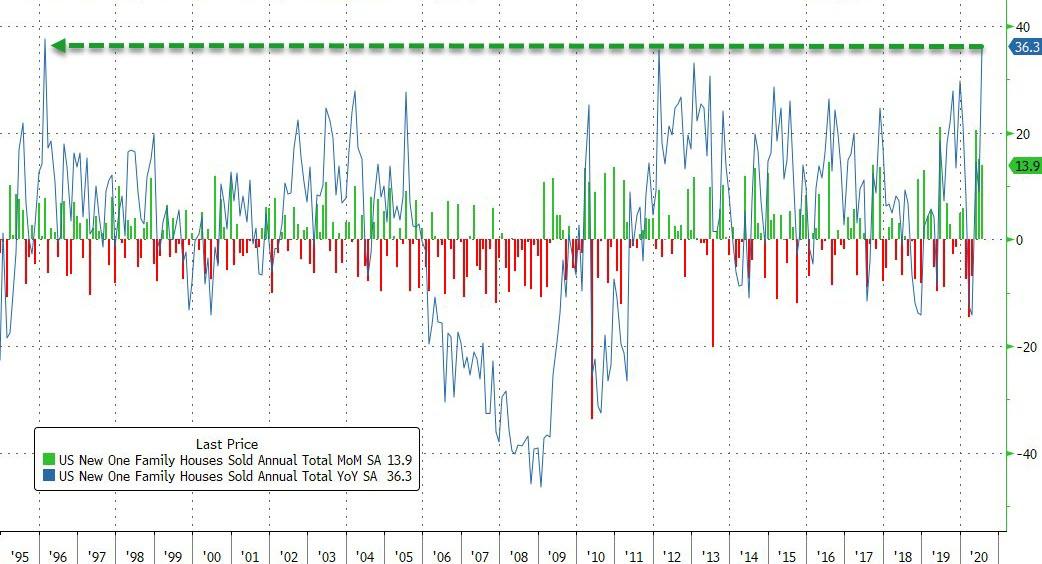
Source: Bloomberg
Driven by and 81.4% increase in Midwest New home sales, highest since Jan 1992
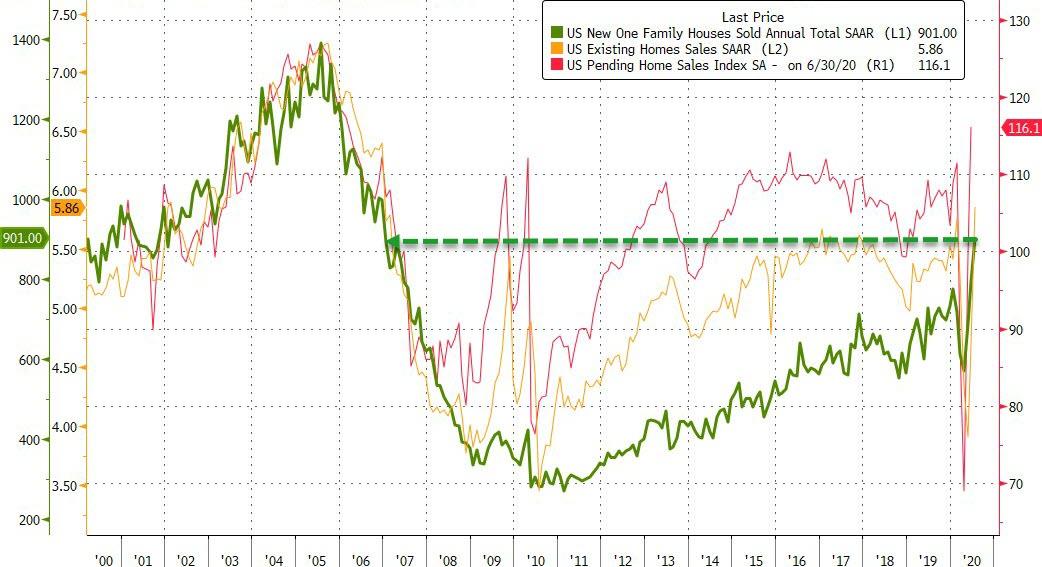
New Home Sales SAAR is 901k (against expectations of 790k), the most since Jan 2007…
Source: Bloomberg
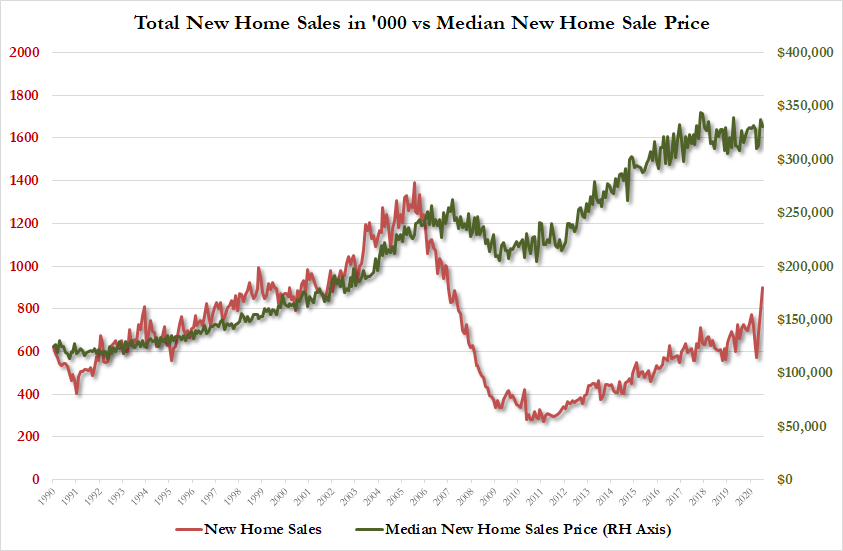
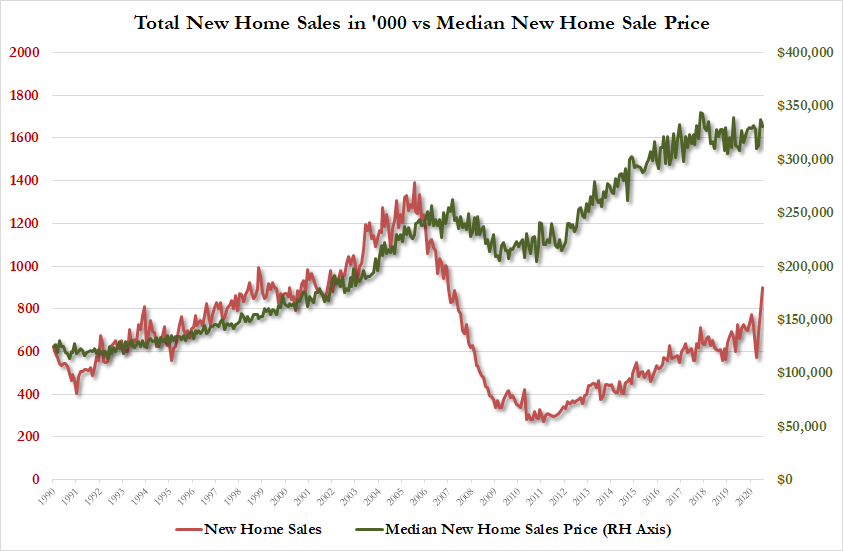
Median new home price rose 7.2% y/y to $330,600; average selling price at $391,300
https://www.zerohedge.com/markets/us-new-home-sales-surge-july-highest-annual-spike-1996
August 25, 2020
New Home Sales Surge in July
US New Home Sales Surge In July, Highest Annual Spike Since 1996
by Tyler Durden Tue, 08/25/2020 – 10:07
After June’s continued resurgence in US home sales, July is expected to see a significant slowdown in that recovery, with new home sales expected to rise 1.8% MoM. Instead, new home sales soared a stunning 13.9% MoM. This means new home sales in the US rose 36.3% YoY – the most since 1996…
Source: Bloomberg
Driven by and 81.4% increase in Midwest New home sales, highest since Jan 1992
New Home Sales SAAR is 901k (against expectations of 790k), the most since Jan 2007…
Source: Bloomberg
Median new home price rose 7.2% y/y to $330,600; average selling price at $391,300
https://www.zerohedge.com/markets/us-new-home-sales-surge-july-highest-annual-spike-1996
August 14, 2020
Risky Business
Close to 150 large companies went bust in Q2 2020
29 July 2020 In the second quarter of 2020, 147 large companies — with turnover above EUR50mn — went insolvent, representing an increase by +70 cases compared to Q1 2020 (+91% q/q) and +73 compared to Q2 of last year (+99% y/y). The cumulative turnover of insolvent major companies also surged to EUR106.9bn (+155% q/q and +138% y/y). All three sub-categories of companies we monitor by size of turnover posted a record level of major insolvencies : 22 cases in Q2 (+12 q/q) for those with a turnover exceeding EUR1bn; 77 (+46) for those with a turnover between EUR100mn and EUR1bn; and 48 (+12) for those with turnover between EUR50mn and EUR100mn. In this context, the average turnover of major companies becoming insolvent jumped to EUR727mn in Q2 2020 compared to EUR544mn in Q1 and EUR601mn in 2019.
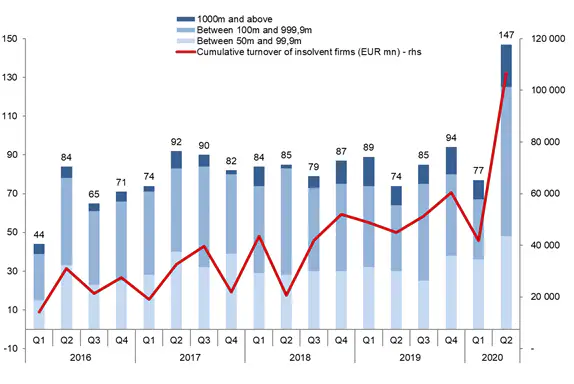
Figure 1 – Number of major insolvencies* by quarter and size of turnover in EUR mn

(*) Companies with a turnover exceeding EUR50mn. Sources: Euler Hermes, Allianz Research
The largest surges were seen in Western Europe and the U.S. In Q2 2020, Western Europe posted the largest increase in major insolvencies to 64 (+38 cases q/q), ahead of North America, which recorded 52 cases (+30 q/q). Western Europe also remains the largest contributor to the global insolvency count for the first half of the year with 90 cases (+21 compared to H1 2019), again ahead of North America with 74 cases (+43). Asia experienced a stable number of major insolvencies in both Q1 and Q2 (20 cases), pushing down the outcome for H1 to 40 (-7 cases y/y). At the same time, North America posted a noticeable rise in insolvencies of companies with turnovers exceeding EUR1bn, with 17 cases in Q2, after 6 in Q1. The U.S. tops the list with 20 out of the 30 largest insolvencies registered in H1 2020, ahead of China (5) and Singapore (2).
Retail, services and energy were the most impacted sectors, but automotive also stood out with a noticeable increase in major insolvencies. Retail and services posted 37 and 24 major insolvencies, respectively (i.e. +22 cases q/q) and +17 q/q), followed by energy with 17 cases (+10 q/q). While there was a pause in major insolvencies in the construction sector, they accelerated in the automotive sector, which recorded 13 cases in Q2 notably in the automotive suppliers, retailers and car rental sub-sectors. The list of more resilient sectors remains pretty unchanged from Q1 with in particular chemicals, computer/telecom and pharmaceuticals – on top of transport equipment. However, the average size (in terms of turnover) of their insolvent companies was two to three times larger than the average in H1 2020.
Where are the hotspots in Q2 2020? Retail and services in Western Europe and North America, energy in North America and automotive in Western Europe. In Q2 2020, the highest number of major insolvencies was recorded in retail in Western Europe (18), ahead of retail (14) and energy (14) in North America, and automotive (11) and services (11) in Western Europe. Looking at the first half of 2020 as a whole, the outcome is pretty similar in terms of ranking and relative frequency in major insolvencies. H1 2020 posted the highest number of major insolvencies in retail (52 cases) and services (31). For both sectors, these were mainly in North America and Western Europe. Yet, two other sectors stood out with more than 10 major insolvencies by region: energy in North America (18) and automotive in Western Europe (14). Construction comes right after in all regions but North America.
What does this mean for companies? As the Covid-19 pandemic creates an insolvency time bomb, we expect a stronger risk of domino effects, notably on fragile providers along supply chains.
For our full insolvency outlook, see our recent report : Calm before the storm: Covid-19 and the business insolvency time bomb.
Figure 2 – Number of major insolvencies* by sector and by region
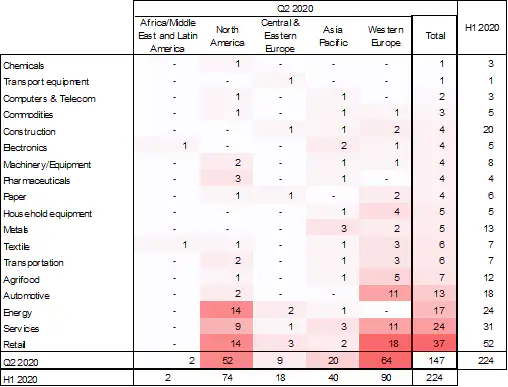
(*) Companies with a turnover exceeding EUR50mn. Sources: Euler Hermes, Allianz Research
Figure 3 – Number of major insolvencies* in H1 2020 by sector and size of turnover in EUR mn
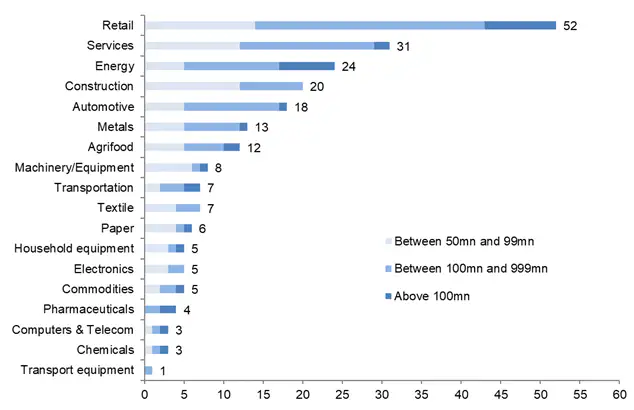
(*) Companies with a turnover exceeding EUR50mn. Sources: Euler Hermes, Allianz Research
 Everchem Updates Archive
 Sign Up for Email Updates