
Government Regulation
September 3, 2024
China Introduces a VOC Tax
Unveiling New VOC Tax Policy: Challenges and Opportunities of Green Transformation in PU
PUdaily | Updated: September 3, 2024
On July 31, 2024, Wang Dongwei, vice minister at China’s Ministry of Finance, announced an important decision at a press conference held by the State Council Information Office that volatile organic compounds (VOCs) will be included in the scope of environmental protection tax. This decision not only signifies a further improvement in China’s tax system but also marks a significant leap in the process of ecological civilization construction.
Background of the Policy
As China’s economy has transitioned to a stage of high-quality development, environmental protection and ecological civilization construction have been increasingly emphasized. VOCs are precursors to fine particulate matter (PM2.5) and ozone (O3) among other secondary pollutants, posing a serious threat to air quality and human health. Therefore, the inclusion of VOCs in the tax scope has become inevitable for environmental governance and pollution control.
Looking back, China’s VOCs control has undergone a gradual deepening process from the formulation of laws to policy promotion. China’s new Air Pollution Prevention and Control Law, which took effect in 2016, first explicitly defined the legal responsibility for VOCs prevention and control. The subsequent introduction of governance measures such as the 13th Five-Year VOC Prevention and Control Work Plan and the Three-Year Action Plan to Win the Blue Sky Defense War, has continuously promoted VOC governance efforts. In January 2024, the Central Committee of the Communist Party of China and the State Council issued guidelines to comprehensively promote the development of a Beautiful China, which clearly stated the need to expedite the inclusion of VOCs in the tax scope, laying a solid foundation for the Ministry of Finance’s policy decision.
As a major source of VOCs, the polyurethane industry mainly generates them from reaction kettles, storage tanks, pipelines, finished product storage and some other production processes. The VOCs in polyurethane include unreacted isocyanates, polyols, solvents (such as DMF, DMAc, etc.), additives, and various by-products. These compounds not only easily form photochemical smog in the atmosphere, affecting air quality but may also pose health risks through respiratory pathways, skin contact, among others.
To further reduce VOC emissions in polyurethane, VOCs emission characteristics in each process have been preliminarily analyzed so as to implement targeted emission reduction measures. The methods include reducing by-products by optimizing reaction conditions, improving production processes to achieve solvent-free or low-solvent manufacturing, and perfecting waste gas collection and treatment systems.
The Impact of VOC Tax on the Polyurethane Industry
1. Deep Economic Impact and Restructuring
Reshaping Cost Structures: The introduction of tax on VOCs will compel polyurethane companies to revisit their cost structures. Apart from direct tax expenditures, businesses need to consider the indirect costs associated with upgrading, maintaining, and managing environmental protection facilities. These cost increases will have a profound impact on business strategies and financial status, prompting companies to seek more economically efficient solutions.
Rebuilding Market Competitiveness: The prices of polyurethane-related products may be adjusted accordingly with rising costs. This will change consumers’ perceptions of value, thus affecting market demand structures. Those who successfully achieve green transformation and reduce VOC emissions will become more competitive in the market.
2. Driving Forces and Challenges of Technological Innovation
Breakthroughs in Green Manufacturing: Businesses need to increase R&D investments in green manufacturing to address the challenges of VOC taxes, including exploring new catalysts, optimizing reaction routes, and developing recyclable or biodegradable materials. Breakthrough technologies will deliver significant environmental and economic benefits.
Upgrading Waste Gas Treatment Technologies: Existing waste gas treatment technologies may struggle to meet stricter environmental standards. Therefore, businesses need to focus on the latest developments in waste gas treatment technologies domestically and internationally, actively introducing and grasping advanced technologies. Furthermore, strengthening independent R&D capabilities and developing more efficient, cost-effective waste gas treatment technologies are crucial.
3. Far-reaching Changes and Opportunities in Industry Chain
Supply Chain Integration and Green Transformation: The introduction of VOC tax will prompt businesses in the polyurethane supply chain to enhance cooperation. Raw material suppliers need to provide more eco-friendly materials to support downstream manufacturers’ green transformation, while downstream manufacturers may demand higher environmental performance from products to improve their brand image and meet customer requirements. The supply chain integration will push the industry towards a green and sustainable future.
Enhancing Industry Standards and Aligning with International Standards: With increasingly stringent environmental policies and the implementation of environmental taxes, relevant standards and specifications in the polyurethane industry will be gradually enhanced, helping regulate market order, raising the industry level and promoting fair competition. Aligning with international environmental standards will also provide strong support for polyurethane businesses’ global expansion.
Strategies for the Polyurethane Industry
1. Strengthening Internal Management for Enhanced Environmental Performance
Building and improving environmental management systems, reinforcing the daily operation and meticulous maintenance of environmental facilities are crucial to support the high-quality development. Through fine-tuned management strategies, businesses can effectively control energy and material consumption, significantly reducing the emission of pollutants like VOCs, thereby contributing to environmental protection. Sustainability training for employees, integrating green concepts into each employee’s mindset to enhance their social responsibility and participation, is essential for paving the way for green roads. These measures not only showcase businesses’ environmental responsibility but also serve as key drivers for transitioning towards a better and more sustainable future.
2. Increasing R&D Investment to Promote Technological Innovation
Increasing R&D efforts in green manufacturing and air pollution control technologies, actively incorporating advanced technological achievements are strategic focuses. Beyond the industrial sphere, businesses can deepen collaborations with universities and research institutes to facilitate the conversion of research outcomes into practical applications, jointly advancing technological upgrades and industrial advancements.
3. Monitoring Policy Changes and Flexibly Adjusting Business Strategies
Businesses should closely monitor changes in national environmental and tax policies, stay informed about policy requirements and demand changes. Based on this information, flexibly adjusting business strategies and development directions ensures their sustained growth and market adaptability. For instance, adapting product structures, exploring emerging markets, or intensifying communication and collaboration with government entities based on policy trends.
4. Actively Engaging in Industry Self-Regulation and Cooperation
Polyurethane businesses should actively engage in self-regulation and enhance collaboration with industry peers. By jointly formulating industry standards and regulations, sharing technologies and experiences, they can promote industry transformation and sustainable development.
In conclusion, the impact of VOC tax on the polyurethane industry is diverse and far-reaching. Market participants need to adopt an open innovation approach to embrace challenges and opportunities actively. Green transformation and sustainable development can be achieved through initiatives such as strengthening internal management, promoting technological innovation, flexibly adjusting business strategies, and actively engaging in industry self-regulation and cooperation.
August 29, 2024
EPA Targets
EPA Targets Five Widely Used Chemicals: TSCA “High Priority” Designation Signals Potential Future Use Restrictions on the Chemicals and Products Containing Them
by: Javaneh S. Tarter, Nancy B. Beck, PhD, DABT, Gregory R. Wall, Matthew Z. Leopold of Hunton Andrews Kurth – The Nickel Report
Thursday, August 29, 2024

Related Practices & Jurisdictions
On July 25, 2024, the US Environmental Protection Agency (EPA) proposed to designate acetaldehyde (CASRN 75-07-0), acrylonitrile (CASRN 107-13-1), benzenamine (CASRN 62-53-3), vinyl chloride (CASRN 75-01-4), and 4,4-methylene bis(2-chloroaniline) (MBOCA) (CASRN 101-14-4) as high-priority substances for risk evaluation under the Toxic Substances Control Act (TSCA). A high-priority designation marks the first step toward EPA performing a risk evaluation of a chemical, which could lead to a risk management regulation imposing significant restrictions on uses of the chemical, including products containing the chemical. Companies involved in the manufacture, import, processing, distribution, use or disposal of these widely used chemicals or products containing them should take note that EPA is considering them for potential evaluation and restrictions in the future.
High Priority Chemicals
Under TSCA Section 6, a high-priority substance is a substance that EPA determines “may present an unreasonable risk of injury to health or the environment” because of potential hazard and exposure under the conditions of use, including an unreasonable risk to potentially exposed or susceptible subpopulations. In proposing the five chemicals for high-priority designation, EPA considered their conditions of use and production volume or changes in conditions of use and production volume over time, hazard and exposure potential, and impacts to potentially exposed or susceptible subpopulations, including children, consumers, workers, and overburdened communities. The chemicals’ persistence and bioaccumulation and whether they are stored near significant sources of drinking water are also relevant criteria.
If EPA finalizes its proposed high-priority designations for these substances, EPA will proceed to release scoping documents defining the scope of the risk evaluations and will conduct risk evaluations to determine whether the substances present an unreasonable risk to human health or the environment. If EPA does find that the substance presents an unreasonable risk, EPA must propose risk management rules, such as bans, worker protection programs, concentration limits, labeling, notification, and other restrictions to the extent necessary to eliminate the unreasonable risks. EPA must complete the risk evaluation process within 3-3.5 years and the risk management process within 2 years of the final risk evaluation.
Notably, EPA has been significantly delayed in these timelines for other high-priority substances that are still undergoing risk evaluations. There are currently 24 high-priority chemicals that are still undergoing the risk evaluation process. EPA has announced the goal of releasing more information about high-priority substances earlier in the process to attempt to gather more data on uses from stakeholders about high-priority chemicals, resulting in more efficient and informed risk evaluations and risk management rules.
Uses of the Five High Priority Chemicals
EPA released high priority designation documents for each of the five chemicals. The documents detail why under the statutory criteria EPA believes they warrant a high priority designation. In particular, EPA outlines the conditions of use of each chemical that it is aware of based on publicly available data such as TSCA Chemical Data Reporting (CDR) rule data, Toxics Release Inventory (TRI) exposure data, safety data sheets, and other EPA databases. Below, we outline the conditions of use that EPA has identified in these high-priority designation documents.
Companies should be aware that these uses are likely to be included in risk evaluations for these chemicals and potentially regulated in the future:
Acetaldehyde
Acetaldehydeis used as an intermediate in chemical, petrochemical and adhesive manufacturing, as well as an intermediate in packaging (excluding food packaging). It has commercial uses in adhesives, sealants, plastic and rubber products, golf and sports turf, agricultural non-pesticidal products, and paper products. Additionally, EPA identified acetaldehyde in commercial use for construction and building materials, including paper articles; metal articles; stone, plaster, and cement; and glass and ceramic materials.
Acetaldehyde is also used in consumer paints and coatings, plastic and rubber products, paper products, leather cleaning products, surface cleaners, wood polish, car degreaser and wax, motor oil, caulking, surface sealer, drywall, home insulation, automobile components, imaging products such as cameras and camcorders, displays, projectors, audio equipment, broadcasting systems, harnesses, cables, sheets, films, blankets, jewelry, clothing, and children’s products such as toys and games.
Acrylonitrile
Acrylonitrileis used primarily in the manufacturing and processing of plastics, paints, fibers, rubber, petrochemicals, adhesive and sealant, and other chemicals. Acrylonitrile is used as an intermediate and a monomer in manufacturing chemical products such as plastic material and resins, synthetic rubber, organic fibers, and paints and coatings. Other conditions of use of acrylonitrile include soaps and detergent manufacturing; surface active agent manufacturing; photographic film, paper, plate and chemical manufacturing; petroleum refineries; bulk gasoline terminals; pulp and paper; ferrous metals, and as a solvent in degreasing.
Consumer products reported to contain acrylonitrile include auto adhesives, batteries, multipurpose adhesive, printer inks, paint/stain products, surface sealers and upholstery, glues, coloring pens, corrective fluid, food packaging, clothing, textiles, furnishings, audio equipment, automobile construction, automobile equipment, battery cases, broadcasting systems, carbon fiber, displays, fans, imaging products such as cameras and camcorders, optical units, projectors, and nitrile gloves. EPA also identified acrylonitrile uses in several children’s products, including craft supplies, toys, games, bibs, and clothing.
Benzenamine
Benzenamine (also referred to as aniline) is used as an intermediate in chemical, petrochemical, pesticide, fertilizer, and other agricultural chemical, plastics, resins and synthetic dyes and pigment manufacturing. Benzenamine is also processed as a reactant in dyes in synthetic dye and pigment manufacturing and dyes in textiles, leather, and apparel manufacturing. Benzenamine is a processing aid and heat transfer agent for several industrial uses. It is also used in inks, toner, color products, rubber tires, textile (fabric) products, as well as furniture and furnishings, including soft plastic articles and leather articles.
Other conditions of use of benzamine include brightener in paper manufacturing, soaps and detergents, pH regulators, water treatment products, degreasing, and industrial surface coating and solvent use. Additionally, benzamine is present in consumer products such as fabric, jewelry, paints and coatings, fuels, batteries, speaker systems, audio equipment, imaging products such as cameras and camcorders, broadcasting systems, cable parts, magnetics, switch holders, seals, housings, ink, optical whitening agents, and children’s products such as toys and apparel.
Vinyl chloride
Vinyl chloride is primarily used to manufacture and process plastic materials such as polyvinyl chloride (PVC), plastic resins, and other chemicals, many of which are used for pipes and insulating materials. It is used as an intermediate, binder, and monomer in plastic material and resin manufacturing, as well as an intermediate in manufacturing products such as adhesives, industrial gas, and petrochemicals. Additional conditions of use of vinyl chloride include other basic inorganic chemical manufacturing, plastics, rubber products, unlaminated plastics film and sheet (except packaging) manufacturing, pulp and paper, ferrous and non-ferrous metals, degreasing, and industrial surface coating and solvent use.
Consumer products reported to contain vinyl chloride include adhesives and sealants, paints and coatings, furniture and furnishings, floor coverings, fabric, agricultural and food packaging, medical devices, vinyl wallcovering and roofing, upholstery, instrument and door panels, convertible tops, swimming pool and industrial liners, sporting goods, luggage, briefcases, accessories, adhesives, glues, inks, and children’s products such as toys and apparel.
4,4-methylene bis(2-chloroaniline) (MBOCA)
MBOCA is used in plastic material, resin, synthetic rubber, and paint and coating manufacturing. It is also used as a plasticizer in plastic and rubber products. Other MBOCA uses include degreasing and industrial surface coating and solvent use; processing as a curing agent (epoxy resins); and as an intermediate in polyurethane elastomers to produce polyurethane foams. Additionally, MBOCA may be present in consumer products such as golf balls, robot wheels, roller skate wheels, high-load wheels for platform and tool-box carts, sports boots, shoe soles, belts, belts and rollers used in computer printers and photocopy machines, paper, and corrugated cardboard.
Comment Period
EPA is interested in receiving comments on these proposed high priority designations that would inform its hazard and exposure assessment, as well as identify conditions of use it could include in a risk evaluation. Comments must be received on these proposed designations on or before October 23, 2024. Companies who use these chemicals may want to provide EPA with data about how they use these chemicals in their facilities, including what current worker protections are used or whether there are restrictions or limitations on how the substance is used in consumer products, so that EPA can have the most updated information about the real-world applications of these substances.
August 26, 2024
Latest Canadian Rail Strike Update
Canadian agency upholds binding arbitration order to end rail dispute
Union says it will appeal ruling to federal court
· Saturday, August 24, 2024

This story originally appeared on Trains.com.
OTTAWA, Ontario — The Canada Industrial Relations Board has affirmed the decision by Labor Minister Steven MacKinnon to end the work stoppages at Canadian National Railway and Canadian Pacific Kansas City, requiring the railroads to resume operations and to impose binding arbitration between the railroads and the Teamsters Canada Rail Conference to resolve new contract terms.
Operations are to resume by 12:01 a.m. ET on Monday, Aug. 26, while the labor contract that expired on Dec. 31, 2023, is extended until a new agreement is completed. The start of the arbitration process will begin with a meeting with the CIRB on Thursday, Aug. 29, at 11 a.m. ET.
In response to the decision this evening (Saturday, Aug. 24), the union has said it will comply, but will also appeal the CIRB ruling to federal court.
“This decision by the CIRB sets a dangerous precedent,” TCRC President Paul Boucher said in a statement. “It signals to corporate Canada that large companies need only stop their operations for a few hours, inflict short-term economic pain, and the federal government will step in to break a union. The rights of Canadian workers have been significantly diminished today.”
A statement from Canadian National says the railroad will comply with the order. “While CN is disappointed an agreement could not be reached at the bargaining table,” the statement reads, “the company is satisfied that this order effectively ends the unpredictability that has been negatively impacting supply chains for months.”
CPKC also said it would comply and was ending the lockout it imposed on Aug. 22. The railroad’s statement said it was asking TCRC workers to return to work for the day shift on Sunday, Aug. 25, “so that we can get the Canadian economy moving again as quickly as possible and avoid further disruption to supply chains.” CPKC said the CIRB ruling “ends months of unnecessary uncertainty and disruption” for the economy, but also cautioned that it will take “several weeks” for the rail network to fully recover and “a period of time beyond that for supply chains to stabilize.”
The CIRB, in a pair of decisions — one addressing each railroad — said it determined it “does not have the authority to review the minister’s directions or to assess their validity,” saying that is a matter for the courts, and that it further “has no discretion for ability to refuse to implement, in whole or in part, the minister’s directions or to modify their terms.”
MacKinnon had announced his decision to send the matter to arbitration on Thursday, Aug. 22 — about 17 hours after both railroads locked out members of the TCRC. But rail operations remained in limbo as CPKC awaited the board’s ruling before advancing its plans to restart operations and the union kept its picket lines up at that railroad in the interim. CN ended its lockout on Thursday at 6 p.m. and the union originally said it would return, but then issued a strike notice effective at 10 a.m. on Monday, Aug. 26, while it awaited the CIRB action, saying the move was intended to “pressure CN into negotiating an agreement.”
CN’s statement notes that the CIRB ruling prohibits any further labor stoppage during the arbitration process, and therefore voids the TCRC strike notice.
MacKinnon, in a post this evening on social media site X, said he expected the railroads and employees to “resume operations at the earliest opportunity.”
August 23, 2024
Canada Rail Strike Update
Canadian Labor Minister Puts End To National Railroad Strike, Orders Arbitration
by Tyler Durden
Friday, Aug 23, 2024 – 08:35 AM
Authored by David Lassen via Trains.com,
The Canadian government has moved to end Canada’s freight rail work stoppage – the first to shut down both Canadian National and Canadian Pacific Kansas City simultaneously.
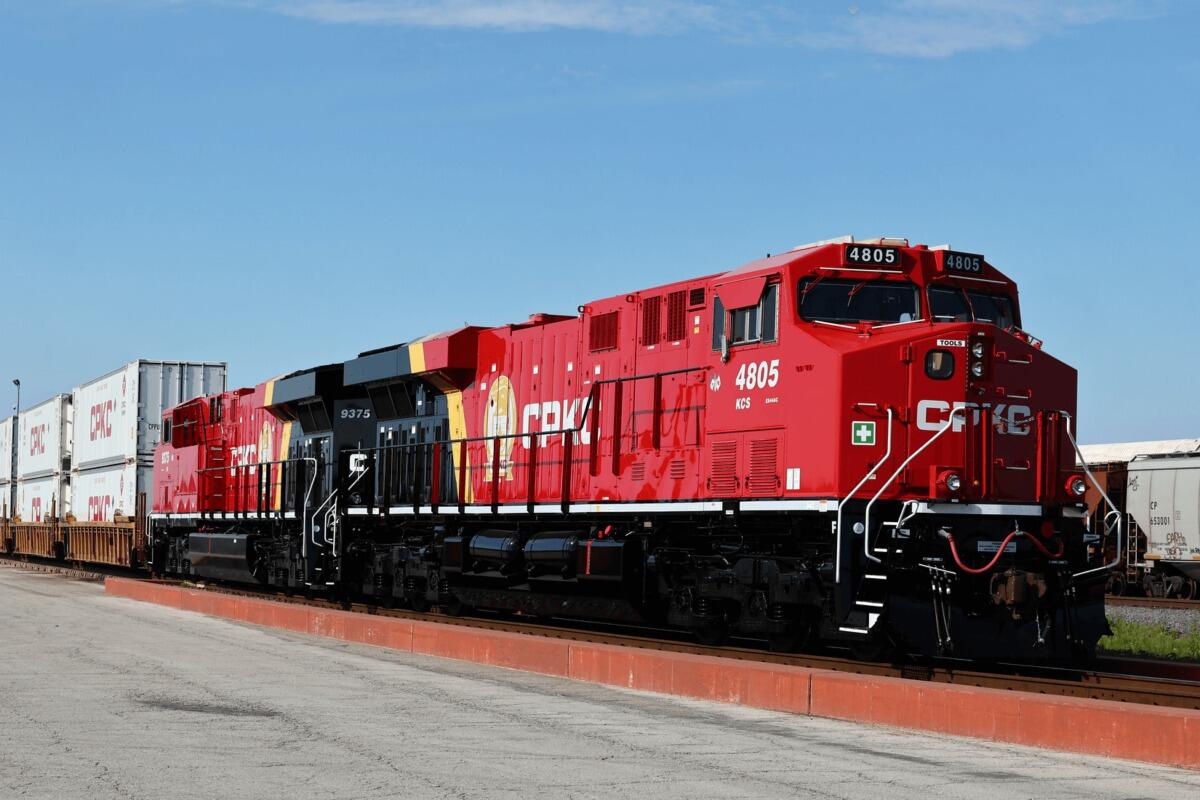
However, while the two railroads say they are preparing to resume operations after Labor Minister Steven MacKinnon sent the dispute to binding arbitration, the Teamsters Canada Rail Conference says it will maintain picket lines while it reviews MacKinnon’s action.
And the CBC reports that MacKinnon’s move might not bring an immediate end to the lockouts of TCRC engineers and conductors that began at the two railroads at 12:01 a.m. today (Aug. 22).
Also locked out were rail traffic controllers at CPKC represented by the same union.
“These collective bargaining negotiations belong to CN Rail, CPKC and TCRC alone — but their effects, and the impacts of the current impasse, are being borne by all Canadians,” MacKinnon said.
“As Minister of Labour, it is my assessment that the parties are at a fundamental impasse. Therefore, it is my duty and responsibility to invoke my authorities under the Canada Labour Code to secure industrial peace and deliver the short and long-term solutions that are in the national interest.”
The existing contracts between the TCRC and both railways will be extended until new agreements are signed. Negotiated agreements are always preferable, MacKinnon said, but the needs of the nation outweighed the need for a contract deal reached at the bargaining table.
“Workers, farmers, commuters and businesses rely on Canada’s railways everyday, and will continue to do so. It is the government’s duty and responsibility to ensure industrial peace in this critically vital sector,” MacKinnon said.
“Thus, we will be examining why we experience repeated conflicts in the railway sector and the conditions that led to the parallel work stoppages we are seeing. Canadians can be assured that their government will not allow them to suffer when parties do not fulfill their responsibility. Especially where their livelihoods, worker safety, and communities are at stake.”
CN said in a statement this evening that it had ended its lockout as of 6 p.m. ET and initiated its recovery plan, acting in advance of a formal order from the Canada Industrial Relations Board “to expedite the recovery of the economy.
“While CN is satisfied that this labour conflict has ended and that it can get back to its role of powering the economy,” the railroad said in its statement, “the company is disappointed that a negotiated deal could not be achieved at the bargaining table despite its best efforts.
CPKC said it is preparing to restart operations and will provide further details about the timing once it receives the CIRB’s order.
“The Canadian government has recognized the immense consequences of a railway work stoppage for the Canadian economy, North American supply chains. and all Canadians,” CPKC CEO Keith Creel said in a statement.
“The government has acted to protect Canada’s national interest. We regret that the government had to intervene because we fundamentally believe in and respect collective bargaining; however, given the stakes for all involved, this situation required action.”
The TCRC said it was keeping picket lines in place while it reviewed MacKinnon’s move, the response by the CIRB, and sought legal counsel.
The union’s president, Paul Boucher, said the government’s action “allowed CN and CPKC to sidestep a union determined to protect rail safety. Despite claiming to value and honour the collective bargaining process, the federal government quickly used its authority to suspend it, mere hours after an employer-imposed work stoppage. … The two major railways in Canada manufactured this crisis, took the country hostage, and manipulated the government to once again disregard the rights afforded to working-class Canadians. “
Boucher called the decision “shameful” and said the government had made the decision “only because they knew their minority could not gather the support needed to pass a legislated resolution to appease the railways.”
Meanwhile, Lisa Raitt, labor minister under former prime minister Stephen Harper, told the CBC that the parties still have to agree to arbitration: “Maybe you can write to the CIRB and ask them to impose binding arbitration … but there’s no way a minister can write a letter and say that everyone goes back to work and I’m sending you to binding arbitration.”
MacKinnon said he is “confident” that his move will end the shutdown, but hedged in saying it would definitely do so, noting that the CIRB is an independent body.
“They have a process that requires consultation with the parties,” he said.
“They will be doing that and rendering a decision, I hope very quickly. … I want to be deferential to the process that will unfold.”
CN and CPKC had both sought arbitration to end the dispute, with MacKinnon last week denying a request from CN to require arbitration. At the time, MacKinnon said it was the “shared responsibility” of CN and the union to negotiate in good faith.
Prime Minister Justin Trudeau said in a post on X.com that while collective bargaining is preferred:
“When that is no longer a foreseeable option — when we are facing serious consequences to our supply chains and the workers who depend on it — governments must act.”
Transport Minister Pablo Rodriguez, reacting to MacKinnon’s move, wrote on X.com that the government “is acting to preserve the stability and certainty that our entire economy is renowned for across the world.”
The premiers of two prairie provinces with economies heavily reliant on rail transport — Scott Moe of Saskatchewan and Danielle Smith of Alberta, who had both called for federal action — welcomed the intervention in comments on X.com.
Moe wrote that the government “took the appropriate action … to end the rail stoppage and ensure our Canadian products are moving to market again.”
Smith wrote that she was “pleased to see” that MacKinnon had taken action.
August 21, 2024
Non-Compete Update
Federal District Court Blocks Federal Trade Commission Final Rule on Non-Competes
On August 20, 2024, a judge in the United States District Court for the Northern District of Texas issued a nationwide injunction barring the implementation of the Federal Trade Commission’s (FTC) controversial final rule that would have prohibited non-competition agreements with workers.
The FTC adopted the final rule on April 23, 2024. With limited exceptions, the rule effectively would have banned all non-compete agreements – and provisions that functioned as non-competes – between businesses and virtually all workers as “unfair method[s] of competition.” The final rule also would have required companies to refrain from enforcing most existing non-compete agreements and to notify workers that any non-compete obligations were now unenforceable. The rule had been scheduled to take effect on September 4, 2024.
The FTC’s sweeping prohibition would have covered agreements with any worker, including employees, independent contractors, externs, interns, volunteers, apprentices, or sole proprietors who provide a service to a client or customer. In issuing the final rule, the FTC argued that non-competition clauses restrict workers’ freedom to change jobs, thus stifling competition and innovation. The agency claimed that non-competes often disadvantage workers, particularly those in low-wage positions, by limiting their opportunities for career advancement and wage growth.
In its August 20, 2024 ruling, the Texas federal court challenged the FTC’s authority to enact such a broad and all-encompassing regulation. The court expressed concerns that the FTC may have overstepped its legal boundaries by attempting to regulate employment contracts, which traditionally have been governed by state law. The ruling emphasized that employment law, including the enforcement or prohibition of non-compete agreements, has long been within the purview of individual states, rather than the federal government.
Since the publication of the final rule in April, it has been subject to various legal challenges, with mixed results. On July 3, 2024, the United States District Court for the Northern District of Texas had granted a limited preliminary injunction staying enforcement of the FTC’s final rule prohibiting non-compete clauses, but only as to the parties in that case, pending a final ruling on the merits. On August 20, 2024, the same court issued the significantly broader ruling described above.
What Should Businesses Do Now?
Businesses that were planning to comply with the FTC’s final rule by rewriting template agreements and issuing notices to current and former employees regarding the rule’s effects can now halt those efforts, as the non-compete rule will no longer take effect on September 4, 2024. However, given the increasing attention to non-compete agreements at the state and federal level, companies should maintain efforts to update and implement their restrictive covenant programs so that each worker agreement is narrowly tailored to protect only the organization’s legitimate business needs.
www.meainfo.org
 Everchem Updates Archive
  Sign Up for Email Updates