
Government Regulation
April 2, 2025
Liberation Day – Reciprocal Tariffs
“Well we have some very, very good news today,” Trump began his address exclaiming that “This is Liberation Day.”
“April 2, 2025, will forever be remembered as the day American industry was reborn, the day America’s destiny was reclaimed and the day that we began to make America wealthy again,” Trump says.
Mexico and Canada are not on the list as US will continue to exempt USMCA-compliant goods.
“For decades, our country has been looted, pillaged, raped and plundered by nations near and far, both friend and foe alike. American steel workers, auto workers, farmers and skilled craftsmen — we have a lot of them here with us today. They really suffered gravely.”
“In a few moments, I will sign a historic Executive Order, reciprocal tariffs on countries throughout the world. Reciprocal. That means they do it to us and we do it to them. Very simple. Can’t get any simpler than that.”
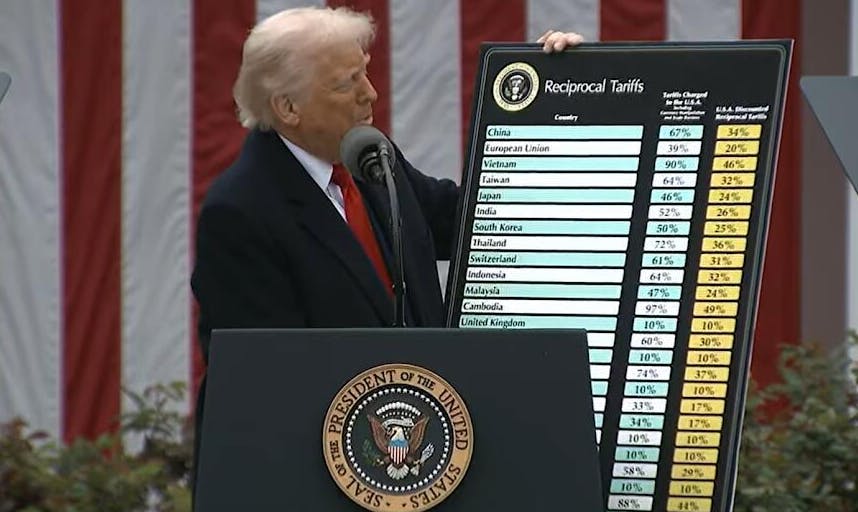
Trump lays out his theory that tariffs will bring back a “golden age” for the US, a phrase he also used in his inaugural address:
“Jobs and factories will come roaring back into our country, and you see it happening already. We will supercharge our domestic industrial base.”
Trump says the reciprocal tariffs will bring “stronger competition and lower prices for consumers” in the US.
Finally, Trump announces his tariff plan details as a “Declaration Of Economic Independence”
The bottom line is that this is targeted reciprocal tariffs, NOT a broad-based 15% or more tariff slap on all products.
Additionally, Trump confirmed that the new reciprocal tariffs will begin at midnight tonight.
However, they did announce a baseline tariff rate of 10% for all countries (below the 15% consensus and 20% worst case) and Trump confirmed the 25% tariff on all auto imports.
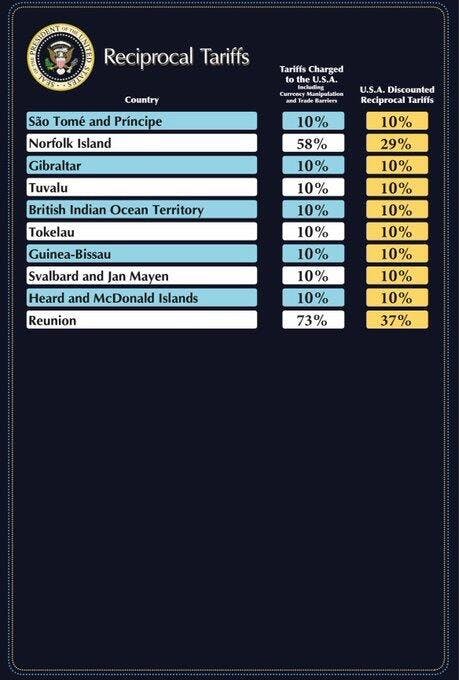
Additionally, Trump said they will not be full reciprocal tariffs, then held a chart up showing the individual nation (trade-weighted average) tariff levels:
Full List of Countries Hit With Reciprocal Tariffs:
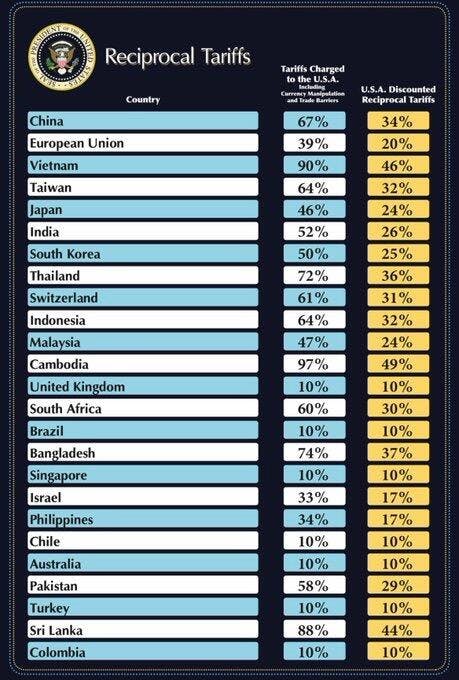
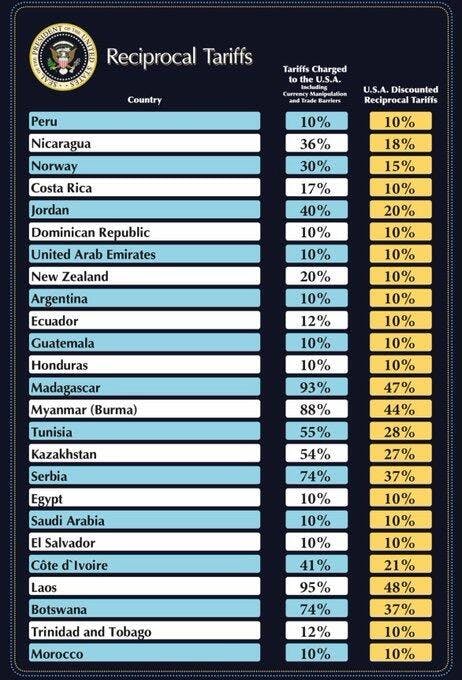
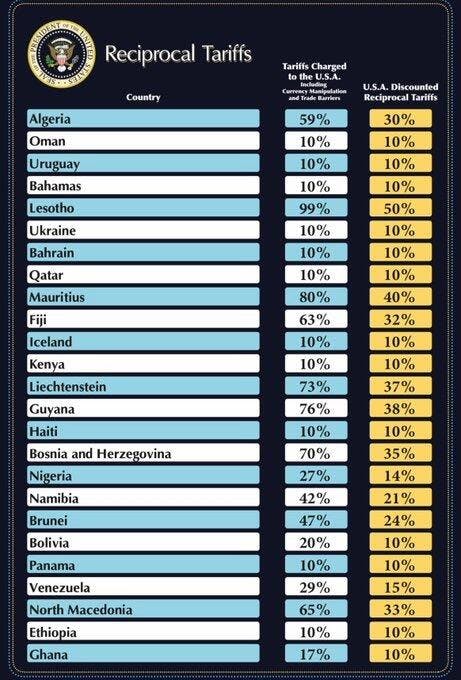
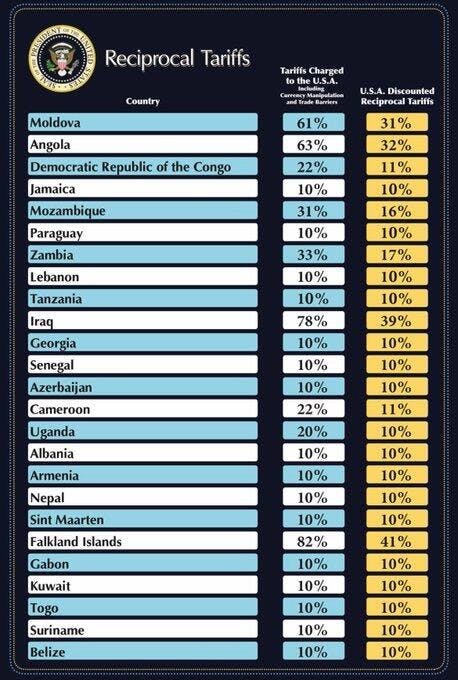
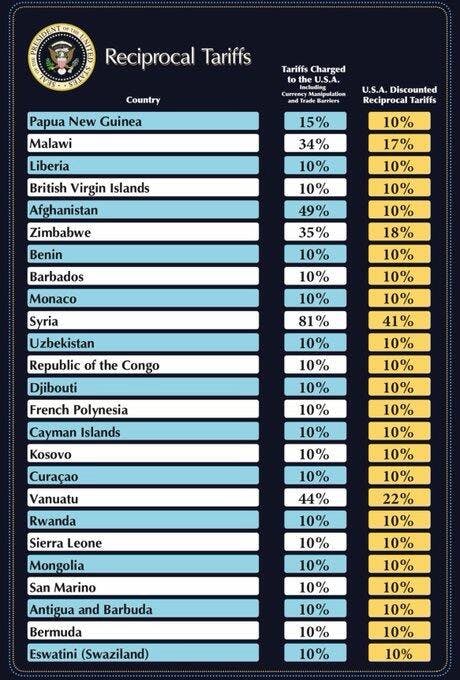
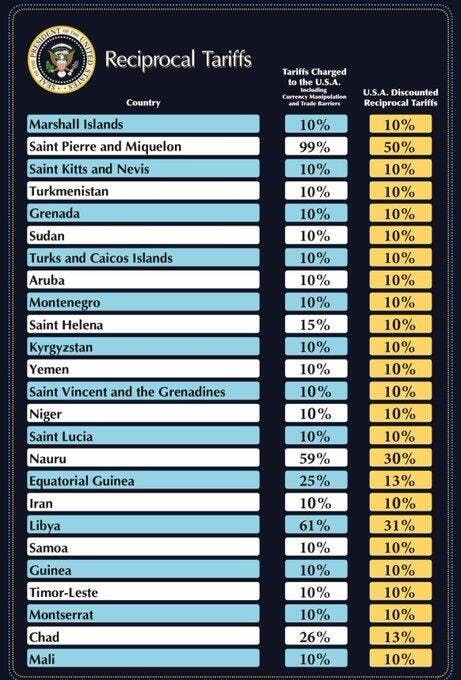
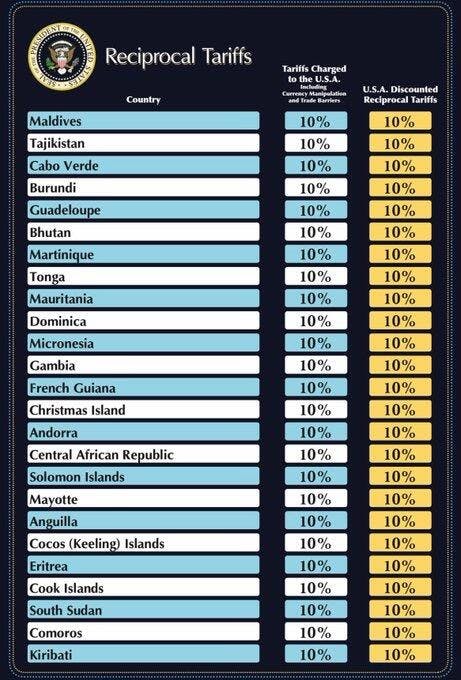
For a deeper dive, see: https://www.zerohedge.com/markets/trumps-liberation-day-live-blog-all-you-need-know
February 26, 2025
Bismuth Catalyst Disruption Ahead
China Announces Export Controls on Five Critical Minerals
Proactive intelligence Alert
February 12, 2025
On February 4, 2025, China announced it would restrict exports of five critical minerals: tungsten, tellurium, bismuth, indium, and molybdenum. Industries dependent on these metals, including defense, renewable energy, electronics, and manufacturing, may experience supply chain disruptions, including delays, price increases, and supply bottlenecks, due to China’s leading role in their production.
 | Tungsten | Artillery shells, armor plating, cutting tools, engine parts, airplane balancing weights. |
 | Tellurium | Solar panels, thermoelectric devices, infrared optics, steel alloys, and rechargeable batteries. |
 | Bismuth | Medical treatments, lead-free solder, cosmetics, flame retardants, and ammunition. |
 | Indium | Phone screens, TV displays, fiber-optic technology, semiconductors, and solar panels. |
 | Molybdenum | Missile components, nuclear reactors, steel alloys, lubricants, and high-temperature electronics. |
Background
China’s new export controls require licenses to export 20 tungsten, tellurium, bismuth, indium and molybdenum-related products to “safeguard national security interests.” China is the global leader of the rare earths industry overall, dominating about 69% of the world’s production and 90% of the world’s mining. China is the top producer of all five recently restricted metals.
China’s Production of Impacted Minerals

Source: Bloomberg
In recent years, China restricted the exports of several other critical minerals. In July 2023, China announced export restrictions on certain gallium and germanium products, metals essential in chip manufacturing, citing national security concerns. Following the announcement, prices for gallium and germanium surged, with gallium prices increasing by nearly 20% in the United States and Europe.
In August 2024, China announced restrictions on antimony, a metal used in defense technology. From August 2024 to December 2024, antimony shipments from China to the United States dropped 97% while prices rose 200%. In December 2024, China banned the export of gallium, germanium, and antimony to the United States entirely.
The scope of China’s export restrictions on the five minerals also includes a ban on the technology to process and refine the materials for their critical uses. This factor pressures rival economies to develop independent supply chains and creates short-term bottlenecks that could disrupt industries relying on these materials.
Exiger Insights
Although China’s recent restrictions do not single out exports to any particular country, the announcement followed the United States’ recent imposition of a 10% tariff on Chinese imports. It is not clear whether U.S. imports of the impacted minerals will qualify for licenses given China’s national security concerns and the minerals’ heavy use in U.S. defense and technology.
Anticipated Disruptions
Stakeholders should prepare for:
- Supply delays: The new licensing requirements may slow down the export process, leading to delays in receiving essential materials.
- Material shortages: Given China’s substantial share in the production of these metals, global shortages are possible until alternative sources are identified.
- Increased costs: Supply constraints may drive up prices for these metals, affecting production costs across impacted industries.
Recommendations
Stakeholders are advised to:
- Assess supply chain exposure: Identify dependencies on the restricted metals and evaluate the potential impact on operations.
- Explore alternative suppliers: Investigate other global sources for these metals or suitable substitutes to diversify supply chains.
- Communicate with customers: Proactively inform clients about potential delays or changes in product availability and manage expectations accordingly.
https://www.exiger.com/perspectives/critical-minerals-export-controls
China export curbs push European bismuth prices to highest since 2008
By Anushree Ashish Mukherjee and Ashitha Shivaprasad
February 21, 20254:39 AM ESTUpdated 5 days ago
- Summary
- China produced more than 80% of world’s bismuth last year – USGS
- Alternative producers include Korea, Japan and Laos
Feb 21 (Reuters) – Bismuth prices in Europe have soared to their highest in nearly 17 years after China’s plan to impose export curbs raised fears of curtailed supply for the metal used in medication, cosmetics and atomic research.
Earlier this month, China said it would implement export controls on five critical metals — tungsten, tellurium, molybdenum, bismuth, and indium — in retaliation to new tariffs imposed by U.S. President Donald Trump.
From $6 per lb previously, bismuth prices have surged to between $12 and $18 in the European spot market this week, the highest level since May 2008.
Traders expect to see higher bismuth prices.
China produced roughly 13,000 tons, or over 80% of the world’s supply, of bismuth last year, according to the U.S. Geological Survey (USGS).
The rest comes from countries, including Japan, South Korea and Laos. However, traders say the availability from other nations was limited compared to China.
“We have received many inquiries from both our EU and our U.S. customers,” a trader based in Europe said, adding that U.S. consumers would be more vulnerable if the China-U.S. trade war escalates.
The U.S. has been heavily reliant on imports since it stopped production of primary refined bismuth in 1997, according to the USGS.
If the U.S. was completely cut off from Chinese bismuth supplies, production outside China would have to grow by 22% to meet demand, said Jost Wubbeke, Managing Partner at Sinolytics.
“It is hard to find cheap and stable alternative supplies, especially when everyone’s trying to find new sources at the same time.”
As trade tensions escalate, China is expected to further leverage its dominance in critical minerals to retaliate.
February 18, 2025
State Taxes 2025
Comparing 2025 State Individual Income Taxes Individual income taxes are a major source of state government revenue, accounting for more than a third of state tax collections. Their significance in public policy is further enhanced by individuals being actively responsible for filing their income taxes, in contrast to the indirect payment of sales and excise taxes. The trend continues: Last year continued the historic pace of income tax rate reductions. In total, 28 states enacted and/or implemented individual income tax rate reductions since 2021.Here’s where things currently stand: 27 states and DC have graduated-rate income taxes. 14 states have flat income taxes. 8 states levy no individual income tax at all. Top marginal rates span from 2.5 percent in Arizona and North Dakota to 13.3 percent in California. (California also imposes a 1.1 percent payroll tax on wage income, bringing the all-in top rate to 14.4 percent as of 2024.) 
February 13, 2025
EVERCHEM UPDATE: VOL. 13 – TCPP Tariff Tango
In the latest installment of international trade drama, the United States has slapped anti-dumping and countervailing tariffs on Chinese suppliers of TCPP—the flame retardant that helps keep spray foam insulation from becoming spray foam bonfires.
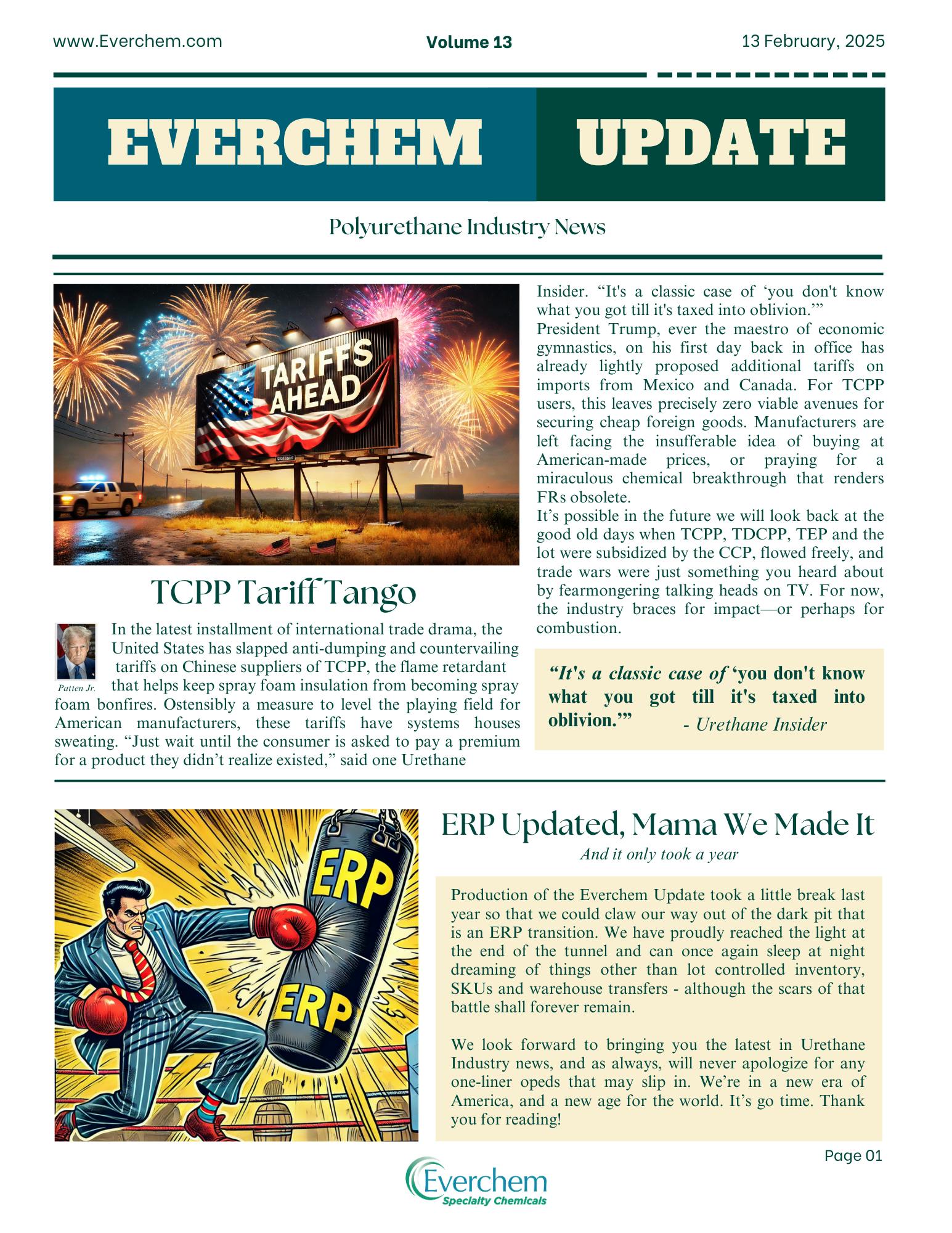
Fun Fact – this entire episode was generated by AI:
– the voice over
– all videos
– the music
– the script/article was written by ChatGPT and refined by me
– the photos on the article
(I still had to edit the video, I’m not out of a job just yet)
Subscribe to the Urethane blog for more Everchem Updates here
February 13, 2025
More Anti Dumping Drama–Now on MDI
AD/CV Duties Sought on Methylene Diphenyl Diisocyanate

A petition filed Feb. 12 alleges that methylene diphenyl diisocyanate from China is being sold at less than fair value in the U.S. and benefiting from countervailable subsidies. The alleged average dumping margins range from 305.81 percent to 507.13 percent.
The product subject to this petition is used the production of polyurethanes for many applications, including the manufacture of rigid polyurethane foams used for home and refrigerator insulation, coatings, adhesives, binders and sealants. It is commonly called polymeric, monomeric, or modified MDI and is also known as methylene bisphenyl isocyanate, 4,4’-diphenylmethane diisocyanate, methylene di-p-phenylene ester of isocyanic acid, and methylene bis(4-phenyl isocyanate), among others.
MDI consists of an aromatic polyisocyanate material whose composition includes two or more isocyanate groups (i.e., functional groups containing a nitrogen atom, a carbon atom, and an oxygen atom bonded together) attached to one or more benzene rings (i.e., flat, symmetrical molecules made up of six carbon atoms arranged in a hexagonal ring) that are joined by methylene bridges (i.e., a carbon atom bound to two hydrogen atoms and connected by single bonds to two other distinct atoms in the rest of the molecule).
The petition covers MDI (1) irrespective of whether it has gone through a distillation process, (2) regardless of acid content, reactivity, functionality, freeze stability, physical form, viscosity, grade, purity, molecular weight, or packaging, (3) that has been processed in a third country, including by commingling, diluting, introducing or removing additives, or performing any other processing that would not otherwise remove the MDI from the scope if performed in the subject country, and (4) that is commingled or blended with MDI from sources other than China.
The petition does not cover (1) mixtures of MDI with other materials when the combined MDI component comprises less than 40 percent of the total weight of the mixture, (2) partially reacted MDI when its nitrogen-carbon-oxygen content is less than 10 weight percentage, or (3) any separately packaged polyol that would not fall within the scope if entered on its own.
MDI is currently classifiable under HTSUS subheadings 2929.10.8010 and 3909.31.0000 and may also be entered under subheadings 3506.91.5000, 3815.90.5000, 3824.99.2900, 3824.99.9397, 3909.50.5000, 3911.90.4500, 3920.99.5000, and 3921.13.5000.
The Department of Commerce and the International Trade Commission will next determine whether to launch AD and CV duty and injury investigations, respectively, on this product. There are strict statutory deadlines associated with these proceedings, so affected companies that wish to protect their interests should contact Sandler, Travis & Rosenberg as soon as possible.
 Everchem Updates Archive
  Sign Up for Email Updates