Mergers & Acquisitions
May 18, 2025
COIM Acquires Palmer Cashew Nutshell Liquid Site
FOR IMMEDIATE RELEASE May 16, 2025

COIM USA Announces Acquisition of Strategic Site in New Boston, Texas
West Deptford, NJ — COIM USA, a leading specialty chemical manufacturer and part of the global COIM Group, is pleased to announce the acquisition of a 20-acre property in New Boston, Texas (Texarkana Region), from Palmer International.
The acquisition includes an existing logistics infrastructure, as well as a new, renewable polyol product line, consisting of materials made principally from rapidly-renewable Cashew Nutshell Liquid (CNSL). This product line will complement COIM’s existing Isoexter line of polyester polyols, allowing them to better serve the market.
COIM also plans to expand operations at the new site, adding 100 million lbs. of capacity for additional product lines by the middle of 2027.
“This acquisition represents a significant milestone in COIM USA’s long-term growth strategy,” said Michelangelo Cavallo, President of COIM USA. He further commented: “The New Boston location broadens our geographic reach, expands our sustainable portfolio, and enhances COIM USA’s ability to serve customers with greater speed, efficiency, and resiliency.”
In summary, the New Boston site will create operational synergies by enhancing COIM USA’s current product portfolio with innovative, sustainable materials. The planned expansion will also deliver geographic efficiencies and operational redundancy, with the goal of ensuring consistent service and supply reliability for customers across North America.
About COIM USA COIM USA is a subsidiary of COIM Group, an international leader in the production of specialty chemicals, including polyesters, polyurethanes, adhesives, and other high-performance materials used in foam, elastomers, packaging, coatings, adhesives, and composites. With a global presence and a
May 6, 2025
ADNOC & Covestro Update
ADNOC set to gain unconditional EU antitrust nod for Covestro deal – Reuters
May 06, 2025 9:21 AM ETCovestro AG (CVVTF) StockCOVTYBy: Carl Surran, SA News Editor

Abu Dhabi state oil giant ADNOC is set to secure unconditional antitrust approval from the European Union for its €14.7B (~$16.6B) takeover of German chemicals company Covestro (OTCPK:CVVTF) (OTCPK:COVTY), Reuters reported Tuesday.
The European Commission, which is scheduled to decide on the deal by May 12, does not see any competition issues because there are no overlaps between the two companies, according to the report.
The acquisition also is subject to the EU’s Foreign Subsidies Regulation, where the focus is on unfair foreign aid for companies; South African and Indian competition watchdogs have already cleared the deal without demanding remedies.
Covestro (OTCPK:CVVTF) (OTCPK:COVTY), which also narrowed its FY 2025 core profit expectations to €1B-€1.4B from €1B-€1.6B previously, said it does not speculate about regulatory proceedings.
Once the deal is completed, XRG – the international investment arm of ADNOC – will become the new majority shareholder in Covestro (OTCPK:CVVTF) (OTCPK:COVTY).
April 28, 2025
More Details on Wanhua & PIC JV
Wanhua Chemical & PIC Sign JV Agreement
PUdaily | Updated: April 28, 2025
Wanhua Chemical Group Co., Ltd. and Petrochemical Industries Company (PIC) Sign Joint Venture Agreement
On April 25th, at the headquarters of Wanhua Chemical Group in Yantai City, Shandong Province, Wanhua Chemical Group Co., Ltd. (hereinafter referred to as “Wanhua Chemical”) and Petrochemical Industries Company (herein referred to as “PIC”, a wholly-owned subsidiary of Kuwait Petroleum Corporation “KPC”) officially signed a joint venture agreement, with PIC investing $638 million to subscribe to a 25% of the shares of Wanhua Chemical’s wholly-owned subsidiary, Wanhua Chemical (Yantai) Petrochemical Co., Ltd.
Before the signing of the agreement, PIC had successfully completed the bidding process on April 22nd, 2025, at the Shandong United Property Rights Trading Center.
The signing of this agreement marks an important milestone in the many years of cooperation between Wanhua Chemical and PIC, signifying the entry into a new phase of strategic cooperation between the two parties, and also reflecting their joint commitment to promoting the development of the global petrochemical industry.
In the presence of Chairman of Wanhua Chemical Group, Liao Zengtai, and Deputy Chairman and CEO of Kuwait Petroleum Corporation, Shaikh Nawaf Al Sabah, President of Wanhua Chemical Group, Kou Guangwu, and CEO of PIC, Nadia Al Hajji, officially signed the joint venture agreement.
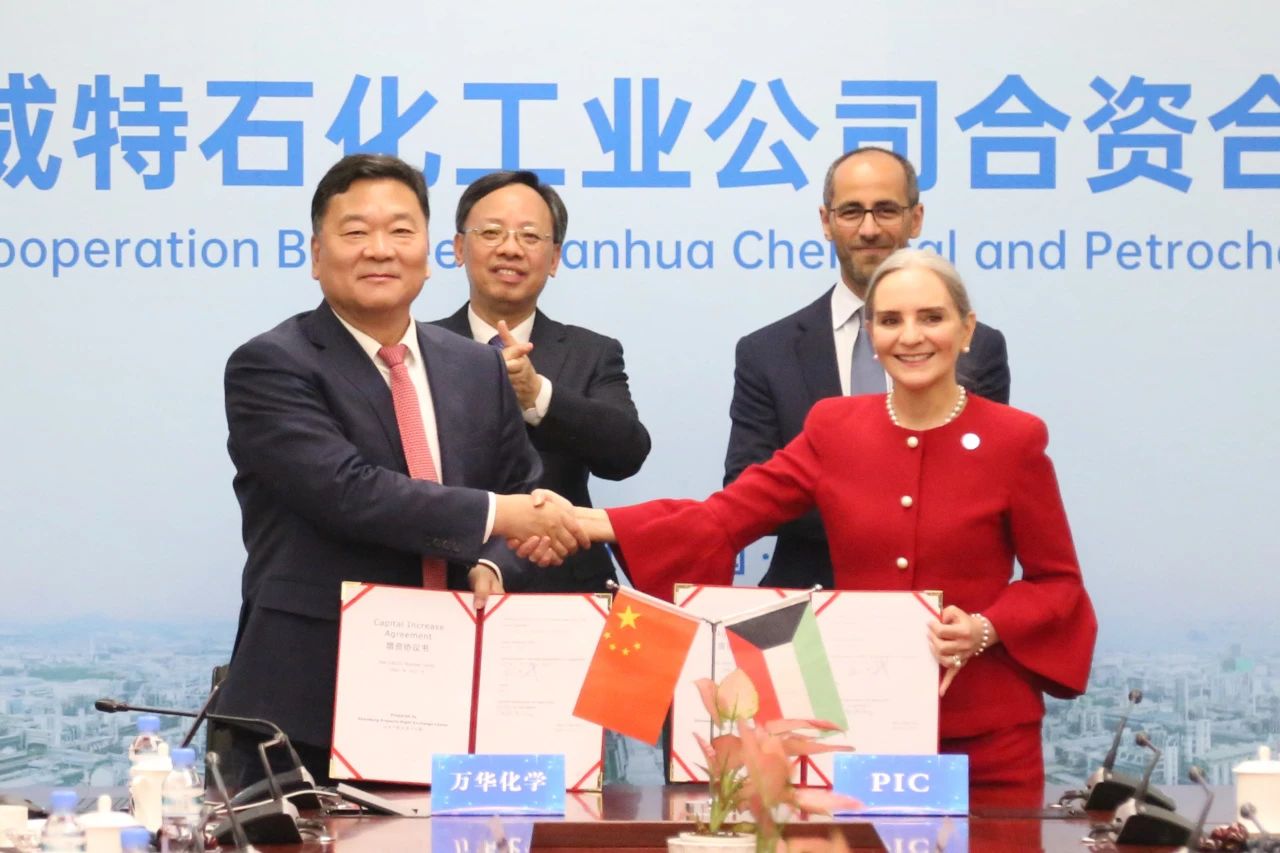
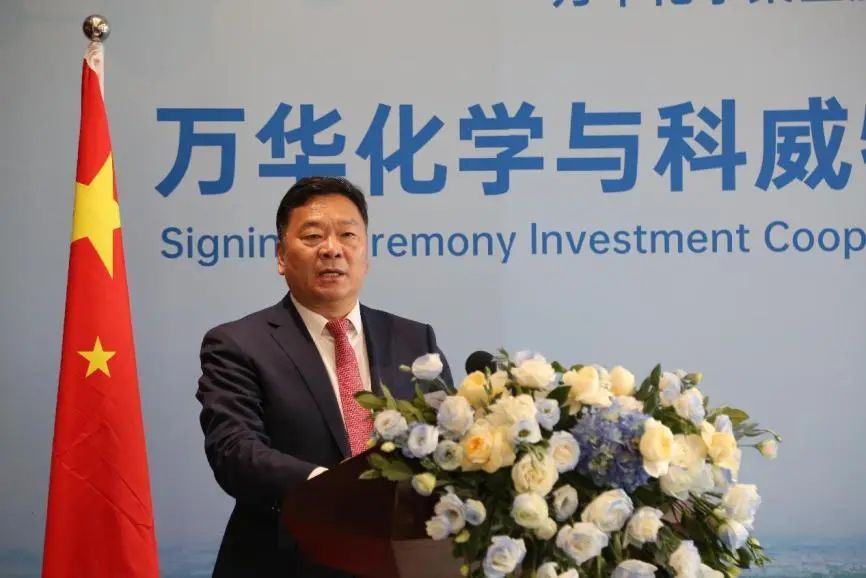
Regarding this joint venture between Wanhua Chemical and PIC, President Kou Guangwu of Wanhua Chemical Group said: Since leading Wanhua’s business team to visit Kuwait Petroleum for the first time in 2013, we have been the first to sign a long-term LPG supply agreement with Kuwait Petroleum, becoming the first enterprise in China to directly participate in the allocation of Middle Eastern LPG resources, creating an energy artery connecting the Persian Gulf and the Bohai Sea. These direct cooperations have not only ensured the stable operation of Wanhua Yantai’s petrochemical facilities but also laid a solid foundation for Wanhua Chemical to become the first Chinese enterprise with the right to recommend CP prices. Today, the signing of the joint venture agreement between Wanhua Chemical and PIC is not only a comprehensive upgrade of past cooperation but also another model of Sino-Ku cooperation. We look forward to using this joint venture as a new starting point, continue to expand the field of joint cooperation, share missions, lead changes, and accelerate the pace of “oil transformation”, promote the petrochemical industry’s transition from “high carbon manufacturing” to “low carbon recycling”, promote the deep integration of the “Belt and Road” initiative with the “Kuwait 2035 National Vision”, and create a new situation for joint development.
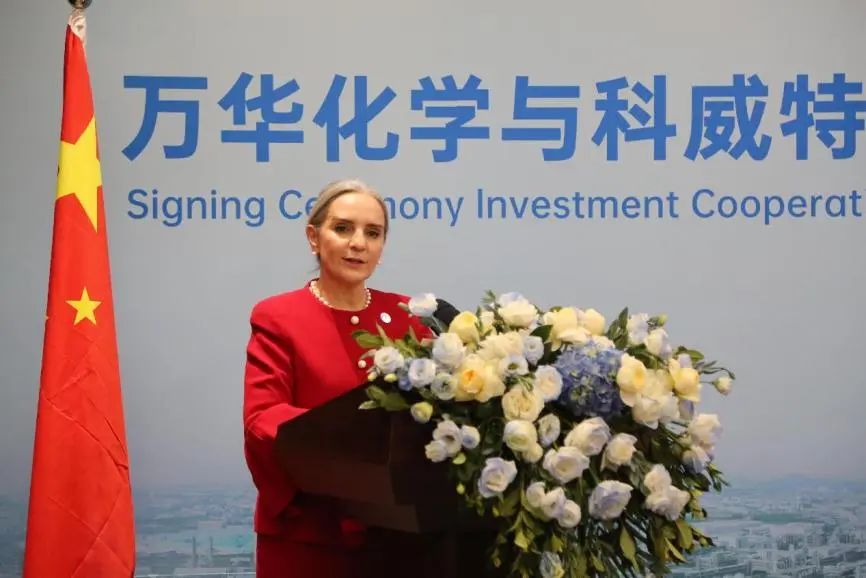
CEO of PIC, Nadia Al Hajji, said: The joint venture is of great significance and far-reaching implications. She emphasized the strategic importance of the project, noting that it will not only create value through the joint petrochemical assets but also promote mutual development and innovation between the two parties. The joint venture between PIC and Wanhua Chemical reflects the common vision, high trust, and consistency in promoting innovation, development, and creating long-term value between the two parties. Nadia Al Hajji expressed her sincere gratitude and affirmed that this cooperation will be the cornerstone for PIC’s continued development in Asia and broader regions. “I would like to express my heartfelt thanks to everyone who has worked hard to make this cooperative relationship a reality. From the teams working tirelessly behind the scenes to the leaders who support this vision – it is your dedication that has made this proud moment possible.”
Shaikh Khaled Al Sabah, Director and General Manager of International Marketing at Kuwait Petroleum Corporation, expressed his gratitude to all the leaders, employees of Wanhua, and relevant personnel of Kuwait for their efforts in facilitating the good cooperation between PIC and Wanhua! He emphasized the long-standing cooperative relationship between Kuwait Petroleum and Wanhua Chemical, which began with long-term supply agreements years ago, laying a solid foundation of trust, responsibility, and mutual respect between the two companies, and looking forward to further deepening exchanges and strengthening cooperation to achieve mutual benefit and win-win, and continuously achieve new and greater achievements. “I would like to take this opportunity to wish PIC and Wanhua Chemical all the best on this journey together.”
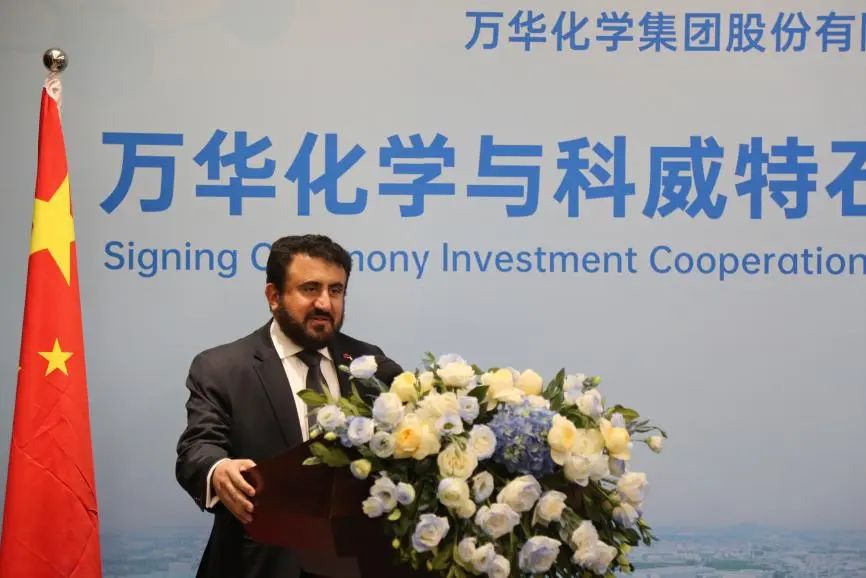
Shaikh Nawaf Al Sabah, Deputy Chairman and CEO of KPC, made a concluding speech on behalf of KPC: Congratulations on the successful signing. He mentioned that Kuwait’s diplomatic relations with China are long-standing, and that Kuwait is one of the first supporters of China’s “Belt and Road” initiative. In the future, Kuwait will continue to be a good friend of China. He emphasized that the agreement signed between PIC and Wanhua Chemical is of milestone significance, marking the largest petrochemical investment by Kuwait in China, and also an important milestone in the long-standing friendly relations between the two countries. He said that this joint venture, based on the traditional supply relationship, demonstrates KPC’s determination to transform the traditional supply relationship into a strategic cooperative relationship oriented towards value creation. “Today marks another step in our strategy to transform our carbon hydrogen compound supply relationship into a long-term partnership. In this sense, the cooperation between PIC and Wanhua Chemical on the Yantai Petrochemical PDH integrated project reflects the common vision of both parties in terms of industrial development, value creation, and long-term cooperation.”
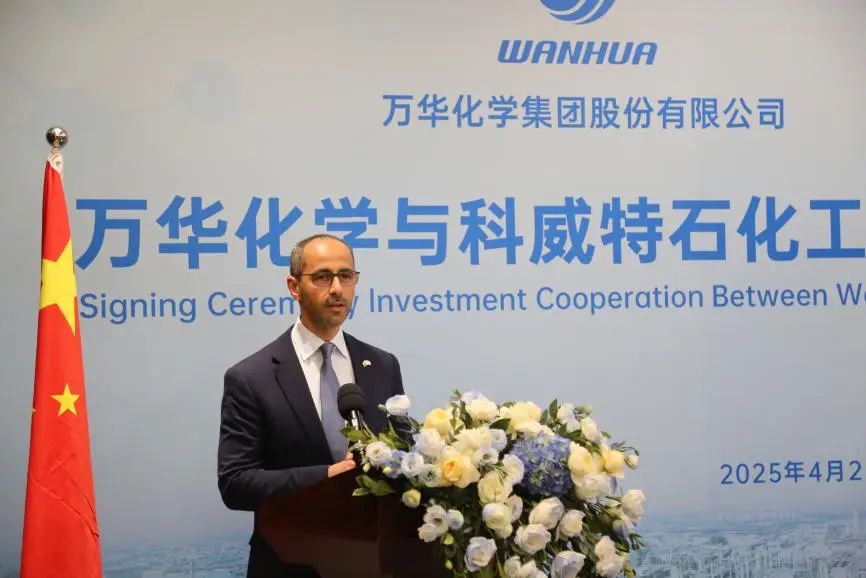
Chairman of Wanhua Chemical Group, Liao Zengtai, on behalf of Wanhua Chemical, made a concluding speech: He highly praised the friendship between Wanhua Chemical and KPC, the highly compatible development concepts of both parties, the deepening mutual trust, and the continuously expanding scale of cooperation are the solid foundation for the historical cooperation and future joint development. The signing of this joint venture agreement marks the entry into a new era of friendly relations between the two parties, and in the future, both parties will fully leverage their respective industrial advantages and resource endowments to achieve complementary advantages on a larger scale, broader fields, and deeper levels, helping both parties’ cooperation to reach new heights. He believes that with the joint efforts of Wanhua Chemical and Kuwait Petroleum Corporation (KPC), this cooperation will definitely yield fruitful results, contributing to the construction of a world-leading high-end chemical new material industry base in the southern coast of the Bohai Sea, and providing greater strength to Yantai in building a central city in the Bohai Rim.
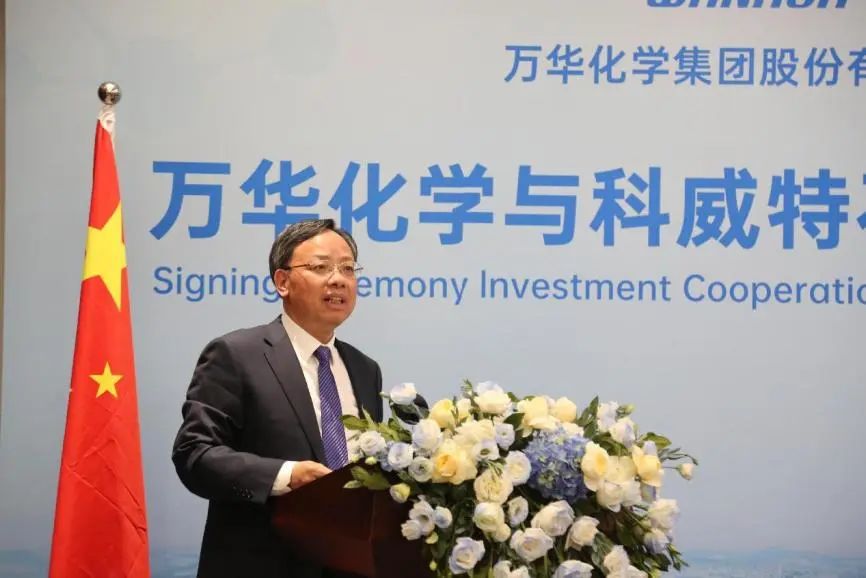
The signing ceremony was presided over by Chen Yifeng, Senior Vice President and Chairman of Wanhua Chemical (Yantai) Petrochemical Co., Ltd., and was attended by Feras Al Awad, Deputy CEO of PIC’s Projects and Business Development, Li Min, Vice President of Wanhua Chemical, and other senior leaders and project team members from both sides.
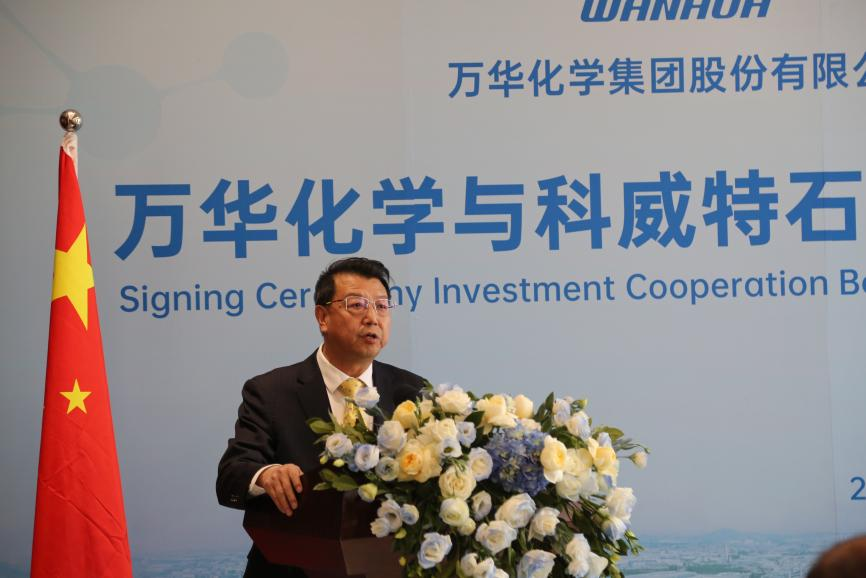
This joint venture between Wanhua Chemical and PIC will help improve the internationalization level of the Bohai Sea coast, the business environment for foreign merchants in China, attract more high-quality foreign capital, promote the coordinated development of the chemical and petroleum industries to new heights, promote economic development, and lead the new trend of petrochemical industry development!
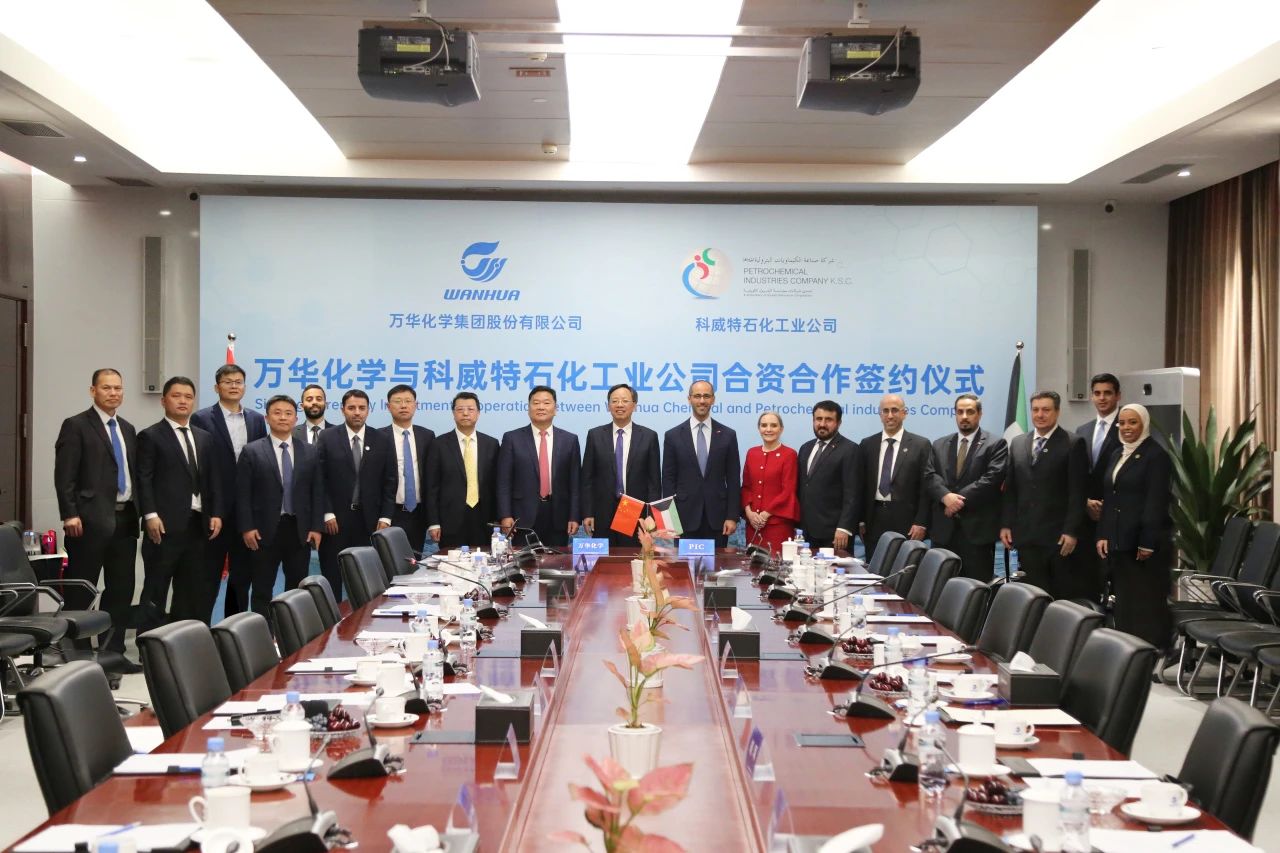
Source: Wanhua Chemical
April 27, 2025
More Details to Follow!
Kuwait Petroleum subsidiary acquires 25% stake in China’s Wanhua Chemical Group
By Reuters
April 26, 20258:55 AM EDTUpdated a day ago
- Companies

Kuwait Petroleum Corporation S.a.k.
April 26 (Reuters) – Kuwait’s Petrochemical Industries Company, a subsidiary of state-owned Kuwait Petroleum Corporation, said on Saturday it has signed an agreement to acquire a 25% stake in China’s Wanhua Chemical Group.
It did not disclose the value of the transaction, which it said was the largest Kuwaiti investment in China’s petrochemicals industry.
Under the deal, Petrochemical Industries Company will acquire several of the Chinese group’s industrial units that specialize in manufacturing several petrochemicals, including propylene oxide and acrylic acid in the Chinese city of Yantai.
This would help diversify the Kuwaiti company’s portfolio of high-value products, it said.
Reporting by Ahmed Haggagy; Writing by Menna Alaa El-Din and Ahmed Tolba; Editing by Alexandra Hudson and Susan Fenton
April 10, 2025
Wanhua Wins Bid for Vencorex
Vancorex Recovery: Chinese Wanhua Wins Bid, Lyon Court Rules
April 10, 2025

2025-04-10 10:18:00
The Future of Vancorex: Challenges and Opportunities Following the Chinese Acquisition
Table of Contents
- The Future of Vancorex: Challenges and Opportunities Following the Chinese Acquisition
- The Acquisition Details
- Community Reactions to the Decision
- The Economic Landscape and Its Challenges
- Broader Impacts of Foreign Ownership
- Future Scenarios: The Road Ahead
- Expert Opinions: Industry Insights
- The Emotional Narratives Behind Job Loss
- Conclusion: A Call for Engagement
- Did You Know?
- Frequently Asked Questions
- Vancorex Acquisition: An expert’s Take on Challenges and opportunities
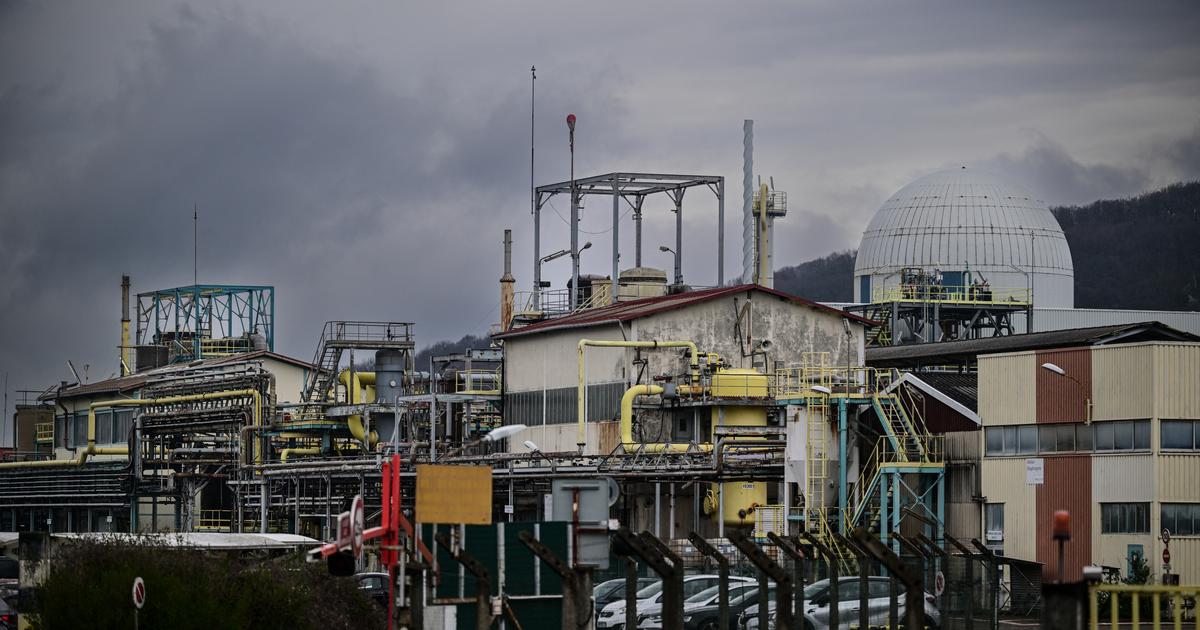
As the dust settles on the recent acquisition of Vancorex by the Chinese conglomerate Wanhua, significant questions loom about the future of the chemical factory near Grenoble. This change not only affects the economic landscape of the local community but also raises concerns and hopes among employees, government officials, and industry stakeholders alike. With around fifty out of the original four hundred and fifty jobs retained, the stakes couldn’t be higher for the surviving workforce and the broader regional economy.
The Acquisition Details
In a decision announced by the commercial court of Lyon, Wanhua’s Hungarian subsidiary, Borsodchem, has committed to maintain 54 jobs while paving the way for significant investment. The deal, valued at 1.2 million euros, also includes a pledge of 19 million euros to be injected into the facility by 2027. This dual commitment raises the question: is this truly a lifeline or merely a temporary fix?
Immediate Implications for Employees
For the employees who remain, the acquisition could signify stability in an otherwise tumultuous environment. Those who keep their positions at Vancorex can breathe a little easier, yet the emotional weight of the situation remains. Many have experienced job insecurity and concern for their future, which has been exacerbated by the awareness that nearly 90% of jobs may be cut. The psychological toll of workforce reductions lingers heavily in the air as the remaining employees adjust to a new corporate culture.
Community Reactions to the Decision
While some may celebrate the retention of roughly 54 jobs, the broader community’s reaction is more mixed. The Auvergne-Rhône-Alpes region and various local authorities have expressed disappointment that an industrial flagship will now operate under foreign ownership. Local officials have reached out with concerns that although job preservation is commendable, the commitment from Wanhua could and should have covered more ground. “While we are relieved that some employment opportunities remain, we hoped for a more extensive commitment,” stated a regional spokesperson.
Counteroffers and Local Initiatives
In a striking contrast to the acquisition, employees had attempted to propose a cooperative model, known as a Société Coopérative d’Intérêt Collectif (Scic), to safeguard local jobs and preserve the company’s legacy. Yet, the court deemed their offer inadmissible, citing insufficient cash flow and lack of concrete funding resources. This dismissal underscores the struggle for community-driven initiatives in a corporate setting, a sentiment echoed by the local labor union CGT.
The Economic Landscape and Its Challenges
Vancorex’s crisis exemplifies a wider trend affecting industrial jobs, particularly in the chemical sector. As globalization leads to closures or sales of major local industries, the economic vibrancy of regions like Isère hangs in the balance. Vancorex’s challenges are not isolated; factories in the United States have faced similar threats due to overseas competition and changing market demands.
The Role of Globalization and Automation
Globally, industries are rapidly evolving due to technological advancements like automation and artificial intelligence. The shift is impacting the labor landscape, not just locally but also internationally. Take, for instance, American factories faced with the dilemma of investing in new technology or maintaining the workforce. Economic reports have consistently highlighted how automation can lead to job displacement, a situation that Vancorex finds itself hinting at post-acquisition. Transitioning to automated systems may be in the cards for Vancorex as Wanhua revamps the factory’s operations.
Broader Impacts of Foreign Ownership
The implications of foreign ownership extend beyond immediate job retention. Local communities often grapple with feelings of disempowerment when critical industries fall under international control. The local workforce may find it challenging to align with new corporate goals, especially if they differ vastly from their previous understanding of job security and community-driven values.
Regulatory Considerations and Future Legislation
As the acquisition proceeds, regulatory frameworks will be put to the test. In both France and the U.S., there are laws intended to protect local employment and maintain competitive markets. Policymakers will be closely observing how Wanhua bases its operations in the region and may call for stricter regulations on foreign investments, particularly in sensitive sectors. This is analogous to recent discussions in the U.S. regarding the impact of foreign companies on American labor markets.
Future Scenarios: The Road Ahead
Looking ahead, Vancorex has several potential paths unfolding from this transition. A promising future may hinge on Wanhua’s commitment to invest and innovate. If the investment allocated by Wanhua leads to enhanced operations, higher efficiencies, and ultimately increased production, this could positively influence local employment scenarios.
Investments in Green Chemistry
Amid global concerns over climate change and sustainability, Wanhua has an opportunity to steer Vancorex towards greener operations. As consumer preferences shift to environmentally friendly products, investing in sustainable practices could not only enhance the factory’s reputation but also ensure its relevance in a competitive market. Such a transformation could attract local and international partnerships, offering an additional buffer against job losses.
Expert Opinions: Industry Insights
Industry experts have mixed feelings about this acquisition. Dr. Emily Anderson, a labor economist, notes, “The retention of jobs is a positive sign but doesn’t address the pressing need for systemic change to encourage resilience.” Meanwhile, Mark Thompson, a senior consultant in business strategies, elaborates, “Wanhua has the potential to revitalize Vancorex, but it will require truly understanding local markets to realize that potential.”
Lessons from Other Regions
This scenario draws parallels to the American Midwest, where factories have also been acquired by foreign entities. Cities like Detroit have grappled with similar upheavals, beginning in the 21st century as automakers restructured their operations. The key takeaway from these events is the importance of partnerships between local government, the workforce, and foreign entities to secure a brighter future.
The Emotional Narratives Behind Job Loss
While numbers and statistics paint a picture of the economic landscape, rarely do they capture the emotional realities faced by displaced workers. Families rely on factory jobs for their livelihoods, and as Vancorex moves into uncharted territory, local citizens grapple with fear, uncertainty, and an evolving sense of identity. This raises crucial questions: How do communities redefine themselves in the absence of long-standing employment? What alternative avenues for job security can emerge from such transitions?
Building Community Resilience
The path forward may rest not only in corporate commitments but also in fostering a resilient community. Local organizations, NGOs, and residents must work collectively to identify new opportunities—perhaps in sectors that haven’t yet been fully developed in the region, such as renewable energy or IT. Such community efforts could also galvanize support for local businesses, ensuring that economic shifts benefit the broader population.
Conclusion: A Call for Engagement
As Vancorex enters this new chapter under Wanhua’s ownership, the community, employees, and local government must engage in meaningful dialogue about the vision for the future. It is imperative that all stakeholders work collaboratively to establish frameworks that truly honor the local workforce while embracing the global marketplace.
Did You Know?
This acquisition highlights a growing trend of foreign entities acquiring traditional factories. While it might revitalize certain aspects, the cultural and emotional impacts on local communities can last much longer.
Frequently Asked Questions
What happens to the remaining jobs at Vancorex?
Currently, Wanhua is committed to maintaining 54 out of 450 jobs, but further developments regarding job security remain to be seen.
What alternatives were considered to save more jobs?
A cooperative model initiated by employees and local communities was deemed inadmissible by the court due to insufficient funding and other concerns.
How can local communities thrive after factory closures?
Communities should explore diversifying their economies, investing in new industries, and fostering partnerships with local governments and organizations to build resilience.
Vancorex Acquisition: An expert’s Take on Challenges and opportunities
Time.news sits down with Dr. Alistair Humphrey, a leading expert in industrial transitions and regional economics, to discuss the recent acquisition of vancorex by Chinese conglomerate Wanhua and its implications for the local community and beyond.
Time.news editor: Dr. Humphrey, thank you for joining us.The acquisition of Vancorex by Wanhua has certainly stirred up a lot of discussion. Could you give us your initial thoughts on this growth?
Dr. Alistair Humphrey: It’s a complex situation.On one hand, the acquisition secures the existing facility and commits to retaining some jobs, which is undoubtedly positive for those 54 employees. The planned 19 million euro investment by 2027 also suggests a level of commitment to the site’s future. However, the significant job losses – nearly 90% of the workforce – highlight the challenges inherent in these types of industrial transitions.
Time.news Editor: The article mentions mixed reactions from the community and local officials. There’s disappointment that a local industrial flagship is now under foreign ownership and that the commitment didn’t “cover more ground.” Is this a typical sentiment in these situations?
Dr. Alistair Humphrey: Absolutely. There’s frequently enough a sense of loss when a long-standing local company is acquired, especially by a foreign entity. It’s not just about jobs; it’s about identity and community pride.Local officials are rightfully concerned about the economic impact and the potential ripple effects throughout the region. The failure of the employee-lead cooperative proposal, the Société Coopérative d’Intérêt Collectif (Scic), also underscores public dissatisfaction with the acquisition.
Time.news Editor: The article points to broader trends affecting industrial jobs, like globalization and automation. How significant a role do these factors play in Vancorex’s situation?
Dr. Alistair Humphrey: They’re crucial. Globalization has created intense competition in the chemical sector, driving companies to seek cost efficiencies and new markets. Automation, driven by advancements in AI and technology, is enabling companies to produce more with fewer workers. Vancorex likely faces pressure on both fronts. Wanhua’s investment could include upgrades to automation, which, while beneficial in the long run, may affect future job creation. Addressing the challenges of globalization requires understanding how technological advancements will impact workforce.
Time.news Editor: What about the implications of foreign ownership itself? The article touches on feelings of disempowerment and potential challenges aligning with new corporate goals.
Dr. Alistair humphrey: That’s a real concern. Foreign ownership can introduce different corporate cultures, management styles, and priorities. Effective communication, transparency, and a genuine effort to understand and respect the local workforce are vital for a prosperous transition. It’s essential that Wanhua integrates Vancorex into its global strategy whilst respecting the local stakeholders.
time.news Editor: are there steps that policymakers and local authorities can take to mitigate the negative impacts of acquisitions like this? The article mentions regulatory considerations.
Dr. Alistair Humphrey: Yes. Policymakers can review regulations on foreign investments, particularly in strategic sectors, to ensure they adequately protect local employment and promote fair competition. More broadly, investing in retraining programs, supporting small businesses, and diversifying the regional economy are all crucial to building resilience. There should be emphasis on how to support a new ecosystem of industrial advancement on a community level.
Time.news Editor: the article suggests that investments in green chemistry could be a positive path forward for Vancorex. Can you elaborate on that?
Dr. Alistair Humphrey: Absolutely. The global push for sustainability presents a significant opportunity. By investing in environmentally friendly production methods and developing lasting products,Vancorex could not only enhance its reputation but also attract new customers and partnerships.This could create new, higher-skilled jobs and ensure the factory’s long-term relevance. Shifting to greener operations and partnering with organizations who align with corporate sustainability initiatives could change the perception surrounding the acquisition.
Time.news Editor: The article draws parallels to the American Midwest. What lessons can be learned from those experiences?
dr. Alistair Humphrey: The key lesson is the importance of collaboration. Successful transitions require a strong partnership between local government, the workforce, and the acquiring company. open communication, a willingness to compromise, and a shared vision for the future are essential.
Time.news Editor: what advice would you give to the community of Grenoble as they navigate this challenging period?
Dr. Alistair Humphrey: Focus on building resilience.Support local businesses, explore new economic opportunities, and invest in education and retraining. Community organizations, NGOs, and residents must work together to create a brighter future. Acknowledge that there will be challenges, but that building community resilience begins with a collective vision. It’s a call for engagement, demanding everyone to consider their role in creating a shared economic vision for the future.
 Everchem Updates Archive
  Sign Up for Email Updates