
The Urethane Blog
May 20, 2024
MOL’s €1.3 billion polyol complex in Tiszaújváros inaugurated

- The €1.3 billion project is MOL’s largest organic investment to date, for which it has also received support from the Hungarian state
- The complex will produce raw materials for durable plastic consumer goods such as bed mattresses, moulded car seats, insulation for houses and elastic rubber soles for sports shoes
- Thanks to the innovative technology of Germany’s thyssenkrupp Uhde and Evonik, the plant is operating with the most advanced technology available
Tiszaújváros, May 14, 2024 – MOL’s EUR 1.3 billion polyol complex in Tiszaújváros, boasting a capacity of around 200,000 tonnes of polyol per year, has been inaugurated. The ceremony, addressed by Prime Minister of Hungary Viktor Orbán, MOL’s Chairman-CEO, Zsolt Hernádi, and thyssenkrupp Board member Ilse Henne, marks a significant milestone for the company. MOL Group stands as the sole entity in Hungary and in Central and Eastern Europe to cover the entire value chain, from petroleum processing to polyol production (a widely used plastic raw material).
MOL Group held an inauguration ceremony in Tiszaújváros to celebrate the completion of its largest organic investment, the polyol complex. MOL, thyssenkrupp and Evonik IP signed the licence agreement in summer 2017, and the foundation stone of the complex was laid in September 2019.
The main units were transported to Tiszaújváros between 2019 and 2020, mainly by water, and were followed by the completion of the complex’s hydrogen peroxide, propylene oxide, polyol and propylene glycol plants. In addition to the four main plants, a pilot polyol plant, a quality assurance laboratory and, in Százhalombatta, a Research and Development Center were also built.
“I am proud that we have completed the polyol complex. It was a true international team effort, a great collaboration involving thousands of people over the past six years that enabled us to deliver MOL Group’s largest investment ever, perhaps the biggest development in modern Hungarian history. We have come a long way, but the road ahead is even longer. The polyol complex will significantly strengthen our company’s position and competitiveness, with the entire value chain from petroleum processing to polyol production. This investment has put Tiszaújváros back on the map of the European chemical industry, making it one of the most important industrial centers in the region. It will enhance the industrial competitiveness of our country and could catalyze economic growth as well. Through this investment, Hungary will be stronger, as MOL’s success is the success of the whole country,” said Zsolt Hernádi, Chairman and CEO of MOL Group.
“With this new MOL polyol-complex we establish new standards in terms of efficiency, environmental friendliness and automation by combining proven technologies with innovative solutions”, said Nadja Håkansson, CEO of thyssenkrupp Uhde. “We are grateful for the deep and trustful partnership with MOL. This polyol plant is a true landmark project and a great demonstration of how we at thyssenkrupp Uhde enable the industrial green transformation. With fully integrated and highly automated plant units, the valuable polyol chemicals will be produced in a highly efficient and sustainable way.”
The project involved an international team of thousands of experts, with engineering design work carried out in Germany, Thailand, India and Hungary. The plant equipment came from 24 countries. The construction of the complex involved 75 000 cubic metres of concrete, 13 000 tonnes of steel, 2 500 kilometres of cable and 700 km of pipelines laid in more than 18 million working-hours. The Hungarian government contributed with €131.5 million to the project: a €93.6 million corporate tax credit, which can be claimed once the investment is operational, and a €37.9 million investment grant based on an individual government decision.
Polyol is one of the most sought-after plastics raw materials, used in a wide range of industries from car manufacturing to clothing and insulation. Polyurethane is made from polyol and is the base material for many of the durable consumer goods that everyone encounters in their everyday lives.
Polyurethane made from polyol is needed:
- for the production of foam mattresses, bed mattresses, foam for comfortable seating on sofas and armchairs, and rigid foams for insulating refrigerators;
- for the production of insulating materials used in the construction industry, whether for the insulation of the facade of a building or a pipeline;
- for the production of sealants and adhesives familiar from DIY stores, and the elastic rubber soles of running shoes.
The Tiszaújváros plant will produce polyol using one of the most efficient and environmentally friendly methods available today. According to MOL’s calculations, the plant will contribute nearly EUR 150 million annually to the MOL Group’s financial results and will provide long-term employment for nearly 300 people.
MOL Group has been strengthening its chemical business for almost ten years: the new butadiene extraction plant was completed in 2015 with a HUF 35 billion investment, followed by the synthetic rubber (S-SBR) plant in 2018 with a HUF 100 billion investment. In 2016, the company announced a major strategic shift to prepare for the energy transition and the post-fossil fuel world by expanding its portfolio. As part of the third and largest wave of investment in the petrochemicals business, next to the polyol complex, the polypropylene plant is the most important element, which is a HUF 65 billion investment, and there are nearly EUR 2 billion of life cycle investments that will secure the long-term future of the chemicals business.
About MOL Group
MOL Group is an international, integrated oil, gas, petrochemicals and consumer retail company, headquartered in Budapest, Hungary. It is active in over 30 countries with a dynamic international workforce of 24,000 people and a track record of more than 100 years. MOL Group operates three refineries and two petrochemicals plants under integrated supply chain-management in Hungary, Slovakia and Croatia, and owns a network of almost 2400 service stations across 10 countries in Central & South Eastern Europe. MOL’s exploration and production activities are supported by more than 85 years’ experience in the field of hydrocarbons and 30 years in the injection of CO2. At the moment, there are production activities in 8 countries and exploration assets in 10 countries.
MOL is committed to transform its traditional fossil-fuel-based operations into a low-carbon, sustainable business model and aspires to become net carbon neutral by 2050 while shaping the low-carbon circular economy in Central-and Eastern Europe.
About thyssenkrupp Uhde
thyssenkrupp Uhde combines unique technological expertise and decades of global experience in the engineering, procurement, construction and service of chemical plants. We develop innovative processes and products for a more sustainable future and thus contribute to the long-term success of our customers in almost all areas of the chemical industry. Our portfolio includes leading technologies for the production of base chemicals, fertilizers and polymers as well as complete value-chains for green hydrogen and sustainable chemicals. www.thyssenkrupp-uhde.com
May 20, 2024
ISM: Economic improvement to continue through 2024
By Larry Adams
May 17, 2024 | 6:28 am CDT
TEMPE, Ariz. — The U.S. economy will continue to softly expand for the rest of 2024, say the nation’s purchasing and supply executives in the Spring 2024 Semiannual Economic Forecast. Expectations for the remainder of 2024 are similar to those expressed in December 2023, despite continued inflation concerns and geopolitical uncertainty.
These projections are part of the forecast issued by the Institute for Supply Management (ISM) Business Survey Committees. The forecast was presented today by Timothy R. Fiore, CPSM, C.P.M., Chair of the ISM Manufacturing Business Survey Committee, and Anthony S. Nieves, CPSM, C.P.M., A.P.P., CFPM, Chair of the ISM Services Business Survey Committee.
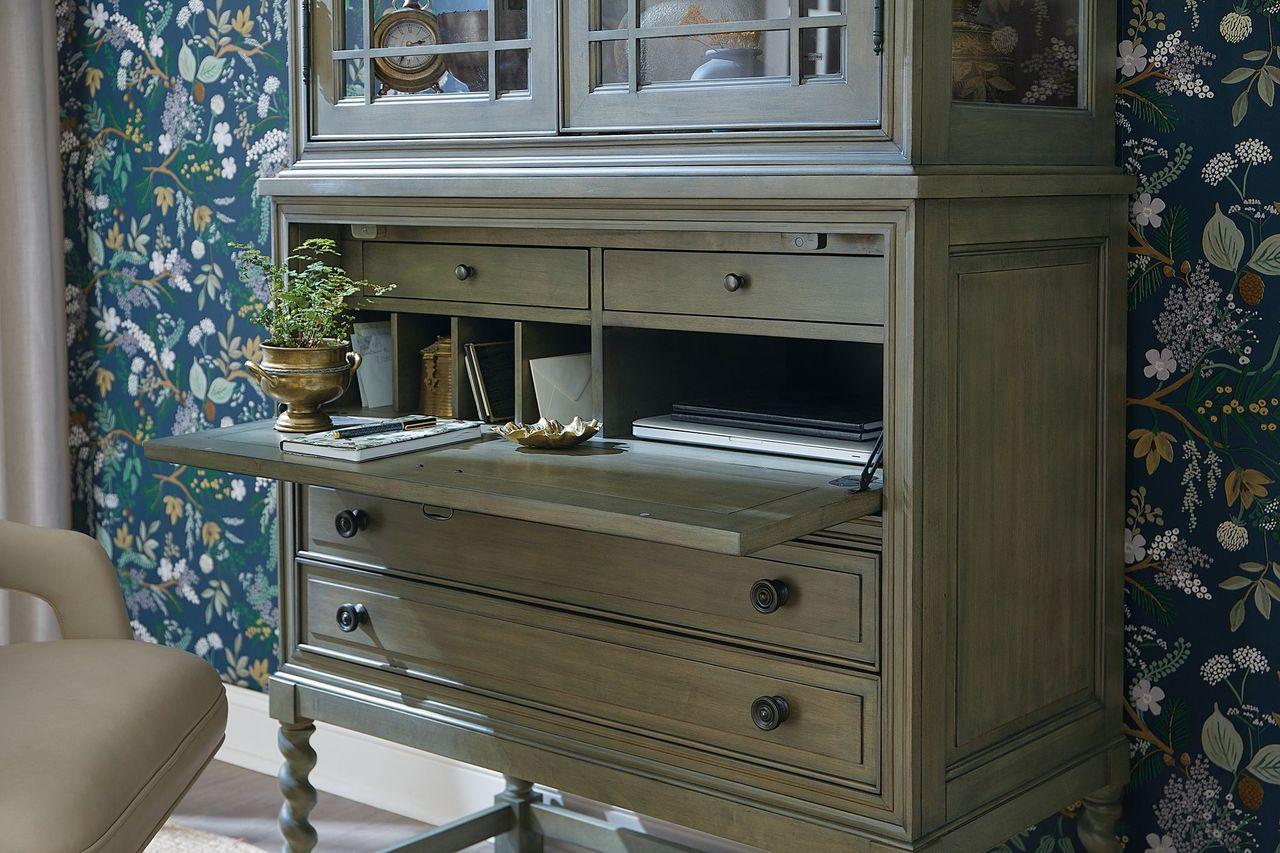
According to the report, the Furniture & Related Products category was one of twelve of the 18 industries to report projected revenue increases for the rest of 2024.
In addition, in 2024, the category is:
- one of 12 industries expecting production capacity increases for 2024,
- one of 10 industries expecting capital expenditure increases,
- one of 17 manufacturing industries reporting an increase in prices paid for the first part of 2024, and one of 15 industries expecting price increases for all of 2024,
- and, is one of 12 manufacturing industries expecting increases in revenue in 2024.
The Wood Products category is mentioned only once in the report as one of 10 industries reporting operating capacity levels above the average rate of 82.8 percent.
Here is a truncated version of the ISM report released May 15. For a complete report or more information, visit the Institute of Supply Management. The full text version of each monthly report is posted on www.ismrob.org on the first and third business days of every month after 10:00 a.m. (ET).
Manufacturing Summary
Revenue for 2024 is expected to increase, on average, by 2.1 percent. This is 3.5 percentage points lower than the December 2023 forecast of 5.6 percent, and 1.2 percentage points higher than the 0.9-percentage point year-over-year increase reported for 2023. Forty-four percent of respondents say that revenues for 2024 will increase, on average, 8.6 percent compared to 2023. Fourteen percent say revenues will decrease (12.3 percent, on average), and 42 percent indicate no change. With an operating rate of 82.8 percent and projected increases in capital expenditures (1 percent), prices paid for raw materials (1.9 percent) and employment (0.3 percent) by the end of 2024, the manufacturing sector continues its comeback from the turmoil that began in 2020. “With 12 manufacturing industries expecting revenue growth in 2024 and nine industries expecting employment growth in 2024, panelists forecast that recovery will continue the rest of the year, albeit somewhat softer than originally expected. Sentiment in each industry was generally consistent with performance reports in the April 2024 Manufacturing ISM Report On Business, as well as the fall Semiannual Economic Forecast conducted in December,” says Fiore.
Twelve of 18 industries report projected revenue increases for the rest of 2024, listed in order: Apparel, Leather & Allied Products; Food, Beverage & Tobacco Products; Transportation Equipment; Computer & Electronic Products; Chemical Products; Nonmetallic Mineral Products; Primary Metals; Textile Mills; Furniture & Related Products; Fabricated Metal Products; Electrical Equipment, Appliances & Components; and Paper Products.
Services Summary
Respondents expect a 2.9-percent net increase in overall revenues, which is 4 percentage points lower than the 6.9-percent increase forecast in December 2023. Thirty-six percent of respondents say that revenues for 2024 will increase, on average, 10.3 percent compared to 2023. Meanwhile, 10 percent expect their revenues to decrease (7.5 percent, on average), and 54 percent indicate no change. “The services sector will continue to grow for the rest of 2024. Services companies are currently operating at 88.6 percent of normal capacity. Supply managers indicate that prices are expected to increase 3.2 percent over the year, reflecting increasing inflation. Employment is projected to increase 0.8 percent. Thirteen industries forecast increased revenues, down from the 16 industries that predicted increases in December 2023,” says Nieves.
Thirteen of 18 industries expect revenue increases in 2024, listed in order: Retail Trade; Mining; Transportation & Warehousing; Other Services; Management of Companies & Support Services; Accommodation & Food Services; Professional, Scientific & Technical Services; Construction; Wholesale Trade; Public Administration; Utilities; Information; and Finance & Insurance.
OPERATING RATE
Manufacturing
Purchasing and supply executives report that their companies are operating, on average, at 82.8 percent of normal capacity, 0.2 percentage point lower than the figure reported in December 2023. The 10 industries reporting operating capacity levels above the average rate of 82.8 percent — listed in order — are: Paper Products; Textile Mills; Petroleum & Coal Products; Transportation Equipment; Computer & Electronic Products; Wood Products; Machinery; Primary Metals; Food, Beverage & Tobacco Products; and Fabricated Metal Products.
Services
Organizations are operating, on average, at 88.6 percent of normal capacity, according to Business Survey Committee respondents. This is 2.1 percentage points higher compared to December 2023. The eight industries operating at capacity levels above the average rate of 88.6 percent — listed in order — are: Educational Services; Other Services; Finance & Insurance; Retail Trade; Utilities; Agriculture, Forestry, Fishing & Hunting; Construction; and Public Administration.
Manufacturing
Production capacity is expected to increase 2.4 percent in 2024; in December, panelists reported an increase of 0.7 percentage point for 2023 and projected an increase of 7.8 percent this year. Thirty percent of respondents expect capacity increases of, on average, 12.6 percent; 7 percent expect decreases of, on average, 19.7 percent; and 62 percent expect no change. The 12 industries expecting production capacity increases for 2024 — listed in order — are: Nonmetallic Mineral Products; Furniture & Related Products; Computer & Electronic Products; Food, Beverage & Tobacco Products; Fabricated Metal Products; Primary Metals; Chemical Products; Plastics & Rubber Products; Petroleum & Coal Products; Transportation Equipment; Electrical Equipment, Appliances & Components; and Paper Products.
Services
The capacity to produce products or provide services in the services sector is expected to increase 2.6 percent in 2024. This compares to an increase of 3.9 percent reported for 2023 and a December projection of a 4.1-percent increase for this year. Sixteen percent of services respondents expect their capacity for 2024 to increase, on average, 17.6 percent, and 2 percent foresee capacity decreasing, on average, 11.2 percent. Eighty-two percent expect no change in capacity. The 14 industries expecting production capacity increases for 2024 — listed in order — are: Retail Trade; Mining; Professional, Scientific & Technical Services; Construction; Transportation & Warehousing; Arts, Entertainment & Recreation; Accommodation & Food Services; Wholesale Trade; Information; Management of Companies & Support Services; Public Administration; Health Care & Social Assistance; Utilities; and Finance & Insurance.
PREDICTED CAPITAL EXPENDITURES — 2024 vs. 2023
Manufacturing
Survey respondents expect a 1-percent increase in capital expenditures in 2024, much lower than the 11.9 percent increase forecast by the panel in December. Twenty-four percent of respondents predict increased (on average, 19.8 percent) capital expenditures in 2024, 14 percent said their capital spending would decrease (on average, 26.2 percent), and 62 percent expect no change. The 10 industries expecting capital expenditure increases for 2024 — listed in order — are: Food, Beverage & Tobacco Products; Furniture & Related Products; Nonmetallic Mineral Products; Primary Metals; Fabricated Metal Products; Petroleum & Coal Products; Chemical Products; Paper Products; Transportation Equipment; and Machinery.
Services
This year, services purchasing and supply executives expect capital expenditures to increase 1.4 percent compared to 2023. The 25 percent of respondents expecting to spend more predict an average increase of 16 percent, 12 percent anticipate an average decrease of 20.8 percent, and 63 percent expect no change in capital expenditures in 2024. The 10 industries expecting an increase in capital expenditures — listed in order — are: Public Administration; Utilities; Retail Trade; Accommodation & Food Services; Mining; Transportation & Warehousing; Professional, Scientific & Technical Services; Educational Services; Construction; and Finance & Insurance.
PRICES — Changes Between End of 2023 and May 2024
Manufacturing
In the December forecast, respondents predicted an increase of 3.2 percent in prices paid during the first four months of 2024; they now report prices increased by 1.6 percent. The 45 percent who say their prices are higher now than at the end of 2023 report an average increase of 5.8 percent, while 17 percent reported lower prices (by 6 percent, on average). The remaining 39 percent indicated no change for the period. Seventeen manufacturing industries reported an increase in prices paid for the first part of 2024, listed in order: Textile Mills; Printing & Related Support Activities; Apparel, Leather & Allied Products; Plastics & Rubber Products; Nonmetallic Mineral Products; Primary Metals; Paper Products; Chemical Products; Computer & Electronic Products; Machinery; Miscellaneous Manufacturing; Fabricated Metal Products; Petroleum & Coal Products; Electrical Equipment, Appliances & Components; Transportation Equipment; Furniture & Related Products; and Food, Beverage & Tobacco Products.
Services
Services respondents report that purchases during the first four months of this year cost an average of 2.3 percent more than at the end of 2023. This is 1.4 percentage points less than the 3.7-percent increase predicted in December. Forty-six percent of services respondents report that prices increased, on average, 6.7 percent; 11 percent report price decreases of, on average, 7.2 percent; and 43 percent indicate no change. Fourteen of 18 industries reported an increase in prices paid in the first part of 2024, listed in order: Public Administration; Management of Companies & Support Services; Utilities; Retail Trade; Professional, Scientific & Technical Services; Transportation & Warehousing; Construction; Educational Services; Finance & Insurance; Health Care & Social Assistance; Wholesale Trade; Arts, Entertainment & Recreation; Other Services; and Information.
PRICES — Predicted Changes Between End of 2023 and End of 2024
Manufacturing
Survey respondents expect a year-over-year, net-average prices increase of 1.9 percent for 2024. With respondents reporting price increases of 1.6 percent through April 2024, prices are projected to increase slightly for the rest of the year. Forty-seven percent of respondents project prices to increase, on average, 6.1 percent for the full year, 20 percent anticipate a decrease (5.2 percent, on average), and 33 percent expect no change. The 15 industries expect price increases for all of 2024, listed in order are: Textile Mills; Apparel, Leather & Allied Products; Primary Metals; Plastics & Rubber Products; Nonmetallic Mineral Products; Chemical Products; Paper Products; Furniture & Related Products; Fabricated Metal Products; Transportation Equipment; Miscellaneous Manufacturing; Petroleum & Coal Products; Computer & Electronic Products; Electrical Equipment, Appliances & Components; and Machinery.
Services
This year, services respondents expect prices to increase, on average, 3.2 percent compared to the end of 2023. With respondents reporting an increase of 2.3 percent through April 2024, prices are projected to increase over the rest of the year. Forty-eight of respondents anticipate increases of, on average, 7.2 percent; 7 percent expect decreases of, on average, 5 percent; and 45 percent do not expect prices to change. Fifteen of 18 industries project price increases for all of 2024, listed in order: Public Administration; Retail Trade; Arts, Entertainment & Recreation; Utilities; Wholesale Trade; Management of Companies & Support Services; Construction; Health Care & Social Assistance; Professional, Scientific & Technical Services; Educational Services; Finance & Insurance; Transportation & Warehousing; Accommodation & Food Services; Information; and Other Services.
EMPLOYMENT
Employment — Predicted Changes Between End of 2023 and End of 2024
Manufacturing
ISM’s Manufacturing Business Survey Committee respondents forecast that sector employment in 2024 will increase 0.3 percentage point year over year. Twenty-three percent of respondents expect employment to be, on average, 7.4 percent higher; 15 percent predict employment to decrease, on average, 8.7 percent; and 62 percent expect employment levels to be unchanged. The nine industries projecting employment growth during 2024 — listed in order — are: Nonmetallic Mineral Products; Food, Beverage & Tobacco Products; Primary Metals; Plastics & Rubber Products; Petroleum & Coal Products; Fabricated Metal Products; Textile Mills; Computer & Electronic Products; and Chemical Products.
Services
Sector employment will increase 0.8 percent in 2024, according to the forecast of ISM’s Services Business Survey Committee respondents. For the remaining months of the year, 25 percent expect employment to increase, on average, 5.2 percent; 8 percent anticipate employment to decrease, on average, 7 percent; and 67 percent expect no change in employment levels. The 13 industries anticipating increases in employment — listed in order — are: Other Services; Retail Trade; Accommodation & Food Services; Mining; Arts, Entertainment & Recreation; Construction; Transportation & Warehousing; Utilities; Public Administration; Health Care & Social Assistance; Wholesale Trade; Real Estate, Rental & Leasing; and Professional, Scientific & Technical Services.
BUSINESS REVENUES
Business Revenues Comparison — 2024 vs. 2023
Manufacturing
Increased revenues are expected this year, as purchasing and supply management executives predict an overall net increase of 2.1 percent compared to 2023. This is 3.5 percentage points lower than the 5.6-percent increase forecast in December, and 1.2 percentage points higher than the 0.9-percentage point year-over-year increase reported for 2023. Forty-four percent of respondents say that revenues for 2024 will increase, on average, 8.6 percent; 14 percent say their revenues will decrease, on average, 12.3 percent; and 42 percent forecast no change. The 12 manufacturing industries expecting increases in revenue in 2024 — listed in order — are: Apparel, Leather & Allied Products; Food, Beverage & Tobacco Products; Transportation Equipment; Computer & Electronic Products; Chemical Products; Nonmetallic Mineral Products; Primary Metals; Textile Mills; Furniture & Related Products; Fabricated Metal Products; Electrical Equipment, Appliances & Components; and Paper Products.
Services
This year, services purchasing and supply management executives predict a net increase of 2.9 percent in sector business revenue compared to 2023. This is 4 percentage points lower than the 6.9-percent increase forecast in December, and 1.3 percentage points lower than the 4.2-percent increase reported for 2023. Thirty-six percent of respondents indicate revenues for 2024 will increase, on average, 10.3 percent; 10 percent say their revenues will decrease, on average, 7.5 percent; and 54 percent expect no change. Thirteen of 18 services industries project revenue increases in 2024, listed in order: Retail Trade; Mining; Transportation & Warehousing; Other Services; Management of Companies & Support Services; Accommodation & Food Services; Professional, Scientific & Technical Services; Construction; Wholesale Trade; Public Administration; Utilities; Information; and Finance & Insurance.
May 19, 2024
Tosoh to Increase Prices for Millionate MDI Grades

Tosoh Specialty Chemicals USA, Inc. is increasing its prices for Millionate MDI Grades in North America. Effective with deliveries on or after June 1, 2024, or as contract terms allow, TSCU will increase the prices of Millionate MDI grades by $0.25/kg.
Millionate MDI is widely used in the production of rigid, semi-rigid, and integral skin foams, as well as coatings, adhesives, and elastomers.
TOSOH CORPORATION
Tosoh Corporation is the parent company of a Japanese chemical and specialty products and materials group that comprises over 100 companies worldwide and a multiethnic workforce of more than 12,000 people.
The parent company was established in 1935 and is listed on the First Section of the Tokyo Stock Exchange. In the 80 years that we have been in business, we have built balanced product lines of commodity chemicals for industry and of specialty products and materials for high technology and niche markets.
Tosoh’s principal markets include the chemical and petrochemical, construction, automotive, consumer electronics, information technology, bioscience, and environmental markets.
May 19, 2024
Chemical Data Reporting under the Toxic Substances Control Act

- The 2024 CDR Reporting Period is Opening Soon The 2024 CDR submission period begins June 1, 2024, and runs through September 20, 2024. Companies are required to report data electronically using EPA’s Central Data Exchange (CDX) systemand the e-CDRweb reporting tool which will be available starting June 1.
- Guidance on submitting information to the CDR database for 2024.
- CDR GuideMe guidance database
- 2020 CDR National Review EPA published a review summarizing the 2020 CDR site locations, production volumes, industrial uses, and commercial/consumer uses, as well as, data trends from the last three reporting cycles.
The Chemical Data Reporting (CDR) rule, under the Toxic Substances Control Act (TSCA), requires manufacturers (including importers) to provide EPA with information on the production and use of chemicals in commerce.
Basic Information
2020 National Review
CDR Data
Regulatory Overview
- CDR Petitions
- Proposed TSCA Data Reporting Rule
- Legislative and regulatory authority
- 40 CFR Part 711, (TSCA CDR Requirements)
CDR Reporting
May 15, 2024

Birth: October 24th, 1937
Death: May 13th, 2024
F. Quinn Stepan OBITUARY
The world lost an extraordinary man on May 13, 2024. F. Quinn Stepan died peacefully in his home of 60 years.
The beloved husband of the late Jean “Snowy” Stepan (nee Finn) and devoted son of the late Alfred Charles and Mary Louise Stepan lived his life for others. Quinn Stepan had many passions, his first was his love for his wife, Snowy. They were married for 63 years and raised eight children.
He was the loving father of Jeanne (Rob) Schoder, Quinn (Debbie) Stepan Jr., Jennifer (Jim) Beqaj, Lisa (Tim) Hackett, Colleen (Jay) Tulimieri, Alfred (Candice) Stepan and Richard (Heather) Stepan and the late Todd Stepan. Cherished grandfather of Theresa (Joe) Stepan Dumais, Meghann (John) Stepan Kelly, Quinn P. Stepan, Robby (Taylor) Schoder, Mari Schoder, Scott (Mary) Schoder, Charlie Schoder and the late Michael Schoder, Jack, Sam, and Sarah Beqaj, Grace, Francie, Timmy, and Johnny Hackett, Quinn, Jeanne, Libby, and Jack Tulimieri, Spencer Stepan, and Haley, Finn, and Brenna Stepan. He also was blessed to be the fond great grandfather of Olivia, Hudson and Miles Schoder, Faye and Scott Schoder, Colin, Katelyn, Lilly and Andrew Dumais, Mac, Step, Walt and Rhetta Kelly, and Quinn H. Stepan.
Quinn Stepan was born in 1937 in the middle of an economic recession, the tough times would influence his lifestyle choices. He was the third child of Alfred and Mary Louise. He was a proud member of the Winnetka Stepan family with four brothers and two sisters. He grew-up on the Village Green, sitting on the cannon, running in the Fourth of July races and swimming in Maple Street Beach.
Quinn and Snowy Stepan hosted the extended family for the Turkey Bowl and Thanksgiving for more than 100 people, for four decades. Traditions were important to Quinn, he believed that gatherings created the opportunity to build connections and strengthen bonds between people. Quinn was the dear brother of Stratford (Judy) Stepan, Charlotte (Jim) Stepan Shea and John (Bonnie) Stepan and Brother-in-law to Richard Wehman and sister-in-law to Nancy Leys Stepan. His sister Marilee Stepan Wehman and sister-in-law Ann Ruppe Stepan, brothers Alfred Stepan and Paul Stepan predeceased him.
Quinn attended Faith, Hope and Charity, Loyola Academy, and then the University of Notre Dame. He cultivated life long friendships across each of these institutions. After Notre Dame, he served in the Army and moved with his young family to Michigan, Texas and New Jersey. Eventually they found their way back to Winnetka, earning an MBA at the University of Chicago, residing in the shadow of Faith Hope for the last 60 years.
He loved Winnetka and Lake Michigan. Quinn never forgot the foundation of his Catholic education and he firmly believed in its importance. He would serve as the Chairman of the Board for both Loyola Academy and Woodlands Academy. He spent decades on the Notre Dame Liberal Art Council and was an ardent supporter of Big Shoulders and the Stepan Scholars program at the Our Lady of Grace parochial school. He believed Catholic education was important to build people of good character and sound mind. He definitely valued a liberal arts background, he said it was important for students to develop their thinking and writing skills. He funded the Stepan Economic Chair at Notre Dame to coax the best professors to stay in the College of Arts & Letters instead of decamping to the Business Schools.
He shared his leadership and management skills tirelessly to help these institutions flourish.
Quinn Stepan will also be remembered for the company he lead. His Team took the company his father founded in 1932 and made it a global powerhouse. When Quinn joined Stepan Company in 1961, net sales were $17.3 million and net income was $1.3 million with 3 domestic industrial plants. Today, it is a global company with 22 plants in 12 countries with 2 billion dollars in sales that employs more than 2400 people.
He loved going to work everyday at Stepan. He built a culture of idea sharing, congeniality and excellence. He ate lunch in the company cafeteria so he could visit with the troops. He was recognized as an industry leader and was honored with the Elva Walker Spillane Distinguished Service Award in 2010.
Family will always be the greatest legacy of Quinn Stepan. His family was his top priority. He loved everyone, he cared deeply about their well-being, their education, their futures and their passions. He was the catalyst for incredible family events – holiday celebrations, travel escapades that included European and American driving tours, Mediterranean boat cruises, golf outings, ski trips, Olympic experiences, African safaris, early trips to India and China. He wanted to share the joys of travel with others and wanted to create a wonder for the vastness of the world.
He chronicled all these good times – the games he attended, the beautiful places visited, graduations, baptisms etc.… It was not uncommon for relatives to be jockeying for position on his photo shelves. He loved his photos and being surrounded by the smiles and love of the family he had built. He was dedicated, steadfast and resolute. We knew that we always had a cheerleader in our corner. It is these memories that will provide comfort. He will be deeply missed by his family, friends and colleagues. Hopefully, all can take the lessons of Quinn’s well lived life and move forward to be the catalyst for change to make our world a little better.
Visitation Thursday, May 16, 2024, 10:00 a.m. CDT at Saints Faith, Hope & Charity Church, 191 Linden Street, Winnetka, IL 60093, it will immediately be followed by a 11:00 a.m. Funeral Mass. To virtually attend the funeral Mass, visit F. Quinn Stepan’s obituary page on donnellanfuneral.com to access the link to the live streaming. The family invites you to a reception immediately following Mass in the Saints Faith Hope & Charity Parish Hall. Interment private All Saints Cemetery, Des Plaines, IL. In lieu of flowers, memorials may be made to either: Big Shoulders Fund. Info: donnellanfuneral.com or 847-675-1990
 Everchem Updates Archive
 Sign Up for Email Updates