
The Urethane Blog
August 14, 2023
ADNOC Could Raise Covestro Bid To $12.6 Billion
By Alex Kimani – Aug 14, 2023, 3:30 PM CDT

Abu Dhabi National Oil Co (ADNOC) has signaled a willingness to raise its informal offer to 60 euros per share for a valuation of $12.6 billion for German plastics and chemicals maker Covestro. The latest offer would represent a premium of nearly 30% to Covestro’s closing share price on Friday.ADNOC last raised its informal offer to 57 euros per share in July, although no final decision has yet been made.
ADNOC appears willing to go on an M&A spree: Abu Dhabi’s national oil company is separately in talks with Austria’s OMV regarding a possible merger of the two companies that could form an entity worth $30 billion.
It’s not clear why ADNOC is interested in buying Covestro, considering how badly the petrochemical business has been doing lately. Earlier in August, Covestro reported a 21%Y/Y fall in second quarter revenues to 3.7 billion euros. Covestro is hardly alone, with U.S. oil and gas giants facing a similar fate. Sluggish consumer demand as well as a deluge of new factories coming online over the past few years means petrochemical margins face a protracted downturn. The situation is so dire that Cologne-based Lanxness AG has called it a “Lehman 2” moment for the chemicals industry.
“It’s been a pretty dramatic downturn. With chemicals oversupplied right now, large oil companies will find other areas to invest in,” Joseph Chang, a New York-based analyst at ICIS, has told Bloomberg.
Over the past decade, Big Oil has relied on petrochemicals as a growth engine, acting as a hedge when oil and gas prices drop and a long-term growth driver in the transition to clean energy. Previously, several Wall Street analysts predicted that oil demand will actually grow over the coming decades primarily driven by petrochemicals demand growth. Indeed, Energy Intelligence is not the only bull here. No less than 10 organizations, including OPEC, Exxon Mobil Corp. (NYSE:XOM), and the Energy Information Administration (EIA), have predicted that global oil demand will actually grow over the next few decades and not shrink as most analysts have forecast.
August 14, 2023
Cash reserves running out for many trucking firms, Werner says
Smaller firms could exit the market more frequently amid higher fuel prices and other costs as well as depressed volumes, according to industry players.
Published Aug. 14, 2023
David TaubeAssociate Editor

Dive Brief:
- Trucks will exit the market more quickly given depletions in cash, Werner Enterprises CEO Derek Leathers told investors on a Q2 earnings call, detailing the carrier’s ability to benefit from the reduced capacity.
- Executives with the carrier believe smaller trucking firms raked in cash amid 2022’s heyday, federal stimulus and lower fuel cost. But now that abundance of cash is now largely exhausted, Leathers said.
- Based on Werner’s internal analytics on how long the average carrier could stay afloat during the downturn, the TL provider thinks “those months are up,” spurring an “accelerated pace” of truck deactivations, Leathers said.
Dive Insight:
Federal data suggests that over 110,000 net deactivations have occurred for nearly a year, Werner reported.
Federal Motor Carrier Safety Administration data showed net truck deactivations for 44 consecutive weeks, Leathers said.
“Now they find themselves in an environment with rising interest rates and their finance costs are higher than ever,” said Leathers, who also serves as the carrier’s president and chairman.
Others are sharing similar observations.
Transportation tech services provider Motive, formerly KeepTruckin, reported that new carrier starts dropped below 10,000 in July, following a “trend of reverting to 2019 levels and marking a 29% decline since the beginning of the year,” according to a monthly economic report.
Many of those exiting fleets are now involving carriers with five or more vehicles, meaning the downturn is expanding beyond early stages when smaller firms were hit hardest, Motive reported.
Gene Graves of the United Shippers Alliance, an organization which negotiates rates with LTL providers and other transportation, projects hardships for carriers given Yellow’s demise and insurance increases.
“Every year there’s always a bunch of small LTL guys” exiting the market, said Graves, the alliance’s executive director. He added that the shakeout could be bigger than most years given the circumstances.
But amid the depressed volume, Graves foresees significant expansion from larger carriers.
“They’re gonna get bigger,” he said. “They have the capacity right now. They’re building new capacity.”
https://www.transportdive.com/news/fmcsa-net-deactivations-2023-trucks/690529/
August 14, 2023
Gulbrandsen commissions its new Tin Catalyst productionplant at its site in Dahej, India.
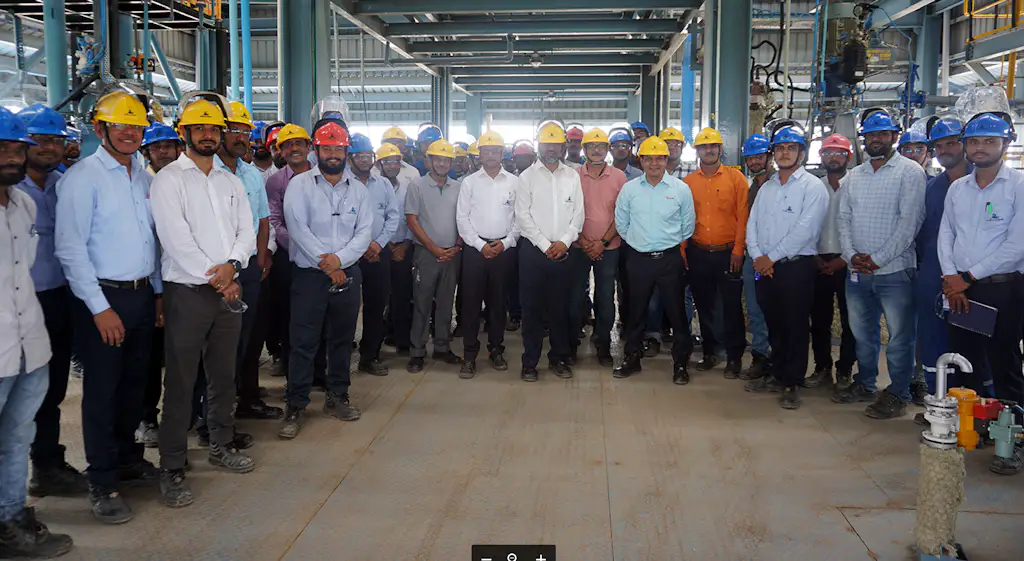
DAHEJ, GUJARAT, INDIA — August 14, 2023 — Gulbrandsen, a global specialty
chemicals leader, and one of the world’s largest producers of tin catalysts for the
polyurethane foaming industry, has completed the commissioning and safe start-up of
its new Tin Catalyst production plant at its site in Dahej, India. The unit will produce
Stannous Octoate and Stannous Neodecanoate.
Joerg Duebel, Global Business Director for Polyurethane Additives at Gulbrandsen,
commented on the occasion “Thanks to the well-coordinated efforts of our teams across
the globe, we completed the safe start-up of this unit ahead of schedule. This facility
will help us in meeting the growing demand for these products while also strengthening
our commitment to delivering high-quality catalysts to the polyurethane foaming
industry.”
About Gulbrandsen: Gulbrandsen is a manufacturer of industrial chemical
intermediates, fine chemicals and catalysts used in process industries. For more
information, please visit our website at www.gulbrandsen.com.
August 9, 2023
Stepan Company (SCL) Q2 2023 Earnings Call Transcript
Jul. 26, 2023 2:04 PM ETStepan Company (SCL)

Q2: 2023-07-26 Earnings Summary
EPS of $0.53 misses by $0.64 | Revenue of $579.98M (-22.84% Y/Y) misses by $89.88M
Stepan Company (NYSE:SCL) Q2 2023 Earnings Conference Call July 26, 2023 9:00 AM ET
Company Participants
Luis Rojo – VP & CFO
Scott Behrens – CEO, President & Director
Scott Behrens
Good morning, and thank you for joining us today to discuss our second quarter results. I plan to share highlights from our second quarter performance. I will also share updates on our key strategic priorities while Luis will provide additional details on our financial results. The company reported second quarter adjusted net income of $12.1 million. Earnings were significantly impacted by a 19% decline in sales volume versus the all-time record prior year second quarter due to continued demand softness across most of our markets and continued inventory destocking in certain market channels.
In the second quarter, margins in our Surfactant and Polymer segments were only slightly lower versus prior year as a result of less favorable mix, while unit margins for Specialty Products were significantly lower versus prior year due to high-cost inventory and pricing pressure. Gradual volume improvement throughout the quarter within our rigid polyol business was more than offset by destocking activity within our agricultural business. Cash expenses were slightly lower versus prior year due to proactive head count and discretionary expense controls implemented earlier in the year and lower accruals for incentive-based compensation.
For the quarter, adjusted EBITDA was $45.8 million versus $96.7 million in the prior year quarter, primarily driven by the decline in sales volume. Adjusted EBITDA in the second quarter of 2023 was slightly lower than the first quarter of 2023. Second quarter Surfactant operating income was $15.1 million versus $48.2 million in the prior year quarter, primarily due to a 15% decline in global sales volume. In addition, Unit margins were slightly lower due to less favorable product mix, high cost inventory carryover and increased competitive pricing pressure in Latin America.
Polymer operating income was $16.3 million, a decrease of $17.6 million versus the prior year. This decrease was primarily due to a 29% decline in global sales volume, including a 28% volume decline in Rigid Polyols. Specialty Product operating income was $3.8 million versus $9.9 million in the prior year. This decrease was primarily attributable to lower unit margins and sales volume within the medium chain triglycerides product line versus a record prior year.
Luis Rojo
Now turning to Polymers on Slide 7. Net sales were $164.5 million for the quarter, a 31% decrease versus the prior year. Volume decreased 29%, primarily due to a 28% volume decline in region volumes and lower demand in the specialty polyol and businesses. This was partially offset by volume growth in China. The lower demand reflect customer and channel inventory destocking and lower construction-related activities. Selling prices decreased 3% and foreign currency translation positively impacted net sales by 1%. Polymer operating income decreased $17.6 million versus prior year, primarily due to the 29% decrease in global volume. North America and Europe results were both impacted by lower volumes. Asia results improved on increased demand following the reopening of China.
Scott Behrens
Moving to Slide 10, Construction on our new alkoxylation production facility in Pasadena, Texas is approximately 35% complete and has surpassed 500,000 construction hours without an injury. The new estimated capital investment now stands at $265 million. We expect the Pasadena plant to be 90% complete by year-end and to start up in mid-2024. The underlying of consolation business that supports the Pasadena investment continued its strong double-digit volume growth in the first half of the year and at attractive margins.
Scott Behrens
Yes. Thanks, David. With regards to destocking, so the destocking obviously started to happen in Q1, definitely in the polyol side of our business for sure and in, I would say, all segments of our consumer products business. I think when you look back and try to appreciate how much inventory was stuffed throughout the channels. I don’t think anyone had a really good handle on it. What we can say going forward is in the rigid polyol business, we think that the destocking is predominantly behind us, and we’re now starting to get into a normal demand pattern for the second half of the year. I would say the same thing is true in consumer products. The destocking probably bottomed out in late April, May, and we’re now going to be entering a normal stabilized volume pattern going forward.
https://seekingalpha.com/article/4620083-stepan-company-scl-q2-2023-earnings-call-transcript
August 9, 2023
The rise and fall of a $500M company: A look at Klaussner’s shutdown
Sheila Long O’Mara//Executive Editor, Furniture Today//August 9, 2023
ASHEBORO – The news that 60-year-old Klaussner Home Furnishings is out of business shook the industry this week, leaving retailers scrambling for new resources and wondering how a company that had sales in excess of $500 million at one time could falter.
Founded in 1963 by Stuart Love as Stuart Furniture, the company announced its closing with an open letter on its website saying its lender was no longer willing to fund operations.
During its earlier days, the company grew into an upholstery powerhouse with its focus on quick-delivery sofa programs that are now a mainstay in the category. Love’s practice was to ship finished product to retailers a week after the order was placed, helping retailers cut down on their inventory loads. Under Love’s ownership, the company’s sales grew to $90 million. Furniture Today estimated Klaussner’s 2020 sales at $270 million, a 10% decline from estimated sales of $300 million in 2019. In 2009, Klaussner’s estimated sales were $500 million.
Former executive J.B. Davis joined the company in 1970, retiring 40 years later in 2010 as president and CEO. In 1979, Love sold Stuart Furniture to German furniture executive Hans Klaussner, and in 1986, the company’s name was changed to Klaussner Furniture.
In 2001, Klaussner expanded its product offering beyond upholstery to include case goods with the rollout of the Dick Idol collection, a licensed offering with the wildlife artist and sculptor.
Under Davis’ leadership, Klaussner Furniture grew quickly through acquisitions of companies such as upholstery producer Stylecraft and case goods resource JDI and by capturing considerable floor space at many of the biggest furniture retailers in the business.
The company also launched a high-end upholstery line called Comfort Design in 2009 and unveiled its Enso Bedding brand a year later.
Industry executive Bill Wittenberg succeeded Davis as president and CEO in 2010, and the following year, he led a management buyout of the company with Dave Bryant, chief financial officer at the time, from Hans Klaussner.
The new ownership also moved the company away from its Asheboro-based showroom where the company had traditionally shown new products during High Point Market, to its new 90,000-square-foot showroom located in the heart of the market district at 101 N. Hamilton St.
The company once again entered into a new category with its introduction in 2014 of outdoor furniture and later exited the category at the height of the COVID-19 pandemic in 2021.
Klaussner moved into the country music scene in 2015 when it signed a licensing agreement with Trisha Yearwood to design a whole home collection. Since that initial partnership, the company has introduced nine collections with Yearwood.
In 2017, private investment firm Monomoy Capital Partners acquired Klaussner. At the time of the announcement, the private equity group said the current management team would remain in place and maintain minority equity stake in the business.
At the time the company employed more than 1,800. As of yesterday, the company’s total employment was 884.
Two years after the Monomoy investment, Wittenberg transitioned to a strategic advisory role on the company’s board of directors, and Terry McNew took the reins as CEO.
McNew left the position last July, and Monomoy tapped David Cybulski for the job in August after serving first as the company’s chief financial officer and later in the interim CEO position.
 Everchem Updates Archive
 Sign Up for Email Updates