
The Urethane Blog
June 18, 2023
These Are The Most Common Blood Types Around The World
by Tyler Durden
Saturday, Jun 17, 2023 – 11:15 PM
World Blood Donor Day is organized every June 14 by the World Health Organization with the aim of raising public awareness about the need for safe blood, plasma and platelets as well as to celebrate the many people who save lives through their blood donations.
There are four different types of blood: A, B, O and AB. Each of these can either be positive or negative, depending on whether a protein known as the “Rh factor” is present in the red blood cells. Each blood type has slightly different qualities. For instance, those with type O- are universal donors. This means they can give blood to anyone. AB+ on the other hand is a universal acceptor, so they can receive donations from anyone. Only around seven percent of the world are Rh negative.
As Statista’s Anna Fleck shows in the following map, the most common blood group worldwide is O positive.

You will find more infographics at Statista
Europe tells a slightly different story, however, with the majority of its countries’ populations having A positive blood. Only two countries in the World Population Review’s records have a greater share of B positive blood types: Pakistan and Bangladesh.
While this chart is useful for getting an overview of regional patterns, it hides some of the finer details, such as how evenly split countries are by blood type. For instance, in China and India a fairly high share of the population has B+ blood. Meanwhile, in Europe many countries are fairly closely tied between O+ and A+. There are of course slight differences and exemptions, with the Nordic countries representing a slightly greater share of people having A+ versus O+, according to World Population Review. The U.S. is also fairly closely split, with 37.4 percent of the population having type O+ and 35.7 percent A+, while only 8.5 percent are B+ in the country.
The countries with the clearest prevalence of a given blood group are Ecuador, Peru and Zimbabwe, with 75 percent, 70 percent and 63 percent of O+ blood respectively.
According to the American Red Cross, the opposite rules apply when it comes to the universality of plasma transfusions. In that case, O- blood types can only donate plasma to other O- patients, while the universal plasma donor type is AB blood.
https://www.zerohedge.com/medical/these-are-most-common-blood-types-around-world
June 16, 2023
Dr. Thorsten Dreier appointed as new CTO of Covestro

Dr. Thorsten Dreier
The Supervisory Board of Covestro unanimously appointed Dr. Thorsten Dreier as Covestro’s new Chief Technology Officer. The 49-year-old will take over on July 1, 2023, from Dr. Klaus Schäfer, who most recently extended his expiring contract by six months to ensure personnel stability for Covestro during a challenging period in the market as a result of the ongoing energy crisis.
“Dr. Thorsten Dreier has demonstrated his technological expertise, customer focus, market orientation and management qualities in our company over the last twenty years, and with great success. He has played a decisive role in shaping Covestro’s development,” said Dr. Richard Pott, Chairman of Covestro’s Supervisory Board. “He is therefore the ideal successor as Chief Technology Officer and will continue to successfully drive Covestro’s transformation towards a circular economy and to achieving climate neutrality.”
“I am grateful for the trust placed in me. I am looking very much forward to working with Covestro employees and the other members of the Board of Management, give new impetus to the transformation of our company and to fulfill our aspired position as a pioneer in the chemical industry in decisively driving forward the circular economy,” said Dreier.
In his role as Chief Technology Officer, Dreier will assume responsibility for the corporate functions Process Technology, Engineering, Group Health, Safety & Environment and Group Procurement. In the coming months, he will work with Dr. Klaus Schäfer, to prepare for the smooth takeover of his duties and familiarize himself with all the tasks of his future area of responsibility.
About Dr. Thorsten Dreier:
Dr. Thorsten Dreier, born in Münster in 1972, is currently Global Head of the Coatings & Adhesives Business Entity. He began his career in 2002 as a laboratory manager in the Bayer Group and subsequently held various management positions at Bayer, Bayer MaterialScience and Bayer Technology Services. With the spin-off of Covestro, Dreier became global Head of Production & Technology in the Coatings, Adhesives & Specialties business unit and later of the Specialty Films and Thermoplastic Polyurethanes business units. He studied chemistry and received his doctorate from the University of Münster in 2001.
https://www.covestro.com/investors/news/dr-thorsten-dreier-appointed-as-new-cto-of-covestro/
June 15, 2023
West Coast port labor deal reached; peak season chaos averted
Tentative agreement on new 6-year contract, subject to ratification
· Thursday, June 15, 2023
Listen to this article
0:00 / 3:27BeyondWords
Negotiations on the West Coast port labor contract dragged on for months longer than expected, with tempers flaring along the way. Work disruptions began affecting ship schedules and container dwell times over the past two weeks. It now appears that more that significant fallout to the supply chain has been averted: A deal has been reached.
Late Wednesday night, the Pacific Maritime Association (PMA), representing the terminals, and the International Longshore and Warehouse Union (ILWU), representing workers, announced a tentative agreement on a new six-year contract.
No details were released and the agreement is still subject to ratification by both parties.
Acting Labor Secretary Julie Su had flown to San Francisco to meet with the parties on Monday and “played a key role” in the reaching the agreement, according to the ILWU and PMA.
PMA President James McKenna said the new contract agreement “recognizes the heroic efforts and personal sacrifices of the ILWU workforce in keeping our ports operating [during the pandemic and supply chain crisis].”
ILWU President Willie Adams said the union will now “turn our full attention back to the operation of the West Coast ports.”
Deal averts peak season disruptions
Reaching an agreement prior to peak season was crucial for all parties. Doing so avoided political fallout to the Biden administration from pre-holiday congestion headlines. The ILWU avoided reputational fallout from holding up Christmas cargoes to increase wages that were already relatively high. And the PMA averted losses to port productivity during peak season, which translates into more terminal profits.
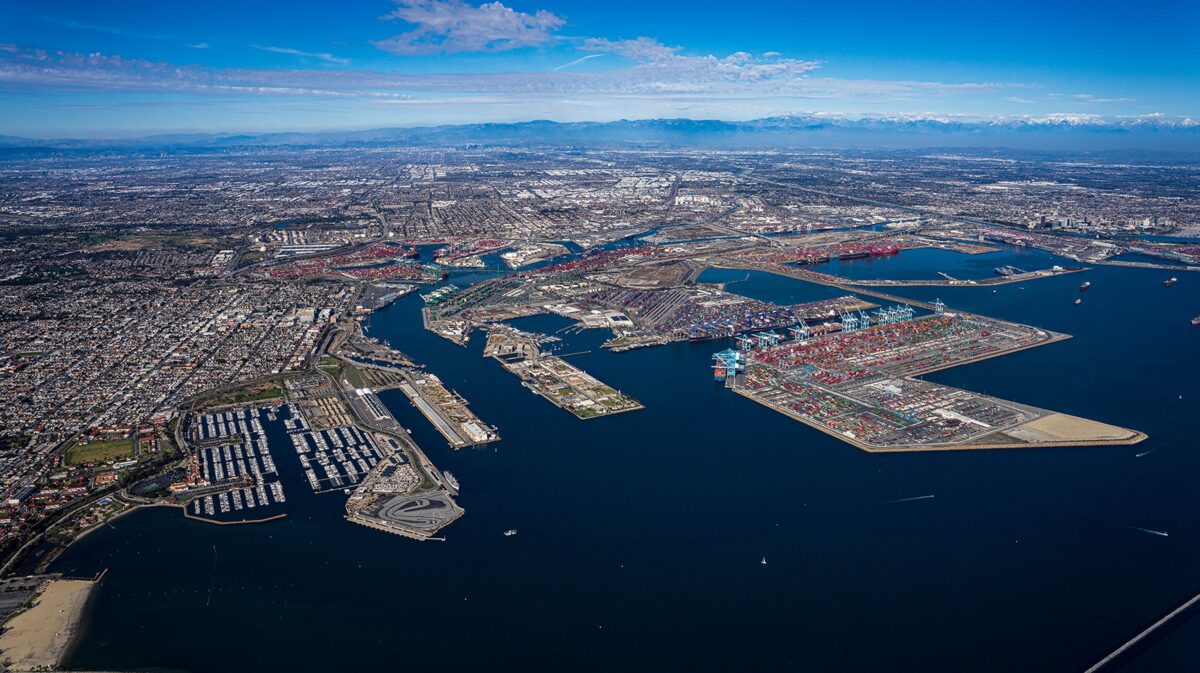
Volumes to the West Coast have been seasonally rising, in line with pre-pandemic patterns. The Port of Los Angeles handled 409,150 twenty-foot equivalent units of imports in May, up 19% from April and up 64% from the recent low in March.
As of Monday, there were 58 container ships en route to the ports of Los Angeles and Long Beach from Asia, compared to 46 a month before and 47 two months prior.
Port of Los Angeles Executive Gene Seroka said his port is operating at about 70% of capacity. Of the 30% shortfall, he said half was due to macroeconomic issues and half was due to cargo switched to East Coast and Gulf Coast ports as a result of labor concerns at West Coast ports.
“If we can get a labor deal soon and the economy doesn’t falter, we’ll have a strong second half,” Seroka said on Tuesday.
They got the labor deal. Now it’s up to the economy.
June 15, 2023

 Everchem Updates Archive
 Sign Up for Email Updates