The Urethane Blog
May 15, 2023

Effective July 1, 2023, or as contracts allow, Stepan will increase the price for STEPANPOL® and TERATE® Rigid Polyester Polyols used in the Americas by $0.04 per pound. This increase is necessary due to the continued escalation in diethylene glycol costs.
May 11, 2023
Tempur Sealy International, Inc. (TPX) Q1 2023 Earnings Call Transcript
May 09, 2023 12:32 PM ETTempur Sealy International, Inc. (TPX)
Q1: 2023-05-09 Earnings Summary
EPS of $0.53 beats by $0.02 | Revenue of $1.21B (-2.53% Y/Y) misses by $5.66M
Tempur Sealy International, Inc. (NYSE:TPX) Q1 2023 Earnings Conference Call May 9, 2023 8:00 AM ET
Company Participants
Aubrey Moore – Vice President of Investor Relations
Scott Thompson – Chairman, President, and Chief Executive Officer
Bhaskar Rao – Executive Vice President, and Chief Financial Officer
Scott Thompson
Thank you, Aubrey. Good morning, everyone, and thank you for joining us on our 2023 first quarter earnings call. I’ll start by sharing some highlights from our first quarter performance, and then Bhaskar will review our financial performance in more detail. After that I will share some closing comments before we open the call up for Q&A.
In the first quarter of 2023 net sales were approximately $1.2 billion and adjusted EPS was $0.53, which represents a 75% growth in sales and approximately 300% growth in adjusted EPS over the first quarter of 2019, a pre-COVID period. Compared to the same period last year, this represents a 3% decline in sales and a 23% decline in adjusted EPS, driven by launch costs to support our new innovative products in a less robust macroeconomic environment.
Our wholesale channel performed well. We reported wholesale sales stable to prior year as our continued global market over performance mitigated the heightened macroeconomic headwinds. Our direct channel performance was more impacted by the current environment. Unfavorable foreign exchange rates presented a challenge to our international operations and cost us $0.03 per share quarter.
As I noted, though industry conditions were less favorable than expected, it is very clear we continue to outperform the market and units appear to be stabilizing at a historical trough level. In the second quarter our expectation is that our sales will return to growth year-over-year, driven by continued global market outperformance and the rollout of our new products. We also anticipate industry demand will slowly improve in the back half of the year as comps ease.
As a reminder, U.S. produced mattresses consumption declined approximately an unprecedented 24% in 2022 representing trough unit production for the last 10 years. Most of the decline was post first quarter of 2022. As we’ve now fully lapped the challenging prior year comps, we anticipate the industry will slowly recover, resulting in a more stable U.S. bedding environment in the full year 2023 with the back half unit trends stronger than the first half.
Turning to highlights and some key wins in the quarter. First, we continue to see positive momentum in our brands and private label products at wholesale. Our high quality products leading customer service continues to drive third party retailers to lean into our brands and non-branded products. Our third party retail partners in the U.S. are especially supportive of the new Stearns & Foster product.
We are tracking to expand our third-party retail slots of Stearns by approximately 20% compared to the previous collection. We believe these slots will be coming from competitors, enhancing the total presence of Tempur Sealy brands on U.S. retail floors. We continue to make progress towards our goal of making Stearns & Foster our next $1 billion brand more than doubling its current size today.
On the product side, we’re well underway with our rollout of the new Stearns & Foster collection in North America. The new products are designed to further differentiate our high-end traditional Innerspring brand, while also offering an extended lineup of products that address the needs and differences of consumers.
The collection’s superior innovation, enhanced step-up opportunities, and elevated design together create unprecedented luxury Innerspring product that meets the needs of what we believe is an underserved consumer seeking a premium Innerspring product. Overall, Stearns & Foster performed well relative to the U.S. market in the first quarter, and we believe it’s currently the fastest growing major brand in the U.S.
The second highlight of the quarter is the launch of our new TEMPUR-breeze product and our new innovative line of smart adjustable bases in the U.S. These products build on the success of our prior generation of breeze and adjustable bases to provide even greater consumer benefits to America’s most highly recommended mattress. The new TEMPUR-breeze product features our latest Tempur material innovation, which delivers greater Tempur yield characteristics and greater cooling benefits.
In our new line of adjustable bases, we enhanced our connected-sleep platform and our continued focus on improving sleep and overall health and wellness of consumers. In addition to our sense and response technology for snoring featured in our previous smart base collection, the new bases also feature lumbar support at the touch of a button and advanced technologies, including our industry first acoustic massage and a range of relaxation features that help prepare customers’ bodies and minds with deep rejuvenative sleep.
Exclusive to the top-tier TEMPUR–Ergo ProSmart Base, wind down programs and SoundScape mode offers an immersive and multi-sensory experience. After very positive feedback from consumer studies and retail partner previews, we started shipping the new TEMPUR-breeze and the new TEMPUR–Ergo power bases in late first quarter. The rollout is going according to plan, and we have shipped over 75% of breeze four models to date.
We pre-built inventory to support a seamless transition across our valued Tempur-Pedic retail partners network. Most all retailers will be floored and selling for Memorial Day, which is when our new breeze and smart base advertising campaigns begin. This is the first North America Tempur mattress launch in four years.
The third highlight is that we’ve significantly fortified our supply chain and we’re executing orders within normalized order to delivery times. Our U.S. operating team, plant personnel have worked significant amounts of overtime to get us to the point of normalized order to delivery times The overtime and expediting cost hurt us a bit in gross margin in this quarter, but we’re thrilled to be back on normal customer service ahead of the prime selling season of second and third quarter. This is especially positive and we’ve accomplished this while outperforming the broader market.
The final highlight is that we successfully kicked off the rollout of our new Tempur International product this quarter. This all new lineup of mattresses, pillows, and bed bases have been strategically designed to optimize Tempur’s global addressable market. The expanded price points and consumer-centric innovations in the new collection will continue to appeal to our legacy ultra-premium consumers at prices of 3000 and above, while also meeting the needs of consumer shopping for mattresses between 2000 and 3000.
We streamlined the construction of the new products to drive future manufacturing efficiencies and enhance our ability to adapt our products to individual market’s needs. This updated process has enabled us to feel confident in unlocking a broader price range without materially altering our margin profile of our Tempur International business. We’re manufacturing both the new lines of products and the old line of products as we transition. This is a heavy lift for our overseas team, and after the transition period, we plan to optimize production of the new line, which we expect will be a positive driver for gross margins.
We are launching the new lineup in over 90 markets worldwide, and we’re staggering the rollout of these new products to allow for customized approach by region. In the first quarter, we kicked off the launch of our temporary European markets. We expect the rollout to be completed for all of our subsidiary markets in Europe and Asia by the third quarter, and to be completed by the end of the year for our third-party distributors. We expect the total rollout to be completed by the end of 2023, except for the UK, which has some country specific industry fire retardant regulations. We expect the UK to be fully floored by the first quarter of 2024. The early reaction to the new lineup has been very positive.
Scott Thompson
Nice job. Thank you, Bhaskar. I’m excited to share that we have announced this morning that we’ve signed a definitive agreement acquiring Mattress Firm, the nation’s largest mattress specialty retailer. This acquisition aligns with our strategy of acquiring companies that extend our competitive advantages, enable us to move closer to consumers and facilitate continued innovation. This combination will compliment Tempur Sealy’s extensive product development and manufacturing capabilities with vertically integrated retail.
First and foremost, Mattress Firm has been a valued retail partner for more than 35 years, and we look forward to welcoming their talented workforce and more than 8,000 employees to the Tempur Sealy family once the deal is closed. The transaction is expected to close in the second half of 2024, subject to satisfactory and customary closing conditions and applicable regulatory approvals. Mattress Firm is expected to operate as a separate business unit within the Tempur Sealy organization and to continue to provide customers with brands and products they desire.
This morning, we released a separate press release and investor presentation related to this transaction. Both can be found on our investor webpage. These documents provide further details on the transaction and the strategic rationale. We see this transaction as being attractive both strategically and financially.
Susan Maklari
Good morning. My question is around the acquisition that you announced this morning, appreciating what the synergies are, but how do you think about managing some of the perhaps channel conflicts that are going to come through with this and some of the adjustments that will need to be made in terms of product and offerings and logistics and those types of efforts in there, and just how are you thinking about some of those elements of this deal?
Scott Thompson
First of all, let me talk about channel conflict. First of all, we consider it — one of our expertise is the ability to manage omni-channel strategy throughout the world and have been doing it for a number of years. If you look at the most recent acquisition before this Dreams as kind of a maybe a beta test, Dreams is obviously a large retailer in the UK. We’re obviously in the UK and we did not have any problems with channel conflict in that acquisition. And we’ve been working on this, at least this has been in the marketplace where people have thought about this for years, probably five or six years. I doubt there’s anybody in bedding that is surprised with this transaction.
And if you move over to the States, we’re in retail stores. We’ve got our Sleep Outfitters operation, which is a direct competitor to Mattress Firm in the marketplace and we’ve got our Tempur stores. And although years ago, and I’m going to say what, four or five years ago, Bhaskar, yes, there used to be a little bit of noise in the system. I think once retailers saw how we operate our stores that I’m going say we’re a good retailer and we’re not really trying to steal share from anybody, it hasn’t been a problem. Additionally, over the years we have discussed this concept with various of our — various customers, large and small, and I think we have a good understanding of what their expectations are. And it’s, look, it’s going to depend on us having quality product, quality service, quality advertising and servicing them correctly, and making sure that they are not put at a competitive disadvantage. And so I’m not expecting any significant channel conflict as long as we deliver quality product at the right price with the proper support around it.
You asked about kind of logistics, and I assume you’re kind of moving towards synergies. You know, look, they’re both very large companies. We’ve put a $100 million down on a piece of paper. The kind of stuff you should be thinking about is warehousing and logistics. There are cities where we literally have warehouses within five miles of each other. And on a Tempur product, we would make the product in our plant, put it on a truck, take it to our warehouse, take it off the truck, put it in the rack where it would sit and wait for an order from Mattress Firm. And then we would get another truck, take it down from the rack, put it on the truck, and we would take it to their warehouse. Then they would take it off the truck, put it in their rack, and they would wait for a customer order, of which then they’d get another truck, take it down from the rack, put it in, and take it to the customer’s house. I mean that’s just the way the systems work. We’ve never been able to get the two companies to figure out how to clean up some of the logistics. So we think there’s good synergies in logistics and warehousing.
The other thing that may not be as evident to the people who aren’t in the business is on the manufacturing side and this would be on the Tempur side of the house, not the Mattress side of the house. I think everybody knows we’re ordered to delivery on Sealy. And so that means we don’t know what beds we’re going to make until we get an order from somebody. And I’d generally call it three, four days. And these are in Sealy operations as you know, these are manual manufacturing.
So we whipsaw the workforce. There are some days they show up at work and we’ve got lots of orders and we expect or would like for them to work overtime. Some days they show up at work and we don’t have enough orders, and they only get to work four hours. At most plants we decide on Friday afternoon if they’re going to work the weekend and of course there’s overtime involved in some of these swings, but it’s also just a quality of workforce and be able to hire people because the hours are variable. If we had real committed orders, I and had certainty of distribution, we could pre-build and level out the manufacturing.
So on the days that we don’t have specific orders, if we knew for sure we were going to get some orders, we could go ahead and build some product and level it out. And I think that’s a big quality improvement for us. It’s a workforce issue and there’s also, I believe, significant cost savings. We, of course, would have the normal insurance savings we call a little bit of overhead here, kind of savings. I think the other thing that may not be obvious that we’re really thrilled about, it’s one thing COVID kind of really, really highlighted was the supply chain around the world is not very robust. Okay?
And if you stop and think about it, the reason it’s not very robust is a little bit of what I just said. Nobody down in the supply chain knows for sure what their orders are. So everybody’s working kind of just in time. And being able to have, we’ll call it fully committed distribution, I think will allow us to fortify the supply chain by giving suppliers more certainty and being able to sign long-term contracts, which I think will also have quite frankly, some synergies.
The last one I’ll kind of throw up, there’s a laundry list here, but we’ve got your first question is, I think one of the other things that the combination does is, we have very sophisticated labs that test the quality of product. It is the core of Tempur, it is the core of Sealy, best-in-class ability to analyze foam, springs, durability. And so one thing we can do that would help a retailer is we can make sure the products that are put on their floor are the quality that they’re supposed to be and continuously test to make sure that we’re getting what we’re paying for. I think that will make the product sharper at Mattress Firm. I think that’s good for the customer, and I suspect we’ll find some opportunities from a cost standpoint, once you do the really hard analytics and test the product.
May 11, 2023
Upholstered Furniture Market Situation & Trends
PUdaily | Updated: May 9, 2023
Upholstered furniture refers to furniture added with padding, foam, fabric and other materials. This involves sofas, upholstered beds, mattresses, nightstands, coffee tables and other relative products. Among them, mattresses and sofas are the two main types of upholstered furniture. The industrialization of upholstered furniture began in Europe in the early 20th century. Global upholstered furniture industry has greatly increased its production capacity thanks to continuously advanced manufacturing technologies, and the market demand has also kept growing.
As the upholstered furniture industry is labor-intensive, developed countries are continuing to transfer their manufacturing to developing countries, which have low labor costs and sufficient raw materials. The main upholstered furniture manufacturing countries currently include China, U.S., Poland, India, Italy, and Germany.
China has become one of major producers and consumers of upholstered furniture. China’s modern upholstered furniture industry began in the early 1980s. In recent years, through introduction of advanced furniture design technology and processing technology from abroad, and on the basis of fully leveraging the advantages of raw material resources and labor costs, China’s upholstered furniture industry has developed rapidly. At present, China’s upholstered furniture output value makes up 46.4% of the world, contributing about 30.7% of the global upholstered furniture consumption.
Figure 1 China Upholstered Furniture Outputs & YoY Changes, 2012-2021
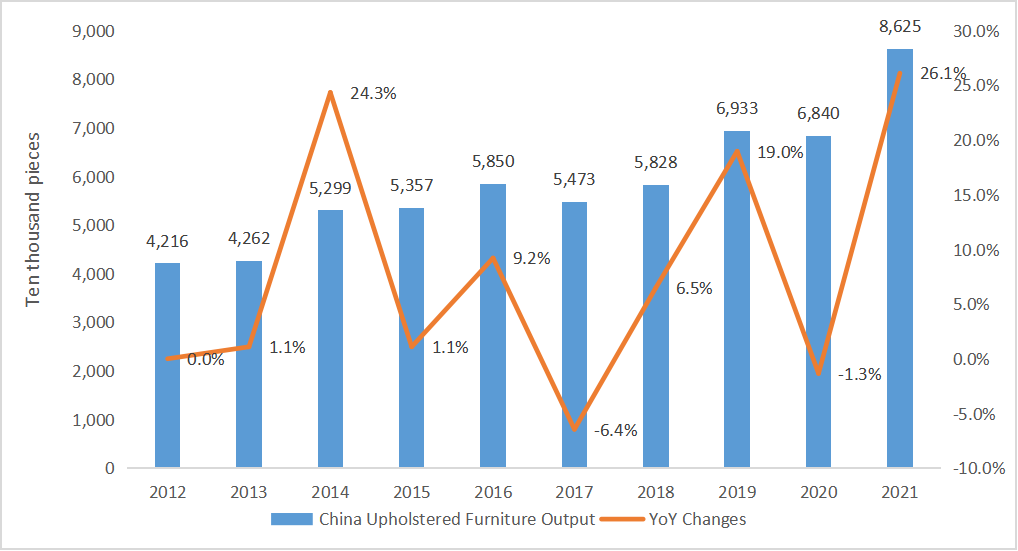
The upholstered furniture industry has a long industrial chain that spans agriculture, manufacturing, and retail industries. Its upstream industries mainly include leather, wood, foam, and other raw material industries. Downstream manufacturers mainly sell products to end consumers through channels such as dealers, ODMs, and direct-sale stores. Leather is mainly used for the outer surface of upholstered furniture, primarily natural cowhide. Wood is mainly used for the main structure of upholstered furniture, and the development of forest planting directly affects the wood supply and procurement costs of the upholstered furniture industry. Foam, namely polyurethane foam, is a typical cushioning material mainly used for cushions, armrests, backrests, etc., to improve the softness and comfort of upholstered furniture. It is made from polyurethane through processes such as foaming, hot pressing, and cutting, and is a derivative product in the petrochemical processing industry. Therefore, its price is greatly affected by fluctuations in oil prices. Downstream manufacturers of upholstered furniture mainly sell products to end users through direct-sale stores, dealers, etc., and factors such as household income and real estate industry development drive consumer demand.
Commodity prices have risen sharply since 2021. The low added value and high cost of the upholstered furniture industry have been greatly affected by rising raw material prices. Meanwhile, under the policy of “housing is for living, not for speculation”, the prosperity of the real estate industry has significantly declined, which also brings obvious suppression on the demand for upholstered furniture. Under the dual impact of rising costs and weakening demand, the overall profit margin of the upholstered furniture industry has significantly decreased. Especially for small and micro manufacturers that rely on price advantages, their survival space has been squeezed.
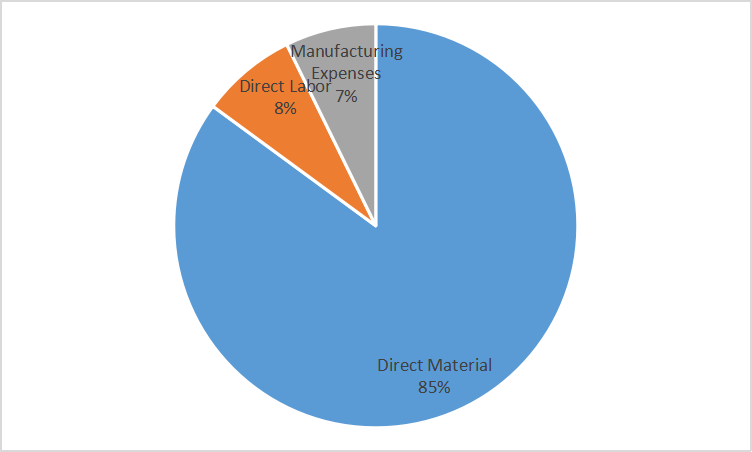
Figure 2 Cost Structure of a Mattress Manufacturer
In the future, China’s upholstered furniture industry could follow two important directions:
1) A boom in established market:
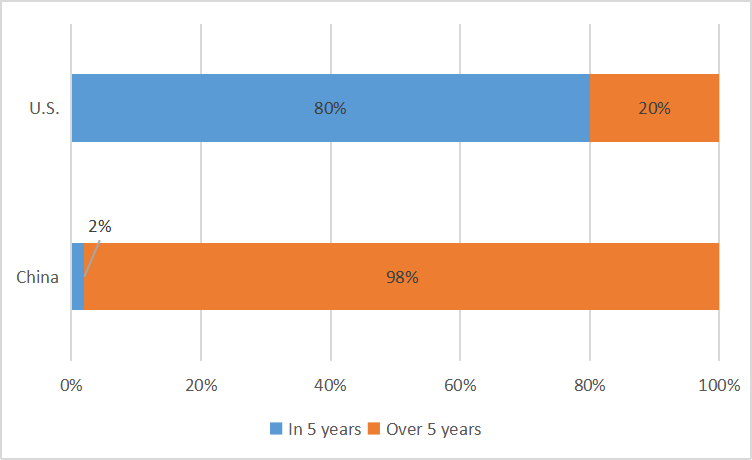
A few decades ago, spring mattresses were popularized in China. For a spring mattress, the lifespan of spring is usually 10-20 years, and that of filler and fabric is about 5-10 years. At present, the frequency of mattress replacement in China is much lower than that in U.S. 37% of Chinese consumers replace mattresses in 10-15 years, while 47% of consumers have never changed them, which are mostly under serviceability limit state. We believe that increasingly frequent mattress replacement and higher requirements for comfort level of beddings may boost the demand for mattresses.
Figure 3 Mattress Replacement Frequency in China
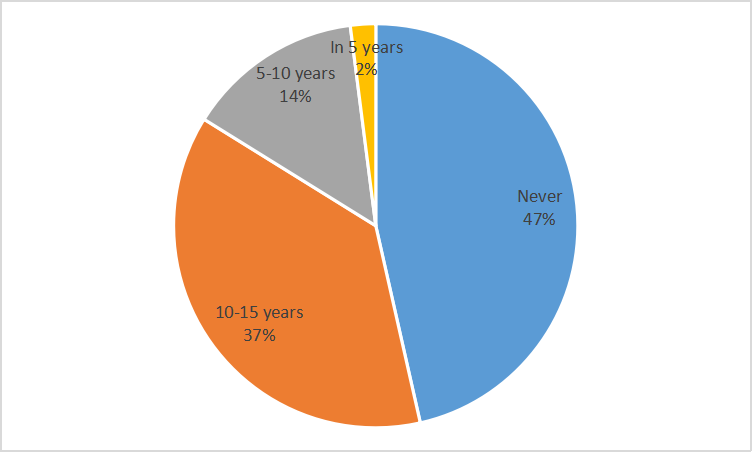
Figure 4 Comparison of Mattress Replacement Frequency in China and U.S.
2) Rising industrial concentration:
At present, China’s sofa industry is fragmented. CR4 (the concentration ratio of the top four manufacturers) in China was only 30% in 2021, with Man Wah holding the largest market share (about 12%); the concentration of U.S. sofa industry was higher, with CR4 reaching 51% and CR10 reaching 79% in 2017, and the market share of top manufacturers la-z-boy/Ashley/Man Wah reached 21%/11%/10% respectively.
In terms of the mattress industry, the U.S. market is dominated by a few top brands, while Chinese mattress market is inundated with small and medium-sized manufacturers.
The top 5 brands in U.S., (CR5), Sealy, Simmons, Serta, Tempur-Pedic and Sleep Number, together occupied 69.40% of the mattress market. CR3 and CR8 in China’s mattress market are only 11.43% and 18.66%. The market share of top three brands – Sleemon, Serta and DeRucci – is 4.38%, 3.88% and 3.17% respectively.
With the improvement of residents’ consumption levels and the broad demand for mattress replacement, top manufacturers with advantages in brand, channels, and services are expected to usher in a significant growth in the next few years.
May 10, 2023
Headline CPI Dips To 2-Year Low; Shelter Costs Roll Over
by Tyler Durden
Wednesday, May 10, 2023 – 08:39 AM
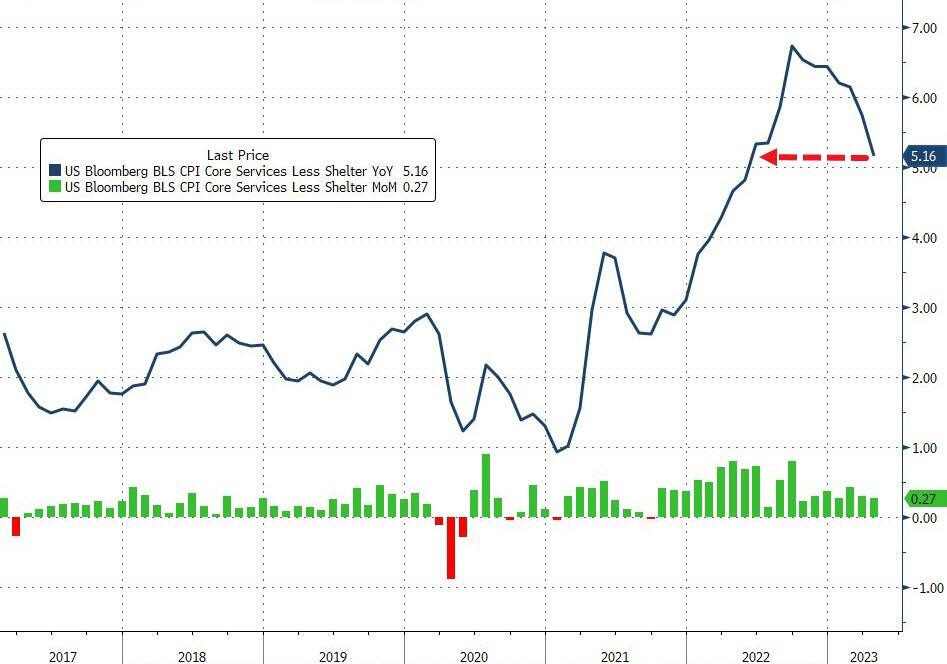
Another month, another inflation print to jawbone over. The Fed’s new favorite signal from The BLS is Core Services CPI Ex-Shelter, and this morning’s print is ‘good’ news with the YoY growth at the slowest since May 2022….
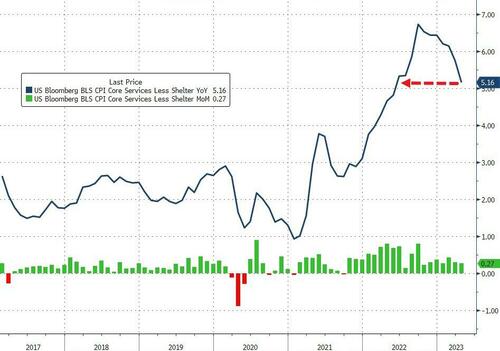
Source: Bloomberg
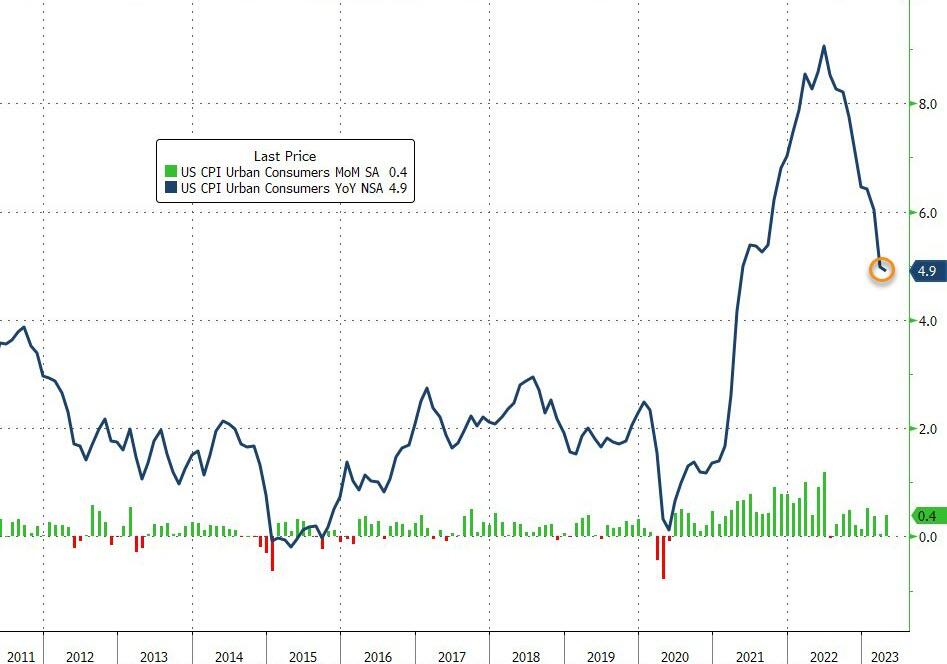
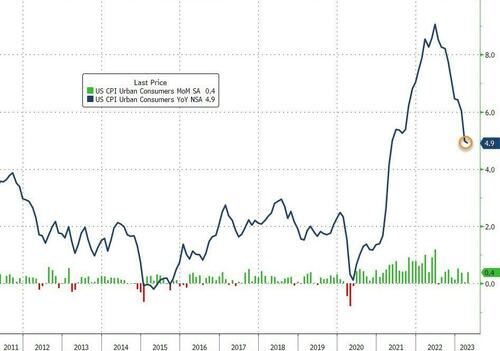
Headline CPI was expected to accelerate in April (+0.4% MoM exp), and met expectations with the drop in YoY CPI slowing dramatically (though the 4.9% print was slightly cooler than the 5.0% YoY exp)…
Source: Bloomberg
The all items index increased 4.9 percent for the 12 months ending April; this was the smallest 12-month increase since the period ending April 2021.
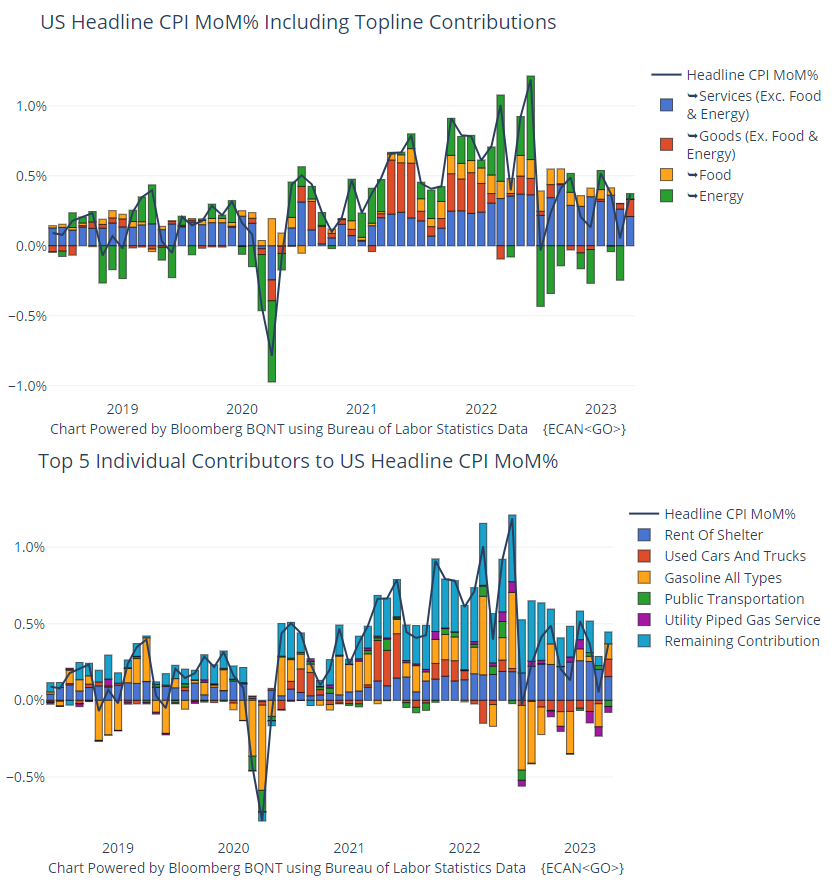
Energy (and Gasoline) was the main drivers to the downside while Shelter costs remain high…
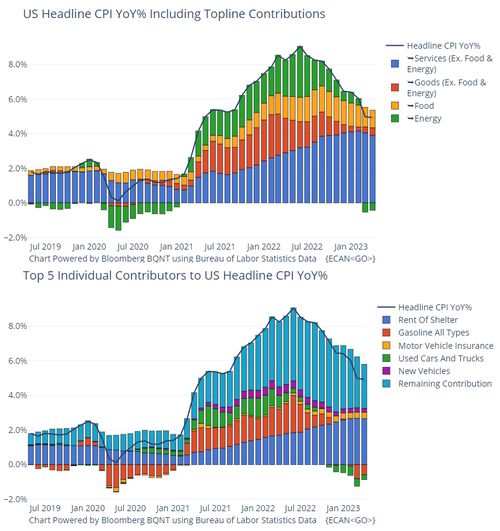
The headline print is below pretty much all the major f0orecast:
- 5.1% – Goldman Sachs
- 5.1% – Citigroup
- 5.1% – JP Morgan Chase
- 5.1% – Morgan Stanley
- 5.0% – Barclays
- 5.0% – Bank of America
- 5.0% – Credit Suisse
- 5.0% – Bloomberg Economics
- 5.0% – HSBC
- 5.0% – UBS
- 5.0% – Wells Fargo
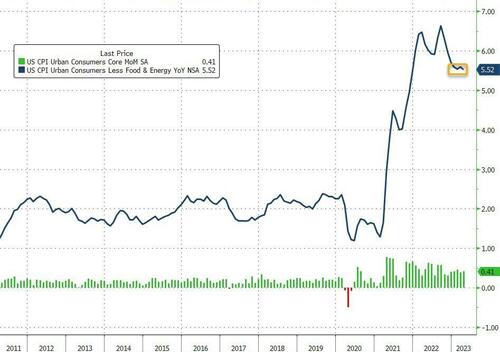
Core CPI was also expected to rise by 0.4% MoM in April, and met that expectation with YoY up 5.2% – very sticky.
The energy index decreased 5.1 percent for the 12 months ending April, and the food index increased 7.7 percent over the last year.
Source: Bloomberg
The index for all items less food and energy rose 0.4 percent in April, as it did in March.
- The shelter index increased 0.4 percent over the month after rising 0.6 percent in March.
- The index for rent rose 0.6 percent in April, and the index for owners’ equivalent rent rose 0.5 percent over the month.
- The index for lodging away from home decreased 3.0 percent in April after rising in each of the previous four months.
The shelter index was the largest factor in the monthly increase in the index for all items less food and energy… as we noted last month, the shelter index has now topped out…
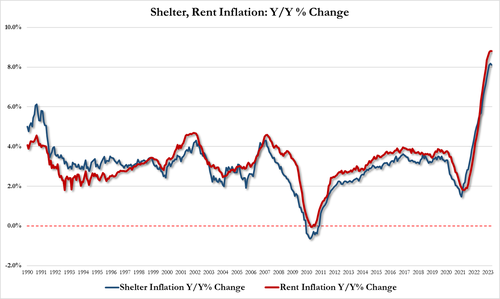
But, just to add some confusion to the pot, Owners Equivalent Rent rose 8.1% YoY – a new record high…
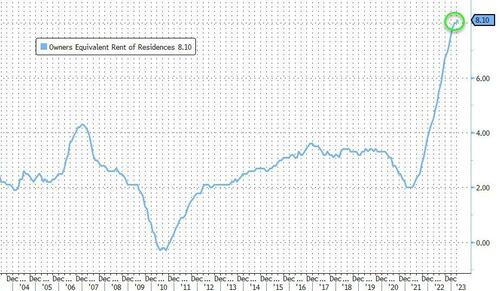
Among the other indexes that rose in April was the index for used cars and trucks, which increased 4.4 percent, and the index for motor vehicle insurance which increased 1.4 percent. The indexes for recreation, household furnishings and operations, personal care, apparel, and education also increased in April.
Several indexes declined in April, led by the airline fares index which fell 2.6 percent over the month after rising in February and March.
- The index for new vehicles declined 0.2 percent and the index for communication decreased 0.1 percent in April.
- The medical care index was unchanged in April, after falling 0.3 percent the previous month.
- The index for hospital services rose 0.5 percent over the month, after a 0.4-percent decline in March.
- The prescription drugs index increased 0.3 percent in April, while the physicians’ services index was unchanged.
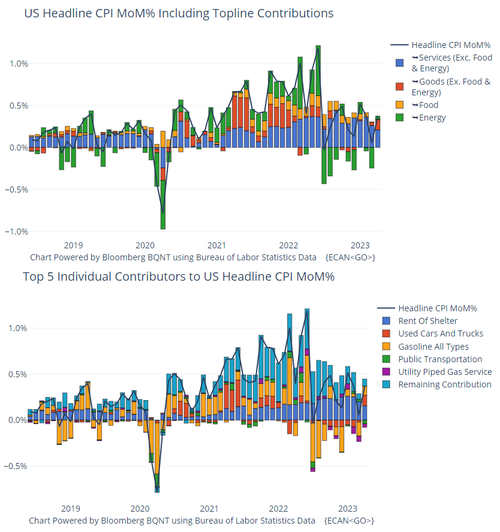
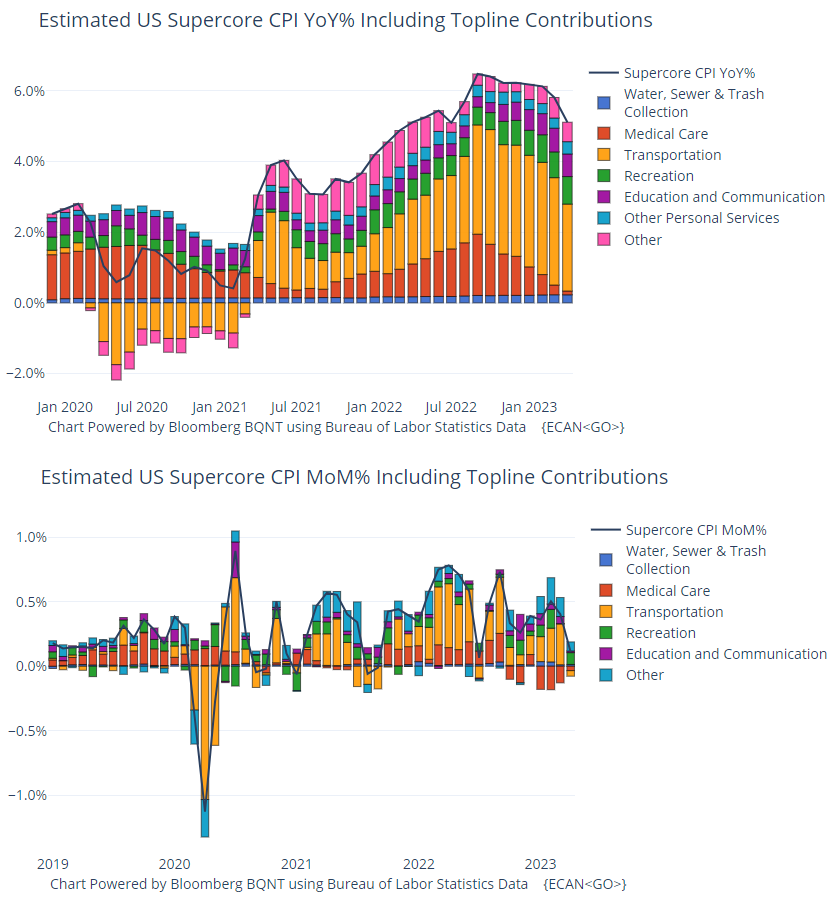
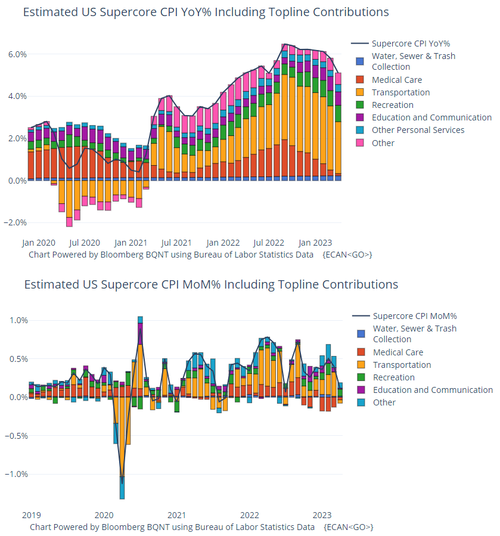
The so-called SuperCore inflation also slowed to 5.0% YoY with Transport and Medical Care costs dropping MoM…
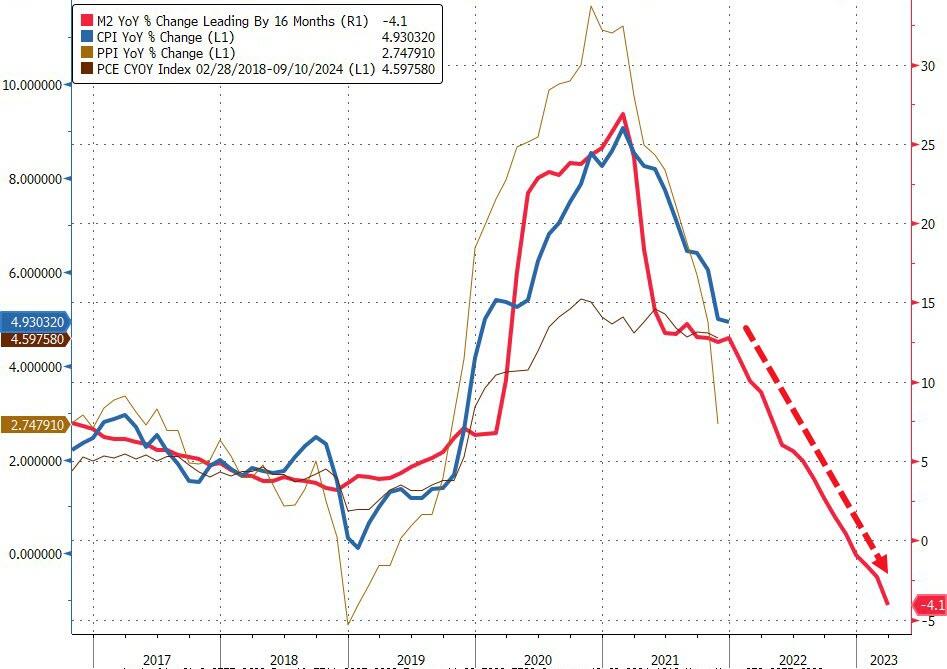
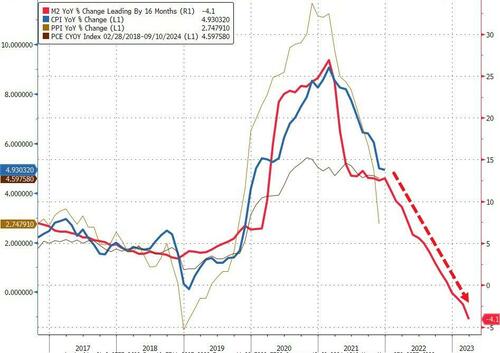
Is M2 signaling that the ‘stickiness’ is over and a tsunami of deflation is about to hit?
Source: Bloomberg
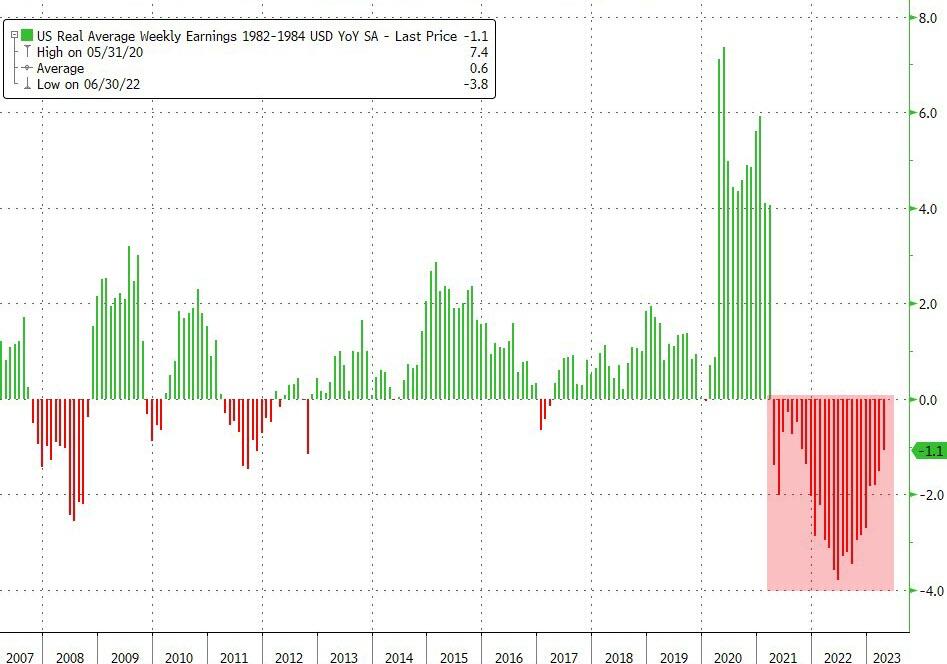
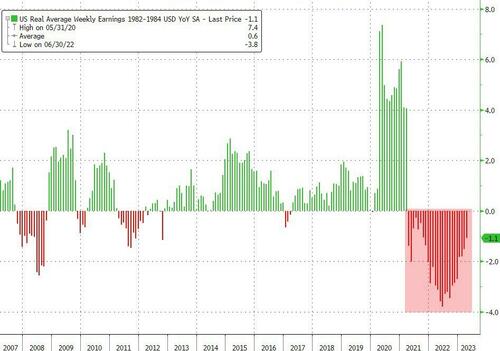
Finally, inflation continues to outpace Americans’ rising wages – for the 25th straight month…
Source: Bloomberg
May 9, 2023
Leading Global Bedding Company Tempur Sealy to Acquire Mattress Firm, the Nation’s Largest Mattress Specialty Retailer
May 09, 2023 6:36 AM ETTempur Sealy International, Inc. (TPX)
– Significantly Expands Consumer Touchpoints and Accelerates U.S. Omni-Channel Strategy
– Simplifies Consumer Purchase Journey and Facilitates Innovation
– Streamlines Operations and Drives Adjusted EPS Accretion
– Tempur Sealy (TPX) to Host Conference Call to Discuss First Quarter 2023 Results and the Transaction at 8:00 a.m. Eastern Time Today, May 9th
LEXINGTON, Ky., May 9, 2023 /PRNewswire/ — Tempur Sealy International, Inc. (NYSE: TPX, “Company” or “Tempur Sealy”) and Mattress Firm Group Inc. (“Mattress Firm”) today announced that Tempur Sealy has signed a definitive agreement to acquire Mattress Firm, the nation’s largest mattress specialty retailer, in a cash and stock transaction valued at approximately $4.0 billion.
The transaction is expected to be funded by approximately $2.7 billion of cash consideration (subject to adjustments, including the repayment of Mattress Firm’s debt and other customary items) and $1.3 billion in stock consideration issued to Mattress Firm shareholders, reflecting the issuance of 34.2 million shares of common stock based on the closing share price of $37.62 as of May 8, 2023. The transaction is currently anticipated to close in the second half of 2024, subject to the satisfaction of customary closing conditions, including applicable regulatory approvals. Following the close of the transaction, Mattress Firm is expected to operate as a separate business unit within the Company.
Founded in 1986, Mattress Firm is the largest mattress specialty retailer in the U.S., operating over 2,300 brick-and-mortar retail locations and a growing e-commerce platform. Mattress Firm’s more than 6,200 highly trained retail sales associates provide personalized service to help consumers choose the ideal bedding products across their robust assortment of market-leading brands.
This combination will complement Tempur Sealy’s extensive product development and manufacturing capabilities with vertically integrated retail. Together, Tempur Sealy and Mattress Firm’s combined global footprint will include approximately 3,000 retail stores, 30 e-commerce platforms, 71 manufacturing facilities, and 4 state-of-the-art R&D facilities worldwide. These combined operations will be supported by more than 21,000 best-in-class employees with a collective focus on providing breakthrough sleep solutions to consumers in over 100 countries.
Tempur Sealy Chairman and CEO Scott Thompson said, “This transaction advances all four of our key long-term initiatives: to develop the highest quality bedding products, promote brands with compelling marketing, optimize our diverse omnichannel distribution platform, and drive EPS growth. Consistent with our M&A strategy, this acquisition will make Tempur Sealy more competitive by bringing us closer to consumers and facilitating continued innovation.”
Thompson concluded, “We are excited by the long-term growth prospects for our global vertically integrated Company. This combination will accelerate our growth trajectory and enhance operating cash flow. Mattress Firm has been a valued retail partner for more than 35 years, and we look forward to welcoming their talented workforce of more than 8,100 employees to the Tempur Sealy family.”
Mattress Firm CEO John Eck said, “We know that every customer has unique needs and wants when it comes to a sleep solution that is perfect for them. As part of Tempur Sealy, our customers will benefit from our combined portfolio of highly recognized brands and products, extensive omni-channel capabilities, industry leading innovation and best-in-class teams. Under Tempur Sealy’s leadership, our combined company will be in a unique position to take advantage of our shared values and complementary capabilities to better address consumers’ needs and drive growth.”
Strategic Rationale
The combination with Mattress Firm is expected to enhance Tempur Sealy’s ability to meet consumers’ needs, expand growth opportunities, and streamline operations.
We expect to leverage the individual strengths of Tempur Sealy and Mattress Firm to realize six strategic benefits through this acquisition.
- Expanding Consumer Touchpoints. Mattress Firm’s and Tempur Sealy’s combined consumer touchpoints will create opportunities to keep pace with consumers’ evolving preferences. Being closer to the U.S. bedding consumer will also broaden opportunities to develop lifetime relationships with consumers.
- Accelerating U.S. Omni-Channel Strategy. Mattress Firm’s more than 2,300 brick-and-mortar retail stores, robust e-commerce capabilities, and sleep education and sleep tracking platforms complement Tempur Sealy’s direct-to-consumer operations, enabling a seamless omni-channel ecosystem that meets the needs of more consumers nationwide.
- Simplifying the Consumer Purchase Journey. This combination facilitates targeted marketing efforts to drive incremental brand awareness through blended advertising and share of voice, and enhance consumer understanding of bedding innovation, including health and wellness benefits. Further, the combination brings together Tempur Sealy’s and Mattress Firm’s highly trained retail sales and customer service teams to expand customer service capabilities, facilitate improved consumer outcomes, and simplify the consumer purchase journey.
- Facilitating Consumer-Centric Innovation. The alignment of new product development and testing will enable a more targeted, end-to-end innovation approach and enhances opportunities to invest in, test, and refine new sleep technologies.
- Streamlining Operations and Enhances Supply Chain Management. Enhanced visibility to consumer demand creates opportunities for more agile and fortified supply chain management. Combined scale and vertically integrated infrastructure across the combined company drives operational efficiencies across logistics, transportation, warehousing, supply chain planning, sourcing, and product development, streamlining the order-to-delivery process for all customers.
- Driving Adjusted EPS Accretion. Tempur Sealy has a strong track record of creating long-term value from highly strategic M&A activities. This acquisition is expected to be accretive to adjusted EPS before synergies in the first year post close. Adjusted for the impact of run-rate synergies, this acquisition is expected to deliver low double digit adjusted EPS accretion.
Cost Synergies
Tempur Sealy expects to begin realizing synergies by the end of year two after closing and to realize at least $100 million in annual run-rate synergies by the end of year four after closing. The Company expects to achieve synergies by leveraging its global scale and vertically integrated infrastructure to drive efficiencies through logistics, product lifecycle management, manufacturing optimization, and sourcing initiatives.
Transaction Overview
Under the terms of the agreement, Tempur Sealy will purchase Mattress Firm for an enterprise value of approximately $4.0 billion. The transaction is expected to be funded by approximately $2.7 billion of cash consideration (subject to adjustments including the repayment of Mattress Firm’s debt and other customary items.) and $1.3 billion in stock consideration issued to Mattress Firm shareholders, reflecting the issuance of approximately 34.2 million shares of Tempur Sealy common stock based on the closing price of $37.62 per share as of May 8, 2023. Following the transaction, Mattress Firm’s and Tempur Sealy’s shareholders will own approximately 16.6% and 83.4% of the combined company, respectively, based on the Company’s shares outstanding at the time of signing. Tempur Sealy expects to expand its existing Board of Directors by appointing two mutually-agreed Mattress Firm directors to the Tempur Sealy Board following the closing of the transaction.
Tempur Sealy plans to fund the cash portion of the transaction using a combination of cash on hand and proceeds from a combination of new secured and unsecured financing, a portion of which will be used to repay Mattress Firm’s outstanding debt. The combined company’s expected net leverage at closing per the Company’s credit agreement after giving effect to the transaction is expected to be between 3.0x and 3.25x adjusted EBITDA. Tempur Sealy expects to return to its net leverage target range of 2.0x to 3.0x adjusted EBITDA in the first 12 months after closing, supported by the increased earnings and free cash flow outlook of the combined company.
Timing and Approvals
The transaction has been approved by the board of directors of Tempur Sealy and Mattress Firm. Mattress Firm shareholders holding more than 80% of Mattress Firm’s outstanding shares have signed voting agreements in support of the transaction. The transaction does not require Tempur Sealy shareholder approval.
The transaction is expected to close in the second half of 2024, subject to the satisfaction of customary closing conditions and applicable regulatory approvals, including receipt of clearance under the Hart-Scott-Rodino Antitrust Improvements Act of 1976.
The Company has received a request for additional information and documentary material from the Federal Trade Commission (“FTC”) in connection with the FTC’s review of the transaction. The Company expects to work cooperatively with the FTC to complete the acquisition.
 Everchem Updates Archive
 Sign Up for Email Updates