
The Urethane Blog
April 13, 2026
Somnigroup to buy Leggett & Platt in ~$2.5B all-stock deal
Apr 13, 2026, 6:40 AM ETSomnigroup International Inc. (SGI) Stock, LEG StockBy: Preeti Singh, SA News Editor

Somnigroup International (SGI) has agreed to acquire Leggett & Platt (LEG) in an all-stock transaction worth ~$2.5B, based on Somnigroup’s April 10 closing price.
Under the terms of the agreement, Leggett & Platt shareholders will receive 0.1455 shares of Somnigroup common stock in exchange for each share of Leggett & Platt common stock they own.
As a result, Leggett & Platt’s shareholders will own ~9% of the combined company on a fully diluted basis. The agreement has been unanimously approved by the boards of directors of both companies.
The transaction is currently anticipated to close by year-end 2026, subject to the satisfaction of customary closing conditions, including approval by Leggett & Platt’s shareholders and receipt of applicable regulatory approvals.
Upon closing, Leggett & Platt is expected to operate as a separate business unit within Somnigroup, similar to Tempur Sealy, Mattress Firm, and Dreams, and to maintain its offices in Carthage, Missouri.
Leggett & Platt’s chairman and CEO, Karl Glassman, will continue to lead Leggett & Platt following the closing date and will assist with a seamless transition to a new CEO of the Leggett & Platt business unit within twelve months of the closing date.
Somnigroup and Leggett & Platt have collaborated for nearly 50 years to drive innovation in the bedding market. After giving effect to the transaction, including elimination of intercompany sales, the combined company generated 2025 net sales of around $11.2B, ~$1.7B of adjusted EBITDA, and $1.1B of operating cash flow.
The combination is expected to be accretive to adjusted EPS before synergies in the first year post close and presents cost synergy opportunities with an expected net positive impact on adjusted EBITDA of $50M on a fully implemented annual run-rate basis.
April 12, 2026
First Quarter Transactions

2/4/26
Stahl
(68.5% stake fromhttps://www.pnc.com/en/corporate-and-institutional/topics/specialty-segments/chemicals-and-plastics.html?WT.mc_id=CIB_Offline_0065
Wendel; 16.1% from
BASF SE; 14.6% from
Clariant AG)
Henkel AG & Co.
KGaA
EUR 2.1B –
- Henkel AG & Co. KGaA has agreed to acquire Stahl, a Netherlands-based producer of
high-performance specialty coatings for flexible materials, serving companies across
the automotive, fashion & lifestyle and packaging markets. Stahl’s portfolio consists
of leather finishing coatings, performance coatings as well as high-performance
paper packaging & graphics coatings. - “With the acquisition of Stahl, we will further strengthen our Adhesive Technologies
business unit in line with our strategic agenda for purposeful growth. It will enable us
to expand into the attractive adjacent category of specialty coatings with product
offerings in core as well as in new end-markets, driving further growth in our
Adhesive Technologies business unit.” said Henkel CEO Carsten Knobel. - Stahl employs approximately 1,700 people and generates annual revenue of EUR 725
million (2.9x EV / Revenue).
1/27/26
Universal Chemicals
and Coatings
PRO-SET
Formulated
Resin Systems
(Iron Path
Capital)
- –
- PRO-SET Formulated Resin Systems (“PFRS”) has acquired Universal Chemicals and
Coatings, an Illinois-based manufacturer of custom industrial coatings, laminating
adhesives and container linings. - This marks the third acquisition for PFRS, following its acquisition of Gougeon
Brothers, Inc. in May 2025 and Wessex Resins and Adhesives in December 2025.
Furthers PFRS’ strategy to build a global formulated resin systems business focused
on highly specified formulated products for fabricating, bonding, sealing, coating and
repair of advanced non-metallic and metallic composite structures for marine,
aerospace, defense, electronics and industrial applications.
1/22/26
Chemical business of
Kyocera Corporation
Sumitomo
Bakelite
Company Limited
$189M –
- Sumitomo Bakelite Company Limited has agreed to acquire the Chemical business of
Kyocera Corporation. Kyocera’s chemical business, based in Japan, manufactures
epoxy-resin molding compounds for encapsulation of semiconductor devices,
bonding pastes for semiconductor devices and resins for industrial use. - Enhances Sumitomo’s presence in the information & communications technology
industry.
1/14/26
Key Polymer
(DalFort Capital
Partners)
Seatex
(The Riverside
Company)
- –
- Seatex has acquired Key Polymer, a Massachusetts-based manufacturer of highperformance
adhesives, sealants and coatings for a diverse range of industries. - “Key Polymer is an excellent complement to the Seatex platform,” said Riverside
Partner Craig Kahler. “This represents our first follow -on acquisition since we
acquired Seatex in October 2024 and materially advances our plans to expand the end
market and geographic reach of the platform.”
3/19/26 Diversified Plastics
The Rubber
Group
(River Associates)
- –
- The Rubber Group has acquired Diversified Plastics (“DPI”), a Montana-based
precision plastic manufacturer offering urethane casting, thermoforming, machining
and injection molding. - “The combination is about growth. We are bringing together complementary
capabilities to better serve customers,” said Rob Pruyn, President, The Rubber
Group. “By combining rubber, plastics, and urethane capabilities, we can offer a
broader range of engineered solutions to both customer bases, and the cross-selling
opportunity is significant.” - DPI will now be known as Diversified Plastics Industrial Solutions.
April 9, 2026
US announced final anti-dumping duties on MDI imported from China
April 9, 2026 1 min read

On April 8, 2026, The US Department of Commerce announced that it has issued its final affirmative anti-dumping determination on methylene diphenyl diisocyanate (MDI) from China, imposing duties of 85.11% on major producers and 159.04% on others, a sharp reduction from preliminary rates. The final ruling sets a dumping rate of 85.11% for producer and exporter Covestro Polymers (China) Co., Ltd., producer Wanhua Chemical Group Co., Ltd., and its exporter Shandong Mingko Co., Ltd. All other Chinese producers and exporters received a rate of 159.04%. The products involved fall under US Harmonized Tariff Schedule numbers 2929.10.8010 and 3909.31.0000.
These final rates represent a significant reduction from the preliminary dumping duties of 376.12% to 511.75% announced in September 2025.
The US initiated the anti-dumping investigation on MDI from China on March 4, 2025, and issued its affirmative preliminary determination on September 16, 2025.
April 8, 2026
The Great Toilet Paper Shortage
4/8/2026|Updated: 4/8/2026
It was six years ago and most nations of the world had gone into lockdown to beat back a respiratory virus. Nothing like this had ever been tried before, and this is for a reason. Every pandemic protocol recommended against such tactics. This of course included work-from-home orders and a huge disruption in normal work flows, including the forced closure of small businesses.
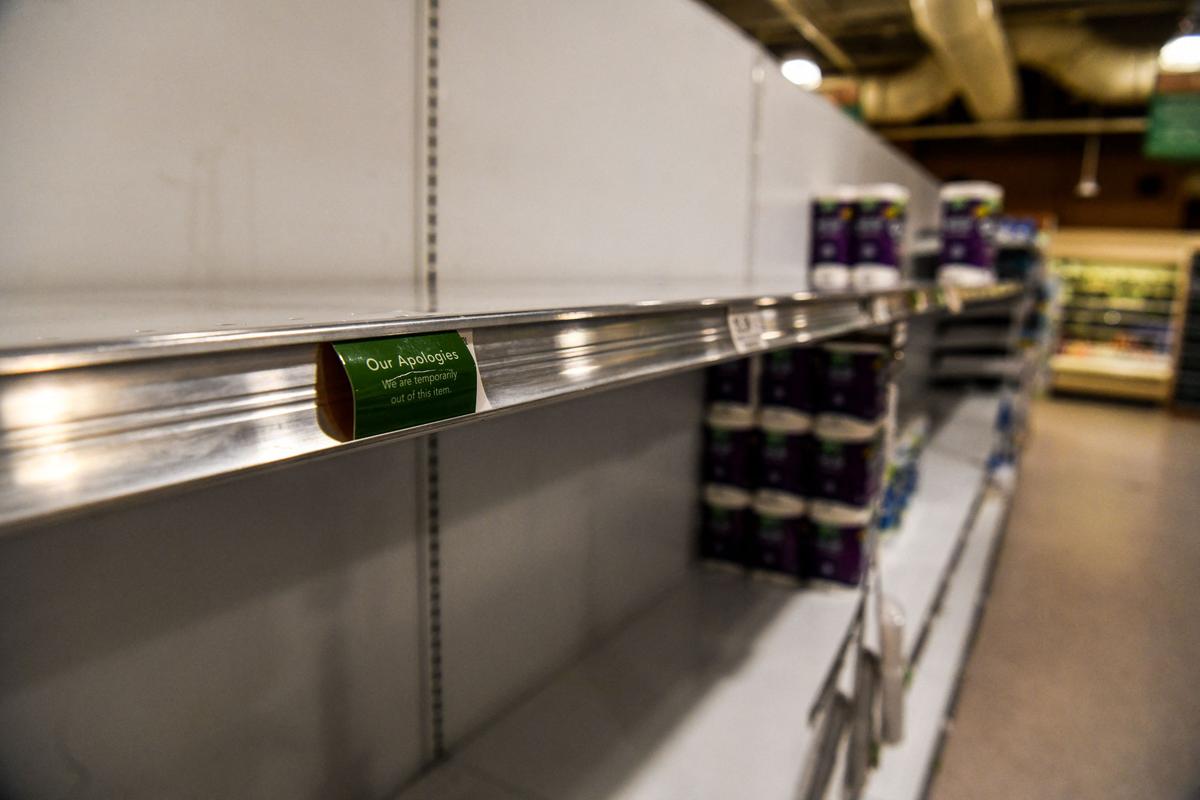
In the early weeks of these wild times, something unusual happened. You would go to the store and could not find toilet paper. You would go to another and it wasn’t there either. Hardly anyone actually stocks up on something that had always been available, so this was something of a shock. It came just as so much else seemed to be breaking, so it seemed in a sense like the world was falling apart.
Suddenly you were seeing toilet paper on sale for high figures on Facebook Marketplace. People were texting my phone with offers. Messages were coming in from all quarters wondering where they could get it. People were driving long distances just on a rumour that some was in stock somewhere.
Who knew just how thin the veneer of civilization truly was? People were losing their minds about what was surely a brief interruption in the availability of a product invented little more than 100 years ago, before which time people would use water or the “Farmer’s Almanac” hanging on the wall of the outhouse. Blech, but come on people!
Folks began to wonder how this had happened. The first theories involved supply chain breakages. Maybe truckers stopped showing up. Maybe we are more dependent on imports than we knew.
Or maybe bad people were stockpiling toilet paper. There were social media posts with pictures of people who had filled their entire garage with toilet paper, thus triggering genuine outrage. Stores that had toilet paper started rationing it. Or raising prices to effectively ration, thus prompting claims of gouging.
This went on for maybe two weeks of extreme deprivation and near panic. Had the forces of supply and demand broken? Was civilization utterly collapsing with this just as a first sign?
The actual explanation is both much simpler and more interesting. As it turns out, the workplace is where most people find the need for toilet paper. Workplace rolls are typically much different. They are industrial-sized rolls using machines wholly unlike anything one would use at home. They also use cheaper-quality paper.
But with millions suddenly working from home and avoiding the office altogether, the demand for workplace commercial varieties of toilet paper collapsed. Warehouses were stuffed with it but demand was nowhere in sight. Conversely, the demand for vast quantities of home use soared even as stay-at-home people decided to stock up. Experience suggests that households staying home will use about 40 percent more toilet paper of the type specifically manufactured for that purpose.
Most stores keep just enough to match supply and demand. Now we had a market shock. Even manufacturers had not prepared and suddenly faced a demand that they could not meet under normal production patterns. They certainly had not anticipated this.
The result was exactly as we saw. The markets had not broken. They were working entirely as they should. Manufacturers retooled and responded. Retailers rushed to stock up. In a few weeks, the panic died down and a new equilibrium was established.
What does this event teach us about economics? Everything. Higher demand and fixed supply drive shortages and higher prices. Higher prices with a premium over costs of production calls forth increased supply. This happens not instantly but in time, as fast as possible so long as the market is working.
Which is precisely why we need markets always to work. This was an unusual and dramatic change but actually the market as a driving force of production decisions operated with great elan and beauty.
As Adam Smith would say, it was almost like an invisible hand was in control. No one needed to know the names of the people running the paper mills and give them a call. We are all only consumers of the product. The prices alone do the work to nudge the producers and retailers in the right direction.
Prices are the signs and symbols of the dynamics of human life itself, instructing and revealing the secrets of the material world to entrepreneurs and managers.
Many societies in history have attempted to replace prices and markets with plans and commands. It works until there is a change in conditions. Here’s the rub: there is always change. Every day, every minute, there is change. The point of the institution of markets is to investigate and instantiate that change in signs and symbols to poke and nudge producers about the right path forward.
What seemed to many to be a major example of markets having broken was actually the opposite. It revealed how markets work brilliantly. Even the most extreme exogenous shock that no one anticipated only caused a fortnight-long disruption in a good that society had decided was essential to human well-being.
I highly regret what our central managers of the microbial kingdom did to us in those days. They are the villains in this story. The free market, on the other hand, is the hero. It adapted and served the human family with essential goods, not immediately but as quickly as humanly possible.
This is the real story of the great toilet-paper shortage of 2020. So many people say it as a failure of capitalistic forces when, in the instance of this product, really it was one of its greatest victories.
April 7, 2026
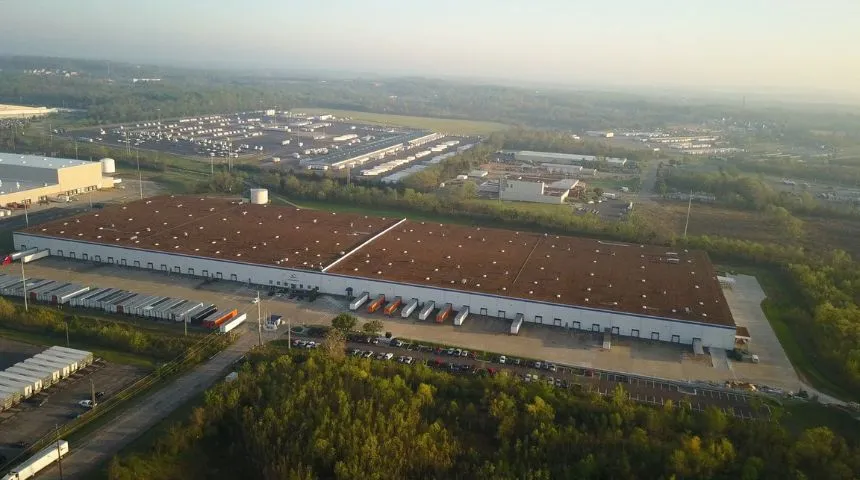
Sinomax is consolidating manufacturing into its Tennessee facility. Photo courtesy of Sinomax.
Sinomax consolidates 2 domestic production facilities into 1 in Tennessee
Sheila Long O’Mara //Executive Editor, Furniture Today//April 2, 2026
PHOENIX – Foam bedding producer Sinomax is consolidating its domestic manufacturing operations into its Tennessee facility, a move that will eliminate 89 manufacturing jobs at its location here, according to the company and a Worker Adjustment and Retraining Notification (WARN) filing.
The company said it is shifting U.S. production to its 1-million-square-foot LaVergne, Tenn., plant as part of a broader effort to improve efficiency and streamline operations.
The transition impacts about 89 employees working in manufacturing roles in Phoenix. The company said it will work with affected employees over the coming month to assist with their transition to new employment opportunities.
Sinomax cited operational challenges in Arizona as a key factor in the decision, particularly difficulties securing permits tied to foam pouring, a key component of its manufacturing process.
“Because of these issues, we cannot consider this location to be a long-term strategic investment in manufacturing,” the company said in a statement.
While manufacturing will cease in Phoenix, the company said the facility, opened in 2021, will continue to serve as a distribution hub for the foreseeable future.
“Although we regret this action had to be taken, we believe it is in the best interest of the health and long-term growth of the organization,” the statement said.
Sinomax’s LaVergne, Tenn., facility opened in 2017 and is the company’s first U.S. factory.
 Everchem Updates Archive
 Sign Up for Email Updates