
The Urethane Blog
March 23, 2021
Everything you ever wanted to know about foam mattresses
Turns out there’s a lot more to foam than what meets the eye. 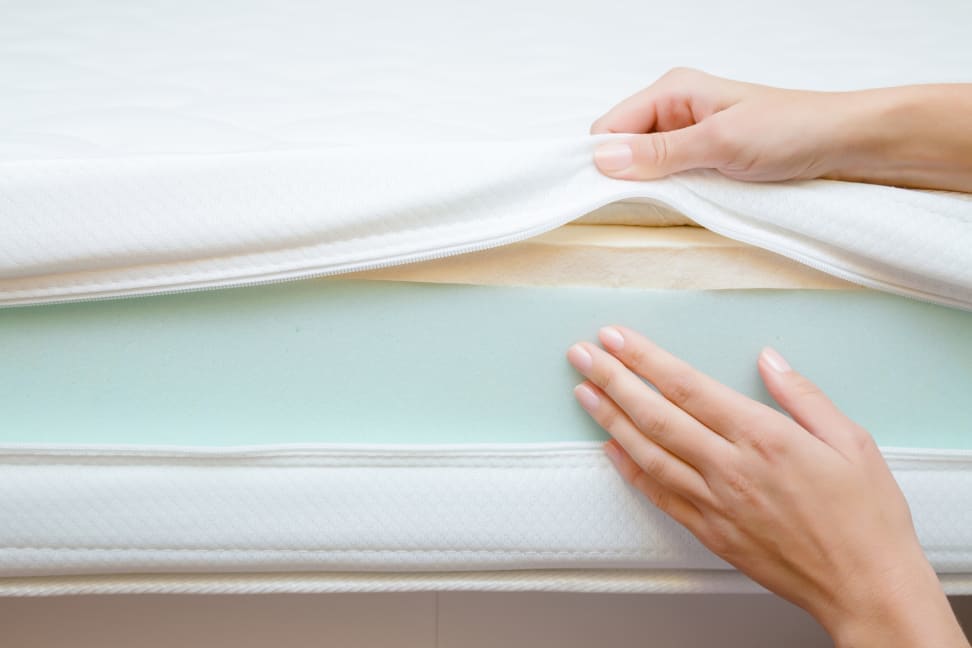 Credit: Getty Images / FotoDuets
Written by Lindsey Vickers
Updated March 22, 2021
Foam is one of those materials that’s almost everywhere in our lives: home insulation, the seats in cars and planes, beneath carpets, and of course, in mattresses. As the sleep writer at Reviewed, I spend a lot of time testing and analyzing various foam mattresses, and it’s a word I’ve typed who knows how many times in the last year at my job. But it got me thinking: What actually is foam? Where does it come from, and how’s it made?
Here’s everything you wanted to know (and then some) about foam and how it could help you doze off.
What is foam and how is it made?
Foam manufacturing shares some qualities with baking: You put together a handful of ingredients, mix them, and they go from a batter-like blend to the final product. Mattress foams are made with just three components: polyols, the basic building blocks, which are most often derived from oils, like petroleum; isocyanates, which are reactants that trigger chemical changes when mixed with the polyols; and blowing agents, which create gas bubbles in the foam. Mix them together in the right proportions and, voilà, you’ve got foam. Latex, which is less common in mattresses and has different components, can also be made into a foam. To drastically oversimplify, foam is like “bricks of bubbles,” says JT Marino, co-founder of mattress-in-a-box company Tuft & Needle.
Manufacturers can change the sensation of a foam by altering the proportions of different ingredients. The firmness, in particular, is controlled by the ratio of isocyanates to polyols. “Essentially, the more isocyanate, the more firm that foam will be; the less isocyanates, [the softer] the foam will be,” Marino says. There are two types of isocyanates that have different chemical structures that may be used in foam, MDI (methylenediphenyl diisocyanate) and TDI (toluene diisocyanate), he says. MDI plays a role in giving foams their “memory” and is often found in more expensive products, while TDI is generally used in cheaper foams, he says.
After the ingredients are mixed, and the foam has cooled (the reaction kicks off a lot of heat), manufacturers are left with massive blocks of foam. Those are cut down into smaller pieces, called “buns,” says Jamie Diamonstein, the chief product officer at mattress company Leesa. The buns are cut down once again to make the piece of foam that is the right thickness, width, and height for a given mattress, he says. After that, it’s just a matter of adhering the foam to additional pieces of foam, or other mattress components, like springs in the case of hybrid mattresses, and wrapping it up in a big fabric sack—which is the encasement you see as a consumer.
What types of foam are used in mattresses?
There are two main types of foam found in beds: polyurethane foam and memory foam. They rely on the same fundamental ingredients, and both have some ability to contour and a forgiving, supple surface, but the sensations they bring to sleep are completely different.
Polyurethane is known for having a springier surface, and can be cheaper than memory foam (in part because the isocyanate used can be TDI, whereas memory foam requires MDI, which is more expensive), Marino says.
“Memory foam,” a term you’ve probably heard before, can also charade under two other names: viscoelastic foam and temper foam. This type of foam has the sink-in sensation a Tempur-Pedic mattress, the original memory-foam mattress, might bring to mind. The material was developed in the 1960s by NASA to absorb shock and improve the comfort of NASA’s airplane seats. The formula was eventually released to the public market so that other manufacturers could use the material in products. It didn’t take off as a material in mattresses until the 1990s, but now it’s practically ubiquitous. It continues to be known for its ability to conform to the body, which some manufacturers claim relieves pressure points.
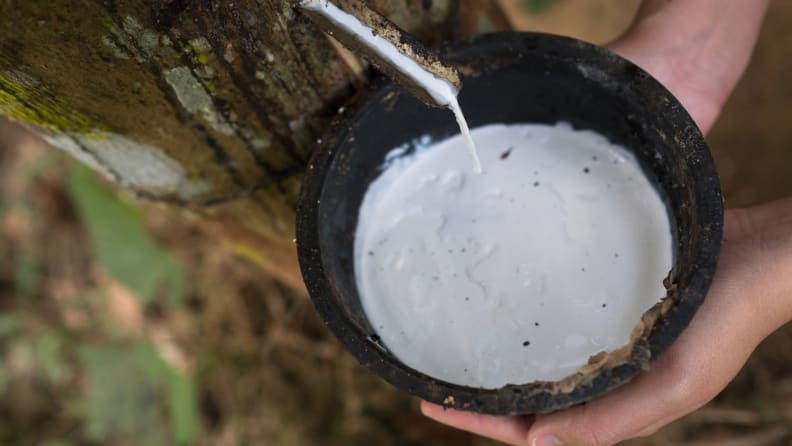
I was surprised to learn that latex is also a foam. It’s less common in mattresses (though it can be found) than polyurethane and memory foam and tends to be more expensive. Like polyurethane foams, synthetic latex often uses petroleum, but natural latex can be more environmentally-friendly as it’s sourced from rubber trees. There are two methods of producing latex: dunlop and talalay. Dunlop is the older and more traditional method. In it, the mixture is poured into a mold which it completely fills. The resulting latex is generally firmer. Talalay latex starts the same way (mixture poured into a mold) before the process diverges. After the mold is filled it’s vacuum-sealed, creating an even spread throughout the mold, that then goes through a cycle with freezing, heating, and cooling that cause the material to set. The better distribution of latex caused by the vacuum sealing creates a product that’s generally considered softer and that may have a more uniform sensation.
Are there other differences between foams?
Another more technical consideration is foam’s “cell structure.” Within memory foam and polyurethane foam, there are two subtypes of foam structure, referred to as open- or closed-cell, that you can’t see but that may still make a difference in your sleep experience when it comes to temperature regulation. Different cell structures are the result of how the foam responds to blowing agents and the shape the bubbles take when the material is fully set.
In open-cell foam, the bubbles that form during manufacture essentially pop, leaving a webbing that makes the inside of the foam more connected and less dense, as opposed to closed off and totally encased. “If air can flow through the mattress, whether you shift and move and it kind of [pushes] more air through it, or just air in the room just slowly kind of moves through … the faster the heat will move away from your body,” Marino says. While polyurethane and memory foams can be open- or closed-cell, latex is open-cell (and may even have larger bubbles than other foams, amplifying its cooling ability).
Closed-cell foam, in contrast, retains the shape of most of the individual bubbles that are created during manufacturing. These bubbles tend to hold heat because the cells are isolated compartments rather than an interconnected network. (This is the same reason closed-cell foam can be better for building insulation.) According to Marino, the openness of a foam mattress’s cell structure is what plays the biggest role in heat retention. Aside from changing a mattress’s propensity for heat retention, the cell structure won’t make a marked difference in how the mattress feels when you sleep on it.
Most mattress manufacturers don’t advertise whether the foam used in products is open- or closed-cell, so I decided to scope it out through customer service chats on companies’ websites. Reps from Leesa and Tuft & Needle both immediately replied that all the foams used are open-cell. Others were less clear. Dreamcloud and Nectar couldn’t confirm the type of foam used in mattresses, only reiterating more generic details listed on product web pages. The Nectar representative told me, “We don’t get questions like this everyday … you must be very picky with your mattress.” She went on to tell me that there wasn’t really an answer as to whether the mattress cell is open or closed, “because Nectar is plush.”) The bottom line: Figuring out a memory foam or polyurethane foam mattress’s cell structure could prove challenging, but if you’re prone to sleeping hot, finding one that’s open-cell may be worth the effort.
What are the pros of choosing a foam mattress?

Foam mattresses are popular for good reason. The material contours and can relieve pressure points by providing more cushion than, say, a pure innerspring mattress. Plus, many of the solid foam options out there are far cheaper than hybrid mattresses, which combine the best qualities of innersprings and foam.
When shopping for a mattress, you want to look for something that will provide even pressure distribution. Memory foam is particularly good at distributing pressure and providing support, which may make it a solid choice. It also has that unique sinking-in and cradling feeling that’s hard to replicate, so if that sensation is your cup of tea, memory foam may be the way to go.
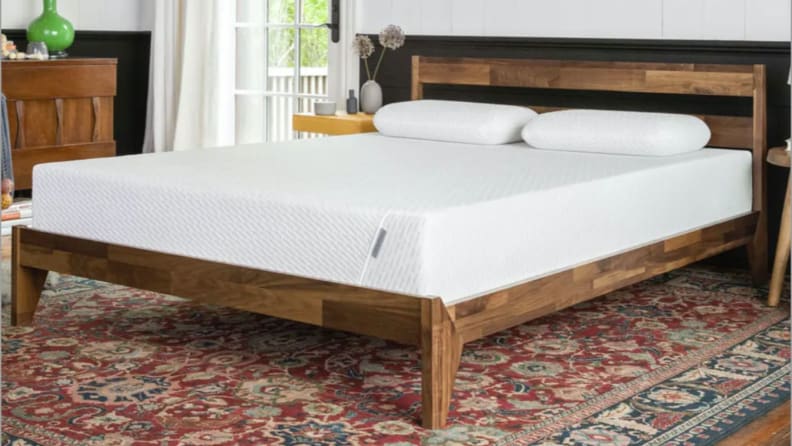
While memory foam is uniquely good at providing a sink-in sensation, it’s not the only foam that has a supportive sleep surface. Our favorite mattress, the Tuft & Needle Original, is a solid-foam mattress that’s surprisingly firm and doesn’t have the same amount of “memory” as actual memory foams (but doesn’t lose the slight surface give), and offers a lot of bang for your buck at $695 for a queen. Of course, there are numerous other options, from the Nectar Mattress, which falls on the softer side, to the Amerisleep AS3, which is on the firmer end of the spectrum. In other words: When it comes to foam, there’s really something for everyone.
What are the cons of choosing a foam mattress?

For all foam’s upshots, it still has one major downside: heat retention. For folks who sleep cold, or live in areas where the summers tend to be cooler (or who have really good climate control in their bedrooms), this may not be a concern. Some manufacturers, like Leesa, claim to integrate design features that mitigate the issue. These include everything from punching small holes through the foam for increased air circulation, to covering it with fabrics designed to wick sweat, to layering ingredients, like graphite or copper, into the foam itself that purport to have temperature regulation properties. But whether or not they actually work is questionable, in my experience. In addition to relying on open-cell foam, Leesa, for example, claims the Leesa Original Mattress and Leesa Hybrid have a “cooling layer of top foam that promotes airflow while you sleep … you get the pressure-relief and body contouring benefits of a memory foam mattress without the sweat.” When I tested the Leesa Hybrid, I didn’t notice any heat retention. But my sister recently got an Original Leesa Mattress and found it sleeps super-hot (to the point that she plans to take advantage of the return policy). I baked on the Tempur-Cloud, despite the company’s claims that it “adapts to your temperature.”
Another potential downside is the environmental cost of manufacturing foam. For the most part, the raw materials to produce polyols are sourced from petroleum oils, Marino says. Sometimes the necessary oils can be derived from castor beans, though they still have an environmental toll due to their growth, topped by the processing they undergo to make the oil. If sustainability is a concern and budget isn’t a major issue, consider shopping for latex mattresses—though be sure you look for natural latex as opposed to the synthetic kind.
Is a foam mattress right for you?

Foam mattresses might be a great fit if you like to sleep on your side (a position researchers found folks spend more than half of each night in, consciously or not) and/or prefer a cushier sleep surface and you never sleep hot. Still, foams can be very firm and can be designed to sleep cooler, and with as many options as there are, there’s something for everyone.
As with everything sleep, it ultimately boils down to your personal preference and how you catch your best zzz’s, and that’s something only you can decide. It can be hard to shop for mattresses online, so just remember that most companies have generous sleep trial periods. At the end of the day (and, ahem, overnight), sleeping on one may just be the way to decide if a particular foam mattress works for you.
The product experts at Reviewed have all your shopping needs covered. Follow Reviewed on Facebook, Twitter, and Instagram for the latest deals, product reviews, and more.
Prices were accurate at the time this article was published but may change over time.
https://www.reviewed.com/sleep/features/what-is-memory-foam-polyurethane-foam-mattress
March 22, 2021
Canadian Pacific Buys Kansas City Southern For $25BN In Largest Deal Of 2021
by Tyler DurdenSunday, Mar 21, 2021 – 10:25 AM
Canadian Pacific Railways has agreed to buy Kansas City Southern for $25 billion ($28.9 billion including debt) in the largest takeover deal this year. The transaction which sees CP take over the smallest of the seven Class 1 railway operators that dominate a significant share of freight activity in the US, is the biggest in CP’s history and will create a 20,000-mile rail network including the first U.S.-Mexico-Canada railroad.
As the FT, which first reported the transaction, notes, the deal marks the latest effort to shake up a structure among the big railroads in the US and Canada that has been unchanged since CSX and Norfolk Southern — the two big operators in the eastern US — took over Conrail and divided it between themselves in 1999.
The transaction gives CP access to the Kansas City, Missouri-based company’s sprawling Midwestern rail network that connects farms in Kansas and Missouri to ports along the Gulf of Mexico. It would also give it reach to Mexico, which made up almost half of Kansas City Southern’s revenue last year, and create the only network that cuts through all three North American countries
“This transaction will be transformative for North America,” CP President and Chief Executive Officer Keith Creel said, adding that “this will create the first US-Mexico-Canada railroad . . . [and combine the] two best performing Class 1 railroads for the past three years on a revenue growth basis.”
The Calgary-based company will pay $275 per share – a 23% premium to Friday’s record close – comprised of $90 in cash and the remainder with its stock, receiving 0.489 CP shares for every share they own. To pay for the deal, CP will issue 44.5 million new shares and raise $8.6bn in debt. according to a statement from both companies on Sunday. Shares of Kansas City Southern have more than doubled in the past year. Last September, the company rejected a takeover bid from a Blackstone and Global Infrastructure Partners-led consortium that valued its shares at $21BN.
The two companies notified the Surface Transportation Board, the US freight rail regulator that will need to approve the combination, about the deal on Saturday, people with direct knowledge of the matter said.
Investors have been concerned that any further consolidation would run into problems with the STB. As it stands, there are two competing big operators in Canada (CP and Canadian National), CSX and Norfolk Southern in the eastern US and Union Pacific and BNSF in the west. Kansas City Southern, the smallest Class 1, is the only operator focused on north-south operations.
The FT also notes that Kansas City Southern’s performance has been closely tied to trade between the US, Canada and Mexico, with its main routes linking the two countries neighbouring the US. It also has extensive operations in Mexico and owns a 50% stake in the Panama Canal Railway Company. The railway sector was hit hard in the early phase of the pandemic because of restrictions imposed by the US government to contain the spread of coronavirus.
As a result, Kansas City Southern reported an 8% drop in revenues in 2020 to $2.6bn and a 23% increase in net income to $617m. But prospects have improved in recent months, as the US accelerated its rollout of vaccines and business activity picked up. Biden’s efforts to strengthen US-Mexico trade relations – especially if Mexico agrees to hold the migrants that Biden initially invited – are expected to further boost railway activity. KCS employs about 6,200 staff compared with nearly 12,000 at the Canadian group.
Canadian Pacific shares have climbed 80% over the past year and have a market value of C$63bn ($50bn). The company’s largest shareholder is Chris Hohn’s TCI hedge fund, which had an 8.4% stake, according to filings from the end of last year.
Canadian Pacific previously approached first CSX and then Norfolk Southern about potential mergers in 2014 and 2016 under Hunter Harrison, the chief executive who was installed after a campaign by Bill Ackman, the activist investor. Both bids were rebuffed and there have been no further attempts at mergers since Harrison unexpectedly resigned from CP in January 2017. Harrison joined CSX two months later, shortly before his death in December that year.
Creel will be CEO of the new company, based in Calgary, and is expected to remain at the helm until at least early 2026, according to a separate statement. The combined entity, to be called Canadian Pacific Kansas City, or CPKC, will have revenue of about $8.7 billion and almost 20,000 employees.
https://www.zerohedge.com/markets/canadian-pacific-buys-kansas-city-soutern-25bn-largest-deal-2021
March 22, 2021
Canadian Pacific Buys Kansas City Southern For $25BN In Largest Deal Of 2021
by Tyler DurdenSunday, Mar 21, 2021 – 10:25 AM
Canadian Pacific Railways has agreed to buy Kansas City Southern for $25 billion ($28.9 billion including debt) in the largest takeover deal this year. The transaction which sees CP take over the smallest of the seven Class 1 railway operators that dominate a significant share of freight activity in the US, is the biggest in CP’s history and will create a 20,000-mile rail network including the first U.S.-Mexico-Canada railroad.
As the FT, which first reported the transaction, notes, the deal marks the latest effort to shake up a structure among the big railroads in the US and Canada that has been unchanged since CSX and Norfolk Southern — the two big operators in the eastern US — took over Conrail and divided it between themselves in 1999.
The transaction gives CP access to the Kansas City, Missouri-based company’s sprawling Midwestern rail network that connects farms in Kansas and Missouri to ports along the Gulf of Mexico. It would also give it reach to Mexico, which made up almost half of Kansas City Southern’s revenue last year, and create the only network that cuts through all three North American countries
“This transaction will be transformative for North America,” CP President and Chief Executive Officer Keith Creel said, adding that “this will create the first US-Mexico-Canada railroad . . . [and combine the] two best performing Class 1 railroads for the past three years on a revenue growth basis.”
The Calgary-based company will pay $275 per share – a 23% premium to Friday’s record close – comprised of $90 in cash and the remainder with its stock, receiving 0.489 CP shares for every share they own. To pay for the deal, CP will issue 44.5 million new shares and raise $8.6bn in debt. according to a statement from both companies on Sunday. Shares of Kansas City Southern have more than doubled in the past year. Last September, the company rejected a takeover bid from a Blackstone and Global Infrastructure Partners-led consortium that valued its shares at $21BN.
The two companies notified the Surface Transportation Board, the US freight rail regulator that will need to approve the combination, about the deal on Saturday, people with direct knowledge of the matter said.
Investors have been concerned that any further consolidation would run into problems with the STB. As it stands, there are two competing big operators in Canada (CP and Canadian National), CSX and Norfolk Southern in the eastern US and Union Pacific and BNSF in the west. Kansas City Southern, the smallest Class 1, is the only operator focused on north-south operations.
The FT also notes that Kansas City Southern’s performance has been closely tied to trade between the US, Canada and Mexico, with its main routes linking the two countries neighbouring the US. It also has extensive operations in Mexico and owns a 50% stake in the Panama Canal Railway Company. The railway sector was hit hard in the early phase of the pandemic because of restrictions imposed by the US government to contain the spread of coronavirus.
As a result, Kansas City Southern reported an 8% drop in revenues in 2020 to $2.6bn and a 23% increase in net income to $617m. But prospects have improved in recent months, as the US accelerated its rollout of vaccines and business activity picked up. Biden’s efforts to strengthen US-Mexico trade relations – especially if Mexico agrees to hold the migrants that Biden initially invited – are expected to further boost railway activity. KCS employs about 6,200 staff compared with nearly 12,000 at the Canadian group.
Canadian Pacific shares have climbed 80% over the past year and have a market value of C$63bn ($50bn). The company’s largest shareholder is Chris Hohn’s TCI hedge fund, which had an 8.4% stake, according to filings from the end of last year.
Canadian Pacific previously approached first CSX and then Norfolk Southern about potential mergers in 2014 and 2016 under Hunter Harrison, the chief executive who was installed after a campaign by Bill Ackman, the activist investor. Both bids were rebuffed and there have been no further attempts at mergers since Harrison unexpectedly resigned from CP in January 2017. Harrison joined CSX two months later, shortly before his death in December that year.
Creel will be CEO of the new company, based in Calgary, and is expected to remain at the helm until at least early 2026, according to a separate statement. The combined entity, to be called Canadian Pacific Kansas City, or CPKC, will have revenue of about $8.7 billion and almost 20,000 employees.
https://www.zerohedge.com/markets/canadian-pacific-buys-kansas-city-soutern-25bn-largest-deal-2021
March 21, 2021
Post-freeze US petrochemical restarts progressing
- Author
- Kristen Hays
- Editor
- Richard Rubin
- Commodity
- Petrochemicals
Houston — Most US Gulf Coast petrochemical plants that were shut when sustained sub-freezing temperatures hit the region in mid-February have resumed operations or expect to restart by the end of March.
Not registered?
Receive daily email alerts, subscriber notes & personalize your experience. Register Now
Restarts have been gradual and operating rates remained reduced as producers have continually checked for any leaks in miles of pipe that was exposed to frigid cold for more than 72 hours. The industry remained focused on bringing crackers back online to produce ethylene needed to feed downstream plants that produce plastic resins and other products.
Numerous force majeures declared the week of Feb. 15 remained in effect as producers sought to clear backlogs of contract orders.
LyondellBasell CEO Bob Patel said at an energy conference March 16 that US resin supply could take the rest of 2021 to catch up to demand after weather-related setbacks in 2020 and the February freeze, particularly as already strong demand grows alongside economic recovery boosted by COVID-19 vaccinations becoming more available worldwide.
“As vaccines are rolled out, the year-over-year demand growth and the additional recovery-related growth in demand is still in front of us,” he said. “And supply is going to have to catch up all year long to meet this level of demand that we expect this year.”
Here is a rundown of fallout from the freeze:
FORCE MAJEURES
**Dow Chemical: Declared Feb. 19, on 2-ethylhexanol and butanol products from its Texas City, Texas complex
**Formosa Plastics USA: Declared Feb. 19 on US polyethylene
**BASF: Declared Feb. 19 on dioctyl terephthalate (DOTP), a plasticizer, at its Pasadena, Texas, site
**Westlake Chemical: Declared Feb. 19 on US caustic soda, chlorine, PVC and VCM; company has 2.9 million mt/year of US caustic soda capacity, more than 2 million mt/year of PVC capacity, 2.6 million mt/year of VCM; more than 2.26 million mt/year of chlorine capacity at five affected sites
**Formosa Plastics USA: Declared Feb. 18 on US PVC, 1.3 million mt/year of capacity at Point Comfort, Texas, and Baton Rouge, Louisiana, complexes.
**Dow Chemical: Declared Feb. 18 on multiple intermediate chemicals produced at plants in Deer Park, Freeport, Texas City and Bayport Texas, Hahnville, Louisiana, and Louisville, Kentucky; declaration includes vinyl acetate monomer (VAM), methyl methacrylate (MMA), glacial methacrylic acid (GMAA), butyl methacrylate (BMA), glycidyl methacrylate (GMA), 2-ethylhexyl Acrylate (2EHA), butyl acrylate (BA), and others; Dow informed South American customers
**Celanese: Declared force majeure Feb. 18 on multiple intermediate chemicals normally sold to customers in the US, Europe and the Middle East, including acetic acid, VAM, ethyl acetate and ethylene vinyl acetate (EVA)
**Total: Declared Feb. 17 on polypropylene produced at its 1.15 million mt/year La Porte, Texas, facility
**Formosa Plastics USA: Declared Feb. 17 on all chlor-alkali products
**LyondellBasell: Declared Feb. 16 on styrene monomer
**Vestolit: Declared Feb. 16 on PVC produced at its Colombia and Mexico plants on lack of upstream vinyl chloride monomer feedstock from US suppliers; plants have a combined 1.8 million mt/year of capacity
**Olin: Declared Feb. 16 on US chlorine, caustic soda, ethylene dichloride, epoxy, hydrochloric acid and other products produced at its Freeport, Texas, complex; ; on Feb. 18 Olin expanded the declaration in a separate letter to customers to include products made system-wide
**MEGlobal: Declared Feb. 15 on MEG produced at its Freeport, Texas, site
**LyondellBasell: Declared Feb. 15 on US polyethylene
**Flint Hills Resources: Declared Feb. 15 on polypropylene produced at Longview, Texas
**OxyChem: Declared Feb. 15 on US chlorine, caustic soda, EDC, vinyl chloride monomer and polyvinyl chloride.
**LyondellBasell: Declared Feb. 15 on US polypropylene
**INEOS Olefins and Polymers USA: Declared Feb. 15 on polypropylene
**OQ Chemicals: Declared Feb. 15 on US oxo-alcohols, aldehydes, acids and esters produced at its Bat City, Texas, operations
SHUTDOWNS
**Shell: two crackers with a combined 961,000 mt/year of capacity, Deer Park, Texas
**Nan Ya Plastics: cumulative 1.17 million mt/year of monoethylene glycol, Point Comfort, Texas
**CP Chem: 998,000 mt/year HDPE, Pasadena, Texas
**TPC Group: Houston site, including 544,310 mt/year butadiene unit
**CP Chem: three crackers with a combined capacity of 1.36 million mt/year of capacity, Sweeny, Texas
**INEOS: 1.89 million mt/year of ethylene capacity, Chocolate Bayou, Texas
**LyondellBasell: 1.134 million mt/year cracker, Corpus Christi, Texas
**Dow Chemical: 827,000 mt/year cracker, Orange, Texas
**Indorama Ventures: 435,000 mt/year EO, 358,000 mt/year MEG, Clear Lake, Texas
**LyondellBasell: 265,000 mt/year MEG, Bayport, Texas
RESTARTS
**Dow Chemical: Three crackers with a cumulative capacity of 3.68 million mt/year of capacity and two LDPE units with 552,000 mt/year and 186,000 mt/year HDPE, Freeport, Texas; 490,000 mt/year LLDPE and 390,000 mt/year HDPE, Seadrift, Texas
**Formosa Plastics USA, Point Comfort, Texas: 1.2 million mt/year cracker; 875,000 mt/year HDPE; 400,000 mt/year of LDPE; 465,000 mt/year of LLDPE; 798,000 mt/year of PVC; 1 million mt/year of caustic soda and 910,000 mt/year of chlorine; 753,000 mt/year of VCM; 1.478 million mt/year of EDC; two PP units with combined capacity of 1.7 million mt/year
**Westlake Chemical: 331,763 mt/year cracker, 249,475 mt/year chlorine, 274,423 mt/year caustic soda, 680,388 mt/year vinyl chloride monomer, 680,388 mt/year polyvinyl chloride, Calvert City, Kentucky
**Eastman Chemical: 730,000 mt/year ethylene capacity, Longview, Texas
**LyondellBasell: 3 million mt/year of ethylene capacity in Channelview and La Porte, Texas
**CP Chem: Two crackers with cumulative 2.53 million mt/year capacity, Cedar Bayou, Texas
**Lotte Chemical: 700,000 mt/year MEG, 1 million mt/year joint-venture cracker, Lake Charles, Louisiana
**Olin: Freeport, Texas complex, with 3 million mt/year of caustic soda and 2.73 million mt/year of chlorine capacity; 748,000 mt/year of EDC
**OxyChem: 544,000 mt/year cracker; 248,000 mt/year chlor-alkali; 680,000 mt/year EDC, Ingleside, Texas; Deer Park and Pasadena, Texas, 1.27 million mt in PVC capacity, Deer Park and Pasadena, Texas; 1.79 million mt/year of VCM, 580,000 mt/year chlor-alkali, La Porte, Texas
**Shintech: Freeport, Texas: 1.45 million mt/year PVC; one of three PVC lines shut down week of March 15 for a planned turnaround
**Indorama Ventures: 235,867 mt/year cracker; 1 million mt/year ethylene oxide/MEG unit, 238,135 mt/year propylene oxide unit, and 988,000 mt/year of MTBE capacity, Port Neches, Texas
**Westlake Chemical, 632,000 mt/year cracker, Lake Charles, Louisiana
**MEGlobal: 750,000 mt/year monoethylene glycol (MEG) plant, Freeport, Texas
**Nan Ya Plastics, two MEG units with a cumulative 1.17 million mt/year capacity, Point Comfort, Texas
**Dow Chemical: 300,000 mt/year MEG, Seadrift, Texas
**Indorama Ventures: 300,000 mt/year MEG, Clear Lake, Texas
**CP Chem, two crackers with a combined 1.9 million mt/year of capacity, Cedar Bayou, Texas
**CP Chem, 853,000 mt/year cracker, Port Arthur, Texas
**Braskem: 360,000 mt/year PP Freeport, Texas; 450,000 mt/year PP, La Porte, Texas
**Motiva Chemicals: 635,000 mt/year mixed-feed cracker, Port Arthur, Texas
**Shell: Norco, Louisiana, restarted two crackers with a combined 1.4 million mt/year of capacity
**Baystar Polymers: 408,000 mt/year HDPE unit at Bayport, Texas
**Flint Hills Resources: 658,000 mt/year PDH unit, Houston
**Dow Chemical: 750,000 PDH, Freeport, Texas
**ExxonMobil: Beaumont, Texas; 826,000 mt/year cracker; 225,000 mt/year HDPE; 240,000 mt/year LDPE; 1.19 million mt/year LLDPE with some HDPE capacity
**ExxonMobil: Baytown, Texas; three crackers with a combined capacity of 3.8 million mt/year; 800,000 mt/year PP
**Sasol: 380,000 mt/year EO/MEG, Lake Charles, Louisiana
**Formosa Plastics USA: 513,000 mt/year PVC, 653,000 mt/year VCM, Baton Rouge, Louisiana
**LyondellBasell: Lake Charles, Louisiana, joint-venture 470,000 mt/year LLDPE; 420,000 mt/year LDPE
PRICES
**The FD Mont Belvieu spot ethylene price has risen 53% since Feb. 12 to 55.50 cents/lb on March 19, while the FD Choctaw marker has risen 61% in that span to 58 cents/lb
**Spot polymer-grade propylene prices rose 27% from Feb. 12 to an all-time high of $1.24.75/lb FD USG when all three US PDH plants were shut – two on the freeze, one for a turnaround – but have since declined 32% to 84 cents/lb FD USG on March 19.
**US export PVC prices reached a fresh all-time high of $1,700/mt March 17 on deals done amid tight post-freeze supply and turnarounds.
March 21, 2021
Post-freeze US petrochemical restarts progressing
- Author
- Kristen Hays
- Editor
- Richard Rubin
- Commodity
- Petrochemicals
Houston — Most US Gulf Coast petrochemical plants that were shut when sustained sub-freezing temperatures hit the region in mid-February have resumed operations or expect to restart by the end of March.
Not registered?
Receive daily email alerts, subscriber notes & personalize your experience. Register Now
Restarts have been gradual and operating rates remained reduced as producers have continually checked for any leaks in miles of pipe that was exposed to frigid cold for more than 72 hours. The industry remained focused on bringing crackers back online to produce ethylene needed to feed downstream plants that produce plastic resins and other products.
Numerous force majeures declared the week of Feb. 15 remained in effect as producers sought to clear backlogs of contract orders.
LyondellBasell CEO Bob Patel said at an energy conference March 16 that US resin supply could take the rest of 2021 to catch up to demand after weather-related setbacks in 2020 and the February freeze, particularly as already strong demand grows alongside economic recovery boosted by COVID-19 vaccinations becoming more available worldwide.
“As vaccines are rolled out, the year-over-year demand growth and the additional recovery-related growth in demand is still in front of us,” he said. “And supply is going to have to catch up all year long to meet this level of demand that we expect this year.”
Here is a rundown of fallout from the freeze:
FORCE MAJEURES
**Dow Chemical: Declared Feb. 19, on 2-ethylhexanol and butanol products from its Texas City, Texas complex
**Formosa Plastics USA: Declared Feb. 19 on US polyethylene
**BASF: Declared Feb. 19 on dioctyl terephthalate (DOTP), a plasticizer, at its Pasadena, Texas, site
**Westlake Chemical: Declared Feb. 19 on US caustic soda, chlorine, PVC and VCM; company has 2.9 million mt/year of US caustic soda capacity, more than 2 million mt/year of PVC capacity, 2.6 million mt/year of VCM; more than 2.26 million mt/year of chlorine capacity at five affected sites
**Formosa Plastics USA: Declared Feb. 18 on US PVC, 1.3 million mt/year of capacity at Point Comfort, Texas, and Baton Rouge, Louisiana, complexes.
**Dow Chemical: Declared Feb. 18 on multiple intermediate chemicals produced at plants in Deer Park, Freeport, Texas City and Bayport Texas, Hahnville, Louisiana, and Louisville, Kentucky; declaration includes vinyl acetate monomer (VAM), methyl methacrylate (MMA), glacial methacrylic acid (GMAA), butyl methacrylate (BMA), glycidyl methacrylate (GMA), 2-ethylhexyl Acrylate (2EHA), butyl acrylate (BA), and others; Dow informed South American customers
**Celanese: Declared force majeure Feb. 18 on multiple intermediate chemicals normally sold to customers in the US, Europe and the Middle East, including acetic acid, VAM, ethyl acetate and ethylene vinyl acetate (EVA)
**Total: Declared Feb. 17 on polypropylene produced at its 1.15 million mt/year La Porte, Texas, facility
**Formosa Plastics USA: Declared Feb. 17 on all chlor-alkali products
**LyondellBasell: Declared Feb. 16 on styrene monomer
**Vestolit: Declared Feb. 16 on PVC produced at its Colombia and Mexico plants on lack of upstream vinyl chloride monomer feedstock from US suppliers; plants have a combined 1.8 million mt/year of capacity
**Olin: Declared Feb. 16 on US chlorine, caustic soda, ethylene dichloride, epoxy, hydrochloric acid and other products produced at its Freeport, Texas, complex; ; on Feb. 18 Olin expanded the declaration in a separate letter to customers to include products made system-wide
**MEGlobal: Declared Feb. 15 on MEG produced at its Freeport, Texas, site
**LyondellBasell: Declared Feb. 15 on US polyethylene
**Flint Hills Resources: Declared Feb. 15 on polypropylene produced at Longview, Texas
**OxyChem: Declared Feb. 15 on US chlorine, caustic soda, EDC, vinyl chloride monomer and polyvinyl chloride.
**LyondellBasell: Declared Feb. 15 on US polypropylene
**INEOS Olefins and Polymers USA: Declared Feb. 15 on polypropylene
**OQ Chemicals: Declared Feb. 15 on US oxo-alcohols, aldehydes, acids and esters produced at its Bat City, Texas, operations
SHUTDOWNS
**Shell: two crackers with a combined 961,000 mt/year of capacity, Deer Park, Texas
**Nan Ya Plastics: cumulative 1.17 million mt/year of monoethylene glycol, Point Comfort, Texas
**CP Chem: 998,000 mt/year HDPE, Pasadena, Texas
**TPC Group: Houston site, including 544,310 mt/year butadiene unit
**CP Chem: three crackers with a combined capacity of 1.36 million mt/year of capacity, Sweeny, Texas
**INEOS: 1.89 million mt/year of ethylene capacity, Chocolate Bayou, Texas
**LyondellBasell: 1.134 million mt/year cracker, Corpus Christi, Texas
**Dow Chemical: 827,000 mt/year cracker, Orange, Texas
**Indorama Ventures: 435,000 mt/year EO, 358,000 mt/year MEG, Clear Lake, Texas
**LyondellBasell: 265,000 mt/year MEG, Bayport, Texas
RESTARTS
**Dow Chemical: Three crackers with a cumulative capacity of 3.68 million mt/year of capacity and two LDPE units with 552,000 mt/year and 186,000 mt/year HDPE, Freeport, Texas; 490,000 mt/year LLDPE and 390,000 mt/year HDPE, Seadrift, Texas
**Formosa Plastics USA, Point Comfort, Texas: 1.2 million mt/year cracker; 875,000 mt/year HDPE; 400,000 mt/year of LDPE; 465,000 mt/year of LLDPE; 798,000 mt/year of PVC; 1 million mt/year of caustic soda and 910,000 mt/year of chlorine; 753,000 mt/year of VCM; 1.478 million mt/year of EDC; two PP units with combined capacity of 1.7 million mt/year
**Westlake Chemical: 331,763 mt/year cracker, 249,475 mt/year chlorine, 274,423 mt/year caustic soda, 680,388 mt/year vinyl chloride monomer, 680,388 mt/year polyvinyl chloride, Calvert City, Kentucky
**Eastman Chemical: 730,000 mt/year ethylene capacity, Longview, Texas
**LyondellBasell: 3 million mt/year of ethylene capacity in Channelview and La Porte, Texas
**CP Chem: Two crackers with cumulative 2.53 million mt/year capacity, Cedar Bayou, Texas
**Lotte Chemical: 700,000 mt/year MEG, 1 million mt/year joint-venture cracker, Lake Charles, Louisiana
**Olin: Freeport, Texas complex, with 3 million mt/year of caustic soda and 2.73 million mt/year of chlorine capacity; 748,000 mt/year of EDC
**OxyChem: 544,000 mt/year cracker; 248,000 mt/year chlor-alkali; 680,000 mt/year EDC, Ingleside, Texas; Deer Park and Pasadena, Texas, 1.27 million mt in PVC capacity, Deer Park and Pasadena, Texas; 1.79 million mt/year of VCM, 580,000 mt/year chlor-alkali, La Porte, Texas
**Shintech: Freeport, Texas: 1.45 million mt/year PVC; one of three PVC lines shut down week of March 15 for a planned turnaround
**Indorama Ventures: 235,867 mt/year cracker; 1 million mt/year ethylene oxide/MEG unit, 238,135 mt/year propylene oxide unit, and 988,000 mt/year of MTBE capacity, Port Neches, Texas
**Westlake Chemical, 632,000 mt/year cracker, Lake Charles, Louisiana
**MEGlobal: 750,000 mt/year monoethylene glycol (MEG) plant, Freeport, Texas
**Nan Ya Plastics, two MEG units with a cumulative 1.17 million mt/year capacity, Point Comfort, Texas
**Dow Chemical: 300,000 mt/year MEG, Seadrift, Texas
**Indorama Ventures: 300,000 mt/year MEG, Clear Lake, Texas
**CP Chem, two crackers with a combined 1.9 million mt/year of capacity, Cedar Bayou, Texas
**CP Chem, 853,000 mt/year cracker, Port Arthur, Texas
**Braskem: 360,000 mt/year PP Freeport, Texas; 450,000 mt/year PP, La Porte, Texas
**Motiva Chemicals: 635,000 mt/year mixed-feed cracker, Port Arthur, Texas
**Shell: Norco, Louisiana, restarted two crackers with a combined 1.4 million mt/year of capacity
**Baystar Polymers: 408,000 mt/year HDPE unit at Bayport, Texas
**Flint Hills Resources: 658,000 mt/year PDH unit, Houston
**Dow Chemical: 750,000 PDH, Freeport, Texas
**ExxonMobil: Beaumont, Texas; 826,000 mt/year cracker; 225,000 mt/year HDPE; 240,000 mt/year LDPE; 1.19 million mt/year LLDPE with some HDPE capacity
**ExxonMobil: Baytown, Texas; three crackers with a combined capacity of 3.8 million mt/year; 800,000 mt/year PP
**Sasol: 380,000 mt/year EO/MEG, Lake Charles, Louisiana
**Formosa Plastics USA: 513,000 mt/year PVC, 653,000 mt/year VCM, Baton Rouge, Louisiana
**LyondellBasell: Lake Charles, Louisiana, joint-venture 470,000 mt/year LLDPE; 420,000 mt/year LDPE
PRICES
**The FD Mont Belvieu spot ethylene price has risen 53% since Feb. 12 to 55.50 cents/lb on March 19, while the FD Choctaw marker has risen 61% in that span to 58 cents/lb
**Spot polymer-grade propylene prices rose 27% from Feb. 12 to an all-time high of $1.24.75/lb FD USG when all three US PDH plants were shut – two on the freeze, one for a turnaround – but have since declined 32% to 84 cents/lb FD USG on March 19.
**US export PVC prices reached a fresh all-time high of $1,700/mt March 17 on deals done amid tight post-freeze supply and turnarounds.
 Everchem Updates Archive
  Sign Up for Email Updates