
The Urethane Blog
September 15, 2025
Future Trends·Sports·Technology
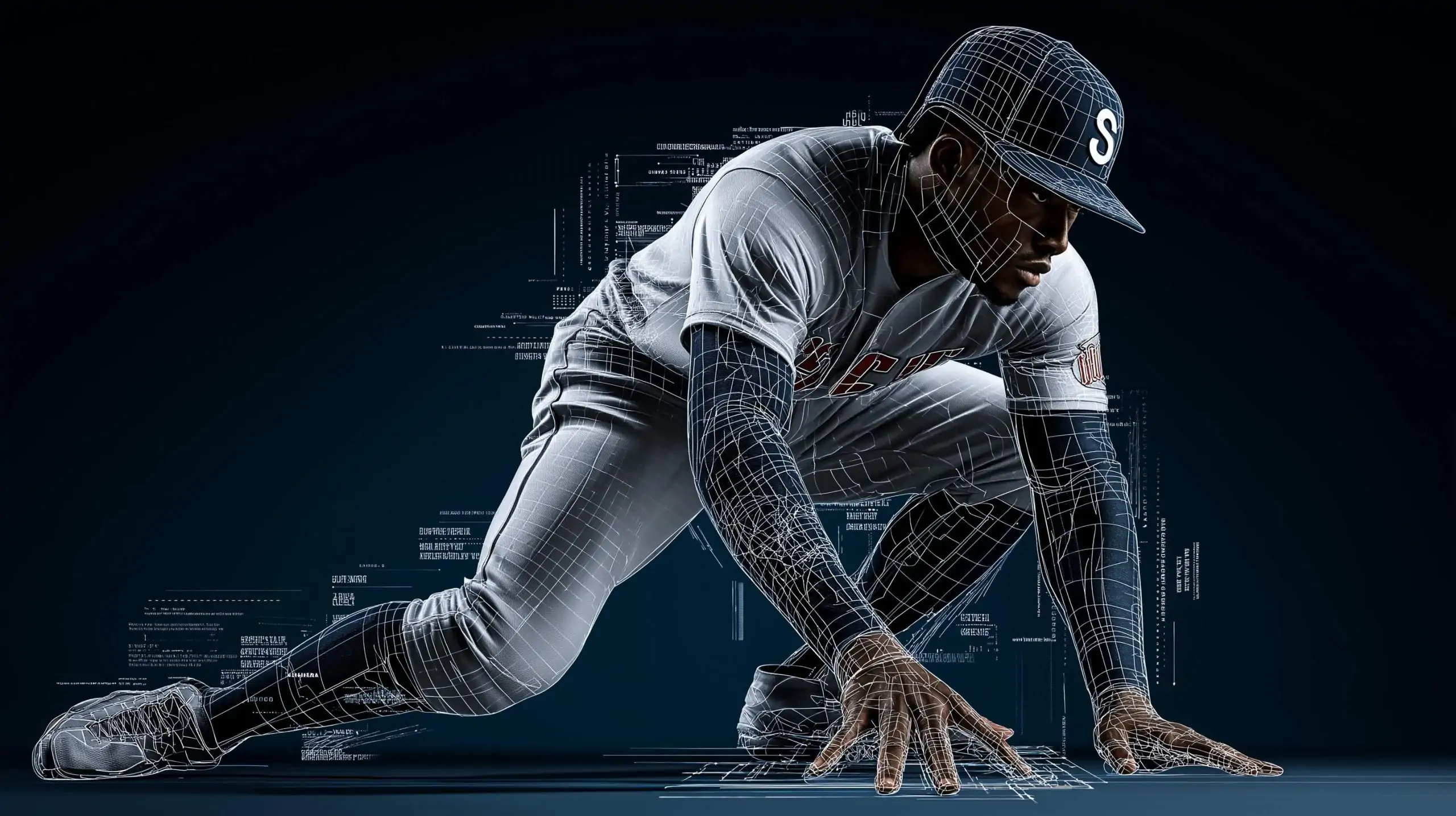
Inside MLB’s 2025 Tech Revolution: Robo Umps, AI Broadcasts & the Future of Baseball
15 September 2025
- Hawk-Eye and Statcast: MLB uses an array of Hawk-Eye high-speed cameras in all 30 ballparks to power Statcast, tracking every pitch’s speed and trajectory along with player movement and even bat swings hawkeyeinnovations.com. This optical tracking system (introduced league-wide in 2019) feeds real-time data for analytics and broadcasts, and also underpins MLB’s replay review since 2014 hawkeyeinnovations.com. It enables new metrics (e.g. exit velocity, launch angle, fielder sprint speed, and soon swing attack angles) that deepen understanding of on-field performance.
- Automated Strike Zone (ABS): MLB is testing “robo-ump” technology via an Automated Ball-Strike System. In 2025 spring training, over half the games let teams challenge human ball/strike calls – with each club getting two challenges that are retained if successful reuters.com foxsports.com. When a batter, pitcher, or catcher signals a challenge, Hawk-Eye tracks the pitch and displays a 3D strike-zone replay on stadium screens in seconds reuters.com. Early results show about 51–52% of challenged calls were overturned foxsports.com. Umpires remain on the field, but this tech-driven challenge system (powered by T-Mobile’s 5G network) is a major step toward consistent strike zones, and MLB even plans to use it in the 2025 All-Star Game foxsports.com foxsports.com.
- PitchCom Communication: Traditional catcher hand signals are largely gone. Since 2022, all teams have adopted PitchCom, a wireless system where catchers (and now pitchers) press a keypad to call pitches, transmitting encrypted audio to earpieces worn by the pitcher and up to four fielders mlb.com mlb.com. This speeds up the game and prevents sign-stealing (a hot-button issue since the 2017 Astros scandal) pitchcom.com. In 2023 MLB even allowed pitchers like Zack Greinke to wear the transmitter on their belt or glove, letting them call their own game to beat the new pitch clock mlb.com mlb.com. As one veteran put it, “I throw a lot of pitches and just won’t be able to throw the pitch I want…if I can’t use that [PitchCom]” mlb.com – underscoring how this tech helps both strategy and pace of play.
- Wearable Player Sensors: MLB is ahead of some leagues in embracing wearables during play. It has approved at least four health and performance devices for in-game use: the Motus pitching sleeve (measures throwing biomechanics), the Zephyr Bioharness (heart rate and breathing for fatigue), Catapult GPS trackers (player workload and positioning), and the popular WHOOP strap (tracking heart rate, strain, and sleep) theupside.us theupside.us. While players can’t see this biometric data live during games, teams access it afterward to guide training and recovery. Beyond games, many clubs use sensor tech in practice – e.g. smart bat sensors (Blast Motion, Diamond Kinetics) that capture swing speed and path, and even motion-capture sleeves to monitor pitching mechanics theupside.us. In Minor League games, bat sensors are now allowed on-field to gather swing data for player development theupside.us.
- Instant Replay System: MLB’s Replay Operations Center in New York, equipped with Hawk-Eye multi-angle video feeds, has handled all umpire reviews since expanded replay launched in 2014 hawkeyeinnovations.com. Managers can challenge close plays (home runs, safe/out, etc.), triggering a rapid video review. Hawk-Eye’s system provides synchronized camera angles and even 3D renderings for officials, which has improved accuracy and consistency of calls hawkeyeinnovations.com hawkeyeinnovations.com. By the mid-2020s about half of all manager challenges result in overturned calls (reflecting the system’s thoroughness), and the average review takes under 90 seconds – faster than in early years espn.com. MLB has also equipped umpires with wireless headsets to announce replay decisions to the crowd (similar to NFL) for transparency technology.mlblogs.com.
- AI-Enhanced Broadcasting: MLB broadcasts are increasingly augmented by AI and advanced data. Statcast data feeds live graphics like strike-zone overlays, launch-angle trackers, and catch probability on TV broadcasts. In 2024, ESPN debuted a “Statcast AI” alternate broadcast for Sunday Night Baseball, layering real-time analytics and predictive modeling (powered by Google Cloud’s AI) over the game action espnfrontrow.com. Other networks have introduced new camera angles – for example, “UmpCam” helmet cameras and base-mounted cams debuted in the 2024 postseason to give fans POV replays sportsvideo.org. AI-driven systems also help production crews by automatically clipping highlights and even suggesting storylines from live data sportsvideo.org. While fully automated commentary isn’t mainstream in MLB yet, AI tools are assisting human broadcasters with instant stat insights and even real-time translations.
- Immersive Fan Experiences (VR/AR): MLB is pushing into virtual and augmented reality for fans. In 2024, the league relaunched its MLB Virtual Ballpark, a metaverse-style 3D stadium where fans can join live watch parties with avatars mlb.com mlb.com. During these events, a 3D recreation of the game (via Gameday 3D) lets fans view any play from any angle in real time, chat via spatial audio, and even partake in virtual scavenger hunts and trivia – all accessible on web or VR headsets mlb.com mlb.com. MLB has also released VR video games like “Home Run Derby VR,” letting fans step into a virtual batter’s box and swing a controller bat in famous stadiums. Augmented reality is enhancing the ballpark too: for instance, some team apps now offer AR overlays where you can point your phone at the field to see live player stats or strike zone graphics. These immersive technologies aim to bring fans closer to the game, whether they’re at home or exploring the concourse.
- Smart Stadiums and Biometric Entry: Baseball venues in 2025 are high-tech playgrounds. Digital ticketing via the MLB Ballpark app is now standard, and ballparks are integrating features like mobile concession ordering and cashless payments for speed. Several teams (Phillies, Giants, Astros, Nationals) have rolled out “Go-Ahead Entry,” a facial-recognition based gate system that lets ticket holders enter by simply walking past a camera espn.com espn.com. This opt-in system, developed with NEC Corp., links your face to your ticket account and even works with new AI security scanners – meaning fans can go from the turnstile to their seats without pulling out a phone or stopping for bag checks espn.com espn.com. “You don’t even have to break stride,” says SF Giants CTO Bill Schlough, calling the frictionless face-scan entry “an absolute game-changer” for the fan experience espn.com. However, privacy advocates worry about the creep of such biometrics – one digital rights group warns this is “just one part of a massive problem that’s only getting bigger” espn.com. Despite concerns, MLB is expanding these tech conveniences, and also experimenting with biometric payments (buying a beer with your face scan) in some venues stadiumtechreport.com stadiumtechreport.com. All 30 MLB parks now have robust 5G Wi-Fi networks to support these innovations and keep fans connected.
- New & Experimental Tech: MLB isn’t stopping at what’s already on the field. The league is exploring brain-sensing wearables and neurotraining tools to boost player performance. For example, teams like the SF Giants have tried the Halo Neuroscience headband, which uses mild electrical stimulation to the brain to improve focus and motor skill learning during training theupside.us. In 2025, a startup called Pison began pilot programs with MLB clubs and colleges for a novel wristband that measures neural signals from the brain to gauge a player’s reaction time, mental fatigue, and focus sportsbusinessjournal.com sportsbusinessjournal.com. The idea is to quantify the “mental game” – a frontier previously hard to measure – and train players’ cognitive skills (e.g. pitch recognition and split-second decision-making) with personalized neural feedback drills sportsbusinessjournal.com sportsbusinessjournal.com. On another front, MLB is working with scientists on smart equipment, like new baseball prototypes. After the 2021 crackdown on pitchers’ illegal sticky substances, MLB partnered with Dow Chemical to develop a pre-tacked baseball that comes out of the wrapper with a perfect grip foxnews.com foxnews.com. In 2023, one such ball was tested in Double-A: players loved the improved grip, but in hot weather it became “too gummy,” showing the challenges of chemistry in sport foxnews.com. The research continues (with “15 PhDs working on it,” per MLB advisor CC Sabathia) to find a ball coating that can replace the centuries-old practice of rubbing mud on baseballs foxnews.com. Other experimental projects include upgraded protective gear (e.g. smarter batting helmets to reduce concussions) and even automated groundskeeping robots in training facilities. MLB’s willingness to pilot these ideas in the minors and independent leagues signals that more radical tech changes could be on the horizon.
- MLB vs. Other Leagues: Compared to the NFL, NBA, and global soccer, MLB’s tech landscape in 2025 is both innovative and unique. In player tracking, all major leagues now capture data – the NFL places RFID chips in every football and in players’ shoulder pads to fuel its Next Gen Stats operations.nfl.com, and the NBA uses optical systems to map player and ball movements in second-by-second detail. Yet MLB’s Statcast stands out for the sheer volume of data (tracking every pitch and play of a 162-game season) and its public availability to fans. In officiating, soccer led the way with goal-line technology and the VAR replay system using Hawk-Eye cameras for controversial calls hawkeyeinnovations.com, and tennis has long trusted Hawk-Eye for line calls. MLB is now catching up by testing an automated strike zone, a bold step neither the NFL nor NBA have equivalently taken (football still relies on referees’ eyes and the old chain gang for first downs, while basketball refs use replay for some calls but no AI officiating). The NFL has embraced tech in other areas: since 2021 the NFL even uses Hawk-Eye in its replay center to speed up multi-angle reviews hawkeyeinnovations.com, and it leverages Amazon’s AI to generate stats like expected rushing yards from tracking data operations.nfl.com. NBA arenas are high-tech too, featuring giant HD scoreboards and AR effects; the NBA was a pioneer in virtual reality broadcasts (streaming select games in VR to Oculus headsets) and uses advanced Second Spectrum analytics to display things like real-time shot probabilities on TV. Global soccer at events like the World Cup has begun using semi-automated offside technology – multiple cameras and AI to detect offside positions instantaneously – something analogous to baseball’s automated pitch location tech hawkeyeinnovations.com. In terms of fan experience, all leagues now offer mobile ticketing, on-demand highlights, and interactive apps, but MLB’s Virtual Ballpark metaverse and weekly VR watch parties are the first of their kind among major sports mlb.com. And while facial-recognition entry is starting to appear in NFL stadiums and NBA arenas, MLB’s concerted rollout of biometric entry lanes in 2024 put it at the forefront of that trend espn.com. Each sport balances tradition and technology – as MLB Commissioner Rob Manfred has noted, baseball tries to “pursue the possibility of change” carefully foxsports.com. But fan sentiment is shifting: after seeing tech like ABS challenges in action, many are now more vocal in demanding high-tech accuracy over human error foxsports.com. In the grand view, MLB’s 2025 tech revolution is part of a wider sports-tech boom – yet its particular blend of preserving a 150-year-old game while infusing it with cutting-edge innovations truly sets baseball apart.
Read more here: https://ts2.tech/en/inside-mlbs-2025-tech-revolution-robo-umps-ai-broadcasts-the-future-of-baseball/
September 14, 2025
Antonio Vallecoccia Obituary

It is with heavy hearts that we announce the peaceful passing of Antonio (Tony) Vallecoccia at Martindale Gardens on September 11, 2025, at the age of 87.
Tony was the heart of his family – a devoted husband to Janet of 62 years, proud and loving father to Sandra (Dale) and LeeAnn, an adoring Nonno to Mark (Charlotte), Jamie (Eric), Gina (Sean), Ashlyn, Brayden and Great Nonno to Georgia. Beloved brother to Fosca (late Joe), Mario (Anna), late Francesco (late Rosa), and late Felice (Agatha). Tony was a caring uncle to many nieces and nephews and a loyal friend to many.
Tony had a way of making people feel at ease—through a warm smile, a well-timed joke , or a helping hand when it was needed most. His presence was a gift, and his absence will be deeply felt by all who had the privilege of knowing him.
The family would like to thank the compassionate staff at Martindale Gardens for their care and kindness in Tony’s final days.
In accordance with Tony’s wishes, cremation has already taken place.
In lieu of flowers, donations can be made in Tony’s memory to the Alzheimer’s and Dementia Society of Canada – a cause close to our hearts. Links are below.
“Forever in our hearts, always in our stories.”
Friends and family are invited to Tony’s Memorial Visitation, held at McKersie & Early Funeral Home, 114 Main Street East in Milton, on Wednesday September 17, 2025 from 3-5pm and 7-9pm.
A Memorial Service will be held at the same on Thursday September 18 at 11:00am, with interment at Evergreen Cemetery to follow.
Another loss for the urethane industry. He had a great run with Valle Foam.
https://www.mckersieearly.com/obituaries/Antonio-Vallecoccia?obId=45325414
September 14, 2025
Specialty Chemicals l Materials Sector: Q2 2025 Performance
August 19, 2025

The specialty chemicals and materials sector delivered an unexpectedly weak Q1, casting serious doubt on the consensus forecast for mid-single-digit EBITDA growth in 2025. Companies had widely cautioned that escalating trade tensions could further weaken already fragile demand, pointing to Q2 results as a critical test. The Q2 earnings season wrapped up last week, and results from 40 leading companies confirmed their fears.
Price deflation has now persisted for ten consecutive quarters. The modest volume recovery seen in 2024 not only reversed in Q1 but worsened in Q2. Consolidated adjusted EBITDA fell more than 17% year-over-year, with margins contracting by 220 basis points, sharply weaker than in Q1. More than half of the companies lowered full-year guidance, reflecting what many executives now describe as a “lower for longer” reality. Notably, some companies attempted to downplay weak results to avoid spooking investors; one CEO went so far as to label a 10% sales decline and a 28% drop in adjusted EBITDA as “resilient performance.”
Beneath the consolidated figures, performance diverged sharply by end market and geography. Water solutions, electronics, agriculture, and medical applications showed strength, but not enough to offset broad-based weakness. Against a backdrop of sluggish demand and persistent overcapacity, companies announced 21 plant closures in Q2 alone, with Europe bearing the brunt.
With global trade tensions still unresolved, the sector faces a sobering risk: 2025 could mark the third straight year of revenue and EBITDA decline. That said, our model suggests the second half could finally stabilize versus the prior year, potentially establishing a much-needed floor for performance.
https://creovgroup.com/blog/f/specialty-chemicals-l-materials-sector-q2-2025-performance
September 10, 2025
MODIFYING THE SCOPE OF RECIPROCAL TARIFFS AND ESTABLISHING PROCEDURES FOR IMPLEMENTING TRADE AND SECURITY AGREEMENTS
September 5, 2025
By the authority vested in me as President by the Constitution and the laws of the United States of America, including the International Emergency Economic Powers Act (50 U.S.C. 1701 et seq.) (IEEPA), the National Emergencies Act (50 U.S.C. 1601 et seq.), section 232 of the Trade Expansion Act of 1962, as amended (19 U.S.C. 1862) (section 232), section 604 of the Trade Act of 1974, as amended (19 U.S.C. 2483), and section 301 of title 3, United States Code, it is hereby ordered:
Section 1. Background. In Executive Order 14257 of April 2, 2025 (Regulating Imports With a Reciprocal Tariff To Rectify Trade Practices That Contribute to Large and Persistent Annual United States Goods Trade Deficits), I found that conditions reflected in large and persistent annual U.S. goods trade deficits, including the consequences of those deficits, constitute an unusual and extraordinary threat to the national security and economy of the United States that has its source in whole or substantial part outside the United States. I declared a national emergency with respect to that threat, and to deal with that threat, I imposed certain ad valorem duties that I deemed necessary and appropriate. In Annex II to Executive Order 14257, I set forth a list of certain goods that, in my judgment, should not be subject to the ad valorem rates of duty imposed pursuant to that order.
In section 4 of Executive Order 14257, section 5 of Executive Order 14326 of July 31, 2025 (Further Modifying the Reciprocal Tariff Rates), and other Executive Orders issued to address the national emergency declared in Executive Order 14257, I directed various officials to monitor the circumstances involving the emergency declared in Executive Order 14257 and to recommend to me additional action that would more effectively deal with the emergency conditions described in Executive Order 14257. Based on this monitoring, among other things, I have received additional information and recommendations from these officials. After considering the information and recommendations these officials have provided to me, among other things, I have determined that it is necessary and appropriate to modify Annex II to Executive Order 14257 as shown in the updated version of Annex II that is attached to this order. In my judgment, these modifications are necessary and appropriate to deal with the national emergency declared in Executive Order 14257.
Further, in section 4(c) of Executive Order 14257, I noted that I might further decrease or limit in scope the duties imposed under Executive Order 14257, as amended, if any trading partner takes significant steps to remedy non-reciprocal trade arrangements and align sufficiently with the United States on economic and national security matters. Accordingly, I later temporarily suspended the individual ad valorem rate of duty for certain trading partners to reflect the fact that some trading partners had signaled a willingness to undertake meaningful economic and national security commitments with the United States designed to combat the emergency declared in Executive Order 14257. In Executive Order 14326, I noted that certain foreign trading partners had agreed, or were on the verge of agreeing, to meaningful trade and security agreements with the United States, with the conclusion of the agreements to be completed in the future.
In my judgment, it is necessary and appropriate to take steps contemplated in certain current and forthcoming trade and security framework agreements (framework agreements) between a foreign trading partner and the United States. I determine that any modification of tariffs required to implement current and forthcoming framework agreements is necessary and appropriate to deal with the national emergency declared in Executive Order 14257 and to reduce or eliminate the threats to national security found in Proclamation 9704 of March 8, 2018 (Adjusting Imports of Aluminum Into the United States), as amended; Proclamation 9705 of March 8, 2018 (Adjusting Imports of Steel Into the United States), as amended; Proclamation 9888 of May 17, 2019 (Adjusting Imports of Automobiles and Automobile Parts Into the United States), as amended; and Proclamation 10962 of July 30, 2025 (Adjusting Imports of Copper Into the United States). Except in rare circumstances, I will refrain from narrowing the scope of the reciprocal tariff or any relevant section 232 tariff before the conclusion of a final trade and security agreement (final agreement) between the foreign trading partner and the United States.
For example, the United States and the European Union recently announced a landmark “Framework on an Agreement on Reciprocal, Fair, and Balanced Trade” (Framework Agreement). In the joint statement announcing the Framework Agreement, the United States committed to reduce the reciprocal tariff imposed under Executive Order 14257, as amended, on certain products of the European Union to zero percent and to reduce tariffs imposed under section 232 for automobiles and automobile parts originating from the European Union if the European Union takes certain steps. In my judgment, it is necessary and appropriate to implement the tariff modifications described in the Framework Agreement. These modifications are necessary and appropriate to deal with the national emergency declared in Executive Order 14257 and to reduce or eliminate the threat to national security found in Proclamation 9888, as amended.
Similarly, I determine that it is necessary and appropriate to implement the terms of any final agreement between a foreign trading partner and the United States related to the national emergency declared in Executive Order 14257. In my judgment, the modifications required to implement the terms of such a final agreement are necessary and appropriate to deal with the national emergency declared in Executive Order 14257 and to reduce or eliminate the threats to national security I have found pursuant to section 232.
Though I am generally unwilling for framework agreements to narrow the scope of the reciprocal tariffs or modify any relevant section 232 tariff before the conclusion of a final agreement, final agreements with the United States may include such modifications. My willingness to reduce the reciprocal tariff to zero percent for a given import or to modify tariffs imposed under section 232 will depend on numerous factors, including the scope and economic value of a trading partner’s commitments to the United States in its agreement on reciprocal trade, the national interests of the United States, the need to deal with the national emergency declared in Executive Order 14257, and the need to reduce or eliminate the threats to national security I have found pursuant to section 232. The list of imports for which I may be willing to provide a zero percent reciprocal tariff rate is set forth in the Annex to this order entitled “Potential Tariff Adjustments for Aligned Partners,” which contains products that cannot be grown, mined, or naturally produced in the United States or grown, mined, or naturally produced in sufficient quantities in the United States to satisfy domestic demand; certain agricultural products; aircraft and aircraft parts; and non-patented articles for use in pharmaceutical applications. Given the complex, fact-specific, and sensitive nature of negotiations and the national emergency declared in Executive Order 14257, among other relevant considerations, the imports that might receive a reciprocal tariff rate of zero percent may be different for each final agreement between a foreign trading partner and the United States.
Sec. 2. Updating Scope of Duties Globally. (a) The updated version of Annex II to Executive Order 14257 is attached to this order and shall be effective with respect to goods entered for consumption, or withdrawn from warehouse for consumption, on or after 12:01 a.m. eastern daylight time 3 days after the date of this order.
(b) The Harmonized Tariff Schedule of the United States (HTSUS) shall be modified as provided in Annex I to this order. These modifications shall enter into effect on the date set forth in Annex I to this order.
Sec. 3. Framework Agreements. (a) Upon the conclusion of any framework agreement of a kind described in section 1 of this order, the Secretary of Commerce and the United States Trade Representative shall determine whether the United States must take any action to implement such framework agreement. Doing so shall include determining whether any condition or conditions to an action by the United States has occurred or will occur before the relevant action by the United States.
(b) If the Secretary of Commerce and the United States Trade Representative determine that an action must be taken to implement a framework agreement pursuant to subsection (a) of this section and that any condition or conditions to such action have occurred or will occur before the relevant action by the United States, the Secretary of Commerce and the United States Trade Representative shall take the necessary and appropriate actions to implement such framework agreement in accordance with this order.
(c) The Secretary of Commerce and the United States Trade Representative shall act in a manner consistent with the national interests of the United States, the purpose of this order, the need to deal with the national emergency declared in Executive Order 14257, and the need to reduce or eliminate the threats to national security I have found pursuant to section 232.
Sec. 4. Final Agreements. (a) Upon the conclusion of any final agreement of a kind described in section 1 of this order, the Secretary of Commerce and the United States Trade Representative shall take the necessary and appropriate actions to implement the final agreement in accordance with this order.
(b) In implementing any final agreement, the Secretary of Commerce and the United States Trade Representative shall act in a manner consistent with the national interests of the United States, the purpose of this order, the need to deal with the national emergency declared in Executive Order 14257, and the need to reduce or eliminate the threats to national security I have found pursuant to section 232.
Sec. 5. Monitoring and Recommendations. (a) The Secretary of Commerce and the United States Trade Representative, in consultation with any officials they deem appropriate, shall continue to monitor the conditions underlying the national emergency declared in Executive Order 14257, including the U.S. trade deficit, the lack of reciprocity in our bilateral trade relationships, disparate tariff rates and non-tariff barriers, U.S. trading partners’ economic policies that suppress domestic wages and consumption imports, the strength of our domestic manufacturing base, the strength of our defense industrial base, and any other relevant factors. The Secretary of Commerce and the United States Trade Representative shall, from time to time, update me on the status of these conditions.
(b) The Secretary of Commerce and the United States Trade Representative, in consultation with the Secretary of State, the Secretary of the Treasury, the Secretary of Homeland Security, the Assistant to the President for Economic Policy, the Senior Counselor for Trade and Manufacturing, and the Assistant to the President for National Security Affairs, shall continue to inform me of any circumstance that, in their opinion, might indicate the need for further action and shall continue to recommend to me additional action that, in their opinion, will more effectively deal with the emergency declared in Executive Order 14257.
(c) The Secretary of Commerce and the United States Trade Representative, in consultation with the Secretary of State, the Secretary of the Treasury, the Secretary of Homeland Security, the Assistant to the President for Economic Policy, the Senior Counselor for Trade and Manufacturing, and the Assistant to the President for National Security Affairs, shall advise me of the conclusion of any agreement on reciprocal trade with a particular trading partner.
Sec. 6. Delegation. (a) Consistent with applicable law, the Secretary of Commerce, the Secretary of Homeland Security, and the United States Trade Representative are directed and authorized to take all necessary actions to implement and effectuate this order and any actions taken under section 3 or section 4 of this order — including through temporary suspension or amendment of regulations or through notices in the Federal Register and by adopting rules, regulations, or guidance — and to employ all powers granted to the President, including those granted by IEEPA and section 232, as may be necessary to implement and effectuate this order.
(b) The Secretary of Commerce and the United States Trade Representative, in consultation with the Commissioner of U.S. Customs and Border Protection (CBP), the Chair of the United States International Trade Commission, and any other senior official they deem appropriate, shall determine whether modifications to the HTSUS are necessary to effectuate this order and any actions taken under section 3 or section 4 of this order and may direct such modifications through notice in the Federal Register.
(c) If implementation of a framework agreement or final agreement of a kind described in section 1 of this order requires a refund of duties collected, CBP shall provide the refund to the extent consistent with law. Any refunds shall be processed pursuant to applicable law and CBP’s standard procedures for such refunds.
(d) Consistent with applicable law, the Secretary of Commerce, the Secretary of Homeland Security, and the United States Trade Representative may redelegate any of these functions within their respective department or agency.
(e) All executive departments and agencies shall take all appropriate measures within their authority to implement this order.
Sec. 7. General Provisions. (a) Nothing in this order shall be construed to impair or otherwise affect:
(i) the authority granted by law to an executive department or agency, or the head thereof; or
(ii) the functions of the Director of the Office of Management and Budget relating to budgetary, administrative, or legislative proposals.
(b) This order shall be implemented consistent with applicable law and subject to the availability of appropriations.
(c) This order is not intended to, and does not, create any right or benefit, substantive or procedural, enforceable at law or in equity by any party against the United States, its departments, agencies, or entities, its officers, employees, or agents, or any other person.
(d) The costs for publication of this order shall be borne by the Department of Commerce.
DONALD J. TRUMP
THE WHITE HOUSE,
September 5, 2025.
ANNEX I
Effective with respect to goods entered for consumption, or withdrawn from warehouse for consumption, on or after 12:01 a.m. eastern daylight time 3 days after the date of this order, subdivision (v)(iii) of U.S. note 2 to subchapter III of chapter 99 of the HTSUS shall be amended by inserting in numerical order the following provisions of the HTSUS:
| 2504.10.10 |
| 2604.00.00 |
| 2609.00.00 |
| 2612.20.00 |
| 2613.90.00 |
| 2825.40.00 |
| 2833.24.00 |
| 2903.51.10 |
| 2924.29.01 |
| 2924.29.03 |
| 2924.29.23 |
| 2924.29.26 |
| 2924.29.28 |
| 2924.29.33 |
| 2924.29.57 |
| 2924.29.80 |
| 2926.90.50 |
| 2933.29.05 |
| 2933.29.60 |
| 4703.11.00 |
| 4703.21.00 |
| 4703.29.00 |
| 7108.11.00 |
| 7108.12.50 |
| 7108.13.10 |
| 7108.13.55 |
| 7108.13.70 |
| 7108.20.00 |
| 7115.90.05 |
| 7115.90.30 |
| 7202.60.00 |
| 7501.10.00 |
| 7502.10.00 |
| 7502.20.00 |
| 7503.00.00 |
| 7504.00.00 |
| 7903.90.30 |
| 8505.11.0070 |
| 8541.41.00 |
Effective with respect to goods entered for consumption, or withdrawn from warehouse for consumption, on or after 12:01 a.m. eastern daylight time 3 days after the date of this order, subdivision (v)(iii) of U.S. note 2 to subchapter III of chapter 99 of the HTSUS shall be amended by removing the following provisions of the HTSUS:
| 2818.30.00 |
| 3824.99.93 3907.29.00 3907.30.00 |
| 3907.61.00 |
| 3907.69.00 |
| 3907.99.50 |
| 3910.00.00 |
September 9, 2025
Leggett & Platt study says several online mattresses fail 1633 flammability standard
September 4, 2025

According to new research from Leggett & Platt, many low-cost imported mattresses sold online fail federal flammability standards. It also says some even attain dangerous heat release rates in violation of U.S. law in as little as two to four minutes after exposure to an ignition source, according to test results submitted to the U.S. Consumer Product Safety Commission in July 2024.
The mattress manufacturer worked with Element Materials Technology, an independent CPSC-approved laboratory for mattress flammability testing and conducted the tests at its St. Paul, Minnesota, facility.
The lab tested eight imported mattress models (24 mattresses in total). These models had an average retail listing price of $233 — about half the wholesale price of an average mattress sold by U.S. manufacturers. The tested mattress models had high Amazon search rankings and were almost all sold on Amazon by third-party sellers. Each model underwent the same full-scale prototype testing used to establish a new mattress’s design compliance with the CPSC’s open-flame standard, known as the “1633” test.
The CPSC adopted this safety standard to reduce deaths and injuries related to mattress fires, particularly those initially ignited by sources such as lighters, candles and matches. The standard requires mattresses to maintain a heat release rate under 200 kW after being ignited by a pair of T-shaped gas burners.
Noncompliant mattresses burn rapidly and can quickly reach dangerous “flashover” conditions. Flashover is the point at which the entire contents of a room ignite simultaneously by radiant heat, making conditions in the room untenable and safe exit from the room impossible. Each year, compliance with the 1633 standard prevents scores of deaths and serious injuries from bedroom fires. To be compliant, a particular mattress design must pass the 1633 test three times. A single failure is considered to be a failure of the design to meet the 1633 standard.
Leggett & Platt says the results of the flammability testing are alarming. Seven of the eight tested mattress models (87.5%) failed the 1633 flammability test. One mattress model per brand was subjected to 1633 flammability testing. Five brands each had at least one model that failed all three 1633 tests conducted. Two of the brands had a model that failed two of three 1633 tests.
The test results submitted to the CPSC raise serious concerns that there may be widespread noncompliance of low-cost imported mattresses sold online in the U.S, according to Leggett & Platt.
An estimated 400,000 mattresses from models that failed 1633 flammability testing were sold on Amazon between 2024 and mid-2025, according to third-party market intelligence data. Many mattress brands identified as having noncompliant models continue to sell those models — as well as other models—on Amazon and other online retailers in the U.S.
According to trademark registrations, it appears to be common for a single foreign company to own several mattress brands that are imported and sold online in the United States. If a mattress model sold by a company under one of these brands fails flammability compliance, would other models sold under that brand, as well as other linked brands sold by that company, fail as well?
Over the past decade, imported mattresses have risen from approximately 10% to over 40% of the U.S. market. The vast majority of mattresses sold on Amazon are imported and sold at lower prices than their American-made counterparts, raising questions as to whether the foreign manufacturers used the materials necessary to make compliant mattresses with appropriate flammability protections.
In a majority of mattress recalls conducted over the past three years, Leggett & Platt says most sellers offer to provide consumers a remedy of a free cover that purportedly will bring the mattress into compliance with the federal flammability standard. However, many consumers are unlikely to call for a free cover, and, if they do, may not place it on the mattress or keep it on during the lifespan of the mattress. This common remedy has likely left thousands of dangerous, highly flammable mattresses in homes throughout the U.S.
“The message sent to companies selling low-cost, noncompliant mattresses is that their worst-case scenario for violating U.S. safety laws and exposing consumers to potentially deadly fires is that they will be required to spend $10 to $20 to send a mattress cover to the few consumers who request one,” the manufacturer says in a press release.
The tests were conducted on behalf of Leggett & Platt Inc., and the company has urged the CPSC to take the following actions:
- Require all online retailers and the mattress manufacturers to conduct an immediate recall of the mattress models that failed flammability testing.
- Expect companies that manufacture the models that failed testing to submit proof of testing to the CPSC, confirming that all other mattresses sold by that company in the United States meet flammability standards.
- Work with online retailers to implement safeguards to ensure the compliance of all mattresses sold on their platforms going forward.
- Impose significant civil penalties on companies that fail to conduct legally required flammability tests or apply false tags indicating compliance, as permitted by law.
The CPSC has issued product safety warnings for the noncompliant mattress models sold under two of the brands tested by Leggett & Platt, citing violations of federal safety regulations. No recalls or warnings have been issued by the CPSC for the remaining noncompliant mattress models to date, Leggett says.
 Everchem Updates Archive
 Sign Up for Email Updates