
The Urethane Blog
September 29, 2025
India Imposes ADD on Chinese Copolymer Polyol Following DGTR Investigation
PUdaily | Updated: September 29, 2025
On September 26, 2025, the Indian government took steps to protect its domestic chemical industry from unfairly traded imports, announcing definitive anti-dumping duties on a key polymer imported from China. The decision follows an extensive investigation by the Directorate General of Trade Remedies (DGTR), which found evidence of significant dumping causing material injury to a local producer.
The duties apply to imports of “Copolymer Polyol of hydroxyl value >= 23.5” (HS Codes 3907 2910 and 3907 2990), a chemical primarily used in the production of flexible foam for mattresses and other applications. The DGTR clarified that Polyester Polyol of the same grade is excluded from this measure.
The investigation, initiated in September 2024, concluded that imports from China were entering the Indian market at dumped prices, with margins ranging from 20% to over 50%. This unfair pricing undercut domestic sales and severely harmed the financial health of the sole Indian manufacturer, M/s Expanded Polymer Systems Pvt. Ltd.
The following key findings from the investigation formed the basis for the final determination:
- Massive Import Surge & Market Displacement: Import volumes from China surged by 287% (from 4,988 to 19,338 MT), seizing over 90% of the total import market. This massive influx displaced traditional suppliers from Europe and the USA and severely eroded the domestic industry’s market share.
- Significant Price Undercutting & Suppression: The landed value of Chinese imports was consistently 10-20% below the domestic industry’s price. This forced the domestic producer to suppress its prices below its own cost of sales for the entire period, directly preventing profitability.
- Severe Financial Injury: Despite a 96% growth in domestic demand, the domestic company operated at a loss with negative returns. Its capacity utilisation was critically low at around 32%, while inventories swelled by 137%, confirming financial distress due to unfair competition.
- Causal Link Established: The Authority definitively ruled out other factors like demand contraction or technological changes, concluding that the surge of low-priced, dumped imports was the primary cause of the material injury.
In its final findings, the DGTR affirmed that Expanded Polymer Systems Pvt. Ltd. constitutes a valid ‘domestic industry’ and that a direct causal link exists between the dumped imports and the injury suffered.
Recommended Anti-Dumping Duties
The DGTR has recommended the following duties (CIF value in USD per Metric Tonne) for a period of five years:
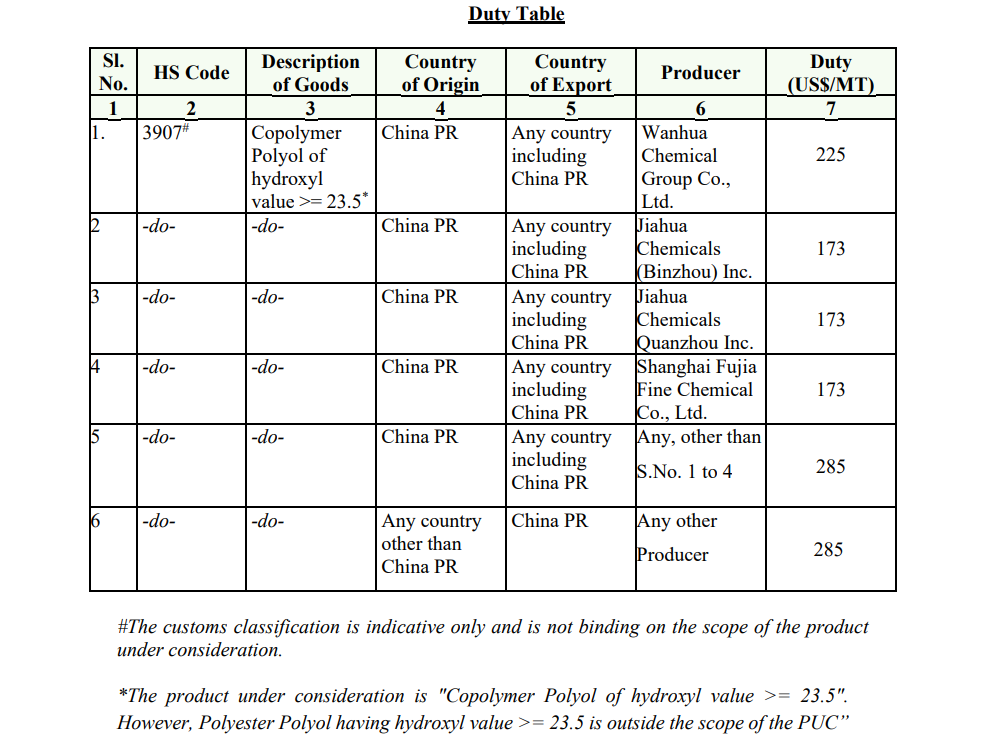
The authority stated that the imposition of these duties aligns with the World Trade Organisation’s (WTO) framework and aims to restore fair competition in the Indian market. It emphasised that the measures are not intended to restrict imports but to ensure they enter India at non-injurious prices, thereby safeguarding the interests of the domestic industry.
India’s Ministry of Finance will issue the final notification for the imposition of these duties.
September 28, 2025
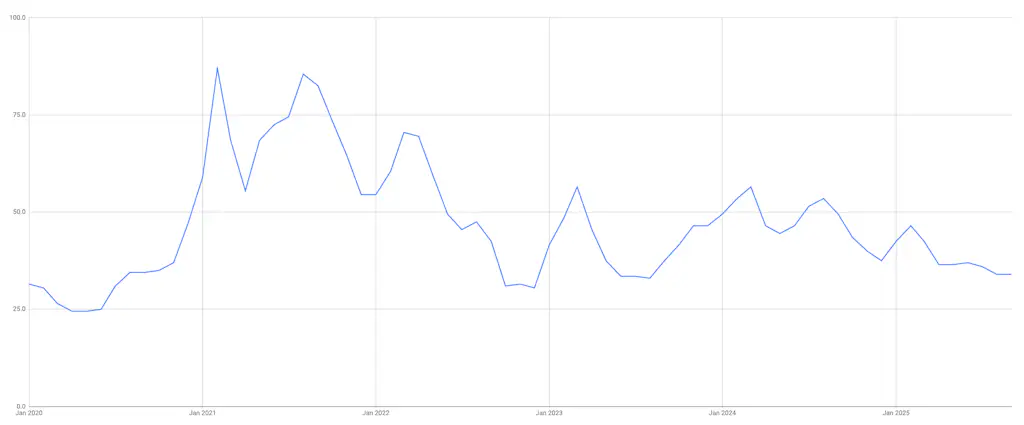
Chemical Grade Propylene is $0.34/lb in September, flat from August
September 25, 2025
Housing Shock: New-Home Sales Unexpectedly Soar 20%

24 Sep 2025270
4:05
New-home sales surged in August to their strongest pace in more than three years, as aggressive price cuts and incentives by builders successfully drew buyers back into a housing market that had been stalled by high mortgage rates and elevated prices.
Sales of new single-family homes increased to a seasonally adjusted annual rate of 800,000 units, a 20.5 percent increase, the Commerce Department and Housing and Urban Development Department said Wednesday.
The pace was well above the 653,000 rate economists had forecast and marked the fastest selling pace since early 2022.
The unexpected jump suggests that homebuilders’ strategy of offering steep discounts and sales incentives is working to revive demand in a market where many potential buyers had been sidelined by affordability concerns. The robust sales pace also helped reduce the inventory overhang that had been weighing on the sector.
The sales surge was broad-based, with gains across all major regions. The South, which accounts for the largest share of new-home sales, saw purchases jump 24.7 percent to 530,000 units. The Northeast posted the largest percentage gain at 72.2 percent, though from a much smaller base.
Builder incentives have reached post-pandemic highs as companies seek to move inventory. Some 39 percent of builders reported cutting prices in September, according to a survey by the National Association of Home Builders and Wells Fargo—the highest level since the early days of the Covid-19 pandemic.
The sales increase helped reduce the supply of unsold new homes to 490,000 units at the end of August, the lowest level this year. That translates to 7.4 months of supply at the current sales rate, down sharply from 9.0 months in July. While still above the 4-to-6 month range considered normal, the improvement suggests the market is moving toward better balance.
The median price of a new home sold in August was $413,500, up 4.7 percent from July but only 1.9 percent higher than a year earlier. The average sales price of $534,100 was up 11.7 percent from the previous month and 12.3 percent higher than August 2024, suggesting strength at higher price points.
By subscribing, you agree to our terms of use & privacy policy. You will receive email marketing messages from Breitbart News Network to the email you provide. You may unsubscribe at any time.
New-home sales reflect contract signings rather than closings, making them a more timely indicator of buyer sentiment than existing-home sales. The August figures likely captured the beginning of a recent decline in mortgage rates, which have since fallen to their lowest levels in more than a year.
The government also revised sales figures for the previous three months higher, suggesting the housing recovery has been building momentum. Sales data is subject to large revisions due to the survey methodology and relatively small sample size.
Despite the improved August numbers, the housing market continues to face headwinds from mortgage rates that remain elevated by historical standards and home prices that have priced out many potential buyers. The average rate on a 30-year fixed mortgage was about 6.2 percent in August, down from peaks above 7 percent last year but still well above pre-pandemic levels.
Shares of major homebuilders rose in early trading Wednesday. Lennar gained 1.99 percent, D.R. Horton rose about one percent. and PulteGroup climbed 1.65 percent.
The new-home market represents a small fraction of overall housing activity but is closely watched as an indicator of future labor intensive construction activity and broader housing demand. What’s more, rising new home sales often have coattails, boosting furniture, technology, and appliance sales. New homes accounted for about 15 percent of home sales in recent months.
https://www.breitbart.com/economy/2025/09/24/housing-shock-new-home-unexpectedly-soar-20
September 23, 2025
India’s Sole TDI Plant has Shut Down Again, but China’s TDI export Dividend is Expected to Continue
It is reported that on September 19, 2025, India’s Gujarat Narmada Valley Fertilizer and Chemicals Limited (GNFC) announced that its 50000 tons/year toluene diisocyanate (TDI) Phase II plant in Dah was safely shut down due to a sudden gas leak. The company emphasized in its statement that the accident was controlled within the factory area and did not cause any casualties or property damage.
GNFC is the only large TDI manufacturer in India, with two TDI production facilities totaling 67000 tons per year. The TDI Phase I facility has a production capacity of 17000 tons per year, while the TDI Phase II facility has a production capacity of 50000 tons per year. The gas leak occurred in the TDI Phase II unit.
As the only large TDI manufacturer in India, especially the TDI Phase II unit, there have been frequent problems, including technical failures, gas leaks.
The TDI unit of GNFC, especially the large-scale Phase II unit involved in this incident, has experienced multiple technical failures, gas leaks, and even more serious safety accidents in history. As a company that adopts DuPont technology from the United States and is controlled by local governments in India, GNFC was originally a strategic pillar for India to achieve import substitution of key chemicals. But the long-term instability of its device operation still requires imported TDI from overseas as a supplement.
Despite the fragility of domestic supply, India has repeatedly targeted China, Japan, South Korea, the European Union, Saudi Arabia, and the United Arab Emirates since 2016
Wait for countries and regions to initiate anti-dumping investigations into imported TDI. The shutdown of GNFC will undoubtedly cause a shortage of TDI supply in India.
The supply-demand imbalance in the global TDI market is rapidly worsening
The discontinuation of GNFC is not an isolated event. Since the third quarter of 2025, the global TDI market has been affected by a series of unexpected and planned supply disruptions.
In July, global chemical giant Covestro’s 300000 tons/year TDI plant in Europe encountered force majeure; During the same period, there were disruptions in BASF’s facilities in South Korea, and the production capacity of Japanese companies such as Mitsui has not yet fully recovered from early shutdowns. This series of events has led to a significant contraction in overseas supply. Wanhua Chemical’s 250000 ton/year plant in Hungary has entered a 30 day maintenance period, further reducing its supply capacity to the European market. At the same time, major Chinese manufacturers have also entered the maintenance season. The abnormality of Wanhua Chemical’s domestic equipment has led to extreme shortage of spot supply and delayed shipment; Covestro and Shanghai BASF have also stated that their supply will be very limited in September and have significantly increased their product guidance prices.
On the demand side, exports have become the strongest growth engine. According to Chinese customs data, from January to August 2025, the total export volume of TDI in China reached 357000 tons, a year-on-year increase of 67.78%. Among them, 18400 tons were exported to India, accounting for 5.2%, ranking fourth among export countries. The force majeure in Europe, slow recovery of Japanese facilities, and subsequent maintenance plans for American facilities have collectively created a huge overseas demand gap.
China’s TDI export dividend is expected to continue
The unexpected shutdown of GNFC undoubtedly exacerbates the already severe overseas supply situation in the fourth quarter, and is expected to lead to severe shortages in the international market, thereby providing strong support for global TDI prices. Domestic production enterprises therefore have a broader export arbitrage window, but it may exacerbate the tight supply of goods in the domestic market, providing strong support for domestic TDI prices.
September 22, 2025
India’s GNFC shuts down TDI unit No.2 following leakage incident
Gujarat Narmada Valley Fertilizers & Chemicals Ltd. (GNFC; Bharuch, India) announced an immediate shutdown of its toluene diisocyanate (TDI) unit No.2 at Dahej on Sep. 19, following a sudden leakage incident, as per Chemweek.
The company reported that safe shutdown procedures were executed, ensuring that the incident remained confined within the plant premises. There were no gas releases beyond the plant boundary, no damage to property, and no loss of life, it added. The TDI unit No.2 has a production capacity of 50,000 metric tons per year.
GNFC said it is conducting necessary checks and remedial measures before restarting the plant.
In addition to unit No.2, the company operates TDI unit No.1 at its Bharuch site, which has a capacity of 14,000 metric tons per year.
According to the Chemical Economics Handbook (CEH) by S&P Global Commodity Insights, GNFC stands as the sole TDI producer in India. The CEH report highlights that TDI consumption in India was estimated at 108,000 metric tons in 2024.
 Everchem Updates Archive
 Sign Up for Email Updates