
The Urethane Blog
March 20, 2025

Klaussner’s Leonardo is a six-piece sectional.
Investment fuels a new chapter for Klaussner, with a North Carolina factory and showroom planned
Cindy W. Hodnett //Executive Editor of Brand Development//March 19, 2025
HIGH POINT — When Klaussner Home Furnishings abruptly closed its doors in 2023, numerous retailers were left in the lurch, including John Garg, CEO of Jennifer Furniture.
At the time, Garg told Furniture Today that the sudden shutdown was a “worse situation than COVID for me” and one that was a “major loss we’re taking for making no mistakes in our business.”

Fast forward to 2025, and not only has Garg weathered the storm that followed Klaussner’s closing, he is actually leading the team that is reintroducing the Klaussner brand to the industry and consumers. Following his purchase of the U.S. market trading rights last year, Garg debuted Klaussner upholstery at retail in five Jennifer Furniture stores in November, and the strong response is fueling continued growth and investment.
Noting that Jennifer Furniture is up 25% year-over-year in sales and more than 40% this month, Garg explains that the time is right for expanding the Klaussner line, adding that the strategy implementation toward future growth is already underway.
“We are not just relaunching a brand; we are redefining American-made furniture with innovation, quality and craftsmanship at its core,” Garg said. “With the support of Jennifer Furniture, Klaussner is set to reclaim its position as a top national brand, offering a diverse range of motion furniture, sleepers, sectionals and stationary frames.”

A multifaceted “game plan” is in place with numerous strategies, including the spring opening of a state-of-the-art production facility in North Carolina that will focus on stationary and slipcover frames and the expansion of a distribution network of key warehouse collaborations in 40 states. Additionally, Garg and his team are focused on strengthening the company’s e-commerce partnerships with Wayfair, Amazon, Costco and others, while also preparing to open a to-the-trade flagship showroom in High Point by the fourth quarter of this year.
“We’re planning a 30,000-square-foot showroom in High Point, and we’ll be finalizing that deal sooner rather than later,” Garg said.
In addition to the physical growth, Garg and his team launched the Klaussner.com website earlier this month, and the early response has been strong, underscoring his belief in the brand as well as multiplatform marketing and social media.
Acknowledging that there are currently notable challenges in the home furnishings industry, Garg added that he also feels there is a lot of opportunity for U.S. companies. Consequently, to ensure continued growth against a backdrop of geopolitical economic uncertainty, he said he plans to follow sound business practices such as controlling expenses, working with the right partners and coaching the sales team to tell the story of a quality product.
“The American furniture market is never going to go away, and we want to support that and build furniture for middle-class American consumers who just want to have a better product,” said Garg. “People are craving the right mix of style, color and quality, and we’re creating it.”
March 19, 2025
Do Household Appliances Really Not Last As Long As They Used To?
by Tyler Durden
Wednesday, Mar 19, 2025 – 06:25 PM
Authored by Ross Pomeroy via RealClearScience,
Everybody knows that household appliances don’t last as long as they used to. But is this conventional wisdom really true? Or is it just one of those alluring fables we like to tell ourselves about the good ol’ days?
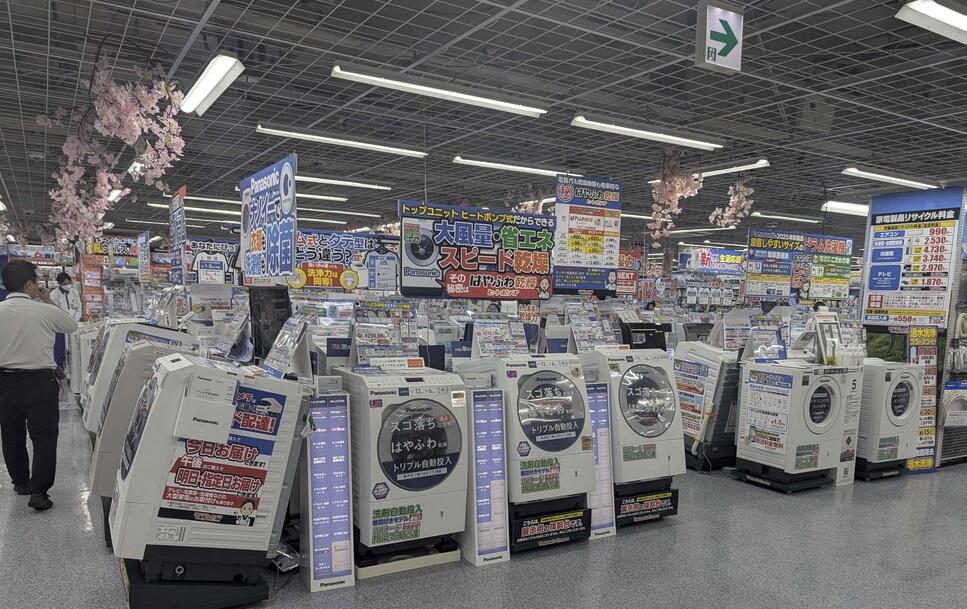
Internet searches provide copious anecdotes. News outlets generally interview repair technicians, who tell a convincing and consistent story. Appliances built in the 1970s generally lasted thirty to fifty years, they say. Today, domestic mainstays like washing machines, ovens, fridges, and dryers get replaced about every decade. Technicians blame an industry push towards computerization, an increase in the number of individual components, and the use of flimsier materials like plastic and aluminum rather than steel. The results of these trends are appliances that break more often and are harder and more costly to repair.
But where is the hard data to back these tales? It’s surprisingly hard to come by.
Researchers Kamila Krych and Johan Berg Pettersen in the Department of Energy and Process Engineering at the Norwegian University of Science and Technology sought to fill the gap.
“We investigate how the sales and ownership of large household appliances have evolved since these appliances were introduced in Norwegian households, and we use this co-evolution to estimate the lifetimes,” they explained in their paper, published in January to the Journal of Industrial Ecology.
The duo estimated the lifetimes of fridges, freezers, washing machines, tumble dryers, dishwashers, and ovens owned in Norway between 1940 and 2022. Their analysis revealed the following trends and factoids:
- Starting the 1990s, the lifetimes of fridges and freezers began slightly increasing, although the difference was not statistically significant.
- In the 1990s, the lifetimes of dishwashers and tumble dryers started to decrease. But again, the difference was not significant.
- In the 1990s and early 2000s, the lifetimes of washing machines and ovens fell off a cliff, respectively dropping from 19.2 to 10.6 years (–45%) and from 23.6 years to 14.3 years (–39%).
- Older appliances lasted between 10 and 30 years.
- Modern fridges, washing machines, dryers, ovens, and dishwashers operate between 10 and 15 years, while freezers last around 20.
“Our study suggests that the lifetimes of washing machines and ovens have decreased but provides no direct explanation for these changes,” they wrote. “The reasons for the identified lifetime decrease could be linked to technical, economic, or social factors or a combination of these.”
On the technical side, increasing reliance on electric parts, as well as added functionality and features, may have hindered longevity, they speculated. Economically, they noted that appliance-makers have striven to lower up-front prices for decades now. According to U.S. Labor Department statistics, home appliance prices declined 12% from the beginning of 2013 through the end of 2023. This race-to-the bottom may have eroded quality in the process, however.
There also might be something to the argument that new appliances are over-designed and harder to repair. On this front, the European Union has put in place “right-to-repair” rules that require manufacturers to produce replacement parts for at least ten years and design their machines to be fixable with everyday tools. While there’s no federal “right-to-repair” laws in the U.S., a handful of states have passed them.
Krych and Pettersen also raised a surprisingly simple explanation for the decline in washing machine lifespans: we use them more than we used to.
“An average Norwegian family of four ran two washing cycles per week in 1960 but eight in 2000. This change in laundry habits is consistent with a general societal change in how cleanliness is perceived in Western countries. Given that the durability of washing machines is generally given as the number of cycles and that a change in laundry habits results in more cycles per year, we could expect more frequent replacements of washing machines.”
While Krych and Pettersen’s study may not be a perfect proxy for every developed market, it does at last bring empirical data to a well-trodden debate. Are household appliances less durable than they used to be? In some cases yes, in others no. But like a new washing machine with a gazillion wash options, sensors, and internet connectivity, the overall picture is complicated.
https://www.zerohedge.com/technology/do-household-appliances-really-not-last-long-they-used
March 19, 2025
European Polyether Polyol Prices Surge Amidst Supply Shortage
PUdaily | Updated: March 18, 2025
The European polyether polyol market has been facing noticeable supply chain pressure in recent months. Major European suppliers like Repsol and Dow are operating at low rates with reduced production levels, resulting in a relatively tight supply in the market. From February to March 2025, polyether polyol prices have surged by EUR 100/tonne due to the supply shortage. With a further widening supply gap and increased imports from China, European polyether polyol prices are anticipated to keep rising from March to April.
Additionally, there is a relatively small number of local traders in Europe, mainly due to the following reasons:
– Limited profit margins: Profits for polyols are relatively low, making large-scale trading markets unsustainable.
– High transport costs: Traders in Europe are feeling the strain of significant cost pressures.
In contrast, there are more traders in the Middle East and Africa regions, particularly in the African market, where large traders are not uncommon. Therefore, the focus of global polyether polyol trade is gradually shifting.
Shell’s Strategic Adjustment of Chemical Assets
Shell is considering selling its chemical assets in Europe and the U.S., with Morgan Stanley conducting a strategic review, according to a report from the Wall Street Journal. This move reflects the dual challenges facing the chemical industry. Uncertainty in regional markets: Shell owns multiple chemical complexes in Europe and the U.S., such as Rheinland in Germany, Moerdijk in the Netherlands, Mossmorran in the UK, Deer Park in Texas, Geismar and Norco in Louisiana, and Monaca in Pennsylvania. The operation of these facilities is affected by global market fluctuations and regional supply-demand dynamics. Particularly in Europe, amid the tight supply and continuous price increases of polyether polyols, the operational efficiency and profit margins of these assets are under severe tests. Margin pressure and strategic restructuring: Shell’s chemical business has been continuously incurring losses over the past three years, although the losses shrank in 2024 (reducing from USD 717 million to USD 392 million). As the European chemical industry faces significant pressure, strategic reviews and potential asset divestments have become important means for Shell to optimize resource allocation and reduce risks. Potential buyers include private equity and Middle Eastern companies who seek to expand capacity in the West. It reflects not only the market attention on chemical assets but also indicates potential shifts in the global chemical industry in the future.
Market Restructuring: Changes in Supply Chain Flows and Global Trade Patterns
By linking the current situation in the European polyether polyol market with Shell’s strategic adjustments, several underlying trends can be observed.
Supply Tightness Driving Price Increases
European producers are challenging to meet market demands due to the fragmented and relatively inefficient production models. Although Chinese products fill the supply gap, they also exacerbate the regional supply-demand imbalance. Consequently, price hikes become an inevitable trend. The continuously rising prices also prompt local producers to reevaluate their asset allocations and production strategies.
Cross-Regional Trade and Capital Restructuring
Global chemical giants like Shell are responding to losses and risks through strategic reviews and asset sales. In the future, if more companies choose to divest assets in Europe, it could lead to a round of capital restructuring and portfolio rebalancing.
Reallocation in the Global Supply Chain
With industry leaders like Shell increasing their investments in China and Singapore, the global polyol supply chain is gradually shifting its focus from Europe and the U.S. towards Asia. This trend not only underscores the reallocation of cost and production advantages but also is poised to have far-reaching implications on the future global trade landscape. Transport costs and trade barriers remain crucial variables in the polyether polyol market, potentially leading to more cross-regional collaborations and M&A restructuring in the future.
March 18, 2025
LyondellBasell and Covestro announce permanent closure of PO11 unit at Maasvlakte
March 18, 2025 09:00 ET | Source: LyondellBasell

MAASSVLAKTE, Netherlands, March 18, 2025 (GLOBE NEWSWIRE) — LyondellBasell (LYB) and Covestro have jointly decided to permanently close the Propylene Oxide Styrene and Monomer (POSM) production unit (PO11) at the Maasvlakte site in the Netherlands. This decision comes after thorough and careful consideration and is driven by the continued pressure on Maasvlakte’s profitability due to global overcapacities, a strong increase of imports from Asia and high costs of European production. Unfortunately, this situation is expected to continue, so longer-term profitable production is not anticipated.
“While the decision to shut down the PO11 unit is difficult, we must ensure all assets within our portfolio are a long-term strategic fit,” said Aaron Ledet, executive vice-president, I&D and Supply Chain. “We are prioritizing our core assets which play a key role in our technology differentiation and circularity or provide attractive returns over the cost of capital. We take our obligations toward our employees, European employee reps, councils and unions seriously. We have engaged with them in line with these obligations and will continue to do so. We would like to thank them for the constructive dialogue. We are also in communication with customers, suppliers and other parties across the value chain and will continue to do business as usual. There is no change to our working relationship, and we continue to focus on providing an exceptional customer and supplier experience.”
“As part of our Sustainable Future Strategy, we’re continuously working to optimally position Covestro to be a reliable partner for our customers and to operate competitively in a challenging market environment,” said Hermann-Josef Dörholt, head of the Performance Materials Business Entity at Covestro. “Due to global overcapacities, persistently weak demand, and high costs in Europe, we have jointly decided with LYB to close the PO11 plant. We will support LYB in implementing this change as socially responsibly as possible. At the same time, we remain committed to the European market and will continue to supply customers with our renowned polyether polyols portfolio.”
The Maasvlakte site, a joint venture between LYB and Covestro, has been operational in the Rotterdam region since 2003. Between now and the end of 2026, LYB will carry out a process to safely shut down and prepare for the demolition of the asset.
In 2024, LYB announced a strategic review of European assets of its Olefins & Polyolefins (O&P) and Intermediates & Derivatives (I&D) business units. LYB has taken the next step in evaluating the option to seek alternative ownership for the O&P sites in the strategic assessment. At this time no decisions have been made and various outcomes remain possible.
About LyondellBasell
We are LyondellBasell (NYSE: LYB) ― a leader in the global chemical industry creating solutions for everyday sustainable living. Through advanced technology and focused investments, we are enabling a circular and low carbon economy. Across all we do, we aim to unlock value for our customers, investors, and society. As one of the world’s largest producers of polymers and a leader in polyolefin technologies, we develop, manufacture and market high-quality and innovative products for applications ranging from sustainable transportation and food safety to clean water and quality healthcare. For more information, please visit www.lyondellbasell.com or follow @LyondellBasell on LinkedIn.
About Covestro
Covestro is one of the world’s leading manufacturers of high-quality polymer materials and their components. With its innovative products, processes and methods, the company helps enhance sustainability and the quality of life in many areas. Covestro supplies customers around the world in key industries such as mobility, building and living, as well as the electrical and electronics sector. In addition, polymers from Covestro are also used in sectors such as sports and leisure, telecommunications and health, as well as in the chemical industry itself.
The company is geared completely to the circular economy. In addition, Covestro aims to achieve climate neutrality for its Scope 1 and Scope 2 emissions by 2035, and the Group’s Scope 3 emissions are also set to be climate neutral by 2050. Covestro generated sales of EUR 14.2 billion in fiscal year 2024. At the end of 2024, the company had 46 production sites worldwide and employed approximately 17,500 people (calculated as full-time equivalents).
Editor’s Note: This one hurts. I worked at ARCO Chemical and Lyondell in the late 1990s when construction started on this plant. I still have photos somewhere of the reclaimed land it was built on!
March 16, 2025
Why Have Container Rates to Los Angeles Halved in 5 Weeks? Unveiling the Reasons
- 10:18 am
- No Comments

Ocean Container Rates Plummet Amid Tariff Uncertainty
Table of Contents
- 1. Ocean Container Rates Plummet Amid Tariff Uncertainty
- 2. China-U.S. Rates See Sharpest Drops
- 3. Why Are Rates Declining Despite Frontloading Efforts?
- 4. Ocean Carrier Strategies
- 5. Tariff Uncertainty
- 6. Retailers Prepare for Potential Tariff Hikes
- 7. Navigating the uncertain Waters of Global Trade
- 8. Based on the provided article, here is a possible PAA question:
- 9. Navigating Tariff Uncertainty: An Interview on Declining Ocean Container Rates
- 10. Understanding the Decline in Ocean freight rates
- 11. Carrier Strategies and Market Volatility
- 12. Retailer Perspectives and Tariff Impact
- 13. Proactive supply Chain Management
- 14. Navigating the Future of Ocean Freight
LONDON,March 14,2025 – Spot ocean container rates are experiencing a significant decline,reflecting growing concerns about tariffs and evolving strategies among ocean carriers. According to recent data, rates have fallen 7% this week, reaching $2,368 per 40-foot container.
China-U.S. Rates See Sharpest Drops
The most considerable rate decreases are observed on routes from China to the United States.Specifically:
- Shanghai to Los Angeles: Rates fell 8% to $2,906, marking a 46% decrease over the past five weeks.
- Shanghai to New York: Rates decreased by 7% to $4,038,a 41% drop over the same period.
Why Are Rates Declining Despite Frontloading Efforts?
Despite widespread anticipation of frontloading to mitigate tariff impacts and increased import volumes reported in January, rates continue to fall. This seeming contradiction raises questions about the underlying factors driving the market.
Ocean Carrier Strategies
One potential explanation lies in the strategies employed by ocean carriers. According to Rachel Shames, vice president of pricing and procurement for customs broker CV International, “Ocean carriers have not controlled capacity by blanking sailings as aggressively as they otherwise would. This can be mostly attributed to a desire to have a smooth rollout of the new alliances and service strings, as well as an effort for the new alliances to maintain market share.”
Tariff Uncertainty
uncertainty surrounding tariffs is also contributing to market volatility. Shames notes, “Increasing tariffs and uncertainty are certainly a factor in the slower market.Spot rates on transpacific Eastbound lanes have fallen to levels not seen sence early in the Red Sea crisis. Outlooks are murky. Blank sailings are increasing for April, but whether it will be enough to drive rates up is unclear.”
Retailers Prepare for Potential Tariff Hikes
The National retail Federation (NRF) anticipates that retailers will increase imports in the coming months to get ahead of potential tariff increases.
Jonathan Gold, NRF vice president, explains, “The on-again, off-again tariffs against Canada and Mexico won’t have a direct impact on port volumes because most of those goods move by truck or rail. But new tariffs on goods from China that have already doubled from 10% to 20% are a concern, and also uncertainty over ‘reciprocal’ tariffs that could start in April. Retailers have been working on supply chain diversification,but that doesn’t happen overnight.”
However, the NRF projects a subsequent decline in import numbers for June and July, suggesting a potential correction after the initial surge.
Navigating the uncertain Waters of Global Trade
the current climate of declining ocean container rates and tariff uncertainty presents both challenges and opportunities for businesses involved in international trade. By staying informed about market trends,understanding carrier strategies,and proactively managing supply chains,companies can navigate these turbulent waters and position themselves for success. It is crucial to closely monitor developments in tariff policies and adjust sourcing strategies accordingly.
What steps are you taking to mitigate the impact of fluctuating ocean freight rates and potential tariffs on your business? Share your strategies in the comments below.
Based on the provided article, here is a possible PAA question:
Navigating Tariff Uncertainty: An Interview on Declining Ocean Container Rates
The recent drop in spot ocean container rates has sent ripples through the global trade market. With rates plummeting, especially on the crucial China-U.S. lanes, and uncertainty surrounding potential tariff hikes looming, we sat down with Emily Carter, Director of Global Logistics at Stellar Imports, to get an insider’s outlook.
Understanding the Decline in Ocean freight rates
Archyde: Emily, thanks for joining us. We’re seeing notable declines in ocean container rates, notably on routes like Shanghai to los Angeles. What’s your take on this, and how is Stellar Imports adapting?
emily Carter: Thanks for having me. The decline is definitely noticeable. While we anticipated a potential surge from frontloading ahead of any tariff implementations, the rates haven’t followed that pattern. We suspect it’s a combination of factors, including ocean carriers adjusting thier strategies and overall market hesitancy due to the tariff situation. At Stellar Imports, we’re actively negotiating rates and exploring alternative shipping options to mitigate the impact.
Carrier Strategies and Market Volatility
Archyde: Rachel Shames from CV International suggests that ocean carriers might not be aggressively blanking sailings. are you seeing evidence of this, and how does it affect your planning?
Emily Carter: Absolutely. We’ve observed less capacity management than we expected, and that’s playing a role in keeping rates down. This makes planning complex as while lower rates are beneficial in the short term, the long-term predictability suffers. We’re communicating closely with our carriers and diversifying our partnerships to hedge against potential disruptions.
Retailer Perspectives and Tariff Impact
Archyde: The National Retail federation anticipates increased imports in the short term, followed by a potential dip. How is Stellar Imports preparing for these projected fluctuations?
Emily Carter: We’re aligned with the NRF’s assessment.We’re working to optimize our inventory levels, strategically timing our shipments to balance immediate demand with potential future tariff implications. Supply chain diversification is also a key focus; we’re exploring alternative sourcing locations to reduce our reliance on specific regions.
Proactive supply Chain Management
Archyde: Tariff uncertainty is a major concern.What practical steps are you taking now to proactively manage your supply chain in this turbulent environment?
Emily Carter: Several things. First, we’re running simulations based on different tariff scenarios to understand the potential financial impact and adjust our pricing strategies accordingly. Second, we’re strengthening relationships with our customs brokers to ensure smooth clearances and minimize delays. we are exploring options of leveraging technology to enhance visibility across every node within our supply chain.
Navigating the Future of Ocean Freight
Archyde: Looking ahead, what is your biggest concern regarding ocean freight rates and global trade, and what advice would you give to other businesses navigating these uncertain waters?
Emily Carter: My biggest concern is the potential for sudden and unpredictable tariff changes, which can significantly disrupt supply chains and increase costs. My advice would be to stay informed, be flexible, and prioritize dialog with your carriers and suppliers. Don’t be afraid to explore alternative options and build resilience into your supply chain. Consider near-shoring that might provide a buffer for your supply chain. ultimately planning for the risk of continued trade instability is paramount.
Archyde: Thank you, Emily, for sharing your insights. It’s crucial to hear perspectives like yours during this time of market flux.
 Everchem Updates Archive
 Sign Up for Email Updates
