
The Urethane Blog
June 7, 2019
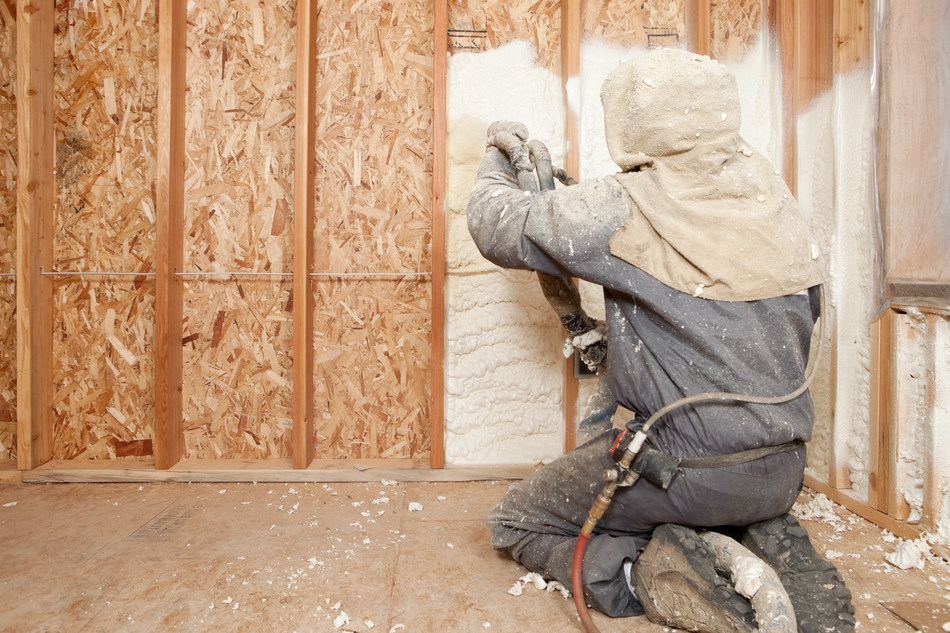
Dow approves Univar Solutions to carry range of polyols and isocyanates in U.S. and Canada MIDLAND, Mich. and DOWNERS GROVE, Ill., May 28, 2019 /PRNewswire/ — Dow (NYSE: DOW) and Univar Inc. (NYSE: UNVR) (“Univar Solutions”) today announced Dow has selected Univar Solutions as a key North American channel to market, distributing Dow’s broad product portfolio of polyols and isocyanates effective April 1, 2019. Univar Solutions, a company recently created from the combination of Univar and Nexeo Solutions, brings some of the best customer service offerings in the industry and is ready to serve as an authorized channel for Dow’s breakthrough polyurethane products across the U.S. and Canada. Univar Solutions is a leading global chemical and ingredient solutions provider, combining a comprehensive logistical offering with expert-level technical know-how. “The power of Dow’s wide ranging solution sets paired with the customer experience that Univar Solutions offers, is the collaboration needed to help downstream formulators innovate and grow,” said Caio Sedeno, North America commercial director for Dow Polyurethanes. “In CASE formulations, we have a broad range of polyols, formulated polyol blends and pre-polymer offerings that will help deliver on ever-advancing application needs.” As both Univar and Dow emerge from recent merger and acquisition transactions, their priorities are aligned and remain clear: offering solutions and experiences to their customers that help drive value. “Through our mission to streamline, innovate and grow, Univar Solutions focuses on enriching the buying experience to create an ecosystem of transparency for our customers and suppliers,” said Mark Fisher, president, Univar Solutions USA. “Combining the product and innovation breadth of Dow with Univar Solutions’ formulation expertise in our Technical Solution Centers, as well as through the digital tools that we deploy, will be a winning, value creating partnership for the industry.” https://www.prnewswire.com/news-releases/dow-selects-univar-solutions-as-a-key-channel-to-market-for-polyurethanes-in-north-america-300856736.htmlDow Selects Univar Solutions as a Key Channel to Market for Polyurethanes in North America

June 7, 2019
Dow approves Univar Solutions to carry range of polyols and isocyanates in U.S. and Canada MIDLAND, Mich. and DOWNERS GROVE, Ill., May 28, 2019 /PRNewswire/ — Dow (NYSE: DOW) and Univar Inc. (NYSE: UNVR) (“Univar Solutions”) today announced Dow has selected Univar Solutions as a key North American channel to market, distributing Dow’s broad product portfolio of polyols and isocyanates effective April 1, 2019. Univar Solutions, a company recently created from the combination of Univar and Nexeo Solutions, brings some of the best customer service offerings in the industry and is ready to serve as an authorized channel for Dow’s breakthrough polyurethane products across the U.S. and Canada. Univar Solutions is a leading global chemical and ingredient solutions provider, combining a comprehensive logistical offering with expert-level technical know-how. “The power of Dow’s wide ranging solution sets paired with the customer experience that Univar Solutions offers, is the collaboration needed to help downstream formulators innovate and grow,” said Caio Sedeno, North America commercial director for Dow Polyurethanes. “In CASE formulations, we have a broad range of polyols, formulated polyol blends and pre-polymer offerings that will help deliver on ever-advancing application needs.” As both Univar and Dow emerge from recent merger and acquisition transactions, their priorities are aligned and remain clear: offering solutions and experiences to their customers that help drive value. “Through our mission to streamline, innovate and grow, Univar Solutions focuses on enriching the buying experience to create an ecosystem of transparency for our customers and suppliers,” said Mark Fisher, president, Univar Solutions USA. “Combining the product and innovation breadth of Dow with Univar Solutions’ formulation expertise in our Technical Solution Centers, as well as through the digital tools that we deploy, will be a winning, value creating partnership for the industry.” https://www.prnewswire.com/news-releases/dow-selects-univar-solutions-as-a-key-channel-to-market-for-polyurethanes-in-north-america-300856736.htmlDow Selects Univar Solutions as a Key Channel to Market for Polyurethanes in North America
June 5, 2019
I lived in IL multiple times, but I’m not going back . . . like the rain tax in NJ
EV Owners In Illinois Must Pay $248 A Year To Make Up For Lost Gas Tax Revenue
As if people in Illinois weren’t being taxed enough as a result of the state’s ongoing pension crisis, now electric vehicle owners in the lowest rated state are going to have to pay $248 in annual registration fees next year – $100 more than what owners of gas burning cars pay – according to the Chicago Tribune.
The higher fee is part of the state’s road improvement legislation. The fee is a massive hike from the $17.50 a year that EV owners currently pay, but significantly lower than $1000 fee that lawmakers proposed last month in a bid to compensate for the loss of state gas tax revenue.
Tom Coleman, 69, of Naperville said: “They’ve cut it back from an outrageous number to a more reasonable number. Most EV owners are going to feel a lot better than $1,000, but still upset.”

Of course, just because it’s been postponed does not mean it will not happen, and with the state chronically on the very of insolvency, Illinois will keep on trying to extra a pound, or several hundred gallons, of virtual gasoline from environmentally conscious electric car owners.
As a reminder, over the weekend, the Illinois General Assembly approved the governor’s $45 billion package of transportation infrastructure improvements which boosted things like vehicle registration fees to fund it. The gas tax in Illinois, which is already one of the highest in the United States, will be doubled to $.38 per gallon and the annual registration fee will jump to $148, from $50, for most gas burning vehicles.
And since EVs don’t use gas, EV owners don’t pay any gas tax. This has prompted the state to assess an additional hundred dollars per year to EV owners in lieu of motor fuel taxes. In other words, congratulations EV owners, you’re still paying for gas, even if indirectly.
Hybrids, which still use gas as a supplement to electric power, are not included in the registration surcharge. Legislation introduced last month by Democratic Senator Martin Sandoval of Chicago would have raised the annual EV registration to $1,000. That proposal was met with pushback from EV manufacturers and owners, who called it “unfair” and a “disincentive”.
Companies like Rivian are calling the $248 fee reasonable compared to the initial fee proposed.
Rivian spokesman Michael McHale said: “We appreciate the stance taken by the Illinois legislature on this issue as we continue our build out and investment in the Normal, IL factory that will help increase the numbers of electric vehicles on the roads of Illinois.”

EV sales have been gaining traction over recent years, fueled in part by state and federal incentives. But charging owners more to drive an electric vehicle in Illinois might slow down the momentum for EVs in the state. Illinois ranked seventh in EV sales last year at 6,400 vehicles, and with a total of about 15,000 electric vehicles registered in the state. Coleman received a $7,500 federal tax credit on his $40,000 Chevy Bolt last year. He didn’t get any incentives from Illinois and commented that the $248 fee was fair for the state’s much-needed road repairs.
He stated: “A lot of EV people aren’t going to be happy, although I think we need to do our fair share. These roads really suck around here.”
And we know this idea is completely foreign, but instead of incentivizing and decentivizing over and over, perhaps the state might at some point consider actually allowing the free market to determine what vehicles should wind up on the road. We understand that this plays into legislators’ nightmarish fears of not being able to find things to tax, but we’re sure they’d find something…
https://www.zerohedge.com/news/2019-06-04/ev-owners-illinois-must-pay-248-year-make-lost-gas-tax-revenue
June 5, 2019
I lived in IL multiple times, but I’m not going back . . . like the rain tax in NJ
EV Owners In Illinois Must Pay $248 A Year To Make Up For Lost Gas Tax Revenue
As if people in Illinois weren’t being taxed enough as a result of the state’s ongoing pension crisis, now electric vehicle owners in the lowest rated state are going to have to pay $248 in annual registration fees next year – $100 more than what owners of gas burning cars pay – according to the Chicago Tribune.
The higher fee is part of the state’s road improvement legislation. The fee is a massive hike from the $17.50 a year that EV owners currently pay, but significantly lower than $1000 fee that lawmakers proposed last month in a bid to compensate for the loss of state gas tax revenue.
Tom Coleman, 69, of Naperville said: “They’ve cut it back from an outrageous number to a more reasonable number. Most EV owners are going to feel a lot better than $1,000, but still upset.”
Of course, just because it’s been postponed does not mean it will not happen, and with the state chronically on the very of insolvency, Illinois will keep on trying to extra a pound, or several hundred gallons, of virtual gasoline from environmentally conscious electric car owners.
As a reminder, over the weekend, the Illinois General Assembly approved the governor’s $45 billion package of transportation infrastructure improvements which boosted things like vehicle registration fees to fund it. The gas tax in Illinois, which is already one of the highest in the United States, will be doubled to $.38 per gallon and the annual registration fee will jump to $148, from $50, for most gas burning vehicles.
And since EVs don’t use gas, EV owners don’t pay any gas tax. This has prompted the state to assess an additional hundred dollars per year to EV owners in lieu of motor fuel taxes. In other words, congratulations EV owners, you’re still paying for gas, even if indirectly.
Hybrids, which still use gas as a supplement to electric power, are not included in the registration surcharge. Legislation introduced last month by Democratic Senator Martin Sandoval of Chicago would have raised the annual EV registration to $1,000. That proposal was met with pushback from EV manufacturers and owners, who called it “unfair” and a “disincentive”.
Companies like Rivian are calling the $248 fee reasonable compared to the initial fee proposed.
Rivian spokesman Michael McHale said: “We appreciate the stance taken by the Illinois legislature on this issue as we continue our build out and investment in the Normal, IL factory that will help increase the numbers of electric vehicles on the roads of Illinois.”
EV sales have been gaining traction over recent years, fueled in part by state and federal incentives. But charging owners more to drive an electric vehicle in Illinois might slow down the momentum for EVs in the state. Illinois ranked seventh in EV sales last year at 6,400 vehicles, and with a total of about 15,000 electric vehicles registered in the state. Coleman received a $7,500 federal tax credit on his $40,000 Chevy Bolt last year. He didn’t get any incentives from Illinois and commented that the $248 fee was fair for the state’s much-needed road repairs.
He stated: “A lot of EV people aren’t going to be happy, although I think we need to do our fair share. These roads really suck around here.”
And we know this idea is completely foreign, but instead of incentivizing and decentivizing over and over, perhaps the state might at some point consider actually allowing the free market to determine what vehicles should wind up on the road. We understand that this plays into legislators’ nightmarish fears of not being able to find things to tax, but we’re sure they’d find something…
https://www.zerohedge.com/news/2019-06-04/ev-owners-illinois-must-pay-248-year-make-lost-gas-tax-revenue
June 4, 2019
Major automakers post U.S. higher May new vehicle sales
(Reuters) – Major automakers on Monday reported better-than-expected U.S. new vehicle sales for May, posting the first monthly increase for 2019 as a strong economy and upbeat consumer sentiment boosted demand.
U.S. new vehicle sales through April had fallen 3 percent, fueling expectations of a weaker year for automakers in 2019 than last year, and May sales were expected to remain weak.
Concerns of a downturn have been further heightened by recent threats from U.S. President Donald Trump that he will impose new tariffs on all Mexican imports.
Cox Automotive analyst Charlie Chesbrough said the May sales figures were a “complete reversal from a slow April,” adding that “there’s no denying many of the economic indicators we follow support strong sales,” including high consumer confidence, stabilizing interest rates and low unemployment.
Fiat Chrysler Automobiles NV (FCA), reported a 2.1% rise in sales as demand for both light- and heavy-duty pickup trucks remained strong. The Ram pickup, a major profit-driver for FCA, had a 33 percent gain in sales versus May 2018.
FCA and General Motors Co have both launched redesigned pickup trucks. Ford Motor Co has for decades built the single best-selling truck brand with its F-Series trucks, with the Chevy brand a solid No. 2 and Ram a distant third. But in the first quarter of this year, Ram brand trucks outsold Chevrolet-brand trucks.
Both GM and Ford report sales quarterly instead of on a monthly basis.
Japanese automaker Toyota Motor Corp posted a 3.2% sales increase, boosted by strong demand for its Camry sedans.
Nissan Motor Co Ltd said its sales rose 0.1%, driven by SUV and truck sales. The Japanese automaker’s sales in the first fourth months of the year had fallen more than the industry average. Nissan has been heavily reliant on consumer discounts and low-margin fleet sales to boost U.S. demand, but its market share has dropped since 2016.
Hyundai Motor Co reported a 2% increase in sales, driven by strong results for its SUV models.
Honda Motor Co Ltd reported a 4.9% drop in sales for May, driven by declining sedan sales.
Passenger car sales have fallen steadily as Americans abandon sedans in favor of larger, more comfortable pickup trucks and SUVs, which are also far more profitable for automakers.
U.S. auto sales are expected to be about 16.9 million units in 2019, a 2.5% fall from 2018, according to industry consultants J.D. Power and LMC Automotive.
https://www.reuters.com/article/us-usa-autos-sales/major-automakers-post-us-higher-may-new-vehicle-sales-idUSKCN1T41TD
 Everchem Updates Archive
 Sign Up for Email Updates