
The Urethane Blog
August 27, 2024
By Dakota Smith
August 26, 2024 | 10:57 am CDT

Sales of newly built, single-family homes in July rose 10.6% to a 739,000 seasonally adjusted annual rate from significant upward revisions in June, according to newly released data from the U.S. Department of Housing and Urban Development and the U.S. Census Bureau. The pace of new home sales in July is up 5.6% from a year earlier. After the notably higher revisions for the May and June data, new home sales from January through July of 2024 are up 2.6% in 2024 compared to the same period in 2023.
“Despite the monthly bump in new home sales data, higher rates continue to sideline buyers as housing affordability challenges remain,” said Carl Harris, chairman of the National Association of Home Builders (NAHB) and a custom home builder from Wichita, Kansas. “The only sustainable way to ease high housing costs is to implement policies that allow builders to construct more attainable, affordable housing.”

“While mortgage rates moved lower in July, the Census estimated gains for new home sales do not match recent industry survey data including the NAHB/Wells Fargo Housing Market Index which showed weakness in the current sales index,” said NAHB chief economist Robert Dietz. “The Census estimate of new home sales is often volatile and subject to revisions and it is possible that the July estimate for sales will be revised lower next month. NAHB is forecasting gradual improvements for the home building sector as the Fed eases monetary policy and mortgage interest rates trend lower.”
A new home sale occurs when a sales contract is signed, or a deposit is accepted. The home can be in any stage of construction: not yet started, under construction, or completed. In addition to adjusting for seasonal effects, the July reading of 739,000 units is the number of homes that would sell if this pace continued for the next 12 months.
New single-family home inventory in July ticked lower to a level of 462,000, down 1.1% from the previous month. This represents a 7.5 months supply at the current building pace. While this reduced level of months’ supply is above the commonly used balance measure of 6, the measure of total home inventory is lower. Given a lean level of resale inventory, total home inventory (new and existing) is near 4.5, which remains low.
The median new home price was $429,800, up 3.1% compared to last month, and a 1.4% decrease from this time last year.
Regionally, on a year-to-date basis, new home sales are up 5.4% in the Northeast, 22.1% in the Midwest and 6.1% in the West. New home sales are down 2.4% in the South.
https://www.woodworkingnetwork.com/news/woodworking-industry-news/new-home-sales-rise-july
August 26, 2024
Canadian agency upholds binding arbitration order to end rail dispute
Union says it will appeal ruling to federal court
· Saturday, August 24, 2024

This story originally appeared on Trains.com.
OTTAWA, Ontario — The Canada Industrial Relations Board has affirmed the decision by Labor Minister Steven MacKinnon to end the work stoppages at Canadian National Railway and Canadian Pacific Kansas City, requiring the railroads to resume operations and to impose binding arbitration between the railroads and the Teamsters Canada Rail Conference to resolve new contract terms.
Operations are to resume by 12:01 a.m. ET on Monday, Aug. 26, while the labor contract that expired on Dec. 31, 2023, is extended until a new agreement is completed. The start of the arbitration process will begin with a meeting with the CIRB on Thursday, Aug. 29, at 11 a.m. ET.
In response to the decision this evening (Saturday, Aug. 24), the union has said it will comply, but will also appeal the CIRB ruling to federal court.
“This decision by the CIRB sets a dangerous precedent,” TCRC President Paul Boucher said in a statement. “It signals to corporate Canada that large companies need only stop their operations for a few hours, inflict short-term economic pain, and the federal government will step in to break a union. The rights of Canadian workers have been significantly diminished today.”
A statement from Canadian National says the railroad will comply with the order. “While CN is disappointed an agreement could not be reached at the bargaining table,” the statement reads, “the company is satisfied that this order effectively ends the unpredictability that has been negatively impacting supply chains for months.”
CPKC also said it would comply and was ending the lockout it imposed on Aug. 22. The railroad’s statement said it was asking TCRC workers to return to work for the day shift on Sunday, Aug. 25, “so that we can get the Canadian economy moving again as quickly as possible and avoid further disruption to supply chains.” CPKC said the CIRB ruling “ends months of unnecessary uncertainty and disruption” for the economy, but also cautioned that it will take “several weeks” for the rail network to fully recover and “a period of time beyond that for supply chains to stabilize.”
The CIRB, in a pair of decisions — one addressing each railroad — said it determined it “does not have the authority to review the minister’s directions or to assess their validity,” saying that is a matter for the courts, and that it further “has no discretion for ability to refuse to implement, in whole or in part, the minister’s directions or to modify their terms.”
MacKinnon had announced his decision to send the matter to arbitration on Thursday, Aug. 22 — about 17 hours after both railroads locked out members of the TCRC. But rail operations remained in limbo as CPKC awaited the board’s ruling before advancing its plans to restart operations and the union kept its picket lines up at that railroad in the interim. CN ended its lockout on Thursday at 6 p.m. and the union originally said it would return, but then issued a strike notice effective at 10 a.m. on Monday, Aug. 26, while it awaited the CIRB action, saying the move was intended to “pressure CN into negotiating an agreement.”
CN’s statement notes that the CIRB ruling prohibits any further labor stoppage during the arbitration process, and therefore voids the TCRC strike notice.
MacKinnon, in a post this evening on social media site X, said he expected the railroads and employees to “resume operations at the earliest opportunity.”
August 25, 2024
Covestro, Holcim help German investigators after drone flights over plants

Published 08/23/2024, 06:49 AM
Updated 08/23/2024, 08:13 AM

© Reuters.
By Friederike Heine and Paolo Laudani
GDANSK/BERLIN (Reuters) – German chemicals group Covestro and Swiss cement maker Holcim (SIX:HOLN) said on Friday they were helping Germany probe suspected espionage after drones were flown over industrial sites.
Prosecutors said on Thursday they had opened an investigation into repeated drone flights over critical infrastructure in northern Germany that were suspected of spying for sabotage purposes.
The German military’s Territorial Command, responsible for domestic military bases, said it had complied with a police request to provide radar data on the suspicious drone flights.
Covestro and Holcim are among a group of chemical, energy and logistics companies that have operations in the ChemCoast Park industrial area in Brunsbuettel in the northern state of Schleswig-Holstein.
“At the request of the authorities, we are providing support in their investigations,” Covestro said in an emailed response to Reuters.
Holcim said it was in close dialogue with the authorities and had not taken any further measures.
German oil and gas company Wintershall Dea said it was not aware of any drone flights over its extraction operations in Brunsbuettel, but added it was monitoring the situation closely.
The prosecutor’s office declined to provide updates on the investigation on Friday, while criminal and state police did not reply to requests for comment.
On Thursday, Bild newspaper cited state criminal police as saying the drones in question were likely to have been Russian Orlan-10s, which have a range of 500-600 kilometres (310-372 miles) and can fly at over 100 kph (62 mph).
Germany, one of Ukraine’s biggest suppliers of military aid since Russia’s invasion in 2022, has been on increased alert over sabotage activity. Earlier this month authorities sealed off a military base near Cologne on suspicion of contaminated tap water that turned out to be false.
In April, two German-Russian nationals were arrested on suspicion of plotting sabotage attacks, in what officials called a serious effort to undermine military support for Ukraine.
August 23, 2024
Canadian Labor Minister Puts End To National Railroad Strike, Orders Arbitration
by Tyler Durden
Friday, Aug 23, 2024 – 08:35 AM
Authored by David Lassen via Trains.com,
The Canadian government has moved to end Canada’s freight rail work stoppage – the first to shut down both Canadian National and Canadian Pacific Kansas City simultaneously.
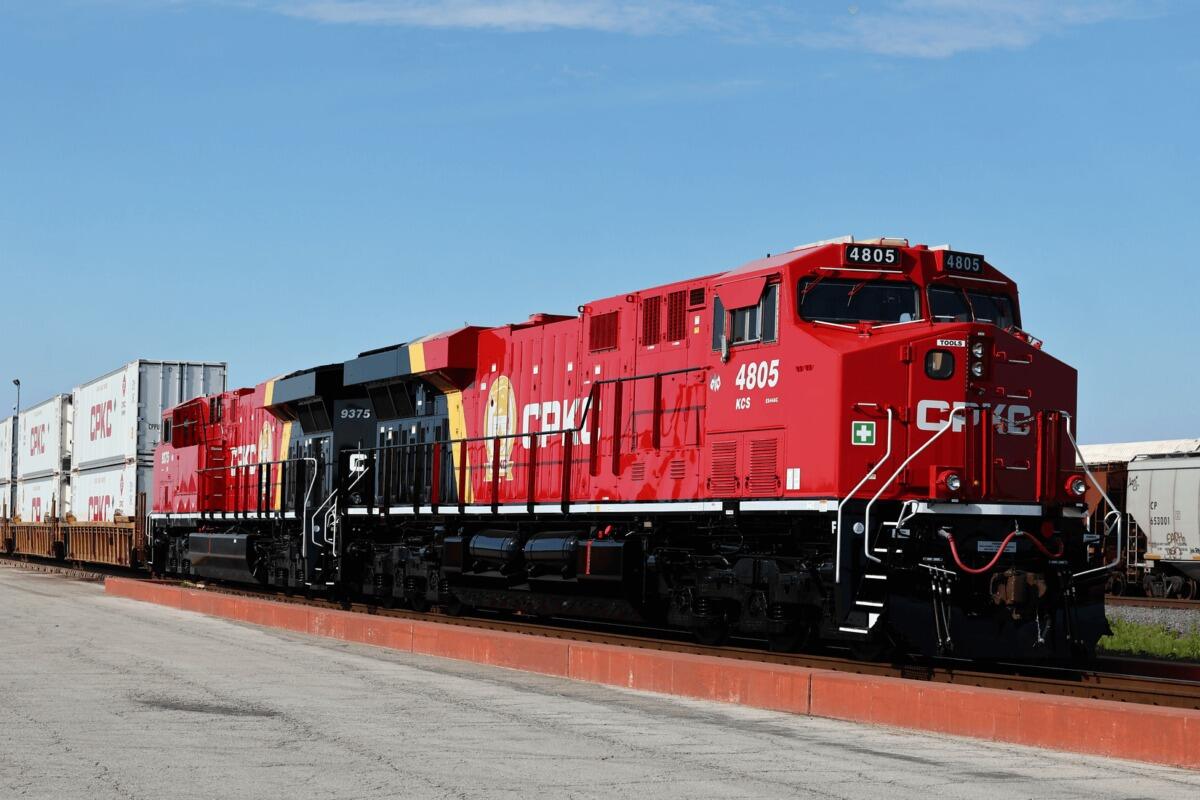
However, while the two railroads say they are preparing to resume operations after Labor Minister Steven MacKinnon sent the dispute to binding arbitration, the Teamsters Canada Rail Conference says it will maintain picket lines while it reviews MacKinnon’s action.
And the CBC reports that MacKinnon’s move might not bring an immediate end to the lockouts of TCRC engineers and conductors that began at the two railroads at 12:01 a.m. today (Aug. 22).
Also locked out were rail traffic controllers at CPKC represented by the same union.
“These collective bargaining negotiations belong to CN Rail, CPKC and TCRC alone — but their effects, and the impacts of the current impasse, are being borne by all Canadians,” MacKinnon said.
“As Minister of Labour, it is my assessment that the parties are at a fundamental impasse. Therefore, it is my duty and responsibility to invoke my authorities under the Canada Labour Code to secure industrial peace and deliver the short and long-term solutions that are in the national interest.”
The existing contracts between the TCRC and both railways will be extended until new agreements are signed. Negotiated agreements are always preferable, MacKinnon said, but the needs of the nation outweighed the need for a contract deal reached at the bargaining table.
“Workers, farmers, commuters and businesses rely on Canada’s railways everyday, and will continue to do so. It is the government’s duty and responsibility to ensure industrial peace in this critically vital sector,” MacKinnon said.
“Thus, we will be examining why we experience repeated conflicts in the railway sector and the conditions that led to the parallel work stoppages we are seeing. Canadians can be assured that their government will not allow them to suffer when parties do not fulfill their responsibility. Especially where their livelihoods, worker safety, and communities are at stake.”
CN said in a statement this evening that it had ended its lockout as of 6 p.m. ET and initiated its recovery plan, acting in advance of a formal order from the Canada Industrial Relations Board “to expedite the recovery of the economy.
“While CN is satisfied that this labour conflict has ended and that it can get back to its role of powering the economy,” the railroad said in its statement, “the company is disappointed that a negotiated deal could not be achieved at the bargaining table despite its best efforts.
CPKC said it is preparing to restart operations and will provide further details about the timing once it receives the CIRB’s order.
“The Canadian government has recognized the immense consequences of a railway work stoppage for the Canadian economy, North American supply chains. and all Canadians,” CPKC CEO Keith Creel said in a statement.
“The government has acted to protect Canada’s national interest. We regret that the government had to intervene because we fundamentally believe in and respect collective bargaining; however, given the stakes for all involved, this situation required action.”
The TCRC said it was keeping picket lines in place while it reviewed MacKinnon’s move, the response by the CIRB, and sought legal counsel.
The union’s president, Paul Boucher, said the government’s action “allowed CN and CPKC to sidestep a union determined to protect rail safety. Despite claiming to value and honour the collective bargaining process, the federal government quickly used its authority to suspend it, mere hours after an employer-imposed work stoppage. … The two major railways in Canada manufactured this crisis, took the country hostage, and manipulated the government to once again disregard the rights afforded to working-class Canadians. “
Boucher called the decision “shameful” and said the government had made the decision “only because they knew their minority could not gather the support needed to pass a legislated resolution to appease the railways.”
Meanwhile, Lisa Raitt, labor minister under former prime minister Stephen Harper, told the CBC that the parties still have to agree to arbitration: “Maybe you can write to the CIRB and ask them to impose binding arbitration … but there’s no way a minister can write a letter and say that everyone goes back to work and I’m sending you to binding arbitration.”
MacKinnon said he is “confident” that his move will end the shutdown, but hedged in saying it would definitely do so, noting that the CIRB is an independent body.
“They have a process that requires consultation with the parties,” he said.
“They will be doing that and rendering a decision, I hope very quickly. … I want to be deferential to the process that will unfold.”
CN and CPKC had both sought arbitration to end the dispute, with MacKinnon last week denying a request from CN to require arbitration. At the time, MacKinnon said it was the “shared responsibility” of CN and the union to negotiate in good faith.
Prime Minister Justin Trudeau said in a post on X.com that while collective bargaining is preferred:
“When that is no longer a foreseeable option — when we are facing serious consequences to our supply chains and the workers who depend on it — governments must act.”
Transport Minister Pablo Rodriguez, reacting to MacKinnon’s move, wrote on X.com that the government “is acting to preserve the stability and certainty that our entire economy is renowned for across the world.”
The premiers of two prairie provinces with economies heavily reliant on rail transport — Scott Moe of Saskatchewan and Danielle Smith of Alberta, who had both called for federal action — welcomed the intervention in comments on X.com.
Moe wrote that the government “took the appropriate action … to end the rail stoppage and ensure our Canadian products are moving to market again.”
Smith wrote that she was “pleased to see” that MacKinnon had taken action.
August 22, 2024
Single family built-for-rent starts increase
By Dakota Smith
August 21, 2024 | 10:36 am CDT

According to NAHB’s analysis of data from the Census Bureau’s Quarterly Starts and Completions by Purpose and Design, there were approximately 23,000 single-family built-for-rent (SFBFR) starts during the second quarter of 2024. This is almost 10% higher than the second quarter of 2023. Over the last four quarters, 83,000 such homes began construction, which is a more than 20% increase compared to the 69,000 estimated SFBFR starts in the four quarters before that period.
The SFBFR market is a source of inventory amid challenges over housing affordability and down payment requirements in the for-sale market, particularly during a period when a growing number of people want more space and a single-family structure. Single-family built-for-rent construction differs in terms of structural characteristics compared to other newly built single-family homes, particularly concerning home size. However, investor demand for single-family homes, both existing and new, has cooled with higher interest rates. Nonetheless, builders continue to build projects of built-for-rent homes for their operation.

Given the relatively small size of this market segment, the quarter-to-quarter movements typically are not statistically significant. The current four-quarter moving average of market share (8%) is nonetheless higher than the historical average of 2.7% (1992-2012).
Importantly, as measured for this analysis, the estimates noted above include only homes built and held by the builder for rental purposes. The estimates exclude homes that are sold to another party for rental purposes, which NAHB estimates may represent another three to five percent of single-family starts based on industry surveys.
The Census data notes an elevated share of single-family homes built as condos (non-fee simple), with this share averaging more than 3% over recent quarters. Some, but certainly not all, of these homes will be used for rental purposes. Additionally, it is theoretically possible some single-family built-for-rent units are being counted in multifamily starts, as a form of “horizontal multifamily,” given these units are often built on a single plot of land. However, spot checks by NAHB with permitting offices indicate no evidence of this data issue occurring.
Nonetheless, demand by investors for single-family rental units, new and existing, has cooled in recent quarters as financial conditions remain tight. This will continue to cool some investor demand for SFBFR housing.
With the onset of the Great Recession and declines in the homeownership rate, the share of built-for-rent homes increased in the years after the recession. While the market share of SFBFR homes is small, it has expanded. Given affordability challenges in the for-sale market, the SFBFR market will likely retain an elevated market share even as the sector cools in the quarters ahead.
 Everchem Updates Archive
 Sign Up for Email Updates
