
Technology
January 21, 2021
Driverless Trucks
Aurora And PACCAR Team Up In Autonomous Truck Push
by Tyler DurdenThursday, Jan 21, 2021 – 14:30
Submitted by Market Crumbs,
Just last month Uber unloaded its self-driving unit, Advanced Technologies Group, to Aurora to accelerate the development of the Aurora Driver, which is hoping to become the autonomous driving platform powering everything from passenger vehicles to heavy-duty trucks.
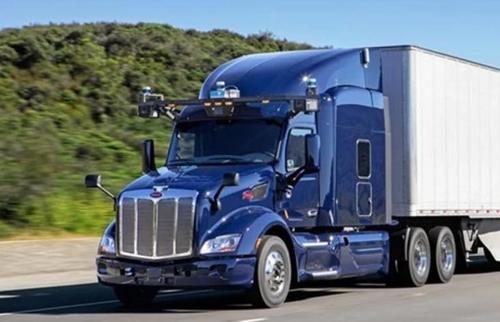
Aurora is backed by names such as Amazon and Sequoia with Uber now reportedly holding a more than 25% stake in the company following last month’s deal. Aurora was co-founded by Chris Urmson, who headed Google’s self-driving division for nearly eight years and is one of the most widely regarded names in the self-driving vehicle space.
Aurora didn’t take long to announce its next move following the acquisition of ATG as the company signed a global strategic partnership with trucking giant PACCAR to bring a self-driving trucks powered by the Aurora Driver to market in the coming years.
The partnership will see the two companies develop, test and commercialize autonomous Peterbilt and Kenworth trucks. Kenworth T680 and Peterbilt 579 trucks running on the Aurora Driver are expected to be deployed in North America over the next few years.
“PACCAR looks forward to partnering with Aurora because of their industry-leading autonomous driving technology and impressive team,” PACCAR CEO Preston Feight said. “This strategic partnership complements PACCAR’s best-in-class commercial vehicle quality, technology and innovation.”
The partnership is a win for Aurora, which says it has already been using PACCAR trucks for many of its test vehicles. Aurora will provide self-driving technology such as hardware, software and operational services, while PACCAR will use its more than 100 years of experience in the trucking sector to contribute autonomous-enabled vehicles and aftermarket parts distribution, finance and other transportation solutions.
“Working together, we’ve been impressed with PACCAR’s product engineering, manufacturing capabilities, and commitment to enhancing its customers’ operational safety and efficiency,” Urmson said. “This partnership brings us one step closer to unlocking the autonomous freight market and delivering goods to those who need them.”
If successful, the partnership could be further applied to other models under the Peterbilt and Kenworth brands, while also expanding outside of the U.S. through PACCAR’s other brands such as Dutch truck manufacturer DAF Trucks.
Fresh off its deal to acquire Uber’s self-driving unit, Aurora now has the perfect partner in PACCAR to help accelerate the development and commercialization of autonomous trucks globally.
https://www.zerohedge.com/markets/aurora-and-paccar-team-autonomous-truck-push
January 21, 2021
Driverless Trucks
Aurora And PACCAR Team Up In Autonomous Truck Push
by Tyler DurdenThursday, Jan 21, 2021 – 14:30
Submitted by Market Crumbs,
Just last month Uber unloaded its self-driving unit, Advanced Technologies Group, to Aurora to accelerate the development of the Aurora Driver, which is hoping to become the autonomous driving platform powering everything from passenger vehicles to heavy-duty trucks.
Aurora is backed by names such as Amazon and Sequoia with Uber now reportedly holding a more than 25% stake in the company following last month’s deal. Aurora was co-founded by Chris Urmson, who headed Google’s self-driving division for nearly eight years and is one of the most widely regarded names in the self-driving vehicle space.
Aurora didn’t take long to announce its next move following the acquisition of ATG as the company signed a global strategic partnership with trucking giant PACCAR to bring a self-driving trucks powered by the Aurora Driver to market in the coming years.
The partnership will see the two companies develop, test and commercialize autonomous Peterbilt and Kenworth trucks. Kenworth T680 and Peterbilt 579 trucks running on the Aurora Driver are expected to be deployed in North America over the next few years.
“PACCAR looks forward to partnering with Aurora because of their industry-leading autonomous driving technology and impressive team,” PACCAR CEO Preston Feight said. “This strategic partnership complements PACCAR’s best-in-class commercial vehicle quality, technology and innovation.”
The partnership is a win for Aurora, which says it has already been using PACCAR trucks for many of its test vehicles. Aurora will provide self-driving technology such as hardware, software and operational services, while PACCAR will use its more than 100 years of experience in the trucking sector to contribute autonomous-enabled vehicles and aftermarket parts distribution, finance and other transportation solutions.
“Working together, we’ve been impressed with PACCAR’s product engineering, manufacturing capabilities, and commitment to enhancing its customers’ operational safety and efficiency,” Urmson said. “This partnership brings us one step closer to unlocking the autonomous freight market and delivering goods to those who need them.”
If successful, the partnership could be further applied to other models under the Peterbilt and Kenworth brands, while also expanding outside of the U.S. through PACCAR’s other brands such as Dutch truck manufacturer DAF Trucks.
Fresh off its deal to acquire Uber’s self-driving unit, Aurora now has the perfect partner in PACCAR to help accelerate the development and commercialization of autonomous trucks globally.
https://www.zerohedge.com/markets/aurora-and-paccar-team-autonomous-truck-push
January 7, 2021
Glycolysis Analysis
Life Cycle Assessment of Polyurethane Foams from Polyols Obtained through Chemical Recycling
- Alessandro Marson
- Massimiliano Masiero
- Michele Modesti
- Antonio Scipioni
- Alessandro Manzardo*
Cite this: ACS Omega 2021, XXXX, XXX, XXX-XXXPublication Date:January 7, 2021https://doi.org/10.1021/acsomega.0c05844
Abstract

In this research, the results of the life cycle assessment of polyurethane (PUR) foams with different recycled polyol contents are presented. A methodological framework implementing laboratory activities directly into the life cycle assessment has been developed. Laboratory activities made the primary data related to the recycled polyol production available through the glycolysis of polyurethane scraps and the subsequent production and characterization of the foams. Five different formulations were analyzed with glycolyzed polyol content ranging from 0 to 100%. A comprehensive set of impact categories was considered. To ensure the robustness of the results, the influence of two different end-of-life allocation approaches was investigated, and the model was subjected to sensitivity and uncertainty analyses. Formulations with recycled content of 50 and 75% scored better environmental impacts compared to others. The main contributions to the overall impact resulted to be related to the production of isocyanate and virgin polyol. Physical characteristics such as density and thermal conductivity emerged as the main variables to be considered to minimize the overall environmental impacts of PUR foams.
Read more here:
January 7, 2021
Glycolysis Analysis
Life Cycle Assessment of Polyurethane Foams from Polyols Obtained through Chemical Recycling
- Alessandro Marson
- Massimiliano Masiero
- Michele Modesti
- Antonio Scipioni
- Alessandro Manzardo*
Cite this: ACS Omega 2021, XXXX, XXX, XXX-XXXPublication Date:January 7, 2021https://doi.org/10.1021/acsomega.0c05844
Abstract
In this research, the results of the life cycle assessment of polyurethane (PUR) foams with different recycled polyol contents are presented. A methodological framework implementing laboratory activities directly into the life cycle assessment has been developed. Laboratory activities made the primary data related to the recycled polyol production available through the glycolysis of polyurethane scraps and the subsequent production and characterization of the foams. Five different formulations were analyzed with glycolyzed polyol content ranging from 0 to 100%. A comprehensive set of impact categories was considered. To ensure the robustness of the results, the influence of two different end-of-life allocation approaches was investigated, and the model was subjected to sensitivity and uncertainty analyses. Formulations with recycled content of 50 and 75% scored better environmental impacts compared to others. The main contributions to the overall impact resulted to be related to the production of isocyanate and virgin polyol. Physical characteristics such as density and thermal conductivity emerged as the main variables to be considered to minimize the overall environmental impacts of PUR foams.
Read more here:
December 31, 2020
Sika Launch
Sika Launches its New Purform® Polyurethane Technology and Invests in Production Facilities in Düdingen
07/12/2020
Sika, the world’s biggest manufacturer of adhesives and sealants for the building sector and automotive industry, has developed a new polyurethane technology, which it is launching onto the market under the Purform® brand. The new polymers will first be integrated into Sika’s top seller Sikaflex®, as well as into liquid applied membranes. This innovation brings important benefits for customers: the products have an improved performance profile, are even more enduring, and have a strong sustainability profile. Investments in the associated production facilities were recently made at the Düdingen site. 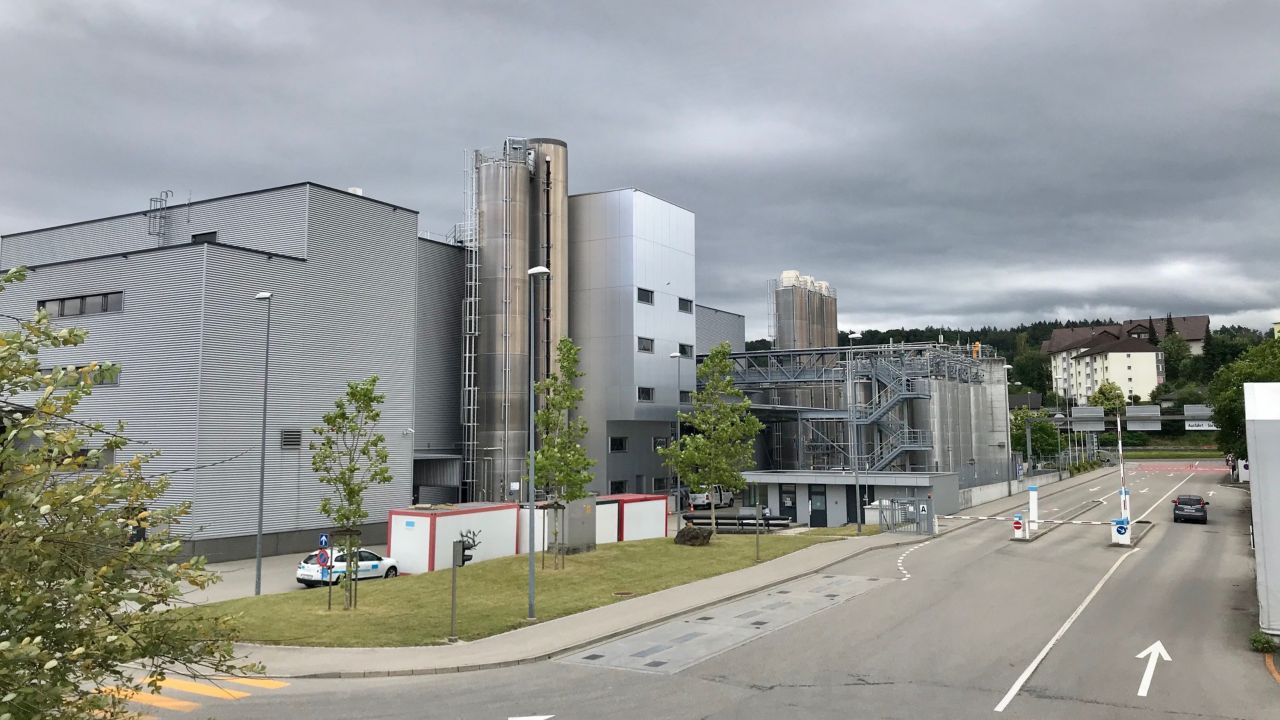
Polyurethanes have many different applications in the construction sector and automotive industry. For example, polyurethane-based joints are used in the weather-resistant sealing of facade elements on buildings, or to affix building components in infrastructure expansion or interior finishings with adhesives. These high-performance solutions are also used in the bonding of body components and battery systems for electric vehicles.
Thanks to its new Purform® technology, from 2021 on Sika will be supplying customers with products that not only satisfy the highest standards in terms of performance, but that are also in line with the upcoming stricter REACH regulations for enhanced health and safety safeguards for users.
Increased Performance with More Benefits for Customers
Sika products that use Purform® can offer customers major advantages. These include the process efficiency brought by less surface preparation with a simultaneous improvement in adhesive properties. The new technology also makes reliable, stress cracking-free bonding of plastics possible, and delivers the best compatibility with sensitive surfaces such as natural stone. Products using the new technology can be extremely weather-resistant and can withstand exposure to UV light outdoors for considerably longer. Thanks to their high durability, they are also significantly more sustainable.
Expansion Investment in Switzerland
The next generation of polyurethanes will be produced at the Düdingen site, which is home to one of Sika’s largest manufacturing plants in Europe. By investing in this expansion, Sika is securing jobs in Switzerland over the long term.

” With the development of the new Purform® technology, our experts have created a further growth platform for Sika, with which we can expand our leading position. In line with our principle ‘more performance, more sustainable,’ we are rigorously implementing our Strategy 2023 from the viewpoint of sustainable, high-performance innovations. With our future-oriented solutions, we are the market leader and enable sustainable construction and transportation.”
Frank Höfflin, Chief Technology Officer
 Everchem Updates Archive
  Sign Up for Email Updates