
Company News
August 19, 2026
Edge-Sweets Company Expands Polymer Development
Edge-Sweets Company (ESCO) Expands Polymer Development Capabilities to Help Companies Take New Materials from Idea Through Formulation and Production
Expanded capabilities bring U.S.-based polymer chemistry, process engineering and equipment design together to help manufacturers move from the laboratory to the production floor
August 13, 2026 09:00 ET | Source: Edge-Sweets Company (ESCO)
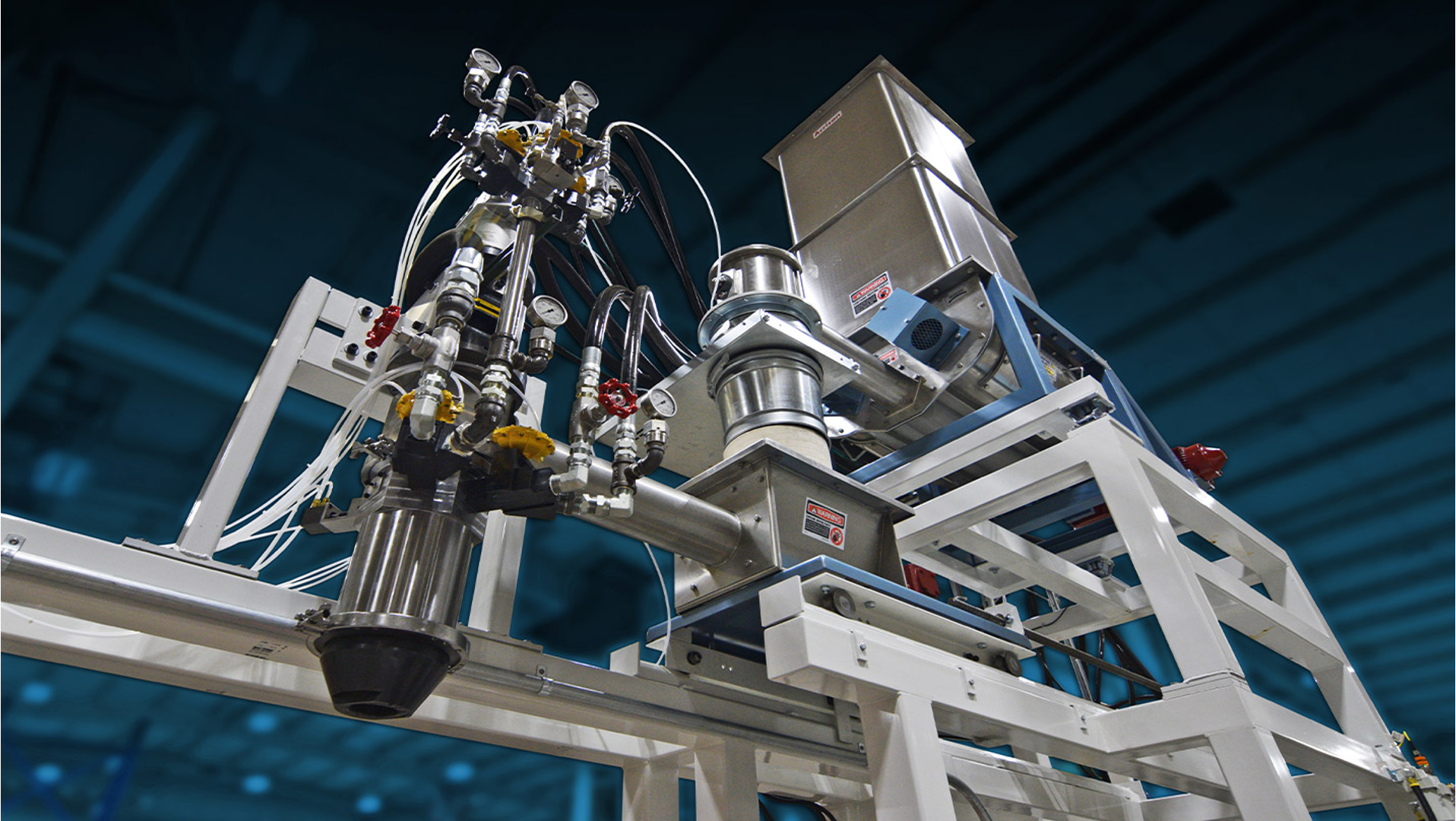
GRAND RAPIDS, Mich., Aug. 13, 2026 (GLOBE NEWSWIRE) — Edge-Sweets Company (ESCO), a Grand Rapids-based engineering and manufacturing firm with more than 140 years of industrial manufacturing history, is expanding its in-house capabilities to help manufacturers move new materials and establish the processes and equipment required to produce them at commercial scale.
Building on its longstanding expertise in custom polyurethane processing equipment, ESCO has expanded its capabilities to include polymer chemistry, applications development and process engineering, allowing customers to solve technical and manufacturing challenges with a single partner.
“Customers don’t always come to us with a finished formulation,” said Rick Speas, Applications Engineer at ESCO. “Often they know the product they want to manufacture, but the chemistry, processing requirements and production equipment are all evolving at the same time. By bringing chemists and engineers together, we can solve those challenges as one development process instead of several separate ones.”
Equipment design depends on chemistry. Variables such as viscosity, filler content and flow characteristics determine how a production system must be engineered, yet many manufacturers begin exploring production equipment before those parameters have been fully established. The expanded capability brings chemists and engineers together earlier in the development process, helping customers move more efficiently from formulation to full-scale production.
ESCO’s recent collaboration with Colorado-based Flora Materials, a developer of bio-based materials, demonstrates how these capabilities can be applied to an emerging material and its intended commercial application. ESCO supported on the formulation development, rapid prototyping, process engineering, and large-scale sample generation, which was recognized with a Best of NeoCon Sustainability Award, and are now helping the company scale up manufacturing to meet demand.
“Taking a new material from hand-poured samples to a repeatable manufacturing process takes the right combination of chemistry, equipment and people willing to solve problems together,” said Natalie York, CEO and founder of Flora Materials. “ESCO has been that kind of partner for Flora. Their team understands both the material and how it needs to be made, and working with them close to home has helped us continue testing, refining and moving toward production.”
Across its growing portfolio of polymer-development work, ESCO is helping companies address a wide range of material, processing and scale-up challenges. Projects include applications ranging from specialized aviation foam to composite panels made with difficult-to-recycle materials. Through its work with Sustainable Solutionz, for example, ESCO has developed a binder and production approach for composite panels incorporating recovered photopolymer printing plates and recycled feedstocks, while also exploring new applications for ocean-recovered plastics.
“Some of the most rewarding projects are the ones that don’t fit a standard process,” Speas said. “Those applications require chemistry, engineering and manufacturing expertise to evolve together. That’s where we believe we can create the greatest value.”
As manufacturers continue developing more advanced polymer systems, ESCO expects demand for integrated chemistry and engineering support to continue growing and is actively seeking opportunities to collaborate with product developers, chemical suppliers, manufacturers and entrepreneurs bringing new materials to market.
Projects typically begin under a mutual nondisclosure agreement, with intellectual-property ownership and any continuing chemistry-supply arrangements determined individually.
Manufacturers interested in polymer formulation, applications development, process engineering or custom dispensing equipment can contact Rick Speas at rspeas@edge-sweets.com to learn more.
About Edge-Sweets Company
Edge-Sweets Company (ESCO) is a Grand Rapids, Michigan-based engineering and manufacturing company specializing in polyurethane processing equipment, custom automation and polymer processing technologies. With industrial roots dating to 1883 and more than 140 years of manufacturing history, ESCO designs and builds custom equipment while providing polymer chemistry, applications development and process engineering support for manufacturers developing innovative products. The company serves customers across industries including furniture, bedding, construction, automotive, aerospace, medical and advanced manufacturing.
August 18, 2026
MLily USA Fire
Winnsboro factory fire puts jobs on hold, closes roads
By Deric Rush
Published: Aug. 17, 2026 at 7:41 PM EDT|Updated: 14 hours ago

FAIRFIELD COUNTY, S.C. (WIS) – A massive industrial fire that reignited overnight has destroyed the MLily USA mattress factory in Winnsboro, forcing major road closures, sparking environmental monitoring, and leaving hundreds of employees in a close-knit community facing sudden job loss.
Emergency crews from across the state remained on the scene Monday evening, battling a fire that has been burning continuously since late Sunday night. Officials warned it could be Tuesday before the active blaze is completely extinguished.
The Challenge of Water-Resistant Foam
The fire first began Sunday morning around 9 a.m. when a smoke alarm sounded at the plant. Fairfield County Fire Department crews initially brought the fire under control and contained it to a small area by Sunday evening.
However, at 11:30 p.m., the fire reignited and quickly tore through the entire production facility.
Firefighters faced unique obstacles trying to douse the flames inside the factory due to the tight layout and the chemical makeup of the materials used to manufacture mattresses.
“The foam is in a conveyor racking system that’s multi-levels high,” said Fairfield County EMS Chief Jamie Webb. “It’s very large pieces of foam. It’s hard to access in the locations it’s in. And that’s what created a challenge with it. It’s close quarters and a lot of material in one spot.”
In addition to the physical layout, the foam used in the mattresses is highly flammable yet water-resistant, making it incredibly difficult to fully put out. The stubborn nature of the chemical fire forced local agencies to request statewide reinforcements to handle the expanding scene.
Road Closures and Community Disruptions
As thick, black smoke drifted across Fairfield County, authorities shut down a major shipping corridor. Highway 321 South remains closed between Highway 34 and Highway 269, and officials expect it to stay blocked for the remainder of the day.
While local schools—including Fairfield County School District, Richard Winn Academy, and the STEM school—remained open on normal schedules, the detours heavily impacted school bus routes and morning commutes.
Bridgette Howell, a nearby gas station clerk, saw the flashing emergency lights and police blockades when she arrived for her shift early Monday morning.
“I turn into my job, then the customers start coming in telling me that the building was on fire,” Howell said. She added that the roadblock created a massive headache for her regulars. “It did mess up some customers. I mean, that go straight down 321, they had to detour 34, and then some of them had to go all the way around and come up 269.”
EPA Called in to Monitor Environmental Impact
Because of the heavy chemicals and foam stored inside the facility, local officials requested assistance from the federal government.
The South Carolina Department of Environmental Services (DES) brought in the Environmental Protection Agency (EPA) to monitor air and water runoff around the site.
“Any time you have a large fire, an industrial fire, there is runoff. And it gets into creeks. That’s just a side effect of any fire you have to fight,” said Fairfield County Administrator Vic Carpenter. “Contractors have already been brought on to start managing that. That’s one of the key things that EPA will be checking.”
State environmental officials and the EPA are currently analyzing air quality readings. Both agencies report that there is currently no hazardous air threat to the public, though they are still waiting on official finalized test results.
Local officials have urged residents to avoid the area due to shifting smoke plumes that can suddenly drop driving visibility to zero.
Sudden Job Loss Hits Close-Knit Town
The economic impact of the total loss of the facility is expected to be deeply felt. MLily USA is one of Fairfield County’s largest employers, sustaining several hundred local jobs.
While county officials say employees worked a condensed shift Sunday morning, they stressed employees safely evacuated when the fire broke out, and no injuries have been reported among factory staff or first responders.
Verdan Glover, who has worked as a groundskeeper at MLily since March, said employees had been warning management about maintenance and safety issues for months.
“I knew it was going to happen. Eventually. I knew it was going to happen,” Glover said. “Something. It was like the Bible. It was either going to be by water or by fire.”
Glover said that the factory’s equipment was constantly breaking down and that employees had suggested shutting down the plant temporarily to make necessary repairs, but management patched over the issues instead.
Now, Glover and hundreds of others are left without jobs.
“Life goes on. I’m just going to get another job. Especially after they see this,” Glover said, though he acknowledged the devastating impact this will have on colleagues who have fewer options. “Instead of taking those two weeks off [to fix things], now you don’t have a job at all.”
Fairfield County PIO Gene Stephens echoed the emotional toll on the community.
“This hurts a community like ours. We have such a close-knit community here,” Stephens said. “And something like this impacts a lot of people. Some are waking up today not knowing… they don’t have a job right now.”
MLily USA Releases Statement
In a statement sent to WIS on Monday afternoon, MLily USA officials expressed appreciation for local emergency crews and asked the public for patience:
“The fire at our facility remains an active scene at this time. Our immediate priority is the safety of our employees, first responders, and the surrounding community. Emergency personnel are on site and actively working to contain the fire, and we are cooperating fully with their response efforts. Because this is an active and developing situation, we do not yet have complete information regarding the cause of the fire or the extent of the damage. We are not aware of any injuries to individuals at this time.
We will provide additional information as it becomes available and can be confirmed. We are grateful to the first responders working at the scene and appreciate the community’s patience as emergency crews continue their response.”
https://www.wistv.com/2026/08/17/winnsboro-factory-fire-puts-jobs-hold-closes-roads
August 17, 2026
Sinochem to Expand HDI Capacity
Sinochem International increases investment in the HDI sector, with planned domestic capacity exceeding 500,000 tons.
2026-08-17 09:15:33Source:ChemNet中文


Recently, the Department of Ecology and Environment of Ningxia Hui Autonomous Region accepted and publicized the environmental impact report for the 100,000 tons/year HDI and 180,000 tons/year Phosgene Expansion and Renovation Project (Phase I) and the 13,000 tons/year Chlorinated Ester Expansion Project of Ningxia Ruitai Technology Co., Ltd.
The project is planned and constructed as a whole to include 100,000 tons/year HDI, 100,000 tons/year HDI trimer, and 180,000 tons/year phosgene, with a co-production of 290,000 tons/year 30% hydrochloric acid; the project is implemented in three phases. The current phase promotes Phase I, involving the construction of a new 20,000 tons/year phosgene unit. Upon completion, the company’s total phosgene capacity will increase from the existing 30,000 tons/year to 50,000 tons/year.
Project Background: Filling the Phosgene Capacity Gap and Supporting Downstream High-end Products
Ningxia Ruitai Technology is a wholly-owned subsidiary of Jiangsu Yangnong Chemical, a subsidiary of Sinochem International. Established in 2010, the company currently possesses multiple production units including phosgene series products and nylon 66. The existing chlorinated ester capacity is 8,000 tons/year, and the products are supplied externally for the production of EHP and TBEC raw materials.
There are two major practical drivers for this expansion and renovation. On one hand, the company’s existing 30,000 tons/year phosgene capacity can hardly meet the full-load operation of downstream units. As a core intermediate for polyurethane and polycarbonate, phosgene capacity has become a bottleneck restricting the company’s development. On the other hand, this expansion simultaneously supports chlorinated ester capacity. After the project lands, the chlorinated ester capacity will increase from 8,000 tons/year to 13,000 tons/year. Meanwhile, new catalytic desulfurization facilities will be added to optimize the quality of phosgene products, laying a solid raw material foundation for the subsequent production of high-end HDI products.
HDI: High-end Aliphatic Isocyanate, Key Raw Material for New Energy Coatings
HDI, or hexamethylene diisocyanate, belongs to high-end aliphatic isocyanates. It differs significantly from aromatic isocyanates like MDI and TDI. Its molecules contain no benzene rings and feature a saturated aliphatic chain structure. It possesses outstanding characteristics such as yellowing resistance, weather resistance, corrosion resistance, and high light transmission. It is an indispensable curing agent raw material for high-end polyurethane coatings and adhesives. The phosgene method is also the current mainstream production process for high-performance HDI.
HDI is mostly used in scenarios with long-term outdoor exposure and stringent requirements for aging resistance, including automotive OEM topcoats, architectural exterior wall coatings, industrial heavy-duty anti-corrosion paints, high-end wood varnishes, and yacht protective coatings. It can effectively solve industry pain points such as easy yellowing, fast aging, and short service life of traditional coatings.
For a long time in the past, the global HDI market was monopolized by overseas enterprises. Foreign companies like Covestro and BASF dominated market supply, while domestic supply of high-end products was insufficient, leading to a high dependence on imports. However, in recent years, Asia has become the core region for global HDI capacity expansion, and domestic chemical enterprises have accelerated their layout in the HDI track, speeding up the import substitution process.
Industry Expansion Wave: Multiple Chemical Giants Enter the Market, Planned Capacity Under Construction Exceeds 500,000 Tons
Regarding overseas manufacturers:
· Covestro completed the acquisition of Converge’s HDI derivative base in July 2026, with existing HDI capacity of 190,000 tons/year;
· Nippon Polyurethane (NPU) has existing capacity of 15,000 tons/year and plans to expand by 50%, with new capacity expected to come on stream around August 2026;
· Asahi Kasei has existing capacity of 22,000 tons/year.
Domestic enterprises are accelerating to seize the market:
· Wanhua Chemical has a total existing HDI capacity of 209,000 tons after acquiring Converge assets. Combined with the Ningbo technical renovation project, the long-term total capacity will expand to 309,000 tons/year;
· Meirui New Materials has formed 100,000 tons/year HDI monomer and derivative capacity in its Henan Industrial Park, with another 200,000 tons under construction;
· NHU (Zhejiang Medicine) plans 103,000 tons/year HDI in its Weifang, Shandong project;
· Oriental Shenghong‘s subsidiary Lianyungang Hongke New Materials is investing 13.33 billion yuan to build an industrial chain project, laying out 50,000 tons/year HDI, simultaneously supporting TDI, PC, and BPA units, to create an integrated “Refining-Aromatics-BPA-PC/TDI/HDI” industrial chain.
According to industry statistics, the total planned HDI capacity awaiting production in the domestic stage has already exceeded 500,000 tons. In the future, the domestic self-sufficiency capability of HDI will be significantly improved, and the industry competitive landscape will usher in a reshaping.
Downstream Demand Explodes at Multiple Points, New Energy Field Opens Incremental Space
In addition to the traditional coatings market, the application of HDI in emerging industries is expanding rapidly, with continuous demand growth in areas such as electrophoretic paints, ultra-wear-resistant floor paints, wind power blade and tower protection coatings, and photovoltaic backsheet structural adhesives.
· Automotive Industry, BMW i-series electric vehicle OEM varnishes use an HDI curing agent system, with a weather resistance life of over 10 years, a 50% increase compared to traditional coatings;
· Wind Power Field, Huntsman’s WindCoat™3025 coating containing HDI trimer is applied to blades in a 60MW domestic offshore wind farm, with salt spray resistance breaking through 3,000 hours;
· Photovoltaic Industry, HDI-based materials are used in N-type modules with a light transmittance of up to 99.3%, a 2 percentage point increase compared to traditional EVA encapsulant films. With the continuous development of new energy vehicles, offshore wind power, and the photovoltaic industry, HDI’s long-term demand has strong support.
August 10, 2026
An Overview of ADNOC
ADNOC Global Expansion Accelerates After UAE’s OPEC Exit
Friday 07/August/2026 – 03:54 PM

Abu Dhabi National Oil Company is pursuing higher production, overseas acquisitions and new export infrastructure as the UAE seeks to strengthen its position in global energy markets.
The ADNOC global expansion strategy is gathering momentum following the United Arab Emirates’ departure from OPEC, giving Abu Dhabi’s state oil company greater freedom to pursue higher production, international acquisitions and new export routes as it seeks to establish itself as a major global energy player.
When the UAE left OPEC, ADNOC leadership said the decision should not be interpreted as a rebuke to Saudi Arabia or other producers. Instead, the departure was presented as reflecting confidence in the country’s capabilities and ambitions.
Three months later, ADNOC’s activities point toward an increasingly assertive strategy: maximizing domestic oil production, expanding internationally and reducing its vulnerability to disruptions around the Strait of Hormuz.
The shift represents another stage in ADNOC’s transformation from a traditionally domestically focused national oil company into an energy group with ambitions extending far beyond the UAE.
“This is a very interesting period for ADNOC,” said Robin Mills, chief executive of energy advisory firm Qamar Energy. “It’s an evolution of where they have been going over the past five or six years but the plan has been accelerated and they’re more aggressive.”
ADNOC’s Transformation Carries National Importance
ADNOC occupies an unusually important position within the UAE economy.
Oil revenues generated by the company played a central role in financing the transformation of the federation from a group of desert sheikhdoms into a modern international center for trade, investment and finance.
Its future strategy therefore carries implications extending well beyond the energy industry.
The UAE itself has adopted an increasingly assertive posture internationally during the past decade, including in diplomacy and military affairs — a reputation that has earned it the nickname “Little Sparta” in some diplomatic circles.
ADNOC’s more expansive strategy can be viewed against that broader backdrop.
The central question is whether the company can successfully capitalize on its greater freedom outside OPEC while managing the financial, geopolitical and market risks that accompany aggressive expansion.
UAE-Saudi Competition Could Reshape the Oil Market
One significant uncertainty is the future relationship between the UAE and Saudi Arabia, OPEC’s dominant producer.
Signs of possible competition have already emerged.
ADNOC increased production to a record level in June, while Saudi Arabia reduced its official crude selling prices, particularly for Asian customers.
If both countries pursue maximum production simultaneously, the resulting increase in supply could place substantial downward pressure on crude prices.
That would create a dilemma.
Higher production could help the UAE capture additional market share, but significantly lower oil prices could reduce revenues and make new investments less attractive.
Both Saudi Arabia and the UAE also need revenue as they seek to repair financial damage resulting from the Iran war.
One factor potentially providing producers with greater flexibility is the decline in global oil inventories during the conflict, which could allow additional supply to enter the market without immediately creating the degree of oversupply that might occur under different conditions.
ADNOC maintains that leaving OPEC has not altered its underlying strategy.
“We have accelerated our growth plans in the UAE and internationally to meet [growing] demand,” an ADNOC spokesperson said.
ADNOC Pushes to Maximize Oil Production
Increasing crude production has been part of ADNOC’s strategy for years rather than a policy developed only after the UAE left OPEC.
Some observers believe the accelerated approach reflects a desire to monetize the country’s petroleum resources while they retain substantial economic value amid the global energy transition.
ADNOC chief executive Sultan al-Jaber has argued that global oil demand will remain strong for longer than many forecasts suggest.
Al-Jaber, who also served as president of the United Nations climate talks in 2023, has nevertheless overseen a strategy that increasingly extends ADNOC beyond conventional crude production.
Petrochemicals are a major component of that diversification.
Demand for petroleum as a transportation fuel could eventually face greater pressure from electric vehicles and renewable energy. Petrochemicals, by contrast, are widely expected to remain an important source of hydrocarbon demand.
ADNOC has consequently invested tens of billions of dollars internationally as it seeks to establish a much larger position in the sector.
$60 Billion Petrochemicals Group Expands ADNOC’s Reach
One of the most significant steps in the ADNOC global expansion came through the combination of its petrochemicals operations with Austrian energy company OMV’s feedstock business.
The transaction created Borouge Group International AG, valued at approximately $60 billion.
ADNOC also completed its $17 billion acquisition of German polymer manufacturer Covestro at the end of last year.
Together, those deals significantly expanded the UAE company’s presence across the international chemicals and advanced-materials industries.
The company has also pursued smaller transactions.
Its distribution business recently acquired Shell fuel stations in South Africa for $1 billion, establishing a UAE retail presence in Africa’s largest economy and providing ADNOC with another platform for international expansion.
The moves suggest ADNOC is seeking to develop assets across multiple stages of the energy value chain rather than remaining primarily a producer and exporter of Abu Dhabi crude.
“If they want to build an oil company that’s a genuine international competitor, they need a proper set of international assets,” Mills said.
“They’re throwing off a huge amount of cash and it’s a potential engine to the rest of the economy because they’ve proven in the past that they can get stuff done.”
Strait of Hormuz Disruption Exposes Strategic Vulnerability
ADNOC’s ambitions are not limited to increasing production and acquiring overseas assets.
Finding secure ways to deliver oil to customers has become an immediate priority.
Since March, much of the company’s production has struggled to reach international markets because of the closure of the Strait of Hormuz, exposing a longstanding vulnerability facing Gulf energy exporters.
The waterway is one of the world’s most strategically important oil transit routes.
ADNOC already operates a pipeline capable of transporting approximately 1.5 million barrels per day overland to Fujairah on the UAE’s eastern coast, allowing crude to bypass Hormuz.
But the company is now accelerating efforts to increase that capacity.
Second Fujairah Pipeline Could Double Export Capacity
ADNOC is constructing a second pipeline to Fujairah that is expected to double the volume of crude that can be exported from the UAE’s east coast beginning in 2027.
The strategic logic is straightforward: the more oil the UAE can transport directly to the Arabian Sea side of the country, the less dependent its exports become on passage through the Strait of Hormuz.
ADNOC is also considering a pipeline for refined petroleum products.
Those plans could be expanded further if the struggle over control and security of Hormuz continues.
For the UAE, the infrastructure is therefore about more than transportation efficiency. It represents an attempt to reduce a significant geopolitical vulnerability affecting the country’s most important export industry.
Leaving OPEC Removes Production Quotas
Despite ADNOC’s growing international portfolio, maximizing domestic crude production remains central to its strategy.
The foundations of that expansion were established about a decade ago.
After Sultan al-Jaber became ADNOC chief executive in 2016, he was presented with a proposal to increase oil exploration. According to people familiar with the company’s history, he quickly became a strong advocate of the plan.
Increasing the UAE’s proven reserves would strengthen Abu Dhabi’s argument for a larger OPEC production quota, enabling ADNOC to produce more crude while remaining within the organization’s framework.
Within approximately six weeks, al-Jaber had put an expansion plan in place, according to one person involved in the discussions.
By 2018, ADNOC had established a goal of increasing oil production capacity from 3.5 million barrels per day to 5 million b/d by 2030.
The timetable was subsequently accelerated, with the company targeting 2027 instead.
Leaving OPEC fundamentally changes one constraint surrounding that ambition: the UAE is no longer required to operate within the cartel’s production quotas.
UAE Production Reaches Record Levels
ADNOC says it can already produce as much as 4.8 million barrels per day after bringing additional reserves into production.
The company has also tested production at 5 million b/d for a limited period.
According to the International Energy Agency, UAE oil production averaged approximately 4.1 million barrels per day in June, its highest level since the agency’s records began, despite disruptions caused by the war.
ADNOC says its strategy itself has not changed following the UAE’s OPEC departure.
“The UAE’s participation in international organisations is a matter for the relevant government authorities,” a company spokesperson said.
Yet analysts believe ADNOC’s production ambitions could ultimately move beyond its existing 5 million-barrel-per-day capacity target.
International Oil Majors See New Opportunities
ADNOC is already exploring projects that could raise production capacity further in cooperation with international energy companies, according to Dalia Salem, Middle East upstream analyst at Wood Mackenzie.
The UAE’s departure from OPEC could improve the economics of those investments because production would no longer be restricted by cartel quotas.
“There’s a lot more excitement from international oil companies now that they’re no longer an OPEC member,” Salem said.
“There are no restrictions and quotas limiting the rates that they have to produce and this improves project economics and makes unconventional oil more attractive to investors.”
The UAE’s partnership strategy differs notably from neighboring Saudi Arabia.
While Saudi Aramco has restricted the extent to which foreign companies can profit directly from Saudi crude production, ADNOC has expanded partnerships with international oil companies.
Foreign Oil Companies Expand UAE Production
Between 2020 and 2025, oil and gas production in the UAE by international majors including BP and TotalEnergies increased 34 percent, according to Wood Mackenzie research.
During that period, private international oil majors produced approximately 10 times more oil in the UAE than in Saudi Arabia.
Wood Mackenzie expects their role to continue expanding.
Over the next decade, international companies are projected to increase their UAE oil and gas production by another 25 percent, eventually producing approximately 1.2 million barrels per day out of projected total UAE production of 7.9 million b/d.
Those forecasts illustrate how international partnerships could become a crucial component of ADNOC’s next phase of growth.
Partnerships Have Not Been Without Friction
Relations between ADNOC and international oil companies have occasionally faced difficulties.
During the Iran war, several private-sector partners complained about aspects of ADNOC’s decision-making, including what they viewed as the company prioritizing exports of its own crude over those of its partners.
Those tensions have not eliminated international interest in UAE resources.
Access to the country’s substantial hydrocarbon reserves remains commercially attractive, and major European energy companies have continued pursuing opportunities with ADNOC.
TotalEnergies, Eni and BP are among the companies that have sought involvement in ADNOC’s gas-cap developments since the Iran war began.
ADNOC’s Post-OPEC Strategy Extends Beyond Producing More Oil
The significance of the ADNOC global expansion is therefore broader than the UAE simply producing more crude after leaving OPEC.
Three strategic priorities are emerging simultaneously: higher production, greater international reach and stronger control over export routes.
Its growing petrochemicals portfolio gives ADNOC exposure to an area of petroleum demand that could remain resilient even as transportation becomes increasingly electrified.
Its investments in pipelines to Fujairah could reduce the UAE’s dependence on the Strait of Hormuz.
Its partnerships with international oil companies could accelerate development of additional reserves and unconventional resources.
And freedom from OPEC quotas potentially allows Abu Dhabi to pursue production based more directly on its own commercial and strategic calculations.
But that freedom introduces risks of its own.
If the UAE and Saudi Arabia aggressively compete for market share, increased production could push global oil prices lower. Such a decline could undermine the economics of the very investments ADNOC is attempting to accelerate.
The company must therefore balance two potentially competing objectives: maximizing the value of the UAE’s enormous petroleum resources while maintaining prices high enough to sustain profitability and investment.
ADNOC’s transformation has been underway for years. The UAE’s departure from OPEC did not create those ambitions.
What it appears to have done is remove one of the principal constraints on how aggressively the company can pursue them.
Whether that freedom ultimately transforms ADNOC into a global energy major — or contributes to a more disruptive period of competition among Gulf producers — will depend not only on Abu Dhabi’s strategy, but also on oil demand, regional geopolitics and how Saudi Arabia responds.
August 10, 2026
Covestro Declares FM on Polyol
Rhine River water levels critical! Covestro declares force majeure on polyether polyols
2026-08-10 08:54:07Source:ChemNet中文


Market news on August 7, 2026: Covestro Germany officially issued a force majeure notice for its polyether polyol series products. Extreme low water levels on the Rhine River impact raw material transportation to the factory, and the supply of related chemical raw materials in Europe faces disruption.
I. Core Trigger for Force Majeure: Rhine River Water Level Drops to a Historic Low
Recently, the water level of the Rhine River has continued to decline, with the water level at the Düsseldorf monitoring station hitting a new historic low. Covestro’s Dormagen plant is constrained by river water levels and has encountered sudden circumstances beyond the company’s control.
The core raw material for polyether polyols, propylene oxide (PO), is restricted by the plant’s supporting technical conditions and can only be transported by ship. Under current Rhine River water level conditions, it is no longer possible to guarantee the stable acquisition of sufficient volumes of shipped PO raw materials for the Dormagen plant, directly limiting raw material supply.
II. Factory Production Impeded, Supply Gap Difficult to Fill in the Short Term
The direct cutoff of raw material supply has led to insufficient capacity utilization for polyether polyols at the Dormagen plant, making it impossible to complete product delivery according to original contracts.
Covestro stated that at this stage, relying on means such as allocation from other group plants and external procurement cannot fully bridge the supply gap caused by this incident. As a result, related products will experience severe delivery delays, production reductions, or even supply interruptions. During the validity period of the force majeure, the company cannot guarantee product supply but will promote feasible alternative supply plans as much as possible.
III. Multiple Product Series Involved, Downstream Polyurethane Industry Chain Under Pressure
The products affected by this force majeure cover multiple mainstream product lines, including Acclaim Polyol, Arcol Polyol, Baydur, Bayfill, Bayfit, Bayflex, Baymer, Baytherm, Desmophen, and other series.
Polyether polyols are a key basic raw material for the polyurethane industry chain. The obstruction of supply from European local facilities may disrupt global polyether polyol trade flows and form an indirect impact on downstream industry chains such as foams and composite materials.
Related link: High temperatures and drought severely hit Rhine River shipping; German industrial supply chain encounters serious impact
 Everchem Updates Archive
  Sign Up for Email Updates