Company News
July 23, 2026
Dow Q2 Results
Dow tops Q2 forecasts, cautious outlook sends shares lower
Jul 23, 2026, 7:48 AM ETDow Inc. (DOW) StockBy: Rob Williams, SA News Editor
Dow Inc. (DOW) beat Wall Street’s second-quarter revenue and earnings estimates as sharply higher polyethylene prices lifted results across its businesses, but shares fell in premarket trading after the company pointed to softer demand trends, lower volumes and higher costs heading into the second half of the year.
The stock fell 2.8% in premarket trading Thursday. Through Wednesday’s close, Dow (DOW) had gained 34% year to date.
Dow (DOW) reported revenue of $12.09 billion, topping the Wall Street consensus estimate of $12.03 billion.
Adjusted earnings were $1.44 a share, above the consensus estimate of $1.28 a share.
Net income rose to $802 million, or $0.99 a share, from a loss of $801 million, or $1.18 a share, a year earlier.
For investors, the results reflected a pricing-driven recovery rather than a broad rebound in demand. Sales volumes declined from a year earlier and the company said geopolitical disruptions in the Middle East, planned maintenance activity and higher turnaround costs weighed on several businesses. While management expects its restructuring program to deliver larger savings than previously planned, it stopped short of providing quantitative financial guidance for the remainder of the year.
Pricing offsets weaker demand
Net sales increased 20% from a year earlier as local prices rose 20%, led by higher polyethylene prices across all regions. Overall sales volume slipped 1%.
The biggest improvement came from the Packaging & Specialty Plastics segment, where revenue climbed 27% to $6.4 billion. Operating profit jumped to $1.28 billion from $71 million a year earlier as higher polyethylene prices more than offset lower volumes caused by planned maintenance. The company said demand in Europe, the Middle East, Africa, India and Asia Pacific was also affected by the conflict in the Middle East.
Industrial Intermediates & Infrastructure revenue rose 14%, supported by higher prices across both businesses, although volumes declined because of weaker construction chemicals demand and the effects of the Middle East conflict.
Performance Materials & Coatings posted an 11% sales increase as higher volumes for downstream silicones and stronger coatings demand lifted revenue. However, operating profit fell 13% because of higher fixed costs, turnaround activity and an unplanned shutdown at the company’s upstream siloxanes plant in Barry, U.K.
Dow (DOW) manufactures materials used in packaging, construction, transportation and consumer products. Its best-known brands include Styrofoam insulation, Silastic silicone materials and Dowlex polyethylene resins.
Cost savings outlook improves
Chief Executive Karen Carter said, “Team Dow delivered strong second quarter results through disciplined and timely execution, reliably serving our customers, and accelerating our self-help actions.”
Rather than updating financial guidance, Dow (DOW) raised expectations for its restructuring efforts. The company now expects its Transform to Outperform program to generate more than $1.3 billion of in-year benefits in 2026, about $200 million more than previously expected. Management said those productivity gains should accelerate during the rest of 2026 and into 2027.
The cautious share-price reaction appeared to reflect continued concerns about demand. Company-wide volumes declined, Packaging & Specialty Plastics volumes fell 4% because of planned maintenance, Industrial Intermediates volumes dropped 2% and management acknowledged ongoing impacts from the Middle East conflict and higher turnaround costs in Performance Materials & Coatings.
July 22, 2026
OCI Q2 Results
OCI Posts Operating Profit of KRW 43.3 Billion in Q2, Turning to Profit From a Year Earlier
LEE Jinhan mystic2j@mk.co.kr Input : 2026-07-22 16:58:32 Updated : 2026-07-22 16:59:07
Improved results in petrochemicals and semiconductors Strengthening semiconductor materials, including wafer recycling

OCI turned to profit from a year earlier, helped by a surge in prices for some petrochemical products amid supply chain disruptions caused by the war in the Middle East.
On the 22nd, OCI disclosed that on a consolidated basis it posted sales of KRW 535.0 billion and operating profit of KRW 43.3 billion in the second quarter of 2026. Revenue rose 1.5% from a year earlier, while net income swung from an operating loss of KRW 2.3 billion to a profit.
The second-quarter results were driven by higher sales volume and selling prices for petrochemical products, supported by stronger demand from customers, as well as improved performance in the semiconductor materials business. The company said sales volumes of products such as chlor-alkali and toluene diisocyanate (TDI) increased on a base effect from the end of scheduled maintenance and a recovery in product demand, while TDI prices also rose due to supply disruptions caused by the war in the Middle East.
July 21, 2026
Old News and the End of an Era
Demolition underway at massive former BASF HQ in Mount Olive
Nov. 13, 2023, 8:05 a.m. ET


Editor’s note: I spent a lot of time here, calling on BASF as a customer. I guess nothing is forever! It was over when they sold the
pharma business that was nearly half of the campus.
July 19, 2026
Thai Polyol Plant Temporary Closure
PTTGC Consolidates Full Ownership of GC Polyols Following Mothball Decision
July 16, 2026 1 min read
PTT Global Chemical Public Company Limited, or PTTGC, has completed the acquisition of the remaining shares in GC Polyols Co., Ltd. and decided to temporarily shut down the company’s polyol production facility in Thailand.
PTTGC increased its ownership in GC Polyols from 82.1% to 100%, with the transaction completed on July 8, 2026. Before the restructuring, Japan’s Sanyo Chemical Industries held a 14.9% stake, while Toyota Tsusho owned the remaining 3%.
Following the acquisition, PTTGC approved a restructuring plan that includes mothballing the GC Polyols plant in response to weak market conditions. The company cited severe global polyol overcapacity, particularly following significant capacity additions in China, which have pushed average industry operating rates down to around 60%.
The facility is located in the Hemaraj Eastern Industrial Estate in Rayong Province, within Thailand’s Eastern Economic Corridor. It began commercial operations around 2020 and has a total annual production capacity of 180,000 tonnes, comprising 130,000 tonnes of polyether polyols, 30,000 tonnes of polymer polyols and 20,000 tonnes of premixed polyols.
The plant supplies polyurethane raw materials used in household appliances, automotive applications, electrical and electronic products, packaging, footwear and construction.
PTTGC reportedly recorded an additional provision of THB 1.8 billion in the second quarter of 2026, following asset impairment charges of approximately THB 5–6 billion recognized between the fourth quarter of 2025 and the first quarter of 2026. As a result, the current book value of GC Polyols is expected to be close to zero.
The temporary shutdown is expected to generate annual maintenance costs of around THB 50 million. However, the move could help reduce annual losses by approximately THB 200 million from 2026 onward, compared with losses of nearly THB 1 billion recorded last year.
The removal of 180,000 tonnes per year of Thai polyol capacity could ease some regional supply pressure in Southeast Asia, although the plant has been mothballed rather than permanently closed.
July 16, 2026
Trucking Surge
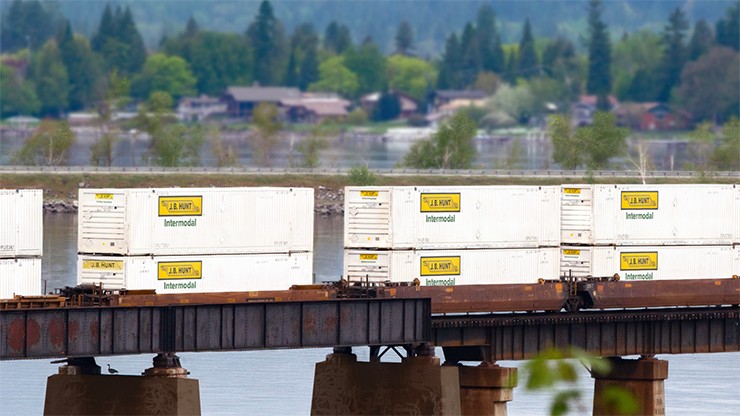
JB Hunt Q2 revenues surge 19% YoY to $3.5B
Anchoring the revenue boost, road-to-rail conversion reached levels not seen in over a decade, EVP and President of Intermodal Darren Field said on an earnings call.
Published July 16, 2026
Larry AvilaSenior Editor
Dive Brief:
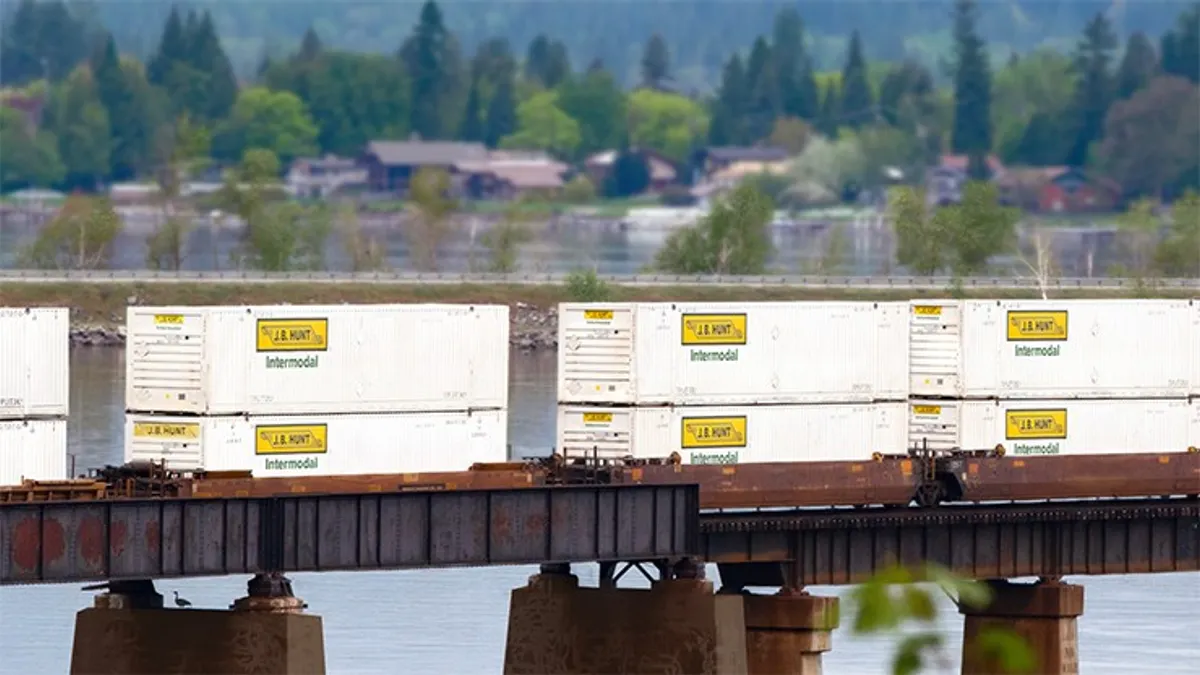
- J.B. Hunt Transport Services on Wednesday reported Q2 revenues jumped 19% year over year to $3.5 billion, driven by increased load volumes across most segments, including intermodal.
- The carrier reported intermodal operating income surged 22% to $1.75 billion from segment volumes rising 10% YoY to more than 578,000 loads, setting a quarterly record, Darren Field, EVP and president of intermodal, said in a call with analysts. He added it was the segment’s first double-digit growth quarter in over a decade.
- “We continue to see significant road-to-rail conversion opportunities in the East, particularly as rising truckload rates, fuel prices and tightening truckload capacity make intermodal an increasingly attractive solution for shippers,” Field said.
Dive Insight:
Tightening trucking capacity and rising rates have pushed shippers to intermodal in recent months.
J.B. Hunt reported intermodal gross revenue increased 11% per load YoY from higher fuel surge revenue, customer rates and changes in freight mix. Excluding fuel surcharge, revenue per load increased 1% from the prior year, the company said.
Spencer Frazier, EVP of sales and marketing, said the company’s strongest area of customer engagement centered on highway to intermodal conversion, dedicated fleets and access to safe and reliable capacity. He added customers initiated more out-of-cycle mini-bids as they sought to keep pricing aligned with rising capacity costs.
The company has been working on productivity improvements across its operations. In its intermodal segment, for example, the carrier has seen a reduction in empty container moves and lower container storage expenses, per its earnings release.
While J.B. Hunt welcomed intermodal’s Q2 performance, Field said the carrier’s focus is to remain disciplined to ensure growth is sustainable over the long term. The company noted it had available intermodal capacity, possibly 10% or more.
Field said the carrier is actively engaged with its rail providers on resource planning to support current and future needs as volumes have accelerated. He added conversion activity is experiencing levels not seen in more than a decade.
What may affect the carrier’s intermodal surge is driver availability, which has been impacted by heightened enforcement of commercial driver license issuance.
Field said driver shortages impacting truckload capacity have trickled into the drayage market.
“In this environment, our in-sourced drayage strategy is a meaningful competitive advantage by owning our tractors, containers and chassis and utilizing primarily company drivers,” he said.
Limiting its use of third-party drayage capacity gives the company more control to maintain the customer experience, Field said.
President and CEO Shelley Simpson said on the call that the company’s available capacity in its segments means more opportunities.
“What makes it great for us to work with our customers is we can help them with conversion into intermodal,” she said. “We can build better fleets for them, and we have plenty of capacity to help them on the highway and final mile side.”
https://www.truckingdive.com/news/jb-hunt-q2-revenues-surge-19-yoy-to-35b/825376
 Everchem Updates Archive
  Sign Up for Email Updates