
Company News
May 22, 2024
Covestro Investors Call Urethane Highlights (Always Worth The Read)
Covestro AG (CVVTF) Q1 2024 Earnings Call Transcript
Apr. 30, 2024 3:23 PM ETCovestro AG (CVVTF) Stock, COVTY Stock
Covestro AG (OTCPK:CVVTF) Q1 2024 Earnings Conference Call April 30, 2024 10:00 AM ET
Company Participants
Ronald Koehler – Head-Investor Relations
Markus Steilemann – Chief Executive Officer
Christian Baier – Chief Financial Officer
Carsten Intveen – Director, Investor Relations
Markus Steilemann
Thank you very much, Ronald and hello and a warm welcome also from my side to our first quarter call. The highlights of the first quarter were a volume increase of 11% year-on-year. This represents the second quarter in a row with a positive volume growth. However, lower prices burden sales which came in at €3.5 billion.
We achieved an EBITDA of €273 million approaching the upper end of our quarterly guidance range. The free operating cash flow shows the usual seasonal pattern with minus €129 million. Overall, we are fully on track to achieve our full year 2024 guidance.
Let me take the opportunity and give you a short update on the discussions with ADNOC. The status remains unchanged as the discussions are still ongoing.
Let’s turn to page number 3. Before coming to the business details, I would like to direct your attention to two CapEx topics. We remain very disciplined on CapEx with a stable budget of around €800 million for 2024. Herein, we continue to invest with a focus on selective expansion projects, asset reliability and efficiency.
The business unit Engineering Plastics recently inaugurated a new polycarbonate copolymer plant in our integrated site in Antwerp. Polycarbonate-copolymers represent a material class in which polycarbonates are chemically reacted with additional components forming a new polymeric chain.
These copolymers are very important for the advancement of our business as they allow for easy adjustment of technical properties in our materials. The investment is in the mid double-digit million-euro range and covers a pilot plan for tests and a full production plant.
The new solvent-free technology with an innovative reactor concept has been developed by Covestro. It allows fast product changes and reduced time to market for new solutions. Target applications are antennas, battery housings, photovoltaics, healthcare equipment and IT applications.
Future innovations might also focus on mobility and other trends. We expect a low double-digit euro million amount as additional EBITDA contribution per annum while further increasing our captive use of polycarbonates.
Let’s turn to the next page. Another example of an investment this time contributing to expand our competitive position for TDI in Europe. Based on our assessment, our TDI plant in Dormagen remains the cost leader compared to our European and international competitors. In addition, our customers advocate strongly for local production instead of relying on fragile international logistics.
Therefore, we started a comprehensive three-year debottlenecking and modernization project on our TDI plant and the precursor unit for TDA. This will increase the capacity towards 280,000 tons and the same time improve reliability significantly. The additional capacity will be available beginning of 2025.
During the modernization, we will also implement several measures and parts to increase the efficiency of the unit. One example is that we are integrating a new reactor that allows us to generate steam for the unit by using heat generated by the chemical processes.
This measure will save around 220,00 tons of carbon dioxide per annum. A positive effect contributing to our Scope 1 emission reduction, but it will also have a positive EBITDA effect as the cost for purchasing energy and carbon dioxide certificates decreases. We expect a very favorable return on investment with a mid double-digit million-euro investment leading to an additional low double-digit million euro EBITDA per annum.
Let’s turn to page number 5. Let us now come back to the business and the volume development in the first quarter of 2024. Year-on-year the global sales volume increased by 10.9%. There are three reasons for the increase: Firstly, improving demand; secondly, fixing our reliability issues in EMEA; and thirdly, end of destocking or perhaps even some restocking.
Going through the different industries, construction showed the highest growth rates with a high teens percentage increase. Furniture and Electro follow with a high single-digit increase. Auto remains on a more modest growth path with a mid-single-digit percentage increase. Important on global level, all industries showed a positive volume development.
Looking into the different regions, EMEA benefited strongly from the resolved internal availability issues. All industries, important to Covestro are exhibiting growth with a strong increase in construction, furniture, and electro. This is mostly associated with better availability of our core products, MDI, TDI and polycarbonates.
Auto is showing a slight increase as the backlog in the order book seems to be worked through. Sales volumes in North America also increased slightly driven by growth in the construction industry, while furniture, auto and electro were still declining.
Asia Pacific experienced growth across all industries that Covestro is focused on. Furniture, auto and also construction exhibited significant growth and electro showed a slight increase.
With this summary of the demand development, I’m now handing over to Christian, who will guide you through the financials.
Christian Baier
Thank you, Markus, and a warm welcome also from my side. We are on page 6 of the presentation. Sales for Q1 2024 are down by 6.2% year-on-year to €3.5 billion. The strong increase in volume was more than offset by negative pricing and FX. A negative impact of €576 million was coming from 15.4% lower prices, and here the pricing in the business entity Performance Materials declined much stronger with minus 21.3% then in the Solutions & Specialties segment with minus 10.4%.
The volume increase of €405 million or 10.9% was significant. The segment Performance Materials exhibited a much stronger increase with 17.3%. This was supported by the resolved internal issues on the chlorine supply and thus better availability of our core products. Solutions & Specialties showed a solid 5.9% increase in volume. The negative FX effect of minus 1.7% or €62 million was mainly driven by the weaker Chinese renminbi.
With that, let’s turn to page 7 of the presentation, where we are showing the Q1 2024 EBITDA bridge. Year-on-year, we have a slight decrease in EBITDA of 4.5% to €273 million which is approaching the upper end of our guidance range of €180 million to €280 million.
Selling prices declined stronger than raw material costs due to an unfavorable industry supply-demand ratio. As a consequence, EBITDA was impacted with minus €175 million from a negative pricing delta. The volume increase could not fully absorb the negative pricing delta and the volume leverage was clearly below the long-term average due to the very low margins.
FX also contributed to the negative development. Other items showed a positive development. This was driven by the success of our savings initiative with significant reduction on fixed costs.
On slide 8, we are breaking down the details for the different segments and are starting with Solutions & Specialties. In S&S, the year-over-year price decline of 10.4% led to a sales decline of 6.2% despite increasing volume of 5.9%. FX also had a negative impact.
Sequentially, sales growth was recorded in EMLA and North America. Due to Chinese New Year, declining sales were observed in Asia Pacific. And overall, the trend was still slightly positive. The EBITDA in Q1 2024 was higher year-on-year, mainly due to higher volumes and a positive pricing delta burdened by negative others and FX. The quarter-over-quarter EBITDA increase was mainly driven by seasonal factors and despite a slightly negative pricing delta.
Raw material prices significantly increased during Q1 with an even accelerating trend in Q2. As a consequence, we expect a meaningful burden from higher raw material costs in Q2. At the same time, pricing flexibility is limited in S&S given quarterly or partly even longer contract duration and a value-based pricing strategy. This said, we expect Q2 EBITDA to be around the Q1 level.
After Solutions & Specialties, we are now looking at the segment Performance Materials. Year-over-year sales declined by 5.7%, driven by price as the main contributor with minus 21.3% and FX with minus 1.7%, volume however was up 17.3% and partially compensated for the drop in sales.
Quarter-over-quarter, sales increased across EMLA and Asia-Pacific, while North America was flat. Growth in EMLA was significantly driven by the improved internal availability. APAC showed slight growth.
The Q1 2024 EBITDA of €103 million is around 40% below last year. The year-over-year decline is mainly driven by a negative pricing Delta and FX. Volumes and reduced fixed cost contributed positively.
Sequentially, the EBITDA in Q1 2024 increased mainly due to positive volumes and reduced operational costs as well as a positive pricing delta. The next topic is the free operating cash flow development for Q1 2024.
As you can see from the graph, the free operating cash flow in Q1 2024 was negative with €129 million. The free operating cash flow slightly improved year-on-year, despite the lower EBITDA, due to continuous working capital management and lower CapEx despite higher income tax payments.
Changes in working capital of minus €229 million in Q1 2024 were mainly attributed to higher stocks. As mentioned already, Q1 CapEx of €106 million was down year-on-year and underlines our savings ambition. All-in-all, the Q1 2024 free operating cash flow is showing a normal seasonal dip, related to increases in working capital after the winter break.
Let’s now look at our balance sheet on Page 11. Our total net debt slightly increased by €186 million versus end 2023, the increase was mainly caused by the seasonally negative free operating cash flow of €129 million and negative others.
The decrease in the net pension liability of €50 million was driven by an increase of the pension discount rates in the U.S. and Germany. This comprises pension provisions of €348 million and a net defined benefit asset of €73 million.
In 2022 and 2023 we executed a share buyback program of close to €200 million before the authorization expired. We are keeping the option of anti-cyclical share buybacks in the future in line with our cash spending priorities.
The renewal of the authorization was successfully endorsed by the AGM, earlier this month. Summarizing our net debt position, the total net debt-to-EBITDA ratio is at 2.9 times, based on a four-quarter rolling EBITDA of €1.1 billion. However, based on our mid-cycle EBITDA the ratio would be only around one-times.
Covestro, remains committed to a solid investment-grade rating. Our Baa2 rating was confirmed by Moody’s end of Q2 2023. On the next page, we are now coming to the outlook for Covestro for 2024.
We confirm our EBITDA guidance for fiscal 2024, assuming that the rather slow development of the economy will prevail in Q2. We are expecting the EBITDA for fiscal 2024 to come out between €1 billion and €1.6 billion.
The mark-to-market EBITDA is calculated at around €1.2 billion, based on April 2024 margins flat forward and our current budget assumptions for 2024. This is a €0.1 billion increase compared to January, driven by slightly improved margins.
Many of you have remarked the missing mid-cycle numbers on this chart. Let me be very clear. We remain committed to our mid-cycle EBITDA concep, with a mid-cycle level as indicated by the blue line.
Our mid-cycle is also supposed to steadily increase, based on capacity additions and the shift of commodities to our downstream businesses and Solutions & Specialties. We gave you two examples for both segments, at the beginning of this presentation.
We are confident that we would achieve an EBITDA of €2.8 billion in 2024 under normal economic conditions.
Just a few words to the global demand outlook, which we are usually showing on a separate slide. The market outlook on global GDP is still around 2.5% and the outlook for our core industries is mostly unchanged versus our February call. Given the minor movement in the industry outlook, we are skipping the comprehensive discussion in the specific slide here.
Let me now focus on the additional guidance elements. Also here, the fiscal year outlook is unchanged. The free operating cash flow is forecast to come out at €0 million to €300 million. The ROCE above WACC is expected at minus 2 to minus 7 percentage points, and the greenhouse gas emissions in Scope 1 and 2 are estimated to be between 4.4 million and 5 million tons.
In Q2 2024, we expect an EBITDA between €270 million and €370 million. The strong volume growth we have seen in Q1 continued in April. However, margins remain on a rather low level, which is expected to lead to a quite negative year-on-year pricing delta in Q2.
For the full year 2024, we remain confident about a high single-digit percent volume improvement. However, we expect that lower selling prices will counterbalance the volume expansion in sales. Therefore we expect sales between €14 billion and €15 billion.
As you have seen already we are quite focused on the CapEx budget of around €800 million. With our maintenance CapEx, we are strengthening the reliability of our assets especially in Performance Materials.
The expansion CapEx of around €300 million is mainly dedicated to strategic expansion projects like the new copolymer plant in Antwerp for the business entity engineering plastics.
Christian Faitz
Yes. Good afternoon Markus, Christian Ronald and team. Two questions if I may. First of all, can you elucidate a bit the Q2 trends you are currently seeing? I appreciate the EBITDA guidance. I appreciate your comments overall but you did mention that in Q1 you did see automotive furniture coming back a little bit. Do you see that continuing into April, May? I mean you must have order visibility of something like three, four weeks at least at the moment?
And then the second question would be more on the supply side/pricing. There’s quite a few outages by your peers lately on the MDI side for example. Would that give you some muscle flex on increasing your own prices? Because I mean typically when I look at your historical development you see volumes coming back and then eventually two, three quarters later prices coming in. We are looking now at the most likely second, third positive volume quarter. So, shouldn’t pricing be back on track at some point during the course of this year? Thank you very much.
Markus Steilemann
Yes, thanks a lot. Christian a very warm welcome also personally here from my side. On the first topic, we assume high single-digit volume growth year-over-year in the second quarter and that should also allow for a low to mid single-digit quarter-on-quarter increase, so we see that the trend continues. You were asking specifically for automotive and furniture. Maybe a bit of history, last year automotive was up by I think more than 10% or exactly on 10% for the entire year.
And that’s why the mid single-digit growth rate in the first quarter for auto is not actually a real slowdown. It’s just that we have now worked through the order books and that’s why I would say we see a bit more normalized levels on auto plus what is maybe negatively impacting auto that we see in Europe as well as the US quite significant decline in new EV proposed systems. Yeah. So that’s one of the key issues. The market segment is still small but it has an impact on the auto — overall auto sales. So I expect however that the automotive sales will continue also in the second quarter to be in that range, so around the mid-single-digit growth rates.
For furniture, it’s a slightly mixed picture year, I think we might also see continued positive growth. On the other hand, China seems to be in that particular segment currently taking a quick break. So I have no real assessment how that would maybe impact the global picture. But I’m still given the overall numbers positive that also furniture will show year-over-year and to a slightly larger smaller extent quarter-over-quarter let’s say positive growth.
You asked on MDI here. As you said some smaller outages, but nothing big. So if there is tactically, let’s say one or the other smaller market where due to short-term supply issues we might have the chance to grasp some business and then maybe also gain here and there, let’s say some more value from customers that remains to be seen. But we also have to take into consideration that the increasing prices in the market are partly also driven by higher raw material cost. So yeah, long story short, I would not say that from an MDI market perspective we are currently already at a point where the market would switch from a buyer’s market to a seller’s market. So it could only from my perspective to be expected anecdotal evidence that would be here and there again a bit more on the price front.
So all in PM margins are expected to slightly improve for the second quarter. However, S&S margins facing a slight or a bit downward pressure. And as we also stated during our presentation, here we normally have contracts let’s say 8, 10 even three months valid sorry 10 to 12 weeks three months validity that makes price increases for the second quarter on average a bit more difficult than in the PM sector. So long story short, PM margin is a bit up, S&S margins for the second quarter maybe a little bit under pressure.
Markus Steilemann
Yeah. Chetan, warm welcome from my side as well. Thanks for your questions. So on China, I had the pleasure to visit China twice in the last two weeks. And the picture, I took away is that the overall Chinese market in many industries including ours, is still described best I think by overcapacities. And those overcapacities, leading to a bit more fierce competition. And at the same time, to ambitions to export from China into other regions especially, overseas that means Mexico, US, parts of Europe, Middle East and so on and so forth.
So, long story short. There is from my perspective, for the products that we are selling, still a stable demand. That’s how would — this steady demand. But we see that some competitors and I take as an example, anecdotally Wanhua. They just announced the technical completion of an MDI expansion. So that drives a bit, let’s say, the perception in the market about volatility on the supply side and that leads sometimes to a bit more speculative behavior of buyers in the market even though demand is steady. Some people buy a bit more, buy a bit less. There’s a lot of trading involved et cetera, and that leads to the pricing picture that we’re currently seeing, which looks more volatile and the fundamental and underlying demand would suggest. Yes. So from that perspective, that’s how I would currently assess the situation.
Q – Jaideep Pandya
Yes. Thanks. I have three questions. Firstly, on the supplier – sorry, apologies competitive landscape. Markus, we have seen a gradual increase in the nameplate sort of capacity on a per plant basis in terms of the train size in MDI, I mean 600kt is norm these days for Wanhua. They’ve just announced TDI capacity expansion as well, which is now 320 kt. And remember when we have had the plant of 300 kt in Germany, this was supposed to be the biggest plant. So as the nameplate capacity on a per plant basis increases, how do you see the competitive landscape especially, when you always say you’re the best in the cost curve point of view. And sort of tied to that is like, when you think about expansion, should we also think that you will go for these bigger trains? That’s my first question.
The second question and I won’t bother you on Adnoc. But I just want to understand, what’s happening sort of at your Board level and in terms of your combinations with shareholders, because a lot has changed from September to now in terms of the — your underlying earnings power. So when you’re discussing with shareholders like, what’s been sort of the feedback because I suppose it is, if I may say so, a bit of a frustrating situation. And obviously, they’re involved in other deals like OMV or so. So — like is there an element of frustration creeping in from the Board or from your shareholder community in this matter?
And lastly, on your Capital Markets Day and I don’t want to take the sort of topics away from the CMD. But obviously, you have one clear target on the S&S division of 17% margin, and you’re meaningfully behind that. So, is there some background work done in this regard, which you’re going to share with us? Because I guess the €2.8 billion target probably, you will revise that based on the market conditions. Thanks a lot for taking my questions.
Markus Steilemann
Yes, Jaideep, thanks a lot. Let’s talk first about the competitive landscape. Okay. If you look at new investments, scale is only one point in assessing the cost per ton. We also run world-scale capacities in MDI 600 kt, because you don’t only have to build it and design it like this by nameplate, but you can also which we do with smart expansion get from a 500 let’s say, conceptual plant, with smart investments throughout a few years to a 600 kt plant and 600 kt seems to be currently the sweet spot, from which onwards then the economies of scale turnaround into, let’s say, complexity costs and things like that.
So we are, in that sense, still extremely competitive. And that’s why we are not concerned about let’s say, another competitor building now nameplate for 600 kt from the scratch or 320 kt in TDI, because nameplate is one thing. The technology behind it, for example, gas-phase phosgenation for TDI or, let’s say, adiabatic processes for MDI, which we have in our portfolio and our protected IP make a significantly higher contribution to the effectiveness and efficiency of the cash cost than the pure nameplate capacity in itself.
And therefore, we not only believe but we have, from our perspective, at least solid data based on internal and external assessments that we have the best-in-class process technology and also, therefore, very competitive assets despite, let’s say, higher or higher slightly creeping increased initial capacity on the nameplate side. So overall, we assume that Wanhua and Covestro have broadly a similar cost structure.
On Adnoc, well, if you ask me for my personal feelings, there is no frustration simply because I’m not paid for frustration. I’m paid for having open minded, faithful conversations in the best interest of our shareholders, the company and other stakeholders and to make sure that we have constructive discussions.
That’s exactly what I’m doing and what the entire Board of Management is doing. So I would also not like to speculate, let’s say, on our shareholder basis and their particular feelings. For sure, if you listen to one or the other share and stakeholder, they might, let’s say, raise some of their views and some of their views might also represent frustrating feelings. But once again, I’m not in a position to, let’s say, represent any single shareholder here and saying, well, this shareholder or that shareholder or the majority or the minorities is frustrated. So, please understand that this is also currently everything that I can share with regards to the ongoing constructive open-minded and faithful discussions with Adnoc.
On Capital Markets, I think we will not talk about the content today. We plan to provide you a strategic update. But historically, we do not plan, and that is also, from our perspective, not the case for the next Capital Markets Day, big announcement because that was always what we also historically did. We just engaged in more in-depth discussion during the Capital Markets Day on specific topics, but not necessarily on big announcements.
Matthew Yates
Hi. Good afternoon, everyone. A couple of questions please. Firstly, just around how you’re dealing with the volatility in benzene pricing. Is that eroding any attempts to increase MDI prices you’re putting through and offsetting the volume recovery? If hypothetically, benzene prices were to go down over the coming months, do you think the market is in a tight enough position that you could hold on to some of that benefit in your own pricing?
And then the second question, I wanted to just ask a little bit about the business case for your TDI investment you talked about at the beginning of the call. These days we tend to hear much more about chemical closures in Germany rather than companies investing fresh capital in their assets. This debottlenecking will, obviously, give you more capacity. And I don’t know if that was motivated by BASF’s retreat from the market. But why would you not think that just gets filled by imports given I think we also spoke on this call about some of the expansions Wilmar is making. So just curious to hear a little bit more about the business case around that TI investment. Thank you.
Markus Steilemann
Matthew, on your first question on the — let’s say benzene prices impacting MDI prices. You could imagine or take the picture of a cork swimming off the surface of an ocean. Yes. The waves going up and down representing the benzene prices and the cork more or less is just sometimes dipping a little bit in, but then popping up a little bit. But in general terms at a given supply-demand situation, actually the MDI prices are swimming on the benzene prices. That’s how you could see it. That means, if benzene prices are going lower, you might gain one to two weeks, where you could gain a bit more in MDI prices. But then the market is following and MDI prices are going down back to the margins that you expect for a respective utilization rate and supply-demand ratio.
So from that perspective, the opposite side benzene price is going up, it takes you a couple of weeks to bring MDI prices up. That means you have short-term squeeze margins. But then things are once again back to the normal margin pattern you would expect for that particular supply-demand situation.
Second effect, if you have benzene prices going up, it takes normally one to two months as they’re running through our books from the raw material purchase into the bill of materials and so on and so forth and then finally into the finished goods. So, means if benzene prices are going down, there might be some benefits for example in the third quarter. But once again, it depends then midterm — mid-term means in a couple of weeks always on the supply-demand balance that you have at that current point in time.
On TDI, there are only two plants remaining in Europe. We are by far the cost leader. And given that cost-leading position which we — with this investment even further improving, we have significantly lower cost compared to landed cost for imported material even from highly cost-efficient plants in Asia Pacific. And that is the reason that with local TDI plants at the cost position we have, we are even let’s say globally competitive against any imported comes from overseas.
May 21, 2024
Stepan Announces Price Increases

Effective July 1, 2024, or as contracts allow, Stepan will increase the price for STEPANPOL® and TERATE® Rigid Polyester Polyols used in the Americas by $0.07 per pound. This increase is necessary due to the continued escalation in diethylene glycol and xylene prices.
May 21, 2024
Board Chairman Glassman Now President & CEO of L & P
LEGGETT & PLATT APPOINTS KARL GLASSMAN AS PRESIDENT AND CEO
May 21, 2024 7:30 AM ETLeggett & Platt, Incorporated (LEG)
CARTHAGE, Mo., May 21, 2024 /PRNewswire/ —
- Karl Glassman appointed President and CEO and will continue to serve as Board Chairman
- Mitch Dolloff resigned as President and CEO and a member of the Board
Diversified manufacturer Leggett & Platt (LEG) announced that its Board of Directors has appointed Karl Glassman as President and Chief Executive Officer, effective immediately. Karl will continue to serve as Board Chairman. This follows the decision by Mitch Dolloff to resign as Chief Executive Officer and a member the Board, also effective immediately, having mutually agreed with the Board that now is the right time for a change in leadership at Leggett & Platt. Mitch will serve in a consulting capacity for one year to assist in the transition.
Karl has served as an executive director and non-executive director on the Leggett & Platt Board since 2002, and previously served as CEO from 2016 to 2021. Karl has served in other various leadership capacities with the Company over his 42-year tenure, including Chief Operating Officer and President of the former Residential Furnishings segment.
Lead Independent Director Robert Brunner commented, “Karl knows the Company better than anyone, and we are pleased he has agreed to step back into the CEO role. Karl’s intimate knowledge of the Company’s end-markets and operations, along with his strong relationships with Leggett’s customers and employees, will ensure a seamless transition. He embodies Leggett’s values and has an impressive track record of creating value and empowering world-class teams. The Board is confident that Karl is the right leader to guide Leggett at this critical time as the Company navigates the current market environment and positions for long-term profitable growth.”
“I am honored to return and lead Leggett at this important time for our company,” commented Glassman. “The restructuring plan, other operational improvement initiatives, and our focus on strengthening our balance sheet create a clear path toward a more focused, agile company with the ability to deliver improved profitability and enhanced shareholder value. I look forward to working with our talented team to advance our key initiatives and am confident we can build upon Leggett’s strong foundation, capitalizing on opportunities ahead.”
Brunner continued, “On behalf of the Board, I would like to thank Mitch for his many contributions to Leggett throughout his more than 20 years with the Company. We wish him the very best in his future endeavors.”
FOR MORE INFORMATION: Visit Leggett’s website at www.leggett.com.
COMPANY DESCRIPTION: Leggett & Platt is a diversified manufacturer that designs and produces a broad variety of engineered components and products that can be found in many homes and automobiles. The 141-year-old Company is a leading supplier of bedding components and private label finished goods; automotive seat comfort and convenience systems; home and work furniture components; geo components; flooring underlayment; hydraulic cylinders for material handling and heavy construction applications; and aerospace tubing and fabricated assemblies.
CONTACT: Investor Relations, (417) 358-8131 or invest@leggett.com
Cassie J. Branscum, Vice President, Investor Relations
Kolina A. Talbert, Manager, Investor Relations
May 20, 2024
Green Polyols from Chimcomplex
Chimcomplex Wraps Up €2.43M Project for Making Polyols from Natural Oils
Published on 2024-05-17. Edited By : SpecialChem
TAGS: Sustainability / Natural Solutions

Chimcomplex SA Borzești concludes the project to make the production processes ecofriendly and align the company’s activities with circular economy principles.
The project was implemented at the Rm Vâlcea plant. The total eligible value of the project is €2,431,000, with non-repayable financial assistance amounting to €1,215,000.
Green Polyols from Castor Oil, Soybean Oil, and Palm Oil
Investing in innovative technology for environmentally friendly polyol production was the next necessary step after the inauguration of one of Europe’s most modern polyol plants in 2022.
This €40 million investment increased the company’s production capacity to over 187,000 tons per year. These innovative “green polyols,” produced using the new technology, replace the petrochemical components of conventional polyols with less polluting alternatives or natural oils such as castor oil, soybean oil, and palm oil. Further down the production chain, these “green polyols” are used to create soft foams for pillows, mattresses, and other automotive components.
The impact of this investment is significant:
- The new production line will allow Chimcomplex to increase its existing capacity by an additional 17,000 tons of special polyols annually. After client testing, these new polyols will enter serial production, significantly reducing their environmental impact due to the nature of the technologies and raw materials used in manufacturing.
- Replacing conventional polyols with the new special types will reduce CO2 emissions by up to 3,400 tons annually.
- The company’s competitiveness will improve through portfolio expansion.
- The new facility enhances the company’s adaptability to customized product needs for individual clients. Product design will be done collaboratively with customers, adapting formulas based on their requirements.
- Current and future clients can purchase the new “Made in Rm. Vâlcea” polyols, reducing the carbon footprint of their final products and labeling them as environmentally friendly.
Amalia Ionescu, project manager, stated, “This new investment completed at the Rm. Vâlcea plant reflects the company’s commitment to sustainability, innovation, and development. We thank Innovation Norway for supporting the project. Over the past 5 years, Chimcomplex specialists from the Advanced Polyol Research and Development Center have created new experimental polyol types, which can now be rapidly tested and widely used by our clients. Fine chemicals add value to Romania overall and to consumers in particular. We all desire safer and healthier products for everyday use. You can rely on the expertise of chemists to find solutions for environmental challenges and develop technologies that reduce our planet’s negative impact.”
The project was carried out in partnership with International Development Norway, a Norwegian organization with over 20 years of experience in international projects focused on eco-business best practices.
https://chimcomplex.com/docs/press-releases/
HISTORY
1954
CHIMCOMPLEX was founded in Borzesti, Onesti, Bacau County.
1966-1970
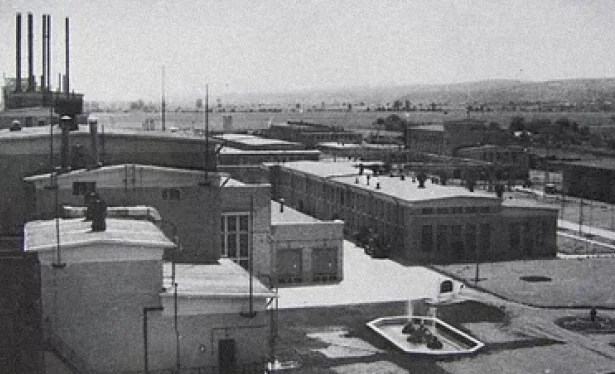
In Râmnicu Vâlcea, was established in 1966 SC OLTCHIM SA under the name of Râmnicu Vâlcea Chemical Plant.
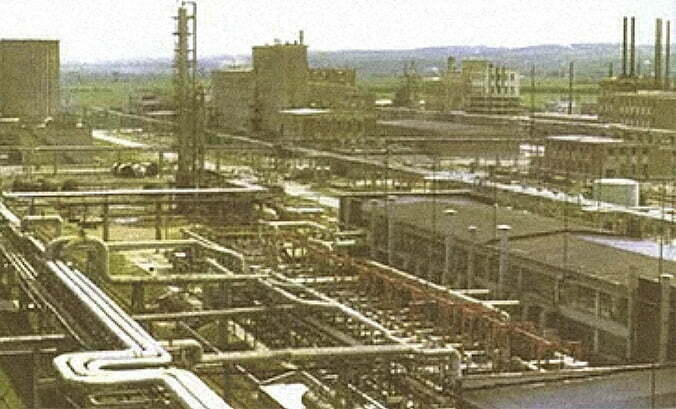
In the two industrial platforms, the needed installations were put into operation for chlorosodium products, oxo alcohols, vinyl chloride, polyvinyl chloride and HCH lindane, all based on foreign licenses.
1971-1980
At Oltchim takes place the development of the production profile from the first stage. New production capacities are put into operation and the product range is diversified with chlorinated solvents, propylene oxide, propylene glycols, polyethers, polyols, phosgene;
1981-1990
At Oltchim, new capacities were put into operation for organic intermediates (amines, chloroformates) and a wide range of pesticides.
1990
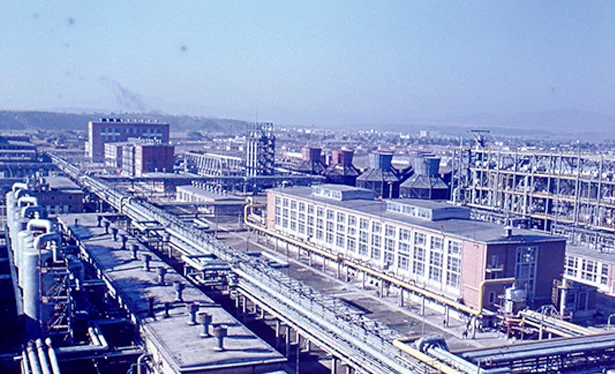
Successive investments take place in production at Borzești Chemical Plant: electrolysis, inorganic chlorides, solvents, PVC, alkylamines, and pesticides.
1991
The Borzești Chemical Plant becomes Chimcomplex SA Borzești with registration number at the trade register J04/493/1991. The financial capital was mostly owned by the state.
1991-1999
The products portfolio has been diversified on both platforms, over 40 basic products in over 78 assortments were developed. Thus we have been producing PVC, polyol polyether, plasticizers, pesticide formulas and formulas for processing plastic materials.
In 1997 Oltchim is listed on the capital market in the first category of the Bucharest Stock Exchange.
2000-2003
Meant the fulfillment of some strategic objectives for the development of Oltchim: modernizations (oxo-alcohols installation, ion exchange membrane electrolysis), commissioning of new installations (caustic soda flakes and pearls, phthalic anhydride, dioctyl phthalate, water demineralization, waste incineration) ) and capacity expansions to existing facilities (propene oxide, flexible polyols, PVC).
2003
Chimcomplex SA Borzești was privatized by Mr. Ștefan Vuza, saving it from bankruptcy. In the first three years, Ștefan Vuza made investments of over 25 million euro. Another 285 million euros were invested in the next 10 years. Mr. Vuza’s strategy also aimed at acquiring Oltchim, which will be the core of the Romanian Chemical Company.
2004-2012
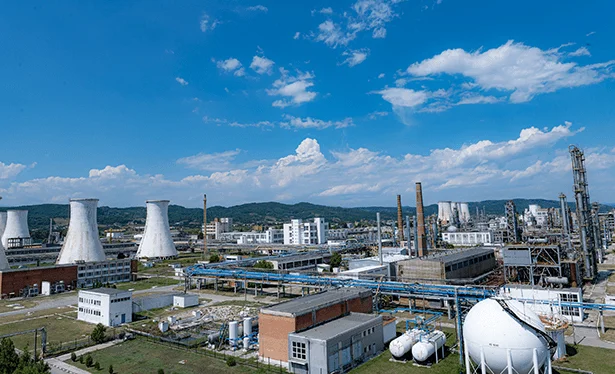
At Oltchim, capacity modernizations and extensions were carried out at the existing technological installations: propene oxide, polyol-polyethers, PVC and a new waste incineration plant were put into operation, as well as an industrial lime plant. In 2010 the turnover decreases due to the lack of ethylene – the main raw material used in the production process.
2013
Oltchim goes into insolvency;
2018
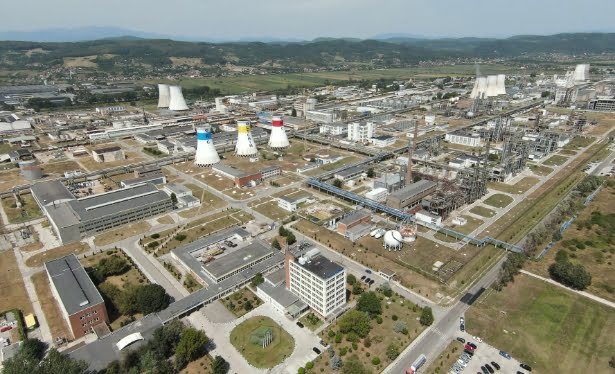
In December 2018, Mr. Ștefan Vuza managed, by contracting an international loan of 1 64 million euros, to acquire Oltchim’s Rm. Vâlcea assets. He thus saved this plant from bankruptcy on the last hundred meters. The financial transaction was spectacular, Mr. Vuza managed to convince a consortium of banks to finance it, although Chimcomplex had an annual turnover of 50 million euros, with a normal profit rate in the chemistry of 10% and a profit of 5 million euros per year. By acquiring these assets, Chimcomplex has strengthened its position as a producer and supplier of chemicals in Europe and formed the nucleus of the new chemical plant in Romania, around which 10 companies are currently gravitating.
2019-2020
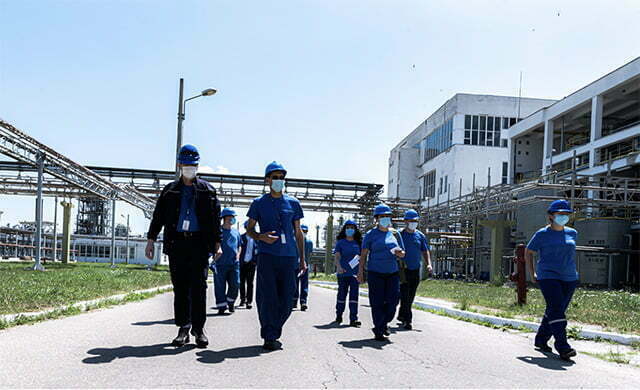
Chimcomplex achieved all its goals, including financial ones, but the path was very different from how it was planned. The company had taken decisive actions and had shown a lot of resilience during COVID-19. At the same time, we encouraged employees, focusing on customer needs and supporting its communities. Chimcomplex closed the year with a stronger balance sheet, ready to accelerate its strategy and realize bold plans for the future.
2021
Chimcomplex stocks recorded the largest increase in history with 1.200% in 2021. It was the biggest increase on all European stock exchanges. Turnover doubled. Net profit increased by over 510% in 2021 compared to 2020. The financial results obtained as a reaction of the synergies between the two plants in Onești and Rm. Vâlcea provided additional liquidity that Chimcomplex
used to make investments and repay all bank loans in advance.
Chimcomplex acquired part of the assets of CET Govora with the idea of building a production capacity of thermal agents in a cogeneration plant. The Romanian Chemical Company has grown and has been reorganised into 8 divisions, to develop efficiently. Thus we have The Chemical Division, The Energy Division, The Research Division, The International Trade and Business Division, The Maintenance and Support Services Division, The Logistics and Transport Division, The Green Division and The White Division.
We also obtained accreditation for the Chimcomplex Academy – an authorized center for training, improvement, and development of competencies for attracting and maintaining staff.
The refinancing carried out in 2021 led to a 6-fold decrease in financial expenses and Chimcomplex achieved all its business objectives.
2022
Chimcomplex consolidated its service portfolio by acquiring Sistemplast S.A. Râmnicu Vâlcea, a company located on the Oltchim platform, that specialized in providing integrated solutions for mechanics, design, construction, verification and monitoring of industrial works.
After an investment of 40 million euros, Chimcomplex inaugurated a new polyol production plant. Thus, in Romania, almost 9% of the European production of polyols will be produced, which will bring the company to the 6th place among the top producers in Europe.
2023
At Rm. Vâlcea will be put into operation the largest high-efficiency cogeneration plant built in Romania, in the last 11 years. The three cogeneration groups have an annual energy capacity of 49.5 MWh, which is used on the platform. The cogeneration plant produces both electricity and thermal energy in the form of technological steam and hot water, with an overall efficiency of 90.5%. This investment of 40 million euros helps us eliminate our dependence on polluting alternatives, but also to reduce CO2 emissions by more than 88,000 tons/year, thus becoming a more responsible and sustainable company.
Chimcomplex is a consolidated company with growth potential and a market value of between 2 and 2.2 billion euros, considering both multiples of EBITDA in the chemical industry and the value on the stock market. Chimcomplex is today the largest producer of green hydrogen in Eastern Europe, with an annual production of over 6,000 tons. It is the only company in Europe’s 10 SE countries with real potential to use hydrogen as a raw material for green chemicals.
Currently, projects of over 55 million euros are in the final execution phase and projects worth over 125 million euros are being prepared and started.
May 20, 2024
MOL Polyol Complex
MOL’s €1.3 billion polyol complex in Tiszaújváros inaugurated

- The €1.3 billion project is MOL’s largest organic investment to date, for which it has also received support from the Hungarian state
- The complex will produce raw materials for durable plastic consumer goods such as bed mattresses, moulded car seats, insulation for houses and elastic rubber soles for sports shoes
- Thanks to the innovative technology of Germany’s thyssenkrupp Uhde and Evonik, the plant is operating with the most advanced technology available
Tiszaújváros, May 14, 2024 – MOL’s EUR 1.3 billion polyol complex in Tiszaújváros, boasting a capacity of around 200,000 tonnes of polyol per year, has been inaugurated. The ceremony, addressed by Prime Minister of Hungary Viktor Orbán, MOL’s Chairman-CEO, Zsolt Hernádi, and thyssenkrupp Board member Ilse Henne, marks a significant milestone for the company. MOL Group stands as the sole entity in Hungary and in Central and Eastern Europe to cover the entire value chain, from petroleum processing to polyol production (a widely used plastic raw material).
MOL Group held an inauguration ceremony in Tiszaújváros to celebrate the completion of its largest organic investment, the polyol complex. MOL, thyssenkrupp and Evonik IP signed the licence agreement in summer 2017, and the foundation stone of the complex was laid in September 2019.
The main units were transported to Tiszaújváros between 2019 and 2020, mainly by water, and were followed by the completion of the complex’s hydrogen peroxide, propylene oxide, polyol and propylene glycol plants. In addition to the four main plants, a pilot polyol plant, a quality assurance laboratory and, in Százhalombatta, a Research and Development Center were also built.
“I am proud that we have completed the polyol complex. It was a true international team effort, a great collaboration involving thousands of people over the past six years that enabled us to deliver MOL Group’s largest investment ever, perhaps the biggest development in modern Hungarian history. We have come a long way, but the road ahead is even longer. The polyol complex will significantly strengthen our company’s position and competitiveness, with the entire value chain from petroleum processing to polyol production. This investment has put Tiszaújváros back on the map of the European chemical industry, making it one of the most important industrial centers in the region. It will enhance the industrial competitiveness of our country and could catalyze economic growth as well. Through this investment, Hungary will be stronger, as MOL’s success is the success of the whole country,” said Zsolt Hernádi, Chairman and CEO of MOL Group.
“With this new MOL polyol-complex we establish new standards in terms of efficiency, environmental friendliness and automation by combining proven technologies with innovative solutions”, said Nadja Håkansson, CEO of thyssenkrupp Uhde. “We are grateful for the deep and trustful partnership with MOL. This polyol plant is a true landmark project and a great demonstration of how we at thyssenkrupp Uhde enable the industrial green transformation. With fully integrated and highly automated plant units, the valuable polyol chemicals will be produced in a highly efficient and sustainable way.”
The project involved an international team of thousands of experts, with engineering design work carried out in Germany, Thailand, India and Hungary. The plant equipment came from 24 countries. The construction of the complex involved 75 000 cubic metres of concrete, 13 000 tonnes of steel, 2 500 kilometres of cable and 700 km of pipelines laid in more than 18 million working-hours. The Hungarian government contributed with €131.5 million to the project: a €93.6 million corporate tax credit, which can be claimed once the investment is operational, and a €37.9 million investment grant based on an individual government decision.
Polyol is one of the most sought-after plastics raw materials, used in a wide range of industries from car manufacturing to clothing and insulation. Polyurethane is made from polyol and is the base material for many of the durable consumer goods that everyone encounters in their everyday lives.
Polyurethane made from polyol is needed:
- for the production of foam mattresses, bed mattresses, foam for comfortable seating on sofas and armchairs, and rigid foams for insulating refrigerators;
- for the production of insulating materials used in the construction industry, whether for the insulation of the facade of a building or a pipeline;
- for the production of sealants and adhesives familiar from DIY stores, and the elastic rubber soles of running shoes.
The Tiszaújváros plant will produce polyol using one of the most efficient and environmentally friendly methods available today. According to MOL’s calculations, the plant will contribute nearly EUR 150 million annually to the MOL Group’s financial results and will provide long-term employment for nearly 300 people.
MOL Group has been strengthening its chemical business for almost ten years: the new butadiene extraction plant was completed in 2015 with a HUF 35 billion investment, followed by the synthetic rubber (S-SBR) plant in 2018 with a HUF 100 billion investment. In 2016, the company announced a major strategic shift to prepare for the energy transition and the post-fossil fuel world by expanding its portfolio. As part of the third and largest wave of investment in the petrochemicals business, next to the polyol complex, the polypropylene plant is the most important element, which is a HUF 65 billion investment, and there are nearly EUR 2 billion of life cycle investments that will secure the long-term future of the chemicals business.
About MOL Group
MOL Group is an international, integrated oil, gas, petrochemicals and consumer retail company, headquartered in Budapest, Hungary. It is active in over 30 countries with a dynamic international workforce of 24,000 people and a track record of more than 100 years. MOL Group operates three refineries and two petrochemicals plants under integrated supply chain-management in Hungary, Slovakia and Croatia, and owns a network of almost 2400 service stations across 10 countries in Central & South Eastern Europe. MOL’s exploration and production activities are supported by more than 85 years’ experience in the field of hydrocarbons and 30 years in the injection of CO2. At the moment, there are production activities in 8 countries and exploration assets in 10 countries.
MOL is committed to transform its traditional fossil-fuel-based operations into a low-carbon, sustainable business model and aspires to become net carbon neutral by 2050 while shaping the low-carbon circular economy in Central-and Eastern Europe.
About thyssenkrupp Uhde
thyssenkrupp Uhde combines unique technological expertise and decades of global experience in the engineering, procurement, construction and service of chemical plants. We develop innovative processes and products for a more sustainable future and thus contribute to the long-term success of our customers in almost all areas of the chemical industry. Our portfolio includes leading technologies for the production of base chemicals, fertilizers and polymers as well as complete value-chains for green hydrogen and sustainable chemicals. www.thyssenkrupp-uhde.com
 Everchem Updates Archive
  Sign Up for Email Updates