
Epoxy
February 24, 2021
West Coast Ports
Shippers Need Alternatives to West Coast Port Congestion
February 22, 2021 Robert J. Bowman, SupplyChainBrain
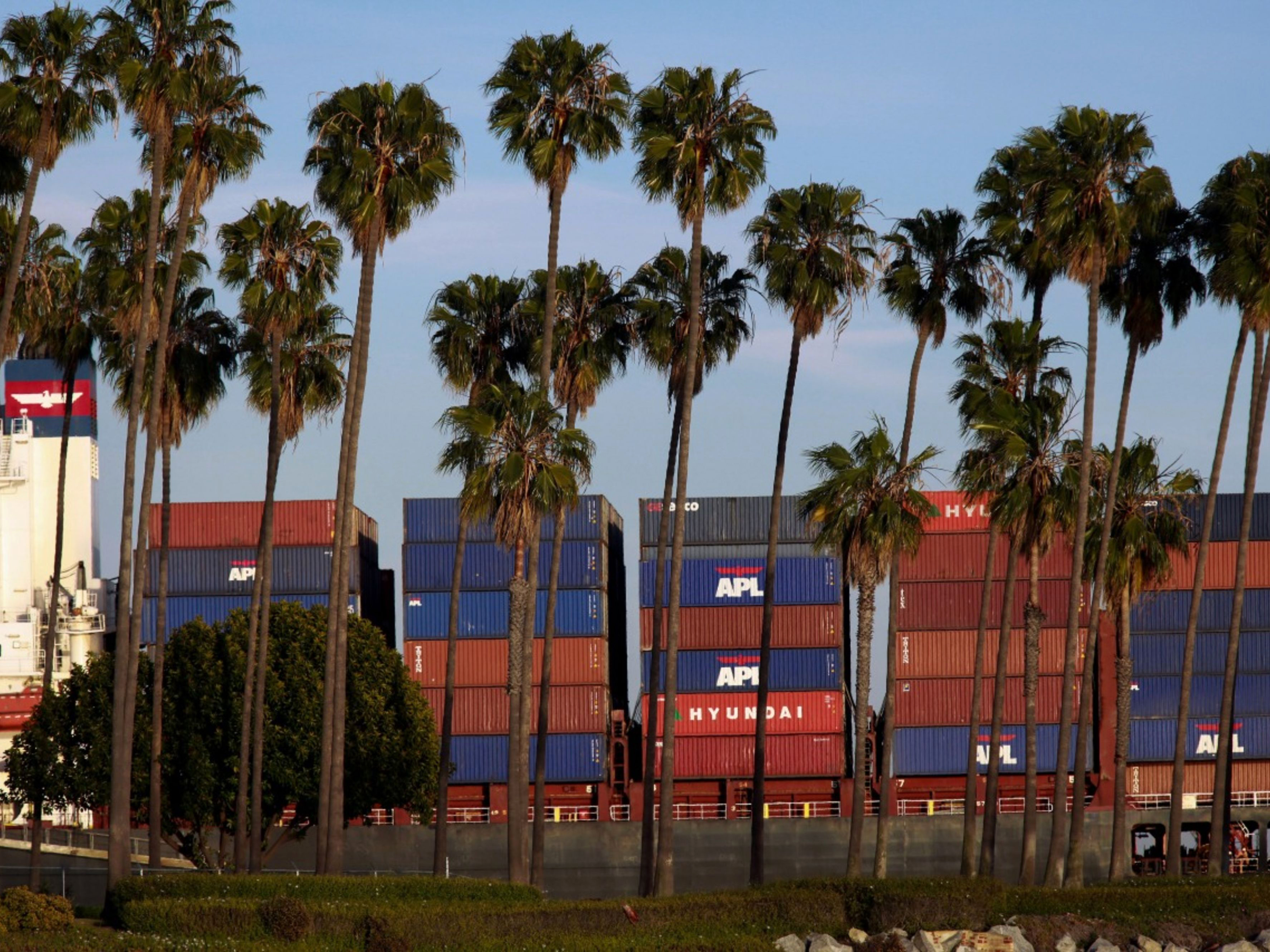
The ports of Los Angeles and Long Beach are currently experiencing severe congestion, with a heavy backup of containers waiting to unload import cargo from Asia. In this conversation with SupplyChainBrain Editor-in-Chief Bob Bowman, Jason Totah, president of Odyssey International Services Inc., discusses alternatives to bringing cargo through overtaxed West Coast ports.
SCB: What’s the situation at the ports of Los Angeles and Long Beach right now?
Totah: It’s quite a logjam, from unloading ships to making containers and chassis available at the port, and appointments to pick up containers. It’s a pretty desperate situation.
SCB: What’s the cause of this congestion?
Totah: Just a lack of planning across the board. This season in particular has been more severe than others because of the pandemic, extra volume, and the vessel alliances omitting and consolidating ports. For various reasons, it’s creating this huge logjam.
SCB: Shouldn’t volumes be slacking off after the holiday peak season, and into Chinese New Year?
Totah: We’ve always had a peak past December, ahead of Chinese New Year. People are uncertain about when factories are going to come back online after Chinese New Year, and the possibility of labor in China being quarantined when they do come back. So everybody’s trying to buy a lot sooner. The anticipation of delays is what’s causing these problems.
SCB: What are you proposing as an alternative for shippers who don’t want to deal with congestion at Long Beach and Los Angeles?
Totah: Our advice has been to have a lot more elasticity in their supply chain, look at different options, and not put all their eggs in one basket. Alternatives would be to use the ports of Seattle or Tacoma as a gateway. Or maybe Oakland, even though there’s not a lot of direct sailings or vessels calling there direct.
SCB: Are Seattle and Tacoma first ports of call inbound from Asia, and last ports of call outbound? Are there a sufficient number of sailings like that in order to take the overflow from L.A./Long Beach?
Totah: Yes. Seattle-Tacoma is either the fourth- or fifth-largest containerport complex in the United States, combining in the Northwest Seaport Alliance. They have quite a lot of sailings coming in. They’re not the super-max vessels, but there are direct sailings from major ports in Asia.
SCB: What about infrastructure beyond the piers in Seattle and Tacoma, such as on-dock or near-dock rail transfer yards, and the ability to transload into trucks as well? Is there adequate capacity for that up there?
Totah: It’s adequate today for the volume they have, but with proper planning it can be scaled. There are a few terminals that have on-dock rail. There’s a similar lack of trucks and chassis, but at smaller scale, than in L.A. and Long Beach.
SCB: How about coming into the Port of Vancouver, British Columbia, then transiting by rail across Canada and down into the U.S. Midwest? Is that an option?
Totah: That has always been an option. Many importers have used it in the past, and it has a customs advantage on valuation because importers don’t pay a harbor maintenance fee when goods arrive at ports in Canada. But the Canadian rails are also congested. You’ll have some people using them, but if you don’t do it regularly, you’re not going to have access to those routings because steamship lines have dedicated space for the people who do.
SCB: Are the lines intent on keeping incoming international containers at the port, so that they can expedite their return to Asia? And does that necessitate transloading inbound cargo into domestic equipment to go inland?
Totah: Yes. Carriers are very reluctant to accept bookings beyond the West Coast. They can give you containers to load your product in, but they don’t want to give you containers to go inland.
SCB: So you have to transload. Is that a good idea anyway? Or does it slow things down?
Totah: Transloading has been a good idea in our view, especially at Seattle/Tacoma, to certain parts of the United States. I’m not proposing that transloading from there into the Southeast is a good option, because the connectivity on the rail isn’t that great. But there are direct points from Seattle/Tacoma to Chicago, Minneapolis, and the Ohio Valley that can offer faster transit time, because international containers don’t move regularly. Domestic trailers move on a daily basis, versus maybe weekly for ocean containers. And congestion at inland rail hubs isn’t as bad for domestic containers. So in terms of transit time and price from port to door, we find that transloading is very competitive.
SCB: When we talk about onward transportation of cargo offloaded on the West Coast and moving into the Midwest, is that mostly by rail? Or does long-haul truck offer an alternative?
Totah: Long-haul over-the-road capacity has been declining for the last several years. There’s a big migration to intermodal. I think that domestic intermodal services are a lot more effective than over-the-road because there’s no limitation on hours of service, or the need for team drivers to deliver the cargo.
SCB: What about bypassing the West Coast altogether, through the Panama Canal and up the East Coast? Is that a viable option today for shippers?
Totah: I think it is. A lot of shippers are based on the East Coast and use all-water services to get there. The demand for it is great, and similar to what I mentioned about going through Vancouver, B.C. Shippers who use the service regularly are committed to it, and give steamship lines the base loads to go in there. It’s not easy for you just to flip-flop to the East Coast based on your needs, because you may not get the space. Up until the last couple of years, there was more demand on the all-water service than via the West Coast. So that’s already at capacity, too.
SCB: What about going in the other direction — from East Asian ports through the Suez Canal, then via transatlantic service to the East Coast?
Totah: It does work from the subcontinent — India, Pakistan, Bangladesh, Sri Lanka, and maybe Singapore, but not from Northeast Asian ports such as Hong Kong. It just adds way too much time. Plus congestion and capacity constraints aren’t limited to the North America trade. It’s also to Europe and other areas. The longer the transit on the water, the more capacity just gets sucked out of the system.
SCB: Do you believe this situation is going to persist throughout 2021?
Totah: I don’t see how it wouldn’t. What we need is a true investment in our industry — for stakeholders to buy more equipment, including containers and chassis, and add vessels. For international trade worldwide, I can’t see it slowing down.
February 22, 2021
Utilities and Feedstocks Key to Restarts
Some US chem plants could take weeks to restart after winter storm
Author: Al Greenwood
2021/02/22
HOUSTON (ICIS)–Chemical plants on the US Gulf Coast could begin to restart within days or weeks, depending on whether they have access to feedstock and utilities and whether they avoided an unexpected cold shutdown, which cokes furnaces and chunks reactors.
Much will depend on whether companies were able to shut down their operations in a controlled and precautionary way, said Brian Pruett, senior vice president of polyethylene (PE) and polypropylene (PP) with CDI, now part of ICIS.
Even then, because such deep freezes are so unusual on the US Gulf Coast, companies may have overlooked some steps, Pruett said. That could complicate restart operations.
Nonetheless, while some plants could take a while to restart, others are coming back online.
CITGO is preparing to restart the east and west plants of its refinery in Corpus Christi, in south Texas, it told state regulators on Monday. Pollution associated with the restart could continue until 4 March.
CITGO had shut down the plant on 15 February because of cold weather, according to sources.
For the most part, a large majority of plants decided to take a controlled, precautionary shutdown, Pruett said. He estimates that 65-75% could restart relatively quickly.
Restarting a plant from a controlled shutdown usually does not take a lot of time, said James Wilson, senior analyst at ICIS.
Pruett said if utilities and feedstock are available, some crackers and polyethylene (PE) plants could begin restart operations within a few days. Refineries could take a couple of days to a week longer because of their size and complexity.
However, Pruett warned that many factors could complicate and prolong restart operations.
The Gulf Coast rarely experiences such cold temperatures, so plant operators do not have experience in dealing with deep freezes.
Plant operators may have failed to properly purge the water in a pump, Pruett said. That pump could suffer damage from the freeze. If there are no parts and no spares immediately available, then the plant will not restart right away. Plants have been known to fly in spare parts from overseas, which will delay restarts.
Wilson added that restarting a plant from a cold shutdown will take longer. Lines need to be properly purged. Pipes could have been damaged if they froze with any liquid inside of them.
Marathon Petroleum told state regulators that it found cracked pipes from the recent freeze at its Galveston Bay refinery in Texas.
For plants that suffered damage, Pruett said it is too early to tell how long they could stay offline. Some companies may decide to start maintenance projects that were planned later in the year. That could further prolong the outages caused by the winter storm.
If the plants escaped damage, they could still take more time to restart because of utility or feedstock shortages, Pruett said.
Some companies have already reported this. Last week, Valero told state regulators that its nitrogen and hydrogen suppliers had lost much of their production capacities.
Some plant restarts will require inspections, which could be delayed because of the coronavirus. Some inspectors may need to take time to attend to their damaged homes.
Additional reporting by Alex Snodgrass
February 22, 2021
EG and Derivatives Update
US EG suppliers mull options with 85% of capacity stricken by winter storm
Author: Antoinette Smith
2021/02/18
HOUSTON (ICIS)–Most US ethylene glycol (EG) capacity is at reduced rates or shut down as a result of a winter storm that has knocked out power for millions of people and business, and threatened water supply.
Nearly 4m tonnes/year of US EG capacity is affected by the storm, according to the ICIS Supply and Demand Database. This represents 85% of total US EG capacity.
The curtailed production led MEG prices in Asia to surge by 11% as that region returned from the Lunar New Year holiday.
The US is a major exporter of MEG to Europe and ships out limited volumes to Asia.
Affected US plants are as follows (as of time of writing):
| Company | Location |
| Eastman | Longview, Texas |
| Formosa | Point Comfort, Texas |
| Indorama | Port Neches and Clear Lake, Texas |
| Lotte | Lake Charles, Louisiana |
| LyondellBasell | Bayport, Texas |
| MEGlobal | Freeport, Texas |
| Sasol | Lake Charles, Louisiana |
Separate force majeure declarations have been made – LyondellBasell announced its force majeure this week, and Formosa had an existing declaration due to feedstock issues – while other suppliers are allocating sales and evaluating options.
MEGlobal is on sales control with regular customers and discussing options now, according to a source familiar with company operations.
“Feedstock suppliers are in question, so no idea when this will resolve,” the source said.
Regarding Sasol’s situation, a company spokesperson said, “No declaration has been made at this point, given we are still assessing the situation.”
Tight supply has been an issue across chemical markets including, related products butanediol (BDO), which can be used instead of DEG to make polyester polyols, and phthalic anhydride (PA), which can be used along with DEG in unsaturated polyester resins (UPRs).
“A lot of supply chains were still trying to recover after impacts from Q4, so this current round of FM is tough to endure,” said a buying source.
STRUGGLING TO REBALANCE
Before the storm, monoethylene and diethylene glycol (MEG, DEG) production had been struggling to catch up from widespread outages in September and October.
Hurricane Laura shut down plants in southwest Louisiana in late August, and planned maintenance idled other plants – in all affecting two thirds of North American production in late summer/early autumn 2020.
Downstream polyethylene terephthalate (PET) production, which had already been running hard to met strong pandemic-related demand, was curtailed by the MEG shortage.
Although all plants had restarted by late October, pent-up as well as current demand consumed all available quantities. Contract customers have been able to obtain needed volumes but spot cargoes have been extremely limited, pushing prices to 2020 shortage levels.
In February MEG spot cargoes had begun to emerge after being sold out for months, though spot DEG was still very hard to find.
Co-product DEG is only about 9% of EG yields, with MEG around 90%. As a result, DEG supply is much more prone to sudden shortages and prolonged periods to rebalance.
Triethylene glycol (TEG) also has been affected, though it represents a very small portion of the market and is nearing the end of its typical winter demand season.
Consumption of MEG has remained strong, with Americas PET production unable to meet demand particularly from the packaging sector. Imports have filled the gaps, with elevated freight costs being passed down to buyers.
DEG demand continues to be healthy, with residential construction in particular driving consumption both in polyurethanes (PUs) in durable goods, as well as in UPRs, which have numerous construction and remodelling end-uses.
MEG is an intermediate in the production of polyester fibres and polyethylene terephthalate (PET) bottle resins, and as an automotive antifreeze.
Applications for DEG include de-icing fluids, surface coatings, UPR and polyester polyols.
Co-product TEG is used in gas delivery pipes as a dehydrating agent to prevent the gas from freezing. It is also used in the oilfield sector to help extract natural gas.
Glycol producers in the US include Dow, Eastman Chemical, Formosa, Indorama Ventures, Lotte Chemical, LyondellBasell, MEGlobal, Sasol and Shell Chemical.
Focus article by Antoinette Smith
 Everchem Updates Archive
 Sign Up for Email Updates