
The Urethane Blog
May 2, 2023
Leggett & Platt, Incorporated (LEG) Q1 2023 Earnings Call Transcript
May 02, 2023 11:24 AM ETLeggett & Platt, Incorporated (LEG)

136.56K Followers
Q1: 2023-05-01 Earnings Summary
EPS of $0.39 beats by $0.13 | Revenue of $1.21B (-8.22% Y/Y) beats by $24.82M
Leggett & Platt, Incorporated (NYSE:LEG) Q1 2023 Earnings Conference Call May 2, 2023 8:30 AM ET
Company Participants
Susan McCoy – Senior Vice President-Investor Relations
Mitch Dolloff – President and Chief Executive Officer
Jeff Tate – Executive Vice President and Chief Financial Officer
Steve Henderson – Executive Vice President and President-Specialized Products and Furniture, Flooring and Textile Products segments
Tyson Hagale – Executive Vice President and President-Beddings Products Segment
Mitch Dolloff
Good morning and thank you for participating in our first quarter call. As expected, the current global macroeconomic environment and its impact on the consumer negatively impacted our first quarter results. Sales were $1.21 billion, EBIT was $89 million and earnings per share was $0.39. These results were better than anticipated, but declined versus record first quarter results last year. Sales in the quarter were down 8% versus first quarter 2022 from lower volume, raw material-related price decreases and currency impact. Acquisitions added 3% to sales. The volume decline was driven by continued demand softness in residential end markets, partially offset by growth in automotive, aerospace and hydraulic cylinders. EBIT decreased 35% versus prior year, primarily from lower volume and lower metal margin in our steel rod business. As a result of these impacts, EBIT margin was 7.4%, down from 10.4% in the first quarter of 2022.
Earnings per share decreased 41% versus first quarter 2022. First quarter earnings were better than anticipated. While operating results were largely in line with our expectations, several expenses were lower due to other factors, totaling approximately $20 million. Those included lower incentive compensation, favorable medical claims and other insurance trends, lower bad debt expense, a reduction to a contingent purchase price liability associated with the prior year acquisition and pandemic-related cost reimbursements. Cash flow from operations was $97 million, up $58 million versus first quarter 2022. Our full year guidance range remains unchanged as we balance better than expected first quarter results with continuing macroeconomic uncertainty. Our diverse portfolio of businesses, solid financial position and the ingenuity and agility of our employees continue to help us navigate challenging markets.
Moving on to segment results and outlook. Sales in our Bedding Products segment were down 17% versus first quarter of 2022. Demand in the U.S. bedding market appears to have stabilized at low levels consistent with those experienced in the second half of 2022. We expect demand to remain at current levels through at least the first half of the year with the potential for modest increases in the second half of the year. Volume in U.S. Spring was down 13% in the first quarter, which we believe is comparable to the domestic mattress market. Although relatively consistent demand is assumed in 2023, we expect to increase production in our U.S. spring business after limiting output last year to align inventory with lower demand levels.
Improving the performance of specialty foam remains a top priority. About two thirds of the earnings challenge is a result of low demand driven by the general bedding market decline, the outsized impact on digitally native brands from changes in consumer privacy laws and cash constraints and share loss from a small number of customers with some of those sales shifting from finished goods to components. The remaining challenges relate primarily to material inefficiency from practices that emerged during the pandemic as we prioritize servicing customers amid chemical shortages and surge in demand. While it will take some time to see significant improvements in specialty foam, especially with the continuing weak demand environment, we’re confident in our recovery plan and are making progress.
Our team has a strong pipeline of opportunities supported by our specialty foam technologies. We also are focused on driving improvement in material margins through both process and equipment changes. We remain confident that our specialty foam business will drive long-term profitable growth for the segment and are placing our highest level of attention on improvements in sales and material management.
Keith Hughes
Thank you. A couple of questions. In the Furniture business, home furniture you would refer to channel inventory. Could you just talk a little more on what products you think are most heavily inventoried and that would assume you’d be running below demand for a while to bring down your components. Is that correct?
Mitch Dolloff
Yes, I think that’s right. I mean we were talking about inventory in the market. And Steve, I’ll let you jump in here. But it’s – after the surge post pandemic, there is such a backlog and then those started to get eliminated and then resulted in high inventories throughout the channel. They’re coming down. They’re coming down at retail; I think they’re probably at the lower to midpoint of the market higher. So it’s just sort of having a weight on demand. I think the outlook is that it will continue to improve from a inventory environment, and we’ll see the production volumes start to increase a bit as we go into the back half of the year. But it’s been pretty steady at low levels, like we talked about in Bedding.
But Steve, any other details you’d like to fill in?
Steve Henderson
Yes, not too much more. I think the retail levels have dropped down to something more in the normal range, I would say. And then wholesale and manufacturer inventories are remaining high in certain areas there. April sales were a little lower than March kind of as an indicator there. So we are cautiously optimistic for a rebound a little bit later in the year, but those inventories are going to have to be worked through. That’s essentially…
Keith Hughes
Okay. Let me shift over to Bedding and not a lot of inventory in that channel. But are you producing at demand? Or are you having to bring your inventory levels down in the Bedding market?
Mitch Dolloff
That’s a great question. I want to know if Tyson will love to answer.
Tyson Hagale
Good morning. Last year that was the situation we were in just after building it wasn’t excessive levels of inventory in the last part of 2021, but making sure we were in a good place to support our customers. We did have higher inventories than we needed as demand started to shift down pretty quickly. So last year, through the course of the year we did constrain our production even below the low demand levels. But really, as we got towards the end of the year we ended up in a pretty good place.
And even back through the full value chain at Sterling, when we took days out to make sure we didn’t have steel inventory as well. We ended the year in a good place. And actually, as we’ve moved through the first quarter, even though demand has maintained a pretty consistent level, we’ve actually had to produce more to shipment levels. And in certain cases, above that just to get our inventories and specific product categories to a place we feel comfortable. So at this point, we feel like we have good flexibility for producing just whatever demand needs to be.
Keith Hughes
Okay. And just one final question on Bedding. The units were down in the U.S. Spring and it was 13%. They were down about that much first quarter of last year. Given the flattening of the market, I would have thought that would have come down closer to zero. Can you talk about what’s happening there?
Tyson Hagale
Sure. Really, if we think about the first quarter of last year, we are still on the downward trend. And so really, the first quarter last year was the highest level that we had for the full year, both for internal as we look at our business but also for the market. Really from the second quarter through the end of the year and even in the first quarter of this year demand has been pretty stable. So really, after we saw that downshift in the first quarter last year, it’s been a pretty consistent picture.
Susan Maklari
Okay. That’s helpful. And then just one last question, which is that you talked a bit about Bedding softening in late March and not holding into April. Do you think some of that and maybe not just in Bedding, but in your other consumer businesses as well, was influenced by what was going on in the banking sector. And as we move further out from there, are you hearing from your customers that the consumer is starting to come back and any other sort of cloud or issues out on the horizon that they’re watching in terms of consumer confidence or their willingness or ability to go out and spend on some of these items?
Mitch Dolloff
That is a great question, but I wish I knew the precise answer to, Susan. But I think that – I don’t know, Tyson, let you jump in as well, but I think it’s been pretty consistent. And I think we’ve seen the hiring product hold up a little better across many of our residential markets, with which totally makes sense. And I think we saw some – a bit of optimism that the home furniture market, for example, would come back a little bit more in the back half of the year. And I think probably a little bit in Bedding as well.
Tyson Hagale
Yes. I think so, Mitch. And it’s a great question. The one we think about all the time and our customers are thinking about it all the time, just the health of the consumer and where they want to spend their dollars. One thing that we’ve had in our lines and we’ve talked about has been just are there additional shocks within the economy that would have a greater impact than – the banking situation or something else that pops up. But also just how sticky inflation continues to be and especially on really essential goods that consumers have to buy every day, can they continue to push out long-term durable purchases, it’s a big question. I don’t have the answer, but we’re continuing to watch it. But overall, I still feel pretty good about just now we’ve had four quarters of relatively stable probably the low levels of where business has been.
May 1, 2023
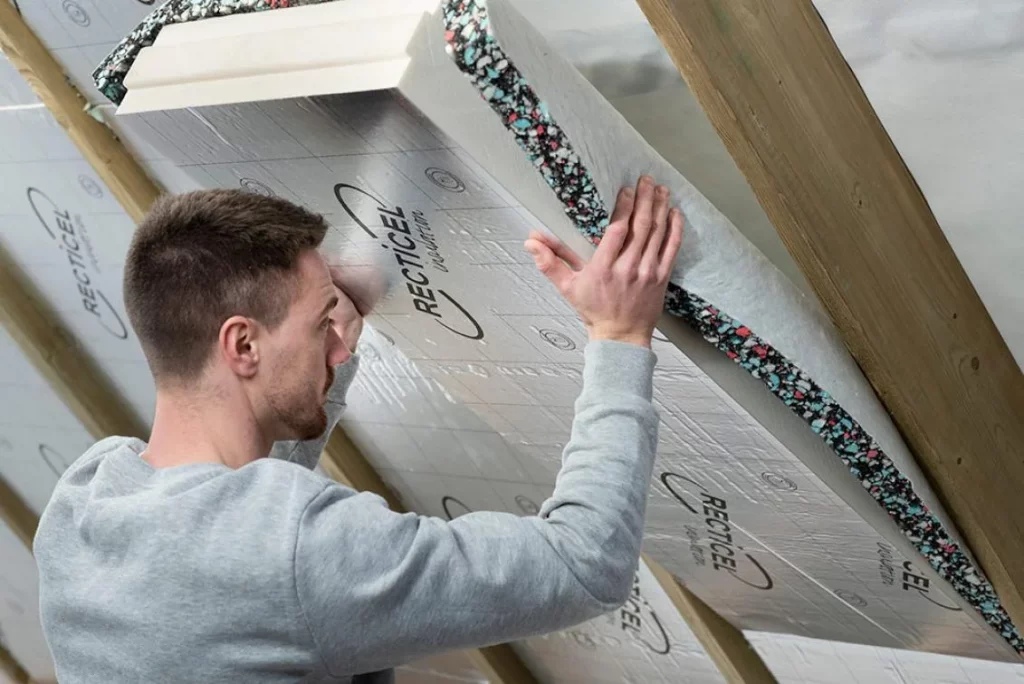
Insulation specialist Recticel thunders 24 percent lower on stock market
04/28/2023 | 05:41am EDT
Copyright BusinessAMBE
Investors dumped Recticel shares after disappointing quarterly results and uncertainty over the sale of its Engineered Foam division to U.S.-based Carpenter.
In the news: Recticel anticipates a significant decline in its operating cash flow (ebitda) in 2023, with the market environment remaining volatile. The company reported this with the release of its quarterly results.
- Demand in the first quarter remained well below last year in almost all product segments. “The market is expected to remain volatile with little near-term visibility,” Recticel stated.
- In the first quarter of 2023, the European construction market remained very challenging due to high inflation and interest rates, according to the company. “Declining disposable income, coupled with expensive building materials, has further weakened the market.”
- Kepler Cheuvreux analysts expected volumes to decline only from the second quarter onward, with the pace of decline increasing in the second quarter. “But it is clear that the market weakness has come earlier than expected,” Kepler said.
- Kepler also expects pressure on margins, as insulation specialists usually cut prices to maintain volumes. On the other hand, raw material prices remain relatively high.
Even more uncertainty: Analysts also point to uncertainty surrounding the sale of Engineered Foam to Carpenter.
- The American candidate acquirer wants a substantial discount from the original price of 656 million euros, due to recent market developments, which Kepler says calls into question the deal, as the price paid was reasonable.
- Recticel says it is still considering all options.
Stock market reaction: On the Brussels Stock Exchange, s share price closed Thursday at 15.92 euros. That went down to some 12 euro, or almost a quarter less, in an initial reaction this morning.
© The Content Exchange, source News
May 1, 2023
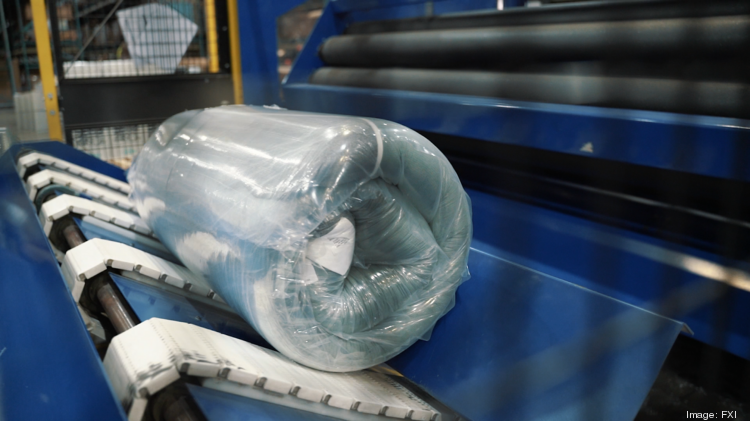
Longtime Charlotte-area manufacturer FXI to close Cornelius facility, laying off nearly 60 workers
By Jenna Martin – Managing Editor, Digital , Charlotte Business Journal
Apr 28, 2023
Listen to this article 3 min
A longtime manufacturer in the Charlotte area is laying off dozens of workers this summer as it plans to close its facility in Cornelius.
Pennsylvania-based FXI says in a Worker Adjustment and Retraining Notification that it will close its plant at 18801 Old Statesville Road by June 20. As a result, about 59 workers will lose their jobs.
The layoffs will begin on a rolling basis on May 22, writes Courtney Damon, chief human resources officer for FXI, in the WARN letter. The closure is expected to be permanent.
The N.C. Department of Commerce received notice on April 24.
FXI manufactures low-density polyurethane foam used in mattresses, furniture and vehicles. It designs, produces and delivers products such as mattresses, toppers and pillows, according to its website.
The company’s 331,400-square-foot building in Cornelius sits on a 48-acre site at Old Statesville and Bailey roads, according to Mecklenburg County real estate records.
A fire broke out at the plant last year, but no injuries were reported, according to Cornelius Today.
A message sent yesterday to Damon seeking more information about the closure was not immediately returned.
FXI has one other North Carolina facility, in High Point, according to its website. The company says it has 34 facilities in the U.S. and Mexico. Twenty-eight locations are listed on its site, excluding the Cornelius plant.
FXI’s history in the Charlotte area
FXI, previously named Foamex International Inc., has operated in Cornelius since at least 2001, according to CBJ archives. Foamex also once had a felt-manufacturing plant in Newton.
The company rebranded to FXI Foamex Innovations in July 2009 after its acquisition by MatlinPatterson Global Opportunities Partners III and Black Diamond Capital Management, CBJ previously reported.
That same month, Foamex LP sold the Cornelius property to Foamex Innovations for about $4 million, according to county real estate records. Foamex originally purchased the site for about $5.76 million in 1990.
In February 2020, FXI merged with New Jersey-based Innocor, which made similar products. As part of that $850 million merger deal, the companies agreed to sell three production facilities in Washington state, Indiana and Mississippi. That left the combined company with 34 manufacturing and distribution facilities across North America and about 4,150 employees.
Both firms were private-equity owned. FXI’s parent company, One Rock Capital Partners, acquired Innocor from Bain Capital. Bain Capital retained a smaller stake in the combined company, CBJ sister publication Philadelphia Business Journal reported at the time.
May 1, 2023
Covestro AG (CVVTF) Q1 2023 Earnings Call Transcript
Apr. 28, 2023 4:02 PM ETCovestro AG (CVVTF), COVTY

136.48K Followers
Covestro AG (OTCPK:CVVTF) Q1 2023 Earnings Conference Call April 28, 2023 10:00 AM ET
Company Participants
Ronald Koehler – Head, Investor Relations
Markus Steilemann – Chief Executive Officer
Thomas Toepfer – Chief Financial Officer
Carsten Intveen – Investor Relations, Director
Markus Steilemann
Thank you, Ronald, and hello and warm welcome also from my side to the results of our first quarter. Today we published our Q1 details after we had pre-released the headline figures two weeks ago.
Sales were down by 20% compared to last year to EUR3.7 billion, clearly indicating the global demand crisis we are currently facing. Against this trend, we achieved the first quarter EBITDA of EUR286 million, clearly beating the guidance of EUR100 million to EUR150 million given in early March. Free operating cash flow was also better than expected by us, despite the usual seasonal working capital buildup.
After positive trend in EBITDA during the first quarter and improved visibility going forward, we are now returning to a quantitative guidance for full year 2023 with a refined range for our financial KPIs.
Finally, as you recall, in the first quarter 2022, we initiated a EUR500 million share buyback program. The program was paused mid 2022 due to the recessionary environment. With more clarity on the outlook, we are now restarting the program in May.
Markus Steilemann
Thanks a lot, Thomas. And I would now like to come to a specific topic, as we are not only quantifying our full year guidance, but we are also resuming our share buyback program. Let me quickly remind you, we started the EUR500 million share buyback program end of February, 2022, and the reason for the buyback program was that major M&A acquisitions were out of scope. We fed our share to be undervalued, and as such a good investment in two sub tranches of each EUR75 million, we purchased around 3.5 million shares in the first half year of 2022. Yet, due to the recessionary environment with the start of the second half of 2022, we had then temporarily suspended the share buyback to protect our balance sheet and retained cash within the company until an economic rebound becomes foreseeable. However, it was always our strategic intention to execute the share buyback in an anti-cyclical manner.
Now, our raised EBITDA and free operating cash flow guidance and the improved visibility that the second quarter 2023 will sequentially result in higher volumes and a further raised EBITDA. We consider this to be the right point in time to reinitiate the buyback. We are still firm in our opinion that our share is currently undervalued and deemed the investment into our own shares as best investment for our shareholders. Consequently, the third sub charge of up to EUR75 million will be launched in May.
Let’s turn pages now to page number 19. A very busy chart. So let me guide you through it. As you know very well from the past and the current situation, Covestro’s business is a cyclical business. In times of an economic downturn or our core products, MDI, TDI and polycarbonate are usually strongly affected. Our products are an early indicator of a crisis as we are at the very beginning of the value chain and have strong exposure to multiple consumer industries. There are steps in the value chain between us and the consumer market. But in time of crisis, the stop of stock replenishments is regular in immediate action and progressing very fast throughout the different value chains. So our products are an early indicator to an economic downturn.
During a recession, the value chain empties through destocking. Upon the start of an economic recovery, a fast and efficient replenishment of the value chain is also required again. Rebounds often create a strong demand to quickly refill the supply chain. These high growth rates usually lead to supply shortages, allowing Covestro to execute the pricing power to again realize financially attractive margins.
So despite the cyclical behavior, the long-term growth drivers for our products remain intact or even improve. The current energy crisis will have a positive impact on the growth of MDI and polycarbonate. The trend for effective insulation to save energy can add one to two percentage point to the growth rate of MDI in the future as MDI is the best insulating materials for buildings and appliances. And MDI is so versatile, it can also be used in the manufacturing of wind turbine blades giving additional benefits of longer lifetimes and reduced maintenance rates. Our polycarbonates are an essential part of the battery pack in most electric vehicles as well as a contributor to lightweight and technically advanced electrical features. This results in a two to five times higher use of polycarbonates in modern EVs compared to a regular combustion car. With that, we believe that once the crisis is over, we will see again a strong rebound of demand for our products.
Let’s turn pages to page number 20 to another topic of special attention. In the past year, the competitiveness of European TDI production compared to competitor imports from Asia-Pacific was always a point of discussion. And yes, there were times like in the third quarter of 2022 when gas prices peaked so that the import of TDI was cost-wise a better solution than local production in Europe. Consequently, and supported by a temporarily significant gap of toluene prices between Europe and China, the imports were peaking at this point in time, taking into account the shipment delay of about six week. Also, we were importing TDI from our plant in China.
You can clearly see an above chart that the landed cost advantage of imports from China in the third quarter peaked even considering logistics and import duties of EUR350 to EUR600 per ton. But as soon as the gas prices were coming down, this advantage quickly disappeared. And with the continuous gas prices declined since the January, 2023 disadvantage has now reversed. So Europe, as a TDI production location, is definitely competitive and has its place to cover the market demand.
If we take a look at the imports that have been coming in from Asia-Pacific in 2022 around 100 kilotons TDI have been imported, and market prices have nevertheless peaked during the time of high gas prices. This clearly indicates that the market needs the European asset base for reliable supply. And with the announcement of a 300 kiloton of European production disappearing towards third quarter of 2023, Europe will even require more imports to cover again rising demand. Demand as of 2024 will exceed the local European production. And customers are hesitant to rely on import, given the supply chain interruption seen in the past two years. We believe that we have a clear technological and cost advantage with our gas phase TDI technology, and additionally, an advantage of having a production in the heart of Europe being able to supply TDI competitively to our customers.
So now let’s turn to the last page of today’s presentation. Let me quickly summarize on page number 21. Volume decline is resulting in lower sales or has resulted in lower sales of EUR3.7 billion in the first quarter, and that was caused by weak demand and ongoing destocking across many industries. Our EBITDA came in with EUR286 million above guidance range of EUR100 million to EUR150 million, and that was driven by cost efficiency and improved pricing data across both segments. This negative free operating cash flow of minus EUR139 million still came better — came in better than expected, and it was held by ongoing strict working capital measures.
We also now quantified the guidance for full year 2023 with an expected EBITDA between EUR1.1 billion to EUR1.6 billion, and we resumed our — will resume our EUR500 million share buyback program with a third tranche up to EUR75 million starting in May.
Markus Mayer
And then the last question is on TDI, is that last year, roughly 100,000 tons have been imported to Europe, is this is net zero [ph]? Also the maximum of imports which can be imported to Europe given its chemical activity, or what would be theoretical maximum number which could be imported to Europe? That’s all for my side.
Thomas Toepfer
Markus Steilemann
Yeah. Absolutely. So, Markus, if you look at the TDI import capacity, what we are basically talking about is not only shipping capacity, but we — what we need, we need storage capacity and unloading capacity in respective harbors, which is a key challenge as we’re talking here about hazardous and very reactive chemicals. So having said that, it is not easy to build those capacity up. But even if it is built up, let me quickly recap on what I tried to explain a little bit earlier in one of the slides. It is absolutely necessary that we get this additional capacity imported into Europe as one of the largest sites in Europe, which represents roughly 40% of European based capacity is about to be shut down by third quarter of 2023. That means we have name played out 300,000 tons. How much real available capacity is represented by this? The jury is out. Nonetheless, we and our customers strongly believe in the growth opportunities and their demand for TDI, and therefore, we need import capacities. Otherwise we will have at least for some time temporarily maybe a shortage of TDI in Europe.
So we need this capacity, and therefore you can assume that there might be an upscaling within this year of another 50,000 tons of import capacity on top of the 100,000 tons that we have seen being imported last year. So, yeah, once again, it’s difficult to judge talking about, let’s say, the chemistry we are handling here. We need that import capacity and we feel in this overall situation as the — yeah, let’s say, one of the last two standing TDI suppliers with the IP protected leading cost position, let’s say, very well-positioned in that market.
Charlie Webb
Brilliant. It worked. Maybe just two questions from me. So first, just thinking about the spreads, maybe you can just walk us around a little bit obviously you kind of alluded to a slightly better kind of volume indication seasonally and sequentially, looking through the year. So just how do you see spreads shaping up in terms of that balance of supply/demand across some of your key commodities? Just a sense on that regionally, and by you those — kind of key commodities, NDI, TDI, polycarbonate would be really useful.
And then just second question, on TDI itself. Obviously, some talk around some of the limitations MOFCOM has put on TDI prices for one of your competitors to close the deal that they are currently undertaking. How do you think about that in terms of what it — has or what implications it has for the China TDI market? And how would you calibrate that into your kind of mid-cycle thinking in its current form? Does it reduce kind of your mid-cycle as it relates to TDI earnings in in China? Does that have a small impact or not? Just trying to understand that, would be great.
Thomas Toepfer
Yeah. Charlie, let me maybe start with the — with a spread question. So I think from an overall picture, you’ve seen that our mark-to-market stands at 1.4, our midpoint of the EBITDA guidance is at 1.35. So essentially what we’ve done, take the number and maybe reduce it slightly. I’m not going to call it a haircut, but it’s a slight reduction that we’ve made.
If you look into the immediate future, that’s also true for the second quarter. So we’re essentially assuming that the uplift that we’re expecting for Q2 in terms of EBITDA is purely coming from better sales volumes, which are seasonally driven. And as I said, the fact that China has no Chinese New Year, and that the construction season is kicking in, but we’re essentially assuming that the margins stay flat also in the second quarter of the year.
The upper end of the guidance 1.6 would require some meaningful upside of the margin to happen the second half of the year. I think this is in the cards if demand picks up, but of course, we’re not planning with it. As I said, our base assumption is still flat volumes and also, margins essentially flat forward. So — yeah, so I think that would be it from my side on the spread.
Maybe Markus you want to talk about TDI.
Markus Steilemann
Yeah. Thanks Charlie for your question and thanks also for once again hinting on TDI. So what’s the situation? One, the largest, let’s say, local producer of TDI in China has bought a smaller competitor. And one of the first measures is that they will shut down a smaller capacity in the order of magnitude, I think a 30 or 40,000 tons of TDI capacity. So a kind of a small consolidation is going on there. However, given the size of those players, that has called the anti-trust authorities on stage and they have gone through a rather, let’s say, sophisticated paper that kind of limits the opportunity of setting the price for TDI in China. However, that goes back, I think for, looking three to four years backwards on the pricing. And we must not forget that, for example, one of those years was 2021, where we have seen rather high prices.
So long story short, I would not expect that this overall regulation, including, let’s say, this potential price cap, if I may call it that way, will have any significant impact on our ability with regard to earn money with TDI. And secondly, also on our ability with regards to our mid-cycle earnings not only because of that very specifics that I just described, but it is just one country and it’s just one product which is not representing the major share of our entire product portfolio.
Let’s not forget about the wonderful products like MDI, polycarbonate and the Solutions & Specialty segment. I hope that answers your question.
Jaideep Pandya
And then the third question really is on MDI. If I just use furniture as a reference industry, do you expect growth to rebound to the sort of five-year historical average for all this MDI capacity that is coming? Or do you think that even if we under undergo maybe for the next 12 months, because it is coming from essentially one player and that player is expected to be disciplined, we won’t have overcapacity issue in MDI? Thanks a lot.
Thomas Toepfer
Markus Steilemann
Yeah. Maybe then, on — Jaideep, on the last topic with regards to MDI. So we believe that structurally MDI growth is fully intact. We also believe that — and you said, well, just let’s take the furniture example as one example, but to really look into the MDI growth, there’s two things that need to be considered. Number one is, we’re not only talking about newly constructed private and commercial buildings, but also about a significant market for refurbishment of buildings. And not to forget that about 25% to 40% of global energy demand is driven by cooling and heating of buildings. So there’s a huge need for more, let’s say, energy efficient buildings. And that is the key driver for retrofitting of homes and new built homes for insulation materials where MDI plays a major role. And that’s why looking at that demand pattern, first and foremost coming out of a crisis, there is a high chance that the market would show a very strong rebound pattern, which would then very fast lead into balanced markets.
And looking a little bit further out, there is, from today’s perspective, an announcement, limited capacity built up to 2025 and 2026, and following years, in 2026 and following years, there is currently even no announcement about additional capacity being built or edited. So the market might even get short or very short in the midterm, and you cannot just turn on the tap and say, okay, let’s produce some more MDI, no matter how you do it, it takes a couple of years from the first planning/announcement to really get quality MDI out of the pipes. And that’s why from today’s perspective, you might come to a gloomy outlook. I would say with a quick rebound, limited announcements and also the need for structural need for MDI given, let’s say, the sustainable development and energy, let’s say, reduction targets, the MDI market is still intact.
April 27, 2023
Dow Inc. (DOW) Q1 2023 Earnings Call Transcript
Apr. 25, 2023 11:15 AM ETDow Inc. (DOW)

136.26K Followers
Q1: 2023-04-25 Earnings Summary
EPS of $0.58 beats by $0.20 | Revenue of $11.85B (-22.36% Y/Y) beats by $516.33M
Dow Inc. (NYSE:DOW) Q1 2023 Earnings Conference Call April 25, 2023 8:00 AM ET
Company Participants
Pankaj Gupta – Investor Relations, Vice President
Jim Fitterling – Chairman and Chief Executive Officer
Howard Ungerleider – President and Chief Financial Officer
Jim Fitterling
Thank you, Pankaj. Beginning on Slide 3. In the first quarter, Team Dow demonstrated its agility, delivering sequential earnings improvement in what continues to be a challenging environment. These results reflect our competitive advantages and operating discipline as we leveraged our structurally advantaged feedstock positions, proactively aligned our operating rates with market demand and focused on higher-value products where pockets of demand remain resilient, such as pharmaceutical applications, energy, commercial building and construction and mobility end markets. Additionally, our actions to deliver $1 billion in cost savings in 2023 are progressing with $100 million achieved in the first quarter. These actions will ensure we continue to focus on cash flow generation through our low-cost to serve operating model.
Turning to the details of the quarter. Net sales were $11.9 billion, down 22% year-over-year. Declines in all operating segments were driven by continued soft global macroeconomic activity. Sales were flat sequentially, as gains in performance materials and coatings and packaging and specialty plastics offset declines in industrial intermediates and infrastructure. Volume decreased 11% year-over-year, led by declines in Europe, the Middle East, Africa and India or EMEA. However, volumes increased 2% sequentially on gains in performance materials and coatings and packaging and specialty plastics.
Local price declined 10% year-over-year and 4% quarter-over-quarter, due to industry supply additions in some businesses amidst soft global economic conditions. Operating EBIT for the quarter was $708 million, down year-over-year due to lower local prices and volumes. Sequentially, operating EBIT improved by $107 million, with gains primarily driven by performance materials and coatings. Cash flow from operations was $531 million in the quarter. On a trailing 12-month basis, cash flow conversion was 85%.
Moving to the Industrial Intermediates & Infrastructure segment. Operating EBIT for the segment was $123 million compared to $661 million in the year ago period. Results were driven by lower pricing and demand, as well as higher energy costs, particularly in EMEA. Sequentially, operating EBIT was down $41 million. Lower energy costs were more than offset by decreased demand and pricing for propylene oxide, its derivatives, and in isocyanates, in polyurethanes and construction chemicals. Industrial Solutions experienced lower volumes due to weather-related impacts and a third-party supply outage combined with lower demand in industrial end markets.
hristopher Parkinson
Okay. Thank you so much. It’s obviously been a few years with China now finally emerging from COVID. But can you just kind of give us your latest and greatest thoughts on your three main segments regarding the potential for new Chinese supply across polyethylene, MDI, and then just the remainder siloxanes, which you’ve already been mentioning. Just given that they’re finally emerging from this, just any update on your thought process there will be incredibly helpful. Thank you so much.
Jim Fitterling
Sure. Let me try to do this MDI and siloxanes. Look, on siloxanes, there were about four additions in China last year on siloxanes capacity. You had each one of them range, they were between 100,000 and 200,000 tons each. And so — there are some more planned additions coming throughout this year. But I think the net total — the biggest year was last year that we saw about 650,000 tons added. So I think we’re through that.
MDI, I think, is a timing game, as we’ve said before, I feel good about where supply/demand is with MDI. In the short term, the operating rates have been between 75% and 80%. And it’s all depending on your view of how fast the Chinese capacity is going to come on. We think it’s going to be spread out a little bit more over time versus all coming on in 2023. And so, our view is that, the industry operating rates should hold up in that high 70s, almost 80% range, which historically is a constructive range for MDI.
 Everchem Updates Archive
 Sign Up for Email Updates