
The Urethane Blog
August 25, 2026
Shell could sell U.S. chemicals division for $8 billion as it refocuses on oil and gas

A Shell fuel tanker truck – Credit: K.D.P / DepositPhotos – License: DepositPhotos
Shell has attracted interest from several potential buyers for its chemical business in the United States, according to the Financial Times. Among those reportedly considering a deal are ExxonMobil, LyondellBasell and investment firm Apollo, sources told the newspaper. Shell could raise around $8 billion by selling its U.S. chemical assets, the Financial Times reports. However, the company has not yet decided whether it will proceed with a sale.
Several potential buyers have already made preliminary offers, either for the division as a whole or for individual parts of the business. Kuwait Petroleum Corporation, the state-owned Kuwaiti oil company, is also said to be among those interested.
Shell operates four chemical plants across Louisiana, Texas and Pennsylvania, producing chemicals used in a range of products, including plastics, medicines and cleaning agents. One of its largest facilities is the Monaca plant in Pennsylvania, which can produce up to 1.6 million tons of polymers each year.
A $8 billion sale of the entire chemicals division would represent a substantial shortfall compared with Shell’s previous investments in its U.S. chemicals business, the newspaper reports.
The potential sale comes as Shell increasingly focuses on its core oil and gas operations. The company made its biggest acquisition in more than a decade earlier this year, paying $13.6 billion for Canadian oil and gas producer ARC Resources.
Shell, ExxonMobil and Apollo declined to comment when contacted by the Financial Times. LyondellBasell and Kuwait Petroleum did not respond to the newspaper’s questions.
The potential sale would not cover all of Shell’s U.S. operations, as the company also owns offshore drilling platforms and oil refineries in the country.
https://nltimes.nl/2026/08/24/shell-sell-us-chemicals-division-8-billion-refocuses-oil-gas
August 20, 2026
Leggett & Platt Announces Shareholder Approval of Merger with Somnigroup
Aug 20, 2026, 11:50 AM ETSomnigroup International Inc. (SGI), LEG

CARTHAGE, Mo., Aug. 20, 2026 /PRNewswire/ — Leggett & Platt (LEG) today announced that its shareholders voted to approve the merger of the Company with Somnigroup International Inc. (SGI). The Merger remains subject to a remaining required regulatory approval and we anticipate that the transaction will close upon satisfaction of the remaining closing conditions.
FORWARD-LOOKING STATEMENTS: This press release contains “forward-looking statements,” identified by words such as “expect,” “anticipate,” “estimate,” “believe,” or by the context in which they appear, including, but not limited to, the anticipated closing of the Somnigroup transaction upon satisfaction of the remaining closing conditions, including required regulatory approvals. Such statements are expressly qualified by cautionary statements described in this provision and reflect only the beliefs, expectations, and assumptions of the Company at the time the statement is made. Because all forward-looking statements deal with the future, they are subject to risks, uncertainties and developments which might cause actual events or results to differ materially from those envisioned or reflected in any forward-looking statement. Moreover, we do not have, and do not undertake, any duty to update or revise any forward-looking statement to reflect events or circumstances after the date on which the statement was made, whether as a result of new information, future events or otherwise, except as required by law. Some of these risks include: risks associated with the Agreement and Plan of Merger, dated April 13, 2026 (as may be amended from time to time, the “Somnigroup Merger Agreement”), by and among Somnigroup International Inc. (“Somnigroup”), Sparrow Unity Corporation, a Missouri corporation and a direct, wholly owned subsidiary of Somnigroup (“Merger Sub”) and the Company, pursuant to which, subject to the terms and conditions of the Somnigroup Merger Agreement, Merger Sub will merge with and into the Company (the “Somnigroup Merger”), with the Company surviving the Somnigroup Merger as a direct, wholly owned subsidiary of Somnigroup, including (i) the completion of the Somnigroup Merger is subject to certain conditions that may not be satisfied or waived, including certain governmental and regulatory approvals; (ii) an event, change or other circumstance could give rise to delays in completing the Somnigroup Merger or the termination of the Somnigroup Merger Agreement; (iii) the Company’s business relationships (including with Somnigroup and its affiliates) may be subject to disruption due to uncertainty associated with the Somnigroup Merger; (iv) the diversion of management time from ongoing business operations and opportunities as a result of the Somnigroup Merger; (v) failure to complete the Somnigroup Merger could negatively impact the share price and the future business and financial results of the Company; (vi) litigation against the Company could result in substantial costs, an injunction preventing the completion of the Somnigroup Merger and/or a judgment resulting in the payment of damages; (vii) the Company will incur significant transaction and merger-related costs in connection with the Somnigroup Merger; (viii) the possibility that the expected benefits of the Somnigroup Merger are not realized when expected or at all; and (ix) other risks inherent in the Company’s and Somnigroup’s businesses.
All such factors are difficult to predict, are beyond the Company’s and Somnigroup’s control and are subject to additional risks and uncertainties, including those detailed in Somnigroup’s annual report on Form 10-K for the year ended December 31, 2025 and those detailed in the Company’s annual report on Form 10-K for the year ended December 31, 2025 and Quarterly Reports on Form 10-Q for the quarters ended March 31, 2026 and June 30, 2026. These risks, as well as other risks related to the proposed transaction, are included in the Form S-4 and proxy statement/prospectus that Somnigroup and Leggett & Platt filed with the SEC in connection with the proposed transaction. There may be other factors that may cause the Company’s and Somnigroup’s actual results to differ materially from the forward-looking statements. The Company does not undertake any obligation to publicly update any forward-looking statement, whether as a result of new information, future events or otherwise, except as required by law. Readers are cautioned not to place undue reliance on these forward-looking statements that speak only as of the date hereof.
FOR MORE INFORMATION: Visit Leggett’s website at www.leggett.com.
August 19, 2026
Edge-Sweets Company (ESCO) Expands Polymer Development Capabilities to Help Companies Take New Materials from Idea Through Formulation and Production
Expanded capabilities bring U.S.-based polymer chemistry, process engineering and equipment design together to help manufacturers move from the laboratory to the production floor
August 13, 2026 09:00 ET | Source: Edge-Sweets Company (ESCO)
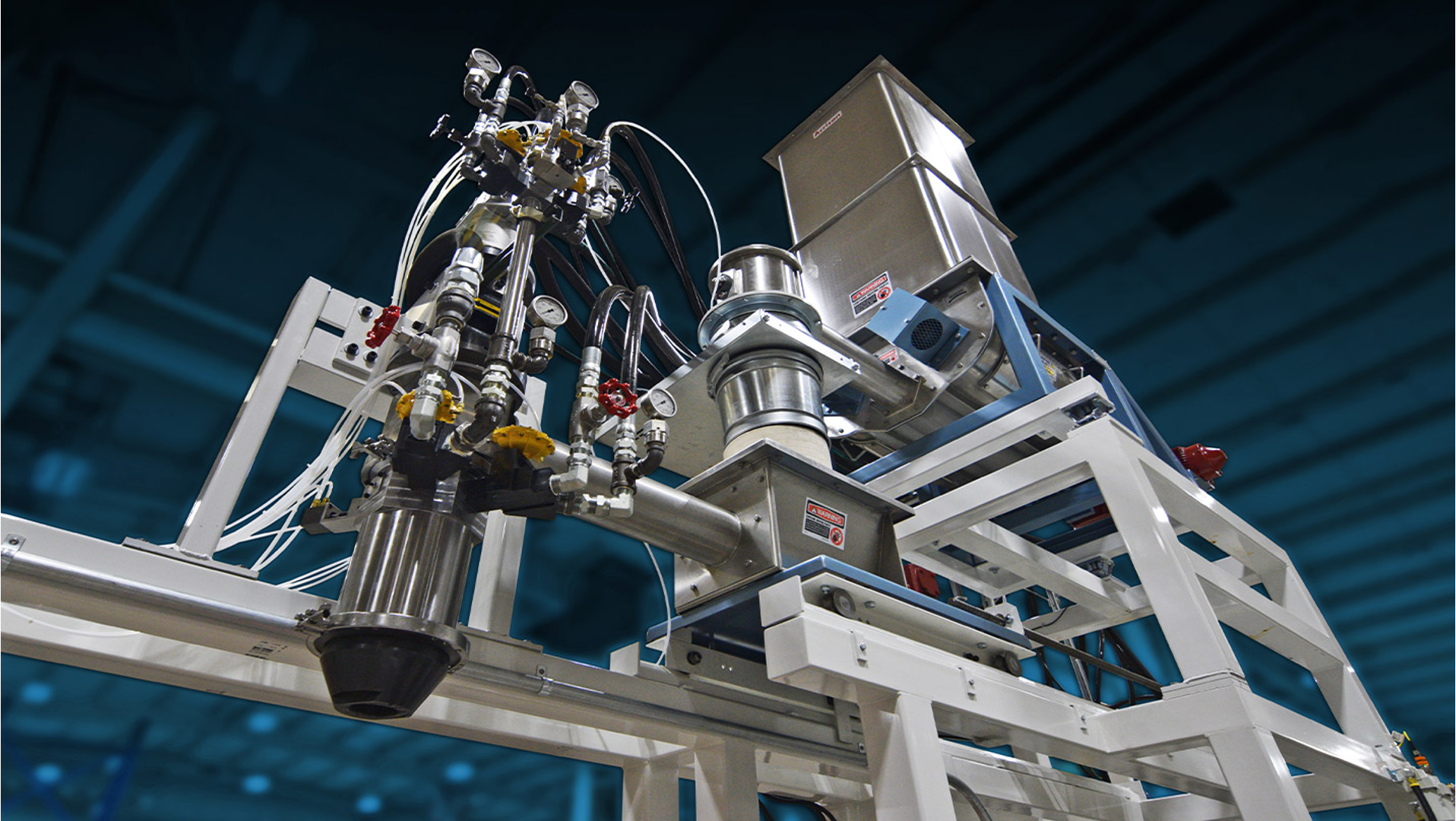
GRAND RAPIDS, Mich., Aug. 13, 2026 (GLOBE NEWSWIRE) — Edge-Sweets Company (ESCO), a Grand Rapids-based engineering and manufacturing firm with more than 140 years of industrial manufacturing history, is expanding its in-house capabilities to help manufacturers move new materials and establish the processes and equipment required to produce them at commercial scale.
Building on its longstanding expertise in custom polyurethane processing equipment, ESCO has expanded its capabilities to include polymer chemistry, applications development and process engineering, allowing customers to solve technical and manufacturing challenges with a single partner.
“Customers don’t always come to us with a finished formulation,” said Rick Speas, Applications Engineer at ESCO. “Often they know the product they want to manufacture, but the chemistry, processing requirements and production equipment are all evolving at the same time. By bringing chemists and engineers together, we can solve those challenges as one development process instead of several separate ones.”
Equipment design depends on chemistry. Variables such as viscosity, filler content and flow characteristics determine how a production system must be engineered, yet many manufacturers begin exploring production equipment before those parameters have been fully established. The expanded capability brings chemists and engineers together earlier in the development process, helping customers move more efficiently from formulation to full-scale production.
ESCO’s recent collaboration with Colorado-based Flora Materials, a developer of bio-based materials, demonstrates how these capabilities can be applied to an emerging material and its intended commercial application. ESCO supported on the formulation development, rapid prototyping, process engineering, and large-scale sample generation, which was recognized with a Best of NeoCon Sustainability Award, and are now helping the company scale up manufacturing to meet demand.
“Taking a new material from hand-poured samples to a repeatable manufacturing process takes the right combination of chemistry, equipment and people willing to solve problems together,” said Natalie York, CEO and founder of Flora Materials. “ESCO has been that kind of partner for Flora. Their team understands both the material and how it needs to be made, and working with them close to home has helped us continue testing, refining and moving toward production.”
Across its growing portfolio of polymer-development work, ESCO is helping companies address a wide range of material, processing and scale-up challenges. Projects include applications ranging from specialized aviation foam to composite panels made with difficult-to-recycle materials. Through its work with Sustainable Solutionz, for example, ESCO has developed a binder and production approach for composite panels incorporating recovered photopolymer printing plates and recycled feedstocks, while also exploring new applications for ocean-recovered plastics.
“Some of the most rewarding projects are the ones that don’t fit a standard process,” Speas said. “Those applications require chemistry, engineering and manufacturing expertise to evolve together. That’s where we believe we can create the greatest value.”
As manufacturers continue developing more advanced polymer systems, ESCO expects demand for integrated chemistry and engineering support to continue growing and is actively seeking opportunities to collaborate with product developers, chemical suppliers, manufacturers and entrepreneurs bringing new materials to market.
Projects typically begin under a mutual nondisclosure agreement, with intellectual-property ownership and any continuing chemistry-supply arrangements determined individually.
Manufacturers interested in polymer formulation, applications development, process engineering or custom dispensing equipment can contact Rick Speas at rspeas@edge-sweets.com to learn more.
About Edge-Sweets Company
Edge-Sweets Company (ESCO) is a Grand Rapids, Michigan-based engineering and manufacturing company specializing in polyurethane processing equipment, custom automation and polymer processing technologies. With industrial roots dating to 1883 and more than 140 years of manufacturing history, ESCO designs and builds custom equipment while providing polymer chemistry, applications development and process engineering support for manufacturers developing innovative products. The company serves customers across industries including furniture, bedding, construction, automotive, aerospace, medical and advanced manufacturing.
August 18, 2026
Winnsboro factory fire puts jobs on hold, closes roads
By Deric Rush
Published: Aug. 17, 2026 at 7:41 PM EDT|Updated: 14 hours ago

FAIRFIELD COUNTY, S.C. (WIS) – A massive industrial fire that reignited overnight has destroyed the MLily USA mattress factory in Winnsboro, forcing major road closures, sparking environmental monitoring, and leaving hundreds of employees in a close-knit community facing sudden job loss.
Emergency crews from across the state remained on the scene Monday evening, battling a fire that has been burning continuously since late Sunday night. Officials warned it could be Tuesday before the active blaze is completely extinguished.
The Challenge of Water-Resistant Foam
The fire first began Sunday morning around 9 a.m. when a smoke alarm sounded at the plant. Fairfield County Fire Department crews initially brought the fire under control and contained it to a small area by Sunday evening.
However, at 11:30 p.m., the fire reignited and quickly tore through the entire production facility.
Firefighters faced unique obstacles trying to douse the flames inside the factory due to the tight layout and the chemical makeup of the materials used to manufacture mattresses.
“The foam is in a conveyor racking system that’s multi-levels high,” said Fairfield County EMS Chief Jamie Webb. “It’s very large pieces of foam. It’s hard to access in the locations it’s in. And that’s what created a challenge with it. It’s close quarters and a lot of material in one spot.”
In addition to the physical layout, the foam used in the mattresses is highly flammable yet water-resistant, making it incredibly difficult to fully put out. The stubborn nature of the chemical fire forced local agencies to request statewide reinforcements to handle the expanding scene.
Road Closures and Community Disruptions
As thick, black smoke drifted across Fairfield County, authorities shut down a major shipping corridor. Highway 321 South remains closed between Highway 34 and Highway 269, and officials expect it to stay blocked for the remainder of the day.
While local schools—including Fairfield County School District, Richard Winn Academy, and the STEM school—remained open on normal schedules, the detours heavily impacted school bus routes and morning commutes.
Bridgette Howell, a nearby gas station clerk, saw the flashing emergency lights and police blockades when she arrived for her shift early Monday morning.
“I turn into my job, then the customers start coming in telling me that the building was on fire,” Howell said. She added that the roadblock created a massive headache for her regulars. “It did mess up some customers. I mean, that go straight down 321, they had to detour 34, and then some of them had to go all the way around and come up 269.”
EPA Called in to Monitor Environmental Impact
Because of the heavy chemicals and foam stored inside the facility, local officials requested assistance from the federal government.
The South Carolina Department of Environmental Services (DES) brought in the Environmental Protection Agency (EPA) to monitor air and water runoff around the site.
“Any time you have a large fire, an industrial fire, there is runoff. And it gets into creeks. That’s just a side effect of any fire you have to fight,” said Fairfield County Administrator Vic Carpenter. “Contractors have already been brought on to start managing that. That’s one of the key things that EPA will be checking.”
State environmental officials and the EPA are currently analyzing air quality readings. Both agencies report that there is currently no hazardous air threat to the public, though they are still waiting on official finalized test results.
Local officials have urged residents to avoid the area due to shifting smoke plumes that can suddenly drop driving visibility to zero.
Sudden Job Loss Hits Close-Knit Town
The economic impact of the total loss of the facility is expected to be deeply felt. MLily USA is one of Fairfield County’s largest employers, sustaining several hundred local jobs.
While county officials say employees worked a condensed shift Sunday morning, they stressed employees safely evacuated when the fire broke out, and no injuries have been reported among factory staff or first responders.
Verdan Glover, who has worked as a groundskeeper at MLily since March, said employees had been warning management about maintenance and safety issues for months.
“I knew it was going to happen. Eventually. I knew it was going to happen,” Glover said. “Something. It was like the Bible. It was either going to be by water or by fire.”
Glover said that the factory’s equipment was constantly breaking down and that employees had suggested shutting down the plant temporarily to make necessary repairs, but management patched over the issues instead.
Now, Glover and hundreds of others are left without jobs.
“Life goes on. I’m just going to get another job. Especially after they see this,” Glover said, though he acknowledged the devastating impact this will have on colleagues who have fewer options. “Instead of taking those two weeks off [to fix things], now you don’t have a job at all.”
Fairfield County PIO Gene Stephens echoed the emotional toll on the community.
“This hurts a community like ours. We have such a close-knit community here,” Stephens said. “And something like this impacts a lot of people. Some are waking up today not knowing… they don’t have a job right now.”
MLily USA Releases Statement
In a statement sent to WIS on Monday afternoon, MLily USA officials expressed appreciation for local emergency crews and asked the public for patience:
“The fire at our facility remains an active scene at this time. Our immediate priority is the safety of our employees, first responders, and the surrounding community. Emergency personnel are on site and actively working to contain the fire, and we are cooperating fully with their response efforts. Because this is an active and developing situation, we do not yet have complete information regarding the cause of the fire or the extent of the damage. We are not aware of any injuries to individuals at this time.
We will provide additional information as it becomes available and can be confirmed. We are grateful to the first responders working at the scene and appreciate the community’s patience as emergency crews continue their response.”
https://www.wistv.com/2026/08/17/winnsboro-factory-fire-puts-jobs-hold-closes-roads
August 17, 2026
Sinochem International increases investment in the HDI sector, with planned domestic capacity exceeding 500,000 tons.
2026-08-17 09:15:33Source:ChemNet中文


Recently, the Department of Ecology and Environment of Ningxia Hui Autonomous Region accepted and publicized the environmental impact report for the 100,000 tons/year HDI and 180,000 tons/year Phosgene Expansion and Renovation Project (Phase I) and the 13,000 tons/year Chlorinated Ester Expansion Project of Ningxia Ruitai Technology Co., Ltd.
The project is planned and constructed as a whole to include 100,000 tons/year HDI, 100,000 tons/year HDI trimer, and 180,000 tons/year phosgene, with a co-production of 290,000 tons/year 30% hydrochloric acid; the project is implemented in three phases. The current phase promotes Phase I, involving the construction of a new 20,000 tons/year phosgene unit. Upon completion, the company’s total phosgene capacity will increase from the existing 30,000 tons/year to 50,000 tons/year.
Project Background: Filling the Phosgene Capacity Gap and Supporting Downstream High-end Products
Ningxia Ruitai Technology is a wholly-owned subsidiary of Jiangsu Yangnong Chemical, a subsidiary of Sinochem International. Established in 2010, the company currently possesses multiple production units including phosgene series products and nylon 66. The existing chlorinated ester capacity is 8,000 tons/year, and the products are supplied externally for the production of EHP and TBEC raw materials.
There are two major practical drivers for this expansion and renovation. On one hand, the company’s existing 30,000 tons/year phosgene capacity can hardly meet the full-load operation of downstream units. As a core intermediate for polyurethane and polycarbonate, phosgene capacity has become a bottleneck restricting the company’s development. On the other hand, this expansion simultaneously supports chlorinated ester capacity. After the project lands, the chlorinated ester capacity will increase from 8,000 tons/year to 13,000 tons/year. Meanwhile, new catalytic desulfurization facilities will be added to optimize the quality of phosgene products, laying a solid raw material foundation for the subsequent production of high-end HDI products.
HDI: High-end Aliphatic Isocyanate, Key Raw Material for New Energy Coatings
HDI, or hexamethylene diisocyanate, belongs to high-end aliphatic isocyanates. It differs significantly from aromatic isocyanates like MDI and TDI. Its molecules contain no benzene rings and feature a saturated aliphatic chain structure. It possesses outstanding characteristics such as yellowing resistance, weather resistance, corrosion resistance, and high light transmission. It is an indispensable curing agent raw material for high-end polyurethane coatings and adhesives. The phosgene method is also the current mainstream production process for high-performance HDI.
HDI is mostly used in scenarios with long-term outdoor exposure and stringent requirements for aging resistance, including automotive OEM topcoats, architectural exterior wall coatings, industrial heavy-duty anti-corrosion paints, high-end wood varnishes, and yacht protective coatings. It can effectively solve industry pain points such as easy yellowing, fast aging, and short service life of traditional coatings.
For a long time in the past, the global HDI market was monopolized by overseas enterprises. Foreign companies like Covestro and BASF dominated market supply, while domestic supply of high-end products was insufficient, leading to a high dependence on imports. However, in recent years, Asia has become the core region for global HDI capacity expansion, and domestic chemical enterprises have accelerated their layout in the HDI track, speeding up the import substitution process.
Industry Expansion Wave: Multiple Chemical Giants Enter the Market, Planned Capacity Under Construction Exceeds 500,000 Tons
Regarding overseas manufacturers:
· Covestro completed the acquisition of Converge’s HDI derivative base in July 2026, with existing HDI capacity of 190,000 tons/year;
· Nippon Polyurethane (NPU) has existing capacity of 15,000 tons/year and plans to expand by 50%, with new capacity expected to come on stream around August 2026;
· Asahi Kasei has existing capacity of 22,000 tons/year.
Domestic enterprises are accelerating to seize the market:
· Wanhua Chemical has a total existing HDI capacity of 209,000 tons after acquiring Converge assets. Combined with the Ningbo technical renovation project, the long-term total capacity will expand to 309,000 tons/year;
· Meirui New Materials has formed 100,000 tons/year HDI monomer and derivative capacity in its Henan Industrial Park, with another 200,000 tons under construction;
· NHU (Zhejiang Medicine) plans 103,000 tons/year HDI in its Weifang, Shandong project;
· Oriental Shenghong‘s subsidiary Lianyungang Hongke New Materials is investing 13.33 billion yuan to build an industrial chain project, laying out 50,000 tons/year HDI, simultaneously supporting TDI, PC, and BPA units, to create an integrated “Refining-Aromatics-BPA-PC/TDI/HDI” industrial chain.
According to industry statistics, the total planned HDI capacity awaiting production in the domestic stage has already exceeded 500,000 tons. In the future, the domestic self-sufficiency capability of HDI will be significantly improved, and the industry competitive landscape will usher in a reshaping.
Downstream Demand Explodes at Multiple Points, New Energy Field Opens Incremental Space
In addition to the traditional coatings market, the application of HDI in emerging industries is expanding rapidly, with continuous demand growth in areas such as electrophoretic paints, ultra-wear-resistant floor paints, wind power blade and tower protection coatings, and photovoltaic backsheet structural adhesives.
· Automotive Industry, BMW i-series electric vehicle OEM varnishes use an HDI curing agent system, with a weather resistance life of over 10 years, a 50% increase compared to traditional coatings;
· Wind Power Field, Huntsman’s WindCoat™3025 coating containing HDI trimer is applied to blades in a 60MW domestic offshore wind farm, with salt spray resistance breaking through 3,000 hours;
· Photovoltaic Industry, HDI-based materials are used in N-type modules with a light transmittance of up to 99.3%, a 2 percentage point increase compared to traditional EVA encapsulant films. With the continuous development of new energy vehicles, offshore wind power, and the photovoltaic industry, HDI’s long-term demand has strong support.
 Everchem Updates Archive
  Sign Up for Email Updates