
Current Affairs
April 14, 2021
RV Surge
“Unprecedented Demand”: RV Sales Hit Record In February, On Pace For Blowout 2021
by Tyler DurdenWednesday, Apr 14, 2021 – 11:05 AM
With median prices for both existing and new homes at all time highs, and soaring at a record annualized rate of almost 20%…
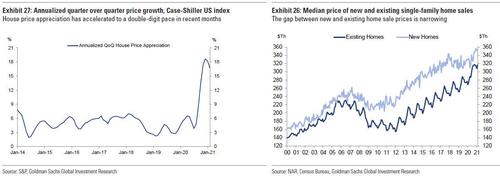
… increasingly more Americans find themselves priced out of homeownership and, unwilling to rent shoeboxes in those liberal bicoastal, record tax incubators, are instead opting to not purchase expensive (and stationary) homes altogether, and are picking a far cheaper (and mobile) option.
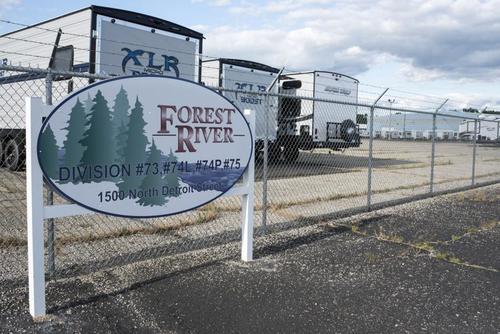
According to the RV Industry Association (RVIA), an industry association trade group that monitors the RV industry, manufacturers are shipping a record number of new units to dealer lots across the county that are being snapped up almost as soon as they arrive.
A February survey of manufacturers showed total RV shipments for the month topping out at 48,286 units, an increase of 30.1% compared to the same period last year, making February 2021 the best February on record.
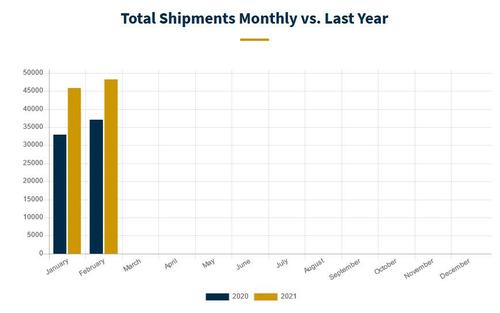
“As people begin to think about their spring and summer vacations, RV trips continue to be the preferred way to travel for millions of Americans,” said RV Industry Association President & CEO Craig Kirby. “As evident in this month’s record shipment report, RV manufacturers and suppliers are committed to meeting the demand from new consumers as well as those looking to upgrade their existing RVs. According to the report, the industry remains on track to build more RVs in 2021 than in any previous year.”
It’s part of a continuing trend the RVIA has been watching closely: “We’re on quite a streak right now,” said Monika Geraci, a RVIA analyst and spokesperson. “November and December were record-breaking months, too.”
According to the recent study commissioned by RVIA, RV wholesale shipments appear to be headed to their highest levels in 2021. Those projections show total RV shipments ranging between 523,000 units and 543,000 units for the coming year, representing a 23% increase over the 2020 year-end total of 430,412 units. It suggests a 5% gain over the record high of 504,600 units shipped in 2017.
“RV shipments in 2021 are forecast to reach record highs as the industry continues its over 40 years of long-term growth,” said Kirby. “We expect consumers to continue to turn to RVs not only because they allow people to recreate responsibly, but also because RVs allow people the freedom to live a fun, active outdoor lifestyle.”
Those numbers surprised even RV insiders, who said they thought 2020 would be a down year.
“A year ago when RV plants shut down for nearly two months, who would have thought we would be talking about record-breaking shipments less than a year later?” said Jeff Rutherford, president and CEO of Airxcel Inc. and RV Industry Association chairman. “The fact that 2021 is projected to be the best year ever for RV shipments speaks to the strengths of our industry and the incredible appeal of the RV lifestyle.”
One factor helping drive the stronger demand for RVs seems to be that they have found a new audience with younger customers. Studies show that 18- to 34-year-olds now make up 22% of the market of new RV buyers, a significant increase.
That study also found RV ownership has increased over 62% in the last 20 years, and now a record 11.2 million American households own RVs. Those numbers are split almost equally between those over and under the age of 55. Additionally, the study found 9.6 million households intend to buy an RV within the next five years. And of that, 84% of Millennials and Gen Zers who own RVs plan to buy another RV within the next five years, and 78% of them saying they want to buy a brand-new model.
According to the report, usage for RV owners remains steady at 20 days a year, while people who say they now intend to buy an RV also say they plan to use their new units for an average of 25 days per year. This increase is thought to be the result of changing attitudes toward working remotely and distance learning. Both give families more ability to be away from home, but still working, than in the past.
Nearly a third of the respondents in the study are “first-time owners,” underscoring the growth of the industry in the past decade. Ownership is spread widely not only across age levels, but also across genders.
In 2017, the industry’s best year to date, manufacturers built and moved just over half a million new units to dealer lots around the county, but those numbers pale when placed against the anticipated growth expected throughout this year.
“It looks like a significant increase over our best year ever,” Geraci said. “And that’s because many people are still looking forward to taking that RV trip they dreamed of. There’s really continued customer demand. Inventory on dealer lots continues to be at historic lows because of the demand by consumers. Based on those two factors alone, it should be a really strong year for the industry.”
Demand for new RVs was strong before the pandemic and stronger still during and after. Geraci said RVIA has been watching demand steadily grow over the last decade.
“If we look back 13 months ago, the RV numbers were really strong. They were up over 2019. So even pre-pandemic, people were looking at RVs. Add the pandemic on top of that, where you had people who had maybe thought about RVing suddenly jumping in,” she said.
While large segments of the travel industry suffered due to the pandemic, it appears that people’s appetite to travel failed to decrease, making RVs a great alternative. Geraci said an RV allows people bring along their own bedroom, kitchen and bathroom, giving most the travel solution they were looking for.
RVs became hot in 2020 when more traditional travel and vacation plans, including air travel, cruising and hotel stays, were crushed by the pandemic. Instead, Americans opted to snap up RVs and hit the road as a safer alternative for their time off.
“It’s easy to social distance in an RV,” she said.
Traditional trailers, units that are pulled behind a truck, still dominate the industry and account for the lion’s share of all sales. But demand for fifth wheels, vans and motorhomes are all up by as much as 20%.
April 14, 2021
Shipping Container Rates
Shipping Container Rates Expected To Remain Elevated Through Year
by Tyler DurdenWednesday, Apr 14, 2021 – 02:45 AM
Bad news for US importers searching for cheap shipping container rates, that is, rates are as up much as 50% than one year ago. Increasing shipping costs are crimping margins of importers that will ultimately have to be passed onto consumers.
Take, for example, the Asia to North American trade line last week was approximately $2,500 to $3,000 for a 40-foot container, about a 25% to 50% increase than the previous year, George Griffiths, an editor on the global container freight-pricing team at S&P Global Platts, told Bloomberg. Shipping costs create massive headaches for US importers, he said, adding that, the logistical issues they are facing today are extreme.
Hapag-Lloyd CEO Rolf Habben Jansen said container prices are likely to remain elevated through the second half of the year. “I don’t see any signs around the corner that demand is falling off a cliff,” he said.
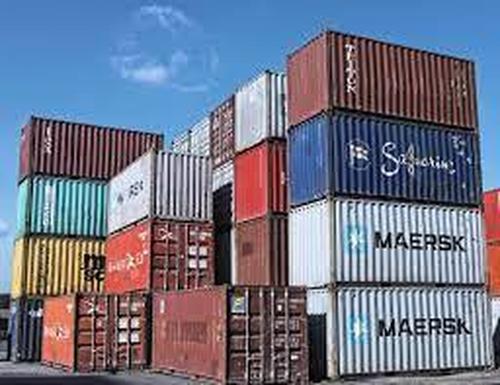
Meanwhile, Oakland and Long Beach, California ports, both reported record imports for March – on a seasonal basis, usually quiet months for containerized inflows. But no thanks to Jay Powell and Janet Yellen’s historical experiment: unleashing trillions of dollars in helicopter money into consumer pockets has created the largest ever pull forward in history where Americans are using their stimulus checks to purchase goods from Asia.
… and it doesn’t come as any surprise the annual trade deficit for goods came in at an all-time high in January, increasing $3.4 billion to a record $221.1 billion. In another sign of the massive trade imbalance, there is a shortage of shipping containers to bring things into the US.
The congestion is so bad at the US West Coast port that the port’s head told importers to expedite container pickup to alleviate congestion last month. Los Angeles and Long Beach ports are locked in traffic jams of vessels waiting to offload cargo as trillions of dollars in stimulus result in one-sided trade with Asia.
“The container dwell time is much higher than it was pre-pandemic,” Port of Los Angeles Executive Director Gene Seroka told CNBC, referring to the duration a container spends at the port.
Data compiled by Marine Exchange of Southern California shows a massive congestion crisis of moored container ships waiting to unload their cargo.
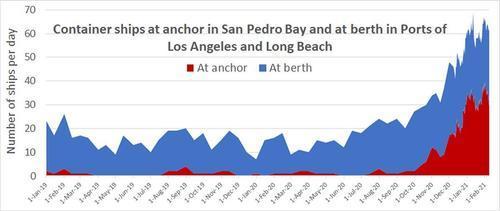
All these supply chain challenges are feeding concerns of inflation could be around the corner. The US producer prices jumped more than forecasted last month, and the March CPI is expected to be released Tuesday.
The four core trade lines worldwide (data provided by Freightos) show prices per 40-foot container began to increase rapidly during the summer of 2000.
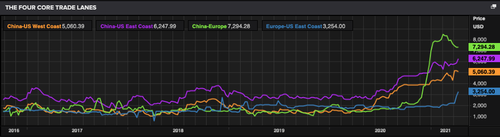
It’s unlikely shipping container rates will decline anytime soon as the Biden administration continues to hand out free money to US consumers who turn around and purchase products that are not manufactured in the US.
https://www.zerohedge.com/commodities/shipping-container-rates-expected-remain-elevated-through-year
April 14, 2021
Shipping Container Rates
Shipping Container Rates Expected To Remain Elevated Through Year
by Tyler DurdenWednesday, Apr 14, 2021 – 02:45 AM
Bad news for US importers searching for cheap shipping container rates, that is, rates are as up much as 50% than one year ago. Increasing shipping costs are crimping margins of importers that will ultimately have to be passed onto consumers.
Take, for example, the Asia to North American trade line last week was approximately $2,500 to $3,000 for a 40-foot container, about a 25% to 50% increase than the previous year, George Griffiths, an editor on the global container freight-pricing team at S&P Global Platts, told Bloomberg. Shipping costs create massive headaches for US importers, he said, adding that, the logistical issues they are facing today are extreme.
Hapag-Lloyd CEO Rolf Habben Jansen said container prices are likely to remain elevated through the second half of the year. “I don’t see any signs around the corner that demand is falling off a cliff,” he said.
Meanwhile, Oakland and Long Beach, California ports, both reported record imports for March – on a seasonal basis, usually quiet months for containerized inflows. But no thanks to Jay Powell and Janet Yellen’s historical experiment: unleashing trillions of dollars in helicopter money into consumer pockets has created the largest ever pull forward in history where Americans are using their stimulus checks to purchase goods from Asia.
… and it doesn’t come as any surprise the annual trade deficit for goods came in at an all-time high in January, increasing $3.4 billion to a record $221.1 billion. In another sign of the massive trade imbalance, there is a shortage of shipping containers to bring things into the US.
The congestion is so bad at the US West Coast port that the port’s head told importers to expedite container pickup to alleviate congestion last month. Los Angeles and Long Beach ports are locked in traffic jams of vessels waiting to offload cargo as trillions of dollars in stimulus result in one-sided trade with Asia.
“The container dwell time is much higher than it was pre-pandemic,” Port of Los Angeles Executive Director Gene Seroka told CNBC, referring to the duration a container spends at the port.
Data compiled by Marine Exchange of Southern California shows a massive congestion crisis of moored container ships waiting to unload their cargo.
All these supply chain challenges are feeding concerns of inflation could be around the corner. The US producer prices jumped more than forecasted last month, and the March CPI is expected to be released Tuesday.
The four core trade lines worldwide (data provided by Freightos) show prices per 40-foot container began to increase rapidly during the summer of 2000.
It’s unlikely shipping container rates will decline anytime soon as the Biden administration continues to hand out free money to US consumers who turn around and purchase products that are not manufactured in the US.
https://www.zerohedge.com/commodities/shipping-container-rates-expected-remain-elevated-through-year
April 12, 2021
Furniture Overview
Eager furniture buyers face long delays because of supply chain issues, shortage of chemical used to make cushion foam
Updated 5:30 AM; Today 5:30 AM

By Cameron Fields, cleveland.com
CLEVELAND, Ohio — The winter storms and power outages that hit Texas and Louisiana happened about two months ago. But their economic impact, particularly for the furniture industry, is still being felt greatly around the country, including in Northeast Ohio.
Texas and Louisiana house the plants that produce toluene diisocyanate (TDI), one of two main chemicals used to make furniture foam.
Because of the storms’ impact, those plants had to shut down their manufacturing process for several weeks, said John Ferrato, president of Wayside Furniture in Akron. The backup in producing TDI is one of the reasons customers have had 3-6 month wait times for furniture to arrive in store showrooms.
Furniture stores in Northeast Ohio have been managing increased demand since last May, when they re-opened after the state-ordered COVID-19 business shutdown.
“People because they couldn’t travel, they couldn’t go out to restaurants, so they’re spending their money on anything to do with the home,” Ferrato said. “So you have huge increases in demand, but then you have a decrease in production capacity, it’s a perfect storm for the whole industry.”
Furniture industry veterans Mike Dewey and Larry Weisman, who own Dewey Furniture in Vermilion and Sheraton Furniture in Willoughby, respectively, have never seen demand for furniture at this level.
A third-generation furniture retailer, Dewey has owned his store for 30 years, and he hopes people continue to put money into their homes after the pandemic. Weisman’s family started the business 60 years ago, and he’s been there 40 years.
“This has been outrageous,” Weisman said. “I mean thank God, it’s been fantastic, but never seen anything close to this.”
As a steady volume of customers purchase furniture, Ferrato and other store leaders have had to make sure they’re transparent with folks about wait times. Ferrato said 3-6 month waits are the most common, but some factories are quoting 8-9 month wait times for product.
These longer wait times, though, are for furniture that is coming on special order, meaning it’s something different than what Ferrato has in stock. Ferrato said if someone came to his store, probably about 80% of what’s on his floor could be picked up that same day or be delivered in a week.
“It’s just that if you see it, and if it’s in blue and you want it in brown, instead of our normal six to 10 weeks, we’re telling you three to six months,” Ferrato said.
At Fish Furniture, 95% of its business consists of products coming on special order, said owner Dan Geller. Geller said most customers know that unless they’re buying a floor sample, they’ll have to wait. Fish Furniture has offered customers loaner furniture to use until their pieces come in.
“Consumers, you can get what you want, and there’s plenty of merchants in Cleveland to do it, but you just have to realize you’re going to wait longer than normal,” Geller said.
Geller said he knows the TDI backup will be resolved within the next 3-4 months because the plants are moving from two shifts to three and will have the workers.
The TDI backup isn’t the only wrinkle in the tangled supply chain, though. A lack of truck drivers and warehouse workers has contributed to the delays as well. Ferrato said the driver shortage had been happening for several years before COVID, but with the recent shortage in warehouse workers, that’s created a deeper problem.
“Even if you have a truck available, if you don’t have somebody in the warehouse to drive a picker to go pull the goods out of the racks and then load them on the trucks, that’s another issue,” Ferrato said.
Containers and boats to ship product from overseas are also in short supply because of the huge amount of demand. Ferrato said product could be sitting in a factory overseas for months because it can’t get onto a ship.
But then when it does get onto a ship and reaches Los Angeles ports or the East Coast, docks are overrun and boats “could literally sit out on the water for weeks on end,” Ferrato said. Some of the backup at the docks is also caused by a lack of workers there.
“You could actually look at a live video outside of Los Angeles any time you want and you’ll see up to 30 boats basically driving around the Pacific Ocean waiting to get a dock appointment because there’s just so much coming in,” Ferrato said.
Geller and other furniture owners think the current demand will continue into the next few months, around the summer or early fall when most people will likely be vaccinated and want to return to going on vacations and eating out. They’ll be spending money on other things again, and furniture sales should return to what stores typically deal with.
But the supply chain issues could cause problems for the furniture industry for an extended period of time. Geller thinks it will take another year for the supply chain to return to normal. Weisman agrees and is hoping next year things will be back to normal.
He advises that if someone wants a special order piece of furniture for Christmas, that they make the order by May.
“I think the supply chain is so burnt out that it may take months for the furniture industry to get out of this thing,” Weisman said.
April 12, 2021
Furniture Overview
Eager furniture buyers face long delays because of supply chain issues, shortage of chemical used to make cushion foam
Updated 5:30 AM; Today 5:30 AM
By Cameron Fields, cleveland.com
CLEVELAND, Ohio — The winter storms and power outages that hit Texas and Louisiana happened about two months ago. But their economic impact, particularly for the furniture industry, is still being felt greatly around the country, including in Northeast Ohio.
Texas and Louisiana house the plants that produce toluene diisocyanate (TDI), one of two main chemicals used to make furniture foam.
Because of the storms’ impact, those plants had to shut down their manufacturing process for several weeks, said John Ferrato, president of Wayside Furniture in Akron. The backup in producing TDI is one of the reasons customers have had 3-6 month wait times for furniture to arrive in store showrooms.
Furniture stores in Northeast Ohio have been managing increased demand since last May, when they re-opened after the state-ordered COVID-19 business shutdown.
“People because they couldn’t travel, they couldn’t go out to restaurants, so they’re spending their money on anything to do with the home,” Ferrato said. “So you have huge increases in demand, but then you have a decrease in production capacity, it’s a perfect storm for the whole industry.”
Furniture industry veterans Mike Dewey and Larry Weisman, who own Dewey Furniture in Vermilion and Sheraton Furniture in Willoughby, respectively, have never seen demand for furniture at this level.
A third-generation furniture retailer, Dewey has owned his store for 30 years, and he hopes people continue to put money into their homes after the pandemic. Weisman’s family started the business 60 years ago, and he’s been there 40 years.
“This has been outrageous,” Weisman said. “I mean thank God, it’s been fantastic, but never seen anything close to this.”
As a steady volume of customers purchase furniture, Ferrato and other store leaders have had to make sure they’re transparent with folks about wait times. Ferrato said 3-6 month waits are the most common, but some factories are quoting 8-9 month wait times for product.
These longer wait times, though, are for furniture that is coming on special order, meaning it’s something different than what Ferrato has in stock. Ferrato said if someone came to his store, probably about 80% of what’s on his floor could be picked up that same day or be delivered in a week.
“It’s just that if you see it, and if it’s in blue and you want it in brown, instead of our normal six to 10 weeks, we’re telling you three to six months,” Ferrato said.
At Fish Furniture, 95% of its business consists of products coming on special order, said owner Dan Geller. Geller said most customers know that unless they’re buying a floor sample, they’ll have to wait. Fish Furniture has offered customers loaner furniture to use until their pieces come in.
“Consumers, you can get what you want, and there’s plenty of merchants in Cleveland to do it, but you just have to realize you’re going to wait longer than normal,” Geller said.
Geller said he knows the TDI backup will be resolved within the next 3-4 months because the plants are moving from two shifts to three and will have the workers.
The TDI backup isn’t the only wrinkle in the tangled supply chain, though. A lack of truck drivers and warehouse workers has contributed to the delays as well. Ferrato said the driver shortage had been happening for several years before COVID, but with the recent shortage in warehouse workers, that’s created a deeper problem.
“Even if you have a truck available, if you don’t have somebody in the warehouse to drive a picker to go pull the goods out of the racks and then load them on the trucks, that’s another issue,” Ferrato said.
Containers and boats to ship product from overseas are also in short supply because of the huge amount of demand. Ferrato said product could be sitting in a factory overseas for months because it can’t get onto a ship.
But then when it does get onto a ship and reaches Los Angeles ports or the East Coast, docks are overrun and boats “could literally sit out on the water for weeks on end,” Ferrato said. Some of the backup at the docks is also caused by a lack of workers there.
“You could actually look at a live video outside of Los Angeles any time you want and you’ll see up to 30 boats basically driving around the Pacific Ocean waiting to get a dock appointment because there’s just so much coming in,” Ferrato said.
Geller and other furniture owners think the current demand will continue into the next few months, around the summer or early fall when most people will likely be vaccinated and want to return to going on vacations and eating out. They’ll be spending money on other things again, and furniture sales should return to what stores typically deal with.
But the supply chain issues could cause problems for the furniture industry for an extended period of time. Geller thinks it will take another year for the supply chain to return to normal. Weisman agrees and is hoping next year things will be back to normal.
He advises that if someone wants a special order piece of furniture for Christmas, that they make the order by May.
“I think the supply chain is so burnt out that it may take months for the furniture industry to get out of this thing,” Weisman said.
 Everchem Updates Archive
  Sign Up for Email Updates