
Technology
September 15, 2025
MLB Tech Update

Future Trends·Sports·Technology
Inside MLB’s 2025 Tech Revolution: Robo Umps, AI Broadcasts & the Future of Baseball
15 September 2025
- Hawk-Eye and Statcast: MLB uses an array of Hawk-Eye high-speed cameras in all 30 ballparks to power Statcast, tracking every pitch’s speed and trajectory along with player movement and even bat swings hawkeyeinnovations.com. This optical tracking system (introduced league-wide in 2019) feeds real-time data for analytics and broadcasts, and also underpins MLB’s replay review since 2014 hawkeyeinnovations.com. It enables new metrics (e.g. exit velocity, launch angle, fielder sprint speed, and soon swing attack angles) that deepen understanding of on-field performance.
- Automated Strike Zone (ABS): MLB is testing “robo-ump” technology via an Automated Ball-Strike System. In 2025 spring training, over half the games let teams challenge human ball/strike calls – with each club getting two challenges that are retained if successful reuters.com foxsports.com. When a batter, pitcher, or catcher signals a challenge, Hawk-Eye tracks the pitch and displays a 3D strike-zone replay on stadium screens in seconds reuters.com. Early results show about 51–52% of challenged calls were overturned foxsports.com. Umpires remain on the field, but this tech-driven challenge system (powered by T-Mobile’s 5G network) is a major step toward consistent strike zones, and MLB even plans to use it in the 2025 All-Star Game foxsports.com foxsports.com.
- PitchCom Communication: Traditional catcher hand signals are largely gone. Since 2022, all teams have adopted PitchCom, a wireless system where catchers (and now pitchers) press a keypad to call pitches, transmitting encrypted audio to earpieces worn by the pitcher and up to four fielders mlb.com mlb.com. This speeds up the game and prevents sign-stealing (a hot-button issue since the 2017 Astros scandal) pitchcom.com. In 2023 MLB even allowed pitchers like Zack Greinke to wear the transmitter on their belt or glove, letting them call their own game to beat the new pitch clock mlb.com mlb.com. As one veteran put it, “I throw a lot of pitches and just won’t be able to throw the pitch I want…if I can’t use that [PitchCom]” mlb.com – underscoring how this tech helps both strategy and pace of play.
- Wearable Player Sensors: MLB is ahead of some leagues in embracing wearables during play. It has approved at least four health and performance devices for in-game use: the Motus pitching sleeve (measures throwing biomechanics), the Zephyr Bioharness (heart rate and breathing for fatigue), Catapult GPS trackers (player workload and positioning), and the popular WHOOP strap (tracking heart rate, strain, and sleep) theupside.us theupside.us. While players can’t see this biometric data live during games, teams access it afterward to guide training and recovery. Beyond games, many clubs use sensor tech in practice – e.g. smart bat sensors (Blast Motion, Diamond Kinetics) that capture swing speed and path, and even motion-capture sleeves to monitor pitching mechanics theupside.us. In Minor League games, bat sensors are now allowed on-field to gather swing data for player development theupside.us.
- Instant Replay System: MLB’s Replay Operations Center in New York, equipped with Hawk-Eye multi-angle video feeds, has handled all umpire reviews since expanded replay launched in 2014 hawkeyeinnovations.com. Managers can challenge close plays (home runs, safe/out, etc.), triggering a rapid video review. Hawk-Eye’s system provides synchronized camera angles and even 3D renderings for officials, which has improved accuracy and consistency of calls hawkeyeinnovations.com hawkeyeinnovations.com. By the mid-2020s about half of all manager challenges result in overturned calls (reflecting the system’s thoroughness), and the average review takes under 90 seconds – faster than in early years espn.com. MLB has also equipped umpires with wireless headsets to announce replay decisions to the crowd (similar to NFL) for transparency technology.mlblogs.com.
- AI-Enhanced Broadcasting: MLB broadcasts are increasingly augmented by AI and advanced data. Statcast data feeds live graphics like strike-zone overlays, launch-angle trackers, and catch probability on TV broadcasts. In 2024, ESPN debuted a “Statcast AI” alternate broadcast for Sunday Night Baseball, layering real-time analytics and predictive modeling (powered by Google Cloud’s AI) over the game action espnfrontrow.com. Other networks have introduced new camera angles – for example, “UmpCam” helmet cameras and base-mounted cams debuted in the 2024 postseason to give fans POV replays sportsvideo.org. AI-driven systems also help production crews by automatically clipping highlights and even suggesting storylines from live data sportsvideo.org. While fully automated commentary isn’t mainstream in MLB yet, AI tools are assisting human broadcasters with instant stat insights and even real-time translations.
- Immersive Fan Experiences (VR/AR): MLB is pushing into virtual and augmented reality for fans. In 2024, the league relaunched its MLB Virtual Ballpark, a metaverse-style 3D stadium where fans can join live watch parties with avatars mlb.com mlb.com. During these events, a 3D recreation of the game (via Gameday 3D) lets fans view any play from any angle in real time, chat via spatial audio, and even partake in virtual scavenger hunts and trivia – all accessible on web or VR headsets mlb.com mlb.com. MLB has also released VR video games like “Home Run Derby VR,” letting fans step into a virtual batter’s box and swing a controller bat in famous stadiums. Augmented reality is enhancing the ballpark too: for instance, some team apps now offer AR overlays where you can point your phone at the field to see live player stats or strike zone graphics. These immersive technologies aim to bring fans closer to the game, whether they’re at home or exploring the concourse.
- Smart Stadiums and Biometric Entry: Baseball venues in 2025 are high-tech playgrounds. Digital ticketing via the MLB Ballpark app is now standard, and ballparks are integrating features like mobile concession ordering and cashless payments for speed. Several teams (Phillies, Giants, Astros, Nationals) have rolled out “Go-Ahead Entry,” a facial-recognition based gate system that lets ticket holders enter by simply walking past a camera espn.com espn.com. This opt-in system, developed with NEC Corp., links your face to your ticket account and even works with new AI security scanners – meaning fans can go from the turnstile to their seats without pulling out a phone or stopping for bag checks espn.com espn.com. “You don’t even have to break stride,” says SF Giants CTO Bill Schlough, calling the frictionless face-scan entry “an absolute game-changer” for the fan experience espn.com. However, privacy advocates worry about the creep of such biometrics – one digital rights group warns this is “just one part of a massive problem that’s only getting bigger” espn.com. Despite concerns, MLB is expanding these tech conveniences, and also experimenting with biometric payments (buying a beer with your face scan) in some venues stadiumtechreport.com stadiumtechreport.com. All 30 MLB parks now have robust 5G Wi-Fi networks to support these innovations and keep fans connected.
- New & Experimental Tech: MLB isn’t stopping at what’s already on the field. The league is exploring brain-sensing wearables and neurotraining tools to boost player performance. For example, teams like the SF Giants have tried the Halo Neuroscience headband, which uses mild electrical stimulation to the brain to improve focus and motor skill learning during training theupside.us. In 2025, a startup called Pison began pilot programs with MLB clubs and colleges for a novel wristband that measures neural signals from the brain to gauge a player’s reaction time, mental fatigue, and focus sportsbusinessjournal.com sportsbusinessjournal.com. The idea is to quantify the “mental game” – a frontier previously hard to measure – and train players’ cognitive skills (e.g. pitch recognition and split-second decision-making) with personalized neural feedback drills sportsbusinessjournal.com sportsbusinessjournal.com. On another front, MLB is working with scientists on smart equipment, like new baseball prototypes. After the 2021 crackdown on pitchers’ illegal sticky substances, MLB partnered with Dow Chemical to develop a pre-tacked baseball that comes out of the wrapper with a perfect grip foxnews.com foxnews.com. In 2023, one such ball was tested in Double-A: players loved the improved grip, but in hot weather it became “too gummy,” showing the challenges of chemistry in sport foxnews.com. The research continues (with “15 PhDs working on it,” per MLB advisor CC Sabathia) to find a ball coating that can replace the centuries-old practice of rubbing mud on baseballs foxnews.com. Other experimental projects include upgraded protective gear (e.g. smarter batting helmets to reduce concussions) and even automated groundskeeping robots in training facilities. MLB’s willingness to pilot these ideas in the minors and independent leagues signals that more radical tech changes could be on the horizon.
- MLB vs. Other Leagues: Compared to the NFL, NBA, and global soccer, MLB’s tech landscape in 2025 is both innovative and unique. In player tracking, all major leagues now capture data – the NFL places RFID chips in every football and in players’ shoulder pads to fuel its Next Gen Stats operations.nfl.com, and the NBA uses optical systems to map player and ball movements in second-by-second detail. Yet MLB’s Statcast stands out for the sheer volume of data (tracking every pitch and play of a 162-game season) and its public availability to fans. In officiating, soccer led the way with goal-line technology and the VAR replay system using Hawk-Eye cameras for controversial calls hawkeyeinnovations.com, and tennis has long trusted Hawk-Eye for line calls. MLB is now catching up by testing an automated strike zone, a bold step neither the NFL nor NBA have equivalently taken (football still relies on referees’ eyes and the old chain gang for first downs, while basketball refs use replay for some calls but no AI officiating). The NFL has embraced tech in other areas: since 2021 the NFL even uses Hawk-Eye in its replay center to speed up multi-angle reviews hawkeyeinnovations.com, and it leverages Amazon’s AI to generate stats like expected rushing yards from tracking data operations.nfl.com. NBA arenas are high-tech too, featuring giant HD scoreboards and AR effects; the NBA was a pioneer in virtual reality broadcasts (streaming select games in VR to Oculus headsets) and uses advanced Second Spectrum analytics to display things like real-time shot probabilities on TV. Global soccer at events like the World Cup has begun using semi-automated offside technology – multiple cameras and AI to detect offside positions instantaneously – something analogous to baseball’s automated pitch location tech hawkeyeinnovations.com. In terms of fan experience, all leagues now offer mobile ticketing, on-demand highlights, and interactive apps, but MLB’s Virtual Ballpark metaverse and weekly VR watch parties are the first of their kind among major sports mlb.com. And while facial-recognition entry is starting to appear in NFL stadiums and NBA arenas, MLB’s concerted rollout of biometric entry lanes in 2024 put it at the forefront of that trend espn.com. Each sport balances tradition and technology – as MLB Commissioner Rob Manfred has noted, baseball tries to “pursue the possibility of change” carefully foxsports.com. But fan sentiment is shifting: after seeing tech like ABS challenges in action, many are now more vocal in demanding high-tech accuracy over human error foxsports.com. In the grand view, MLB’s 2025 tech revolution is part of a wider sports-tech boom – yet its particular blend of preserving a 150-year-old game while infusing it with cutting-edge innovations truly sets baseball apart.
Read more here: https://ts2.tech/en/inside-mlbs-2025-tech-revolution-robo-umps-ai-broadcasts-the-future-of-baseball/
September 3, 2025
PIR Recycling System
Unilin becomes the number one in recycling PIR insulation boards
Wednesday, September 3, 2025

Unilin has raised the bar for sustainability with the opening of the first full-scale recycling facility for PIR (polyisocyanurate) insulation boards in the world in Desselgem, Belgium. This state-of-the-art plant represents a major accomplishment in Unilin’s goal to reduce environmental impact and improve the circularity of insulation products. The €8 million investment in the modern recycling facility enables Unilin to chemically recycle post-industrial PIR insulation boards and internal manufacturing waste into new PIR insulation products. Unilin’s new facility marks a significant milestone in the company’s continuous efforts to lower its carbon footprint and support sustainable construction practices, as it is the first manufacturer in the insulation sector to accomplish this.
PIR insulation boards, which are primarily used in walls, floors, and roofs, are known for their high thermal performance and long lifespan. These boards are made by chemically reacting polyol and MDI (methylene diphenyl diisocyanate), resulting in an insulating material that surpasses traditional materials such as mineral wool, XPS (extruded polystyrene), and EPS (expanded polystyrene) in terms of thermal efficiency.
PIR insulation’s benefits include its higher insulation value per thickness, making it an ideal solution for energy-efficient construction. Its lightweight structure is easy to handle and install, and the boards retain their insulation properties for decades, with little degradation over time. In fact, even after 50 years of use, PIR insulation’s thermal performance remains largely unchanged, further cementing its status as a long-lasting, reliable material for the construction industry.
Unilin’s recycling process
One of the biggest challenges facing PIR insulation products has been circularity. While PIR boards are recyclable, previous methods only allowed for mechanical recycling, which had its limitations. Unilin’s breakthrough came with the development of a chemical recycling process capable of converting waste PIR boards back into raw materials for producing new PIR boards. This self-developed recycling process is a game-changer. It involves a three-step procedure: shredding, filtering, and chemical recycling.
In the first step, the PIR boards are shredded into small pieces.
The next stage uses a specially developed internal procedure to separate the PIR material from the paper or aluminum facing on the panels. The purified PIR is then fed into a glycolysis reactor, which breaks down the material into polyol and other components. The recycled polyol is then reintroduced into the production process, where it is combined with MDI to create new PIR insulation boards. Through this process, Unilin can now self-supply up to 50% of its polyol requirements, marking a major step in reducing reliance on virgin raw materials. As a result, the company is enhancing the sustainability of its products while reducing waste in the construction sector.
The new recycling plant in Desselgem is just the beginning for Unilin. The company plans to gradually ramp up the capacity of the plant, initially focusing on recycling internal board waste before expanding to include post-industrial waste from construction sites. In 2024, Unilin plans to extend its operations with the addition of a recycling plant in the UK, with studies already underway for this expansion.
Beyond scaling up production capacity, Unilin is also exploring further innovations in recycling technologies. The company is researching techniques to not only recycle polyols but also the MDI components, which would bring the recycling process even closer to full circularity.
Unilin has also launched the Unilin Recover program, a take-back initiative designed to collect PIR waste from construction sites and return it to the company’s recycling facilities. By collaborating with the construction industry, this program ensures a steady supply of post-industrial PIR waste to feed into the recycling process. The Recover program is an essential part of the company’s strategy to close the loop on PIR insulation and promote sustainable building practices across Europe.
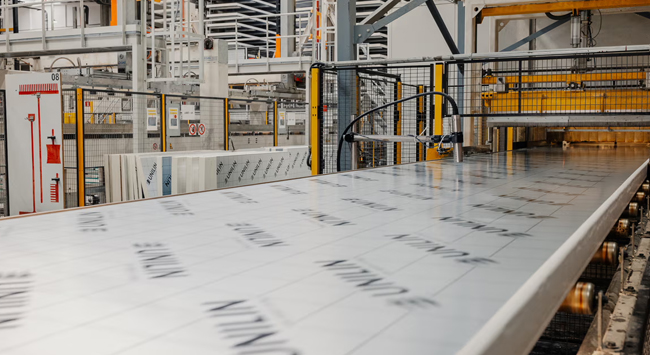
Unilin’s insulation division
Unilin has firmly established itself as one of Europe’s largest manufacturers of polyurethane (PU) insulation. The company’s product range includes a variety of insulation solutions for residential, commercial, and industrial applications, with well-known brands such as Usystem, Utherm, Usafe, and Rezillo. Unilin operates eight production sites across Western Europe, including in Belgium, the Netherlands, France, the UK, and Ireland, and is currently expanding with a new facility in Poland.
In addition to its groundbreaking work in PIR insulation recycling, Unilin’s commitment to sustainability extends across all areas of its operations. The company is constantly innovating to improve the environmental performance of its products, reduce its carbon footprint, and promote circularity within the construction industry. Unilin’s investment in the Desselgem recycling plant is a testament to the company’s leadership in advancing sustainable building materials. As demand for energy-efficient insulation products continues to grow, Unilin is poised to play a crucial role in shaping the future of the construction industry.
Unilin is cutting waste and carbon emissions by being the first company to recycle PIR insulation boards chemically. They are also laying the groundwork for a more sustainable and circular economy in the building industry. The closed-loop PIR insulation system that the company had envisioned is now a reality, and more innovation and growth are planned.
Read more news on: construction, sustainability, building materials, circular economy
Get such updates through the American woodworking industry website: woodandpanel.us
May 27, 2025
BASF Polyurethane Educational Webinar Session #2 June 17th
BASF | Formulator’s Corner
Gain valuable insights about polyurethanes and flexible foam.
Session 2: Categories of Foam
Tuesday, June 17, 2025
11:30 AM ET
1 hour
Register Here: https://event.on24.com/wcc/r/4912077/2020F75146195FC7140640CD43F3BF13
Click here and register to watch Session 1: https://event.on24.com/wcc/r/4867708/0D282DD4DF20763BBDFBF3C54C335F53
Whether you’re new to the flexible foam industry or looking for a refresher on all-things urethanes, come join BASF for Formulator’s Corner, a multipart virtual live info series hosted by BASF urethane technical expert, Mark McBride.

Reserve Your Spot Today!
Register here: https://event.on24.com/wcc/r/4912077/2020F75146195FC7140640CD43F3BF13
Don’t miss out on this opportunity. Register now to secure your place and get ready to have some fun and stretch your industry knowledge.
Speaker

Mark McBride
Slab Foam Technology Lead, Urethane Flexible Chemicals, BASF
With a background in chemical engineering and an MBA from the University of Michigan, Mark is at the forefront of innovation in flexible polyurethane foam. His work not only supports the furniture and automotive industries but also emphasizes sustainability.
May 6, 2025
Satellite Technology Used to Find Mineral Assets
AMRT Satellite Technology Uncovers Significant Mineral Assets at Historic Oregon Mine
Abandoned Mine Expected to Roar Back to Life with Massive Results thanks to AMRT Satellite Scan Technology
Historic and Legendary Lost Ore Carts Heavily Loaded with Gold Nuggets May Soon Be Found in Collapsed and Abandoned Tunnel”
— John Casey, CEO of CC Explorations, LLC
MESA, AZ, UNITED STATES, May 6, 2025 /EINPresswire.com/ — CC Explorations, a leading satellite-based mineral exploration company, today announced the completion of its remote Atomic Mineral Resonance Tomography (AMRT) Technology on a historic mine located in Oregon. The AMRT test results were significant, which has now resulted in current onsite drilling, trenching and other testing, with results leading to substantial in-ground assets, including up to 4,645 oz of gold, 15,800 oz of silver, and trace amounts of platinum group metals and rare earth elements.
Following successful due diligence, CC Explorations intends to own a 75% stake in the project, with the remaining 25% owned by potential investors. The site, which has been neglected for some time, will now undergo a comprehensive fire mitigation and clean-up effort, while the company works to secure the necessary permits to begin full-scale operations.
“We are thrilled that our satellite based AMRT Technology had uncovered such significant mineral resource left undiscovered at this historic mine site,” said John Casey, CEO of CC Explorations. “Our AMRT Technology has allowed us to identify and quantify these abandoned or previously undiscovered valuable assets and make great progress toward proving them out through onsite trenching and drill testing. We are essentially rewriting history.”
The initial remote exploration by way of an AMRT scan, which utilizes advanced satellite imagery, proprietary remote sensing technologies and AI, has enabled CC Explorations to accurately assess the mineral composition with up to 93% accuracy, bringing to light the potential of the site while reducing the need for extensive on-site exploration. This AMRT satellite based approach not only saves time and resources but also minimizes the environmental impact of the company’s operations.
“As a satellite-based exploration company, we are committed to developing innovative and sustainable methods for identifying and extracting valuable mineral resources,” added Mr. Casey. “This project in Oregon is a prime example of how our AMRT technology can unlock the hidden potential of historic mining sites, while also prioritizing environmental stewardship and responsible resource development.”
With the acquisition of this Oregon mine, CC Explorations continues to expand its portfolio of high-potential mineral exploration projects across the United States and around the world.
About CC Explorations LLC:
CC Explorations offers over two decades of expertise in Remote Sensing for Mineral Exploration and Archeological Services through its cutting-edge satellite-based Atomic Mineral Resonance Tomography (AMRT) Technology.
This revolutionary AMRT Technology, akin to how NASA surveys and detects minerals on other planets, stands as the next-generation solution by harnessing the foundational capabilities of its predecessors, Nuclear Magnetic Resonance (NMR), and combining it with proprietary advanced methods, algorithms, and AI. Our AMRT Technology boasts incredible speed and an accuracy rate of up to 93% (proven by drilling and trials). This advanced AMRT Technology, with its unique, precise, and reliable detection capabilities, positions CC Explorations at the forefront of the mineral exploration field.
By leveraging CC Explorations’ satellite-based AMRT Technology, Mineral Exploration Companies, Miners, Prospectors, Geologists, Geophysicists, and Archeologists can obtain detailed insights into subsurface mineral deposits, hydrocarbons, man-made deposits, and voids without ever setting foot on site.
The History Channel successfully utilized CC Explorations’ satellite-based AMRT Technology to locate and document one of Yamashita’s Treasure Sites buried in the Philippines, as featured in its TV documentary series “Lost Gold of World War II” in 2020.
Satellite-based AMRT Technology can reliably detect the positions and depths of most elements on the periodic table from space with zero site environmental impact, all at a fraction of the cost and time compared to traditional mineral exploration methods.
In the realm of mineral and other exploration, the utilization of CC Explorations’ ability to locate Sub-Surface Minerals, Oil and Gas, Hydrocarbons, Gold, Silver, Copper, Lithium, Rare Earths, Critical Minerals, Water, Voids, and other Valuable Items is highly recommended prior to investing in traditional, expensive, and time-consuming exploration methods.
John Casey
CC Explorations
+1 727-946-1892
February 25, 2025
BASF To Host Polyurethane Educational Webinar
BASF | Formulator’s Corner
Gain valuable insights about polyurethanes and flexible foam.
Episode 1: Basic Urethane Chemistry
Tuesday, March 18, 2025
11:30 AM Eastern Daylight Time
1 hour
Register Here: https://event.on24.com/wcc/r/4867708/0D282DD4DF20763BBDFBF3C54C335F53
Whether you’re new to the flexible foam industry or looking for a refresher on all-things urethanes, come join BASF for Formulator’s Corner, a multipart virtual live info series hosted by BASF urethane technical expert, Mark McBride.

Reserve Your Spot Today!
Register here: https://event.on24.com/wcc/r/4867708/0D282DD4DF20763BBDFBF3C54C335F53
Don’t miss out on this opportunity. Register now to secure your place and get ready to have some fun and stretch your industry knowledge.
Speaker
Mark McBride
Slab Foam Technology Lead, Urethane Flexible Chemicals, BASF
With a background in chemical engineering and an MBA from the University of Michigan, Mark is at the forefront of innovation in flexible polyurethane foam. His work not only supports the furniture and automotive industries but also emphasizes sustainability.
 Everchem Updates Archive
  Sign Up for Email Updates