
Technology
July 15, 2024
Quadrant Performance Materials Launches EnviroSeal® Platinum Series
McKinney, TX – July 15, 2024 –

Quadrant Performance Materials (QPM), a leading manufacturer of spray foam insulation systems for the residential and commercial building envelope, announces the release of the EnviroSeal® Platinum Series. This updated product portfolio promises to revolutionize the spray foam industry with optimized formulations, focused on enhancing the applicator experience.
“We asked and listened to our customers’ feedback,” said QPM President & CEO Robert Jamieson. “Using that information, and with rigorous field trials, our R&D and Field Tech Teams have optimized our products to be even easier to use, better performing, and to deliver consistently higher yields.”
Introducing the EnviroSeal Platinum Series:
EnviroSeal OC Platinum
- Open-Cell Spray Foam
- Easy to Use: No Mixing Required
- Year-Round Formulation
- Wider Processing Parameters, Starting at 105°F
- Great Adhesion
- Increased Yield
EnviroSeal OCX Platinum
- Open-Cell Spray Foam
- AC-377 App. X Compliant – No Coatings, No Special Attic Hatch or Devices Required
- The Easy Solution for EnergyStar 3.2
- Easy to Mix
- Easier Application
- Increased Yield
EnviroSeal CC Platinum Max
- Closed-Cell Spray Foam
- HFO Blowing Agent
- High R-Value – Consistent 7.4 per inch at All Depths
- Smoother Finish
- Sprays Great in a Single Pass 1” to 4”
“The EnviroSeal Platinum Series is all about focusing on the applicator experience and optimizing our products to meet their needs,” added Cole Fletcher, QPM Technical Services Manager.
“We are committed to continuous innovation’, said Joey Lister, QPM Technical Director, “and to ensuring our products are the easiest to use and most consistent in the industry”.
For more information on the EnviroSeal Platinum spray foam insulation product line, please visit www.QuadrantPM.com or call 972-542-0072.
About Quadrant Performance Materials
QPM is a leading manufacturer of spray foam insulation systems for residential and commercial construction. We brought together the best and most experienced team in spray foam to provide unprecedented levels of value that elevate the industry. Quadrant helps our customers grow and become more profitable by delivering industry-leading products, knowledge, and exceptional customer service.
EnviroSeal® is a registered trademark of Quadrant Performance Materials.
July 8, 2024
Chinese Energy
China’s Rapid Renewables Rollout Hits Grid Limits
by Tyler Durden
Monday, Jul 08, 2024 – 02:45 AM
By John Kemp, senior energy analyst at Reuters
China’s record-breaking deployment of wind and solar capacity has worsened regional power imbalances, forcing the country to idle increasing amounts of renewable generation when it overwhelms local consumption.
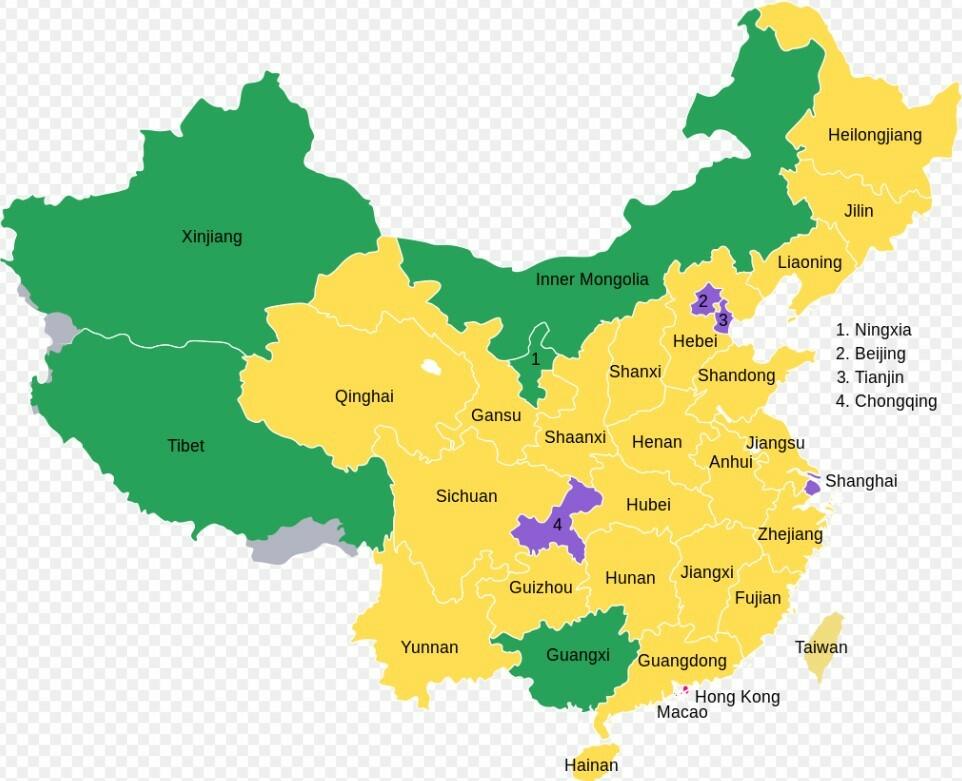
New government regulations aim to reduce the amount of renewable generation that has to be abandoned by increasing long-distance transmission links and better coordinating generation plans across provinces.
Since the end of 2018, China’s total generating capacity has increased by 1.137 billion kilowatts (kW), compound annual growth of 9%, according to data from the National Bureau of statistics (NBS).
Thermal capacity, mainly from coal-fired plants but some from gas-fired generators, rose by 257 million kW or 4% per year (“China statistical yearbook”, NBS, 2023).
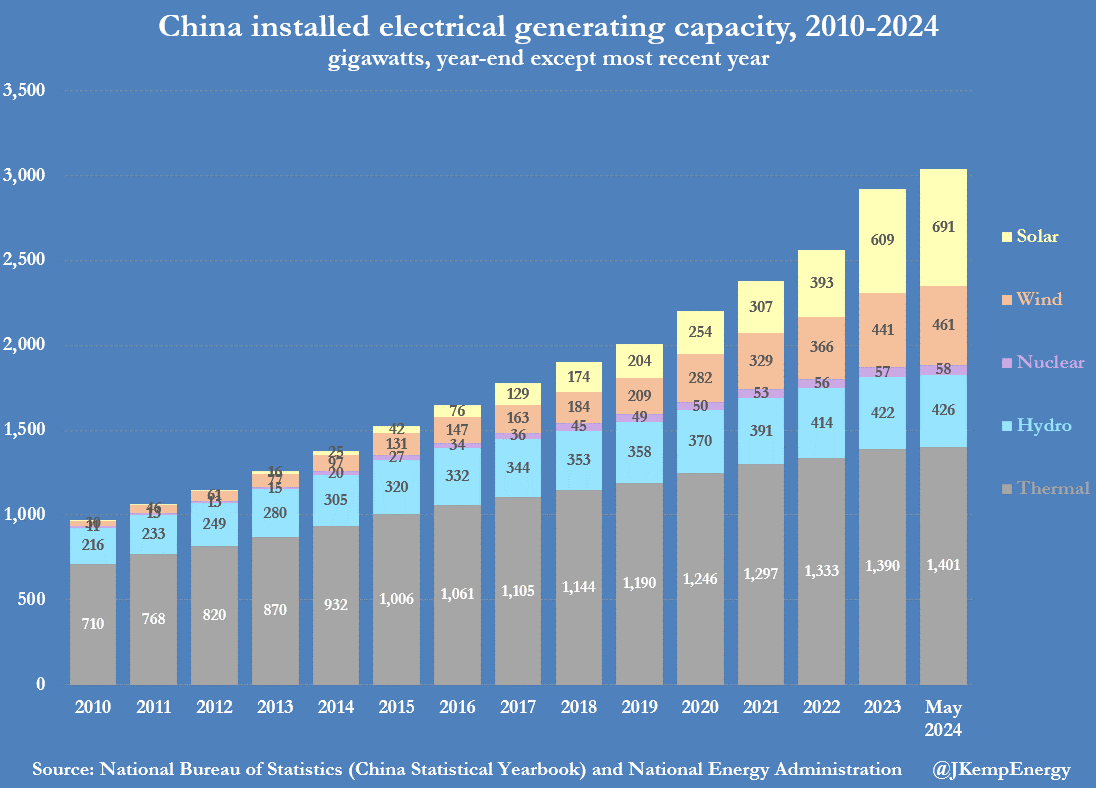
Most capacity additions, however, have come from what the government calls “new energy sources” – wind farms (277 million kW, 19% per year) and solar generators (517 million kW, 29% per year). Increased penetration of intermittent renewables is making it harder to manage a nationwide transmission system that was already struggling with large regional imbalances between generation and load.
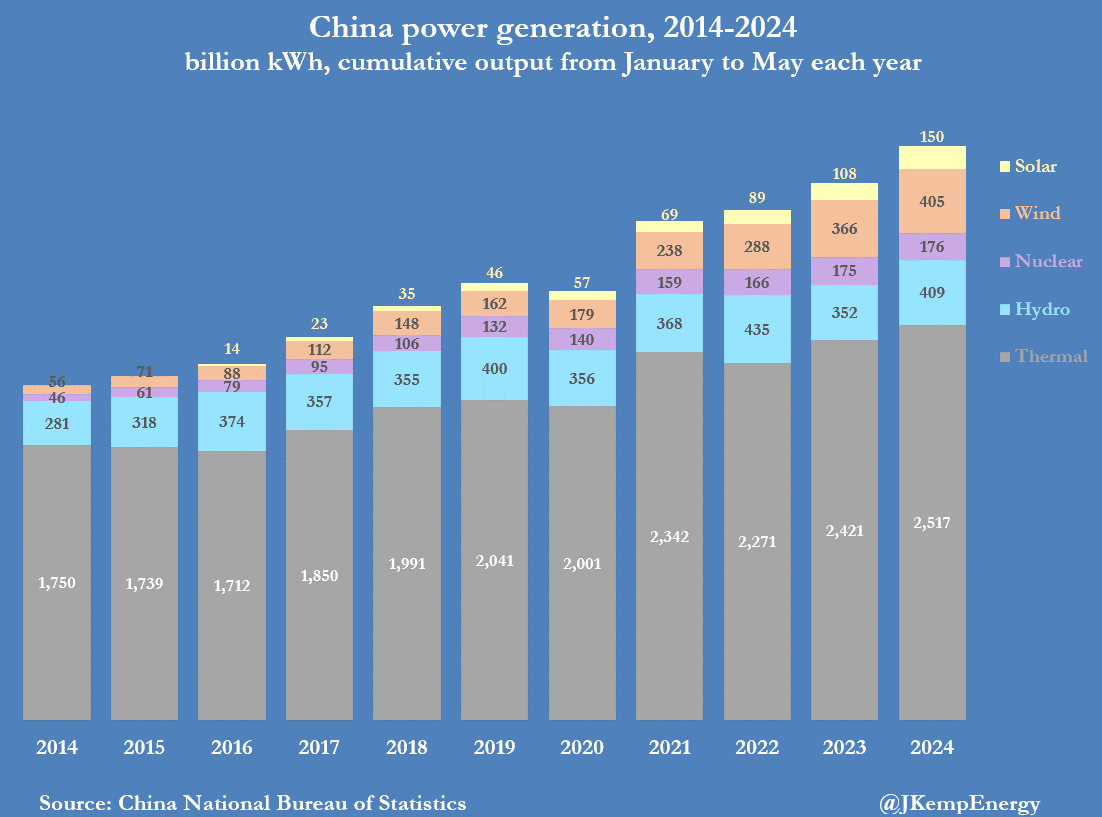
The solution to variable wind and solar output is to smooth out fluctuations across a larger number of generators spread over much larger areas of the country, which will require more transmission and better scheduling.
Long-Distance Transmission
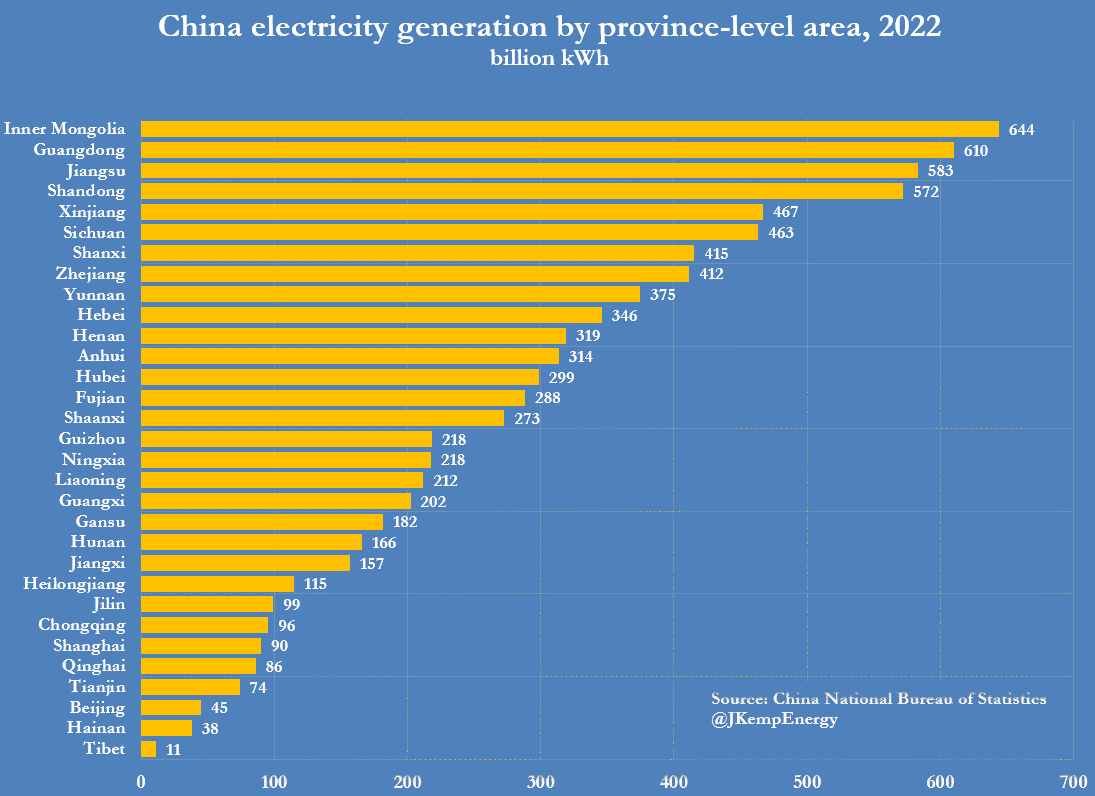
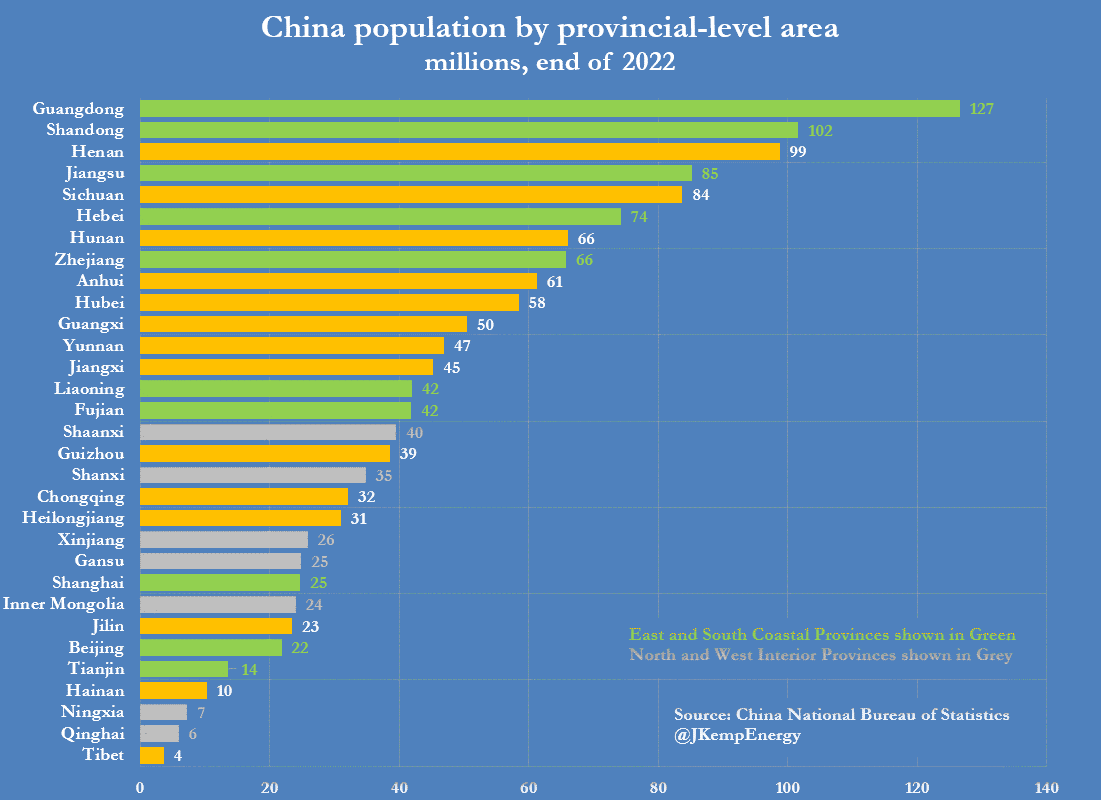
For decades, the country has been characterized by massive west-to-east electricity transfers from interior areas with surplus generation to the massive load centres on the east and south coasts. Ten provincial-level areas in the east and south (Liaoning, Hebei, Beijing, Tianjin, Shandong, Jiangsu, Shanghai, Zhejiang, Fujian and Guangdong) accounted for 50% of national consumption but only 40% of generation in 2022.
By contrast, six remote and sparsely populated northern and western areas (Inner Mongolia, Xinjiang, Shanxi, Shaanxi, Gansu and Ningxia) accounted for 18% of consumption but 25% of generation.
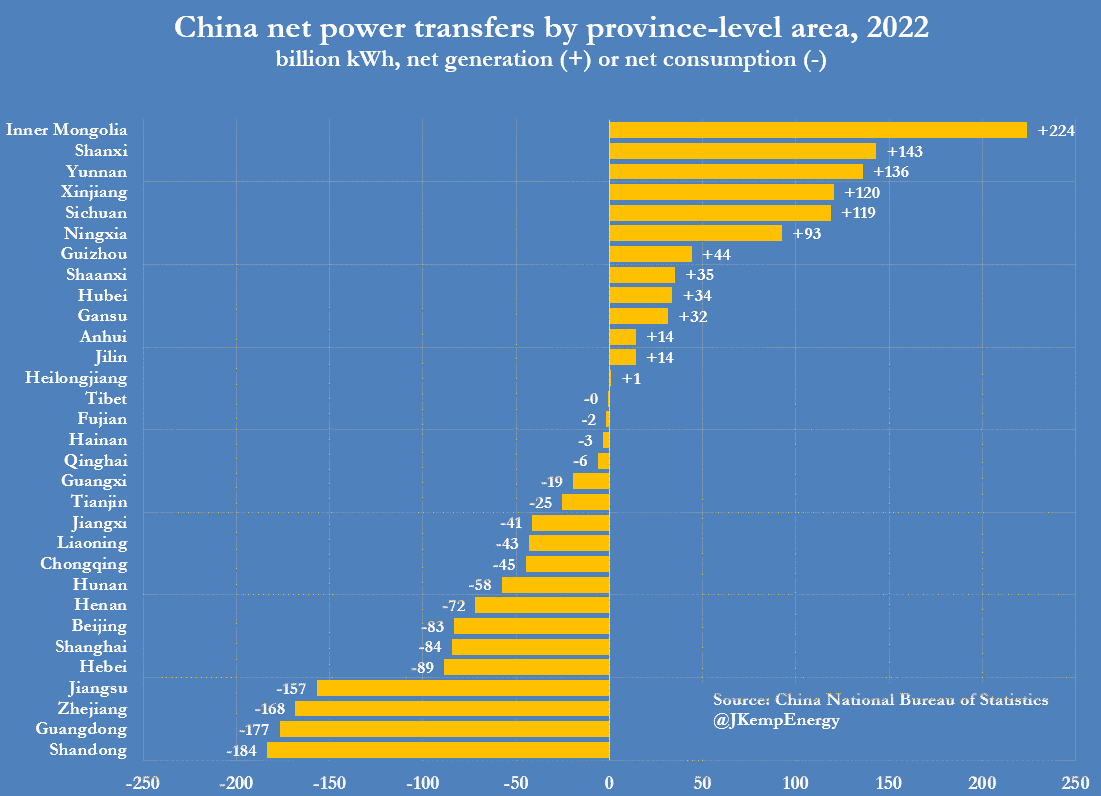
Chartbook: China regional electricity transfers
In response, China’s State Grid Corporation has constructed a network of ultra-high voltage transmission lines to move power thousands of kilometres from surplus areas in the west and north to deficit areas in the east and south.
In the process, China has become the world leader in ultra-high voltage transmission to move electricity over long distances while minimising line losses and is exporting its expertise around the world.
Inner Asia’s Energy Abundance
China’s northern and western areas are some of the least populated and poorest parts of the country, but rich in energy resources, traditionally coal but now increasingly gas and renewables.
The north and west contains the country’s most important coal deposits and has become a major centre of pit-head generation, with some electricity used locally by heavy industry, and the rest transmitted east and south.
Inner Mongolia, Shanxi, Shaanxi and Xinjiang alone accounted for 81% of coal mine production and 25% of all thermal generation in 2022, according to data from the NBS.
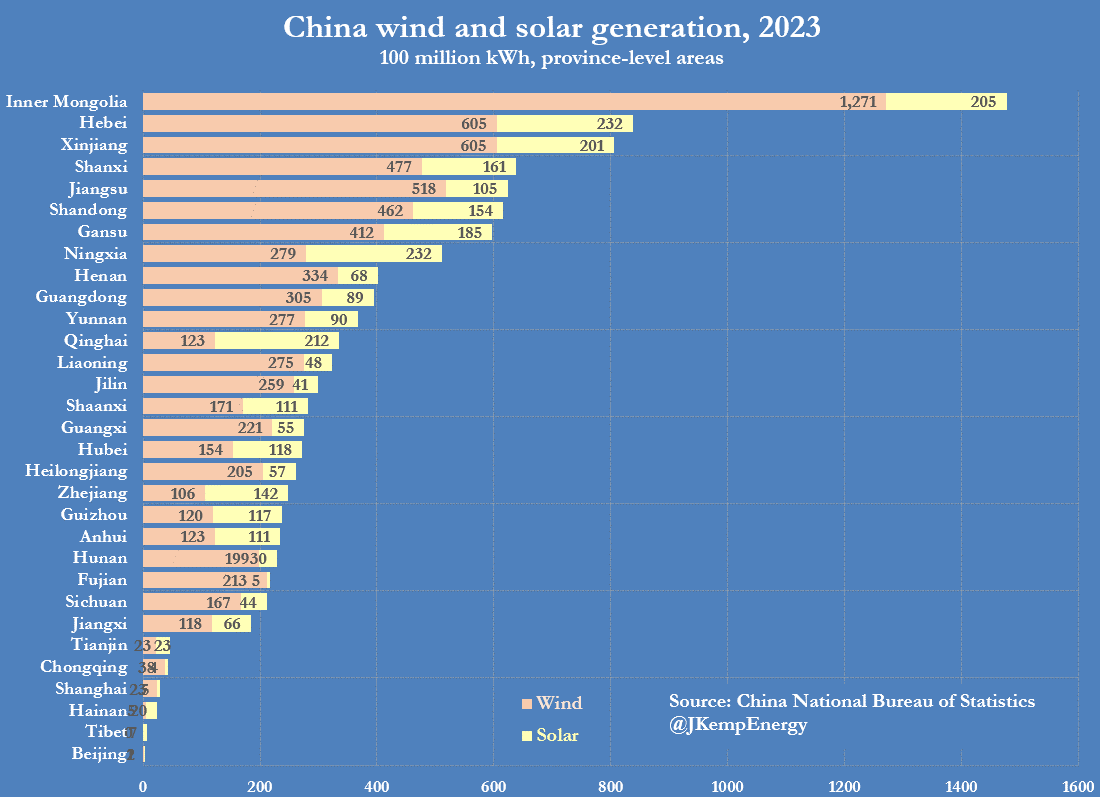
In a quirk of fate, the arid and windswept northern and western plains and deserts are also the best sites for giant wind farms and solar parks.
Inner Mongolia, Shanxi, Shaanxi and Xinjiang together with neighbouring Gansu, Ningxia and Qinghai accounted for 42% of all wind and solar generation last year.
But the addition of so much wind and solar generation in a region already saturated with coal-fired power threatens to overwhelm the transmission system.
During peak periods of wind and solar generation, there is not enough population and industry in these areas to absorb all the output, and not enough long-distance transmission capacity to move the surplus east and south.
More Transmission And Planning
In 2016, the national utilisation rate for new energy sources fell to a record low of 84%, prompting the central government to launch a “Clean Energy Absorption Action Plan” to reduce the waste of renewable resources. The plan focused on improvements in local distribution, long-distance inter-provincial transmission, and energy trading to reduce the curtailment of new energy generation.
By 2023, the utilisation rate for wind power had climbed to a remarkable 97.3% and solar had reached 98%, according to the state-run news agency Xinhua.
With rapid deployment of renewable capacity, however, the problem of abandonment is re-emerging, with wind utilisation down to 96.1% and solar down to 96% in the first five months of 2024. Sliding utilisation has prompted an alert from the National New Energy Consumption Monitoring and Early Warning Center (“Solving the pain points and difficulties of new energy consumption”, Xinhua, July 1, 2024).
The response is likely to be similar, with renewed emphasis on integrating renewables at local level and more transmission capacity to move surplus power across provincial boundaries. In the last two years, central government policy statements have repeatedly focused on the need for better coordination of transmission and generation between provinces.
Creating A Truly National System
In a sign of the importance attached to the issue, the Communist Party’s Politburo held a group study session on new energy technology and energy security on February 29, 2024. The session, bringing together top central and regional leaders, included a discussion on boosting “the grid’s capacity capability to integrate, distribute and regulate clean energy.”
President Xi Jinping stressed need for “coordinated development of the energy sector” (“Xi stresses high-quality development of new energy”, CPC International Department, March 2, 2024).
In many ways, China’s long-distance ultra-high voltage transmission system is an extraordinary engineering achievement, likely to be copied in other parts of the world as more and more renewables are connected to grids. It has enabled a remarkable penetration of intermittent renewables, as well as hydroelectric generation, into the national power system while maintaining or improving reliability. As a result, wind and solar producers supplied 15% of all generation in the first five months of 2024, up from 7% in the same period in 2019.
In some ways, however, China is still struggling to forge a truly integrated nationwide system from fragmented provincial-level utilities that pursue their own priorities. If government plans to achieve even higher renewables penetration are to be achieved, there will have to be much closer links and more coordination between different types of generators and across far wider areas.
https://www.zerohedge.com/markets/chinas-rapid-renewables-rollout-hits-grid-limits
June 6, 2024
NEW Everpol TME-610 TMP Ethoxylated Polyether Polyol from Everchem

EVERPOL TME-610 is a trimethylolpropane-initiated (TMP) ethoxylated polyether polyol. The resulting material has a functionality of three with a nominal hydroxyl value of 610 mgKOH/g. This specialized triol is polymerized with ethylene oxide. The outcome is a highly reactive pure triol that yields increased hardness and durability in coatings applications. Additionally EVERPOL TME-610 provides significant improvements in cell elasticity and compression sets for higher density flexible foams.
REPLACE PEG | USE 50% LESS | 3-FUNCTIONALITY
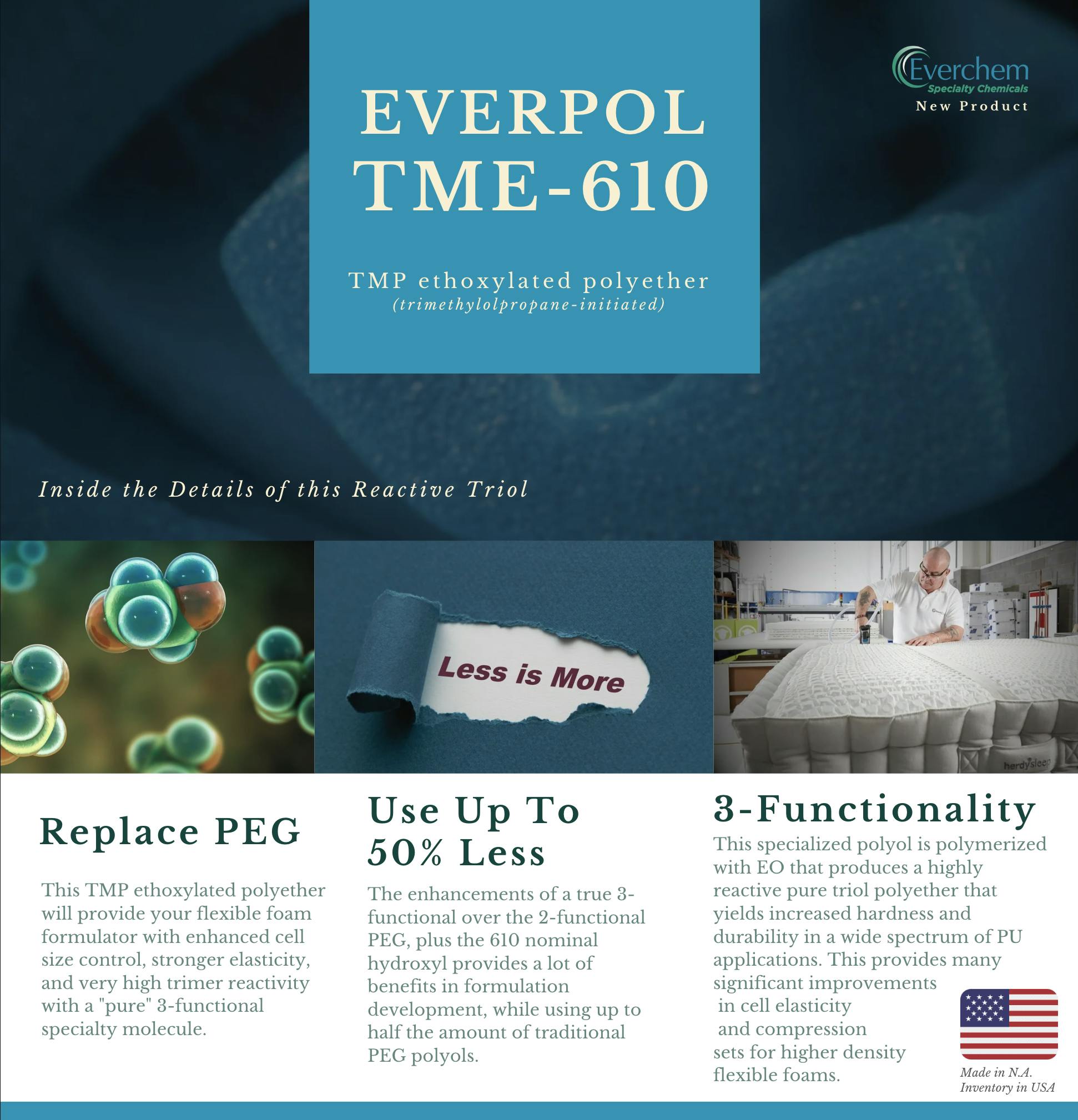



Everchem has developed a new polyether polyol in conjunction with one of our long-term production partners that will provide unique advantages to your polyurethane formulation challenges.
EVERPOL TME-610 Market Applications:
- – CASE (coatings, adhesives, sealants, elastomers)
- – High Performance Flexible Foams.
- – High Density Visco Elastic foams
- – Low Density Rigid Systems
| TYPICAL PROPERTIES | VALUE |
| Hydroxyl Value | 610 mg KOH/g |
| Boiling Point | 300 °C |
| pH | 7.0 |
| Appearance | Free and clear |
| Viscosity (cP) | ~ 700 cps @ 25 C |
REACTIVE TRIOL
Get a quote or a sample of our new specialty additive TME-610
April 17, 2024
The Holy Grail (Not Bikes, but Cars, and Not Just Tubes)
Market Prospects of TPU in Bicycle Tire Applications
PUdaily | Updated: April 11, 2024
Whether in terms of weight reduction or rolling resistance, inner tubes are one of the most cost-effective upgradable components on a bicycle. In response to the demands for weight and resistance reduction, TPU has been considered as a material for inner tubes. TPU inner tubes represent a new technological advancement in recent years. In 2020, Schwalbe introduced its Aerothan TPU Tubes, becoming one of the pioneering companies to launch TPU inner tubes. It also marks the official entry of this material into the commercial bicycle sphere.
Currently, the mainstream materials for inner tubes are butyl rubber, latex, and TPU.
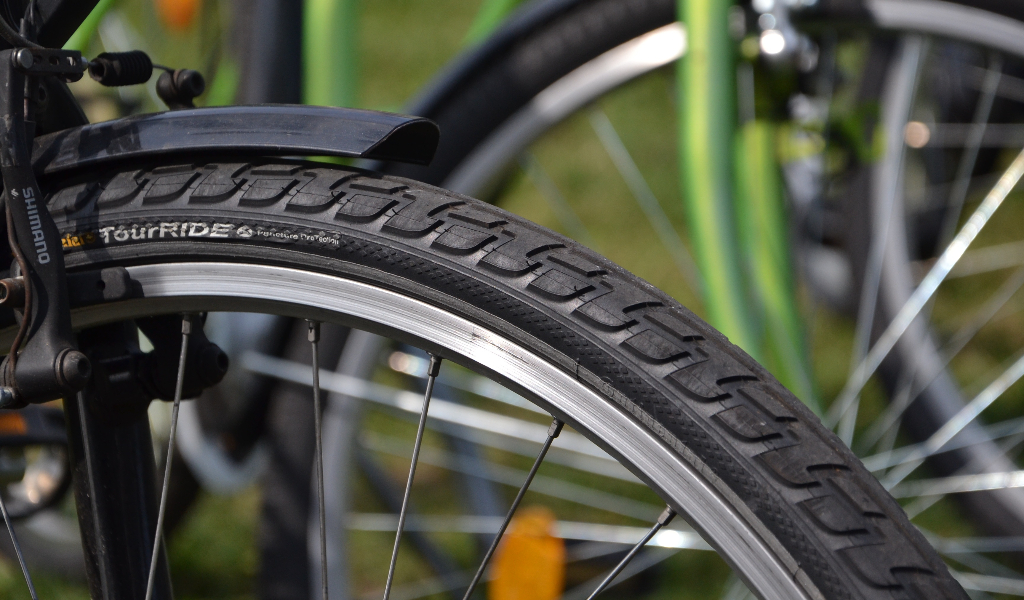
Butyl inner tubes are the most widely used standard inner tubes in cycling. Made from elastic polymers, butyl inner tubes offer good stretch and rebound properties and are the most affordable option. Latex inner tubes fall in the mid-range in terms of cost, mostly produced from natural rubber. Latex rubber is more porous than butyl, meaning latex tubes lose air much more quickly. The price of latex tubes is typically 2-3 times that of butyl tubes.
TPU inner tubes are at the cutting edge and also the most expensive. As a flexible plastic, TPU excels in weight reduction. A typical butyl inner tube weighs around 140 grams (actual weight may vary slightly due to size and valve length), while a latex inner tube reduces that weight to approximately 85 grams. As for TPU inner tubes, the weight drops to just 25 grams. This means that the weight difference between two bicycles made of butyl rubber inner tubes and TPU inner tubes can reach up to 230 grams. This is why many professional cyclists opt for TPU inner tubes when competing.
Another obvious difference among different inner tubes is their rolling resistance. It’s found that the rolling resistance of the best butyl inner tubes still consumes about 3 watts more than TPU inner tubes and 4 watts more than latex inner tubes. In long-distance mountain climbing, a bicycle equipped with TPU inner tubes can increase power by 10 watts, equivalent to reducing weight by 2 kilograms.
Another trend nowadays is tubeless tires, which are tires without inner tubes. Compared to traditional clincher tires with inner tubes, tubeless tires have lower rolling resistance and better puncture protection. However, the high maintenance costs, difficulty in component assembly and replacement, and the risk of air leakage or even tire separation still raise concerns.
China’s bicycle output reached around 100 million units in 2023, reflecting a significant growth potential for TPU inner tubes. Furthermore, Aerothan road tires launched by Schwalbe in July 2023, which replace rubber with nylon-coated TPU material in cover tyres, achieve comprehensive upgrade in puncture protection and weight reduction, potentially opening up new applications for TPU in tires.
March 21, 2024
NEW Everpol MEG-380 AMG Initiated Polyether Polyol from Everchem

EVERPOL MEG-380 is an Alpha Methyl Glucoside-initiated polyether polyol polymerized with propylene oxide. The resulting material has a functionality of four and a typical hydroxl of 380. Due to the higher percentage of carbohydrate moieties when compared with sucrose carbohydrates on a similar weight basis, MEG-380 provides enhanced foam charring with improved compression sets. Main applications include low to high density rigid pour-in-place systems, however, EVERPOL MEG-380 may also be included as a component in flexible polyurethane foam formulations to build bio-content.
OVER 25% BIO-BASED | CHAR ENHANCER | 4-FUNCTIONALITY


Everchem has developed a new polyether polyol in conjunction with one of our long-term production partners that will provide unique advantages to your polyurethane formulation challenges.
EVERPOL MEG-380 Benefits:
- – Over 25% Bio Content as Alpha Methyl Glucoside (AMG) carbohydrate to meet the Certi-PUR Bio-Certification program.
- – AMG does not decompose like sugar carbohydrates during the polyol manufacturing process.
- – Improved compression sets with 4-functional structure.
- – Lower viscosity when compared with sugar polyols at similar carbohydrate loading.
- – Char enhancer with a higher percentage of carbohydrate moieties compared with sucrose carbohydrates on a similar weight basis.
EVERPOL MEG-380 Market Applications:
- – Low Density Rigid Systems with high water content – SPF, FIP packaging
- – High Density Rigid Systems with low level Aux Blowing Agents.
- – High Density Flexible Foam grades AND High Density Visco-Foam grades with high Bio-Content demands.
| TYPICAL PROPERTIES | VALUE |
| Hydroxyl Value | 380 mg KOH/g |
| Water Content | < 0.05 % |
| pH | 6.0 |
| Acid Value | < 5.0 mg KOH/g |
| Viscosity (cP) | ~ 6000 cps @ 25 C |
PROBLEM SOLVER MATERIAL
Get a quote or a sample of our new specialty additive MEG-380
 Everchem Updates Archive
  Sign Up for Email Updates


