
Technology
February 13, 2025
EVERCHEM UPDATE: VOL. 13 – TCPP Tariff Tango
In the latest installment of international trade drama, the United States has slapped anti-dumping and countervailing tariffs on Chinese suppliers of TCPP—the flame retardant that helps keep spray foam insulation from becoming spray foam bonfires.
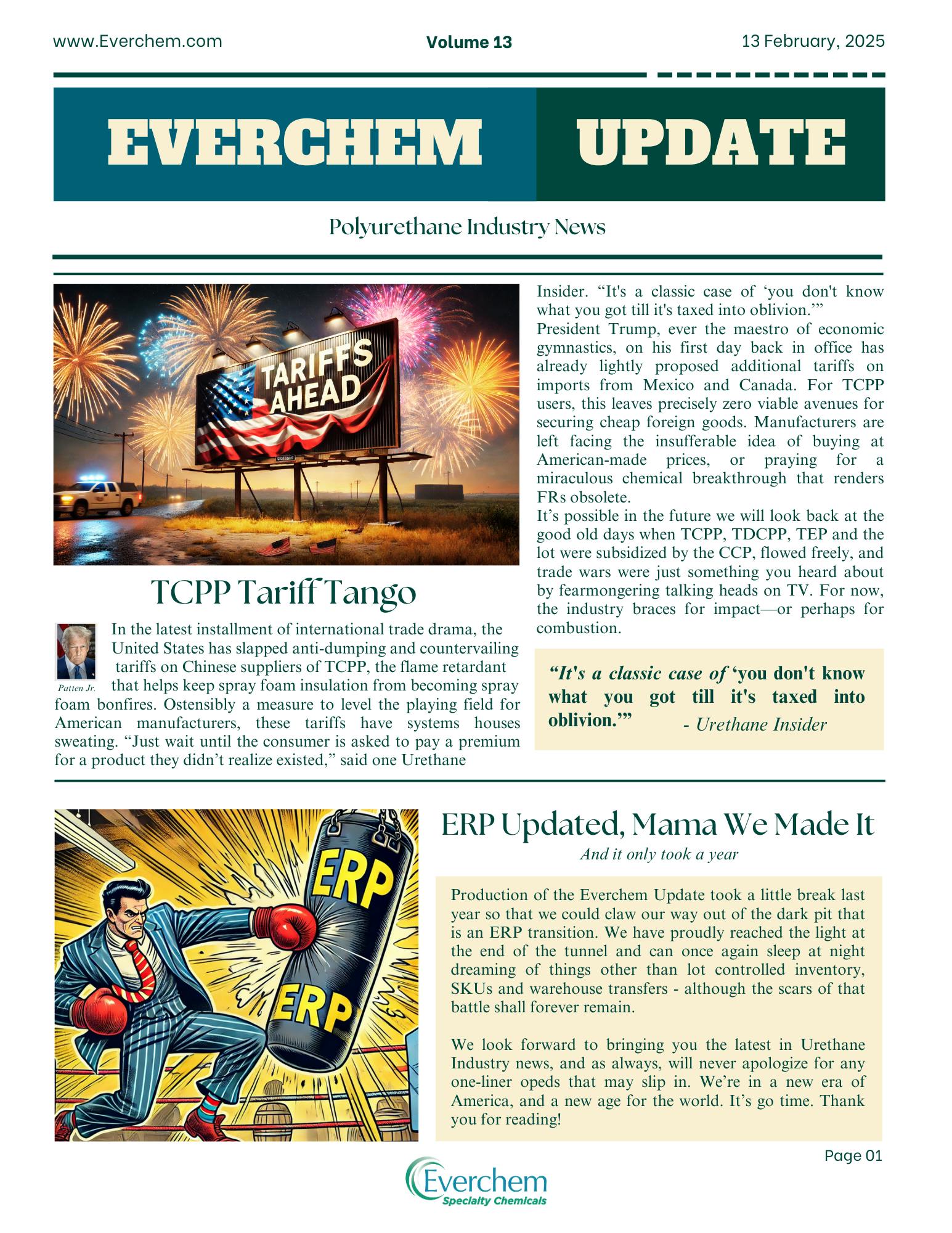
Fun Fact – this entire episode was generated by AI:
– the voice over
– all videos
– the music
– the script/article was written by ChatGPT and refined by me
– the photos on the article
(I still had to edit the video, I’m not out of a job just yet)
Subscribe to the Urethane blog for more Everchem Updates here
December 16, 2024
A.I. Now vs ~2 Years Ago: Chemical Images
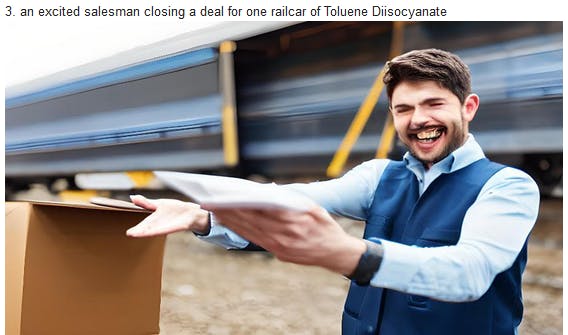
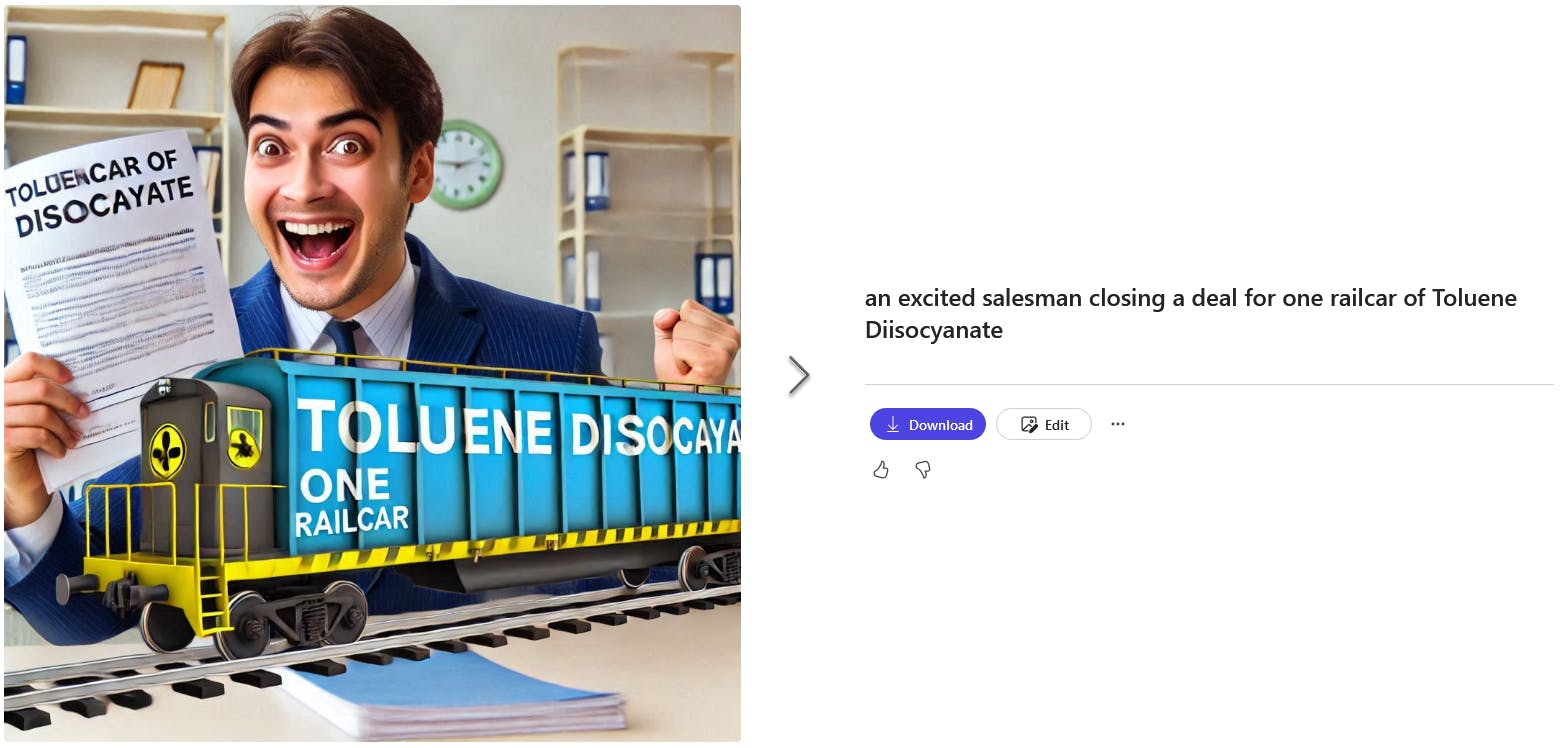
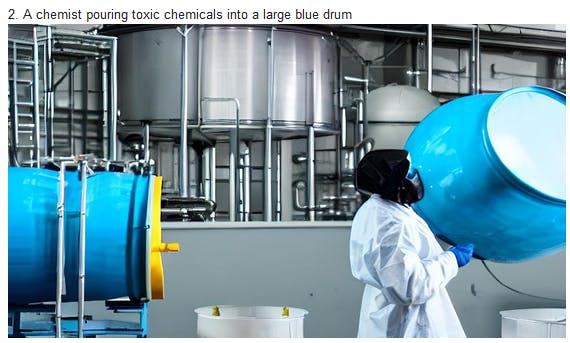
Skynet keeps getting smarter, better, faster. Below are prompts from March of 2023 in an AI generator (left column), versus the same prompts asked today via Microsoft Designer AI image generator (right):

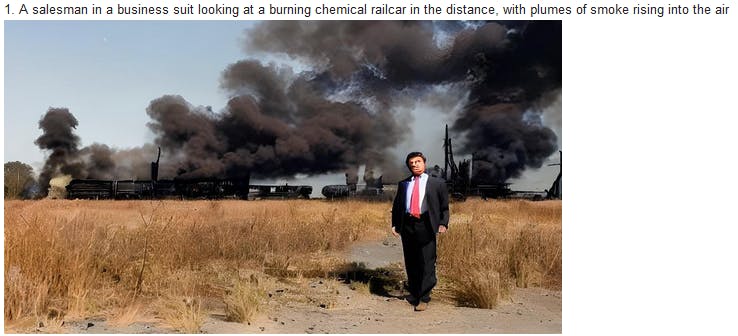

Merry Christmas!!

October 30, 2024
MDF Recycling
MDF recycling set to launch on an industrial scale
By Larry Adams
October 29, 2024 | 11:39 am CDT

MDF recycling was technically impossible, but now a new process is set to launch on an industrial scale.
Photo By Unilin Technologies
WIELSBEKE, Belgium — Backed by a €20 million investment, Unilin is set to start recycling MDF on an industrial scale at its site in Bazeilles, France. Unilin plans to make this innovative service available to the entire sector via Unilin Technologies.
For the production of its MDF and HDF boards, Unilin Group, a global supplier of panels and building supplies, uses recovered and recycled wood. Until 2021, it was technically impossible to recycle the 100 million cubic feet of medium density fiberboard (MDF) and high density fiberboard (HDF) boards manufactured worldwide each year, but Unilin has developed a steam explosion technology to reclaim the wood fiber from these boards in an economically viable manner and reuse them for the production of high-quality fiberboards on an industrial scale.
According to Geert Coudenys, R&D Director, Unilin Panels, the steam explosion is a process in which biomass is treated with hot steam (180 to 240 °C) under pressure (1 to 3.5 MPa) followed by an explosive decompression of the biomass that results in a rupture of the biomass fibers’ rigid structure. “It sounds quite complicated,” Coudenys told Woodworking Network, “but you can compare the process of recycling MDF to the operation of a pressure cooker. First, we moisten the MDF boards with steam. Then the boards are heated and put under very high pressure. Finally, the pressure is reduced, releasing the fibers.
MDF and HDF containing products, such as laminate flooring, are considered difficult to recycle because of the specific way they are made, Coudenys said. These boards are composed of very fine wood fibers bonded with a urea-formaldehyde adhesive, which makes mechanical recycling methods unsuitable. When mechanical recycling methods (like those used for chipboard) are applied to MDF/HDF, the fibers in these boards are destroyed, preventing them from being reused to create new MDF or HDF products. Instead, these materials have traditionally been incinerated or sent to landfills at the end of their life. To recycle MDF/HDF, a chemical recycling process is needed to preserve the integrity of the wood fibers. However, this process is complex and has been challenging to develop on an industrial scale, requiring significant time and resources to create an efficient and high-quality technology.
“As a result, recycling these materials has been considered almost impossible for a long time. Until now. Unilin is the first company in the world to develop a technology to recycle MDF/HDF on an industrial scale,” he said. “Until now, MDF items such as decorative panels, laminate flooring, and production waste products were simply incinerated at the end of their life cycle. What previously made recycling such products impossible was the glue used to bond the wood fibers. The key to making it possible was therefore to find a way to break down the glue molecules.”
Unilin Panels’ CEO Veronique Hoflack took to the kitchen for the first round of testing, using her pressure cooker. “What we’re actually doing is using steam to break apart the glue molecules in cooking vessels,” explains project engineer Stéphane Marthy. “Ultimately, these are agro-industrial machines. To make them suitable for MDF recycling, we put them through a rigorous experimentation process to determine the optimal process parameters.”
From prototype to industrial production
After several years of prototype production, the testing phase finally successfully concluded and the industrial production phase could commence: “We’re going to be working with the same kind of machines, but this time they are custom-built for our needs, to handle far higher volumes,” explains Yoann Raucourt, production manager for the Bazeilles site. Currently, Unilin’s Bazeilles plant is already recycling 1500 kilos of MDF an hour, to exponentially increase this rate from September 2025. This is the date the first MDF recycling line should go live.
“MDF recycling enables us to reuse the wood fibers in the product, storing the CO2 in the wood for longer, rather than being incinerated. The aim for the first phase of operation is to store 380,000 tons of additional CO2 per year, equivalent to the annual emissions of 211,000 cars,” explains Julien Boucher, site manager at Bazeilles.
The €20 million investment will fund new industrial plants and equipment, as well as implementing new processes. Subsequently, Unilin will be able to offer MDF panels made from 30% recycled materials, with that proportion undoubtedly set to rise in the future. To achieve this, two recycling lines will have to be created and integrated: the pre-consumer lines, handling waste generated by industrial customers (manufacturers of laminated products, etc.), and the post-consumer lines, processing consumer waste materials recovered at the end of their first life.
Boucher added, “Innovation is in Unilin’s DNA and we are convinced that this MDF recycling technology represents a considerable leap forward for our industry. This is why we are keen to make this technology more widely available, through Unilin Technologies licensing. This will help develop and boost the circular economy of the panels and flooring industry.”
September 9, 2024
Acoustic Foam for Tires
Henkel and 4JET revolutionize silent tire production for EVs

Share LinkedIn Twitter Facebook Email

L-R: Dr. Armin Kraus, co-CEO at 4JET, Imke Vogel, Market Segment Head Automotive Components Europe at Henkel, Dr. Jan Flohre, Head of Laser Process Development at 4JET and Dr. Rainer Schönfeld, Global Market Strategy Head Automotive Components at Henkel.
As EVs lack engine noise, tire rolling sound becomes more noticeable, often perceived as intrusive and unpleasant. To combat this, manufacturers have been equipping EVs with “Silent Tires,” featuring acoustic polyurethane foam linings. However, this solution has presented logistical and cost challenges, increasing tire production expenses by up to 25%.
The new Laser-Fit process, developed by Henkel and 4JET, promises to streamline production and reduce costs. This method involves creating acoustic foam directly inside the tire from liquid materials at the end of the production line, eliminating complex logistics and manual steps.
“Our new to market Loctite Laser-Fit acoustic foam achieves its sound absorption effect through a large inner surface and a pore design specifically tailored for tire noise suppression,” said Dr. Rainer Schönfeld, Global Market Strategy Head in Henkel’s Automotive Component business unit.
The process utilizes a patented laser activation technique to remove the foam’s air-impermeable skin, allowing for effective sound absorption. This innovation not only simplifies production but also offers manufacturers greater flexibility in foam design and reduces waste.
“This revolutionary direct-foam-to-tire technology represents our joint commitment to innovation and sustainability,” said George Kazantzis, Global Head of Henkel’s Automotive Components business unit. “By eliminating the transportation of pre-fabricated foam and reducing cutting waste, we will enable our customers to lower their carbon footprint.”
The partners developed this technology in record time, showcasing the innovative strength of German SMEs. Dr. Armin Kraus, co-CEO of the 4JET Group, praised the collaboration: “In Henkel, we have found the ideal development partner for this innovation… From the idea to the finished application in record time.”
The complete solution will be presented at RubberTech24 in Shanghai this month, marking, the companies hope, a significant advancement in EV tire technology.
www.electrichybridvehicletechnology.com/news/henkel-and-4jet-revolutionize-silent-tire-production-for-evs.html
August 27, 2024
Covestro Invests
Covestro invests $40M in R&D upgrades in Pittsburgh
Covestro is committing $40 million to enhance its research and development capabilities in Pittsburgh, strengthening its innovation efforts and supporting advanced materials science.
By Prakriti Mitra Published on August 27, 2024, 07:55 EDT
 Image credits – welt.de
Advertisement
Covestro, a global leader in high-tech polymer materials, has announced a $40 million investment to upgrade its research and development (R&D) facilities in Pittsburgh. This significant commitment is aimed at bolstering the company’s innovation capabilities, particularly in the area of advanced materials science, which is crucial for driving future growth and meeting evolving market demands.
The investment will be used to modernize and expand Covestro’s existing R&D infrastructure, ensuring that the company remains at the forefront of material science innovation. The enhancements will include the introduction of cutting-edge equipment, upgraded laboratories, and expanded research spaces. These improvements are designed to facilitate more efficient and effective research, enabling Covestro to accelerate the development of new materials and technologies that address the needs of various industries.
Covestro’s Pittsburgh site has long been a central hub for the company’s R&D activities, and this investment reaffirms the site’s importance within the company’s global operations. By strengthening its R&D capabilities in Pittsburgh, Covestro is positioning itself to better respond to the growing demand for sustainable and innovative material solutions.
The upgrades are expected to significantly enhance the company’s ability to innovate in areas such as automotive, construction, electronics, and healthcare, where advanced materials play a critical role. Covestro’s R&D efforts focus on developing materials that are not only high-performing but also environmentally friendly, aligning with the company’s commitment to sustainability.
In addition to advancing its research initiatives, the $40 million investment will also support job creation and economic growth in the Pittsburgh region. The expansion of the R&D facilities is likely to attract top talent to the area, further solidifying Pittsburgh’s reputation as a hub for innovation and technology.
This investment is part of Covestro’s broader strategy to strengthen its position as a leader in the global materials science industry. By enhancing its R&D capabilities, Covestro aims to accelerate the development of next-generation materials that meet the challenges of today’s rapidly changing markets.
 Everchem Updates Archive
  Sign Up for Email Updates